
You hit the A/C button, the fan ramps up, and air comes out of the vents... but it is about as refreshing as a hair dryer on “low.” I have seen this exact complaint every summer in the shop, and the good news is you can narrow it down pretty quickly with a few simple checks.
This guide walks you through what to check first, what each symptom usually means, and when it is time to stop and call a pro.
Quick safety notes
- Keep hands, hair, and clothing away from belts and fans with the engine running.
- Do not vent refrigerant. It is hazardous and illegal to intentionally release. If you suspect a major leak, stop and get it serviced.
- Use A/C recharge cans cautiously. They can help in very specific cases, but they can also overcharge a system or hide a leak you really need to fix.
Start here: A simple sequence
If you do these in order, you avoid chasing your tail.
1) Confirm the settings
- Set MAX A/C or recirculation (the “loop” icon), fan on medium-high.
- Set temperature to full cold.
- On dual-zone systems, make sure both sides are set cold.
If your car has an “ECO” mode that reduces A/C output, switch it off for this test.
2) Check airflow first
If the airflow is weak, the air might be cold but you are barely getting any of it.
- If air volume is low on all speeds: suspect a clogged cabin air filter or blower issue.
- If air volume is good but not cold: move to the next steps.
3) Do a quick vent temp check
If you have a cheap thermometer, stick it in a center vent. With the car warmed up, A/C on MAX and recirculation, many vehicles will land somewhere around 40 to 55°F at the vents on an 80 to 90°F day. Humidity, vehicle design, and engine cooling fan strategy all affect this, so use it as a sanity check, not a strict spec.
4) Listen for compressor operation
On many vehicles you can hear a soft click as the A/C compressor clutch engages. Some newer vehicles use variable displacement or electric compressors and are quieter, so do not rely on sound alone.
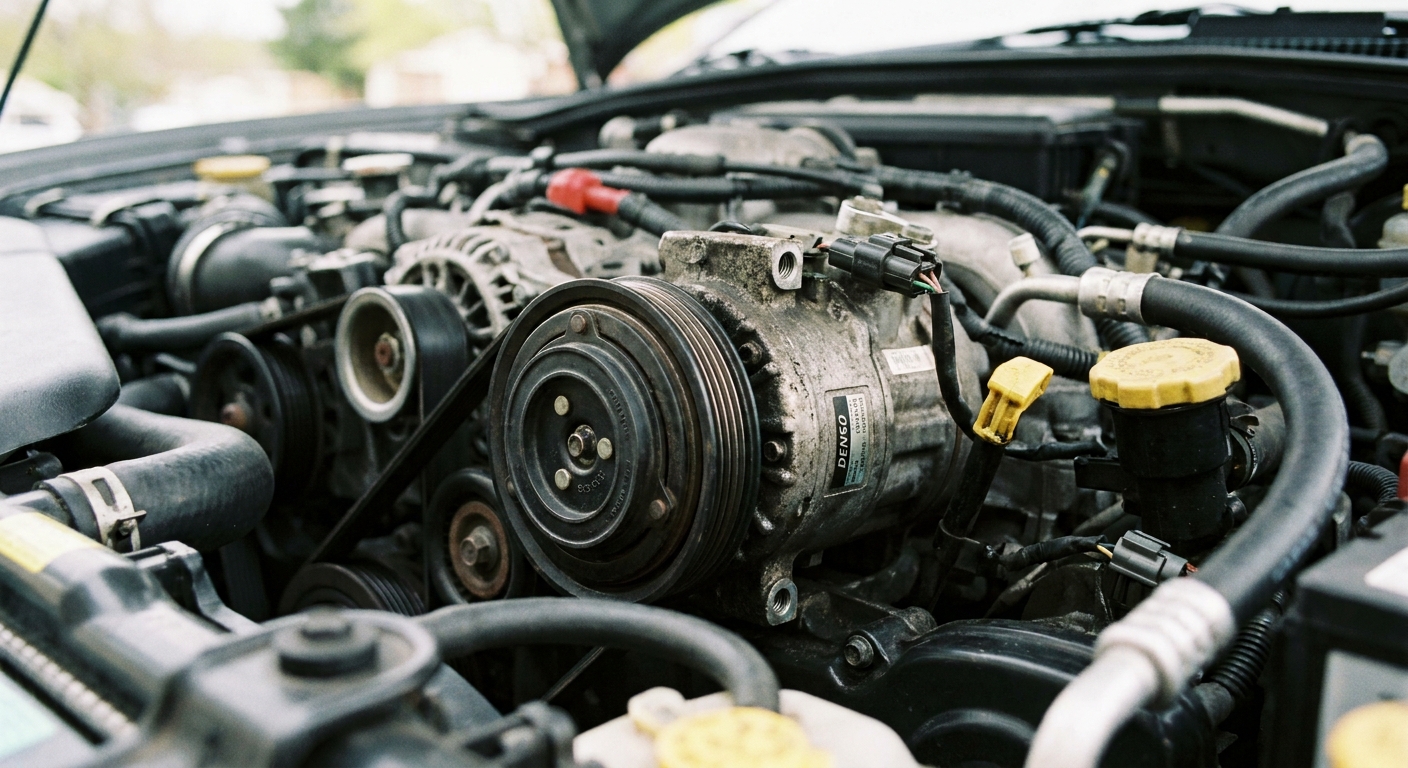
5) Look at the compressor area
With the A/C on, see if the compressor clutch is engaging (if your compressor has a clutch). If the center portion never turns, you may have an electrical or control problem, low refrigerant pressure, a failed clutch, or a compressor issue.
Also keep in mind some cars will intentionally inhibit compressor operation due to sensor inputs or ECM logic, such as low ambient temperature, high-pressure cutout, evaporator temperature protection, or certain engine load and torque management situations.
Common causes
Low refrigerant from a leak
This is the number one reason I see for “A/C blows warm.” Refrigerant does not get “used up” like fuel. Over many years there can be very slow permeation through hoses and small service losses, but if cooling noticeably falls off, assume a leak until proven otherwise.
Typical clues:
- A/C used to work but gradually got weaker over weeks or months
- Compressor clutch clicks on and off rapidly, or will not engage at all
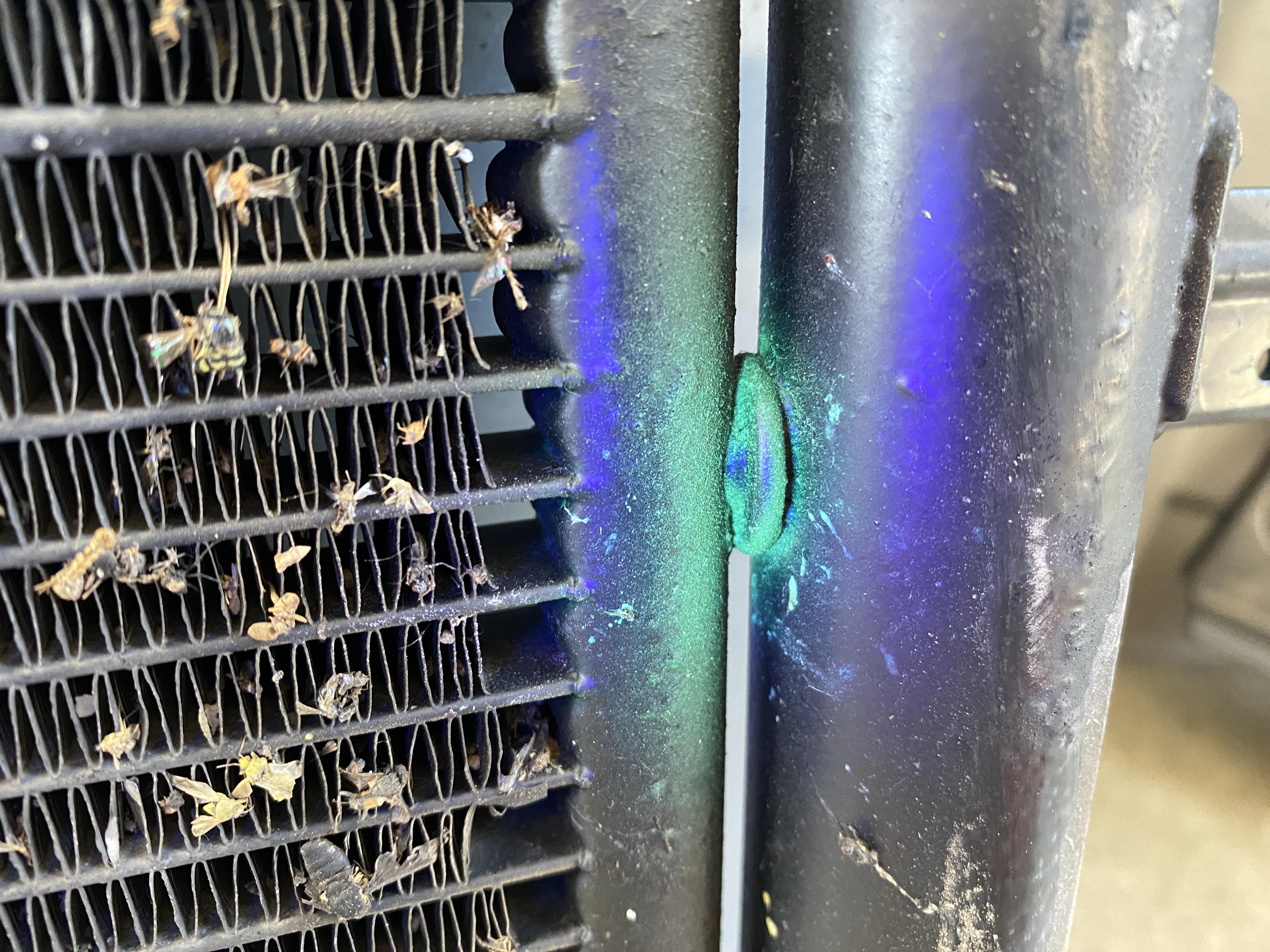
- You may see oily residue on A/C lines or fittings (refrigerant oil can seep with the leak)
What to check: Look for oily dirt buildup around hose crimps, the condenser (in front of the radiator), and service ports. A proper fix is to find the leak, repair it, then evacuate and recharge by weight.
Compressor not pumping or not commanded on
If the compressor does not run, or it is running but not doing its job, you will get ambient-temperature air.
Typical clues:
- Little to no noticeable idle change when A/C is switched on (on modern vehicles this can be very subtle or not noticeable)
- No clutch engagement on clutch-style compressors
- Intermittent cooling that comes and goes
- Grinding noises from the compressor area (stop running A/C and get it checked)
What to check first:
- A/C fuse and relay (your owner’s manual typically lists locations)
- Electrical connector at the compressor for damage or corrosion
- Condenser fan operation (more below). If fans are not moving air, pressure can climb and the system may shut down.
Blend door or HVAC control issue
This one fools people. The A/C system can be making cold air, but the HVAC box under the dash is mixing in heat because the blend door is stuck or the actuator failed.
Typical clues:
- One side cold and the other side warm on dual-zone systems
- Temperature does not change much when you rotate the temp knob
- Clicking or ticking behind the dash when changing temperature settings
What to check: Move temp from full hot to full cold slowly and listen for actuator movement. If it clicks repeatedly or never changes output, a blend door actuator or calibration issue is likely. Diagnosing this before you buy refrigerant saves money.
Clogged cabin air filter
A dirty cabin filter will not usually make air warm, but it can make it feel like the A/C is failing because airflow is weak.
Typical clues:
- Weak airflow from vents even on high fan speed
- Whistling noise from vents
- Musty odor, especially at startup
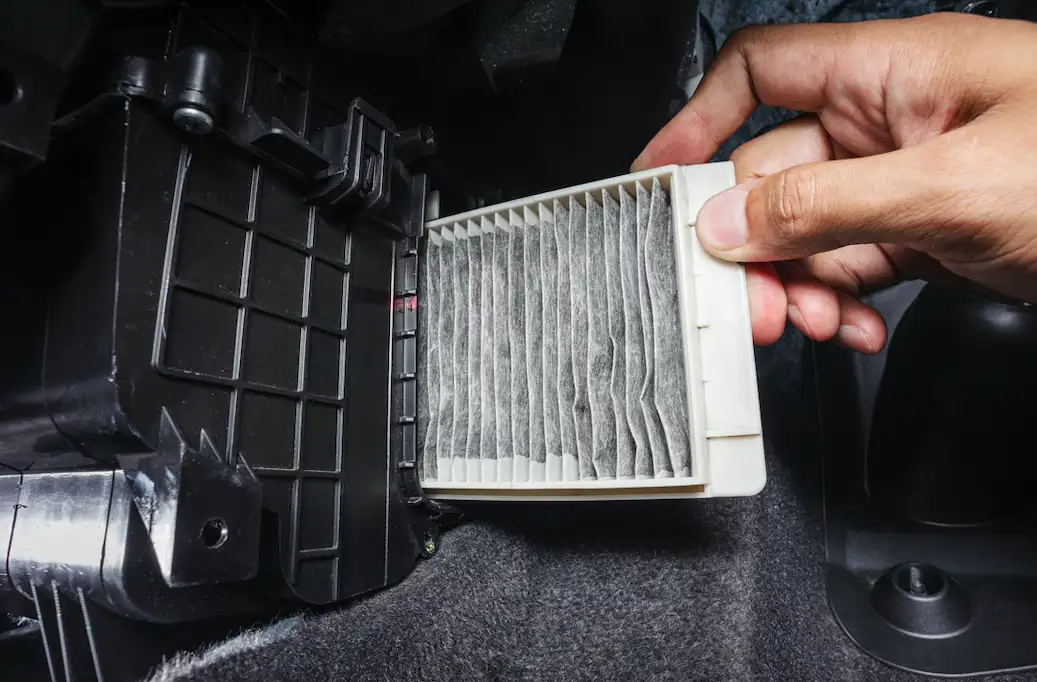
What to check: Pull the cabin filter and inspect it. If it is packed with dust and leaves, replace it. Most take 5 to 15 minutes behind the glovebox or under the cowl.
Condenser fan not working
The condenser needs airflow to shed heat. If the cooling fans are not moving enough air when the A/C is on, system pressure can climb and cooling performance drops hard, especially in traffic.
Typical clues:
- A/C is colder while driving, warmer at stoplights
- Engine temperature may creep up at idle
- Fan does not run when A/C is requested
What to check: With A/C on and the engine warm, look through the grille and confirm the fan is spinning. Some vehicles cycle fans or wait until pressures rise, and some have multiple speeds or multiple fans. The key clue is this: if the A/C is requested, the engine is up to temp, and neither fan ever runs, investigate fuses, relays, fan modules, fan motors, and wiring.
Condenser clogged with debris
Road grit, bugs, and leaves can block airflow through the condenser.
Typical clues:
- Cooling is mediocre, especially in high heat
- Visible debris packed into fins
What to check: Inspect the condenser in front of the radiator. Lightly rinse from the engine side out if you can access it, using gentle water pressure to avoid bending fins.
Evaporator icing
This is a sneaky one. The A/C may start out cold, then slowly goes warm, and sometimes the airflow drops because the evaporator core turns into a block of ice.
Typical clues:
- Cold at first, then warm after 10 to 30 minutes
- Airflow gets weaker as you drive
- After shutting the A/C off for a bit, it works again temporarily
Usual causes: low refrigerant, a bad evaporator temp sensor or thermistor, or moisture in the system. A proper evac and recharge, plus fixing the leak, is the right path here.
Expansion valve or orifice tube issue
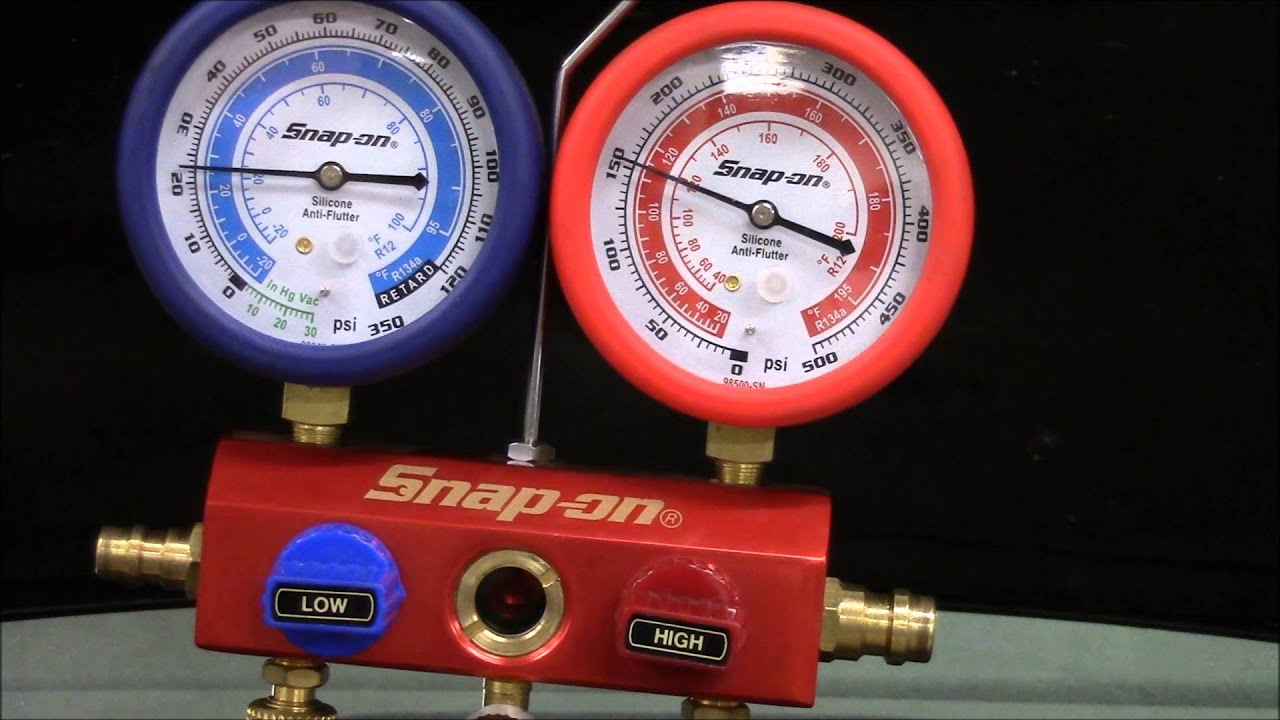
Less common, but real. If the metering device is restricted or stuck, pressures and cooling get weird fast. This is one of those cases where manifold gauge readings and proper diagnosis matter, not guesswork.
Two fast tests
The recirculation test
Switch between fresh air and recirculation. In heavy heat, recirculation should cool noticeably better after a minute or two. If it makes almost no difference, your A/C may not be producing much cooling, or you have a blend door issue.
Feel the A/C lines
With the engine running and A/C on, open the hood and carefully touch the larger diameter aluminum line (often the suction line) near the firewall. On many cars it should feel cool to cold, sometimes sweating with condensation.
- Cold line but warm vents: likely blend door or HVAC box problem.
- Both lines warm: likely compressor not pumping, compressor not being commanded on, or very low refrigerant.
Use common sense here. Line routing varies by vehicle, some parts can be hot, and an A/C line can get cold enough to bite. Do not grab lines near moving components, and do not touch anything that is frosted over with bare skin.
DIY recharge cans
I get it. A $40 can at the parts store looks a lot better than a shop bill. Sometimes, if your system is just slightly low and you already know it does not have a significant leak, a careful top-off can restore some cooling.
But here is the catch: if you are low enough to notice warm air, you usually have a leak big enough that it will come back. And if you overcharge, cooling can get worse and you can stress the compressor.
Two big modern gotchas:
- R-134a vs R-1234yf: Many vehicles from roughly 2015 and newer use R-1234yf instead of R-134a. It uses different service fittings, the refrigerant is much more expensive, and “close enough” DIY charging is harder to do safely. Make sure you know what your car takes by checking the underhood A/C label. Never mix refrigerants.
- Charge by weight matters: Most DIY can gauges are crude and heavily affected by ambient temperature. Shops charge by weight after pulling a vacuum, which is how you get the correct amount and remove moisture. Moisture contamination is one reason evacuation and a proper service procedure matter, especially after a leak.
If you do recharge, avoid sealers. They can clog service equipment and create a bigger mess down the road.
When to stop and get service
Head to a reputable A/C shop or your trusted mechanic if you notice any of the following:
- Grinding, squealing, or burning smell when A/C is turned on
- Compressor clutch engages then quickly disengages repeatedly
- Obvious oily leak at the condenser, compressor, or hoses
- System was recharged recently but went warm again (leak diagnosis time)
- You have an EV or hybrid and you are not sure whether it uses an electric compressor (service procedures and oils can be different)
- Your vehicle uses R-1234yf and you are considering DIY charging without proper tools
FAQ
Why does my car A/C blow cold sometimes and warm other times?
Intermittent cooling often points to a low refrigerant charge (pressure drops below a threshold), a failing compressor clutch or compressor, or an electrical issue like a relay that is overheating and dropping out. Evaporator icing can also cause a “cold then warm” pattern, and a blend door actuator can randomly mix heat.
My A/C is cold while driving but warm at idle. What is that?
Most commonly: the condenser fan is not pulling enough air at low speed, the condenser is clogged with debris, or the system is a bit low on refrigerant. Start by confirming the fans run appropriately with the A/C requested and the engine warm.
Can a clogged cabin air filter make A/C not cold?
It usually does not change the actual temperature of the air coming out, but it reduces airflow so much that it feels like the A/C quit. It is cheap and easy, so it is always worth checking early.
Is it normal for the compressor to cycle on and off?
Some cycling is normal. Rapid cycling every few seconds is not. That often means low refrigerant, a pressure sensor issue, evaporator temperature protection kicking in, or a cooling fan problem causing pressures to swing too quickly.
Quick checklist
- Confirm MAX A/C and recirculation, temp set to cold
- Check airflow strength and replace cabin filter if dirty
- Do a quick vent temperature check with a thermometer
- Check condenser fans operate appropriately with A/C requested
- Look for oily residue on A/C components
- Listen and look for compressor engagement (when applicable)
- If cold line near firewall but warm vents, suspect blend door or HVAC issue
- If it starts cold then fades and airflow drops, suspect evaporator icing
If you want to go deeper, note your vehicle year, make, model, ambient temperature, and whether it cools better on the highway or at idle. That pattern usually points to the right section fast.