If your temperature gauge climbs while you’re sitting at a stoplight, then drops back toward normal once you get moving, that pattern is a huge clue. At a standstill, your car has very little natural airflow through the radiator. On most vehicles it also has less coolant circulation because the water pump is turning slower at idle. Some newer engines use variable speed electric water pumps where it is not strictly RPM dependent, but the basic idea still holds: slow traffic is where weak airflow and marginal cooling show up first.
Below are the most common causes of overheating at idle, what you can check safely, and what typically fixes it. I’m going to keep this diagnostic and practical, like we’re standing next to the car with the hood up and a cup of coffee nearby.
First: don’t cook the engine
Before we get into diagnostics, a quick safety and damage-prevention checklist:
- If the gauge is rising toward hot, turn the A/C off , turn the heater on full hot, and put the blower on high. This helps shed heat through the heater core. It is a temporary heat sink, not a fix.
- Pull over as soon as it’s safe. If the temp is not in the red and there is no steam or coolant smell, a brief 30 to 60 seconds of idling can help stabilize and equalize temps before shutdown. If it is already in the red, climbing fast, or steaming, shut the engine off as soon as you are safely stopped.
- Never open a hot radiator cap. Wait until everything is fully cool. A pressurized cooling system can spray boiling coolant.
- If you see steam or smell coolant, stop driving. Overheating can warp a cylinder head or blow a head gasket fast.
What changes at idle
At a stop, the radiator depends heavily on the cooling fan(s) to pull air through the fins. Coolant still circulates, but there is less flow available on many engines at idle. If the fan is weak, airflow is blocked, coolant is low, or coolant flow is restricted, the temp can climb surprisingly quickly.
That’s why “overheats at idle but not while driving” often points to a fan or airflow issue first. That said, coolant level and flow problems can mimic the same symptom.
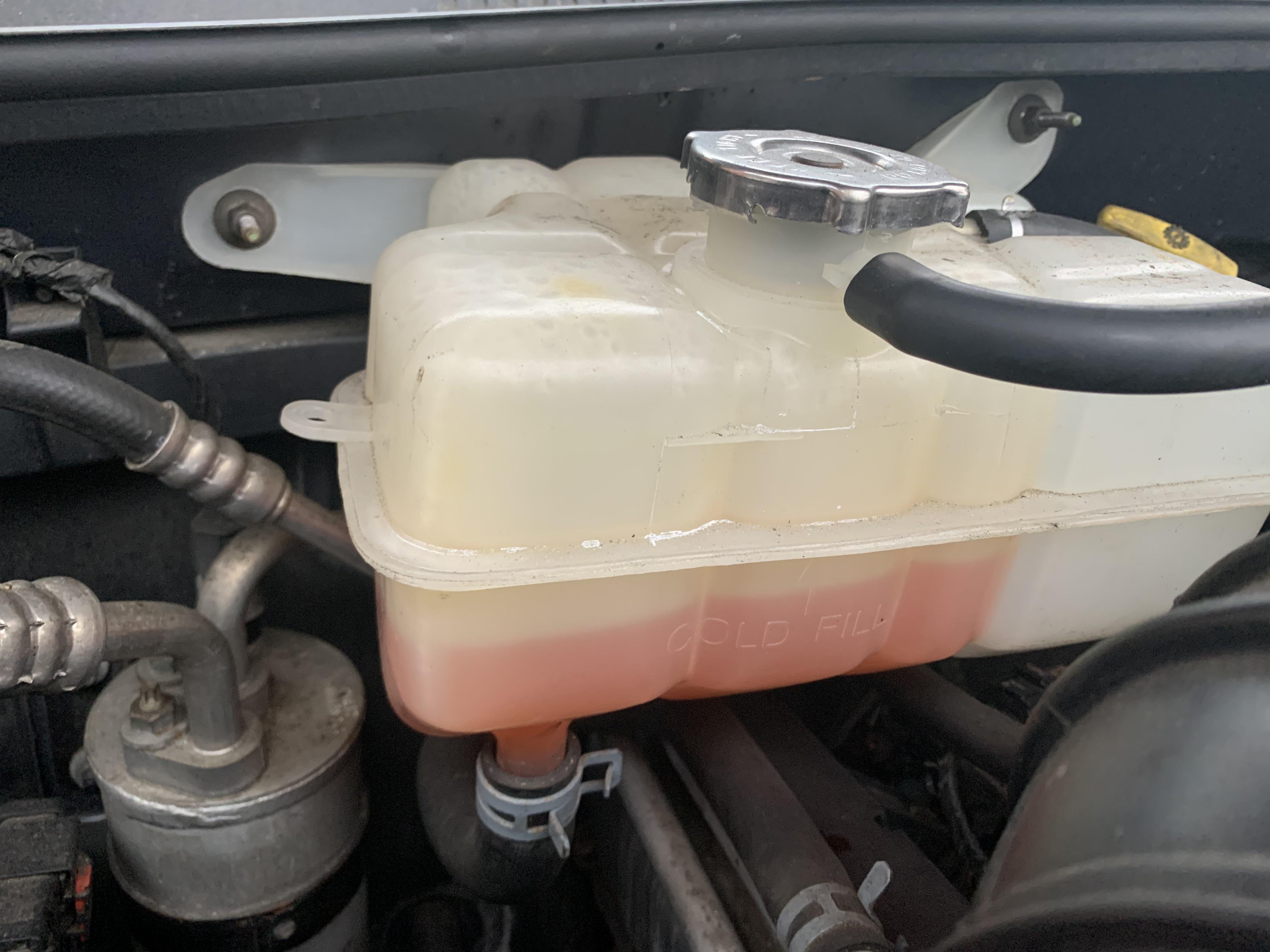
1) Low coolant (or air trapped)
This is the simplest and one of the most common causes. When coolant is low, the system cannot carry heat away from the engine efficiently. And if air gets trapped in the system after a leak or a recent repair, that air pocket can keep coolant from circulating through the radiator or heater core properly, especially at low speed.
What you’ll notice
- Temp rises in traffic and may swing up and down
- Heater may blow cool or go hot then cold
- You may smell sweet coolant, or see a puddle after parking
- Coolant reservoir is low, or empty repeatedly
What to check (when fully cool)
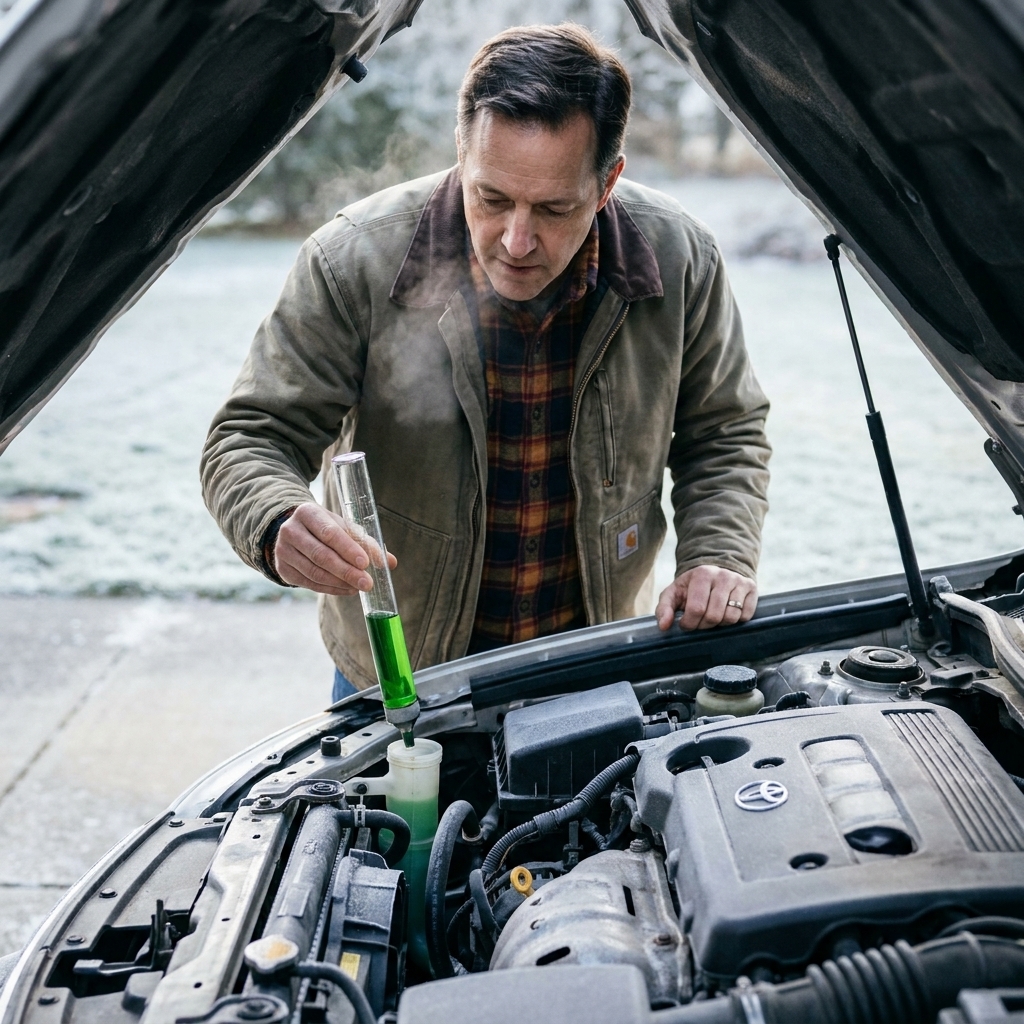
- Coolant reservoir level: It should be between MIN and MAX.
- Radiator level (if accessible): With the engine cold, remove the radiator cap and confirm the radiator is full. Many newer cars have pressurized reservoirs and no radiator cap, so follow the owner’s manual.
- Signs of leaks: Look for crusty residue near hose connections, radiator end tanks, the thermostat housing, and around the water pump area.
Coolant mix note
Use the manufacturer-specified coolant and mixture, which is often 50/50 coolant and distilled water (some vehicles specify different ratios or premix only). In a true emergency, adding water to get you off the road can be better than running low, but treat it as temporary and correct the mix as soon as possible.
Air bleeding note
Bleeding procedures vary a lot by vehicle. Some have bleeder screws, some need a spill-free funnel, and some are easiest with a vacuum fill tool. If you do not bleed it correctly, you can recreate the same overheating-in-traffic symptom even after replacing parts.
2) Fan not running or weak
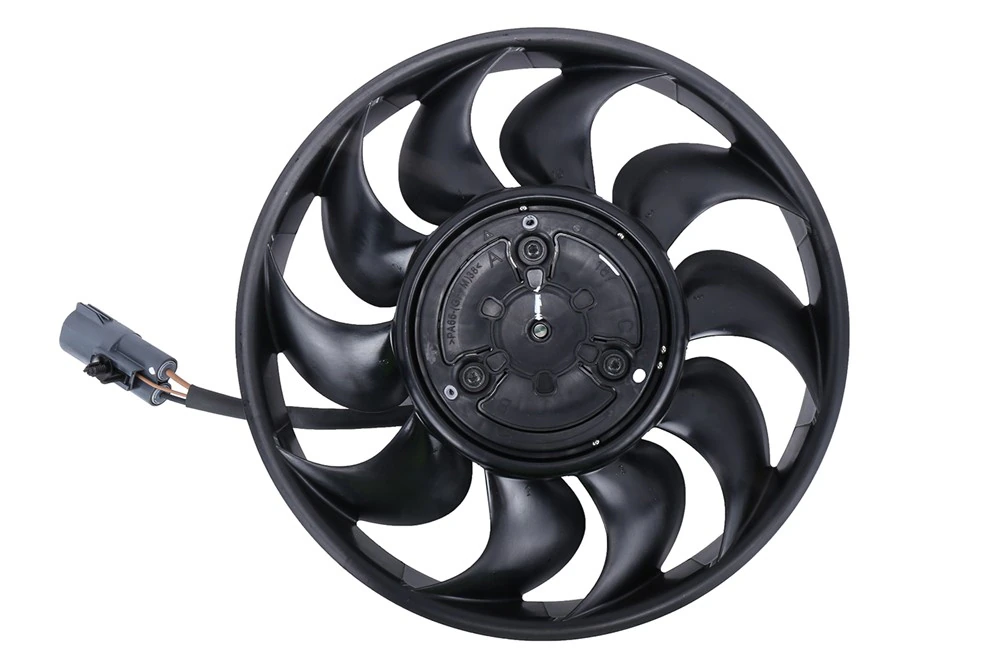
If your car overheats at idle and then cools off once you’re moving, I immediately want to know: Are the radiator fans coming on when the engine gets hot?
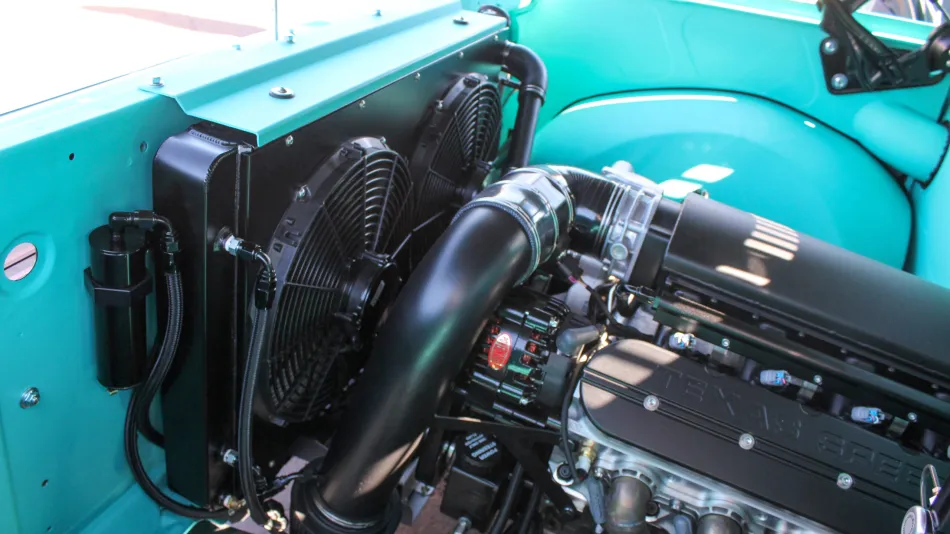
Most modern cars use electric fans controlled by the ECU, coolant temperature sensor inputs, relays, and sometimes a resistor or fan control module. A failure anywhere in that chain can mean the fan never turns on, only runs on low, or cycles incorrectly. At highway speeds, airflow can hide the problem, which is why it shows up first in traffic.
Quick driveway check
With the engine warmed up (and watching the temp gauge closely), pop the hood and look behind the radiator:
- Fan never turns on: likely a relay, fuse, fan motor, wiring issue, fan module, or temperature signal problem.
- Fan turns on but seems slow or noisy: weak motor, failing bearings, damaged blades, or voltage drop in wiring.
- Fan runs only with A/C on: can still indicate a control issue. Also keep in mind that some vehicles do not command the fan until a higher coolant temp when A/C is off. The real question is whether it comes on at the specified temp for your model.
Safety note: Keep hands, hair, and tools away from the fan. It can start without warning.
If you have a scan tool
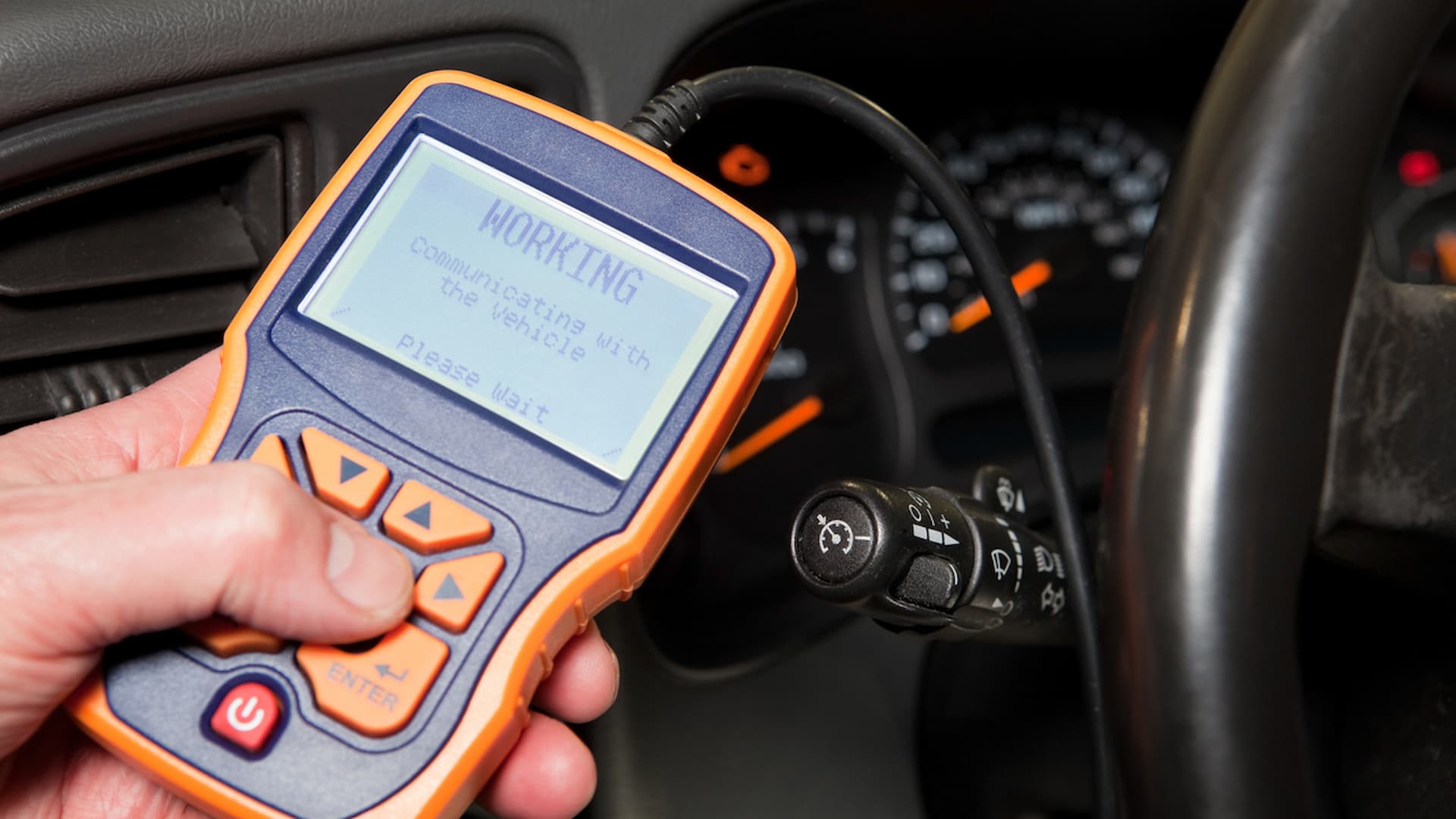
Look at live data for ECT (engine coolant temp) and, if available, fan command or fan duty cycle. If ECT is high but the fan is not commanded on, that points to a sensor reading issue or ECU logic. If the fan is commanded on but not running (or running weak), that points to the fan circuit, module, relay, or motor.
Common fixes
- Replace a blown fuse (but also find out why it blew)
- Replace a faulty fan relay
- Replace the fan motor or full fan assembly
- Repair wiring or corroded connectors
- Replace a failed fan control module (on vehicles that use one)
3) Thermostat sticking
The thermostat regulates when coolant starts flowing from the engine to the radiator. When it sticks closed or opens late, the engine can overheat. You may notice it more at low speed because there is less overall cooling margin.
Signs that point to the thermostat
- Engine warms up normally, then suddenly spikes hot
- Upper radiator hose stays cool longer than expected, even as the gauge climbs
- Cabin heat may be inconsistent
A simple check you can do
With the engine warming up from cold, carefully feel the upper radiator hose (again, keep clear of belts and fans). It should stay relatively cool at first, then get hot fairly quickly when the thermostat opens. If the gauge is climbing but the upper hose is still not getting hot, the thermostat is suspicious.
Important: This is not a perfect test. Some vehicles have different hose routing, and electronically controlled thermostats can behave differently. But it’s a helpful clue.
Fix
Thermostats are typically replaced, not cleaned or “unstuck.” When replacing one, it’s smart to:
- Use the correct temperature rating and correct part for your engine
- Install a new gasket or seal as required
- Refill with the correct coolant and bleed air from the system
4) Water pump and drive belt
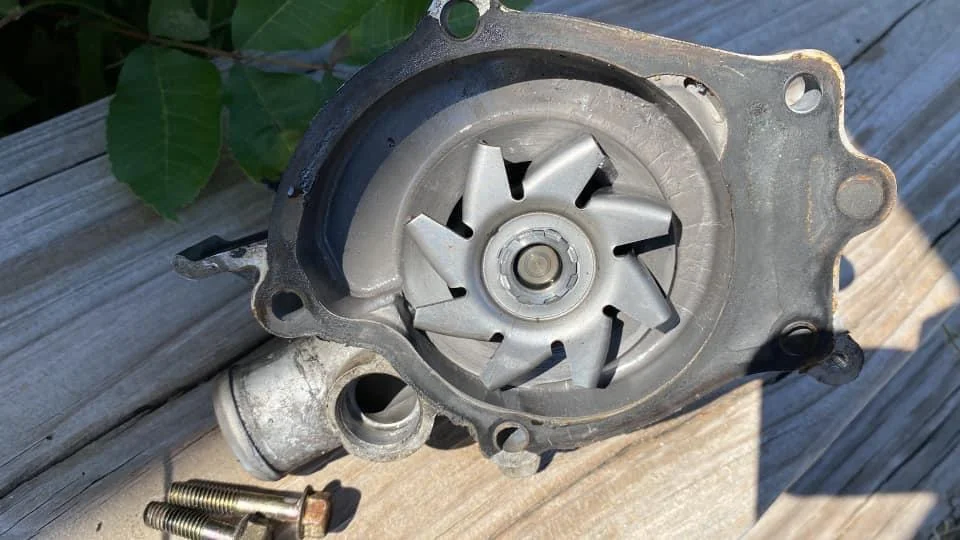
The water pump is the heart of the cooling system. If the impeller is worn, corroded, slipping on the shaft (yes, that happens), or the pump is leaking, you can end up with weak coolant circulation. Weak circulation can show up at idle first.
What you may notice
- Overheats more in traffic than on the highway
- Coolant leak near the pump area, sometimes leaving a crusty trail
- Whining or grinding noise from the pump bearing
- Temperature fluctuations that get worse with A/C on or on hot days
Checks that are realistic for most DIYers
- Look for leaks: Use a flashlight around the water pump and below it. Many pumps have a “weep hole” that drips when the internal seal fails.
- Check belt condition and tension: On belt-driven pumps, a slipping belt can reduce pump speed. A weak belt tensioner can do the same thing, and it can be intermittent.
- Watch for coolant flow: Some vehicles allow you to see flow returning to the radiator or reservoir once the thermostat opens. If there’s little to no movement when it should be circulating, that’s a clue.
5) Airflow blockage
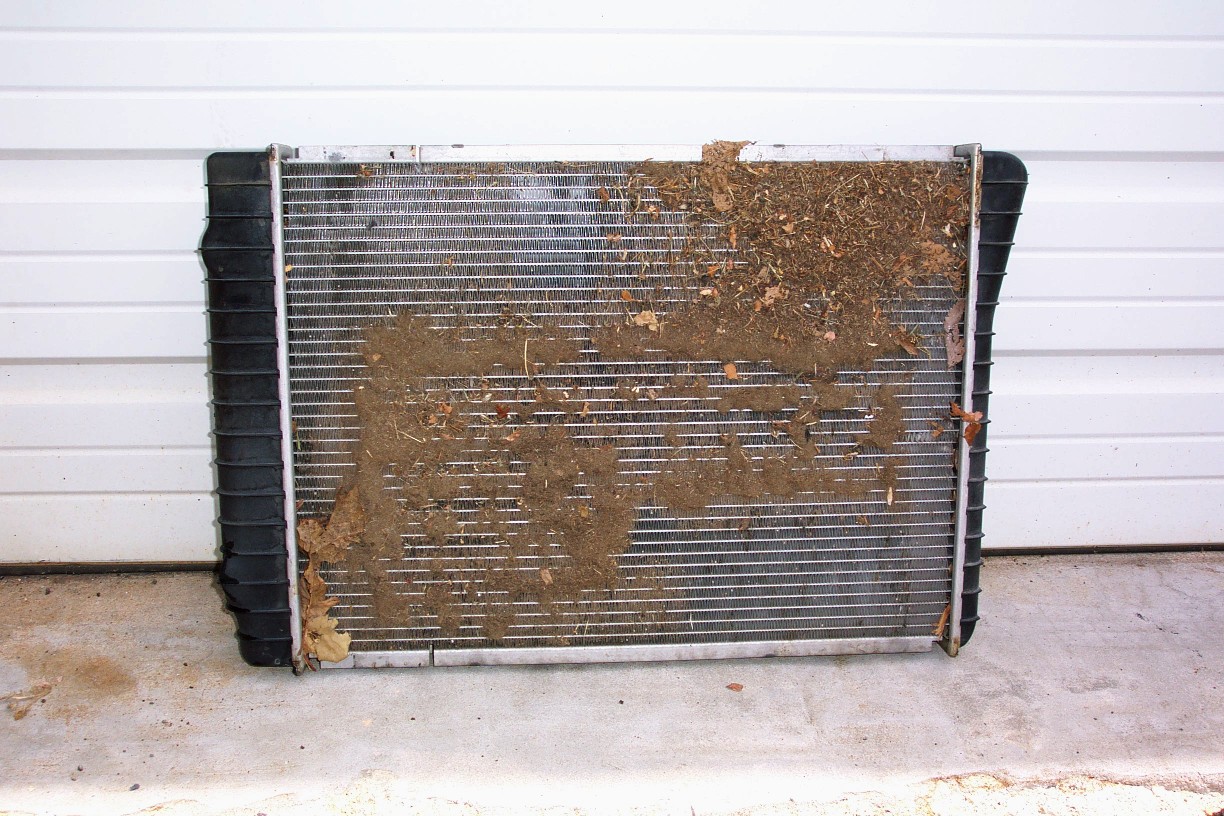
Your radiator can be perfectly fine internally and still struggle if air cannot pass through the fins. At speed, airflow pressure is higher and can partially overcome restrictions. At a stop, the fan has to do all the work, so a blocked radiator face can push temps up.
Common airflow blockers
- Bugs, leaves, and road debris packed into the fins
- Bent or corroded fins that reduce airflow
- An A/C condenser clogged with debris (it sits in front of the radiator on most vehicles)
- Aftermarket lights, winches, or grille blocks that limit airflow
- A missing, broken, or incorrectly installed fan shroud
What to do
- Inspect the radiator and condenser face: Look through the grille with a flashlight.
- Gently clean debris: Use low-pressure water from the engine side outward if possible. Avoid blasting the fins flat.
- Confirm the fan shroud is present and secured: The shroud helps the fan pull air through the whole core, not just the area right in front of the blades.
Other contributors
Radiator cap and pressure
The cooling system is designed to run under pressure. That pressure raises the boiling point of the coolant. A weak radiator cap or a leaking pressure reservoir cap can let coolant boil earlier, especially in stop-and-go conditions.
- Symptom: coolant smell, overflow tank bubbling, repeated coolant loss with no obvious external leak
- Fix: replace the cap with the correct pressure rating
- Best practice: test the cap with a cap tester when possible, and avoid “close enough” caps that do not match the rating
Clogged radiator (internal)
Rust, scale, or stop-leak products can reduce the radiator’s ability to shed heat. This can show up at low speed, but it often shows up under load too.
- Clue: uneven radiator temperatures across the core, or chronic overheating despite a working fan
- Fix: professional flush in some cases, radiator replacement in others
Lean running or misfires
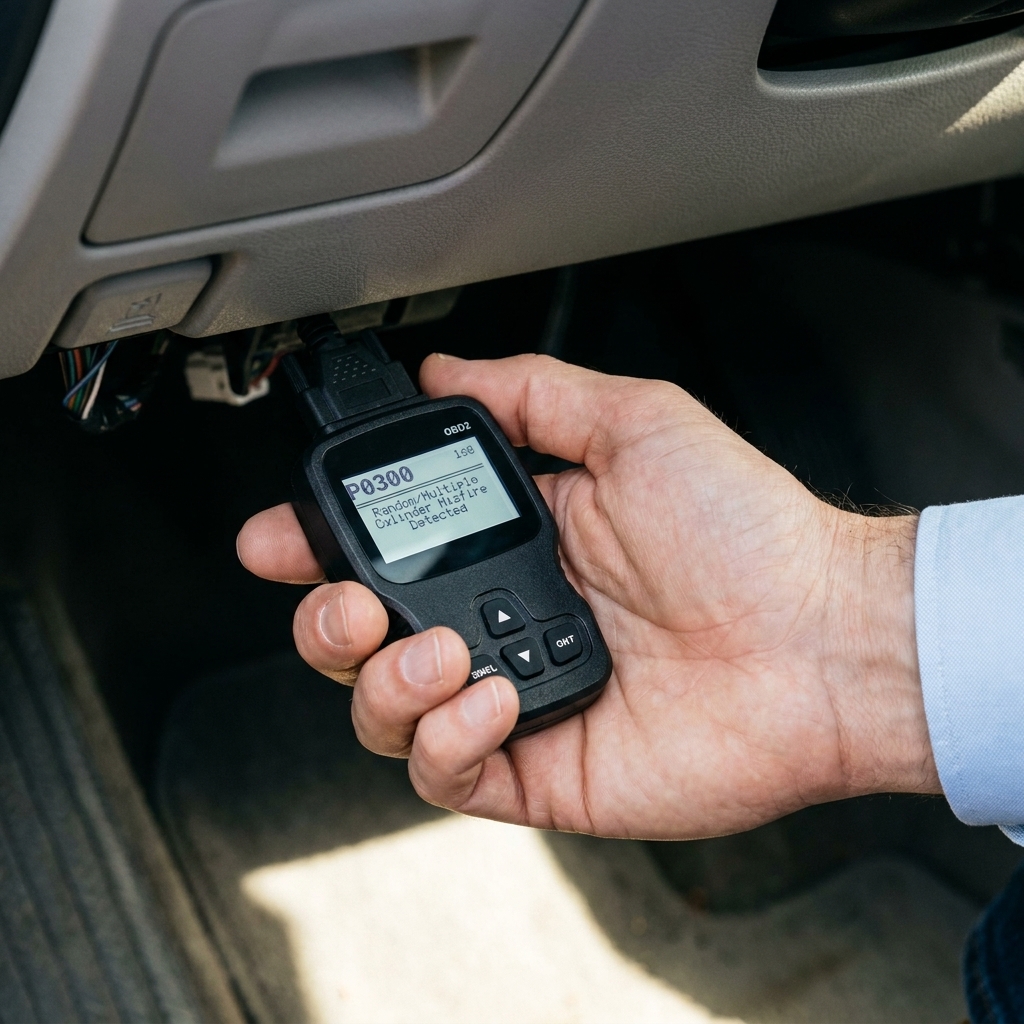
If the engine is running lean or misfiring, it can create excess heat. Usually you’ll also have a check engine light or rough idle.
- Fix: scan codes and address the root cause (vacuum leak, MAF issues, ignition problems)
Internal engine issues (less common, but real)
A head gasket problem or combustion gases leaking into the cooling system can also cause overheating that is worse in traffic. It can show up as persistent overheating, pressure building quickly from cold, or unexplained coolant loss.
- Clues: bubbles in the reservoir with the engine running, coolant pushed out of the overflow, repeated need to top off with no visible leak, sweet exhaust smell, white smoke, or milky oil
- Next step: cooling system pressure test and a block test for combustion gases
Simple diagnostic flow
- Confirm coolant level (cold engine). Top up with the correct coolant mix if low, then watch for a leak.
- Make sure it is bled properly. If you recently did cooling system work, verify the proper bleed procedure for your vehicle.
- Warm the engine and observe the fans. Do they come on as temp rises? Do they sound strong?
- If you can, verify fan-on behavior. A scan tool showing ECT and fan command is ideal. Fan-on temps vary by model.
- Check thermostat clues. Does the upper radiator hose heat up as expected as the engine reaches operating temp?
- Inspect for airflow blockage. Check the radiator and condenser face, and the fan shroud.
- Look for pump and belt clues. Leaks at the pump, belt slip, or a weak tensioner.
If you get stuck after the fan checks, that’s often where a basic OBD-II scan tool and a wiring diagram become your best friends. Modern fan control can be more complicated than it looks.
When it’s an emergency
Stop driving and get it towed if:
- The temp gauge is pegged hot or the warning light is flashing
- You see steam pouring out from under the hood
- The engine is running rough after overheating
- You find milky oil on the dipstick or under the oil cap
- The reservoir is bubbling hard or pushing coolant out repeatedly
One overheating episode can be survivable. Repeated overheating is how engines get expensive fast.
FAQ
Why does my car overheat only when stopped?
Because at a stop there is little airflow through the radiator. If the cooling fan is not doing its job, or airflow is blocked, temperature rises at idle but drops once you’re moving and air is forced through the radiator.
Can low coolant cause overheating only in traffic?
Yes. Low coolant and trapped air can reduce heat transfer and circulation. The symptom can show up first at low speed, especially on hot days.
If the fan runs, does that rule out fan problems?
Not necessarily. A fan can run but still be weak, run at the wrong speed, or come on too late. Fan relays, resistors, modules, and wiring can cause partial failures that still allow some operation.
Is it safe to drive if it overheats only in traffic?
I would not. “Only in traffic” can still overheat enough to warp components, especially if you get stuck in a long backup. Fix the cause before it turns into a head gasket job.
My rule of thumb
Overheating at idle is usually an airflow or fan control problem, but you always start with coolant level, correct coolant mix, and leak checks because they are easy, cheap, and they can mimic everything else. If you want, tell me your year, make, model, engine size, and whether the fans come on with the A/C. I can help you narrow it down to the most likely culprit.