If you have ever had the check engine light pop on at the worst possible time, you are not alone. The good news is that most check engine light problems fall into a handful of repeat offenders, and an inexpensive OBD2 scanner can point you in the right direction in minutes.
In this guide, I will walk you through how to pull codes, what the data actually means, and how to troubleshoot 10 very common OBD2 codes in a way that is beginner-friendly and safe. Think of it like having a patient shop tech in the passenger seat, minus the hourly rate.
Before you scan: what the light means
Your car monitors engine and emissions performance through sensors and modules. When something is out of range for long enough, it stores a diagnostic trouble code (DTC) and may turn on the check engine light.
- Solid check engine light: Often OK to drive short distances if the car is running normally, but diagnose soon. Keep an eye on the temperature gauge, oil pressure warning light, and any new noises or smells. Avoid hard driving until you know what is going on.
- Flashing check engine light: Stop driving if you can do so safely. This often indicates an active misfire that can damage the catalytic converter quickly.
Pro tip: A code tells you which system saw a problem, not always which part is bad. The goal is to confirm the cause before you buy anything.
How to scan codes
You do not need a fancy shop scan tool to get started. A basic handheld scanner or a Bluetooth dongle with a reputable app is enough for common codes.
Step-by-step
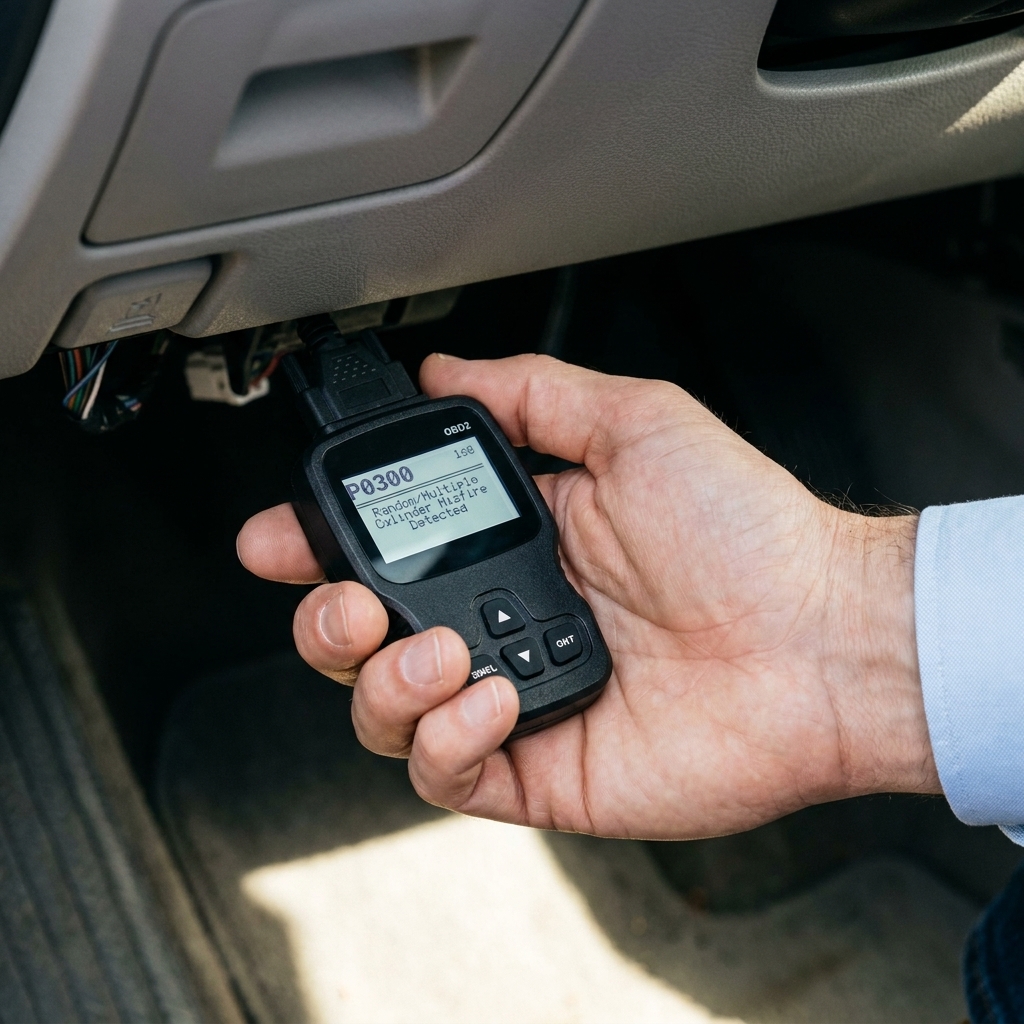
- Find the OBD2 port: Usually under the dash near the steering column, sometimes behind a small cover.
- Key on, engine off: Turn the ignition to ON (or press the start button without your foot on the brake in many cars).
- Read codes: Select “Read Codes” or “Diagnostics.” Write down every code.
- Save freeze-frame data: If your tool shows it, capture freeze-frame. It is a snapshot of conditions when the fault set (RPM, coolant temp, speed, fuel trims).
- Check readiness monitors: If you are near an emissions test, this matters. Clearing codes resets monitors to “not ready.”
Stored vs pending vs permanent
- Stored (confirmed) codes: The fault happened enough times that the computer turned it into an official code.
- Pending codes: The computer saw a problem, but it has not happened enough times to confirm it yet. Pending codes are great early clues.
- Permanent codes: On many newer cars, these do not clear just because you cleared codes or disconnected the battery. They clear only after the system passes self-tests during driving.
Quick decoder: what the code means
P= Powertrain (engine and transmission). Most check engine light codes are P-codes.B= Body,C= Chassis,U= Network/communication.- The first digit:
0= generic (common across brands),1= manufacturer-specific.
What are fuel trims?
Fuel trims are how much the computer is adding or subtracting fuel to hit the target air-fuel mixture. Big positive numbers usually mean it is adding fuel (often a lean condition). Big negative numbers usually mean it is taking fuel away (often a rich condition).

Should you clear codes right away?
Not yet. Clearing codes can erase helpful clues and reset readiness monitors. Scan first, record everything, and do basic checks. Clear codes only after you have made a repair or you are intentionally verifying whether a code returns.
10 common OBD2 codes and fixes
Below are codes that are commonly encountered in the real world. For each one, I will give you what it means, the most likely causes, and the fastest way to confirm the fix.
P0420: Catalyst System Efficiency Below Threshold (Bank 1)
What it means: The catalytic converter on bank 1 is not cleaning up emissions the way the computer expects based on oxygen sensor signals.
Common causes:
- Worn catalytic converter
- Exhaust leak upstream of the catalyst (or near the sensor bungs)
- Lazy or failing upstream or downstream oxygen sensor
- Engine misfire or rich running condition that damaged the catalyst
- Aftermarket exhaust changes or calibration quirks (less common, but real)
Beginner checks:
- Look for exhaust leaks: listen for ticking near the manifold, look for black soot marks at joints.
- Check for misfire codes (P0300 to P030x) or fuel trim codes first. Fix those before blaming a cat.
- If you have live data: compare the upstream oxygen sensor (should switch) to the downstream oxygen sensor (should be steadier). If downstream mirrors upstream, the cat may be weak.
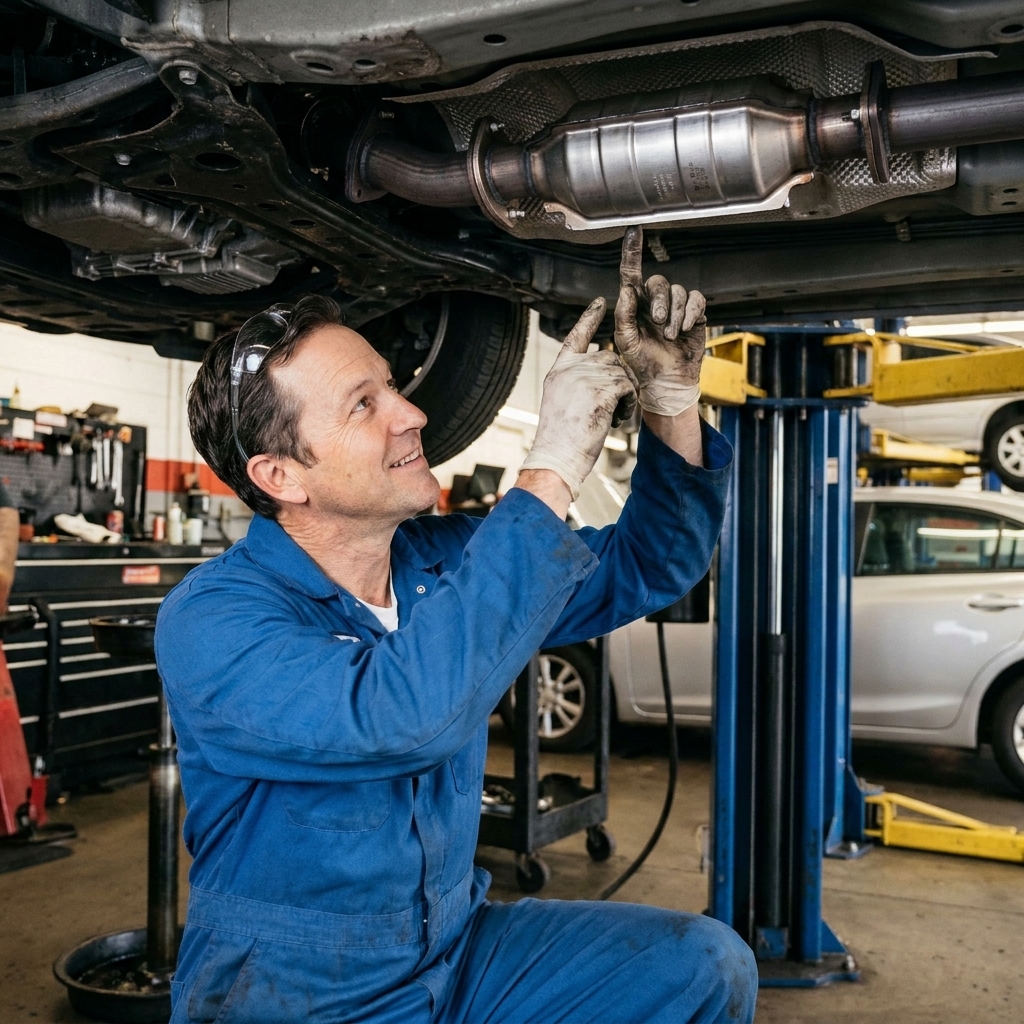
Likely fix: Repair exhaust leaks or underlying engine issues first. If P0420 returns with no other problems, the catalytic converter may be worn out. Use quality parts. Cheap cats often trigger repeat codes.
P0171: System Too Lean (Bank 1)
What it means: The engine is running with too much air or not enough fuel on bank 1.
Common causes:
- Unmetered air after the MAF (vacuum leak, intake boot crack, PCV hose, brake booster hose)
- Dirty or failing MAF sensor
- Weak fuel pump or restricted fuel supply
- Exhaust leak upstream of the oxygen sensor
Beginner checks:
- Inspect intake hoses for cracks, especially after the air filter box.
- Check PCV lines for splits and loose connections.
- Clean the MAF sensor with MAF-specific cleaner only. Let it dry fully before restarting.
Likely fix: Repair the vacuum leak or clean or replace the MAF. If fuel trims are high under load, consider fuel pressure testing at a shop.
P0172: System Too Rich (Bank 1)
What it means: Too much fuel (or not enough air) on bank 1.
Common causes:
- Dirty or faulty MAF sensor
- Restricted air intake (clogged air filter, collapsed intake duct)
- Leaking fuel injector
- High fuel pressure (regulator issue, including a leaking regulator diaphragm on older return-style systems)
- Stuck-open purge valve feeding fuel vapors
- Engine coolant temp sensor reading cold (less common, but it happens)
Beginner checks:
- Look for black smoke, fuel smell, or poor MPG clues.
- Check the air filter and intake tract for blockage.
- If you also have EVAP codes, suspect the purge valve.
- MAF cleaning is worth trying before buying parts.
Likely fix: MAF cleaning or replacement, purge valve replacement, air intake service, or injector and fuel pressure diagnosis if the rich condition is severe.
P0300: Random/Multiple Cylinder Misfire Detected
What it means: The engine is misfiring on more than one cylinder, or the pattern is inconsistent.
Common causes:
- Worn spark plugs
- Failing ignition coils
- Vacuum leak
- Fuel delivery problem
- Low compression (less common, but important)
Beginner checks:
- If the check engine light is flashing, reduce driving immediately.
- Check service history: if plugs are overdue, start there.
- Inspect coil connectors for oil intrusion or broken locks.
Likely fix: Replace spark plugs (and boots if applicable), then address coils or fueling if misfire persists.
P0301 to P0308: Cylinder Misfire
What it means: Misfire detected on a specific cylinder (example: P0302 is cylinder 2).
Common causes: Same as P0300, but now you have a target.
Beginner-friendly swap test:
- Move the ignition coil from the misfiring cylinder to a different cylinder.
- Clear codes and drive.
- If the misfire follows the coil (example: P0302 becomes P0304), the coil is bad.
Likely fix: Replace the failed coil and consider replacing spark plugs if they are worn. If the misfire does not move, the issue may be plug, injector, wiring, vacuum leak near that runner, or compression.
P0455: EVAP System Leak Detected (Large Leak)
What it means: The evaporative emissions system cannot hold pressure. A “large leak” is often something simple, but not always.
Common causes:
- Loose, missing, or damaged gas cap (if equipped)
- Capless filler neck seal or flapper not sealing (capless systems)
- Cracked EVAP hose
- Faulty purge or vent valve
Beginner checks:
- If you have a gas cap: tighten it until it clicks and inspect the seal for cracks.
- If you have a capless system: inspect the filler neck for debris and check that the flapper moves freely and seals. Some vehicles use a capless adapter tool for testing.
- Look under the rear of the car for broken vapor lines near the charcoal canister.
Likely fix: Replace the gas cap if the seal is bad. If it returns, a smoke test at a shop finds EVAP leaks fast.
P0442: EVAP System Leak Detected (Small Leak)
What it means: Same system as P0455, but the leak is smaller, so it can be trickier to locate.
Common causes:
- Gas cap seal starting to fail (if equipped)
- Small cracks in EVAP hoses
- Loose hose clamps or aging O-rings at connections
Beginner checks:
- Start with the cap or capless seal. It is boring, but it is common.
- Inspect hoses at the purge valve in the engine bay for brittleness.
Likely fix: Cap or small line repair. Smoke test if visual checks do not turn anything up.
P0401: EGR Flow Insufficient Detected
What it means: The EGR system is not flowing enough exhaust gas back into the intake under certain conditions.
Common causes:
- Carbon buildup in EGR passages
- Faulty EGR valve
- Failed DPFE sensor (common on some Ford applications)
- Vacuum control issue on older systems
Beginner checks:
- Check vacuum lines (if equipped) for splits.
- If accessible, inspect the EGR valve area for heavy carbon buildup.
Likely fix: Cleaning EGR passages and replacing a failing EGR valve or related sensor. If you are not comfortable removing the valve, this is a reasonable shop job.
P0128: Coolant Thermostat (Coolant Temperature Below Regulating Temperature)
What it means: The engine is not warming up as quickly as expected. Most of the time, the thermostat is stuck open.
Common causes:
- Stuck-open thermostat
- Low coolant level (air pockets can cause odd temp readings)
- Coolant temp sensor issue (less common)
Beginner checks:
- Check coolant level only when the engine is cold.
- Watch the temperature gauge. If it takes forever to reach normal, suspect thermostat.
Likely fix: Thermostat replacement and proper coolant bleed procedure. Do not ignore it. Running cold hurts MPG and can increase fuel dilution and condensation, which can contribute to deposits and sludge risk over time.
P0135: O2 Sensor Heater Circuit Malfunction (Bank 1 Sensor 1)
What it means: The upstream oxygen sensor heater is not working correctly. The heater helps the sensor reach operating temperature faster.
Common causes:
- Failed oxygen sensor (heater element open)
- Blown fuse for the heater circuit
- Damaged wiring near the exhaust
Beginner checks:
- Inspect the sensor harness for melted insulation or rubbing.
- Check for related fuse issues in the manual.
Likely fix: Repair wiring or replace the sensor with a quality brand. Clear the code and verify it does not return.

Basic flow that saves money
If you want to avoid the most common beginner trap (throwing parts at a code), follow this order:
- Scan and document: stored codes, pending codes, permanent codes (if shown), freeze-frame.
- Look for companions: misfires and fuel trim codes can cause catalyst codes, for example.
- Do free checks first: cap or capless seal, intake hose cracks, loose electrical connectors, vacuum lines.
- Do maintenance items next: overdue spark plugs and a filthy air filter create a lot of chaos.
- Only then buy parts: and verify the fix with a drive cycle.
After the repair: clear codes and drive
Once you have fixed the likely cause:
- Clear the code with your scanner.
- Drive normally for a few days. Many issues will re-set quickly if the problem remains.
- If you need emissions readiness: expect several trips, a cold start, and a mix of highway and city driving before monitors flip to “ready.” Drive cycles vary by manufacturer, so do not panic if one car takes longer than another.
Tip: If the same code returns immediately, stop and re-check the basics. A pinched hose, a wrong sensor connector, or a small exhaust leak can undo an otherwise solid repair.
DIY safety notes
- Exhaust parts and oxygen sensors get extremely hot. Let the car cool before touching anything near the manifold or catalytic converter.
- If you go under the vehicle, use jack stands on solid ground. Never trust a jack by itself.
- Keep loose clothing and hands away from belts and fans if the engine is running for checks.
When to call a pro
I love DIY, but I also love not wasting weekends. Consider a shop diagnosis if:
- The check engine light is flashing.
- You have multiple codes across different systems and the car runs poorly.
- You suspect an EVAP leak but cannot find it. A smoke test is the right tool.
- Misfires persist after plugs and coil swap testing.
- You suspect low compression or internal engine issues.
A good diagnosis is not “we scanned it.” A good diagnosis is “we tested it.” If a shop can explain what they measured and why, you are in the right place.
Quick FAQ
Can I drive with the check engine light on?
If it is solid and the car runs normally, you can often drive short distances, but diagnose soon and avoid hard driving. If it is flashing, stop driving if possible and address the misfire immediately.
Will disconnecting the battery clear the code?
On some vehicles it can, but it also resets readiness monitors and can create drivability issues while the car re-learns idle and fuel trims. Use a scanner instead, and only after you record the data.
Do I need an expensive scanner?
Not for the common codes. A basic scanner that reads codes and shows live data is plenty for most beginners. If you get deeper into diagnostics, live data and Mode 06 support become more valuable.
Why does my code come back after I replaced the part?
Most often: the original diagnosis was incomplete (the part was a symptom, not the cause), there is a wiring or air leak issue, or a cheap replacement part is out of spec. Re-check basics and confirm with live data where possible.
Final shop advice
An OBD2 code is a starting point, not a verdict. If you scan, take notes, and do a couple of smart tests before you buy parts, you will solve most check engine lights faster and cheaper than you think.
If you want, tell me the code(s), your vehicle year, make, model, and any symptoms. I will help you narrow it down like we are standing at the tool cart together.