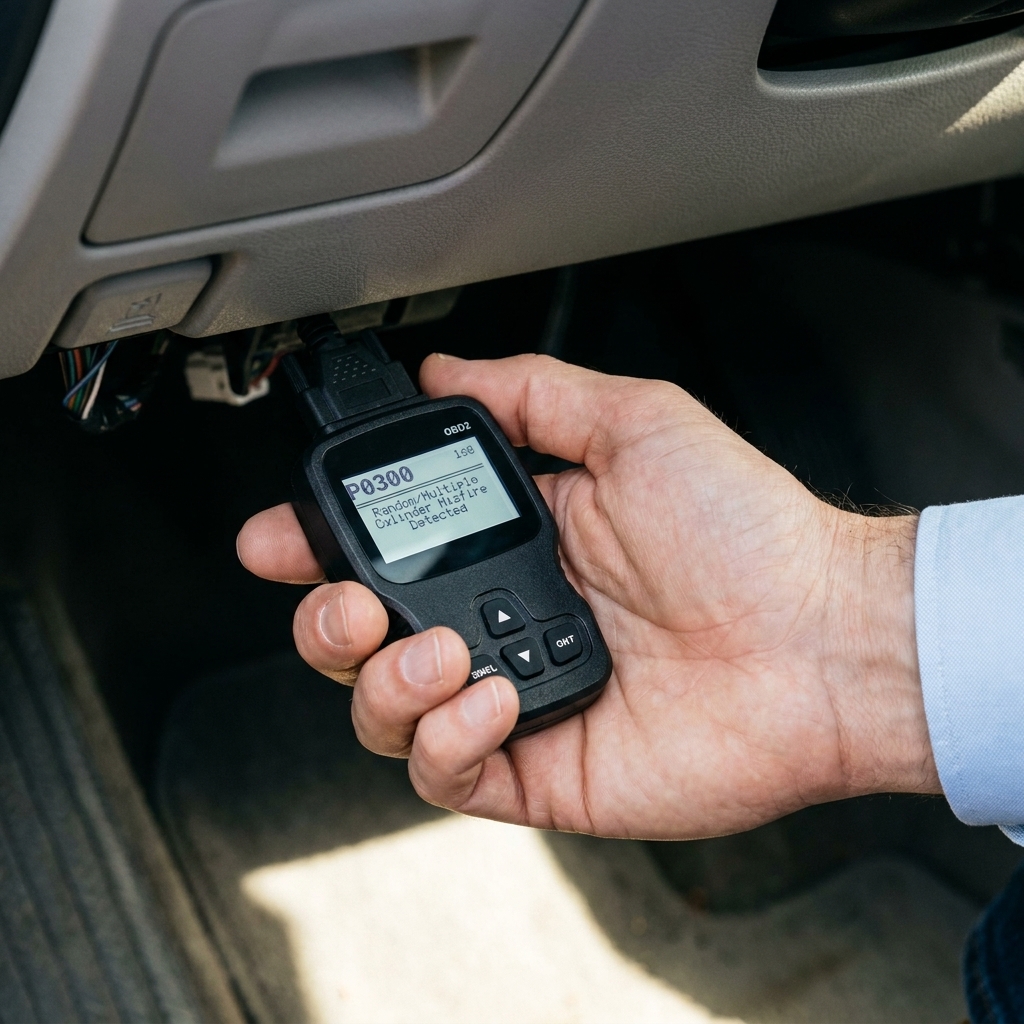
If your check engine light just came on, take a breath. An OBD2 code is a clue, not a verdict. The code tells you what system saw something out of range. Your job is to confirm the simple stuff first, then decide whether you can drive it, monitor it, or park it and call for help.
This guide covers the most common generic OBD2 codes (the ones that look like P0xxx). I will explain what they usually mean, the first checks you can do without fancy tools, and the “safe to drive or not” call I would make in the bay.
Quick safety note: A solid check engine light is often non-urgent, but it is not a free pass. If the car is overheating, stalling, shaking hard, or you have a strong fuel smell, treat it as urgent even if the light is not flashing.
Before you chase a code: 5 smart first steps
1) Note how the light behaves
- Solid check engine light: Often non-emergency. You can usually drive cautiously while you diagnose, as long as the car feels normal and there are no overheating or safety symptoms.
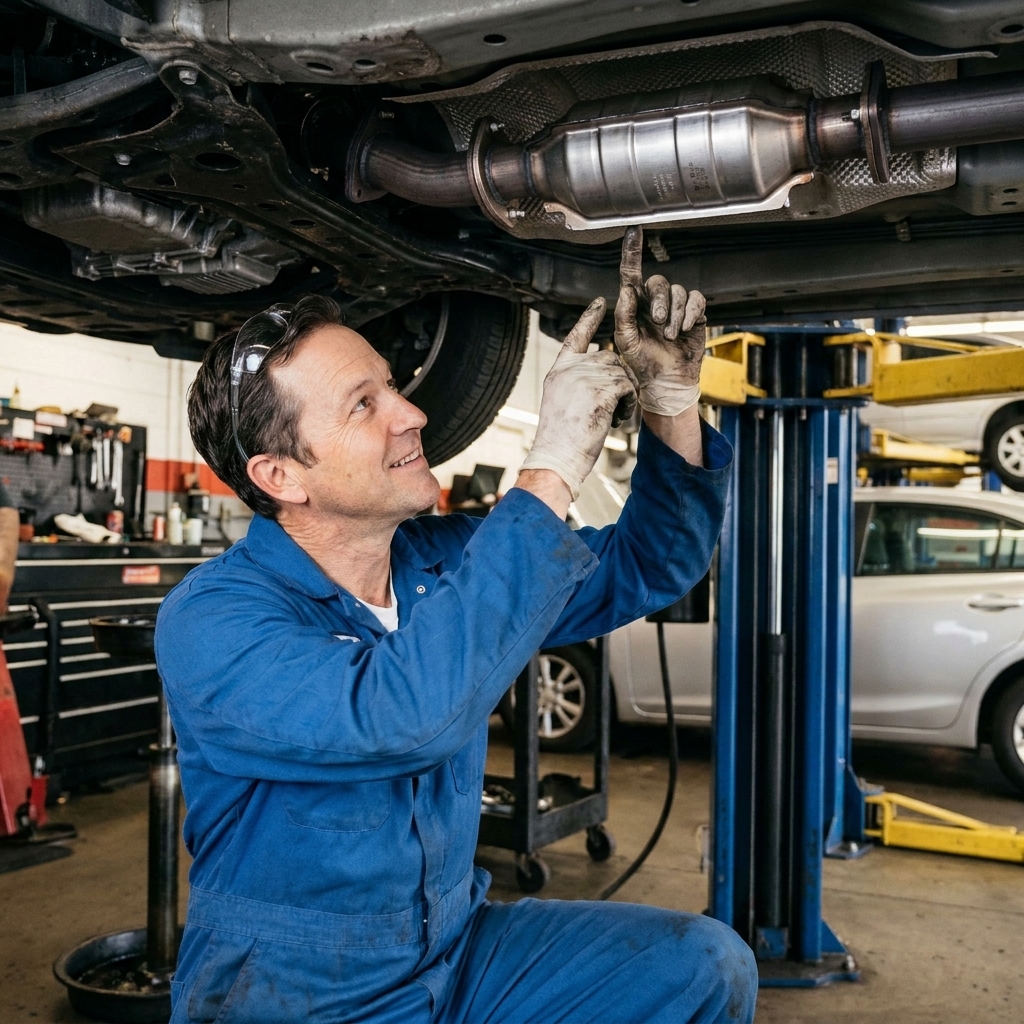
- Flashing check engine light: Treat as urgent. A flashing light commonly indicates an active misfire that can damage the catalytic converter quickly. Reduce load, avoid hard acceleration, and if it continues, stop driving and get it towed.
2) Check for obvious drivability symptoms
Rough idle, shaking, lack of power, stalling, fuel smell, or overheating changes the urgency. Codes plus symptoms matter more than the code alone.
3) Check the gas cap and fuel level
Loose or damaged caps cause a shocking number of EVAP leaks. Tighten until it clicks. If the seal is cracked, replace the cap with an OEM cap or a high-quality aftermarket cap from a reputable brand.
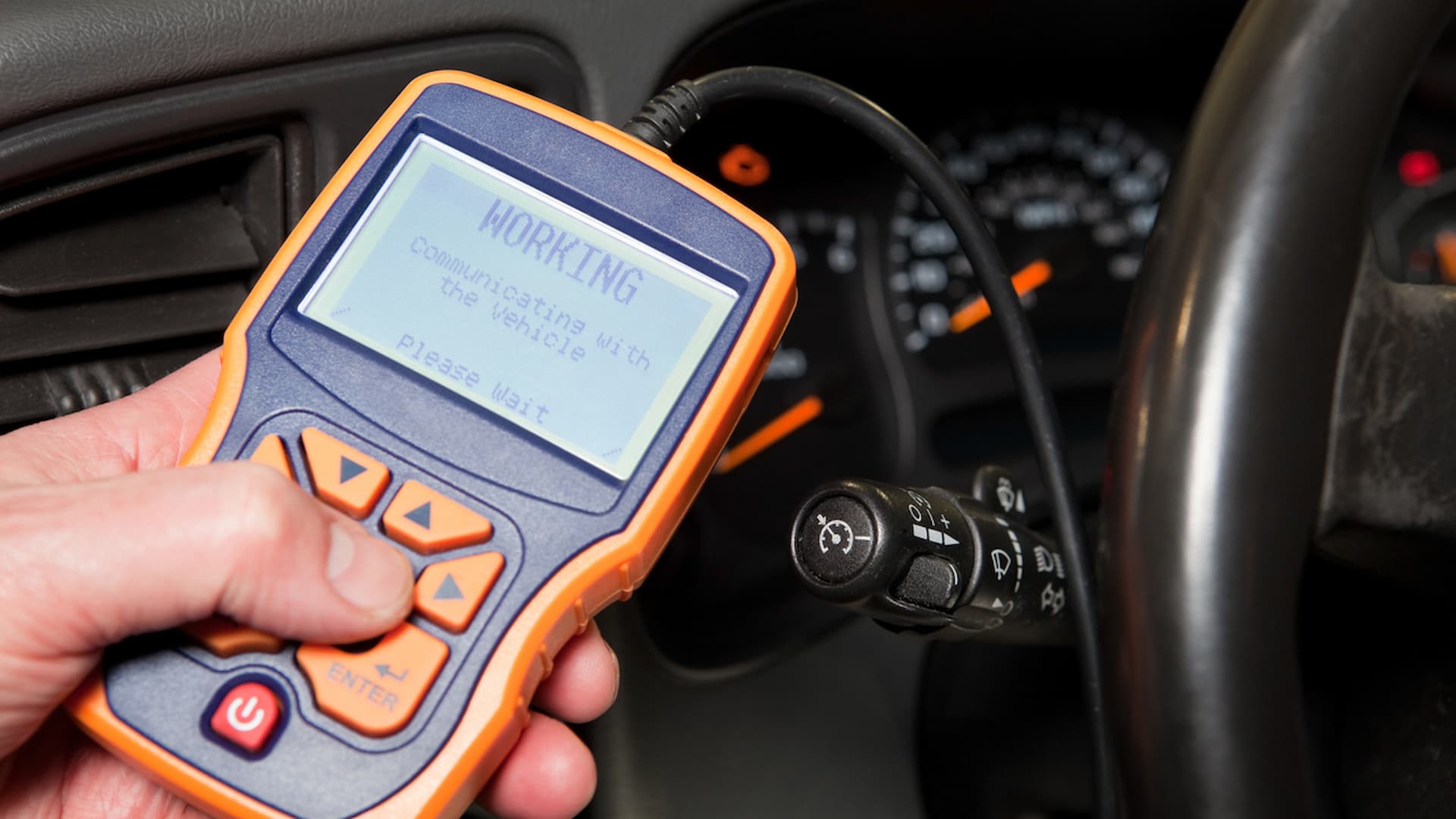
4) Pull codes and freeze frame data
If you have a basic scan tool or a Bluetooth dongle, read:
- Stored codes (what set the light)
- Pending codes (problems the car is seeing but not confirmed yet)
- Freeze frame (engine load, RPM, coolant temp, fuel trims when it happened)
Freeze frame is gold. Example: if the freeze frame shows the code set at warm idle (say 750 RPM, low load) that points you toward vacuum leaks. If it set at highway speed (2,500 RPM, higher load) that points you more toward fuel delivery or airflow measurement.
5) Do not clear codes first
Clearing wipes the evidence. Diagnose first. Clear only after repairs, or if you are intentionally checking what comes back.
Safe to drive vs urgent: a quick decision guide
Usually OK to drive (short-term) if
- Light is solid, not flashing
- No overheating
- No severe shaking or misfire
- No strong fuel smell
- Brakes and steering feel normal
Park it or tow it if
- Check engine light is flashing
- Engine is misfiring badly or stalling
- Coolant temp is rising or you see steam
- Oil pressure warning light is on (not the same as check engine)
- You hear loud mechanical knocking
Mechanic tip: A flashing CEL and a steady CEL are not the same problem. Flashing is the car begging you to stop cooking the catalytic converter.
Most common generic OBD2 codes and first checks
Below are the heavy hitters I see most often. For each one, I will give you what it usually means, what to check first, and when it is time to stop DIY and go to a shop.
P0420 and P0430: Catalyst Efficiency
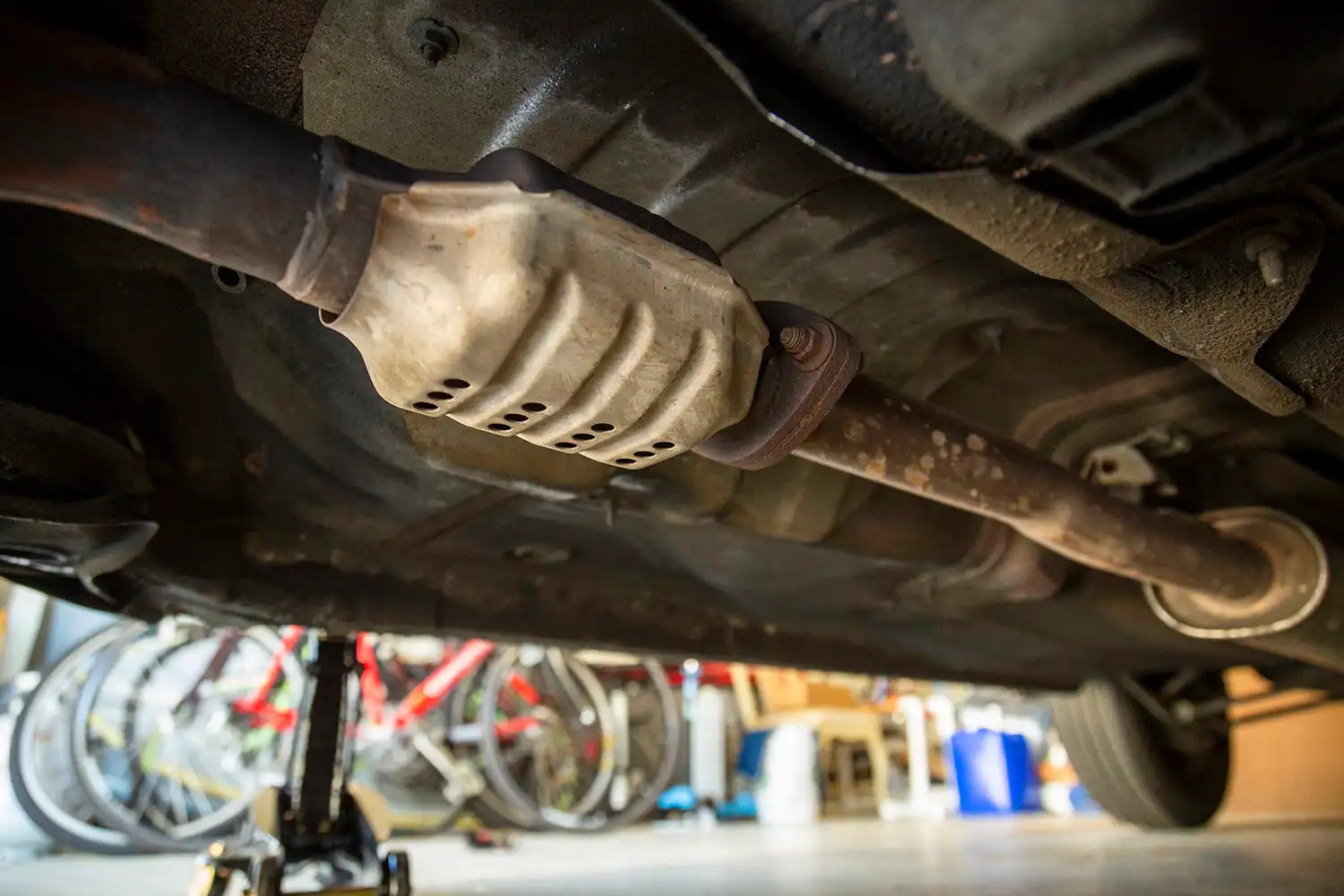
What it usually means: The catalytic converter is not cleaning up exhaust as well as the computer expects. This code is often triggered by an aging converter, but it can also be caused by upstream issues like misfires, exhaust leaks, or oxygen sensor problems.
First checks:
- Look for other codes first, especially misfire codes (
P0300toP0306) or fuel trim codes (P0171/P0174). Fix those before condemning a converter. - Inspect for exhaust leaks near the manifold and before the catalytic converter (soot marks, ticking noise on cold start). Even a small leak can skew O2 readings.
- If you can view live data, compare upstream and downstream sensor behavior. On many older cars with narrowband O2 sensors, a downstream sensor that closely mirrors the upstream sensor can be a clue, but it is not a verdict.
- Nuance that matters: many newer vehicles use wideband A/F sensors upstream. Their readings do not behave like classic 0.1 to 0.9V narrowband O2 sensors. Some apps still show a “voltage” style display that can be misleading. If the data looks confusing, that is normal, and it is a good reason to let a shop graph the sensors properly.
Safe to drive? Usually OK. If the car runs smooth and the light is solid, you can typically drive. But do not ignore it for months. A true catalyst failure can eventually lead to poor performance or failed emissions testing.
P0171 and P0174: System Too Lean
What it usually means: The engine is running with too much air or not enough fuel. The most common causes are vacuum leaks, unmetered air after the MAF sensor, dirty MAF sensor, weak fuel delivery, or an exhaust leak ahead of the upstream O2 or A/F sensor.
First checks:
- Pop the hood and inspect intake ducting between the air filter box and throttle body for cracks or loose clamps.
- Listen for a hissing vacuum leak. Check obvious vacuum lines and PCV hoses.
- If you have a MAF sensor and it is accessible, inspect the connector and wiring. Cleaning the MAF with proper MAF cleaner can help if it is contaminated, but do not touch the sensing element.
- If the lean codes show up mostly at idle, suspect a vacuum leak. If they show up under load, suspect fuel delivery (filter, pump, pressure regulator) or airflow measurement.
Safe to drive? Sometimes OK. Mild lean can be drivable, but a significant lean condition can cause misfires and catalyst damage. If it surges, stumbles, or misfires, move this into the “soon” category.
P0300 to P0306: Misfire
What it usually means: One or more cylinders are not burning the air-fuel mixture consistently. Causes include worn spark plugs, failing ignition coils, vacuum leaks, low fuel pressure, injector problems, or internal engine issues.
First checks:
- If your check engine light is flashing, reduce driving immediately.
- Check maintenance history. If spark plugs are overdue, start there.
- Look for obvious coil or plug wire damage, water intrusion, or oil in spark plug wells.
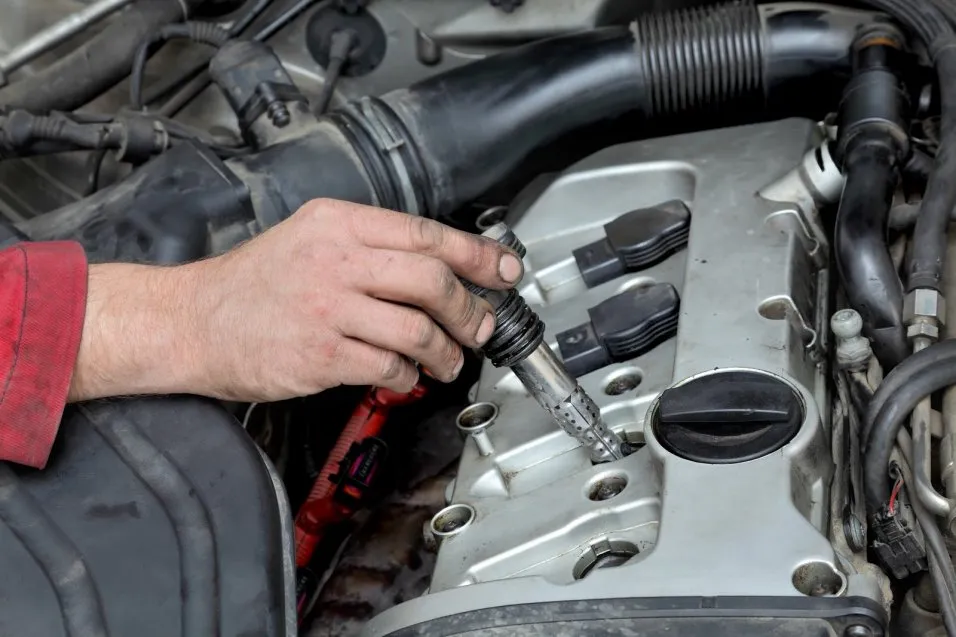
- If you have a cylinder-specific code (
P0302is cylinder 2), a common DIY step is to swap the ignition coil with another cylinder and see if the misfire follows. If it does, the coil is likely the culprit.
Safe to drive? Not OK if it is flashing or running rough. Even a steady-light misfire should be handled quickly to avoid catalytic converter damage.
P0440, P0442, P0455, P0456: EVAP Leak
What it usually means: The evaporative emissions system is not holding pressure. Think of it as a fuel vapor containment and recycling system. Leaks range from “loose gas cap” to cracked hoses or a failing purge or vent valve.
First checks:
- Tighten the gas cap until it clicks. Inspect the rubber seal for cracks or flattening.
- Look under the rear of the vehicle for obviously disconnected EVAP lines near the fuel tank area (easy to damage on rough roads or after repairs).
- Notice fueling symptoms: if the pump constantly clicks off while refueling, the vent system may be acting up.
Safe to drive? Usually OK. EVAP leaks typically will not strand you. That said, if you have a strong raw fuel smell or see fuel leaking, stop driving and address it immediately.
P0128: Coolant Temp Below Normal
What it usually means: The engine is not warming up as quickly as expected. Most commonly the thermostat is stuck open. In some cases a coolant temp sensor issue or low coolant can contribute.
First checks:
- Check coolant level only when the engine is cold. Low coolant can cause weird temperature readings.
- Watch the temperature gauge. If it takes forever to reach normal, or drops while cruising, that points toward a thermostat stuck open.
- Pay attention to heater performance. Weak heat in cold weather often tags along.
Safe to drive? Usually OK. The practical downsides are worse fuel economy, higher emissions, and poor heater output. Long-term, running too cool can contribute to deposits and inefficient operation. If the engine is overheating, that is a different situation entirely.
P0113 and P0102: IAT or MAF Circuit
What it usually means: The computer is seeing an implausible signal from the mass air flow (MAF) sensor or intake air temperature (IAT) sensor. Often it is a wiring or connector issue, a sensor problem, or an air intake problem after service. On many vehicles, the IAT is integrated into the MAF, so one issue can set either code.
First checks:
- Make sure the air filter box is closed properly and the intake tube is clamped down.
- Inspect the sensor connector: bent pins, corrosion, broken locking tab.
- If the code appeared right after an air filter replacement, recheck that nothing was left unplugged.
Safe to drive? Often OK. Expect reduced power and worse fuel economy. If it goes into limp mode or runs extremely rough, stop and diagnose.
P0507 and P0505: Idle Control
What it usually means: The engine is idling too high or the idle control strategy cannot hit its target. Common causes include vacuum leaks, dirty throttle body, or issues after a battery disconnect where the throttle needs to relearn.
First checks:
- Listen for vacuum leaks and inspect intake hoses.
- If your vehicle has an electronic throttle body, a gentle cleaning around the throttle plate can help, but use throttle body cleaner and follow vehicle-specific precautions.
- If the battery was recently replaced or disconnected, look up an idle relearn procedure for your exact make and model.
Safe to drive? Usually OK. A very high idle can make the car hard to control at stops and can cause harsh shifting in automatics. If it is racing badly, get it checked soon.
P0130 to P0167: Oxygen Sensor Circuit
What it usually means: An oxygen sensor signal is missing, stuck, slow, or out of expected range. Sometimes it is the sensor. Sometimes it is wiring damage, exhaust leaks, or mixture problems upstream.
First checks:
- Inspect wiring near the exhaust. Melted harnesses happen.
- Check for exhaust leaks, especially ahead of the sensor that is complaining.
- Do not replace O2 sensors blindly if you also have lean, rich, or misfire codes. Fix root causes first.
Safe to drive? Often OK short-term. Mixture control can be affected depending on which sensor and fault type. Prolonged driving can reduce fuel economy and stress the catalytic converter.
P0200 to P0208: Injector Circuit
What it usually means: The computer is detecting an electrical problem in an injector circuit (wiring, connector, injector coil, or driver issue).
First checks:
- Listen for a rough idle and watch for misfire codes pairing with it.
- Inspect injector connectors for broken clips, corrosion, or pulled wires.
- If you smell raw fuel or see fuel leaks, do not run the engine. Fix leaks immediately.
Safe to drive? Sometimes OK, but be cautious. Injector issues can cause misfires and catalyst damage. If it runs rough or the light flashes, stop driving.
P0401 and P0402: EGR Flow
What it usually means: On vehicles equipped with EGR, the computer is not seeing the expected exhaust gas recirculation flow (too little for P0401, too much for P0402). Carbon buildup is common, and so are vacuum or solenoid issues on older setups.
First checks:
- Look for cracked vacuum lines to the EGR valve or EGR control solenoid (if equipped).
- If the engine pings, knocks, or surges at cruise, note it. Those symptoms can go with EGR issues.
- Carbon-clogged passages often need cleaning. That is doable on some engines, but on others it is a tight, frustrating job.
Safe to drive? Usually OK. It can cause rough running and failed emissions, but it is not typically an immediate “shut it down” code unless drivability is severe.
P0010 to P0017: VVT or Timing Correlation
What it usually means: These codes often involve variable valve timing (VVT) control, cam position, crank position correlation, or timing that is not where the computer expects. Causes range from low or dirty oil, a failing VVT solenoid, wiring issues, to mechanical timing problems.
First checks:
- Check engine oil level and condition. Low oil and neglected oil changes can trigger VVT problems.
- Listen for timing chain rattle on cold start (if applicable) and note any loss of power.
- Inspect connectors at cam sensors and VVT solenoids for oil intrusion or broken locks.
Safe to drive? It depends. If the engine runs normally and there is no nasty noise, you can often drive gently to get it checked soon. If it is running poorly, going into limp mode, or you hear mechanical rattling or knocking, park it and get help. Mechanical timing issues can turn expensive fast.
Simple driveway checks that actually help
Look at fuel trims if your scanner supports it
Short-term fuel trim (STFT) and long-term fuel trim (LTFT) show how hard the ECU is working to correct mixture. As a rough rule, trims consistently beyond about plus or minus 10 to 15 percent suggest a real issue. Try to judge trims at warm idle and during steady cruise, not during cold start or hard acceleration, where swings are normal. Positive numbers usually mean it is adding fuel (lean condition). Negative numbers usually mean it is pulling fuel (rich condition).
Check coolant level and condition
Low coolant can trigger temperature-related codes, heater issues, and in worst cases overheating. Always check when cold and look for dried coolant residue that hints at leaks.
Inspect the basics: air, spark, fuel, and vacuum
- Air: Dirty filter, cracked intake tube, loose clamps
- Spark: Old plugs, coil issues, oil in plug wells
- Fuel: Bad gas, weak pump, clogged filter (where serviceable)
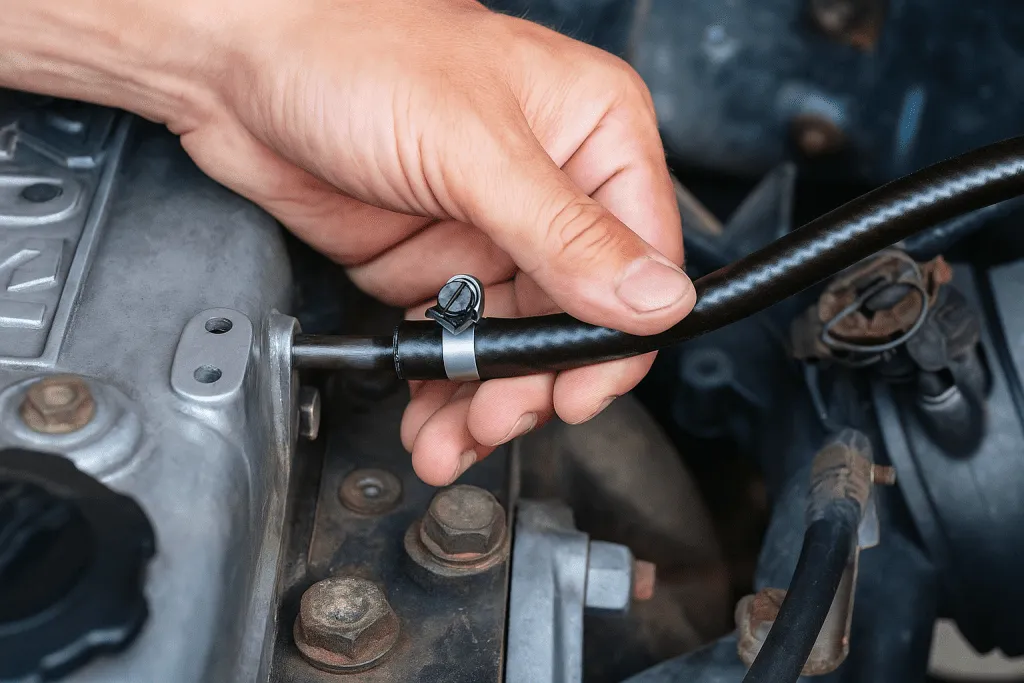
- Vacuum: Split hoses, PCV problems, intake gasket leaks
When it is time to visit a shop
DIY checks are great, but some problems need proper tools and test procedures. Consider scheduling a diagnostic appointment if:
- You have a flashing check engine light at any point
- The car is stalling, overheating, or feels unsafe
- The same code returns quickly after basic checks
- You have multiple related codes and do not know what is cause versus effect
- You suspect a smoke test is needed (common for EVAP and vacuum leaks)
If you want to get your money's worth from a diagnostic fee, bring:
- The code list (including pending codes)
- Any freeze frame data your tool can show
- Notes on when it happens: cold start, highway cruise, idle at stoplights, after fueling
FAQ
Can I drive with the check engine light on?
If the light is solid and the car drives normally, you can often drive short-term while you diagnose. If it is flashing or the engine is running rough, treat it as urgent.
Does a code tell me the exact part to replace?
Usually no. A code points to a system and a symptom. For example, P0171 does not mean “replace oxygen sensor.” It means the engine is reading lean, and you need to find why.
Why did my check engine light turn off by itself?
If the condition does not occur again for a certain number of drive cycles, the light may turn off, but a history code is often stored. Intermittent issues are real issues, they are just harder to catch.
Should I clear the code after tightening the gas cap?
You can, but it is not required. If the gas cap was the only issue, the EVAP monitor may pass after a few trips and the light will go out on its own. Clearing can reset readiness monitors, which matters if you have emissions testing soon.
What about P1xxx codes and other warning lights?
P0xxx codes are generic. P1xxx codes are often manufacturer-specific and can mean different things depending on the make. Also, basic code readers may not pull ABS, airbag, or body codes, even if you have warning lights for those systems.
One last shop-floor reminder
The best way to use OBD2 codes is to think like a diagnostician: confirm the complaint, check the easy stuff, and only then start replacing parts. If you want, share your code list, vehicle year, make, model, engine, and any symptoms. I can help you narrow down the most likely next checks.