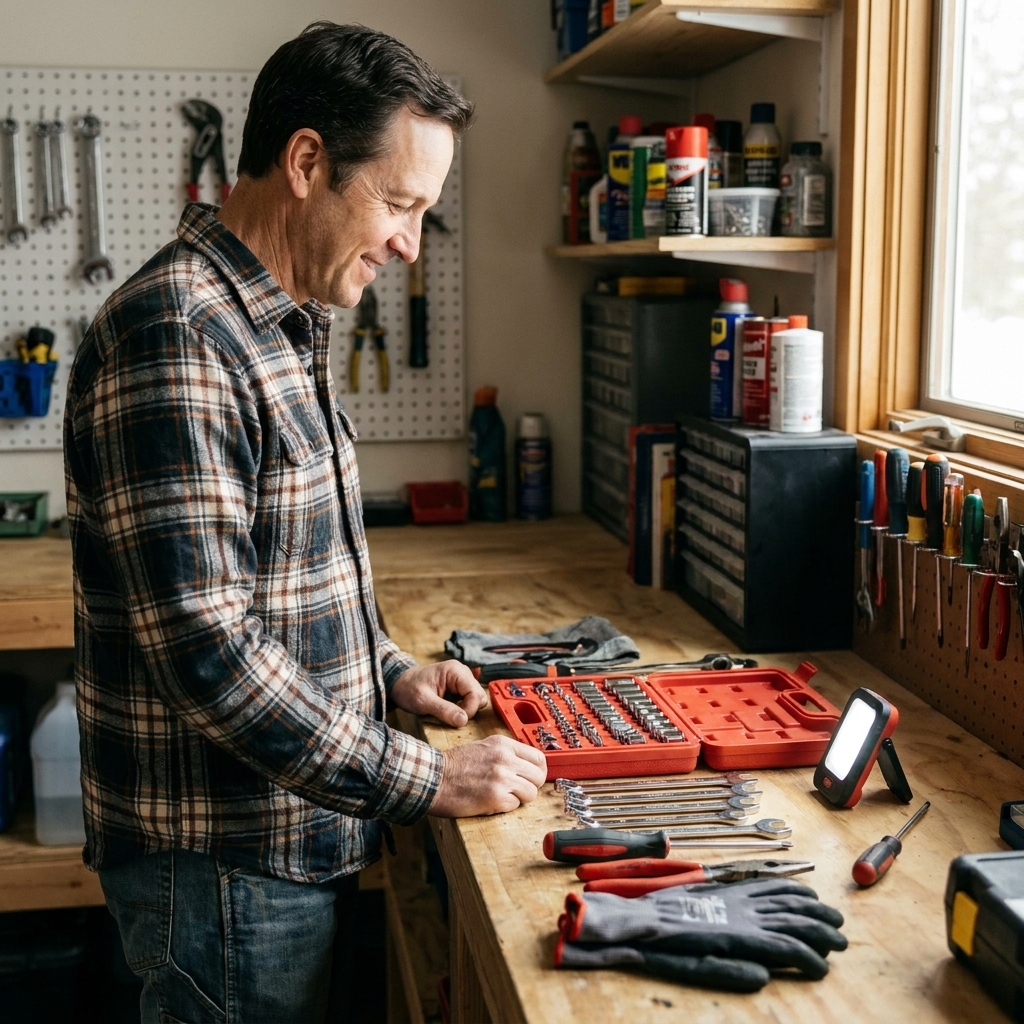
The first real cold snap has a way of turning small “I’ll get to it later” issues into no-start mornings, fogged-up windshields, and white-knuckle stops at the first icy intersection. The good news is you can prevent most winter headaches with three core checks: coolant strength, battery health, and tire readiness.
I’m going to walk you through what I’d check on my own daily driver before winter sets in, using tools and techniques you can handle in a driveway or garage.
Start with fluids that fail in the cold
Oil changes and wiper fluid get all the attention, but in freezing weather, two fluids can ruin your day if they are neglected: engine coolant and windshield washer fluid. Brake fluid is also worth a quick look, especially if it has been a few years.
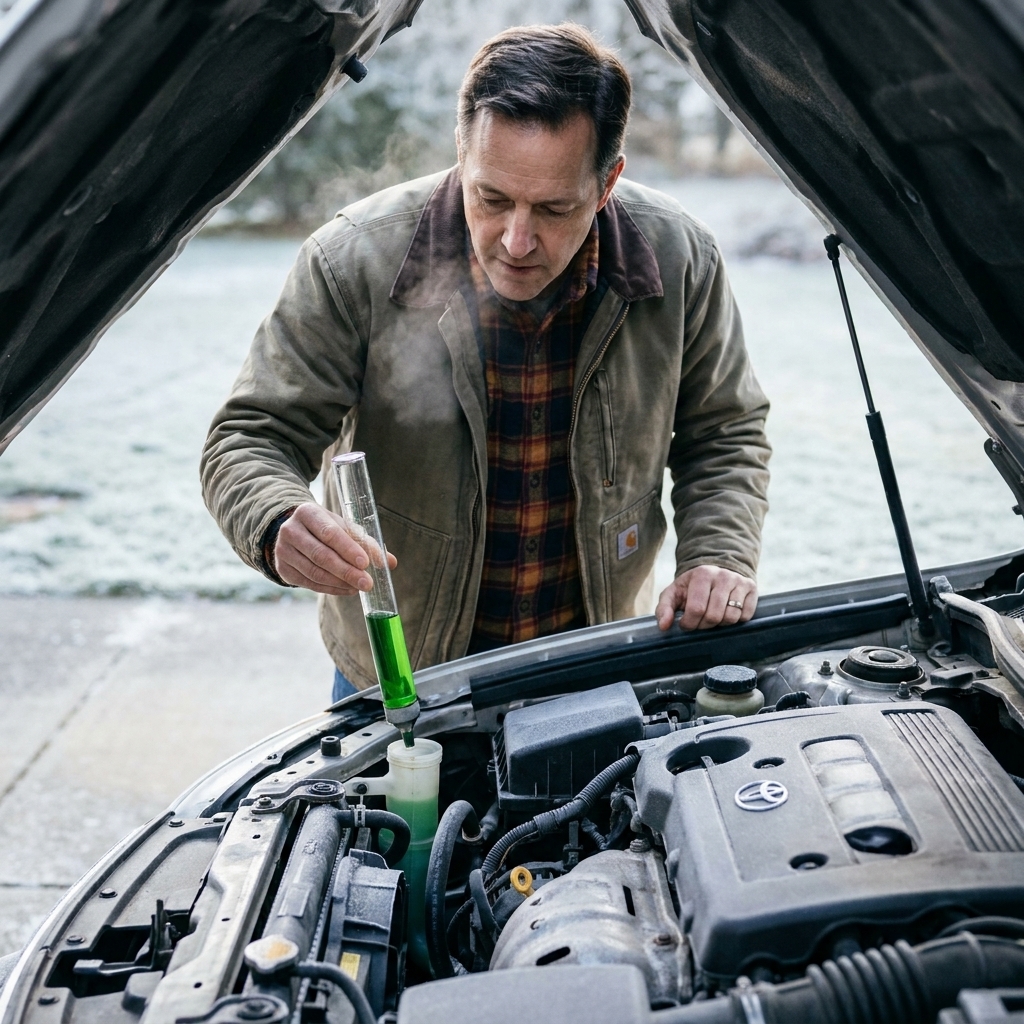
Coolant: test freeze protection, not just level
A full coolant reservoir does not guarantee the mixture is strong enough. Too much water lowers freeze protection and raises corrosion risk. Too much antifreeze can reduce heat transfer and hurt cooling performance.
- Target mix: Most vehicles are happy around a 50/50 mix, typically protecting to roughly -34°F (-37°C). If you live in extreme cold, some manufacturers allow slightly stronger mixes, but do not guess. Check your owner’s manual or service info.
- How to test at home: Use a coolant tester. A hydrometer can work well for many traditional ethylene glycol coolants, but accuracy varies by tester and coolant chemistry. A refractometer is often more broadly accurate across types, but you still need to confirm your tester matches your coolant.
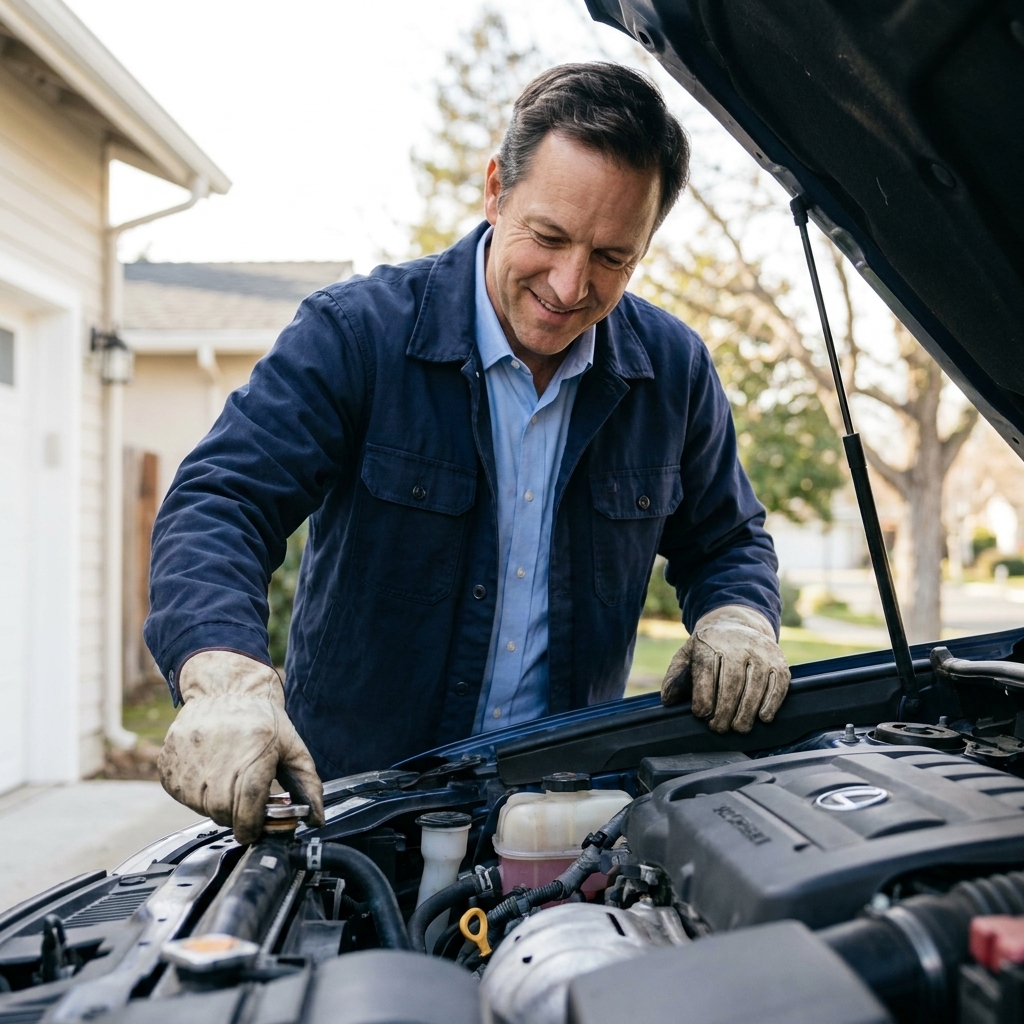
- Where to sample: With the engine stone cold, the radiator (if it has a cap and is safely accessible) is usually the most representative sample. If your only safe access is the reservoir or expansion tank, you can test from there, but be aware recent topping-off or stratification can skew the reading.
- What you’re looking for: Freeze protection appropriate for your climate, plus coolant that looks clean and consistent. Sludge, oil sheen, or rust tint are red flags.
Quick safety note: Never open a hot cooling system. Even a warm engine can hold pressure and cause serious burns.
Top-off rules that prevent mistakes
Coolant is not a universal fluid. Mixing types can create gel-like deposits or shorten coolant life.
- If you are only slightly low: Use premixed coolant that matches your vehicle’s spec, or use distilled water only if you know the mixture is already strong enough for your temperatures.
- If you are consistently low: Do not keep topping off and hoping. Find the leak. Common winter leak points include aging radiator end tanks, hose connections, and water pumps.
- If the coolant is old: Many modern coolants last a long time, but not forever. If you are past the service interval, a proper drain and fill or full flush (depending on the vehicle) is cheap insurance.
Washer fluid: confirm it is winter-rated
If your washer fluid freezes, you lose visibility right when road grime is worst.
- Check the bottle: Look for a freeze rating such as -20°F or -30°F. If you are not sure what is in the tank, it is usually easiest to empty and refill with winter-rated fluid.
- Test the spray pattern: Weak spray can be a partially clogged nozzle or a failing pump. Aim and clean the nozzles now, not during a storm.
Brake fluid: a quick reality check
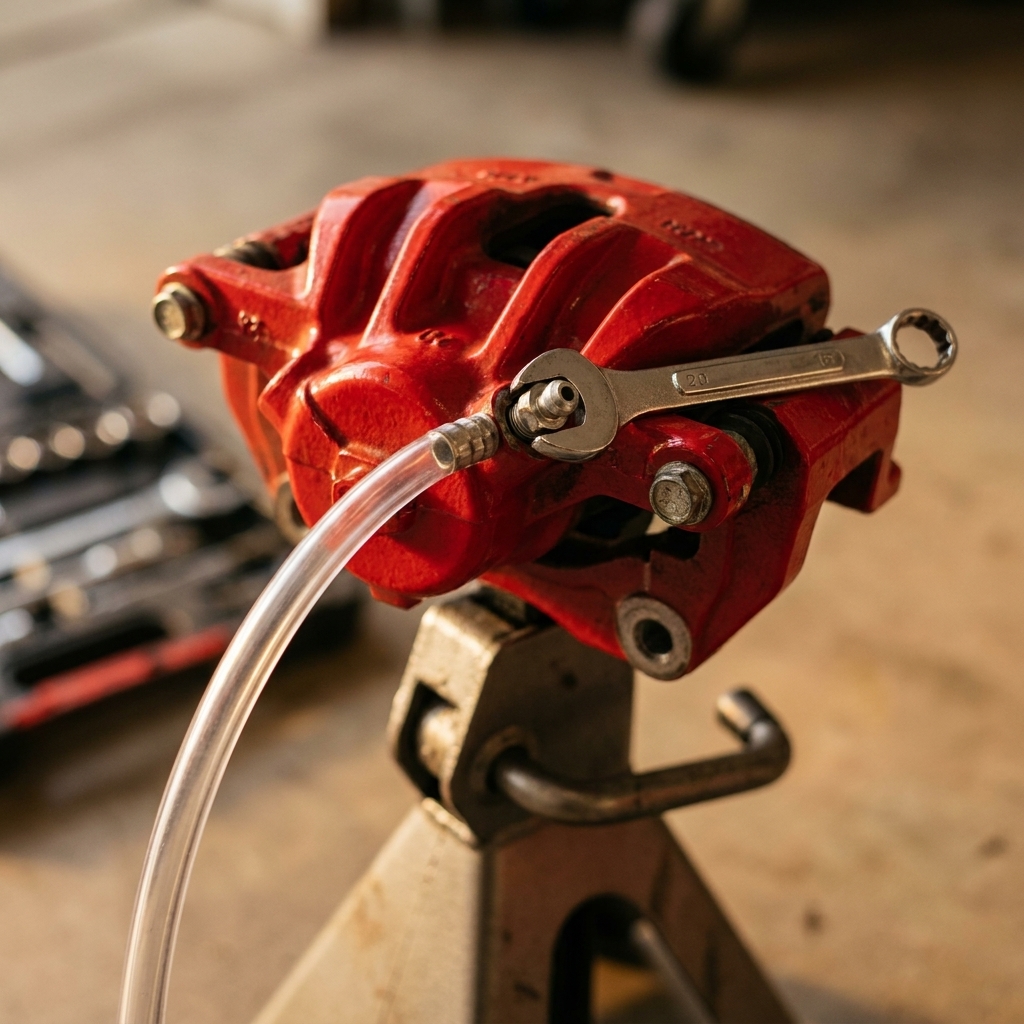
Brake fluid absorbs moisture over time. In cold weather, that moisture can contribute to corrosion, and in hard braking events it can lower boiling point. If your fluid is very dark or you have no idea when it was last changed, put a brake fluid exchange on your winter checklist.
Battery and charging: protect your cranking power
Cold weather does two things at the same time: it thickens engine oil so the starter works harder, and it reduces battery output. A battery that was merely “fine” in October can be dead in January.
Three checks that catch most no-starts
- Check battery age: Many batteries start getting suspicious around 3 to 5 years, depending on climate and driving habits. If yours is older and winter is harsh where you live, plan ahead.
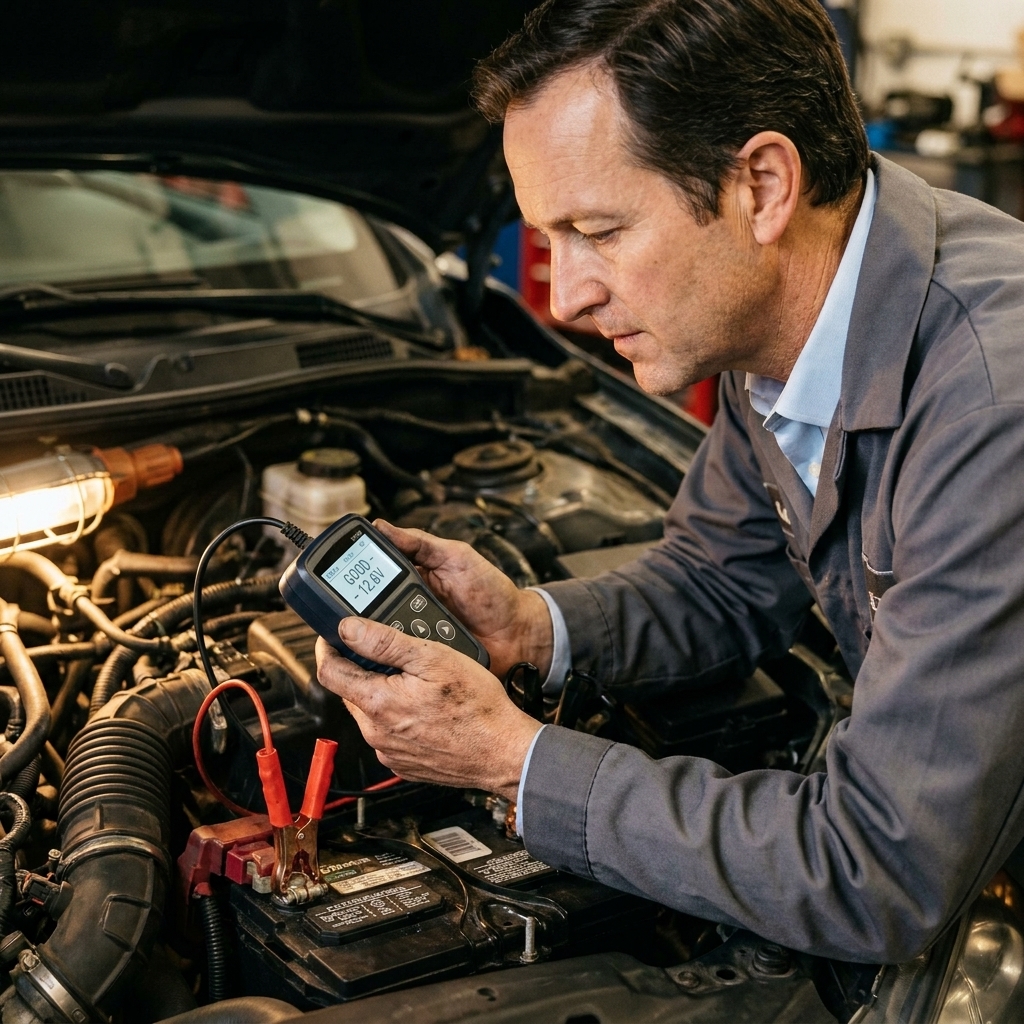
- Test voltage and health: A multimeter is helpful, but a battery load test or conductance test is better. Many parts stores test for free. You are looking for strong results relative to the battery’s CCA (cold-cranking amps) rating.
- Inspect terminals and cables: Corrosion creates resistance, and resistance kills starting power. Clean the terminals, ensure they are tight, and inspect for swollen cables or cracked insulation.
Home driveway tip: After the car has sat overnight, a healthy, fully charged 12V battery often reads around 12.6V at room temperature. Around 12.2V is roughly 50 percent charged. In winter, temperature and how long the battery has been resting can nudge readings a bit lower even when the battery is OK, so treat voltage as a clue, not the final verdict.
Charging basics: alternator and belt
If your battery keeps dying, the battery may be the victim, not the culprit.
- Running voltage: With the engine running, many vehicles charge around 13.7V to 14.7V. Some newer “smart charging” systems vary voltage on purpose based on battery type, temperature, and load, so look for obvious outliers or warning lights before you panic.
- Belt condition: A worn serpentine belt can slip more in damp, cold weather. Look for cracks, glazing, or a squeal on startup.
If you do short trips, consider a maintainer
Short commutes, heated seats, defrosters, and headlights can add up fast. If your car sits outside and you drive mostly short trips, a smart battery maintainer can keep the battery topped off and extend its life. Use an under-hood quick-connect pigtail if your vehicle setup allows it.
Oil: use the viscosity your manual calls for
Winter starts get easier when the oil flows. Stick to the viscosity listed in your owner’s manual, and if your vehicle specifies a winter-friendly grade (like 0W-20 instead of 5W-20), do not freelancing here. The right oil helps the starter and battery do less work when it is bitter cold.
Tires: traction is the real safety system
If I could pick one area that makes the biggest difference in winter confidence, it is tires. AWD helps you get moving, but tires help you turn and stop. That is where winter driving gets serious.
Check tread depth the right way
Legal tread depth and safe winter tread depth are not the same thing.
- All-season tires: As a rule of thumb, consider replacing when you get near 4/32 inch for winter use. Many all-seasons lose snow traction as they wear.
- Winter tires: As a rule of thumb, many drivers notice performance drop as winter tires wear down. Start planning replacement around 6/32 inch if you see a lot of snow.
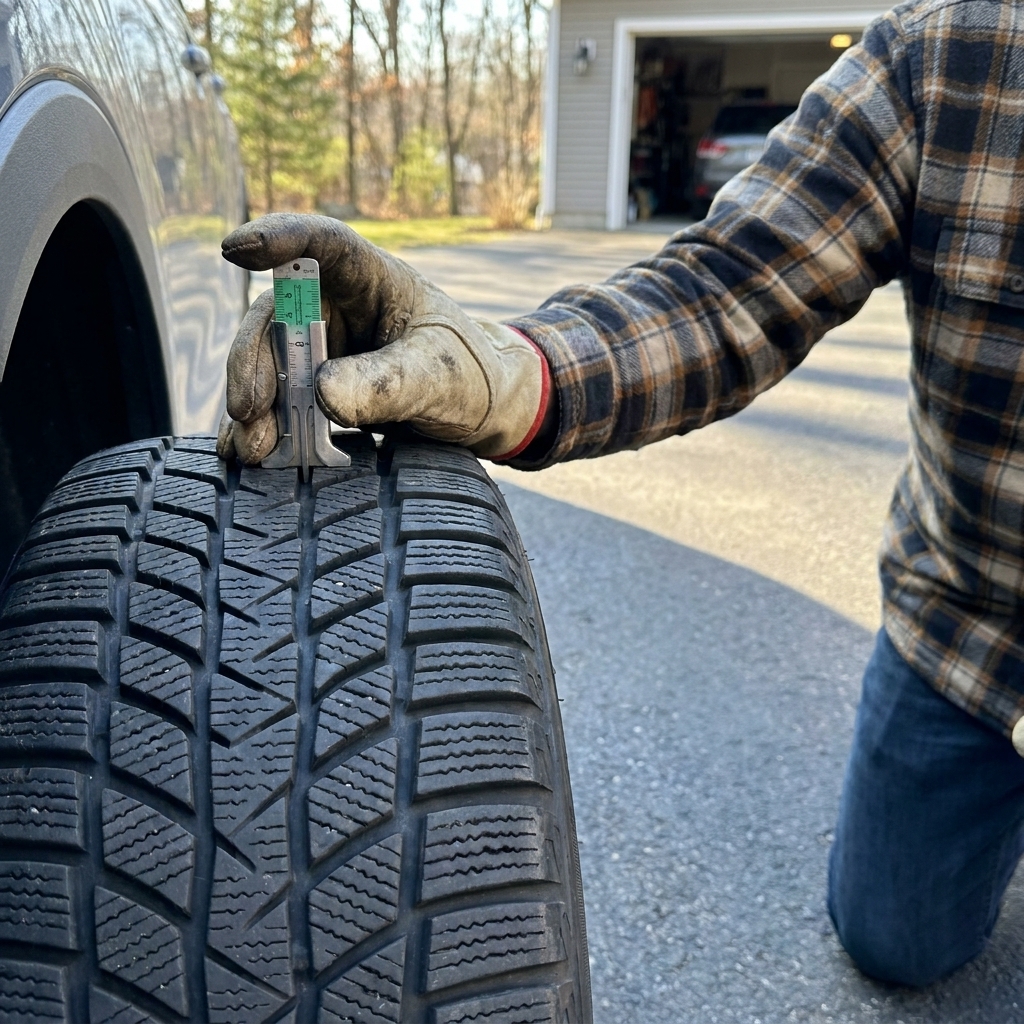
- How to measure: Use a cheap tread depth gauge and check multiple spots across the tire. Uneven wear can point to alignment or inflation issues.
Confirm your tires are winter-capable
Look at the sidewall. You will typically see one of these:
- M+S: Mud and snow rating, common on all-seasons. Helpful, but not a guarantee of strong snow grip.
- Three-Peak Mountain Snowflake (3PMSF): Indicates the tire meets a specific snow traction performance standard. Many dedicated winter tires and some all-weather tires carry this symbol.
If you deal with consistent snow and ice, dedicated winter tires are still the gold standard. If your winters are mixed with lots of dry pavement, a quality all-weather tire with the 3PMSF marking can be a solid compromise.
Cold tire pressure: check before you drive
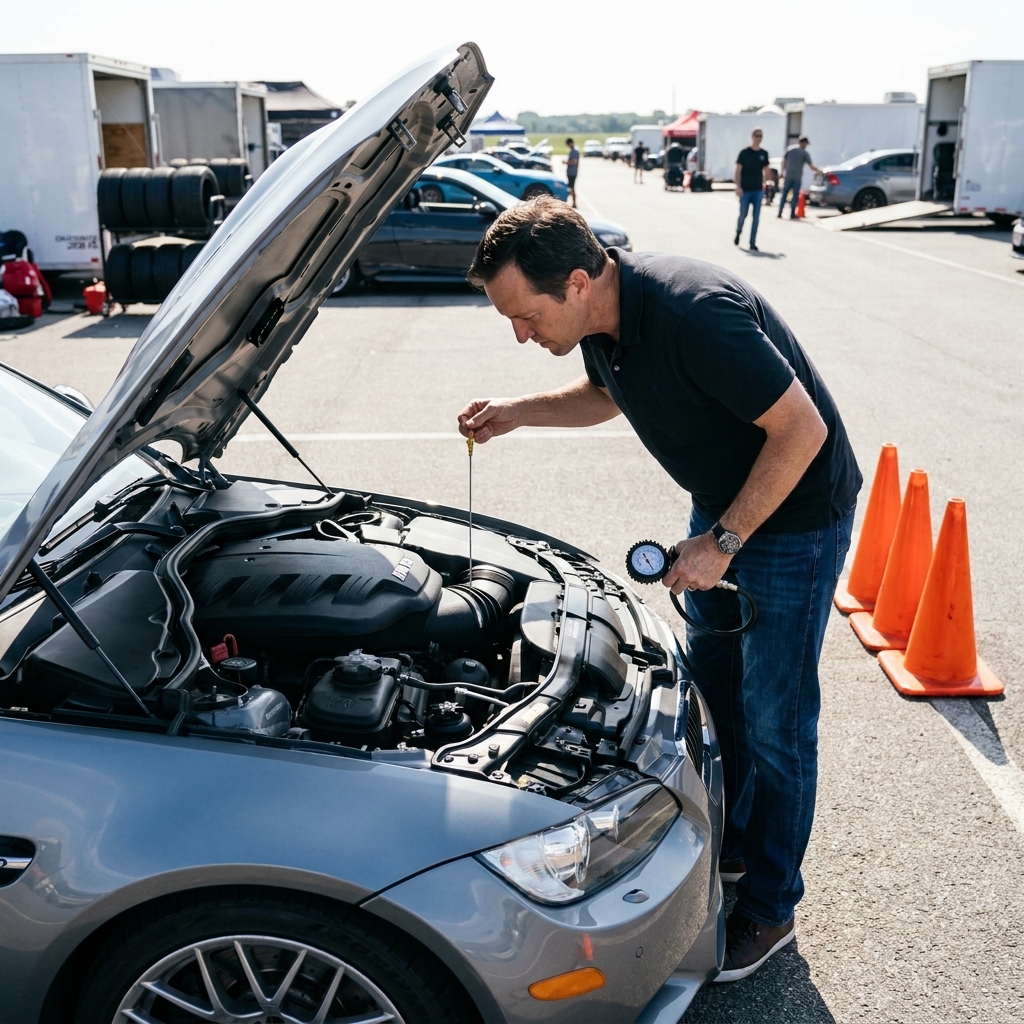
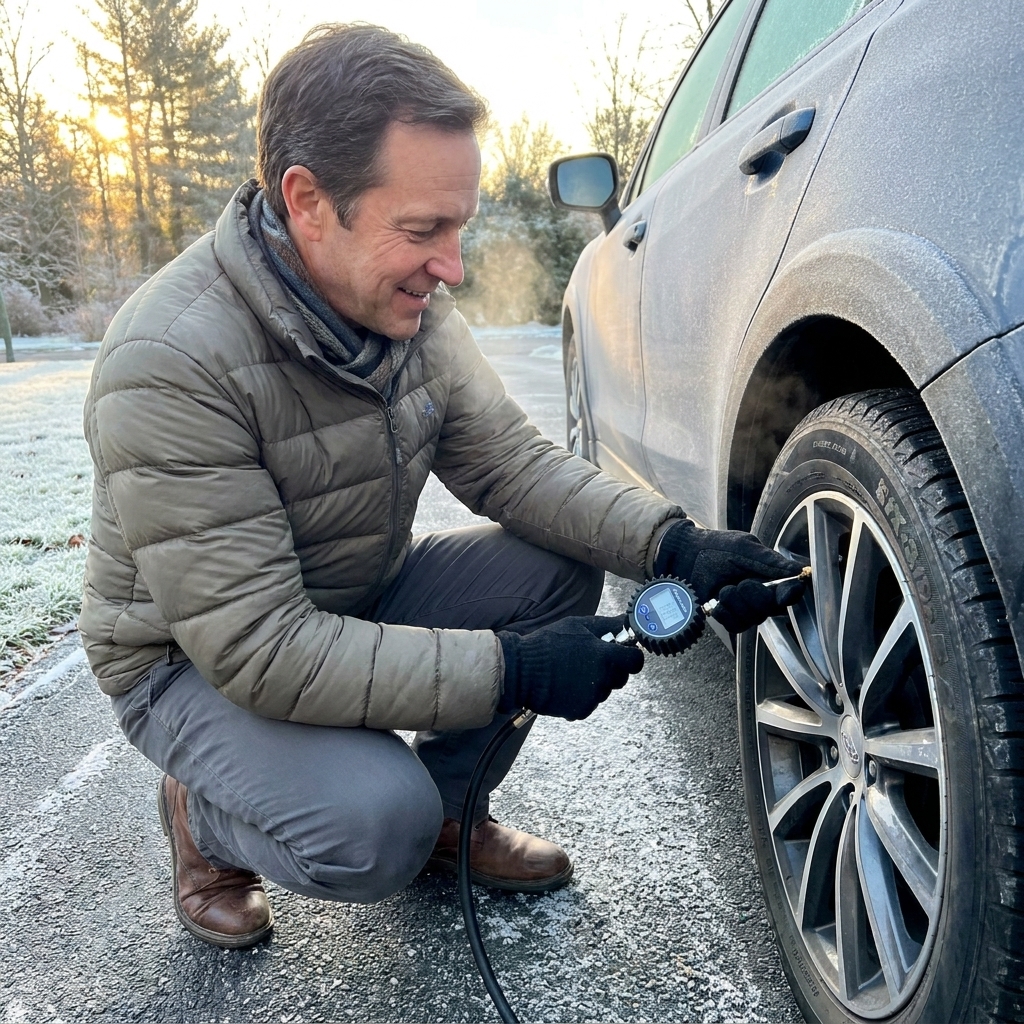
Tire pressure drops as temperatures fall. A rough rule is about 1 psi per 10°F change, though real-world results vary. Underinflation hurts traction, handling, and braking, and it can damage tires over time.
- Check pressure when cold: First thing in the morning is ideal.
- Use the door jamb sticker: Follow the vehicle manufacturer’s recommended pressures, not the number molded into the tire sidewall.
- Do not forget the spare: If you have a spare tire, check it too. A flat spare is a special kind of winter misery.
Inspect for damage and winter issues
- Sidewall cracks or bulges: Replace the tire. Winter potholes are brutal and sidewall damage is dangerous.
- Uneven wear: Cupping, inside-edge wear, or feathering suggests alignment or suspension issues. Fixing it now saves tires later.
- TPMS light: Often it is just pressure drop in cold weather, but confirm with a gauge. Do not ignore it all season.
Pro habit: If you swap to winter tires, mark their previous positions (LF, RF, LR, RR) and follow a rotation plan. It keeps wear even and traction predictable.
A quick winter checklist
If you have the tools handy, you can knock this out in about 20 to 30 minutes. If you have to dig out a gauge, find a flashlight, and charge your multimeter, budget a little more time and do it once, properly.
- Coolant: Check level and test freeze protection with a compatible tester
- Washer fluid: Refill with winter-rated fluid and test spray pattern
- Battery: Inspect terminals, confirm age, and get a load test if you have any doubt
- Tires: Measure tread depth, set cold pressures to the door sticker, inspect for damage, check the spare
- Wipers and defrosters: Replace streaking blades and confirm front and rear defrosters work
- Lights: Confirm working bulbs, especially brake lights
Bonus basics: Toss an ice scraper, a warm blanket, and either jumper cables or a small jump pack in the car. You will be glad you did the first time you help yourself or someone else on a cold shoulder.
FAQ
Is 50/50 coolant always correct?
It is the most common target, but not universal. Some vehicles have specific coolant types and concentration recommendations. The right approach is to test what you have and match the manufacturer’s spec.
Can I add straight antifreeze to make it more winter-ready?
Sometimes, but it is easy to overshoot. Too much antifreeze can reduce heat transfer and may not improve freeze protection the way you expect. Test first, then adjust intentionally using the correct coolant type and distilled water or premix as needed.
My car cranks slow only when it is cold. Battery or starter?
Most often it is a weak battery showing itself under cold load, but corroded terminals, a failing starter, thick oil, or charging issues can contribute. Start with a battery test and terminal inspection because they are quick and cheap.
Do I need winter tires if I have AWD?
AWD helps you accelerate with less wheel spin. It does not help you stop on ice. If you regularly drive in snow or freezing temps, winter tires are one of the biggest safety upgrades you can make.
Ben’s shop-floor rule: winter problems are predictable. If you test coolant strength, protect your battery’s cranking power, and make sure your tires can actually bite, you will avoid most of the season’s worst surprises.