Nothing ruins a morning like turning the key and getting that dreaded click. If your battery was fine yesterday but dead by morning, you are typically looking at one of three buckets: the battery itself is weak, the charging system is not refilling it, or something in the car is quietly drawing power while the car is off (parasitic drain).
I am going to walk you through a simple, at-home diagnostic sequence that helps you separate those three causes without guessing or throwing parts at the problem.
Quick reality check
Before we break out a meter, rule out the easy stuff. I have seen these bite experienced techs, not just new DIYers.
- Lights left on: dome light, trunk light, glovebox light, or a visor mirror light.
- A door not fully latched: some cars keep modules awake if a door ajar switch is triggered.
- Aftermarket accessories: remote starts, dash cams, stereos, amps, trackers.
- Short trips for weeks: a healthy car can still lose the battle if it never gets a proper recharge.
- Temperature: cold weather reduces available battery power, and heat ages batteries faster.
If none of those apply, move on to the tests. This is where you stop guessing.
Diagnostic sequence
You will get the clearest answer by doing these steps in order. Each one tells you something different.
Tools you will want
- Digital multimeter (a basic one is fine)
- Battery charger (even a small smart charger helps)
- Safety glasses and gloves
- Optional but very helpful: clamp meter with DC amps
Step 1: Charge the battery
If the battery is low to begin with, every other test becomes fuzzy. Use a charger whenever you can and charge it fully first.
If you do not have a charger, a 30 to 45 minute drive can be a rough top-up, not a guaranteed full recharge, especially if the battery was very low, it is cold out, or your vehicle uses smart charging. After driving, let it sit for at least 30 minutes before taking voltage readings.
Step 2: Check resting voltage
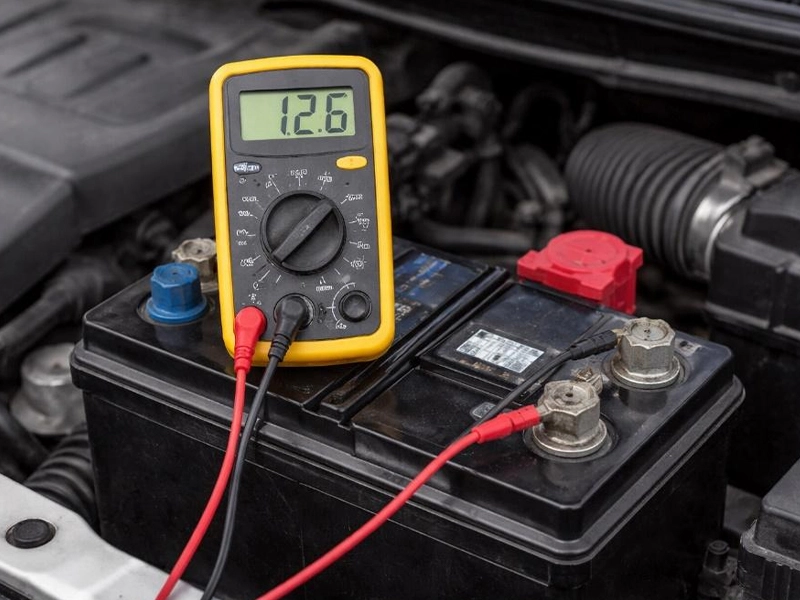
With the car off and sitting at least 30 minutes, set your meter to DC volts and measure voltage directly on the battery posts (not on the clamp ends). Measuring at the posts helps you avoid getting fooled by corrosion or a loose connection at the terminal.
- 12.6 to 12.7V: healthy, fully charged battery (typical for many lead-acid batteries around room temperature)
- Up to about 12.8V: can be normal for some AGM batteries or right after charging (surface charge can read high at first)
- 12.4 to 12.5V: partially charged or aging
- 12.2V or lower: battery is low or weak, or it was drained overnight
- Below 12.0V: likely deeply discharged
What this tells you: If you truly charged it and it still will not settle near the mid 12s after resting, the battery may be sulfated or worn out. Keep in mind temperature and battery type affect voltage, so use the ranges as guidance, not gospel.
Step 3: Quick crank test
Watch the meter while a helper starts the car. You are looking at the lowest voltage during cranking.
- Stays above about 9.6V: generally acceptable (rule of thumb around 70°F or 21°C)
- Drops well below 9.6V: weak battery, high resistance connection, or starter drawing excessive current
Note: In cold weather, cranking voltage can dip lower even with a good battery. Focus on trends (worse and worse each morning) and how the starter sounds.
Tip: If it drops hard and the starter barely turns, try cleaning and tightening the battery terminals before condemning the battery.
Step 4: Check charging voltage
With the engine running, measure voltage at the battery posts.
- 13.8 to 14.7V: typical healthy charging range on many vehicles
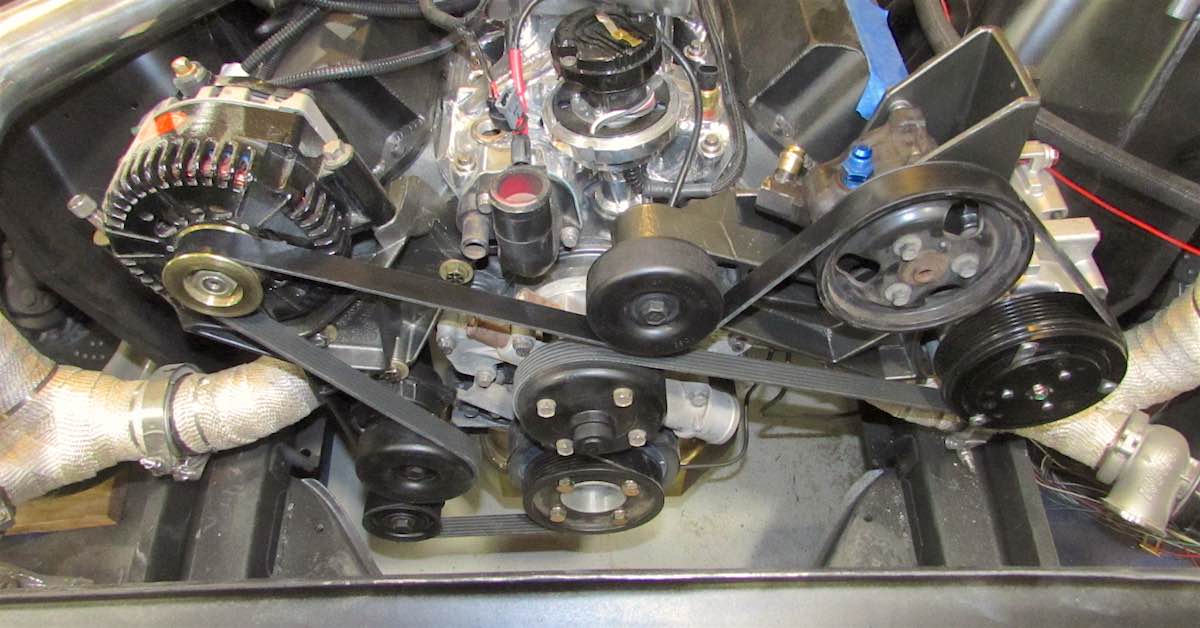
- Below 13.5V: may indicate undercharging (alternator, belt, wiring, grounds, battery sensor, or computer-controlled charging strategy)
- Above 15.0V: overcharging (can cook a battery fast)
Check at idle and then again around 1,500 to 2,000 rpm. Some alternators do not output their best at a low idle.
Turn on headlights, rear defroster, and blower fan. Voltage should usually remain in the 13s to mid 14s on most cars.
Important: Some newer vehicles use ECU-controlled or “smart” charging. It can purposely run low (sometimes near the 12.6 to 13.3V range) once the battery is topped up, then jump higher under certain conditions. If your readings look odd but the battery stays healthy, look up your vehicle’s charging strategy before assuming the alternator is bad.
Step 5: If charging is OK, suspect drain
If the battery tests decent and the alternator is charging correctly, overnight death usually points to parasitic draw. That means something is staying awake or powered when the car is parked.
Parasitic draw basics
Modern cars always use a little power when off. The clock, security system, keyless entry, and memory settings need it. The question is whether the draw is normal or excessive.
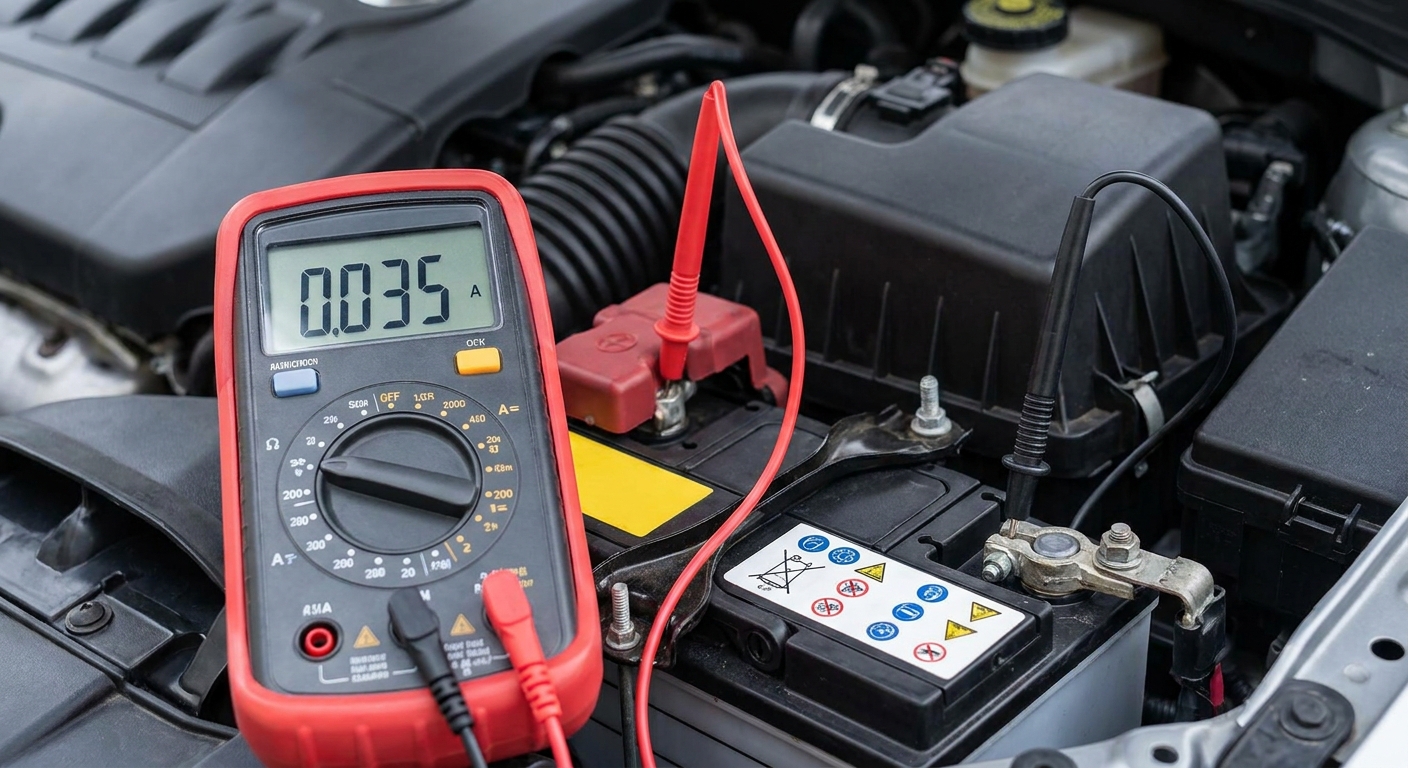
- Typical normal draw: often 20 to 50 milliamps (0.02 to 0.05A) after the car goes to sleep
- Can be normal on some vehicles: 50 to 80 milliamps (0.05 to 0.08A), depending on options and how the car manages networks
- Often problematic: around 100 milliamps (0.10A) or higher on many vehicles
- Definitely a problem: several hundred milliamps or more, especially overnight
Important: Many cars take 10 to 45 minutes to go to sleep after you shut them off. If you measure too soon, you will think you have a draw when you do not. If you can find a factory spec for your exact model, use it.
Parasitic draw test
This is the method I recommend if you have a multimeter and some patience. Take your time. The goal is to avoid waking the car up mid-test.
Prep the car
- Turn everything off and remove the key.
- Keep the key fob away from the car. On push-button start vehicles, a nearby fob can wake modules.
- Close all doors. If you need a door open, manually latch the door striker with a screwdriver so the car thinks the door is closed.
- If you must have the hood open, make sure the underhood light is off and the hood switch is satisfied if your vehicle uses one.
- Disable interior lights if needed (pull the bulb, or switch off if your vehicle has a switch).
- Wait for the vehicle sleep period (start with 30 minutes if you are unsure).
Method A: DC clamp meter
Clamp the meter around the negative battery cable and read DC amps. This method avoids disconnecting the battery, which can wake modules or reset systems. It is also the safest way to avoid blowing your meter fuse.
Method B: Multimeter in series
This is common, but it is also where beginners get into trouble. Many multimeters have a fused 10A (or similar) amp circuit that can blow instantly if the car wakes up and pulls a surge. Take these precautions.
- Make sure all heavy loads are truly off (headlights, blower fan, heated seats, rear defroster). Do not open doors during the test.
- Set the meter to DC amps, use the correct amp port, and start on the highest amp range.
- Disconnect the negative battery cable.
- Connect the meter in series: one lead to the negative battery post, the other lead to the removed negative cable end.
- Do not try to start the car with the meter connected like this.
How to avoid the wake-up surge: If your meter fuse keeps popping or you want extra safety, use a simple jumper wire trick. Before you disconnect the negative cable, connect a jumper wire between the negative post and the negative cable end (so power stays connected). Then disconnect the cable, install the meter in series, and remove the jumper wire. This helps prevent modules from rebooting and pulling an initial surge through your meter.
If the reading is high at first, do not panic. You may have woken the car by disconnecting the battery. Give it time to go back to sleep, then watch where it settles.
Find the circuit (fuse pull)
Once the car is asleep and the meter reading is stable:
- Locate the interior and underhood fuse boxes.
- Pull one fuse at a time and watch the meter.
- If the draw drops significantly when you pull a fuse, you found the circuit feeding the problem.
- Put that fuse back in, confirm the draw returns, then move forward with that circuit in mind.
Note: Pulling some fuses can wake modules and skew results. If the reading jumps around after you pull a fuse, give the car time to go back to sleep before you decide what changed.
Pro tip: Take a photo of the fuse box layout before you start. It saves headaches.
Common drain culprits
Once you identify the circuit, these are the usual suspects I see most often.
- Glovebox or trunk light staying on: failed switch or misaligned latch.
- Aftermarket stereo or amplifier: remote turn-on wire miswired, amp not sleeping.
- Dash cam wired to constant power: fine if it is designed for parking mode, not fine if it is a basic cam without a cutoff.
- Stuck relay: cooling fan relay, fuel pump relay, or accessory relay staying energized.
- Body control module not sleeping: sometimes caused by a flaky door switch, hood switch, or a failing module.
- USB chargers and plug-in accessories: some vehicles keep power to 12V outlets even when off.
Alternator issues that mimic drain
Here is a sneaky one: an alternator can drain the battery when the engine is off if a diode fails inside it. In that case, you can have a battery that goes dead overnight even though the alternator seems to charge okay while running.
Clues pointing to alternator diode drain:
- You measure an excessive key-off draw and it disappears when you disconnect the alternator electrical connector (only do this for testing, with the car off).
- The alternator or area near it feels unusually warm after the car has been sitting.
- Battery light behavior is inconsistent, or headlights pulse.
If you suspect this, it is often worth having the alternator bench-tested at a parts store or verified with professional equipment.
Battery issues
Sometimes the car is innocent and the battery is simply at the end of its life. A weak battery can test “okay” at voltage but have very little usable capacity left. That is why a proper load test matters.
Signs the battery is the problem
- Battery is more than 3 to 5 years old (varies by climate and use).
- It will not hold a charge after being fully charged.
- Cranking voltage drops very low even with clean, tight terminals.
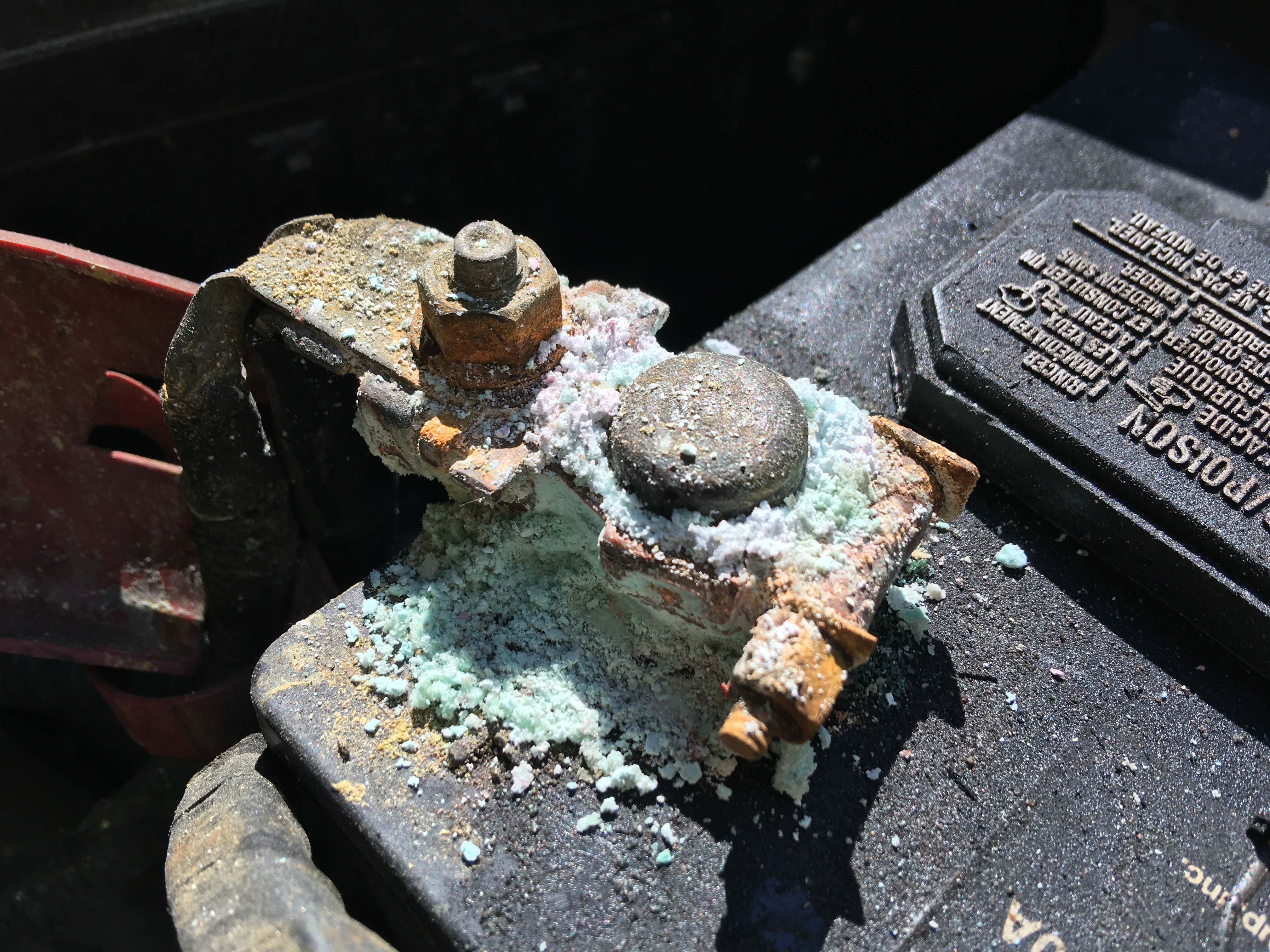
- You see bulging sides, heavy corrosion, or leaking.
Best next step: Have it load-tested. Many parts stores can do this quickly. For the most accurate results, the battery should be fully charged first. A battery that is low can fail a test even if it is not actually bad.
Voltage drop checks
If your crank test looks ugly but the battery seems decent, do not forget the boring stuff: cable and ground resistance. You can have a healthy battery and still get a click or slow crank if the power cannot flow.
- Positive cable drop (during crank): set the meter to DC volts. Put one lead on the positive battery post and the other on the starter main power stud (or the end of the positive cable at the starter). Have a helper crank. A high reading means the positive cable or connections have excessive resistance.
- Ground side drop (during crank): put one lead on the negative battery post and the other on clean metal on the engine block. Crank and watch the reading. A high reading points to a bad ground cable or ground connection.
- Quick win: if you see heavy corrosion or loose grounds, clean and tighten first, then retest before buying parts.
Fixes that stick
If your battery is weak
- Replace the battery with the correct group size and CCA rating.
- Clean corrosion from terminals and ensure clamps are tight.
- If corrosion keeps coming back, inspect cables for internal corrosion and replace as needed.
If the alternator is not charging
- Check belt condition and tension first.
- Inspect the main charging wire and grounds for looseness or corrosion.
- Replace the alternator if it fails testing, and consider replacing the belt if it is old.
If you found a parasitic drain
- Repair the component on the problem circuit (switch, relay, module, aftermarket add-on).
- If it is an aftermarket accessory, rewire it correctly or add a proper low-voltage cutoff.
- For a stuck relay, replace the relay and verify the underlying control signal is not keeping it on.
Decision tree
- Battery will not hold mid 12s after a full charge and rest: suspect bad battery.
- Battery cranks weak and drops far below about 9.6V: suspect bad battery, bad connections, or cold-weather limitations.
- Engine running voltage is consistently below about 13.5V or above 15.0V: suspect charging system (with a note for smart charging vehicles).
- Charging looks normal but battery dies overnight: suspect parasitic drain or alternator diode leak.
When to get help
Some parasitic draw problems are straightforward. Others turn into a long diagnostic chase, especially on newer vehicles with multiple networks and modules.
Consider a shop diagnosis if:
- Your car has intermittent drain that comes and goes.
- You cannot get the vehicle to go to sleep for testing.
- The draw is on a module circuit and requires scan tool data to pinpoint.
- You have a hybrid or EV with a 12V system issue (the approach can differ by platform).
Good diagnostics cost less than guessing. Paying for one solid hour of electrical testing can save you from buying a battery, alternator, and two relays you never needed.
FAQ
How long should a car sit before the battery dies?
With a healthy battery and normal key-off draw, many cars can sit 2 to 4 weeks and still start. If yours dies overnight, something is off: weak battery, heavy draw, or an undercharging issue.
Can a bad alternator kill a battery overnight?
Yes. If an alternator diode fails, it can allow current to flow backward and drain the battery with the engine off. Alternators can also undercharge during driving, leaving the battery low at night.
Is it safe to disconnect the battery overnight to prevent drain?
It is a workable short-term workaround, but expect clock, radio presets, and some computer readiness monitors to reset. On some cars you can also create new issues if the battery is disconnected improperly. If you do it, disconnect the negative terminal and keep it from touching the post.
My battery and alternator tested fine, but it still dies. Now what?
That is classic parasitic drain or an intermittent connection issue. Do a proper sleep-mode draw test, then isolate the circuit by pulling fuses. If it is intermittent, you may need a shop to monitor draw over time.