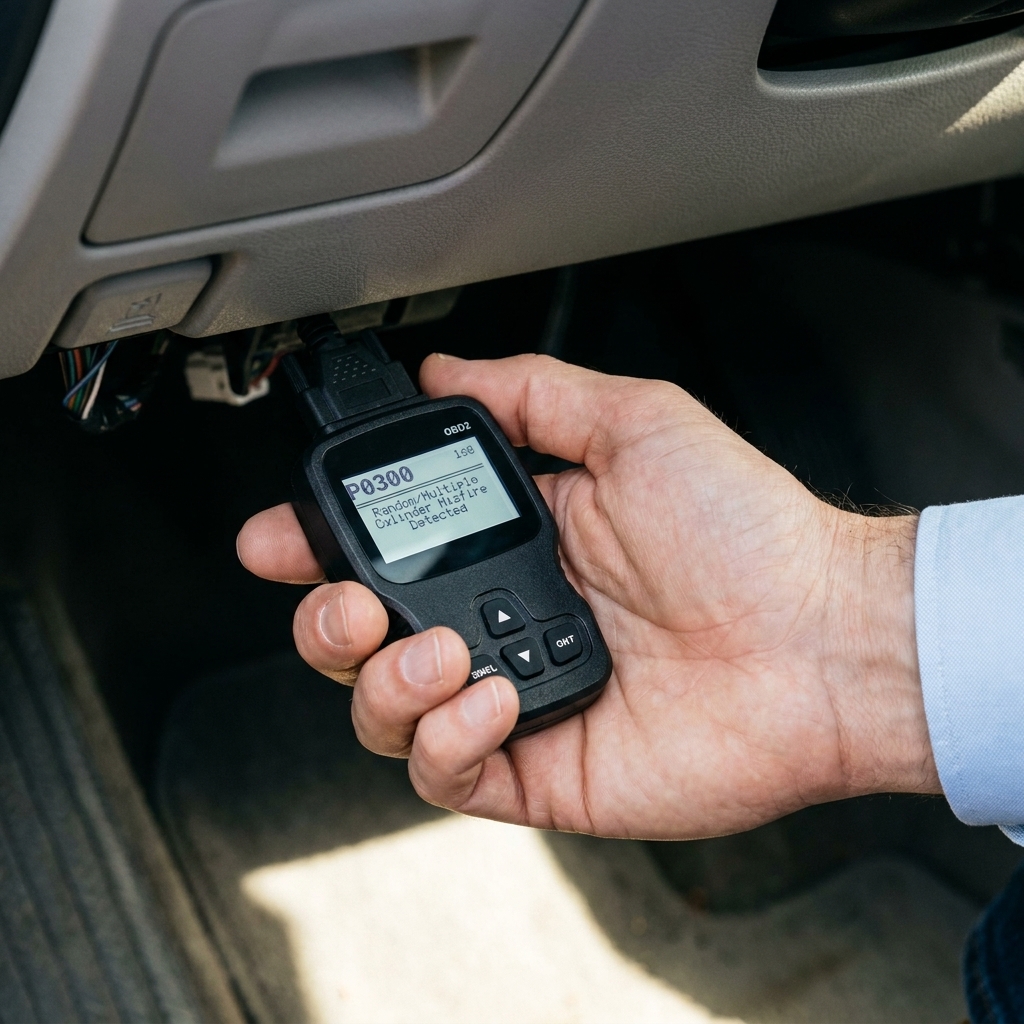
Nothing ruins a morning like a car that was fine last night but clicks and groans today. When a battery dies overnight, it is most often one of five things: a parasitic drain (something staying on), a loose or corroded connection, an aging battery that cannot hold a charge, an alternator or charging issue, or cold weather exposing a weak system. Less common, but real, are things like a battery with an internal defect or shorted cell, a bad ground strap, or an aftermarket device wired in a way that keeps modules awake.
Below is the same diagnostic path I used in the shop: quick wins first, then a couple simple tests that narrow it down without guessing.
Before you start: safety and what you need
You can do most of this with basic tools. If you are not comfortable around batteries, grab a friend and take your time. Batteries can vent hydrogen gas and the terminals can spark if tools bridge power and ground.
Tools that make this easier
- Digital multimeter (ideally with a 10A fused current setting)
- 10mm wrench or socket for most battery terminals
- Battery terminal brush or small wire brush
- Gloves and eye protection
- Optional: battery charger or maintainer (most reliable way to get a full charge)
- Optional: clamp meter that reads DC amps (the easiest way to check parasitic draw)
Quick rule of thumb
If the car needs a jump after sitting 8 to 12 hours, you are usually looking for either (1) a battery that is not holding charge or (2) a draw that is too high while parked.
Step 1: Look for the obvious drains (2 minutes)
Start with the stuff that is free and common.
- Interior lights: glove box, trunk, cargo light, vanity mirrors. These can stay on even when you think everything is shut.
- Aftermarket accessories: remote start, dash cam, audio amps, phone chargers, OBD plug-in gadgets, underglow kits.
- Doors not fully latched: a door-ajar switch can keep modules awake in some vehicles.
At night, walk around the car and look for any glow inside. For trunk and glove box lights, use your phone camera or a small mirror to check with the lid closed. Those switches fail all the time.
Step 2: Check the terminals and cables (10 minutes)
Loose or dirty connections can mimic a dead battery because the starter cannot pull enough current. Sometimes the battery is fine, but the connection is not.
What to look for
- Loose clamps: you should not be able to twist the terminal by hand.
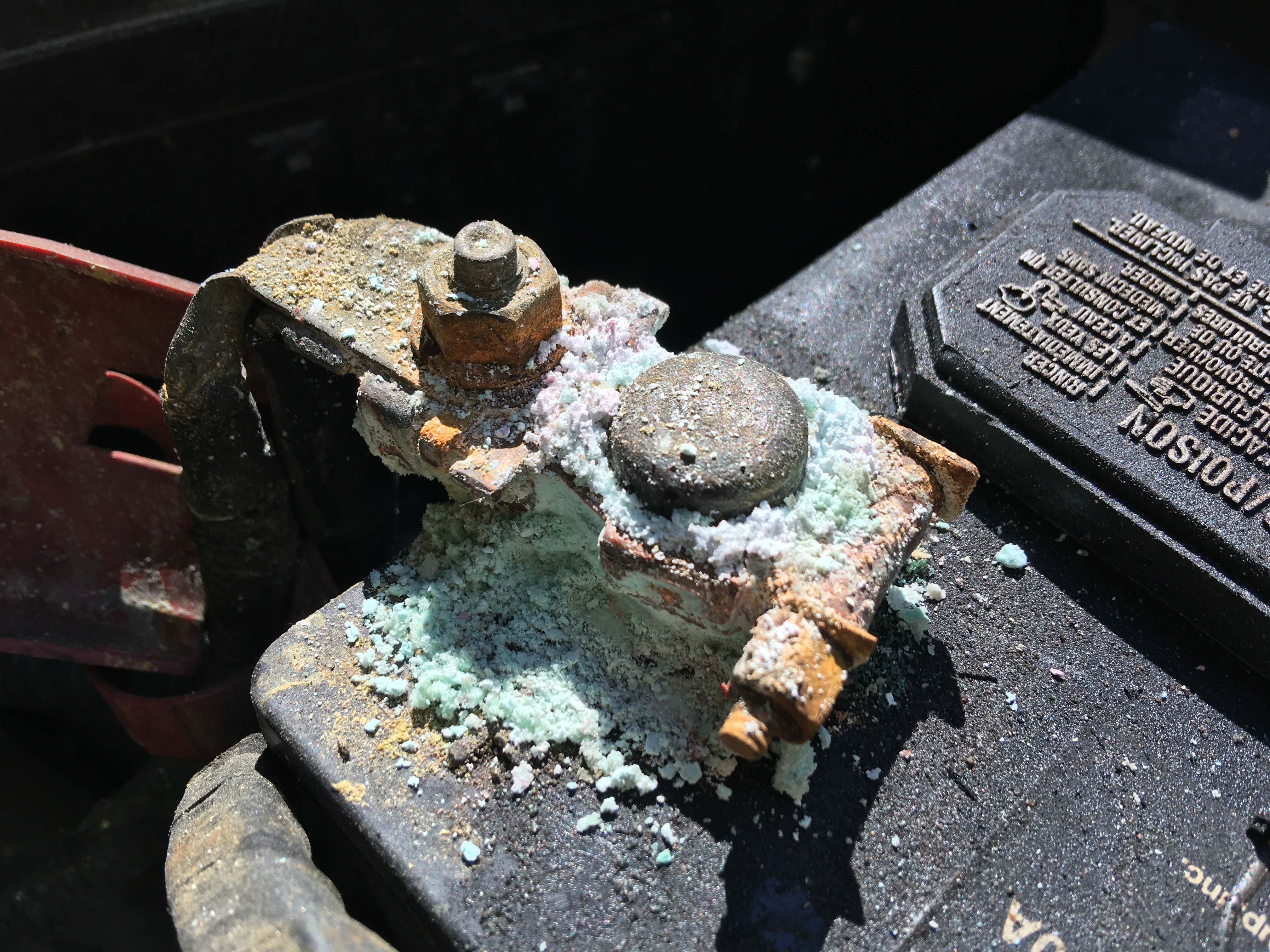
- Corrosion: white, blue, or green crust on terminals or cable ends.
- Damaged cable: swollen insulation, broken strands, stiff or overheated spots.
- Ground issues: loose or rusty ground connection at the chassis or engine block, or a failing ground strap.
Quick fix
- Turn the car off and remove the key.
- Loosen negative first, then positive.
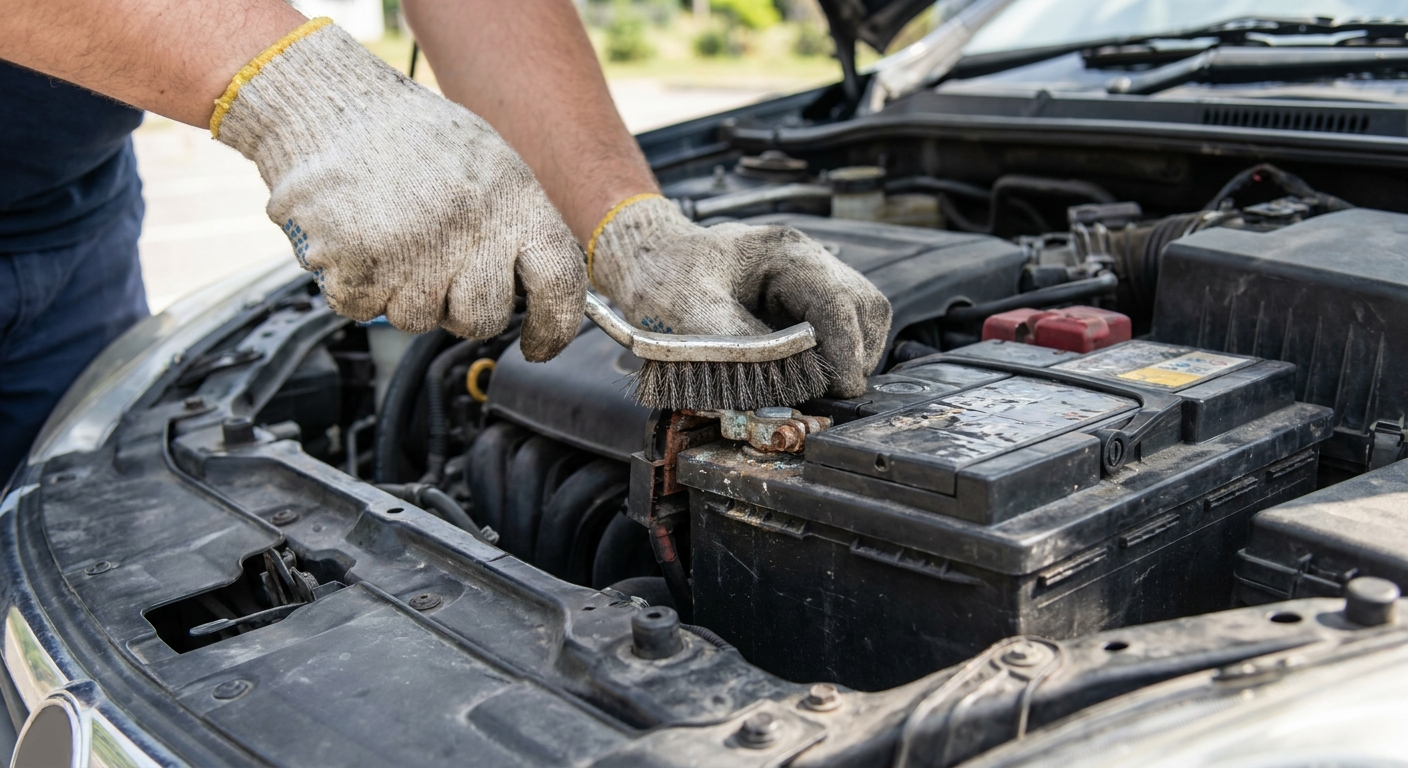
- Clean the posts and inside of the clamps with a terminal brush.
- Reinstall positive first, then negative, and tighten snug.
When you test voltage, measure at the battery posts (the lead posts themselves), not the cable clamps. That removes a lot of guesswork.
If you clean the terminals and the overnight death problem disappears, you likely had a high-resistance connection that prevented proper charging or starting.
Step 3: Age check and a simple battery health test
Most conventional 12V car batteries last about 3 to 5 years, but it varies a lot by climate, driving habits, and battery type (flooded vs AGM). Once they get weak, a cold snap or a couple short trips can tip them over the edge.
Find the battery age
Look for a sticker or stamped code on top or the side. Many have a month and year. If you are pushing five years, keep a skeptical eye on it even if it still starts some days.
Overnight voltage test (easy and telling)
This test helps you separate “battery cannot hold charge” from “something is draining it.”
- Charge the battery fully. A battery charger is the most reliable way. A drive can help, but a short drive does not always put back what a starting and a few accessories took out, especially on vehicles with smart charging systems.
- Turn the car off and let it sit for at least 30 minutes so surface charge settles.
- Measure voltage at the battery posts with a multimeter.
- Measure again the next morning before you try starting.
How to read the numbers
These are typical rested readings for a lead-acid battery at about room temperature. Values can vary with temperature and battery chemistry (AGM often reads a bit higher).
- 12.6 to 12.7V: typically healthy and fully charged
- 12.4V: roughly 75% charged
- 12.2V: roughly 50% charged
- 12.0V or below: effectively discharged
If voltage drops hard overnight (for example, 12.6V to 12.1V) and you did not try to start it, that points to parasitic draw or an internal battery issue. If the battery was already low after driving, that points more toward charging problems or lots of short trips.
Do a real battery test (recommended)
Voltage is useful, but it is not a full capacity test. If the battery is older, has been deeply discharged, or is acting inconsistent, get a proper load test done. Many parts stores will test it for free, and a shop can run a conductance test plus a load test to confirm whether it can actually deliver cranking amps.
Step 4: Check for parasitic draw (the big one)
A small amount of draw is normal. Your car has memory functions, alarms, keyless entry modules, and networked computers that sip power while parked. The issue is when a module stays awake or an accessory keeps pulling current all night.
Normal draw ranges
Many modern cars settle around 20 to 50 milliamps (0.02 to 0.05A) after all modules go to sleep. Some vehicles can be a bit higher, especially with factory alarms and telematics, but sustained draws over 100 milliamps (0.10A) are suspicious. Around 200 milliamps (0.20A) can drain a battery quickly, sometimes overnight if the battery is weak, small, or cold, and often within a couple days even with a decent battery.
The easiest method: DC amp clamp (recommended)
- Turn everything off, remove the key, close doors (latch the door striker with a screwdriver if you need access).
- Wait 20 to 45 minutes for modules to sleep.
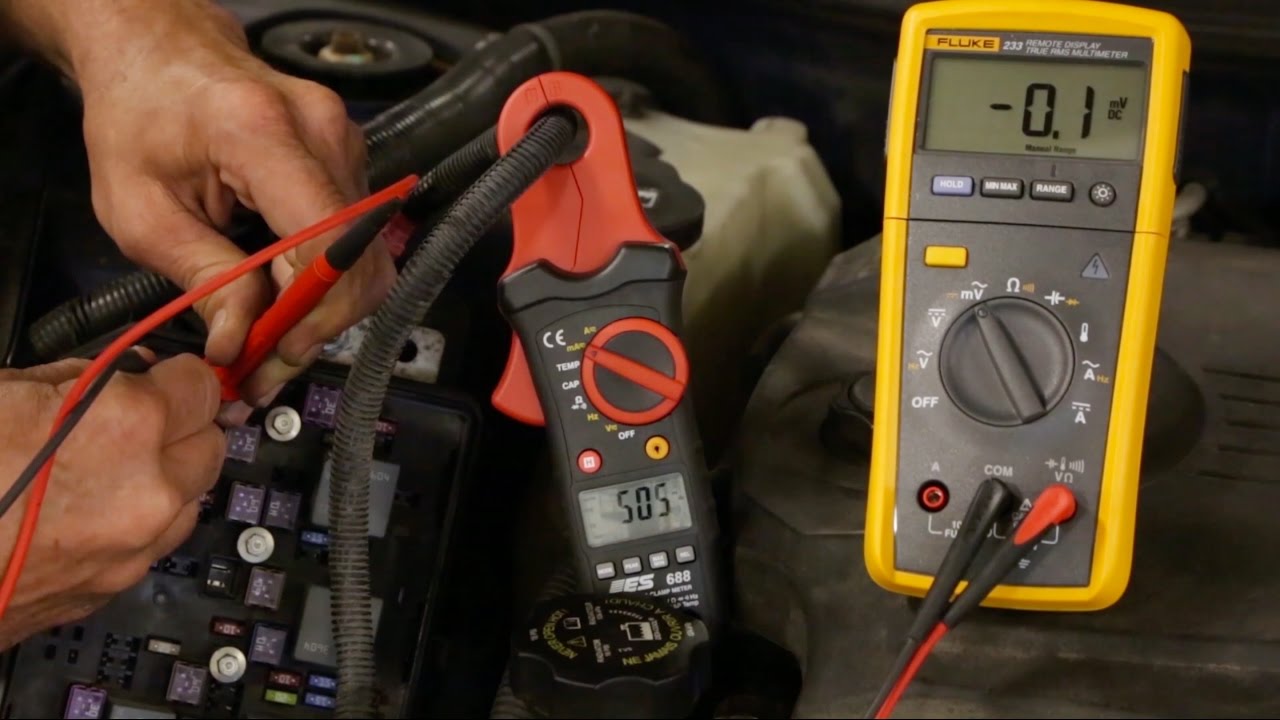
- Clamp the meter around the negative battery cable.
- Read the current draw.
If the draw is high, you can pull fuses one at a time until it drops, which tells you which circuit is responsible.
Multimeter in series method (works, but be careful)
This is the classic shop test, but you must not try to start the car with the meter inline, and you must use the correct fused amp port. Also, do not exceed the meter’s fused rating. Many meters are fused at 10A and blowing that fuse is easy if something wakes up.
- Turn the car off and let it sit so modules are asleep.
- Set your meter to the highest DC amps range and move the red lead to the 10A fused port.
- Disconnect the negative battery cable.
- Connect the meter in series: one lead to the battery negative post, the other lead to the disconnected negative cable.
- Read the draw once it stabilizes. Avoid opening doors, turning on anything, or waking the car while the meter is inline.
Pro tip: If the draw is initially high, do not panic. Many cars wake up when you open a door or reconnect power. The key is what it settles to after the sleep timer.
Step 5: Narrow it down by pulling fuses
If you confirmed excessive draw, the next step is identifying what circuit is staying alive.
How to do it without causing chaos
- Keep the meter connected and stable with the car asleep.
- Pull one fuse at a time from the interior or under-hood fuse panel.
- Watch the amp reading after each pull.
- If you wake the car (some do when a fuse is removed), reinstall the fuse, let it go back to sleep, then continue.
- When the draw drops sharply, note that fuse position and what it feeds.
Once you find the circuit, common culprits include:
- Glove box or trunk lamp circuit (switch misadjusted or broken)
- Aftermarket radio or amplifier wired to constant power
- Telematics module or alarm module that will not sleep
- Power seat or window switch stuck
- Relay stuck closed (cooling fan relay, fuel pump relay, accessory relay)
If a relay is the culprit, it may be warm to the touch after the car has been sitting, or the component it controls may be running when it should not.
Step 6: Rule out alternator and charging problems
If the battery dies overnight, people often blame the alternator. The alternator is not working when the engine is off, but it can still cause overnight issues in two ways: it fails to recharge the battery during driving, or it has a leaky diode that drains the battery while parked.
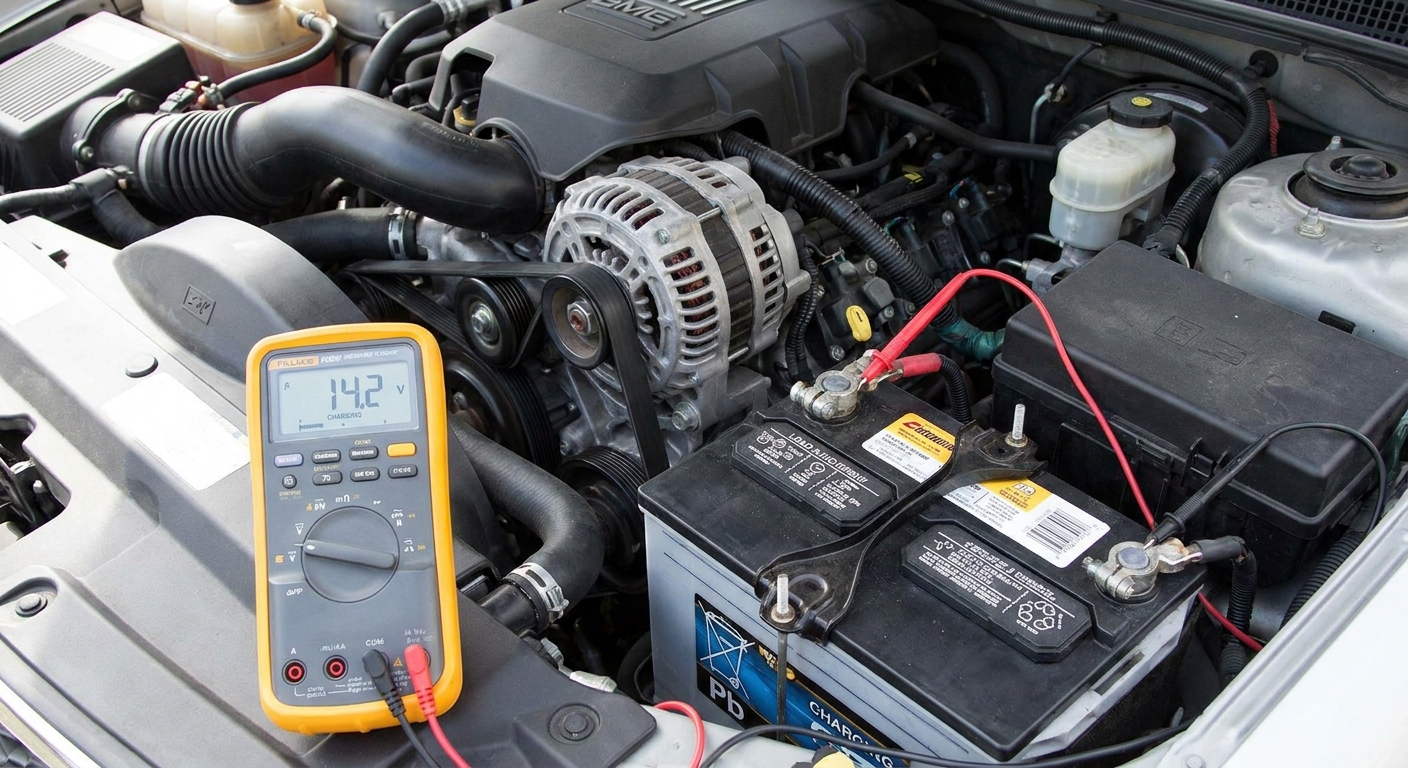
Quick charging voltage test
- Start the engine (jump it if needed).
- Measure voltage at the battery posts at idle.
- Turn on headlights and blower motor and measure again.
On many vehicles, charging voltage often lands around 13.8 to 14.6V. If you see 12.6V or lower while running, the battery is likely not being charged properly (alternator, belt, wiring, or the vehicle’s charging control system). Note: some late-model smart alternator systems intentionally run lower or vary voltage based on conditions, so compare readings under different loads and check service info if something seems borderline.
Signs of a failing alternator diode
- Battery goes dead even when the battery is new
- Parasitic draw test points to the charging circuit
- Sometimes a faint whining noise through speakers that changes with RPM
A shop can confirm diode ripple with a scope, but your fuse-pull test often points you in the right direction. Not every vehicle has an “alternator fuse” labeled that way. Look for the main charging fuse or a fusible link. If pulling that drops the draw, the alternator is a prime suspect.
Step 7: Cold weather and short trips (why it happens suddenly)
Cold does two brutal things at once: it reduces a battery’s available power and it makes the engine harder to crank. So a marginal battery that squeaked by in mild weather can fail the first cold night.
Warning signs you are on borrowed time
- Slower cranking in the morning
- Headlights dim noticeably when starting
- Battery voltage below 12.4V after sitting
- Lots of short trips (under 15 minutes) with heavy electrical use
Cold-weather prevention
- Clean and tighten terminals before winter
- Use a battery maintainer if the car sits for days at a time
- Avoid repeated short trips if possible, or take one longer drive weekly
- Replace an older battery proactively if it is showing weakness
Common fixes, matched to symptoms
Battery is more than 4 years old and fails the overnight voltage hold
- Fix: Replace the battery with the correct group size and CCA rating
- Also do: Clean terminals and confirm charging voltage afterward
Battery tests good, but voltage drops overnight
- Fix: Perform parasitic draw test and fuse isolation
- Common repair: glove box switch, trunk latch switch, stuck relay, aftermarket accessory rewiring
Battery is low after driving, especially with lights or HVAC on
- Fix: Check charging voltage and belt condition, then alternator and main cables
Car starts sometimes, but you get clicking or intermittent no-start
- Fix: Tighten and clean terminals, inspect ground cable to chassis and engine block
When to stop DIY and call a pro
DIY is great, but a few scenarios are worth handing off:
- You measure parasitic draw and it is extremely high (over 1 amp) and you cannot isolate it quickly
- Your vehicle has complex networked modules and pulling fuses causes it to repeatedly wake up and reset
- You suspect a charging control issue on a late-model vehicle (smart alternator systems can be tricky)
- You smell burning insulation, see melted wiring, or find a hot cable or fuse box
A competent electrical tech can pinpoint the exact module or circuit with scan tools and current probes without swapping parts.
Quick checklist: keep it from happening again
- Clean and tighten battery terminals twice a year
- Replace batteries before they are completely on their last legs, especially ahead of winter
- Hardwire accessories correctly (switched power with proper fusing), or use low-draw parking modes
- Drive long enough to recharge after each start, or use a maintainer if the car sits
- If the battery dies once, do not just keep jumping it. Repeated deep discharges shorten battery life fast
FAQ
Can a bad alternator drain a battery overnight?
Yes. A failed alternator diode can allow current to leak backward into the alternator when the car is off. A parasitic draw test and fuse isolation often reveals this.
How long should a car sit before a healthy battery dies?
With a healthy battery and normal draw, many cars can sit for a couple weeks and still start. High draw, cold weather, or an aging battery can cut that to a day or two.
Is it safe to disconnect the battery overnight to “fix” it?
It is a workable temporary workaround to prevent a dead start, but you may lose radio presets, clock settings, and some vehicles may need idle relearn. The real fix is identifying the drain or replacing the weak battery.