A long road trip is the worst time to learn your battery is weak, your tires are underinflated, or your wipers smear like a greasy diner window. The good news is you can catch most problems in your driveway with a few simple checks.
Below is my go-to pre-trip checklist from years in the shop. It is built to be quick to scan, but thorough enough that you are not relying on luck three hours from home.
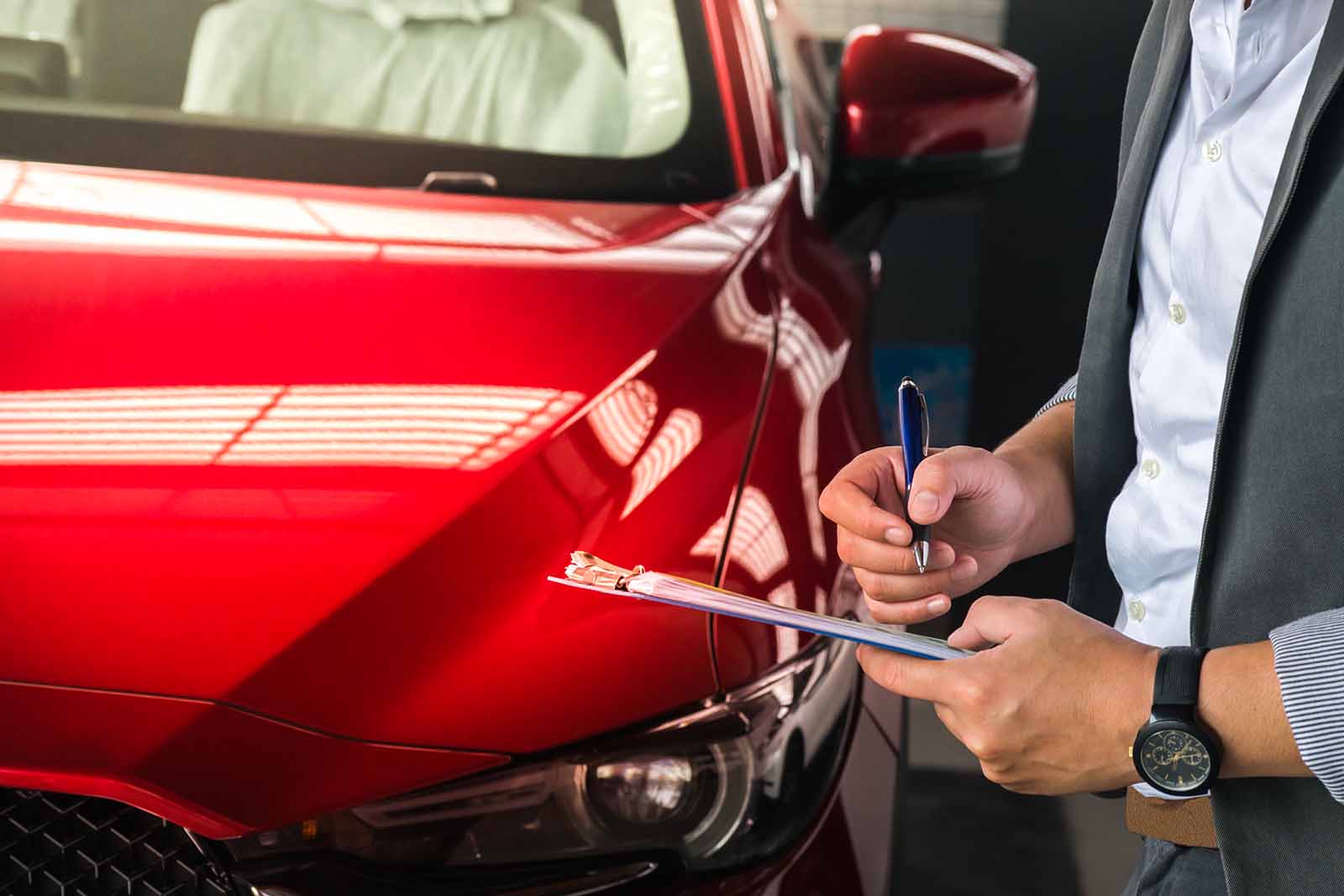
Quick roadmap: when to do what
- 1 to 2 weeks before: tires, brakes, battery test, scheduled maintenance , order parts if needed.
- 2 to 3 days before: top off fluids, test lights, check wipers, load emergency gear.
- Morning of: set tire pressures when cold, do a quick walkaround, confirm you have your key fob and spare.
If anything on this list looks questionable and your trip is tomorrow, prioritize tires, brakes, and cooling system basics. Those are the big three that can turn into a tow.
Tires and wheels
Your tires carry the load, manage the heat, and do all the steering and braking. They deserve the first spot on the list.
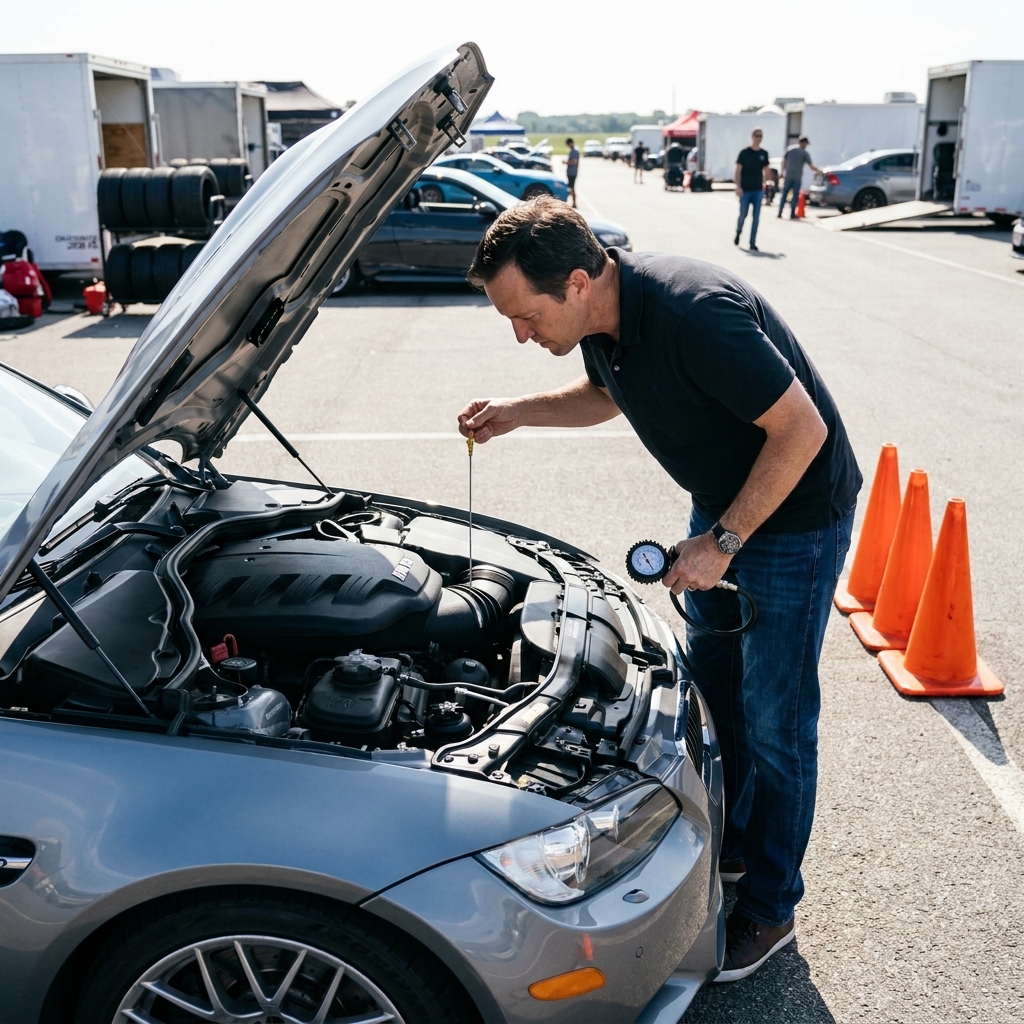
1) Tire pressure (including the spare)
- Check pressures cold, ideally before driving at all (or within about 1 mile at low speed).
- Use the door jamb sticker for the correct PSI, not the number on the tire sidewall.
- Adjust for load. If your sticker lists a higher PSI for full load, use it when the car is packed.
- If you set pressures before loading, do a quick recheck after the car is packed.
- Do not forget the spare tire. Compact spares are often 60 PSI.
2) Tread depth and uneven wear
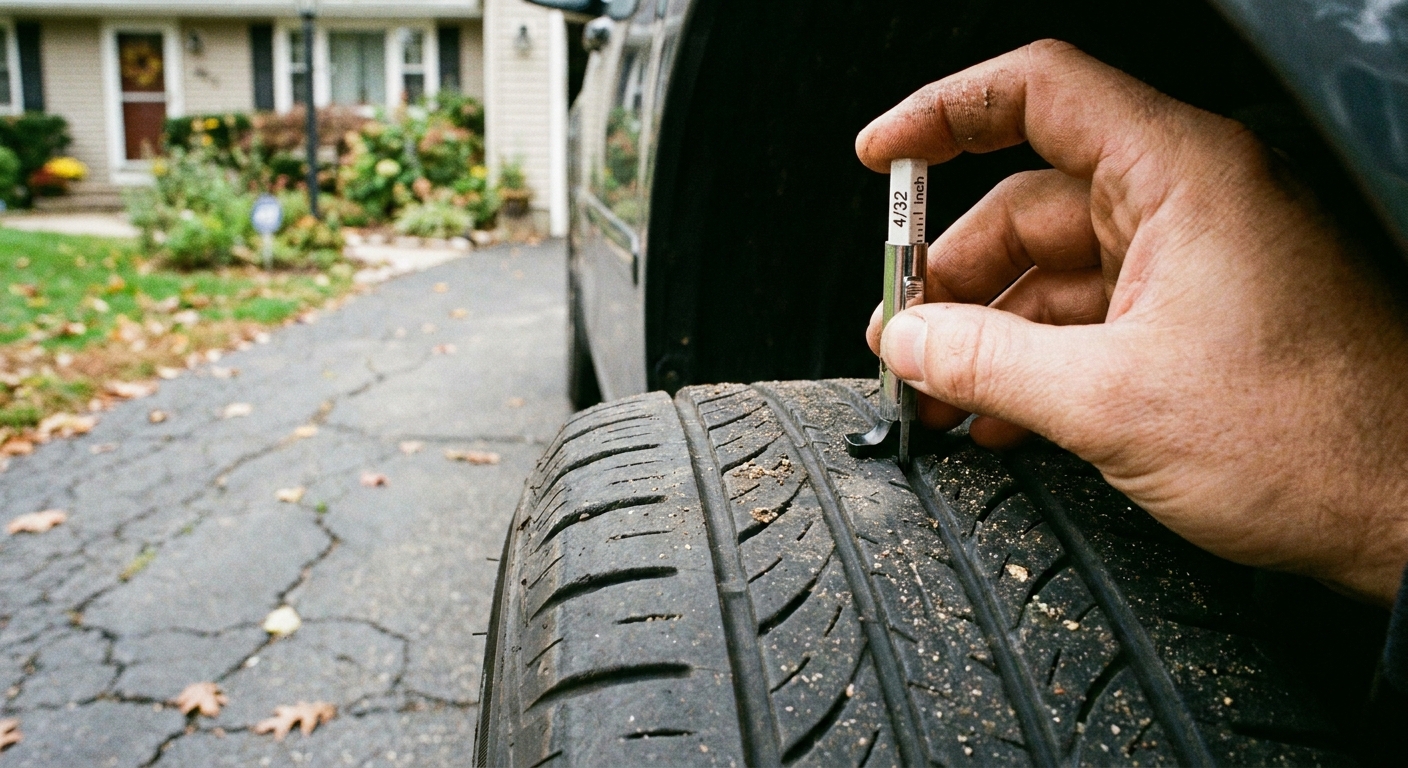
- As a rule of thumb, look for at least 4/32" of tread for wet-weather confidence. At 2/32", tires are legally worn out in many places (including many U.S. states).
- Uneven wear patterns can hint at alignment or suspension issues. Common clues:
- Inside edge worn: alignment or worn suspension parts.
- Center worn: overinflation.
- Both shoulders worn: underinflation.
If you see cords, bulges, or a bubble in the sidewall, replace the tire before the trip. That is a blowout waiting for summer heat.
3) Sidewall damage and age
- Check for cracks, dry rot, gouges, or embedded objects.
- If you can find the DOT date code, keep tire age in mind. Many manufacturers recommend inspection around 5 to 6 years and replacement by about 10 years, depending on condition and use. Older tires are more prone to failure even with decent tread.
4) Lug nuts and wheel issues
- If a wheel has been off recently, confirm lug nuts are properly tightened.
- On the test drive, listen for humming that rises with speed (possible wheel bearing) or steering shake (possible balance issue).
- Bonus move: at home, make sure your lug wrench fits and you can break one lug nut loose. Seized lugs are a common roadside surprise.
Fluids (the easy wins)
Most fluid checks take five minutes and can save you from overheating, poor braking, or a dead transmission on the shoulder.
Engine oil
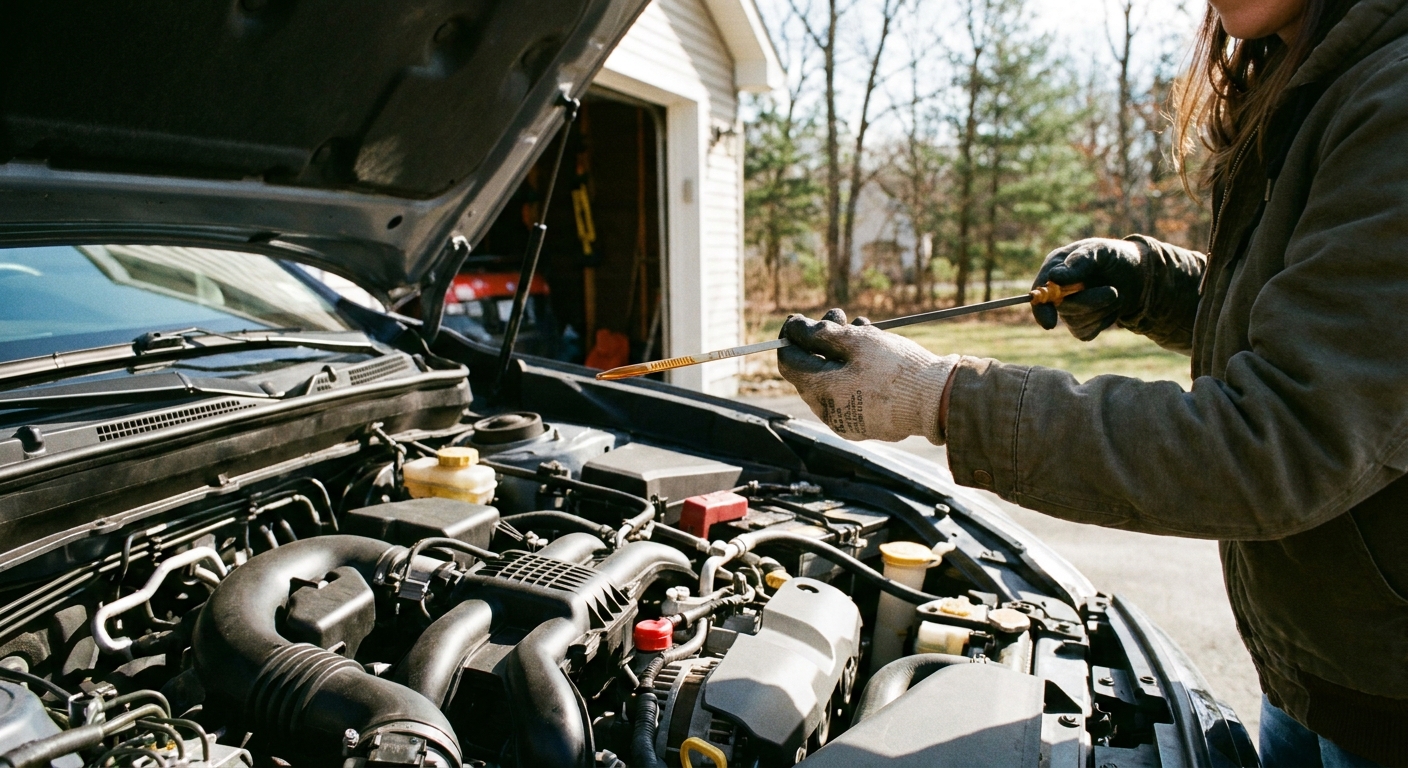
- Check the dipstick level on flat ground with the engine off for a few minutes.
- Top off if low, but avoid overfilling.
- If the oil is extremely dark, gritty, or you are close to your change interval, do the oil change before you go.
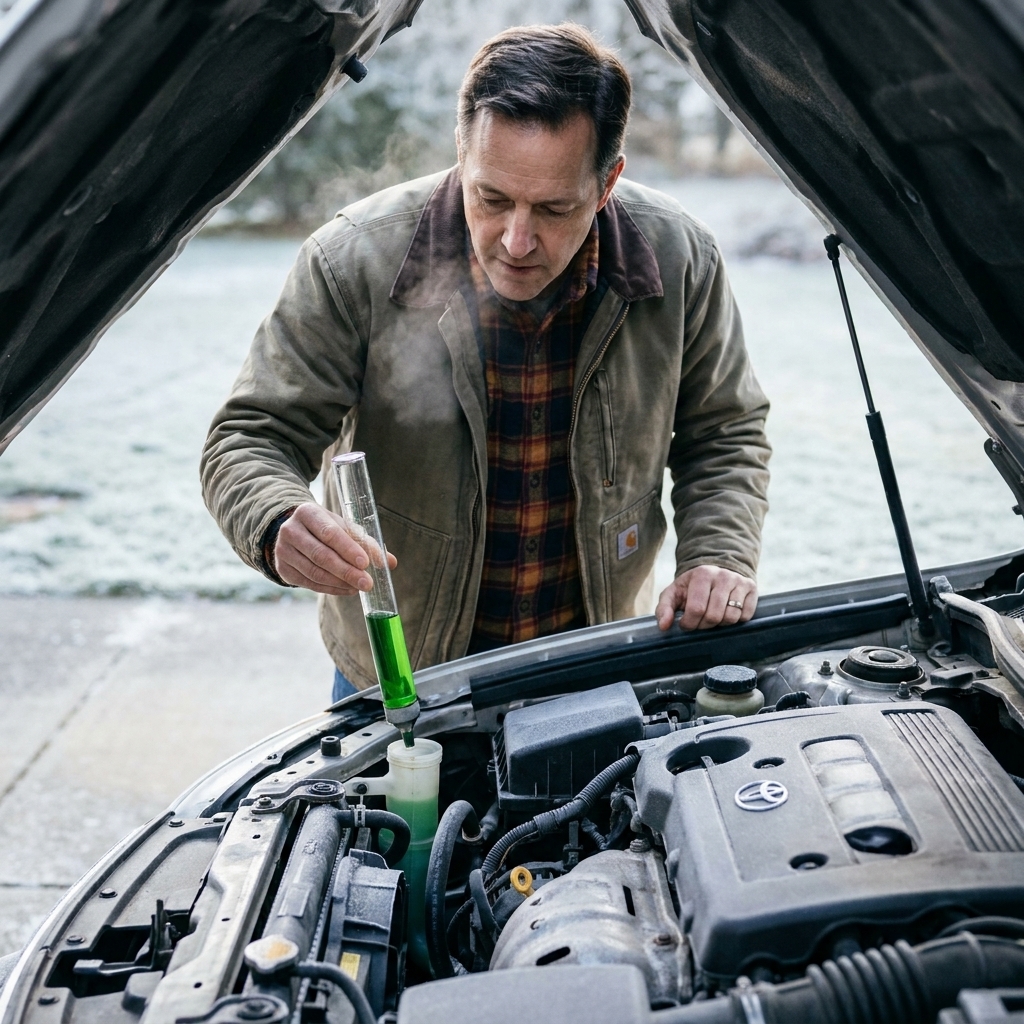
Coolant (engine temperature control)
- Check the coolant level in the reservoir when the engine is cool.
- If you are repeatedly low, look for leaks at hoses, radiator end tanks, water pump area, and under the car.
- If you need to top off, use the correct type for your vehicle. Mixing coolant types can create sludge over time.
Red flag: temperature gauge creeping up on hills, heater blowing cold when it should be hot (often a low-coolant clue), or a sweet smell after shutdown. Handle cooling system issues before a trip.
Brake fluid
- Look at the brake fluid reservoir. Level should be between min and max.
- Low fluid can mean worn brake pads or a leak.
- If the fluid looks very dark, consider a brake fluid service, especially if it has been years.
Transmission fluid (if applicable)
- Many newer vehicles do not have a user-serviceable dipstick. Follow the owner’s manual. Even some sealed or “lifetime” units still have service intervals.
- If you have a dipstick, fluid should be in range and not smell burnt.
Power steering fluid (if your car uses it)
- Check level and condition. Whining while turning or foamy fluid can mean low fluid or air in the system.
Washer fluid
- Top it off. Bugs and road grime are guaranteed on a trip.
Brakes and steering feel
You do not need to pull wheels in the driveway to get a good read on brake health. A short test drive tells you a lot.
Brake pad and rotor reality check
- Listen for squealing (wear indicators) or grinding (metal-on-metal).
- Feel for pulsing in the brake pedal (often rotor thickness variation, runout, or pad deposits, commonly called “warped rotors”).
- Any pulling left or right under braking should be inspected.
Parking brake
- Make sure it holds on a gentle incline. This matters more than people think when you are parked with a loaded car.
Steering and suspension quick check
- On a smooth road, your car should track straight with a light grip.
- Clunks over bumps, wandering, or vibration at highway speed are all worth diagnosing before you rack up miles.
Lights, wipers, and visibility
Most road-trip mishaps are not dramatic. They are annoying, preventable stuff like a dead headlight at dusk in the middle of nowhere.
Exterior lights
- Headlights: low and high beams
- Brake lights
- Turn signals and hazards
- Tail lights and license plate lights
- Fog lights, if equipped
Pro tip: back up near a wall or garage door at night and press the brakes. You will immediately see if one side is out.
Wipers and washer spray
- If wipers chatter, streak, or leave sections untouched, replace them.
- Confirm washer nozzles spray properly and do not dribble.
Windshield condition
- Fix chips before they spiderweb. Temperature changes and highway vibration make cracks grow fast.
Cameras and sensors (quick clean)
- If your car has driver assist features, wipe the windshield area in front of any forward camera and clean radar or parking sensors. Road grime can trigger warnings or disable features.
Battery and charging system
Batteries rarely give you a polite warning. They usually work fine until they do not.
What you can check at home
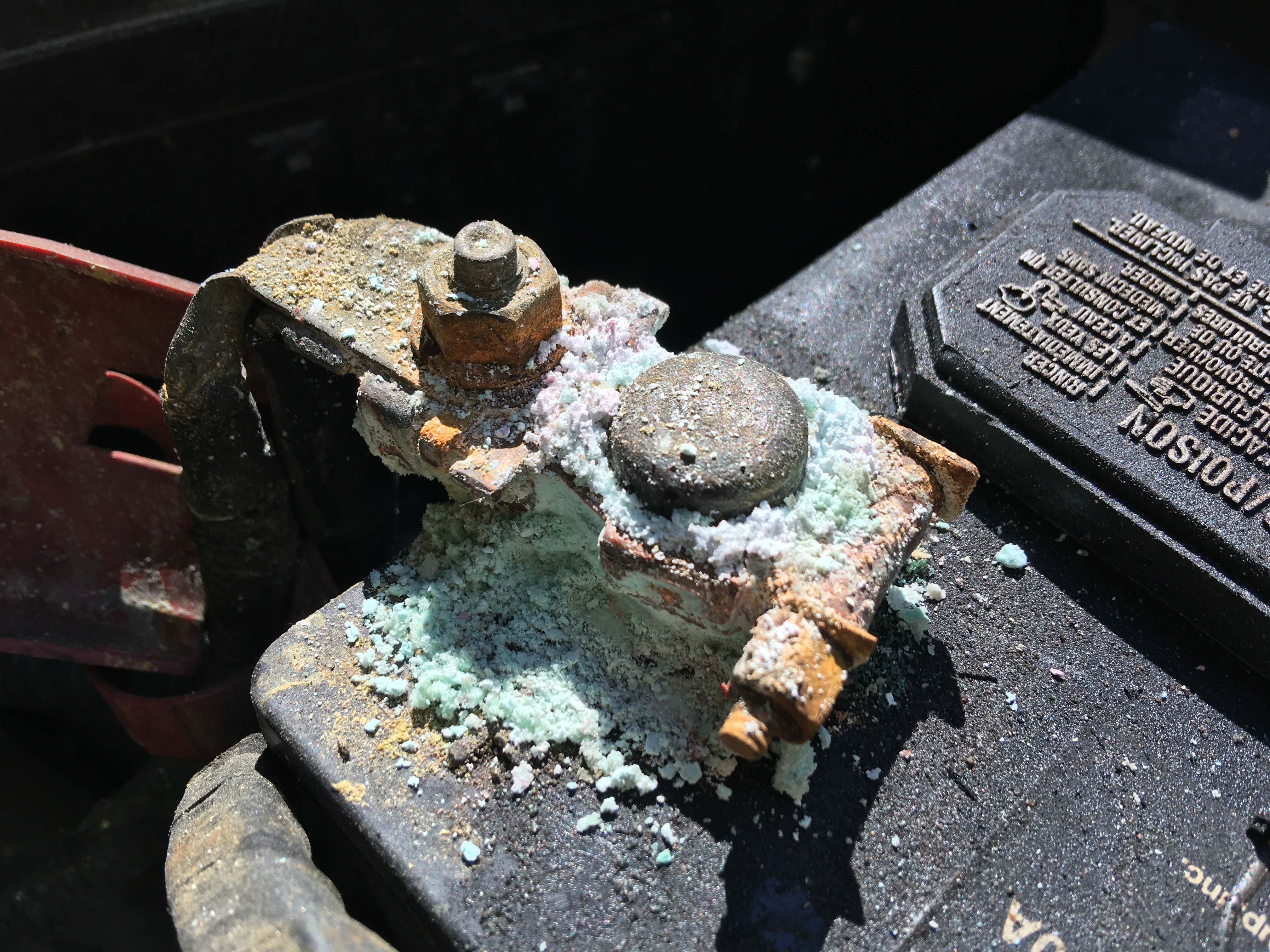
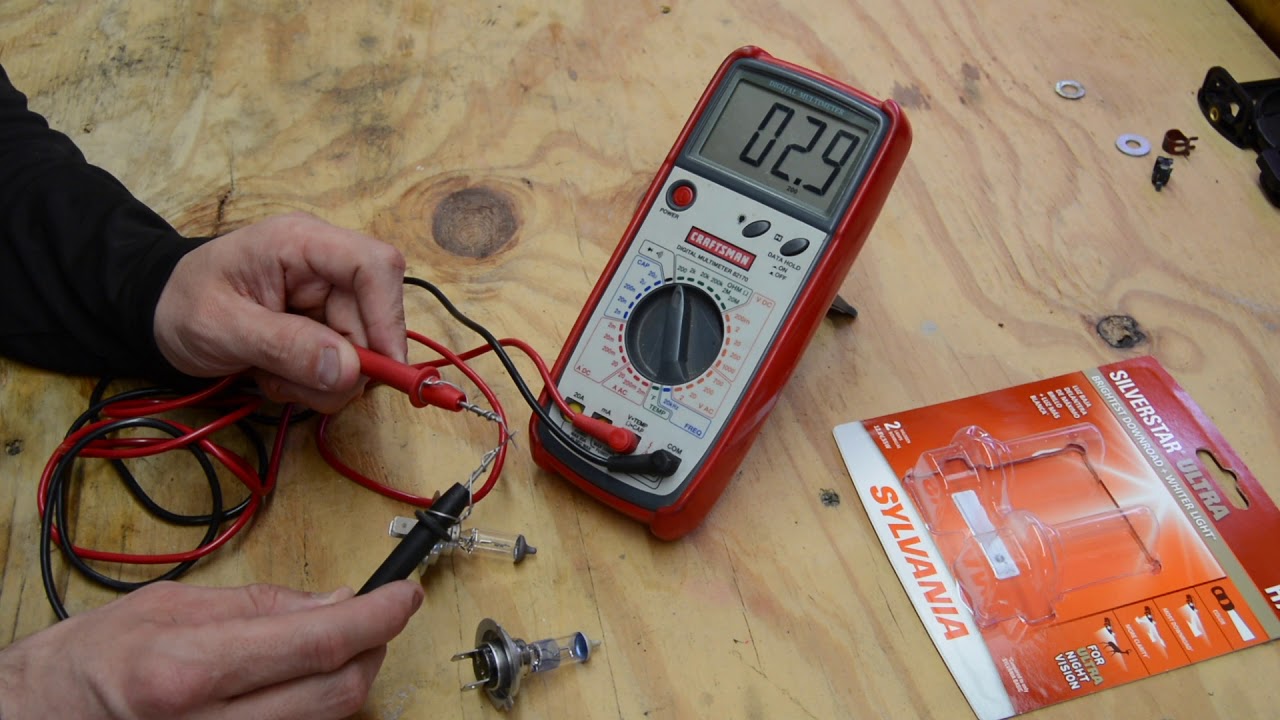
- Look for corrosion on terminals and clean it if needed.
- Make sure the terminals are tight and do not twist by hand.
- Watch for slow cranking, flickering lights at idle, or a battery light on the dash.
Best pre-trip move: get it load-tested
Most auto parts stores can load-test your battery and check alternator output in minutes. If your battery is 4 to 6 years old and you are heading far from home, testing is cheap insurance.
Belts, hoses, leaks, and underhood basics
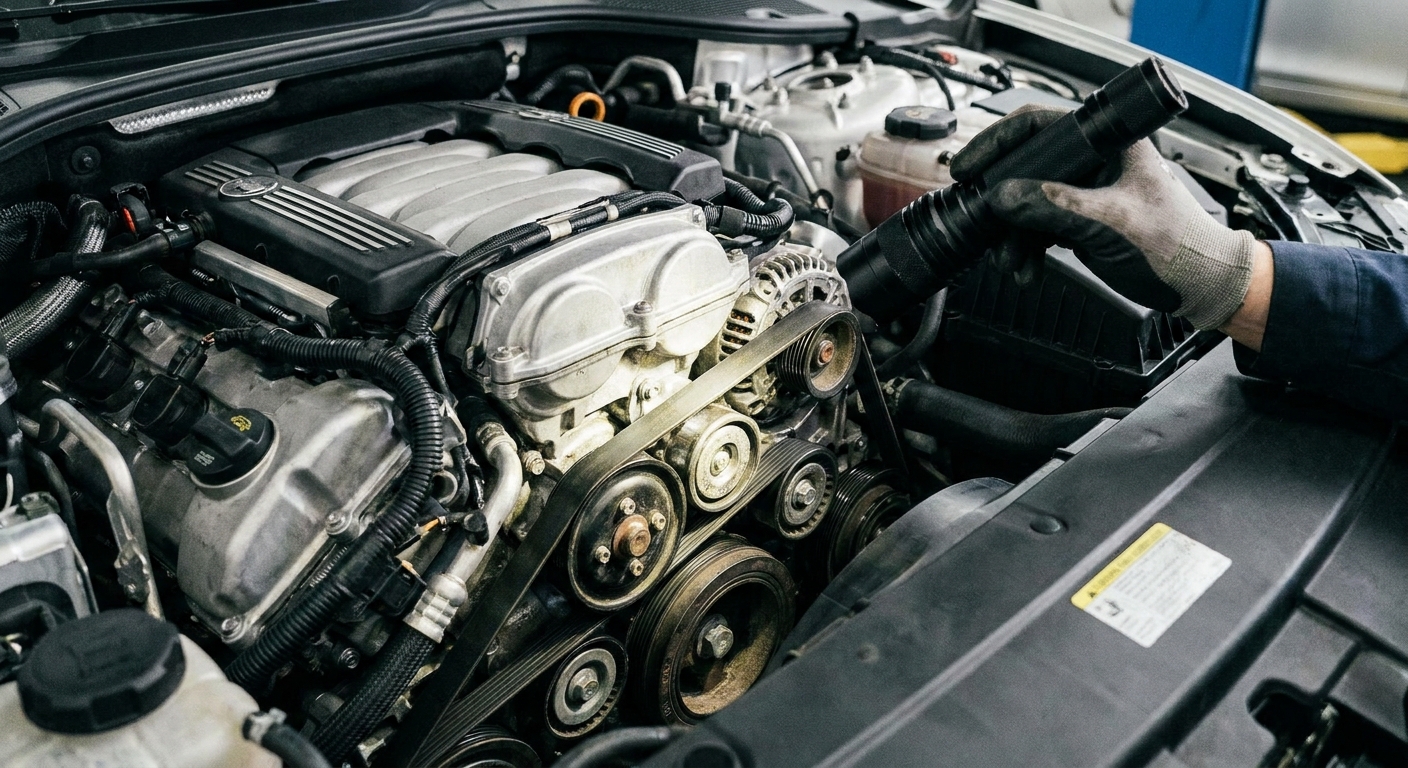
You do not need to be a mechanic to spot trouble. You just need a flashlight and a minute of curiosity.
- Belts: look for cracking, fraying, or glazing. Listen for squealing on cold starts.
- Hoses: look for bulges, wet spots, or crusty residue near clamps.
- Leaks: check your parking spot for fresh oil, coolant, or reddish fluid.
- Smells: burning oil, sweet coolant, or raw fuel smells are all worth addressing.
HVAC and cabin comfort checks
Comfort is not just comfort. It is fatigue management.
- A/C performance: if it is weak now, it will be worse idling in traffic heat.
- Heater and defrost: make sure the defroster gets hot and clears the windshield quickly.
- Cabin air filter: if airflow is weak or musty, replace it. It is usually a quick DIY.
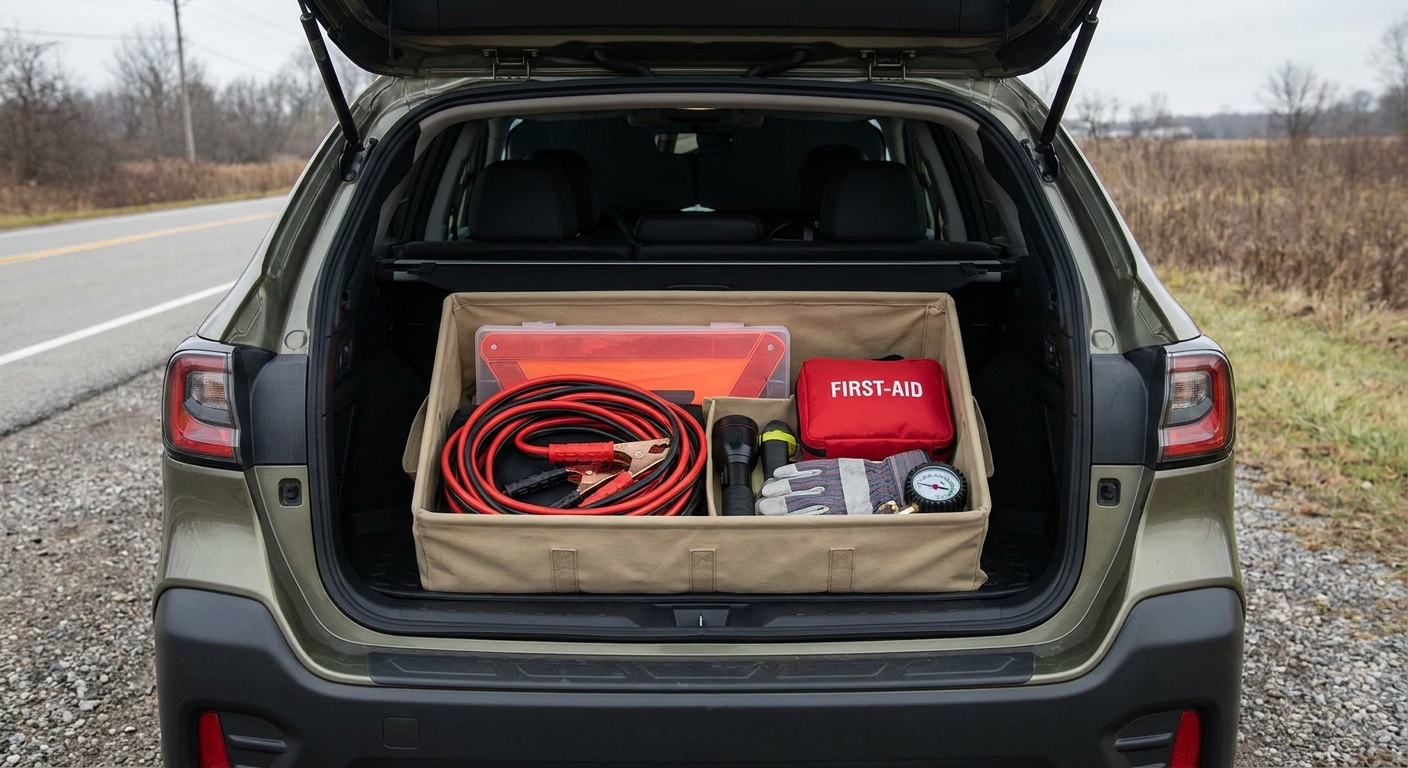
Emergency gear: what to pack (and what to skip)
I like gear that solves common problems without turning your trunk into a rolling hardware store.
Must-haves
- Spare tire, jack, and lug wrench (confirm they are present and fit your wheels)
- Tire pressure gauge
- Flashlight or headlamp with fresh batteries
- Jumper cables or a lithium jump pack
- Basic first-aid kit
- Reflective triangles or road flares
- Work gloves and a small towel or shop rags
- Phone charger and backup charging cable
- Water and a few snacks, especially for remote routes
Nice to have
- Compact air compressor and tire plug kit (for temporary tread-area repairs only, not sidewall damage)
- Small tool kit with screwdriver, pliers, and adjustable wrench
- Quart of the correct engine oil and a funnel
- Windshield washer fluid
Double-check these before you roll
- Registration and insurance
- Spare key plan (at least know where it is)
- Wheel lock key, if you have locking lug nuts
- Roadside assistance coverage and the number to call
Older cars: extra checks I would not skip
If your vehicle has some years on it, it can still be a fantastic road trip companion. You just want to stay ahead of the usual age-related failures.
- Cooling system: inspect radiator hoses closely, check for seeping at the radiator seams, and confirm the cooling fan works.
- Rubber fuel lines: look for cracking or fuel smell, especially on older fuel-injected cars.
- Charging system: confirm alternator belt tension and watch for a glowing battery light.
- Vacuum lines: brittle vacuum hoses can cause rough idle and poor fuel economy.
- Spare parts mindset: if your car is known for a common failure item, bring the part and the tools if you already own them.
My personal rule with classics and older daily drivers: if a hose or belt looks questionable, replace it at home, not on the shoulder.
Hot-weather road trips
Heat magnifies weak components. If you are heading into desert temps or long summer climbs, focus on anything that manages heat.
- Cooling system health: coolant level, no leaks, fans working, radiator not clogged with debris.
- Tire pressure: set pressures when cold. Do not bleed air out of hot tires at a rest stop.
- A/C readiness: weak A/C can become a safety issue if it increases fatigue.
- Carry water: for you first, then for emergencies.
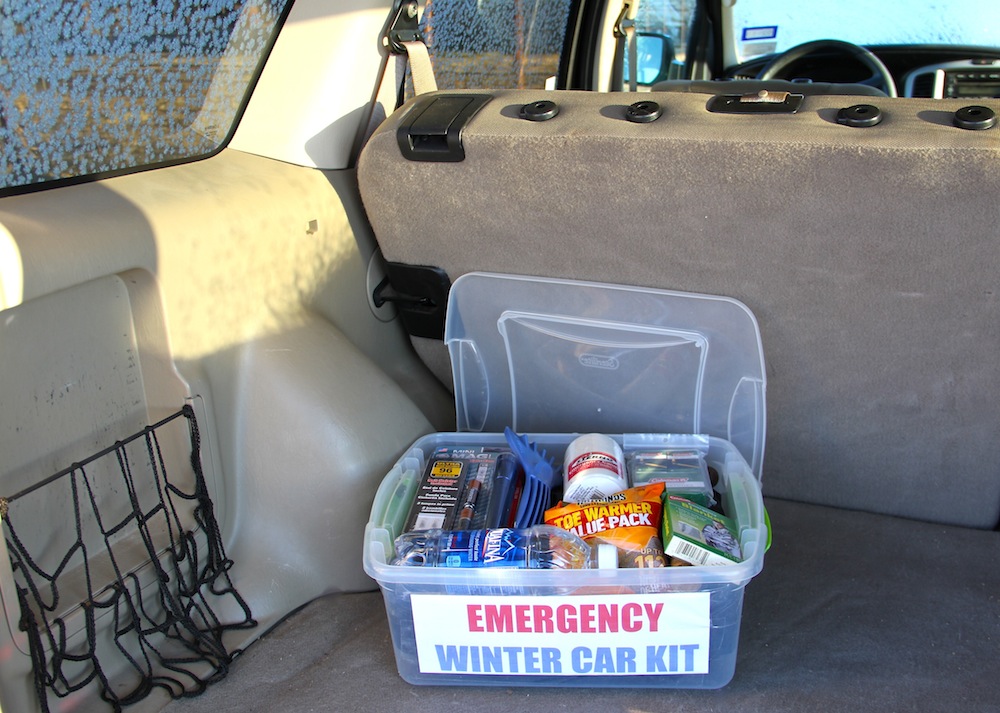
Winter driving and cold-weather trips
Cold weather is hard on batteries, tires, and visibility. Plan for getting stuck, even if you do not expect it.
- Battery: load-test it if it is aging. Cold cranking is where weak batteries fail.
- Tires: consider winter tires if you will see sustained snow or ice. At minimum, ensure good tread depth.
- Washer fluid: use winter-rated fluid so it does not freeze.
- Wipers: replace streaky blades and carry a spare set if conditions are nasty.
- Emergency gear: blanket, hat and gloves, small shovel, traction aid, and extra water and snacks.
- Fuel: keep the tank above half in remote areas to reduce condensation and give you options if delayed.
Final walkaround: the 2-minute check
Right before you pull out, do a lap around the car.
- Any tire visibly low?
- Any puddles under the engine bay?
- All doors and hatch fully closed?
- Headlights and brake lights working?
- Mirrors adjusted and windshield clean?
If you catch one issue here, you just saved yourself the kind of delay that eats half a travel day.
When to get a shop involved
DIY checks are great, but do not ignore warning signs. Schedule an inspection if you notice:
- Brake grinding, major pulling, or a soft pedal
- Overheating, coolant loss, or temperature swings
- Tire cords, bulges, or repeated pressure loss
- Steering shake, clunks, or severe vibration at highway speeds
- Battery that cranks slow or tests weak
A quick pre-trip inspection is almost always cheaper than a tow, a hotel night, and an emergency repair bill in an unfamiliar town.