I’ve seen this one a thousand times in the shop parking lot: the starter spins the engine like it should, the dash lights up, everything sounds “normal”... but it never catches. When an engine cranks at a healthy speed and won’t even try to fire, you can stop thinking battery and starter and start thinking fuel, spark, timing signals, air, or security.
Quick definition for anybody new to this: “Cranks but won’t start” means the engine is rotating when you turn the key to START, but it never runs on its own. If you turn the key and you get clicks or nothing at all, that is a no-crank problem and it is a different flow chart.
Below is the exact driveway decision tree I’d walk a friend through over coffee. Follow it in order. Each step is designed to answer one question fast, without throwing parts at the problem.
Before you start: cranking rules
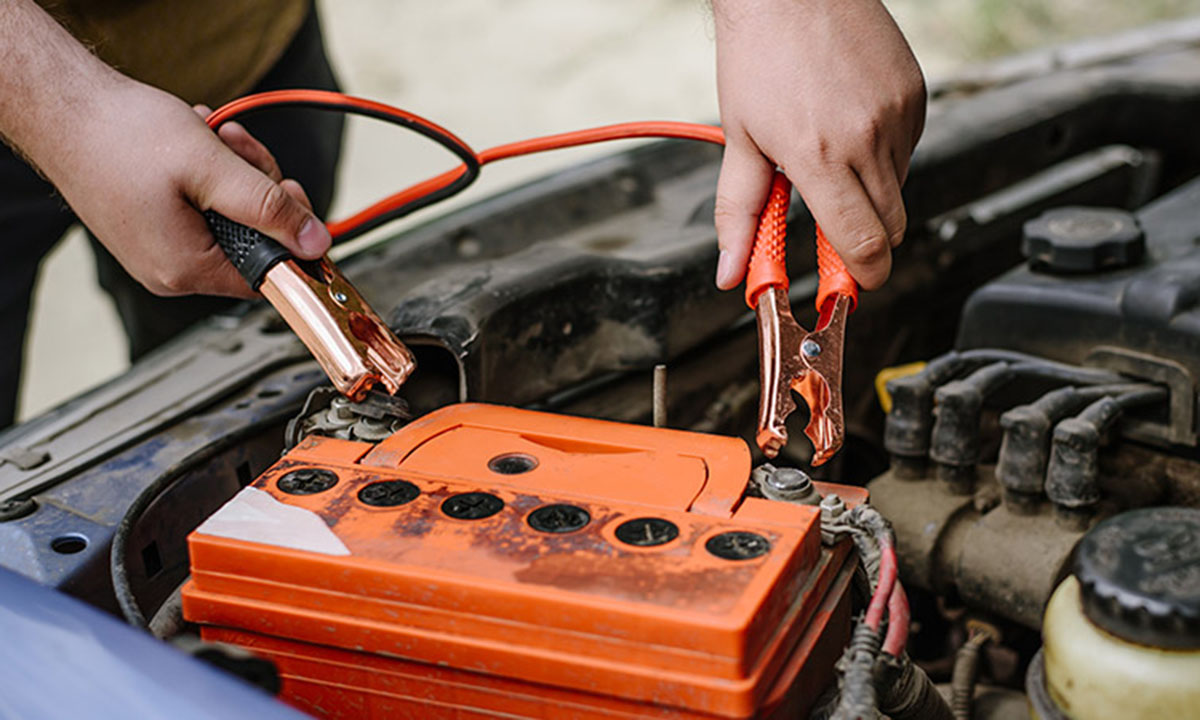
A starter is built for short bursts, not marathon sessions. If the engine is cranking strongly but not starting, repeated attempts can overheat the starter motor, damage the solenoid contacts, and drain the battery enough to create new problems.
- Max crank time: 10 seconds per attempt.
- Rest time: wait 60 to 120 seconds between attempts.
- Stop cranking immediately if the cranking slows down, you smell electrical heat, or you see smoke.
If you have already cranked it for minutes total, set the key aside for now and let things cool while you diagnose. Another crank attempt at this point often turns a single failure into a tow plus a starter replacement.
Decision tree overview
- Scan for clues (if you can)
- Silent fuel pump
- No spark
- Flooded engine
- Air and intake problems
- Crank and cam sensor faults
- Security lockout
- Mechanical timing or compression
Why this order? Because each step gets progressively harder to prove in a driveway. If you find a solid “yes” or “no” early, you save time and keep the starter alive.
0) Scan for clues (optional)
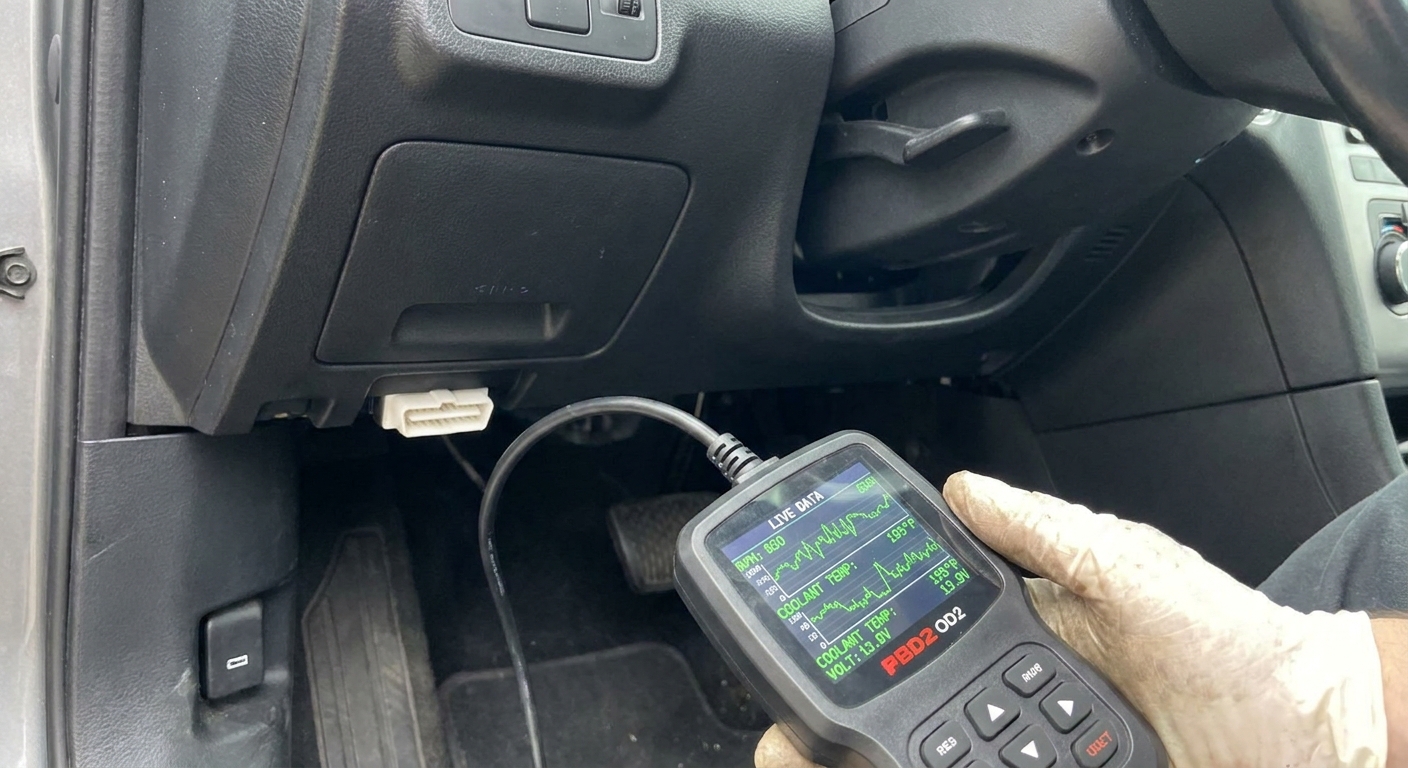
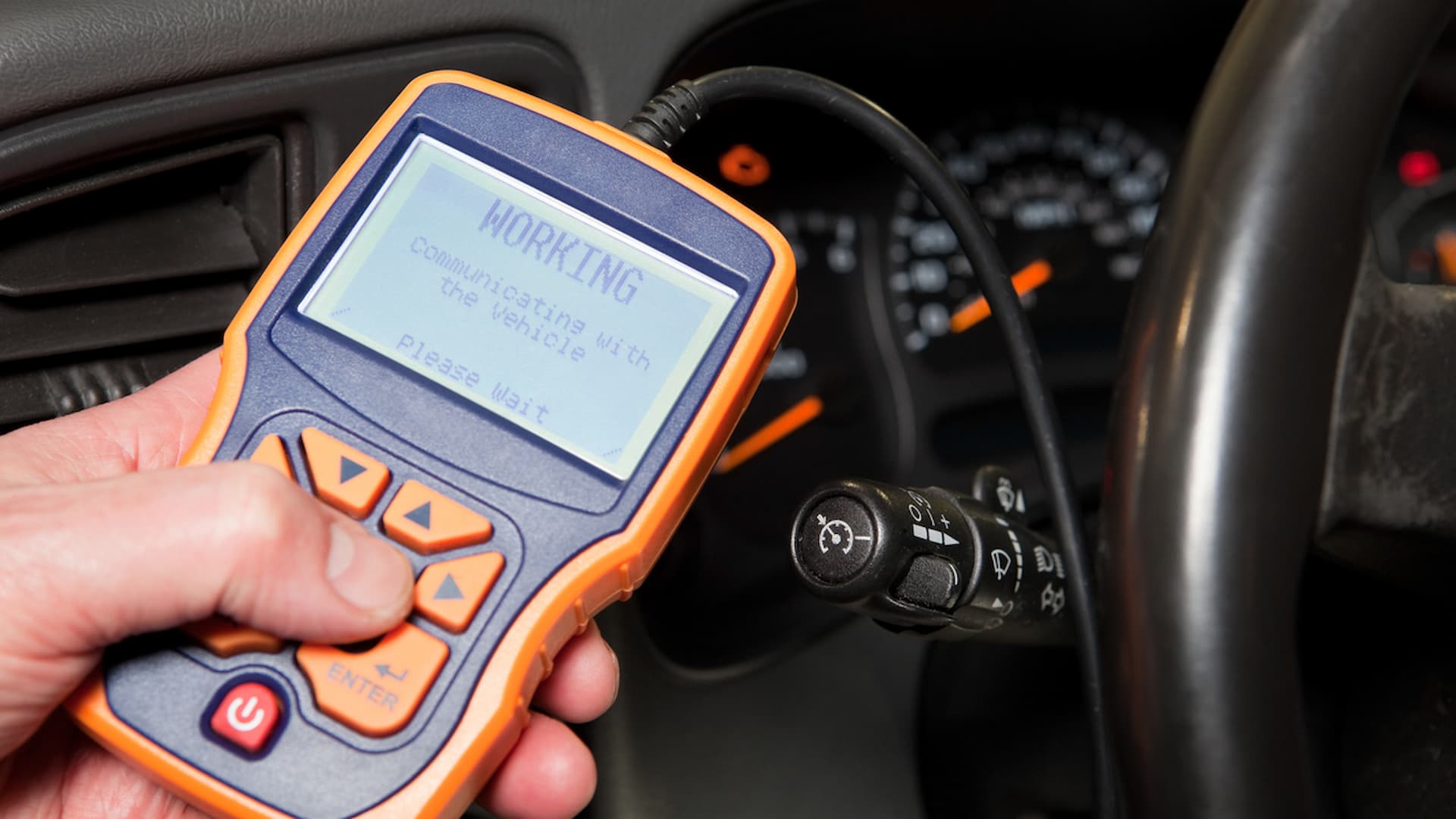
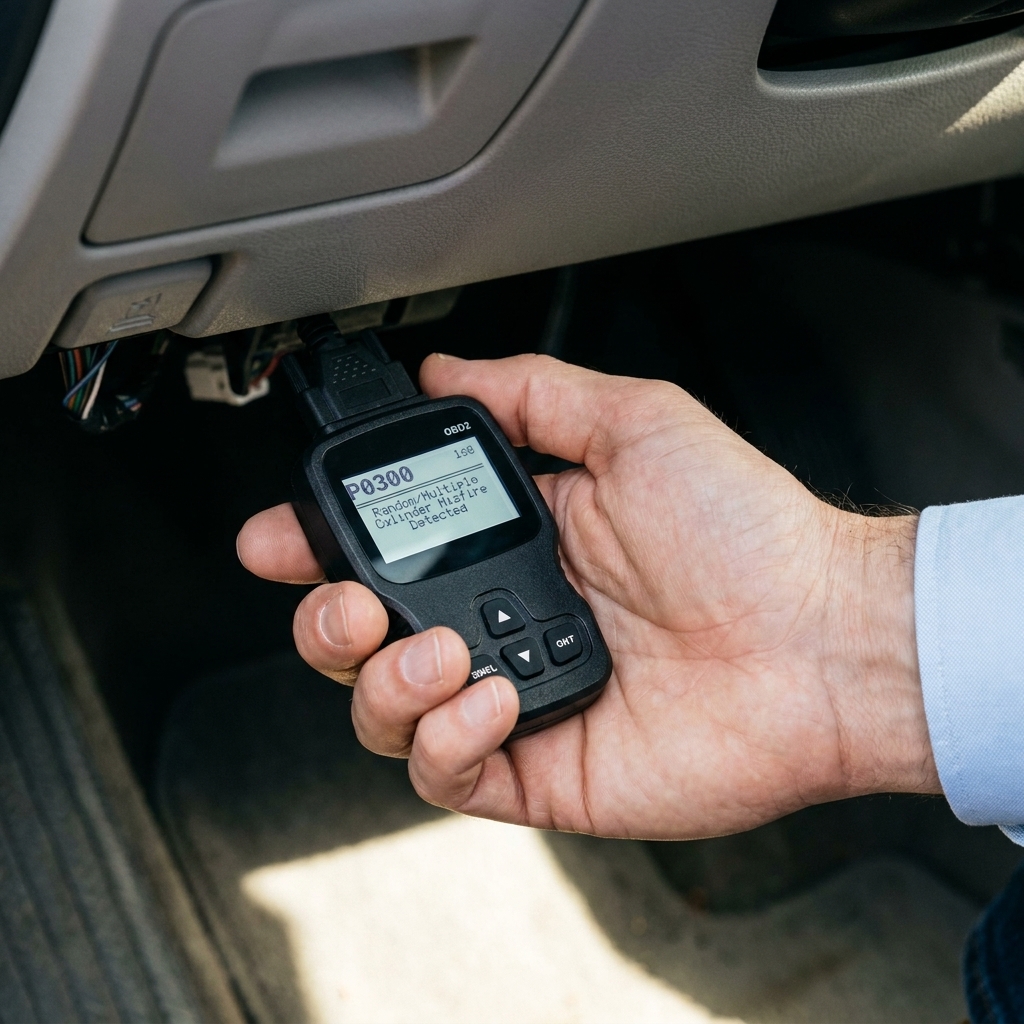
Goal: get easy information before you touch anything. A basic OBD-II reader or dongle is one of the best driveway tools now.
- Scan for codes and write them down before you clear anything.
- Check live data while cranking if your tool supports it. RPM is especially useful for Step 6.
No scanner? No problem. The rest of this still works, you just lose some shortcuts.
1) Silent fuel pump
Goal: confirm the fuel pump is at least waking up. A dead-silent pump is one of the quickest crank-no-start wins to diagnose.
Step 1A: Listen for the prime
On many vehicles, you will hear the fuel pump run briefly when you turn the key to ON (not START). It is often around 1 to 3 seconds, but it varies. Some cars are quieter than others, and a few do not make an obvious prime sound at all.
- Turn everything off (fan, radio).
- Open the driver door or roll the window down.
- Key to ON and listen near the rear of the car.
If you hear the pump prime
Good. The pump has power and is attempting to run. That does not prove fuel pressure is correct, but it is a start. Move to the next section: No spark.
If the pump is totally silent
Do these quick checks in this order:
- Try a second prime cycle: Key OFF for 10 seconds, then ON again. Low voltage and module sleep behavior can make the first cycle inconsistent.
- Check the fuel pump fuse: a blown fuse can be the whole story.
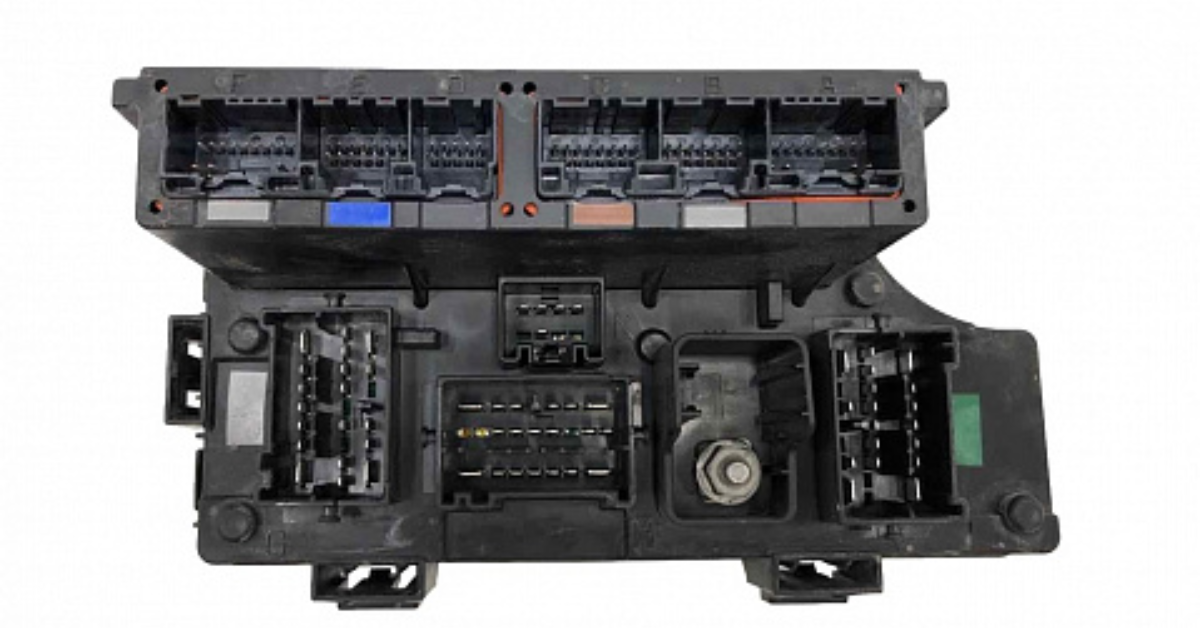
- Swap the fuel pump relay: only if you have an identical relay with the same part number. Many modern fuse boxes use different relay styles or solid-state control, so do not force it.
- Look for impact switch behavior: some vehicles have an inertia shutoff after a bump or minor collision. Your owner’s manual will tell you if yours does and where it is.
When to stop here: If the fuse is good, a correct relay swap changes nothing, and the pump stays silent, you are likely looking at a failed pump, wiring issue, or a control-side issue that needs a meter and often a scan tool. At that point, repeated cranking is just starter heat and battery drain.
2) No spark
Goal: confirm the ignition system is actually firing. No spark means the engine can crank forever and never even sputter.
Safety note
Ignition systems can bite. If you are not comfortable working around high voltage, stop and get help. Avoid holding plug wires or coil outputs while someone cranks.
Step 2A: Watch the tachometer while cranking
This is a useful clue on some vehicles, but it is not a verdict. Many late-model cars drive the tach from network data, and the needle behavior is not always a direct crank sensor report.
- If the tach moves: the computer is often seeing an RPM signal, but it is not proof everything is perfect.
- If the tach stays at 0: that can hint at a missing RPM signal. Keep it in mind for Step 6.
Step 2B: Quick spark test (the clean way)
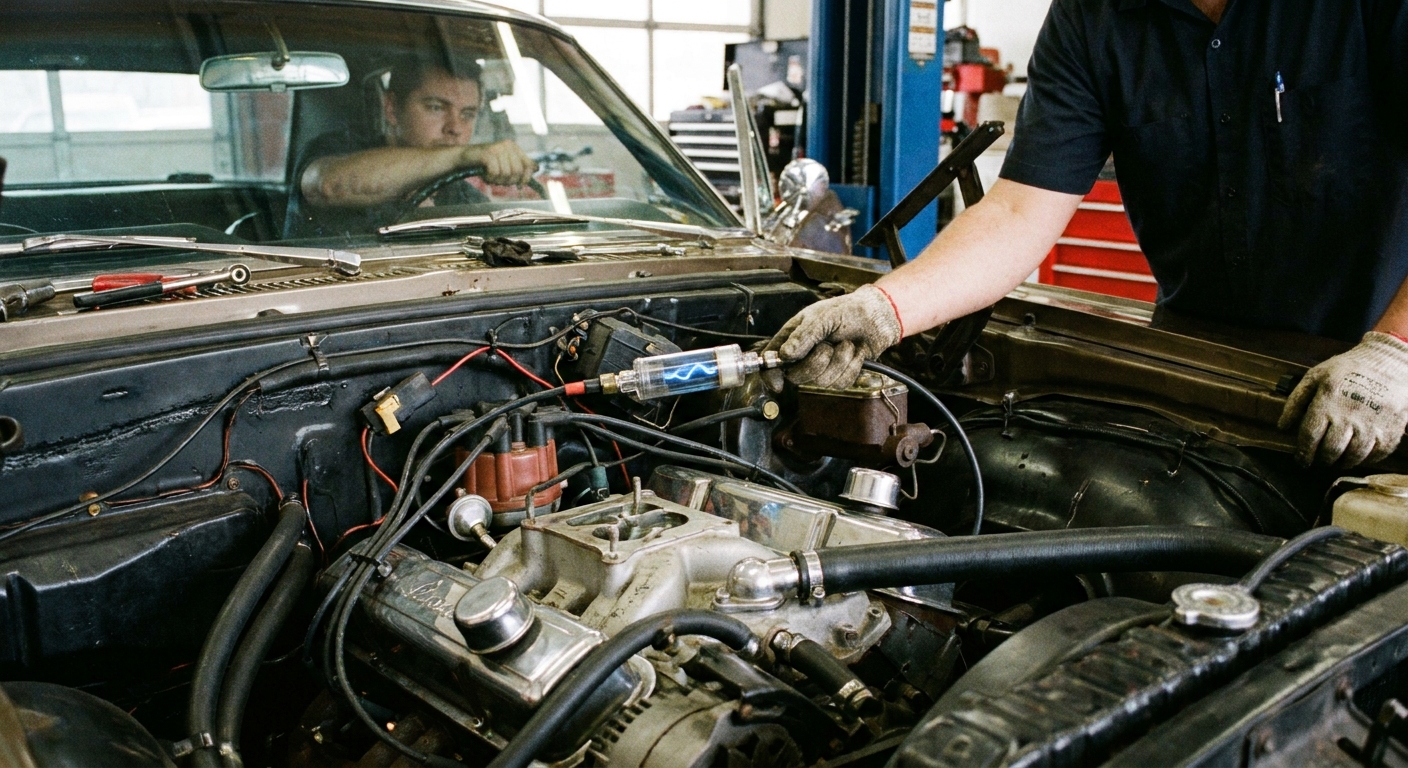
The best at-home method is a cheap inline spark tester. Disconnect a coil or plug wire (depending on your ignition type), install the tester, and crank. You should see a consistent flash.
- Strong consistent flash: spark is likely present. Move to Flooded engine.
- No flash at all: you have a true no-spark condition. Keep reading.
If there is no spark
For a total no-spark condition across the whole engine, I look for system-level causes first:
- Blown ignition/ECM/EFI fuse or a main relay issue (labels vary: IGN, ECM, EFI, INJ).
- Loss of crank or cam signal (Step 6). This is a classic sudden “it died like a switch” failure.
- Security lockout (Step 7), depending on vehicle.
- Ignition module failure (common on older systems).
- Coils or coil packs can fail, but a single coil failure more commonly causes a misfire and rough running rather than an instant total no-start. Shared power feeds to the coils are a bigger suspect for true no-spark.
When it’s time to stop: If you confirm no spark and you have already checked obvious engine control and ignition fuses, the next steps usually require scanning for codes and checking live data or scope patterns.
3) Flooded engine
Goal: determine if you have too much fuel, not too little. Flooding is common after lots of failed starts, a stuck injector, a leaking fuel pressure regulator (older return-style systems), or short trips in cold weather.
Signs you might be flooded
- You smell strong fuel from the tailpipe or under the hood.
- The engine occasionally “tries” to catch, then dies immediately.
- You already did many start attempts, especially with the gas pedal pumping.
Step 3A: Clear-flood mode
On many (not all) fuel-injected cars, holding the accelerator to the floor while cranking tells the computer to cut injector pulse to clear excess fuel.
- Press the pedal all the way down.
- Crank for up to 10 seconds.
- If it starts, keep your foot steady for a moment, then ease off gradually.
If it starts in clear-flood mode: You likely had a rich condition. The next job is figuring out why it was rich: leaking injector, bad coolant temp sensor reading cold all the time, fuel pressure issue, or a restricted air path.
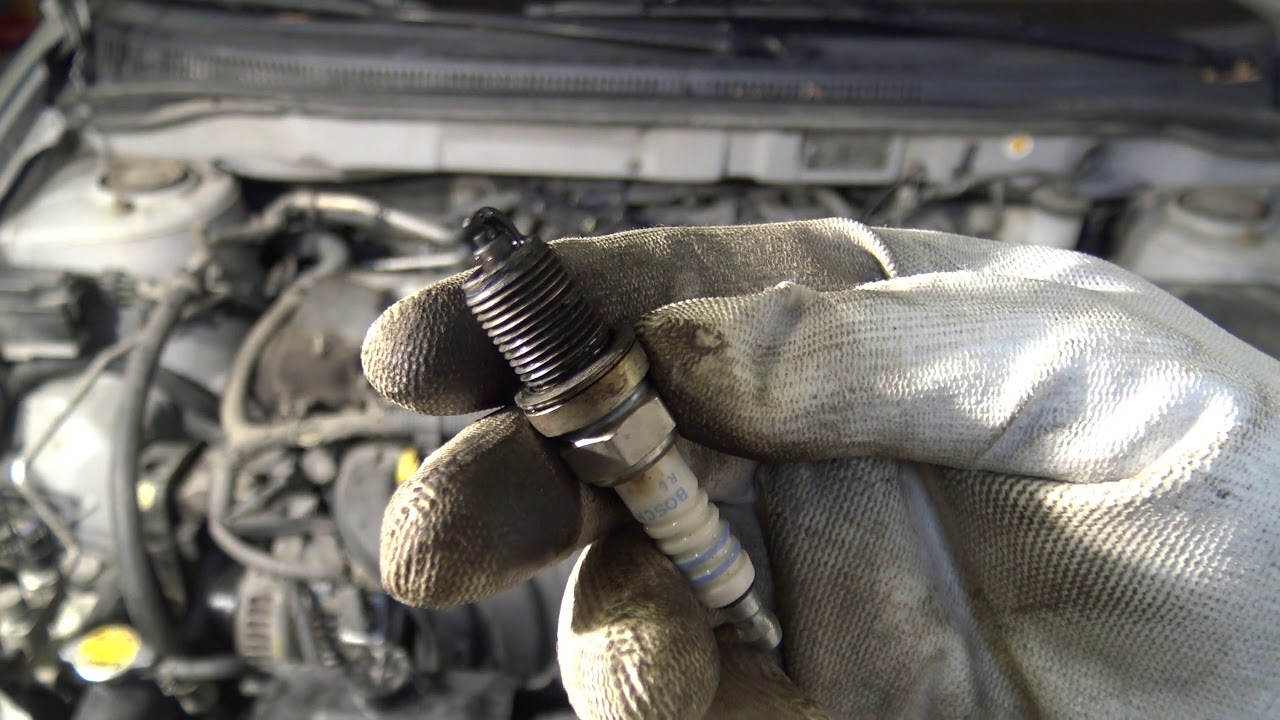
Step 3B: Check a spark plug (only if easy)
If you can pull one plug without turning the job into a two-hour knuckle-buster, it can tell you a lot.
- Wet with fuel: flooding is real.
- Bone dry: you may have a fuel delivery issue even if the pump runs.
When to stop cranking: If it smells strongly of fuel and you have already tried clear-flood once or twice, stop. Raw fuel can wash oil off cylinder walls and dilute engine oil. Let it sit 15 to 30 minutes, then try again once.
4) Air and intake problems
Goal: make sure the engine can actually breathe. Air problems are less common than fuel or spark, but when they happen, they can look exactly like a fuel issue.
Quick checks
- Check the air filter box and intake snorkel: make sure nothing is collapsed, blocked, or packed with debris.
- Listen for abnormal intake behavior while cranking: strange huffing or a stuck throttle body can be a clue.
- If you have electronic throttle: do not pry the throttle plate open aggressively. Some designs do not like being forced.
A simple interpretation that helps
If the engine tries to run on a small amount of combustible spray, that leans you toward fuel delivery. If it will not even cough, you start thinking spark, timing signals, or mechanical timing. I am intentionally not recommending starting fluid as a first move for most people because it is easy to overdo.
5) Fuel pressure (if you can)
Goal: if you heard the pump, take one more step before you move on. A pump can run and still deliver low or no pressure.
Driveway-friendly options
- Schrader valve check (if equipped): some fuel rails have a test port. A proper fuel pressure gauge is the right tool here. If you do not have one, do not improvise with loose hoses.
- Scanner clue: on some direct-injection vehicles you can see low-pressure and high-pressure readings, which can immediately point you to the real problem.
If you cannot check pressure safely, do not get stuck here. Keep moving through the tree.
6) Crank and cam sensor faults
Goal: confirm the engine computer knows the engine is turning and knows when to fire injectors and spark. If the crankshaft position sensor (CKP) or camshaft position sensor (CMP) signal drops out, you can get a clean, normal crank with zero start.
Clues pointing to CKP/CMP issues
- The car died while driving like someone flipped a switch, then cranks but will not start.
- No spark and often no injector pulse.
- Intermittent stalling history, then finally a no-start.
- Tach behavior can support this, but it is only a clue.
Driveway checks you can do
Without a scan tool, you are limited, but these are still useful:
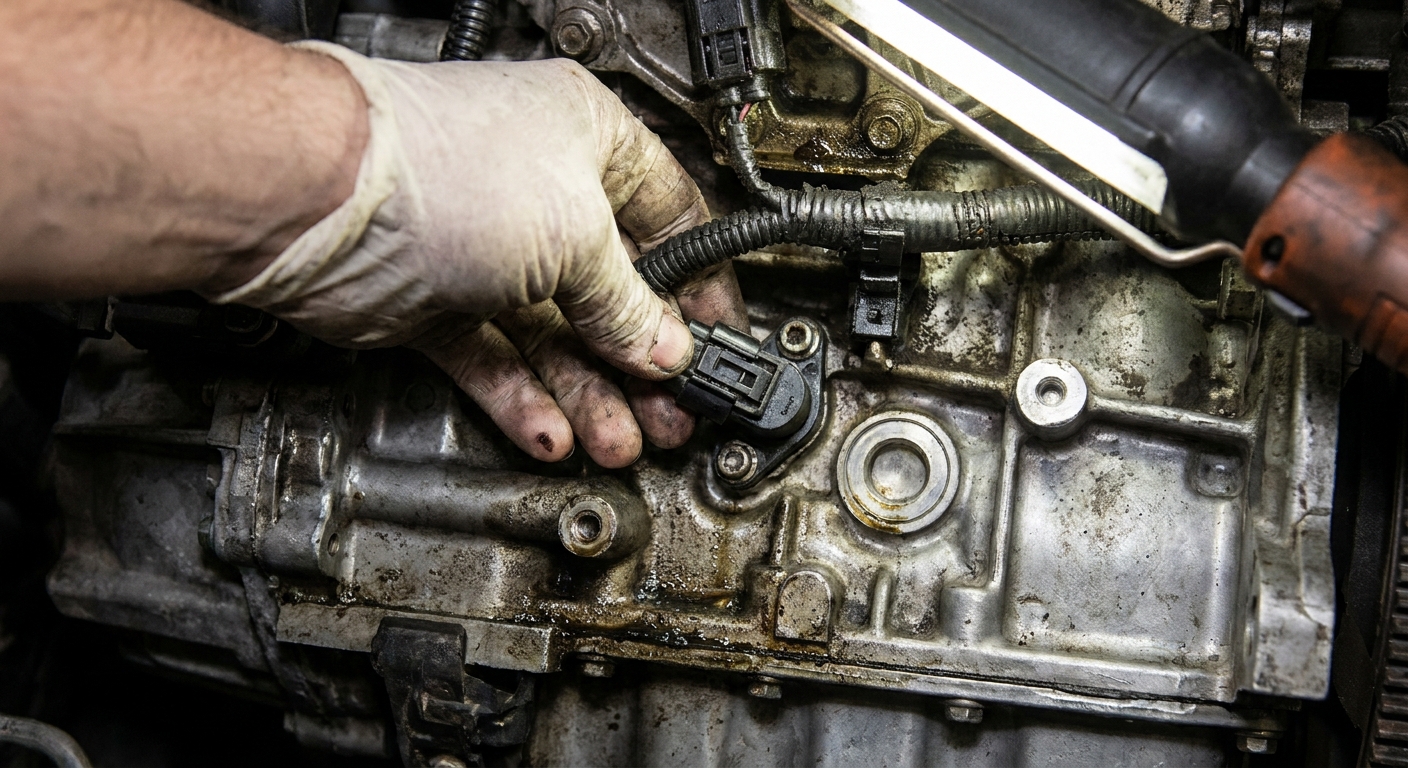
- Check connectors: locate the crank sensor connector (often near the crank pulley, bellhousing, or lower block) and make sure it is seated. Look for oil saturation, broken tabs, or chewed wiring.
- Inspect harness routing: a crank sensor harness that has rubbed through on a bracket is more common than people think.
- Watch RPM with a scan tool if you have one: if RPM stays at 0 while cranking, the ECM may not be seeing CKP.
Reality check: CKP/CMP sensors are not great “guess and replace” parts. Some fail hot, some fail cold, and some are fine but the tone ring or wiring is the problem. If you are not getting RPM on a scanner, or you have a code like P0335 (crank sensor circuit) or P0340 (cam sensor circuit), that is a strong direction.
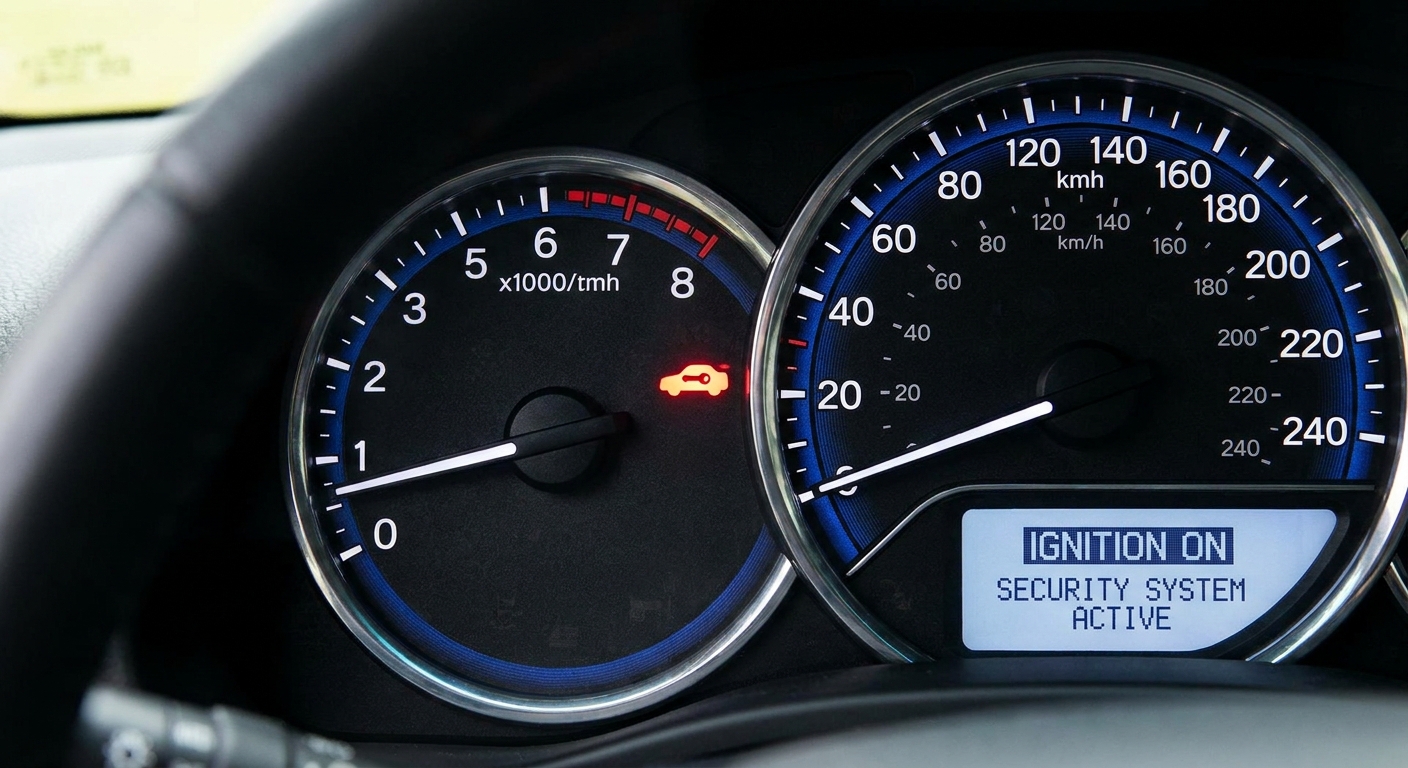
7) Security lockout
Goal: figure out if the car is intentionally refusing to start. Modern immobilizers can allow cranking but block fuel injector pulse, spark, or both.
Common signs
- A security or key-shaped light is flashing rapidly on the dash while cranking, or stays on solid when it normally goes out.
- The car starts and dies immediately (classic immobilizer behavior on some models).
- You recently changed the battery, used a spare key, replaced an ignition switch, or had water intrusion near the steering column.
Quick things to try
- Use your spare key if you have one. A damaged transponder can cause a no-start.
- Lock and unlock with the fob then try again. Some systems re-arm and disarm this way.
- Battery voltage matters: low voltage can make security modules act weird. If you have a charger, stabilizing voltage is a smart move even if cranking sounds OK.
What not to do: keep cranking hoping it will “learn.” It will not. If it is truly locked out, you are just overheating the starter.
8) Mechanical timing or compression
Goal: catch the big mechanical failures that make a normal crank sound deceptively “fine.” When mechanical timing is off, you can have fuel and spark and still get a dead no-start.
Red flags you can hear or notice
- Unusually fast, even cranking sound: sometimes called “spins too easy.” This can happen with very low compression or a broken timing belt on some engines.
- No hint of firing at all even with good spark and fuel clues.
- Recent rattling, slapping, or timing noise before the no-start.
At this point, driveway testing gets limited fast. A compression test, leak-down test, and timing verification are the next steps, and that usually means tools, time, and sometimes towing.
When to stop in the driveway
I love a good driveway win, but here is where I draw the line for most people:
- You confirmed no fuel pump operation after fuse checks and a correct relay swap (if possible).
- You confirmed no spark with a tester and basic engine control fuses look good.
- The car shows security lockout symptoms and a spare key does not help.
- You suspect CKP/CMP and you cannot verify RPM signal or wiring with proper tools.
- The cranking sound changes, you smell hot electrical components, or anything starts smoking.
- You have strong clues of mechanical timing or compression trouble.
At that point, a tow is often cheaper than the “one more try” habit that kills starters and batteries. And if you are stuck somewhere unsafe, skip all of this and call for help immediately.
Quick FAQ
My car cranks strong. Does that guarantee the battery is good?
Not always. A battery can spin a starter yet drop voltage low enough that the ECU or fuel pump acts up. If you have a multimeter, under about 10 volts during cranking is a red flag. For a more formal benchmark, 9.6 volts at 70°F is a common load-test minimum, and cold weather raises the bar. If you do not have a meter, a brief charge is a safe, non-wasteful step.
Could it still be fuel even if I hear the pump?
Yes. Hearing it only proves it runs. You could still have low fuel pressure, a clogged filter (where serviceable), a bad pressure regulator, or injectors that are not being commanded on. That is where a pressure gauge or scan tool comes in.
Is starting fluid a good test?
It can be a diagnostic shortcut, but it is easy to misuse. Too much can cause a backfire, and it is especially risky on diesel engines with glow plugs or intake heaters. On gasoline engines, it can also create ugly intake pops if timing is off. If you are not experienced, I would rather you use the steps above or have a shop confirm fuel pressure and injector pulse safely.