If your engine cranks at a normal, healthy speed but never even tries to fire, compression is one of the three basics I want proven before you start throwing parts at it. Back in my shop days, a five-minute compression check saved customers from buying coils, injectors, and sensors when the real problem was mechanical.
The good news is you can do a solid driveway compression test with a basic gauge and a little patience. I’ll walk you through doing it safely on an engine that cranks normally but will not fire, and then how to read what the numbers are trying to tell you.
Quick note: This guide is for typical gasoline engines. Diesels use different equipment and procedures (and much higher pressures), so do not try to apply gasoline numbers or tools to a diesel.
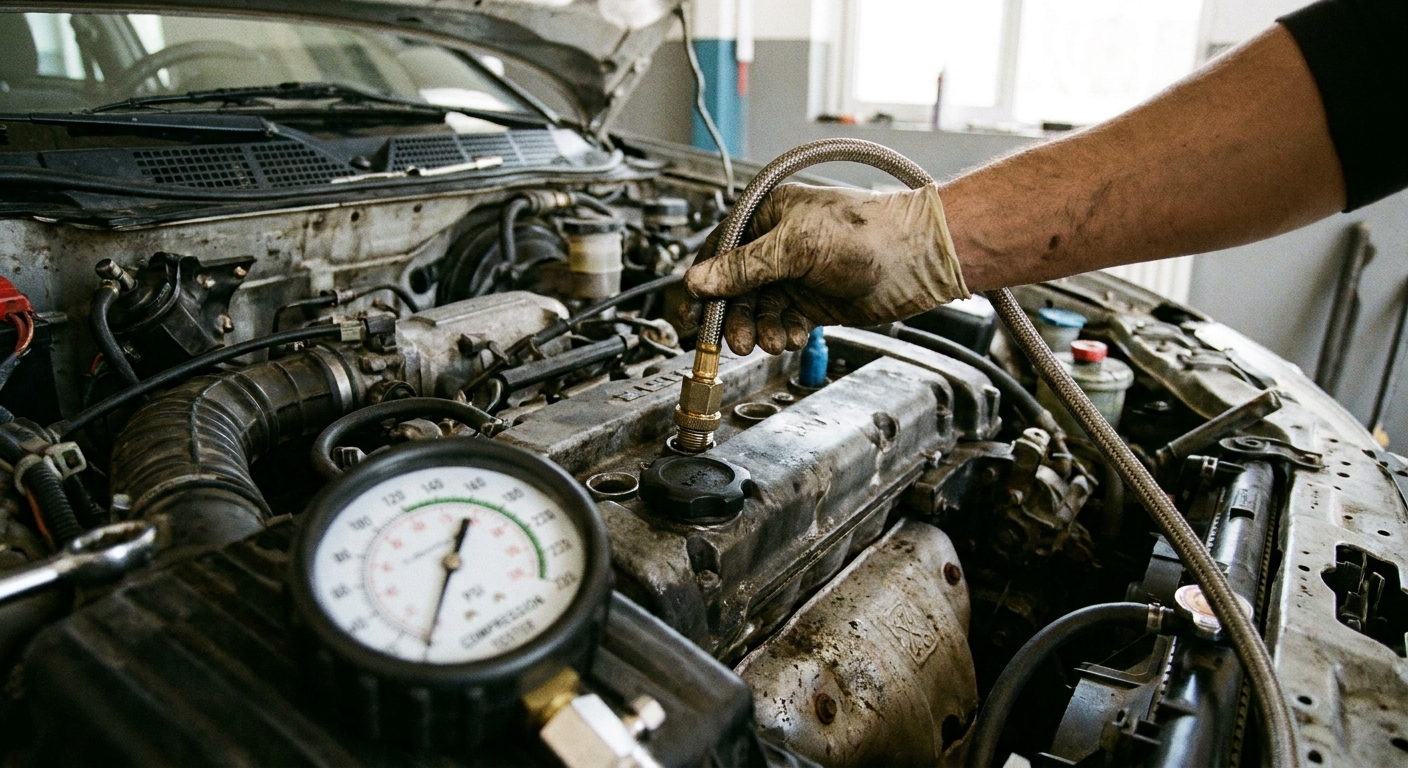
What a compression test tells you
A compression test is a quick mechanical health check. It measures how much pressure each cylinder can build while the engine is cranking.
- It can point to: worn piston rings, burned valves, a blown head gasket between cylinders, or valve timing that is off enough to kill cylinder pressure.
- It cannot confirm: whether you have spark or fuel delivery problems. Those are separate checks.
This article assumes the engine cranks at a normal speed. A slow crank from a weak battery, poor cables, or a starter issue can give you misleadingly low numbers. If it sounds lazy, charge the battery first.
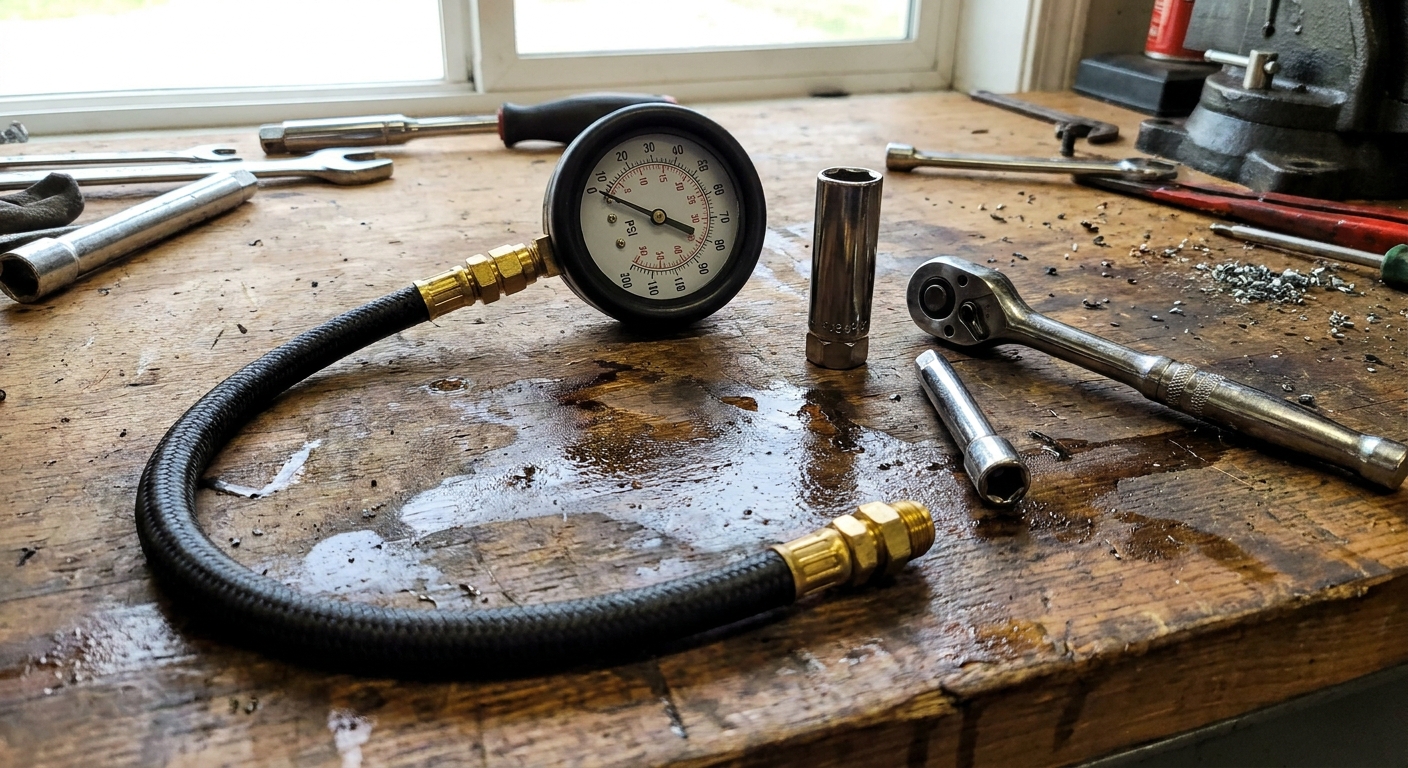
Tools and supplies
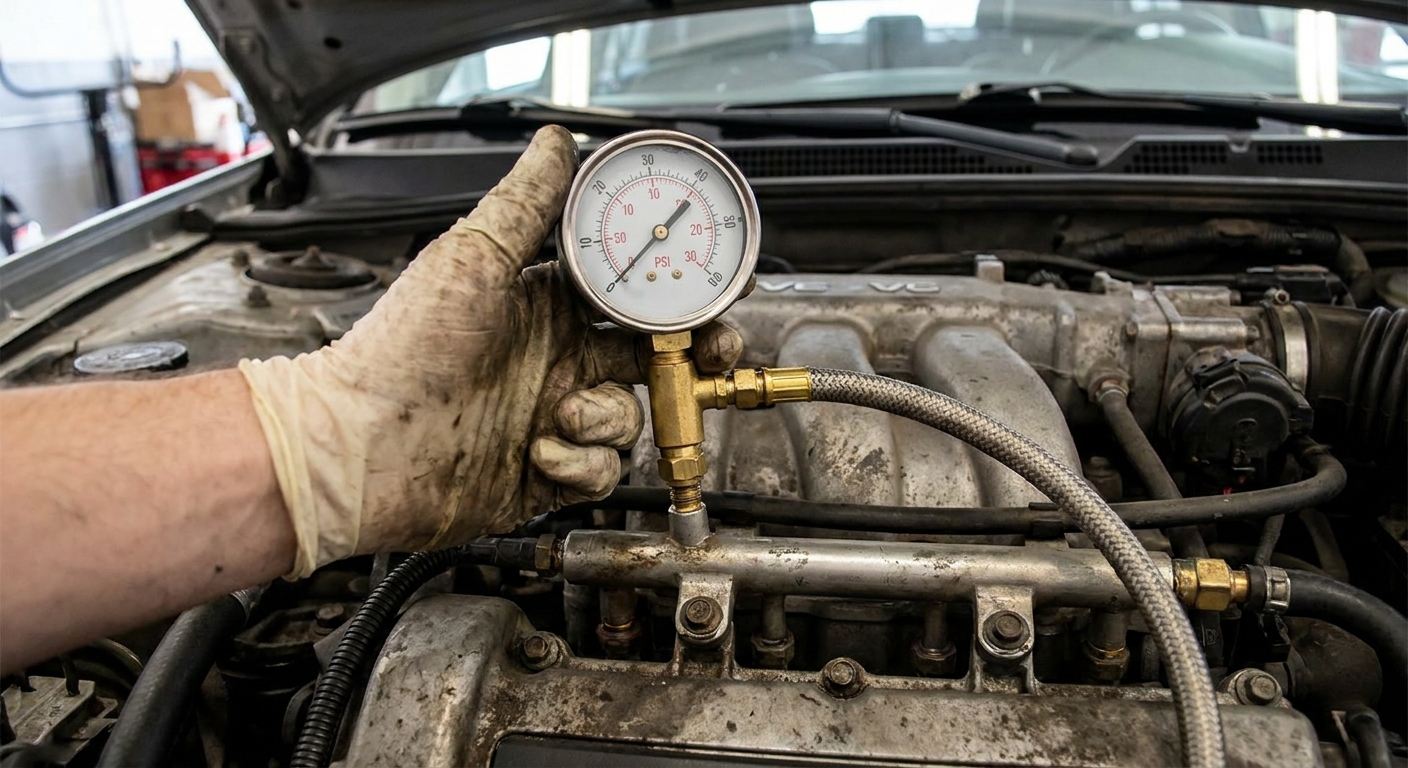
- Compression tester (a screw-in type is best)
- Spark plug socket, ratchet, and extensions
- Small pick or needle-nose pliers (helpful for fuses and connectors)
- Battery charger or jump pack (recommended)
- Pen and paper or notes app
- A teaspoon of clean engine oil (for a wet test)
- Safety glasses and gloves
Pro tip: If your tester came with multiple adapters, take a second to match the thread pitch to your spark plug. Cross-threading the adapter in an aluminum head is the kind of “one quick test” that turns into a weekend.
Safety and setup
1) Warm it if you can
Compression specs are usually given for a warm engine, but your car does not start, so don’t obsess over this. If it will run briefly and then die, warming it up for a minute or two can help accuracy. If it will not run at all, test it cold and focus on cylinder-to-cylinder consistency.
2) Disable fuel and spark
You want the engine to crank without firing, without injecting fuel into the cylinders, and without producing high voltage at the ignition system.
- Disable fuel: Common options are pulling the fuel pump fuse or relay, or unplugging injector connectors. Pulling the pump relay is usually quickest, but some vehicles are pickier and may prefer injector disable.
- Disable spark: On many cars you can unplug the ignition coil connectors or disconnect the main connector at the coil pack. Some vehicles may require a specific fuse, relay, or scan tool command. If your service manual calls out a method, follow it.
If you are unsure which fuse or relay is the fuel pump, check the legend on the fuse box cover or your owner’s manual.
Why this matters: Fuel wash can strip oil from cylinder walls and skew results. Spark can ignite vapor. Either one can turn a simple test into a headache.
3) Get the throttle open
This is a big one. A closed throttle plate restricts incoming air, which can lower compression readings.
- On older cable-throttle cars, having a helper hold the accelerator to the floor while you crank usually works.
- On some newer drive-by-wire (electronic throttle) setups, pedal input may not open the throttle the way you expect during cranking. If you are not sure, check the service manual procedure for your vehicle. The goal is still the same: maximize airflow while cranking.
4) Charge the battery
Consistent cranking speed equals consistent readings. Hook up a charger or jump pack if you have one. If the engine starts cranking slower halfway through the test, cylinder numbers can fade, and you will chase ghosts.
Steps: compression test
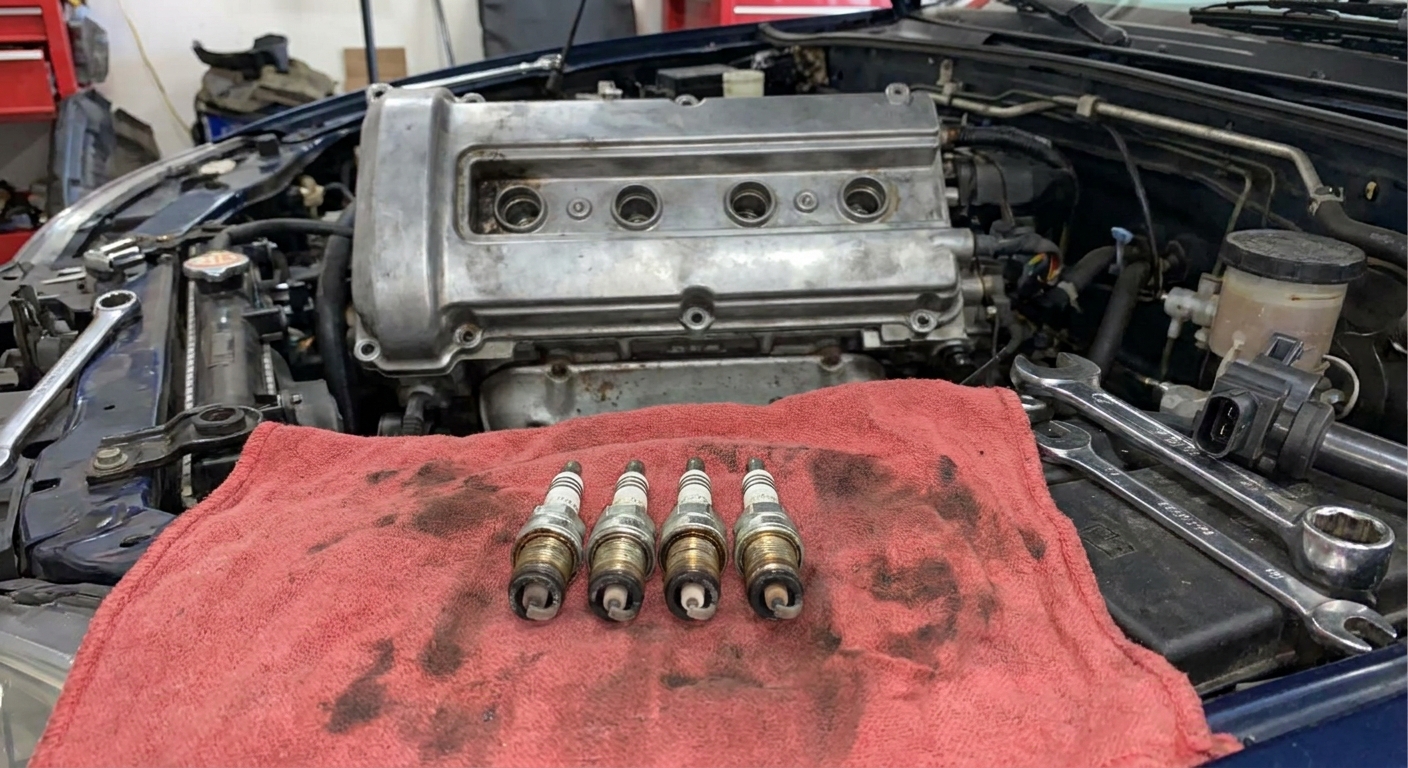
1) Remove all spark plugs
Pulling all the plugs lets the starter spin the engine evenly and quickly, which improves accuracy and saves the starter from working harder than necessary.
- Label coils or plug wires so everything goes back to the right cylinder.
- Remove the coils or plug wires.
- Remove all spark plugs.
While the plugs are out, take a quick look at them. If one is soaked in fuel or oil compared to the others, that clue may matter later.
2) Install the tester on cylinder 1
Screw the tester hose into the spark plug hole by hand until it seats. It should feel smooth. Do not crank it down like a lug nut.
Keep the gauge where you can see it from the driver seat, or have a helper watch it.
3) Crank and watch for peak
Crank the engine in short bursts. What you are watching for is the gauge needle to climb and then stop rising.
- Most engines often reach peak compression in about 4 to 8 compression strokes, but follow your service manual if it specifies a certain number of revolutions or pulses.
- If you are counting by ear, each cylinder will have a steady “puff-puff” rhythm as the engine turns. You are looking for enough cycles that the gauge stops climbing.
- Stop cranking when the needle stops climbing for two strokes in a row, or after about 8 to 10 seconds of cranking as a practical driveway limit. Some OEM procedures are stroke-based rather than time-based, so again, the manual wins if you have it.
You are not trying to set a world record for starter motor endurance. You are trying to get a repeatable peak number.
4) Record it and repeat
Write down each cylinder’s peak pressure. Keep your method the same for every cylinder: throttle open, same crank method, same battery support.
A simple notes format looks like this:
- Cyl 1: ___ psi
- Cyl 2: ___ psi
- Cyl 3: ___ psi
- Cyl 4: ___ psi
If you see something wildly low on one hole, do not panic yet. Finish the rest of the cylinders first so you have a pattern.
Reading the numbers
Exact specs vary by engine. Some healthy engines will show 130 psi, others 210 psi. For a no-start diagnosis, the pattern matters as much as the number.
Keep cylinders close
On most street engines, you want cylinders within about 10 to 15 percent of each other. One cylinder way down compared to the rest is a different problem than all cylinders being down together.
If one cylinder is low
Example pattern: 185, 180, 90, 178.
This usually points to a cylinder-specific issue, such as:
- a burned or bent valve
- a broken valve spring
- damaged piston or rings
- a head gasket leak affecting that cylinder
Your next move is usually a wet compression test (below). If it stays low even wet, you are more likely looking at a valve sealing issue or head gasket rather than rings.
If two adjacent cylinders are low
Example pattern: 190, 95, 90, 188.
That often smells like a head gasket failure between two cylinders. You may also see coolant loss, overheating history, or milky oil, but not always.
If all cylinders are low
Example pattern: 90, 95, 88, 92.
When all cylinders read low, think bigger-picture causes:
- the engine is cranking too slowly (battery, starter, cable issues)
- throttle not open (or not actually opening on a drive-by-wire setup)
- compression tester not sealing
- valve timing is off enough to reduce cylinder pressure
Before you assume the worst, repeat the test with the throttle open as your vehicle allows and a fully charged battery. Consistency in how you test is everything.
How low is too low?
There is no magic number that fits every engine, but as a rough rule of thumb, many gasoline engines start to struggle to light off consistently somewhere below about 90 to 100 psi. That is not a guarantee either way. Some engines will still run lower, and some will not, especially if cranking speed is marginal or the readings are uneven.
Wet compression test
A wet test is a follow-up that helps you separate ring sealing problems from valve sealing problems.
Wet test steps
- Pick the low cylinder.
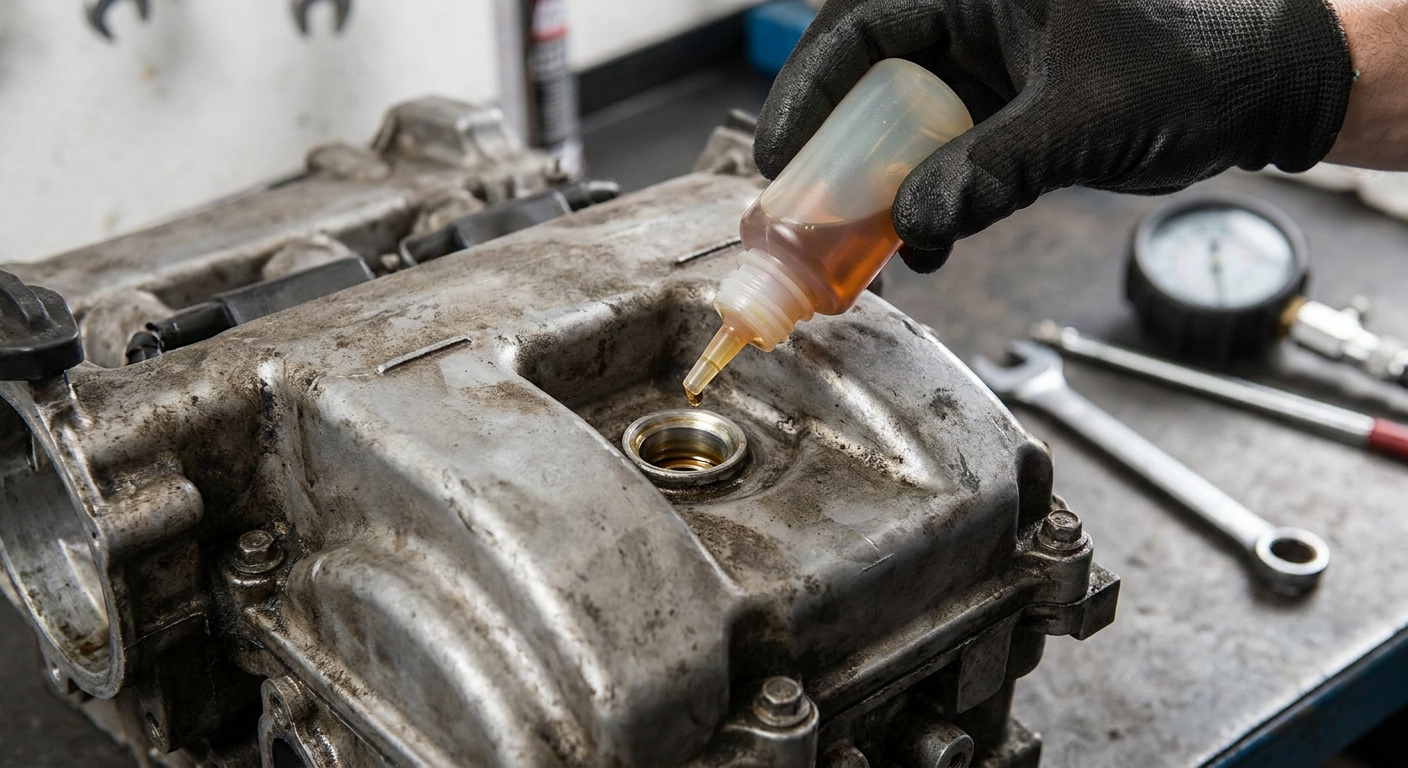
- Add a few ml of clean engine oil, about 1 teaspoon, into that cylinder through the spark plug hole.
- Wait a few seconds, then reinstall the compression tester.
- Crank again the same way as before and record the new number.
What the wet test means
- Compression jumps up noticeably: Oil temporarily helps seal worn rings or a worn cylinder wall. That points toward ring wear.
- Compression barely changes: The leak is likely past the valves or through the head gasket, because oil on the cylinder wall does not help a valve seal.
Keep the oil amount small. Dumping a bunch in can skew the test, foul plugs later, and in extreme cases can create a hydrolock risk.
Mistakes to avoid
- Not getting the throttle open: One of the most common causes of artificially low readings.
- Leaving some spark plugs installed: The engine cranks slower and readings drop.
- Weak battery: Slower cranking can lower numbers across the board.
- Bad seal at the tester hose: Cross-threaded adapter or loose fitting equals fake low compression.
- Changing your crank method between cylinders: Pick a method and keep it consistent.
Put it back together
Once you have your numbers:
- Remove the tester and reinstall spark plugs (start by hand to avoid cross-threading).
- Reconnect coils or plug wires.
- Reinstall any relays or fuses you pulled and reconnect any injector connectors.
- Clear any codes if your car set them while cranking with things unplugged.
If the engine was flooded from earlier attempts, holding the throttle open during starting attempts can help clear it once everything is reconnected.
FAQ
How long should I crank?
Crank until the gauge stops rising, which is often 4 to 8 compression strokes. As a practical driveway guideline, if it has not stabilized by around 8 to 10 seconds of cranking, stop and recheck your setup, battery, and throttle position. If your service manual specifies a number of revolutions, use that.
What is good compression?
It depends on the engine. For no-start diagnosis, I care most that all cylinders are within about 10 to 15 percent of each other and that readings are not uniformly too low to support combustion.
Can I test without removing all plugs?
You can, but I do not recommend it. Leaving plugs in other cylinders makes the starter work harder, slows cranking speed, and can drag your numbers down.
Low on all cylinders means the engine is bad?
Not automatically. Recheck with a charged battery, the throttle open as your vehicle allows, and a good seal at the tester. If it is still low everywhere, you are likely looking at a mechanical or timing-related issue that needs deeper diagnosis.
When to call help
If your readings point toward internal mechanical issues, especially multiple low cylinders, this is a good time to slow down and make a plan. A compression test tells you what is happening, not always exactly why.
If you are seeing big drops, the next professional-level step is often a leak-down test to pinpoint where the air is escaping. Air hissing from the intake points toward intake valves, from the tailpipe points toward exhaust valves, from the oil fill points toward rings, and bubbles in the coolant point toward a head gasket or crack.
If you want, you can share your cylinder readings and whether the wet test changed anything, and I can help you interpret the pattern like I would at the shop counter.