I love seeing a true daily driver roll into the paddock with bug guts on the bumper and a trunk full of stuff you swore you would clean out “this weekend.” That is real car culture. A first track day does not require a trailer, race suit, or a five-figure build. What it does require is respect for heat. The track turns normal street driving into repeated high-speed braking, long corner loads, and sustained temperatures your commuter rarely sees.
This guide focuses on the three areas that decide whether your day is a blast or a headache: brake pads, fluids , and tires. We will also cover a few quick safety and reliability checks that experienced track folks do almost automatically.
Start with the basics
Before you buy a single part, read your organizer’s tech sheet. Some events require a recent brake fluid service, a minimum pad thickness, no visible cord on tires, and a secure battery. Convertibles vary by group: some accept factory rollover protection, others require a roll bar or a “broomstick test.” Noise limits are also a thing at many tracks.
Also check the driver gear rules. Most groups require a helmet that meets a current Snell standard (often SA or M, depending on the organizer) and basic clothing like long pants and closed-toe shoes. Your event will spell it out.
Then be honest about your car’s mission for the day:
- Novice group, first time out: You are learning lines, flags, and smooth inputs. Your car does not need to be “fast,” it needs to be consistent.
- Long commute home: Prioritize parts that behave on the street, especially pads, tires, and alignment settings.
- Heavier car, small brakes, or lots of power: Put even more emphasis on brake fluid and pad choice because heat will stack up quickly.
If anything is already questionable on the street, fix it first. A track day is not the place to “see if that vibration goes away.”
Brakes: your #1 upgrade
On the street you might do one hard stop and then cruise for ten minutes. On track you can do hard stops every 30 to 60 seconds. That is how you boil fluid, glaze pads, and cook rotors. Your goal is to make the brake system heat-tolerant and predictable.
Step 1: pick the right brake pads
For most first-timers, the sweet spot is a street-track hybrid pad. It should have higher temperature capability than OEM without being miserable on the street.
- Why upgrade at all? Many factory pads are designed for low noise and low dust. They can fade when hot, which feels like you are pressing harder and getting less stopping power.
- What you want on track: consistent pedal feel, good bite when hot, and reasonable wear.
- Street manners to watch: Some track-focused pads squeal, dust heavily, and have reduced cold bite on a chilly morning commute.
Practical recommendation: if you plan to do more than one event a year, consider keeping a dedicated set of track pads you swap on before the event and swap off afterward. It is often cheaper than repeatedly cooking your daily pads and rotors.
Do not forget bedding: if you install new pads (or rotors), bed them per the manufacturer’s instructions before the event. Do not make your first hot laps your first bedding attempt.
Step 2: service your brake fluid
Brake fluid is hygroscopic, meaning it absorbs moisture over time. Moisture lowers the fluid’s boiling point. On track, boiling fluid becomes compressible vapor, and that is when your pedal goes long at the worst possible moment.
- Strongly recommended: a thorough flush with fresh fluid before your first event if you do not know its age.
- What spec? Follow your cap or owner’s manual. DOT 4 is commonly used for track days and is compatible with DOT 3 systems, but do not use DOT 5 (silicone) unless the system is specifically designed for it.
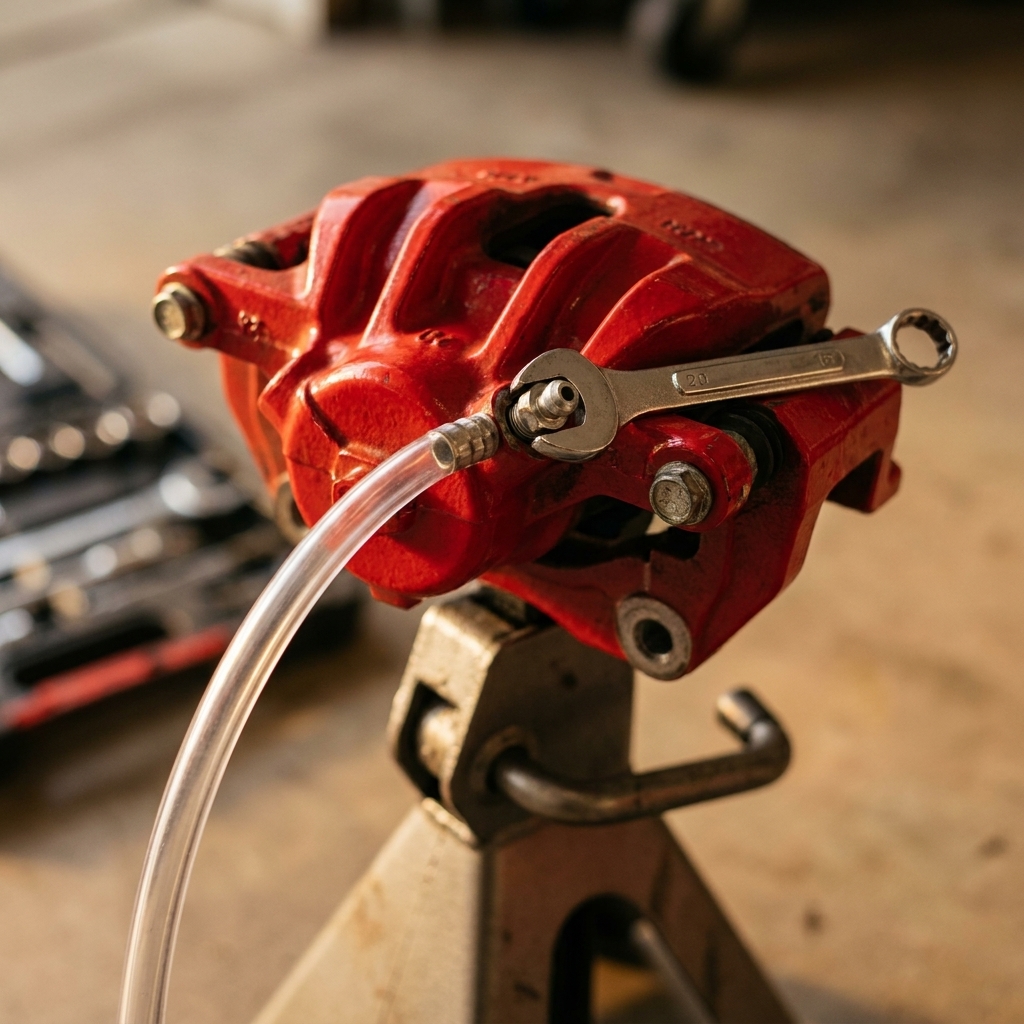
- How to bleed: use a sealed container, and bleed until you see fresh fluid at each caliper and no bubbles. Color alone is not a perfect indicator.
If your pedal gets soft during a session, come in, let the brakes cool, and do not go back out until you have a firm pedal again.
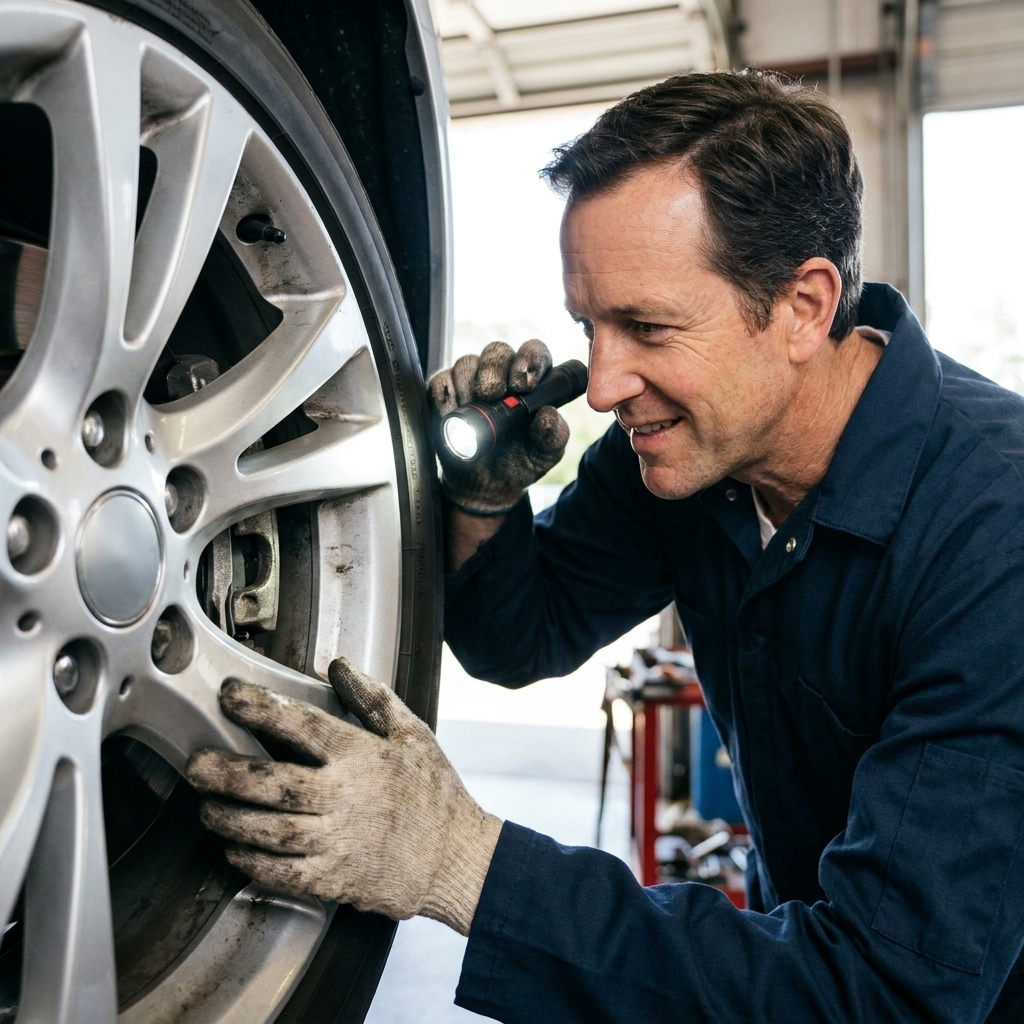
Step 3: inspect pads, rotors, and hardware
- Pad thickness: show up with plenty of friction material. A novice-friendly rule is to arrive with roughly 6 to 8 mm or more, and plan to replace if you are down near 3 to 4 mm. Track use can eat pads quickly.
- Rotor condition: small surface cracks can happen. Cracks that reach the outer edge, connect across the face, or link drilled holes are a no-go. Heavy scoring or a pronounced lip at the edge is also a bad sign.
- Hoses: check for cracks, swelling, or wetness. A soft line that balloons under pressure will ruin pedal feel.
- Caliper slide pins: make sure they move freely and boots are intact so pads wear evenly.
Fluids: avoid ugly surprises
Track days are heat management days. Fresh fluids buy you margin.
Engine oil
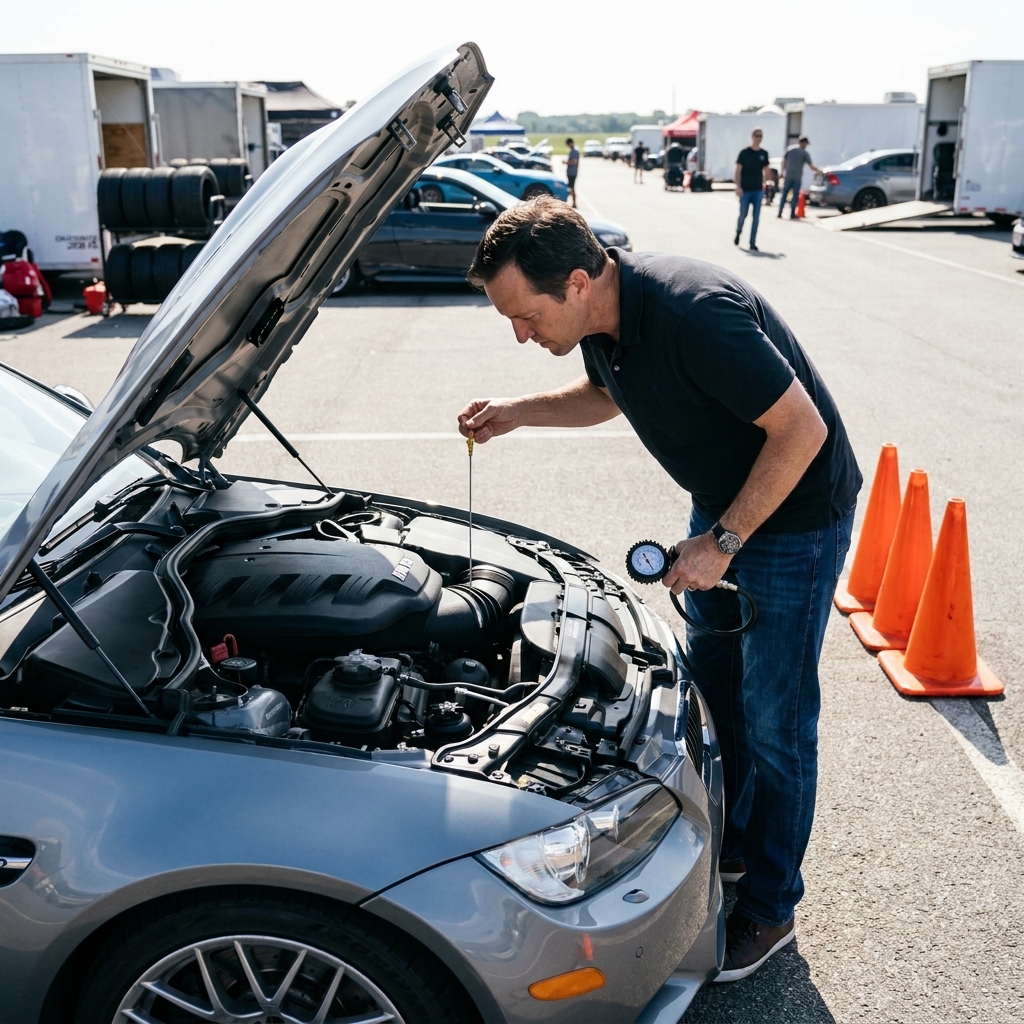
Check oil level on flat ground when the engine is warm and has sat a few minutes. Many engines consume more oil on track due to sustained RPM and cornering loads.
- If you are near your interval: change the oil beforehand.
- If you are turbocharged: prioritize oil quality and heat management. Do an easy cool-down lap, then follow manufacturer guidance. Many modern turbo cars manage cooldown automatically with electric pumps and after-run strategies.
- Bring: at least 1 quart of the correct oil to the event.
Coolant
Make sure the cooling system is healthy. Check hoses, clamps, radiator fans, and the overflow tank level. If your car has been running hot in traffic, fix that before track day.
Coolant rules vary. Some organizations prohibit ethylene glycol because it is slippery when spilled. Others allow certain coolants or require water plus an approved additive. Check your event rules and do not show up with assumptions.
Transmission and differential fluids
If your manual transmission has not been serviced in years, fresh fluid can improve shifting when hot. For automatics, follow the manufacturer’s service guidance and avoid last-minute “miracle fixes” if the transmission already has issues.
Rear differential fluid matters on RWD and AWD cars, especially if you will run multiple sessions. If it smells burnt or has not been changed in a long time, service it.
Tires: grip and confidence
Track days punish tires in three ways: heat, wear, and pressure growth. A daily-driver tire can absolutely handle a novice day, but it needs to be in good condition and managed correctly.
Step 1: inspect your tires
- Tread depth: more is better for longevity. Avoid showing up on nearly-worn tires.
- Age: check the DOT date code on the sidewall. Old, hardened rubber has less grip and can chunk when overheated.
- Sidewalls: look for bubbles, cracking, or damage from potholes.
- Uneven wear: inside-edge wear can hint at alignment issues. For a first track day, do not chase aggressive camber and toe settings unless you really know what you are doing. It is easy to ruin street manners and tire life.
Step 2: manage pressures
As tires heat up, pressure rises. If you start at your normal street pressures and never adjust, you can end up over-inflated, sliding around, and wearing the center of the tread.
- Bring a quality tire pressure gauge.
- Check pressures: in the morning cold, immediately after each session, and again after they cool.
- Adjust: bleed off pressure when hot if needed, then re-check later. The goal is stable feel, not a magic number.
Ask an instructor or an experienced paddock neighbor what hot pressures work well for your tire type and vehicle weight. Most track people are happy to help if you are humble and prepared.
Step 3: wheels and lugs
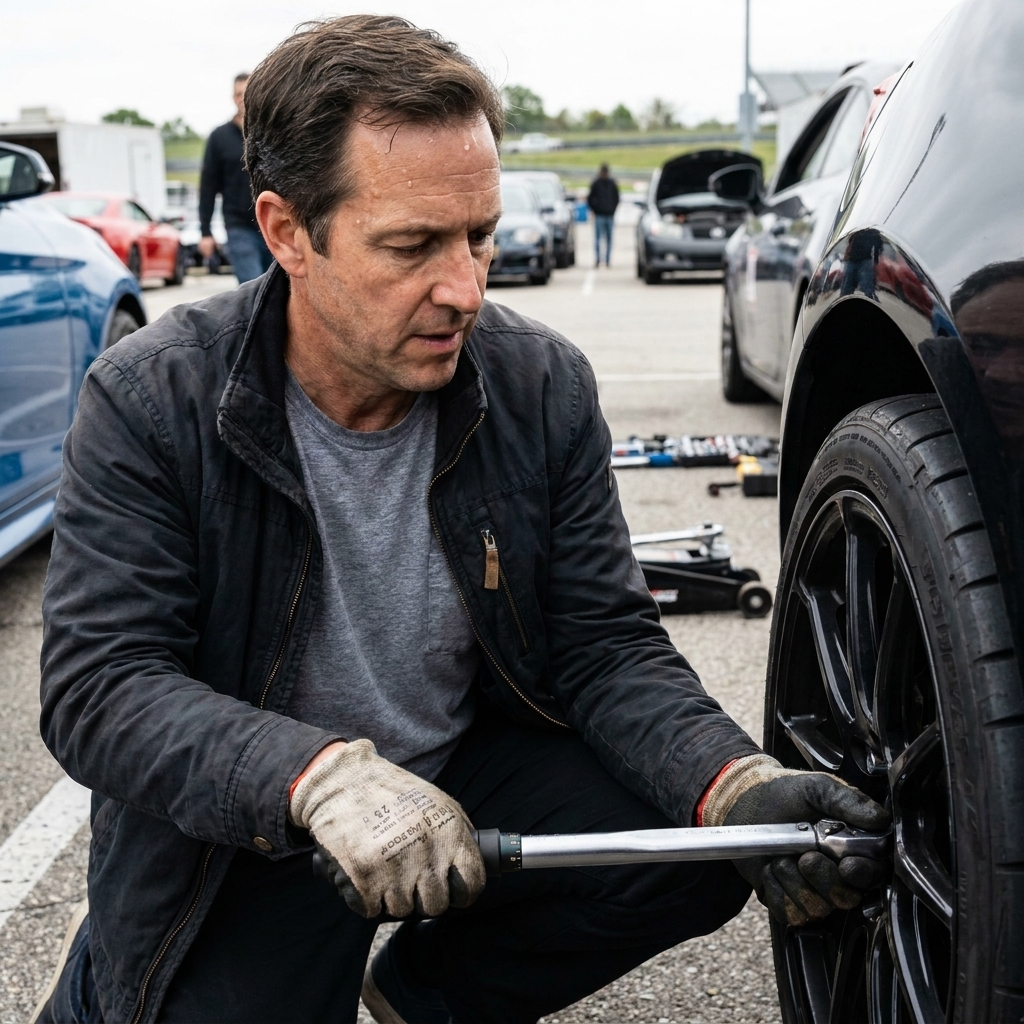
Before the first session, torque your lug nuts to spec with a torque wrench. Re-check after the first session once things have cooled enough to touch safely. Also take a quick look at stud and lug condition. If someone hit your lugs with an impact gun last week, confirm nothing is damaged or over-torqued.
Quick checks that matter
These are the little things that keep your day from ending early.
- Battery: secure hold-down, clean terminals. Tech inspectors look for this.
- Brake pedal and throttle: make sure floor mats cannot slide forward and interfere. Remove loose mats if you are unsure.
- Suspension: listen for clunks, check for leaking struts, and inspect ball joints and tie rod ends for play.
- Wheel bearings: any growl or looseness on the street becomes a bigger problem on track.
- Leaks: fix oil, coolant, and power steering leaks. Spills can shut down the track for everyone.
What to bring
You do not need a rolling tool chest. You do need a few basics.
- Tire pressure gauge and portable inflator
- Torque wrench and correct socket
- Brake fluid (sealed) and a small funnel
- Engine oil (at least 1 quart)
- Blue painter’s tape for headlights or numbers if required
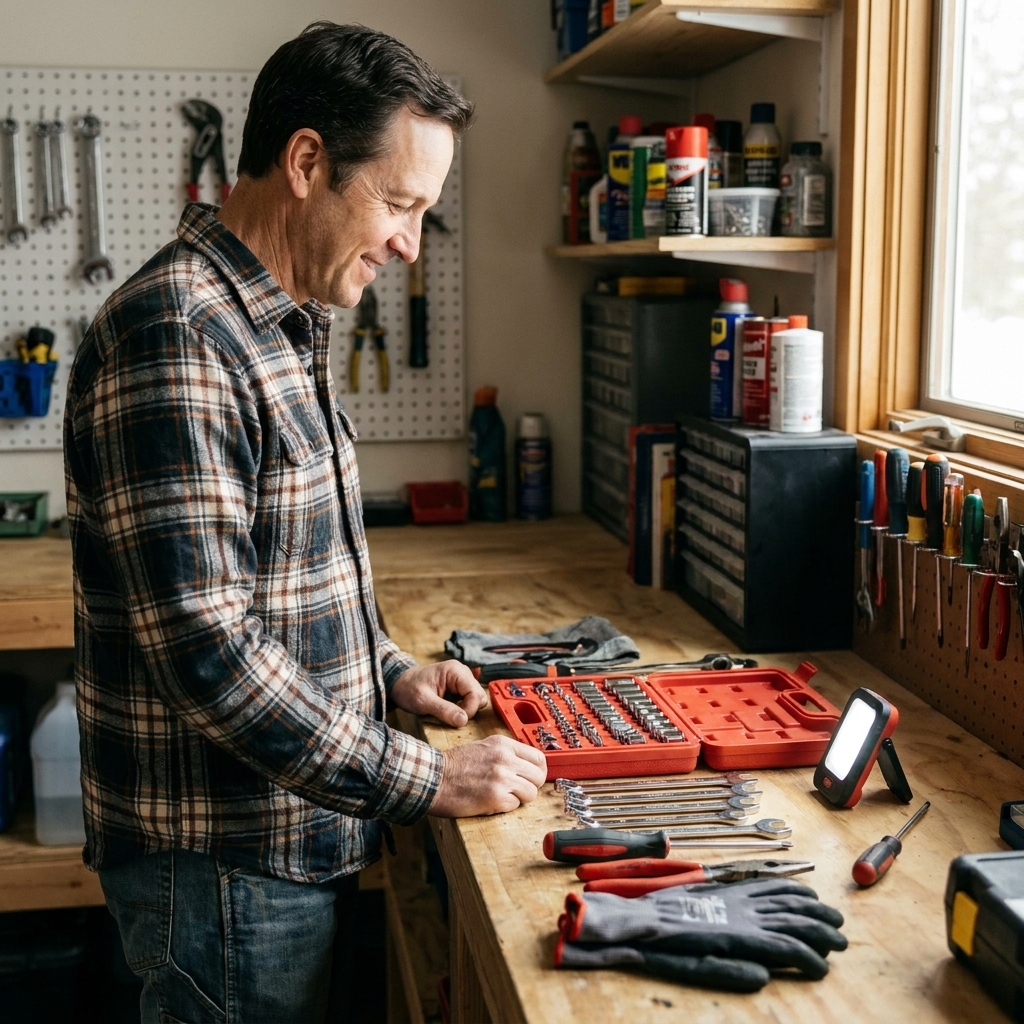
- Basic hand tools, gloves, rags, and brake cleaner
- Water, snacks, sunscreen, and a hat
And clean your car out. Anything loose becomes a projectile under hard braking. Empty the trunk, door pockets, and center console.
On-track habits
Warm up and cool down
Use your out lap to bring everything up to temperature gradually. Use your cool-down lap to reduce brake and drivetrain temps. Then park without yanking the parking brake if your rear brakes are hot. That is how you can imprint pad material onto rotors.
Drive at 7 or 8 tenths
Your first track day is about learning, not lap records. Smooth inputs are faster than you think, and they are a lot easier on brakes and tires. If you feel the brakes fading or the tires getting greasy, back off, short-shift, and take a session to cool the car and reset.
Listen to the car
New noises, new vibrations, or a changing pedal feel are your early warning system. If something feels off, come in. There is zero shame in calling it early. The win is driving home under your own power.
Post-track check
Before you leave, do a quick walk-around:
- Check tire condition and pressures
- Look through the wheels at pad thickness if possible
- Peek for fluid leaks under the car
- Re-torque lug nuts if you have any doubt
- Confirm a firm brake pedal before you hit public roads
When you get home and everything is cool, take another look. Track days have a way of revealing weak links. Catching them in your driveway is a lot better than discovering them on Monday morning traffic.
If you only do two things before your first track day in a daily driver, refresh your brake fluid and bring a tire gauge. Those two habits alone prevent most novice-day headaches.
FAQ
Do I need performance tires for my first track day?
No. A healthy set of street tires is fine for a novice event. The key is condition, pressures, and not overheating them with too much sliding.
Can I run my normal brake pads?
Sometimes, yes, especially on a light car in cool weather with short sessions. But OEM pads are the most common weak point I see on first track days. If you are upgrading one thing, make it pads and a brake fluid refresh.
Should I upgrade to stainless brake lines?
They can improve pedal feel, but they are not a requirement for a first event. Pads, fluid, and a healthy brake system come first.
Is a track day hard on my car?
It can be, because heat and repeated high loads accelerate wear. Prep well, drive smoothly, and keep up on maintenance, and you can enjoy track days without beating your daily into the ground.
Have your own daily-driver track day lessons, pad picks, or “wish I knew this sooner” tips? Drop them in the comments. The best part of this hobby is how much faster everyone learns when people share what actually worked.