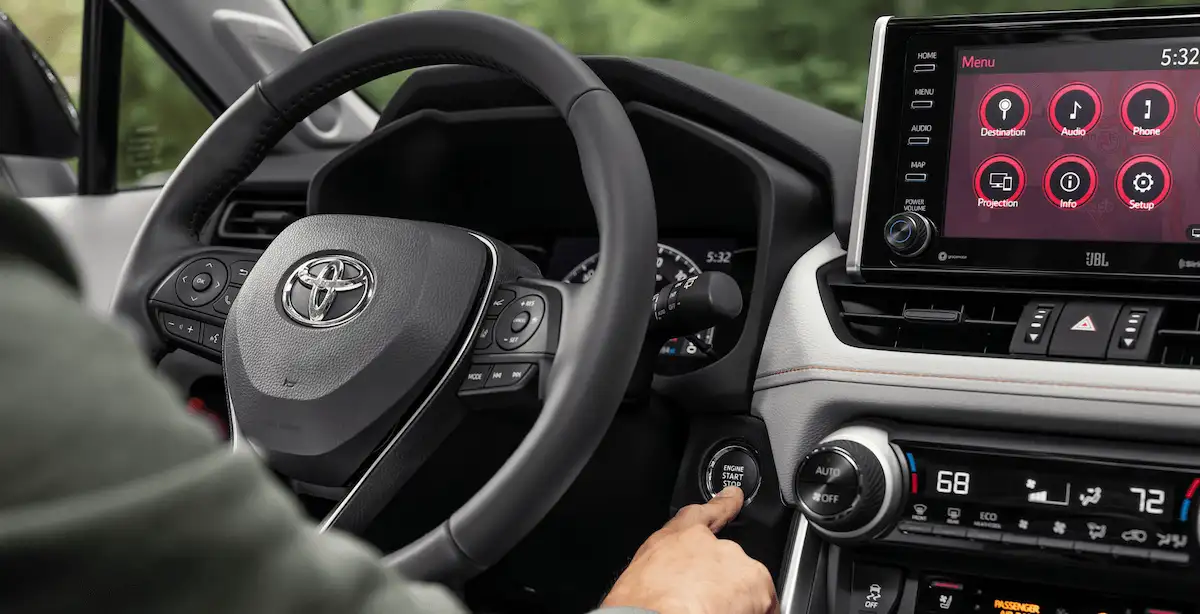
I have seen this exact situation roll into the shop a bunch of times: you hop in, the dash lights up, radio works, you press the start button, and nothing meaningful happens. No crank, no READY light, maybe a message like Steering Locked or Press Brake to Start even though your foot is already on the pedal. Then you notice the steering wheel is frozen solid.
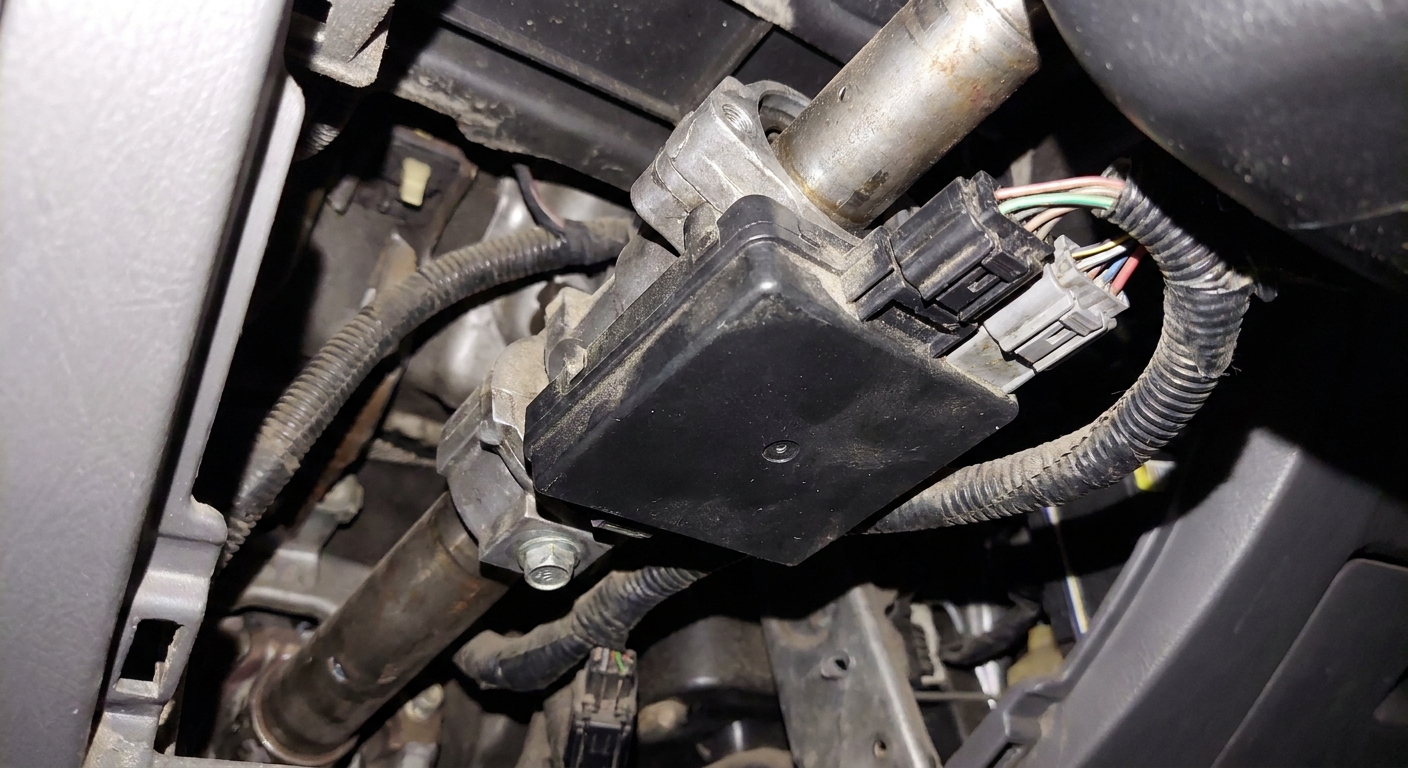
On many push-button cars, that locked wheel is not just a nuisance. It can be the reason the car refuses to start. Instead of a purely mechanical steering lock like older keyed ignitions, a lot of push-button vehicles use an electronic steering column lock that has to release before the car will allow cranking or going to READY.
One important caveat: not every push-button car uses an electronic steering column lock (ESCL). Some newer models have deleted the lock hardware and use other anti-theft strategies. On those cars, a “locked” feeling can sometimes be normal steering bind or a stiff electric power steering system when the car is off, not an ESCL refusing to release.
Why a steering lock can block starting
With a push-button start, the car runs an interlock checklist before it lets the starter engage or the hybrid system go to READY. Depending on the vehicle, that checklist often includes:
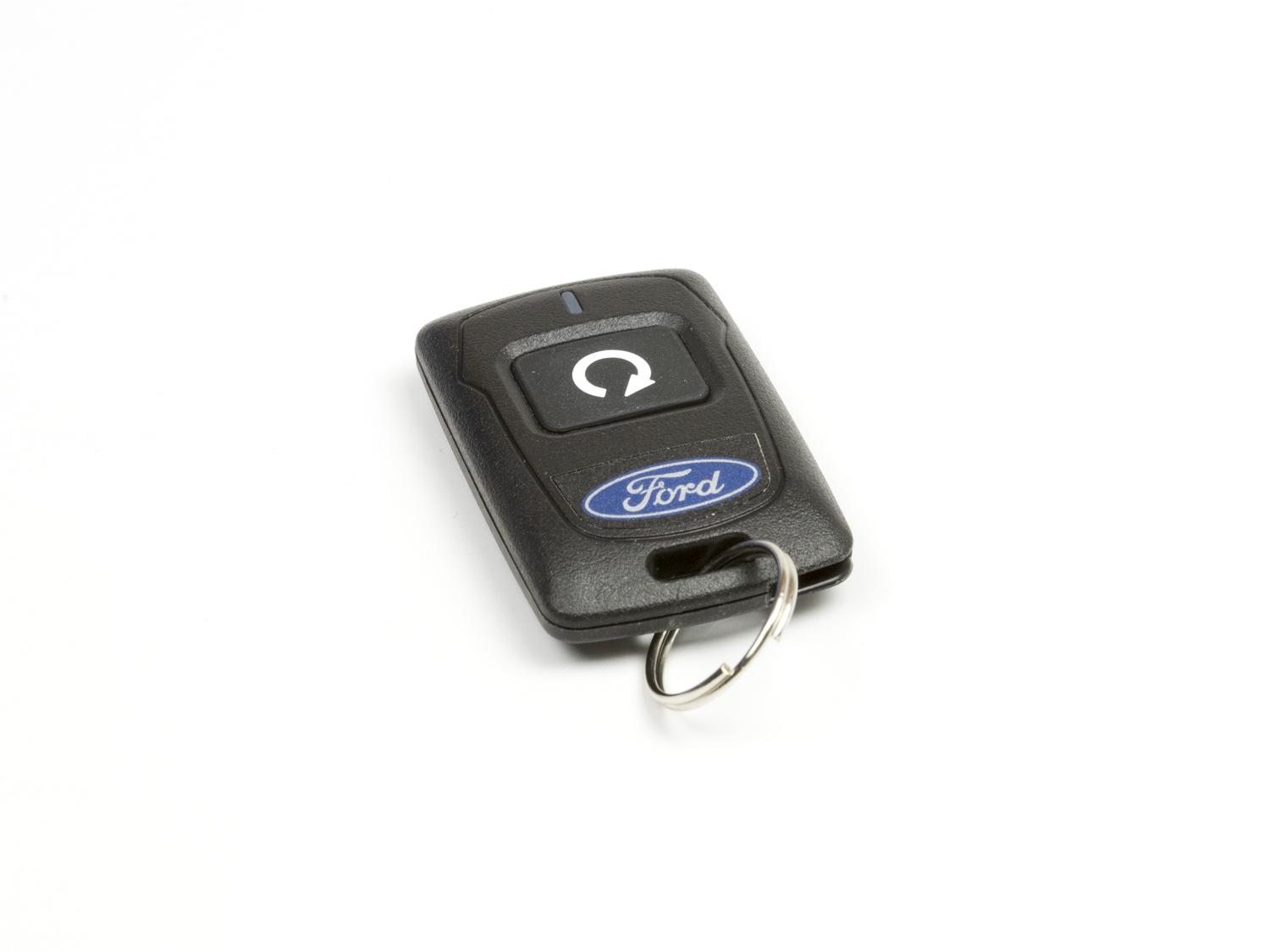
- A valid key fob is detected
- The brake pedal switch shows the brake is pressed
- The transmission range switch shows Park or Neutral
- The immobilizer is happy
- The steering lock reports unlocked
If the car thinks the steering is still locked, many systems will refuse to crank as an anti-theft measure. The logic is simple: if someone breaks in and mashes the start button, the car still should not be drivable with the wheel locked.
There are two big “flavors” of steering locks you might run into:
- Mechanical steering lock (older keyed ignition): a metal key physically turns the ignition cylinder and helps release a steering lock pawl.
- Electronic steering column lock (many push-button starts): a small actuator and lock pin in the column locks and unlocks under computer control.
This page is focused on the push-button style with an electronic lock. If you have a traditional metal key that will not rotate in the cylinder, that is a different failure path than what we are tackling here.
The usual start sequence
Before you assume something is broken, do the start-up sequence slowly and deliberately. A surprising number of no-starts are just the system not recognizing one of the required inputs.
Step-by-step (most common push-button layout)
- Confirm the car is in Park. If you have a gear selector, move it to Park firmly. If you have a rotary knob or buttons, verify Park is actually selected.
- Press and hold the brake pedal. Do not pump it. Hold steady pressure.
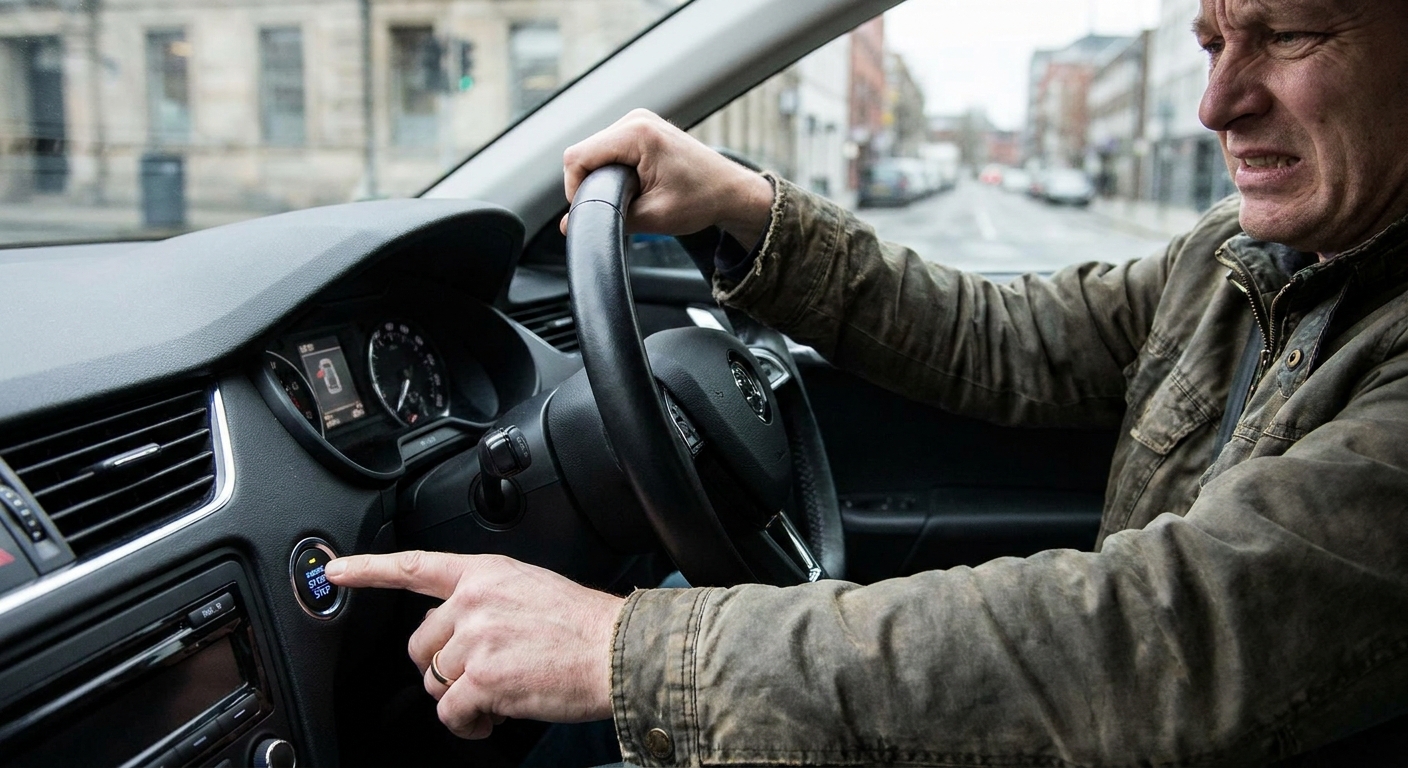
- Press the start button once and keep your foot on the brake.
- Listen. Many ESCL-equipped cars make a quiet click or short whir as the steering lock retracts the lock pin.
If it starts normally after doing that, the issue may have been intermittent input recognition, like a flaky brake switch, low voltage, or a finicky lock position that needed a second attempt. If it still refuses to start and the wheel is hard-locked, move to the next section.
Quick dash clues that help you triage:
- Steering wheel icon or “Steering Locked” message: points you toward the steering lock or a related interlock.
- “Key not detected”: could be a fob battery, interference, or a fob reader issue.
- ACC/ON but no crank/READY: often an interlock problem (brake input, shifter status, steering lock status).
Also, if you drive a hybrid or EV: “starting” often means the car goes to READY. There may be no traditional cranking sound even when everything is working correctly.
The wheel is binding the lock pin
The number one reason a steering lock will not release is simple physics: the front tires are pushing load into the steering column.
This usually happens when you shut the car off with the wheels turned, you parked against a curb, or the car rolled slightly after you turned it off. The lock pin is wedged under pressure, and the actuator cannot pull it back.
How to unload the lock
Try this exact rhythm:
- Sit normally with the key fob in the car.
- Press and hold the brake.
- With one hand, apply firm pressure to the steering wheel in the direction it wants to move. Do not force it past the stop. You are just taking tension off the pin.
- While holding that steering pressure, press the start button.
If you are doing it right, you will feel the steering wheel free up right as the actuator retracts, and the car will proceed to start.
Tips that make this work
- Try both directions: Sometimes the wheel has a tiny bit of play left and right. Work the side that gives even a few millimeters of movement.
- If the tires are jammed hard against a curb: the safest move is usually to keep doing the steering unload technique above. If you have a helper and it is safe, sometimes a gentle rock of the vehicle can reduce tire load, but only if you can do it without risking a roll-away or a collision.
- Do not reef on the wheel: You can damage the lock mechanism, column components, trim, or related sensors if you get aggressive.
When the actuator will not release
If you have tried unloading the wheel and the system still will not unlock, you may be dealing with an electronic steering lock actuator fault or a communication issue that prevents it from being commanded to unlock.
Signs the actuator is the issue
- You consistently see a message like Steering Locked or Steering Lock Malfunction
- You do not hear any click or whir from the column area when you press Start
- The wheel stays locked no matter how you wiggle it
- The issue is getting worse over time, like it used to work on the second try and now it never does
What fails inside the actuator varies by make and model, but the usual suspects are:
- Weak motor that cannot retract the pin under normal resistance
- Worn gears or a stripped drive inside the lock module
- Sticking lock pin from wear or contamination
- Bad position sensor that reports the lock status incorrectly
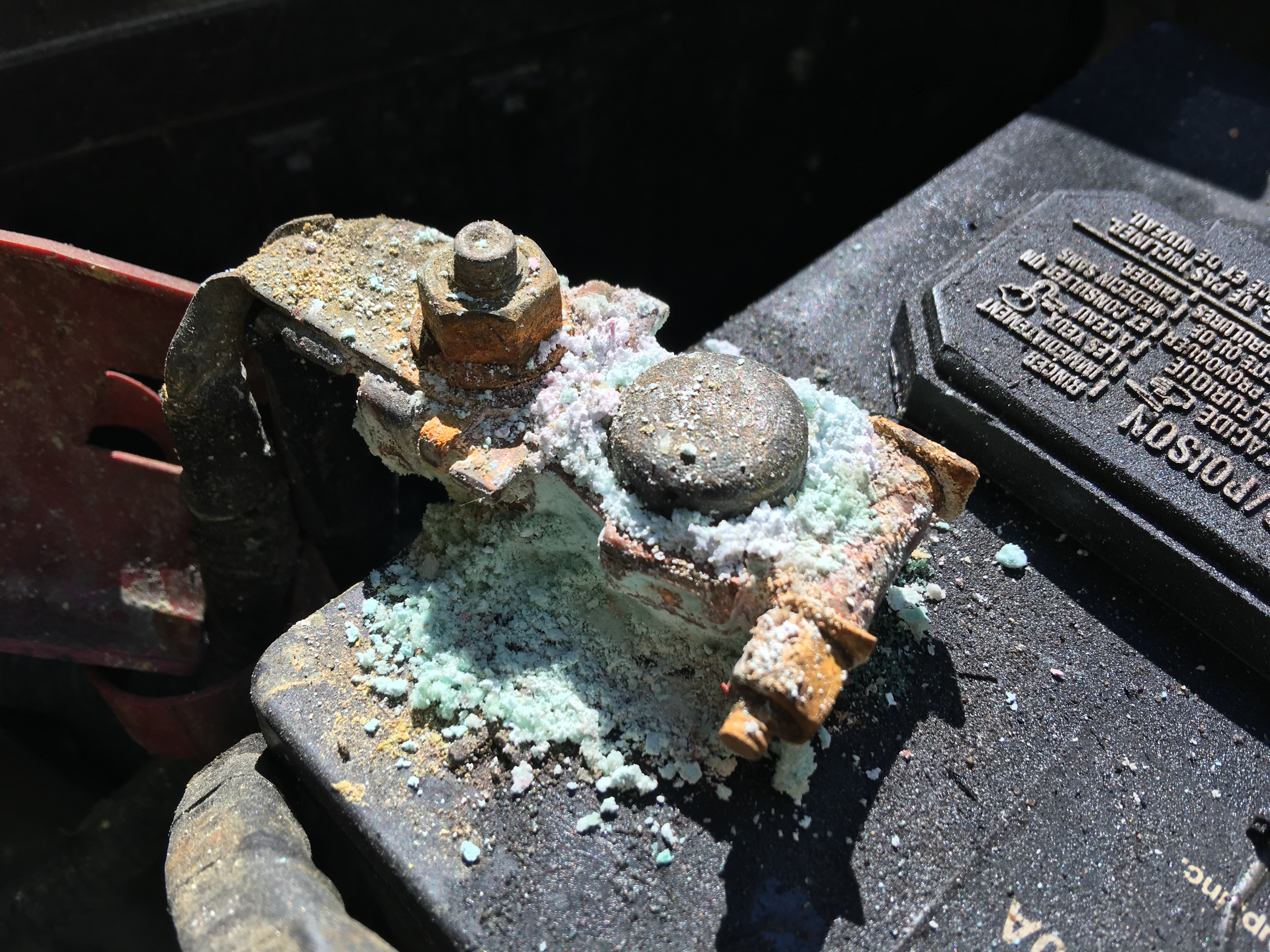
- Low voltage event that left the module confused, especially after a weak 12V battery
If this keeps happening, it is also worth checking for recalls or service bulletins for your specific year and model. Steering lock issues have been common enough on certain vehicles that manufacturers have addressed them before.
Quick checks before a tow
Because the steering lock is part of a bigger starting system, I like to rule out a few easy things that can masquerade as a lock problem.
1) Check the 12V battery
Even if your interior lights and radio work, a weak 12V battery can cause the steering lock actuator to act up. The actuator needs a brief surge of current to retract the pin.
- If the dash lights flicker, you hear rapid clicking, or the screens reboot, suspect low voltage.
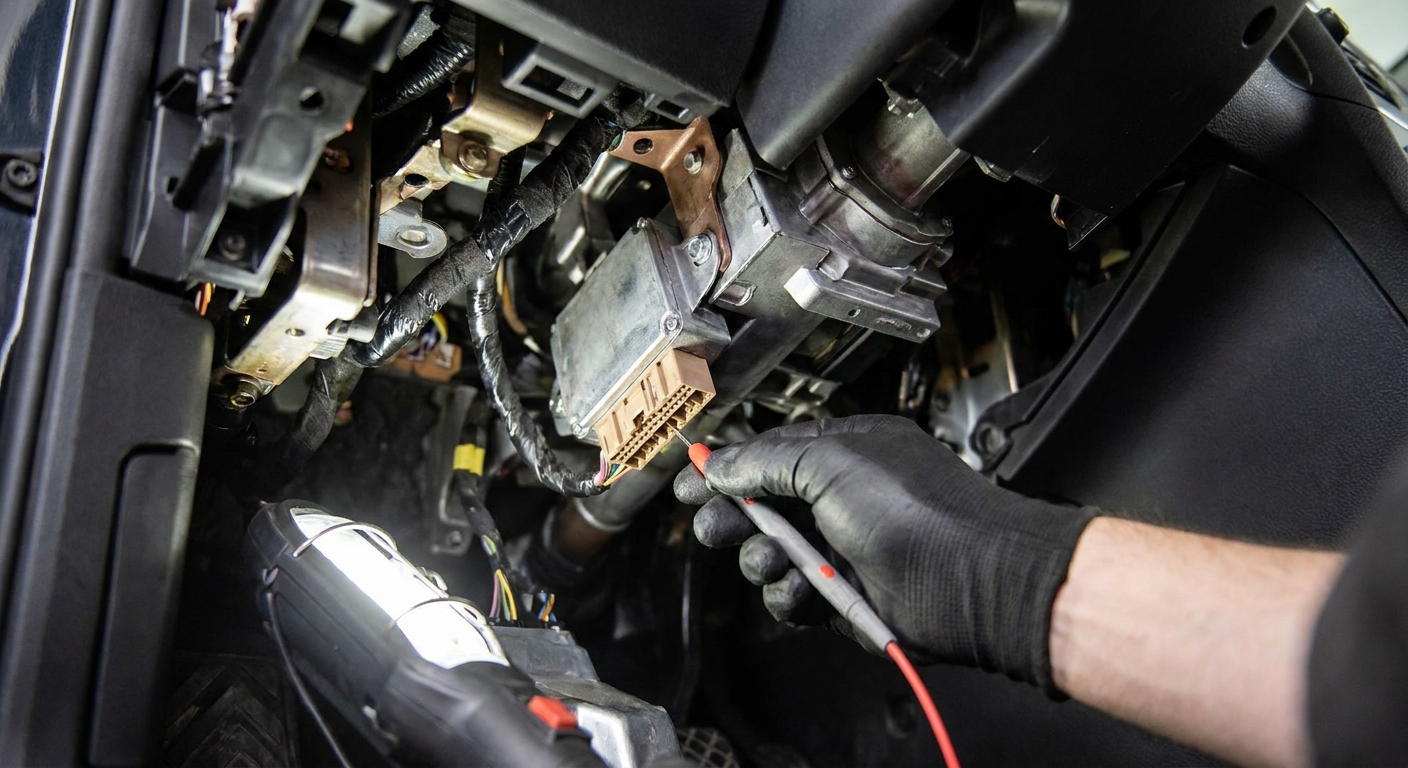
- If you have access to a multimeter, a resting voltage reading taken after the car has been sitting (ideally a few hours) is more meaningful than a just-driven reading. As a rough guide at mild temperatures, under about 12.2V is a red flag, and under 12.0V is very likely trouble.
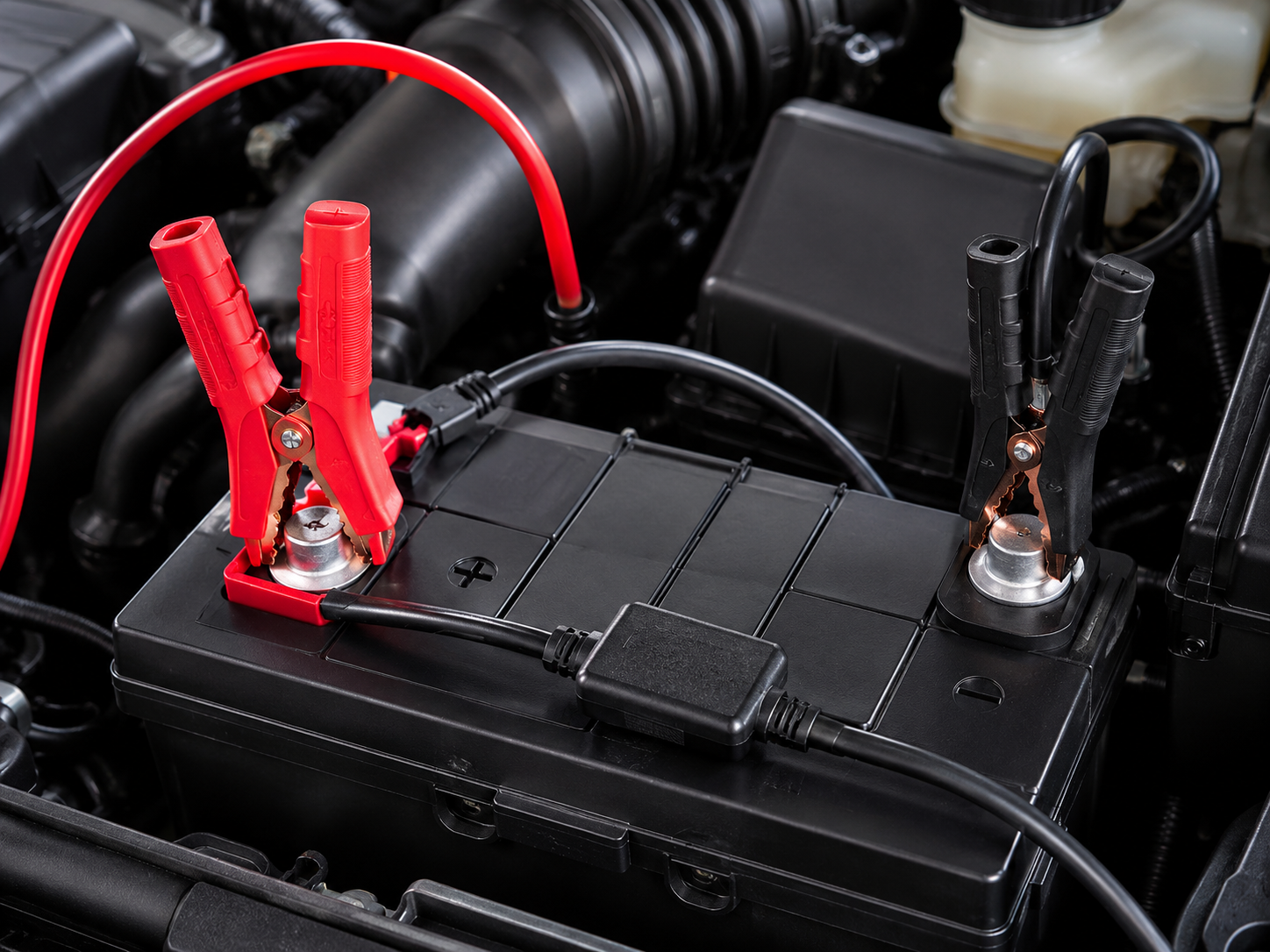
A jump start (or proper 12V boost procedure for your vehicle) can sometimes bring the system back long enough to unlock and start. If the car starts with a boost, address the battery or charging issue next.
2) Confirm the brake lights work
The car needs to see the brake pedal input. If your brake light switch is failing, the car may never allow a start, and some models will also behave strangely with the steering lock.
Quick test: press the brake pedal and see if the brake lights illuminate. If not, the car may not recognize “brake pressed” even though you are doing your part.
3) Try the fob backup method
Some vehicles have a designated spot to place the fob if its battery is weak, like a pocket in the console or a marked spot near the steering column. This does not directly fix a locked steering wheel, but it eliminates “fob not detected” confusion while you troubleshoot.
4) Listen for silence
If you press Start and get total silence from the column area, that can be a dead ESCL actuator, but it can also be low voltage or the car not seeing a required input (brake, Park, or key detected). That is why the quick checks above matter.
What not to do
- Do not keep hammering the start button: It rarely helps and can drain the 12V battery further.
- Do not force the steering wheel past the stop: If the lock is engaged, you are fighting a hardened pin and column components.
- Do not disassemble the column trim unless you are confident: Airbag components, clocksprings, and wiring are nearby. Mistakes get expensive fast.
When it is time for a pro
If your wheel is locked and the car will not start after you have:
- unloaded the wheel while pressing Start,
- confirmed the brake lights work, and
- ruled out an obviously weak 12V battery,
it is time to get diagnostic help. A shop with a good scan tool can pull codes from the body control module and steering lock module (if separate), then verify whether the actuator is being commanded to unlock and whether it reports the correct position.
In many cases, the repair is replacement of the steering lock actuator or the integrated steering column lock module. Some vehicles require programming or immobilizer synchronization after replacement, so this is not always a simple driveway job.
FAQ
My car has power, but it will not crank and the wheel is locked. Is it definitely the steering lock?
Not definitely, but it is one of the most common causes when the wheel is physically locked and the car refuses to start. A weak 12V battery, a brake switch problem, or key detection issues can also prevent starting and may happen at the same time as a lock that will not release.
Why does wiggling the steering wheel help?
You are taking pressure off the lock pin. When the tires load the steering system, the lock pin can be wedged. A small change in wheel angle is often enough to let the actuator retract the pin.
Can cold weather cause this?
Cold can make marginal 12V batteries weaker and can make grease inside small actuators thicker. Both can push a borderline steering lock actuator into failure.
Is it safe to keep trying until it unlocks?
A few careful attempts are fine, but if you are draining the 12V battery or forcing the wheel, stop. If the actuator is failing, repeated attempts can leave you stranded in a worse state.