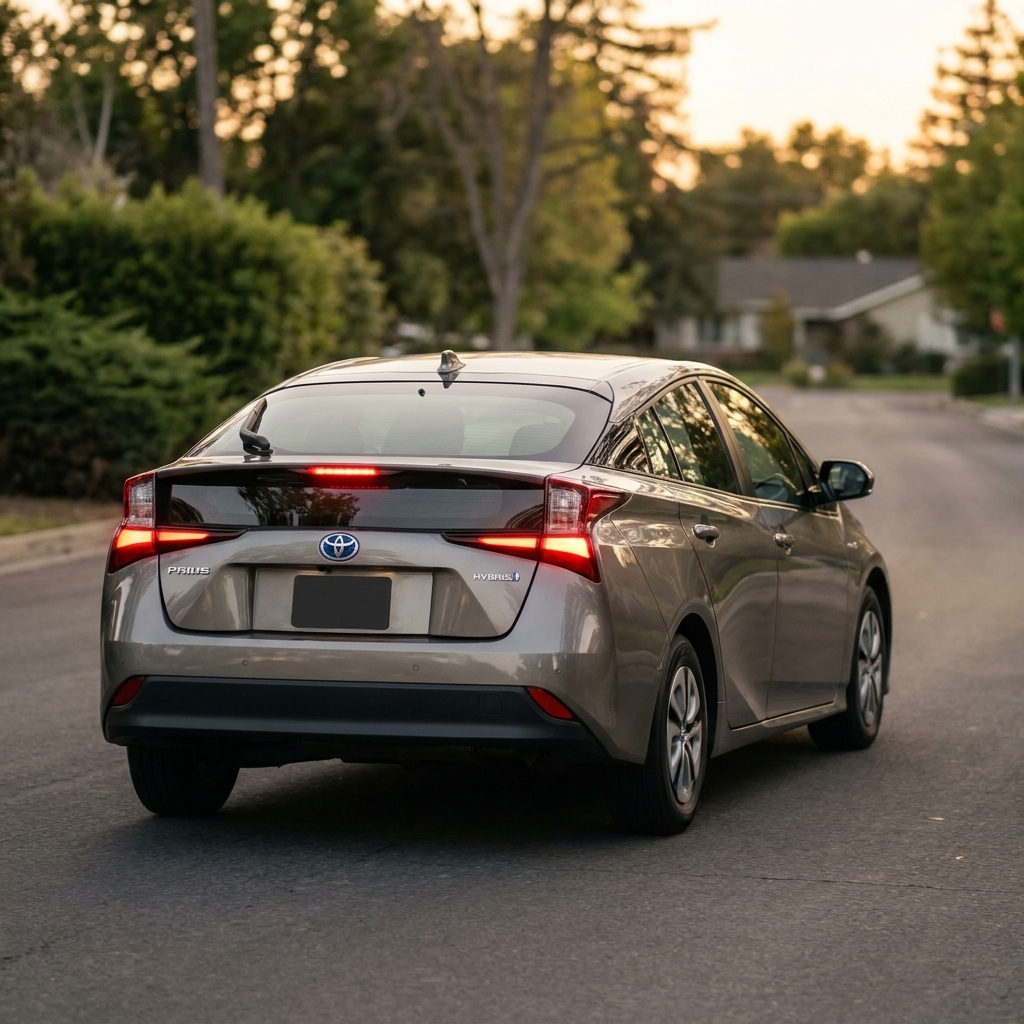
If you have ever jumped from a conventional gas car into a hybrid and thought, “Why does this brake pedal feel weird?”, you are not alone. Hybrids use a blended braking system that tries to harvest energy first (regenerative braking) and then adds traditional friction brakes (pads, rotors, and hydraulic pressure) when needed.
That blend is great for efficiency and brake wear, but it also means a “spongy” or soft pedal can come from two very different places:
- Hydraulic issues like air in the lines, old brake fluid, a failing caliper hose, or a master cylinder problem.
- Electronic blending issues like a brake stroke sensor, brake booster or actuator fault, wheel speed sensor signal problems, or ABS or VSC logic limiting assist.
Let’s break it down in a way you can actually use in your driveway, without guesswork.
How hybrid braking feels when normal
Before we chase problems, it helps to know what “normal hybrid weird” looks like.
- Pedal feel can change slightly at low speeds. Many hybrids transition from mostly regen to mostly friction during the last part of a stop, often somewhere below about 5 to 10 mph, but it is very model dependent and can change with temperature, battery state of charge, and traction.
- You may hear pumps and valves. Brake boost on many hybrids is electro-hydraulic. A faint whir or buzz from the actuator or booster can be normal.
- Initial bite can be softer than you expect. Because the car may be doing regen first, the friction brakes might not grab hard right at the top of the pedal like an older non-ABS system.
What is not normal is a pedal that sinks, requires pumping, feels mushy all the time, or suddenly changes compared to what you are used to in that same car.
Quick safety check
Do this check in a flat driveway or empty lot, not in traffic.
Stop driving and tow it
- Brake warning light, ABS light, or a “Brake System” message that stays on
- Pedal goes to the floor or sinks steadily while holding pressure
- You need to pump the pedal to get stopping power
- Fluid visibly leaking at a wheel, under the car, or near the firewall
- Hard pull to one side with grinding or smoke from a wheel
If it stops straight and lights are off
You can continue with diagnosis, but keep speeds low and leave plenty of room.
Spongy or just not linear
Drivers use “spongy” to describe a few different sensations. The distinction matters.
More likely hydraulic
- Pedal feels soft and springy
- Pedal travel is longer than normal
- Pumping the pedal improves it temporarily
- Feel is similar every time, regardless of speed or road conditions
More likely blending or control
- Pedal feel changes depending on speed, battery state of charge, or traction
- Braking is grabby one moment, then numb the next
- You notice it more on rough pavement, potholes, or when turning into a stop
- Pedal itself may feel firm, but decel does not match your foot consistently
A true hydraulic “spongy” pedal is usually about compressibility (air or flex). A regen blending issue is usually about control or feedback, not compressibility. Also note: a firm pedal with poor decel can be tires, road surface, or ABS intervention, not necessarily a hydraulic fault.
Step-by-step: start simple
1) Check brake fluid level and condition
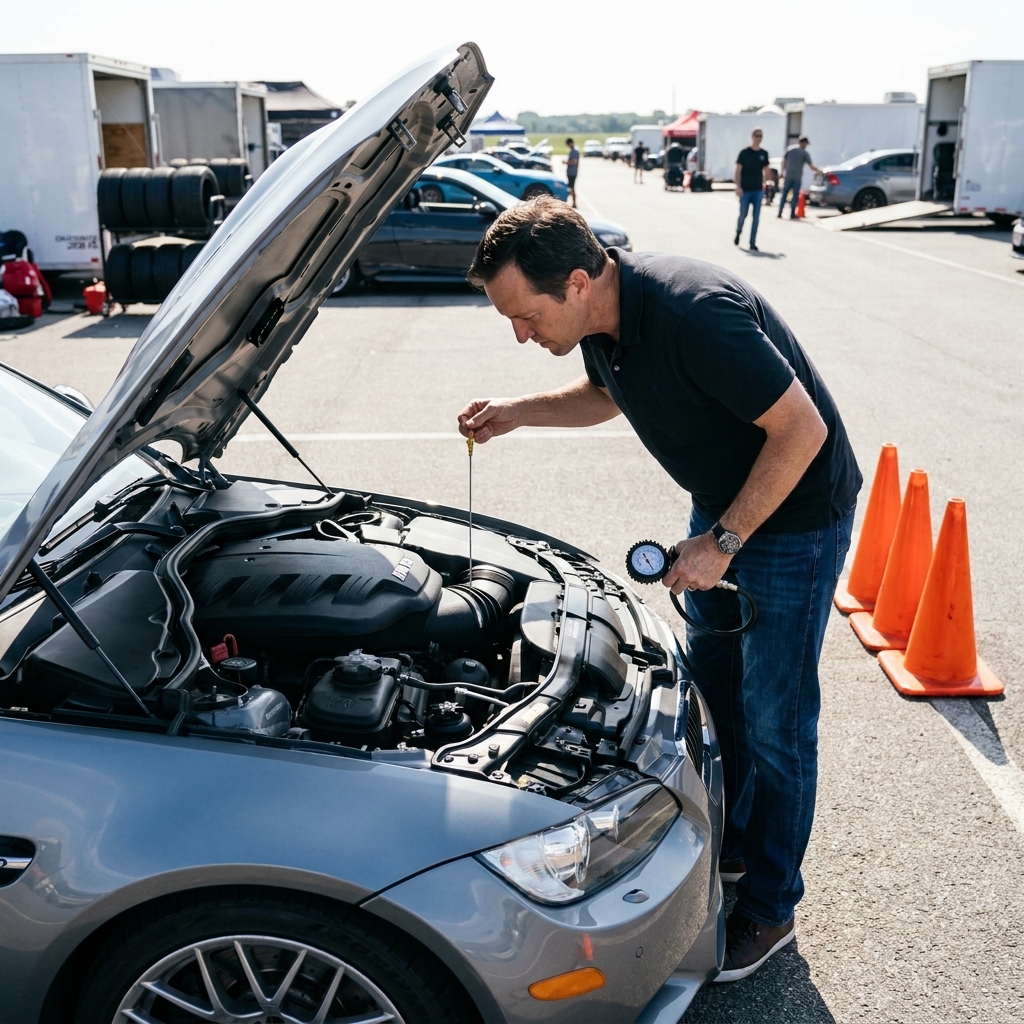
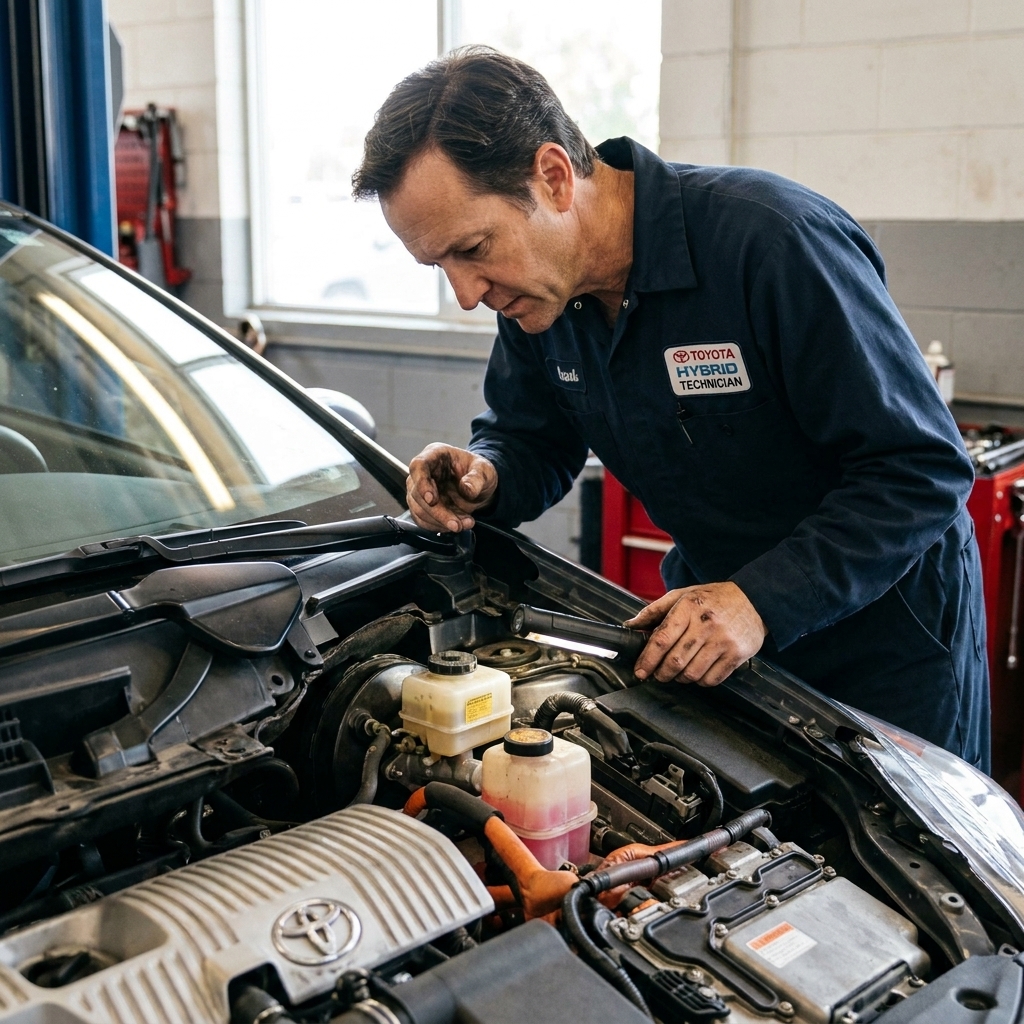
Pop the hood and find the brake fluid reservoir. On many hybrids it is integrated with or mounted near the brake booster or actuator assembly.
- Level low? That is a red flag for a leak or worn pads (worn pads lower the level, but it should not be suddenly low).
- Fluid dark or cloudy? Old fluid absorbs moisture. Moisture can soften pedal feel when the brakes heat up and it increases corrosion risk inside valves, calipers, and actuator components over time.
Use the correct fluid spec shown on the cap or in the owner’s manual, commonly DOT 3 or DOT 4. Do not mix in “mystery” fluid. Brake fluid service intervals are manufacturer specific and often time-based, even on low-mileage hybrids.
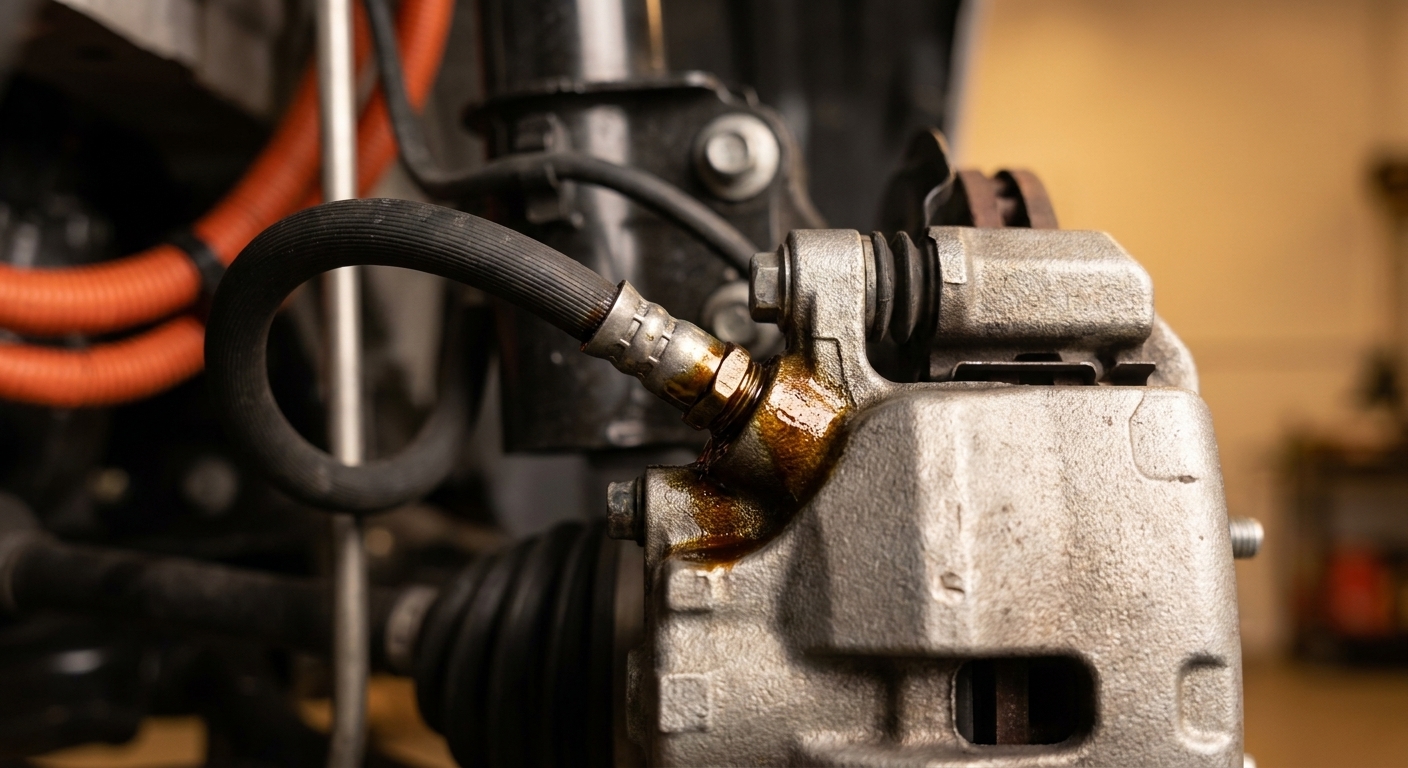
2) Look for leaks and wet spots
Check four areas:
- Inside of each wheel and behind the tire for wetness
- Brake hoses for cracking, swelling, or wet fittings
- Under the master cylinder or actuator area for seepage
- Along the brake lines for rusted sections
Driveway tests: hydraulic vs electronic
Test A: Pedal hold test (READY mode)
With the car in READY, press the brake pedal firmly and hold steady pressure for 30 seconds.
- If the pedal slowly sinks, suspect an internal hydraulic leak such as a master cylinder or actuator internal seal leak (fluid leaking past internal seals), or a leak elsewhere in the system.
- If the pedal stays put but feels long and soft, suspect air in the lines or hydraulic compliance (aging hoses, pad knock-back from a loose wheel bearing, or other mechanical flex). Some mechanical issues can feel like extra travel even when there is no air.
Note: some hybrids will modulate pressure and you may feel slight changes. You are looking for a steady, noticeable sink under constant foot pressure.
Test B: Key-off residual feel (not READY)
Turn the car off. Wait a minute. Then press the brake pedal several times.
- On many vehicles the pedal will get firmer as stored assist is depleted. That can be normal.
- If you hear the actuator pump run briefly after shutdown, that can be normal. If it repeatedly cycles, runs for long periods, or comes on every few minutes while parked, that can point to accumulator leak-down or actuator issues. This is model dependent.
Test C: Low-speed transition feel
In an empty lot, do a few smooth stops from 15 mph down to 0.
- If the last few feet feel like the pedal or decel suddenly changes (a step in braking or a momentary “drop” in decel), you may be feeling regen to friction transition characteristics, calibration quirks, or a sensor input problem.
- If it is uniformly mushy the entire stop, think hydraulics.
Test D: Rough pavement ABS handoff
Lightly brake over a small rough patch or a manhole cover (safely, at low speed).
- If braking seems to “let go” for a split second, that can happen when wheel slip is detected and the system rebalances regen and friction. A mild version can be normal, but if it is dramatic or new, scan for ABS or wheel speed sensor issues and check tire and suspension condition.
Common hydraulic causes
Air in the brake lines after service
This is the big one, especially if you recently had pads, calipers, a wheel bearing, or any brake line work done.
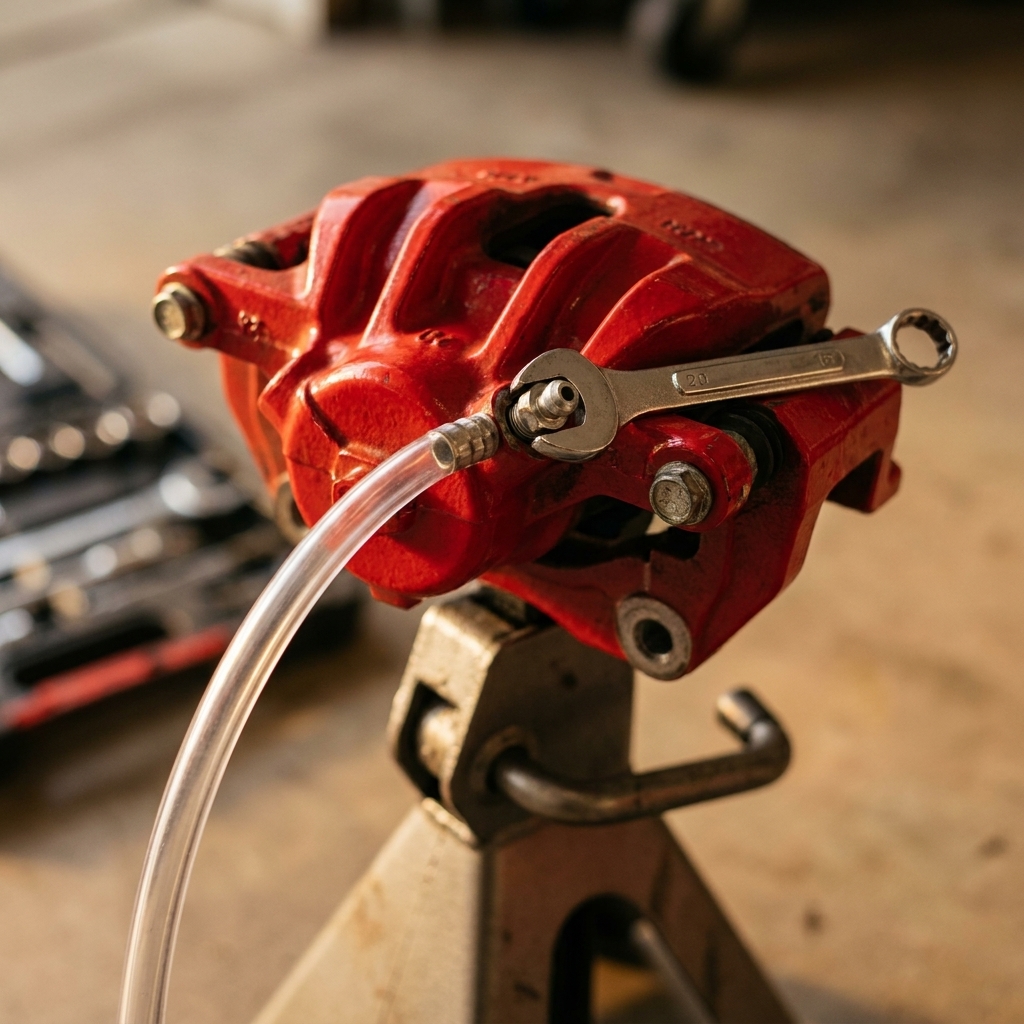
Hybrids can be tricky because some require a scan tool brake bleed procedure to cycle the actuator valves and purge air. A traditional “pump and hold” bleed may not fully remove air on certain systems.
Important safety note: Some hybrids store high hydraulic pressure in an accumulator and use brake-by-wire logic. Follow OEM depressurization and service steps before opening any bleeder or disconnecting brake lines. If you are not 100 percent sure of the procedure for your model, do not guess.
Old, moisture-contaminated brake fluid
Even if mileage is low, time matters. Hybrids often use friction brakes less aggressively, so issues like surface rust or glazing can show up, but brake fluid still absorbs moisture. Moisture lowers boiling point and can contribute to a soft pedal after repeated stops downhill or during heavy braking.
Rubber brake hoses swelling internally
An aging hose can balloon under pressure. You may not see it easily. The symptom is often longer pedal travel and slightly delayed response.
Mechanical travel issues that mimic softness
Not every “soft” complaint is air. Some mechanical problems add travel or reduce bite without a truly compressible pedal:
- Pad knock-back from excessive rotor runout or a loose wheel bearing
- Improper rear drum adjustment on vehicles that still use rear drums (less common on newer hybrids, but still out there)
- Caliper slide pins that are seized or sloppy can cause uneven wear, pulling, overheating, and inconsistent bite. It is usually not the first cause of a classic spongy pedal, but it can contribute to extra travel or poor response.
Hybrid-specific causes
Brake stroke or pedal travel sensor faults
Many hybrids do not use a simple vacuum booster with a direct master cylinder feel the way older cars did. They often measure pedal input electronically and then command hydraulic pressure and regen torque.
If the system is not confident in the sensor signal, it may reduce regen or change assist, which can feel like inconsistent braking or excessive pedal travel.
Wheel speed sensor signal problems
A dirty sensor, damaged tone ring, or wiring issue can cause odd ABS events. When the car thinks a wheel is slipping, it may cut regen and rely more on friction, or rebalance the two depending on strategy. That can feel like a sudden change in braking.
Brake actuator, booster, or accumulator issues
Some hybrids use an electric pump and accumulator to provide hydraulic boost. If the accumulator cannot hold pressure or the actuator has internal leakage, you may get:
- More frequent pump operation
- A longer pedal
- Warning lights or stored codes
- In some cases, a pedal that sinks
This is not a DIY guess-and-replace situation. It is scan-tool time.
Battery state and regen limits
Regen is not always available. If the high-voltage battery is cold, hot, near full charge, or the system is protecting traction, regen may be reduced. That can make the friction brakes do more work and change feel.
This usually feels like a change in deceleration rather than a mushy pedal, but drivers often describe it as “soft” because the car is not slowing the way it usually does.
DIY vs shop
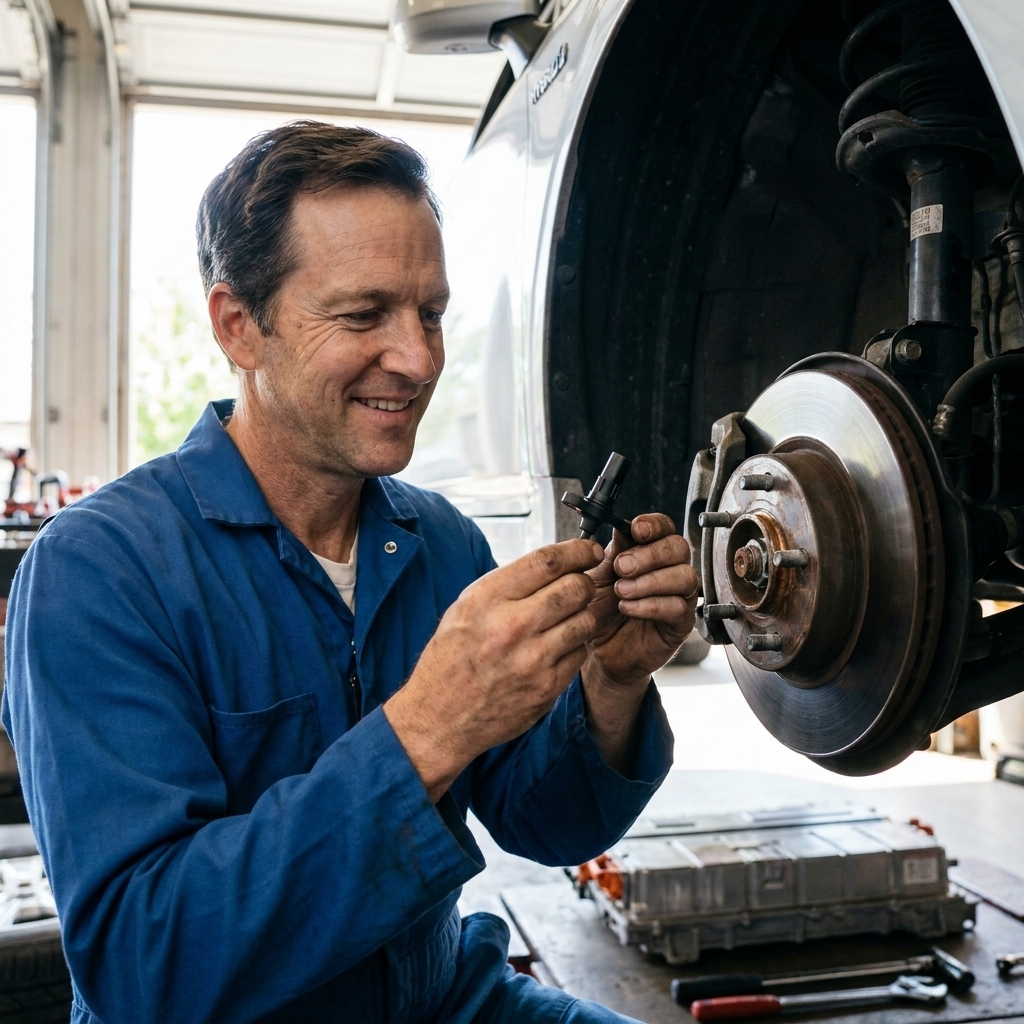
DIY-friendly checks
- Verify brake fluid level and look for leaks
- Inspect pad thickness and rotor condition
- Check caliper slide pin movement if you are comfortable removing calipers
- Look for obvious wheel speed sensor damage at the hubs
Usually shop-level on hybrids
- Brake bleeding that requires a scan tool routine (very common on modern hybrids)
- Depressurizing and servicing systems with an accumulator or brake-by-wire controls
- Diagnosing brake actuator, booster, or accumulator faults
- Reading ABS, VSC, or brake codes and live data for stroke sensors and wheel speeds
- Any work that involves opening the hydraulic control unit or actuator assemblies
If you are choosing a shop, ask a simple question: “Do you have the scan tool and procedure for hybrid brake bleeding and brake actuator tests on this model?” The right shop will answer confidently.
Scan tool clues
You do not need to become a code encyclopedia, but you should know what information matters. When a shop scans the car, ask them to report:
- Codes in ABS, VSC, or Brake modules, not just the engine ECU
- Freeze frame data (conditions when the fault set)
- Live data for wheel speeds, brake pedal stroke, requested vs actual hydraulic pressure (if supported)
- Brake actuator pump run time or accumulator pressure readings (model dependent)
One more tip from the shop floor: if the brakes feel spongy but there are no codes and the symptom started right after brake work, suspect an incomplete bleed procedure first.
Real-world scenarios
“Spongy after pads or rotors”
- Most likely: air in the system
- Also check: correct caliper mounting, hose twists, and proper bedding
- Hybrid twist: may need scan tool bleeding to purge actuator passages
“Pedal is fine, braking is weird around 5 mph”
- Most likely: regen to friction transition characteristics, sometimes worsened by glazed pads or rotor surface rust
- Also consider: software updates or brake system calibration issues (model dependent)
“More pedal travel and I hear the pump more often”
- Most likely: booster, accumulator, or actuator pressure issue or internal leak
- This is a strong case for professional diagnosis
“ABS kicks in too easily on bumps”
- Most likely: wheel speed sensor signal dropout or hub tone ring issues
- Also consider: worn suspension components allowing wheel hop, plus tire condition and pressure
Preventing spongy brakes
- Flush brake fluid on time. Follow the maintenance schedule. If you live in humid climates or do mountain driving, be proactive.
- Use the right bleed procedure. If a hybrid requires scan tool cycling, insist on it.
- Do a few firm stops occasionally. In a safe place, a couple of moderate to firm stops can help keep friction surfaces clean. Do not overheat them, just keep them exercised.
- Keep up with tire and suspension condition. Braking feel is a system. Bad tires and worn shocks can mimic brake weirdness fast.
FAQ
Is a spongy brake pedal dangerous in a hybrid?
Yes, it can be. Hybrids still rely on hydraulics to stop. If the pedal is sinking, you have warning lights, or stopping distance is increasing, treat it as a safety issue and get it inspected immediately.
Can regenerative braking cause a soft pedal?
Regen typically changes how the car slows down, not the actual compressible feel of the pedal. If the pedal itself feels mushy or improves when pumped, that points more toward hydraulic issues.
Do hybrids need special brake bleeding?
Many do. Some hybrid brake systems trap air in the actuator and require a scan tool routine to cycle valves and pumps. Some also require depressurizing stored hydraulic pressure before opening the system. Without the correct procedure, you can chase a soft pedal forever and create a safety risk.
Why do my hybrid brakes feel worse after sitting?
Surface rust on rotors and pad glazing can change initial bite, and low usage of friction brakes can make that more noticeable. But a true spongy pedal after sitting can also indicate a small leak or moisture-contaminated fluid.
When in doubt, basics first
I love chasing weird hybrid symptoms as much as the next former wrench-turner, but I start every brake complaint the same way: fluid level, leaks, proper bleed procedure, then scan data. Most “spongy brake” stories end up being either air in the system after service or a hybrid actuator or booster issue that needs the right tools to confirm.
If you tell a shop exactly what you feel, when it happens (cold, hot, low speed, on bumps), and whether it started after brake work, you will save time and money. And you will get your confidence back the moment that pedal feels solid again.