If you’ve ever jumped from a conventional gas car into a hybrid and thought, “Why does the brake pedal feel a little different?”, you’re not imagining it. Most hybrids slow down using regenerative braking first, then blend in the friction brakes when you need more stopping power or when conditions limit regen.
The good news is that regen often means brake pads last a long time. The less obvious news is that it can change how the rest of the brake system ages. I’ve seen hybrids come into the shop with plenty of pad material left but crusty rotors, stuck slide pins, and uneven pad wear from brakes that simply don’t get exercised hard very often.
Quick safety note: Brake work is safety-critical. If you are not 100% confident in your ability to support the vehicle safely, torque fasteners correctly, and verify pedal feel before driving, this is one of those jobs where it’s smart to bring in a pro.
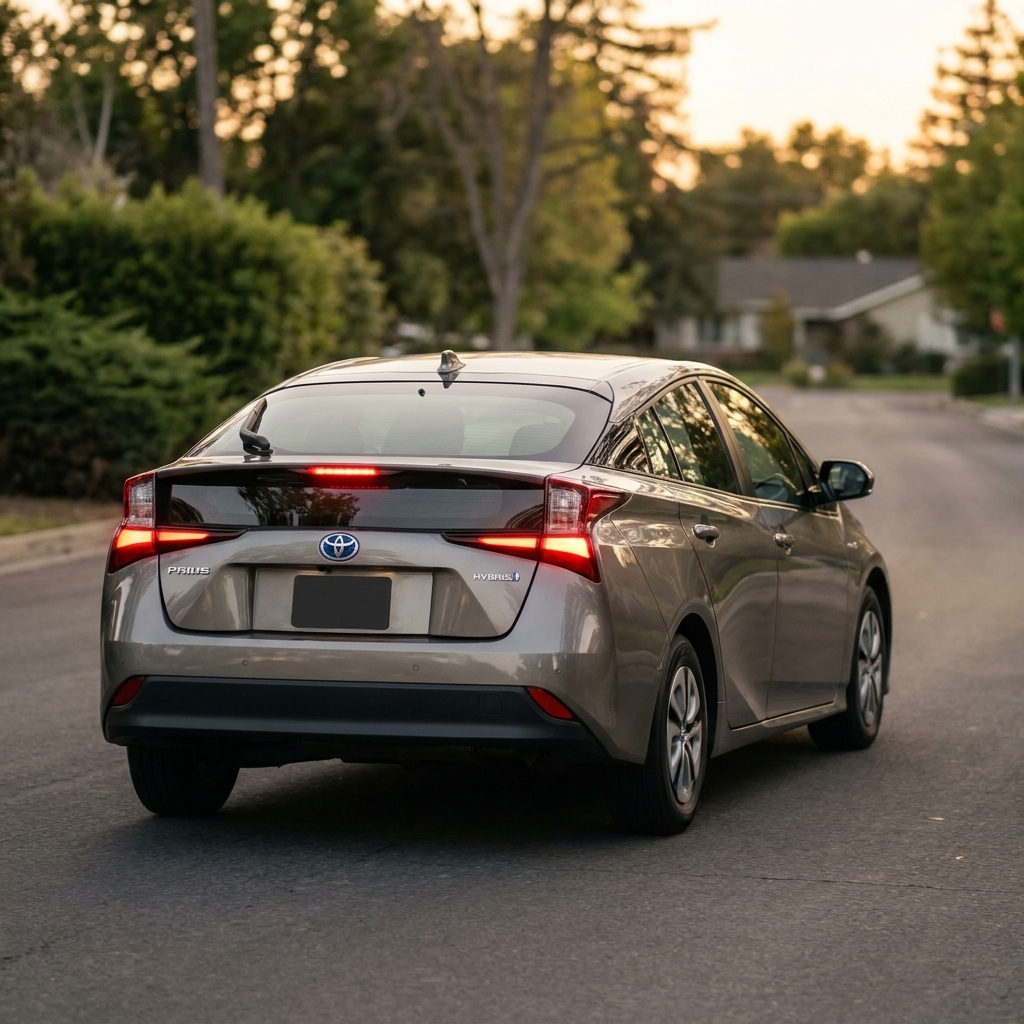
What regen really does
In a hybrid, the electric motor can work in reverse as a generator. When you’re slowing down, the car uses that generator effect to create drag on the drivetrain, turning your forward motion into electricity that gets stored in the battery.
Regen vs. friction: the blend
- Light to moderate braking: often mostly regen, with little friction braking, though some vehicles will intentionally apply a small amount at times to keep rotors dry/clean and maintain consistent feel.
- Hard braking: friction brakes join the party quickly.
- Low speeds: regen tapers off at low speed, commonly in the single digits mph, but the exact handoff varies by vehicle and conditions.
- Cold battery, full battery, ABS activation, or slippery conditions: regen may be limited, so friction brakes do more work.
That blended feel is normal. Your pedal request is interpreted by a control system that decides how much slowing comes from regen and how much comes from pads and rotors.
How regen changes wear
On a conventional car, your pads are constantly scrubbing the rotors, which helps keep the rotor faces cleaner and keeps caliper parts moving regularly. With regen, many drivers use the friction brakes less aggressively day to day, which can let rust and sticky hardware show up earlier than you’d expect based on pad thickness alone.
What usually improves
- Pad life: it’s common to see hybrid pads go well past 80,000 miles, sometimes far more depending on driving and climate.
- Rotor thickness wear: rotors may stay thick because the pads are not grinding them down as often.
What can get worse
- Rotor surface rust and pitting: especially in wet or salty climates, rotors can rust because they are not being wiped clean as often.
- Vibration or pulsation: corrosion, runout, or disc thickness variation are common culprits. Uneven pad deposits can contribute too, especially with lots of gentle braking and long periods of light friction use.
- Sticking slide pins: caliper pins need movement and lubrication. Less frequent heavy braking can let moisture and grime win.
- Inner pad wearing faster: classic sign of a caliper that isn’t sliding freely.
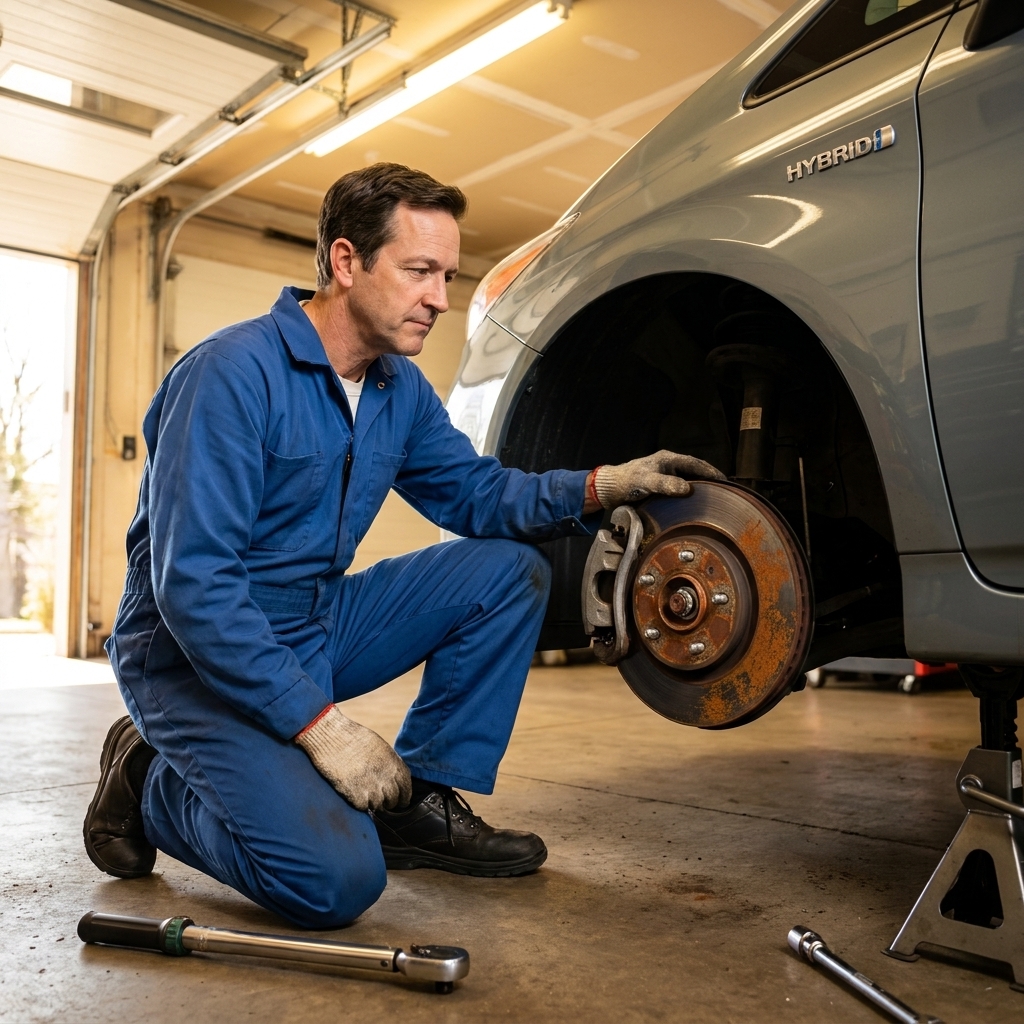
Mechanic’s coffee-cup advice: hybrids often don’t need pads because they wore out, they need pads because they wore unevenly or the hardware stopped moving the way it should.
When to inspect brakes
Don’t wait for grinding. A hybrid can feel totally normal and still have a caliper starting to stick.
Good inspection intervals
- Every tire rotation: a quick visual peek through the wheel spokes is better than nothing.
- At least once a year: full wheel-off inspection is ideal if you live where roads get salted or you see lots of rain.
- Immediately if you notice any of these symptoms:
- Squeal that comes and goes
- Pulsation or steering wheel shake when braking
- Car pulling left or right under braking
- Hot brake smell after a normal drive
- Drop in fuel economy (a dragging caliper can do that)
Brake-by-wire safety notes
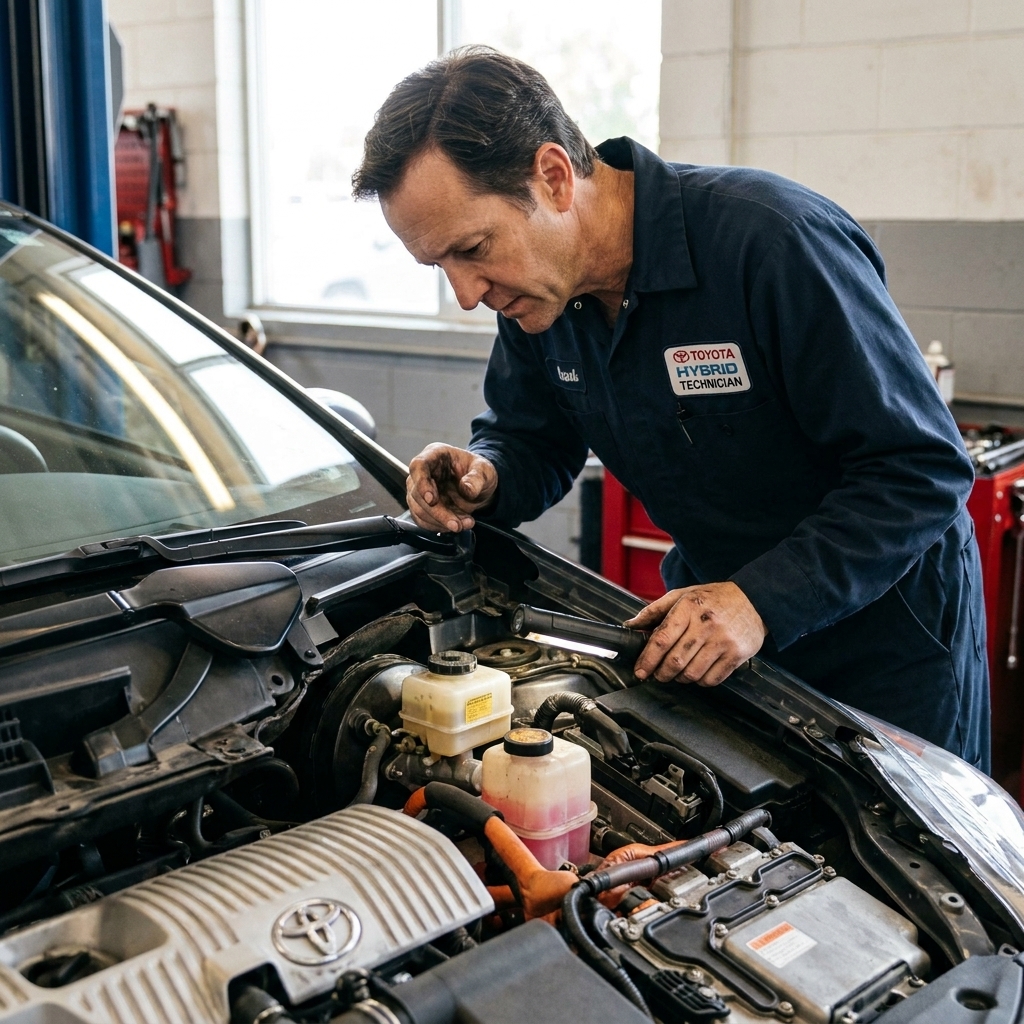
Many hybrids use brake-by-wire or an electro-hydraulic booster/accumulator. That can change what “safe to work on” looks like.
- Follow the manual: some vehicles have a maintenance mode or depressurization procedure for the brake system.
- Keep the car asleep: keep the key fob away and avoid opening doors if your vehicle primes the system when it wakes up.
- Do not press the brake pedal with calipers removed or pistons pushed out. That can force fluid out, overextend pistons, or trigger unwanted system behavior.
- If you are unsure: stop and look up the correct service steps for your exact model. This is one place where guessing gets expensive fast.
Step-by-step inspection
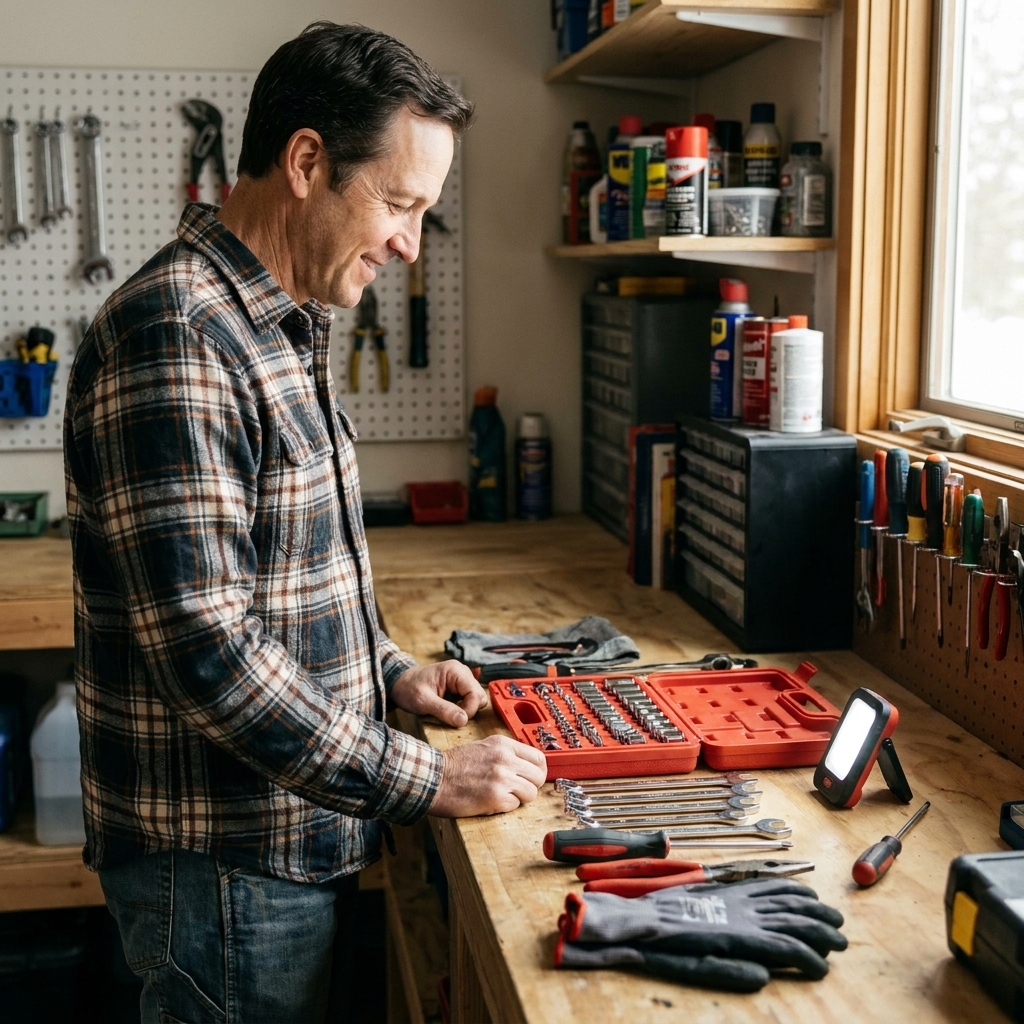
You can do a solid inspection with basic hand tools, a flashlight, and a calm Saturday morning. If you’re new to this, take photos as you go. They help a ton during reassembly.
Tools and supplies
- Jack and jack stands (or a lift)
- Lug wrench or impact
- Flashlight
- Gloves and safety glasses
- Brake cleaner
- Small wire brush
- Caliper hanger hook or bungee cord
- Optional but helpful: digital caliper for measuring rotor thickness
1) Make it safe
Park on level ground, set the parking brake, and chock a wheel. Many hybrids can automatically run pumps or systems when doors open or when the car wakes up. Follow your owner’s manual procedures for maintenance mode if applicable, and keep the key fob away from the car.
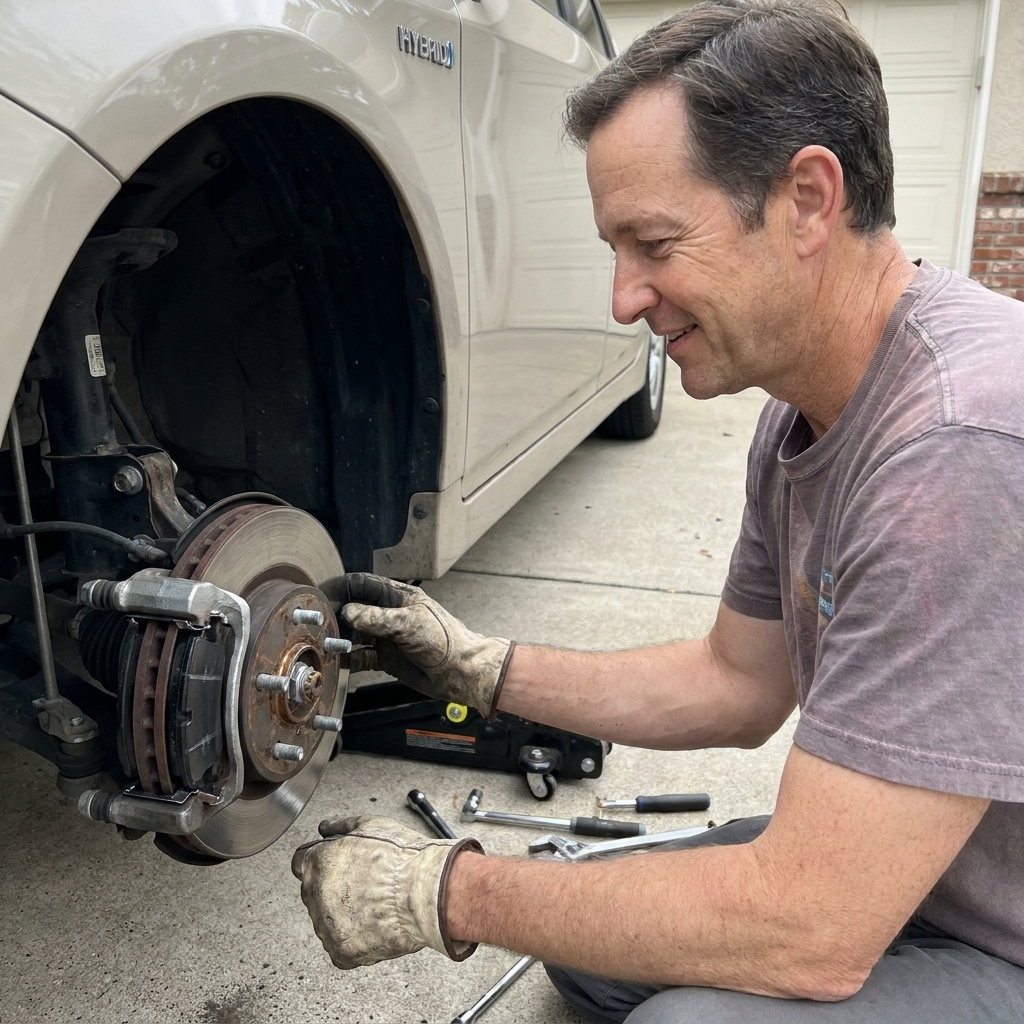
2) Wheel-off visual check
With the wheel off, look at:
- Pad thickness: you typically want more than 3 to 4 mm of friction material. If one pad is much thinner than its mate, suspect sticking hardware.
- Rotor condition: light surface rust after rain is normal. Flaky rust, deep grooves, or pitted braking surfaces are not.
- Caliper boots: torn dust boots can let moisture in and seize things up.
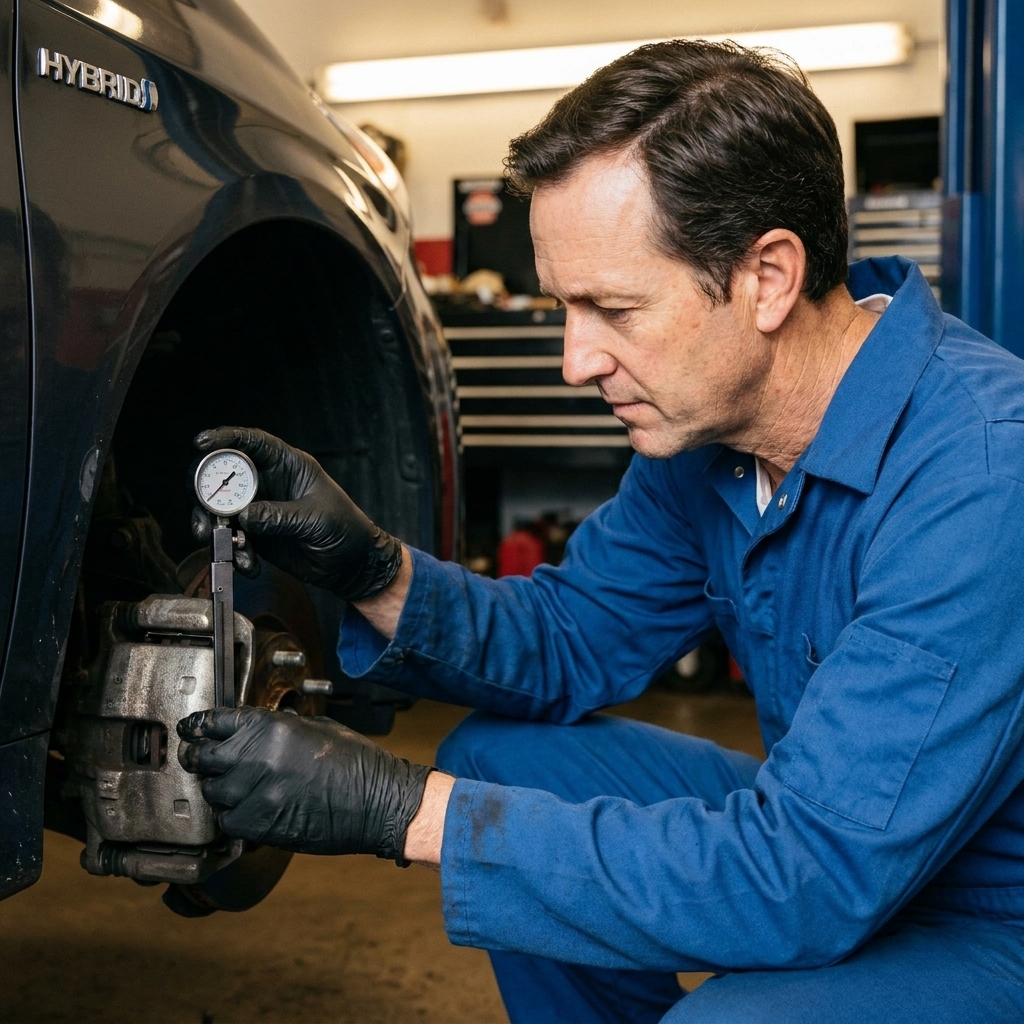
3) Check slide pins
If the design uses slide pins (most do), the caliper should move smoothly on them. Sticky movement is a big deal on hybrids because light brake use can let the pins corrode or gum up.
4) Look for uneven contact
If the rotor face looks shiny in one area and crusty in another, that can mean the pad is not contacting evenly. That’s when you may feel pulsing or hear odd scraping noises even though the pads look fine.
5) Confirm thickness and runout (if needed)
If you’re chasing vibration, measure rotor thickness against the minimum spec and consider checking runout. Specs vary by vehicle, so use service data for your exact model.
Service the skipped parts
If I could tattoo one sentence on every DIY brake job, it would be this: pads are the easy part, caliper hardware is the whole game.
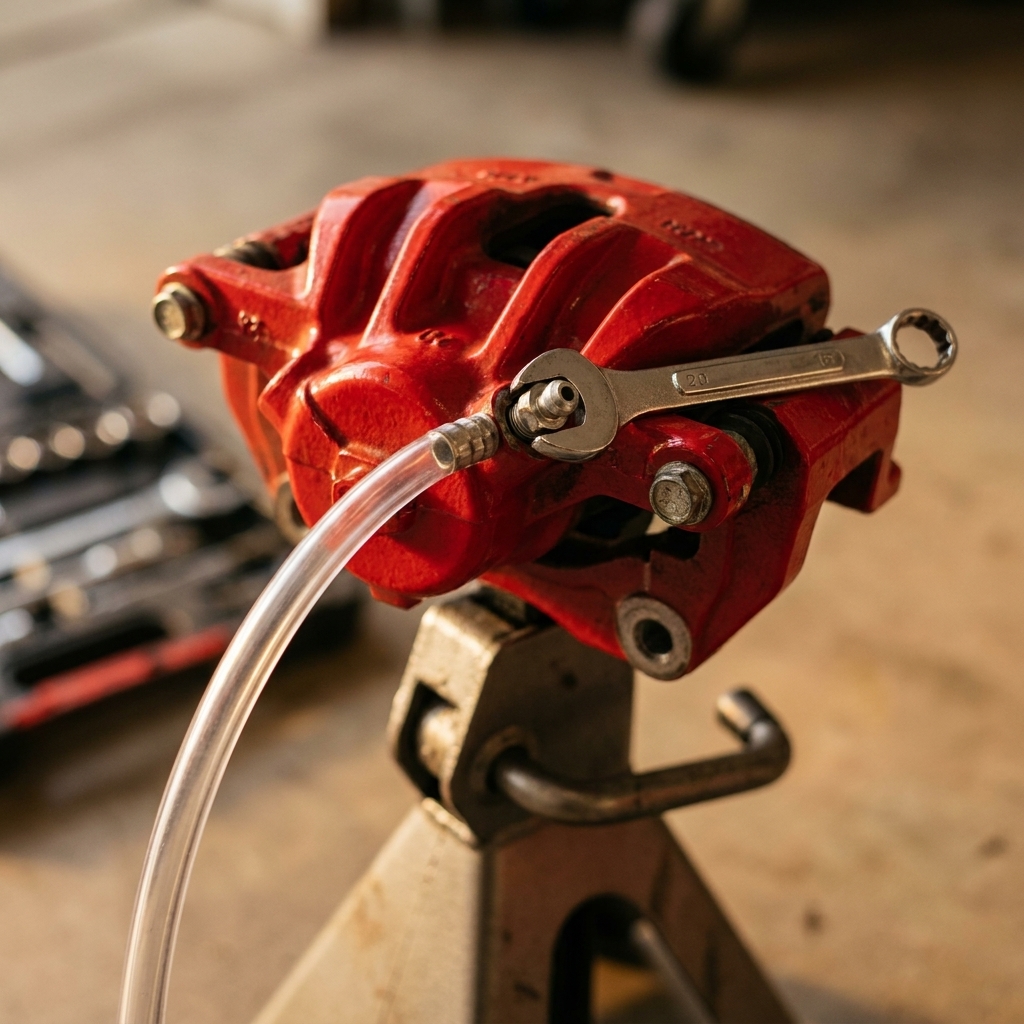
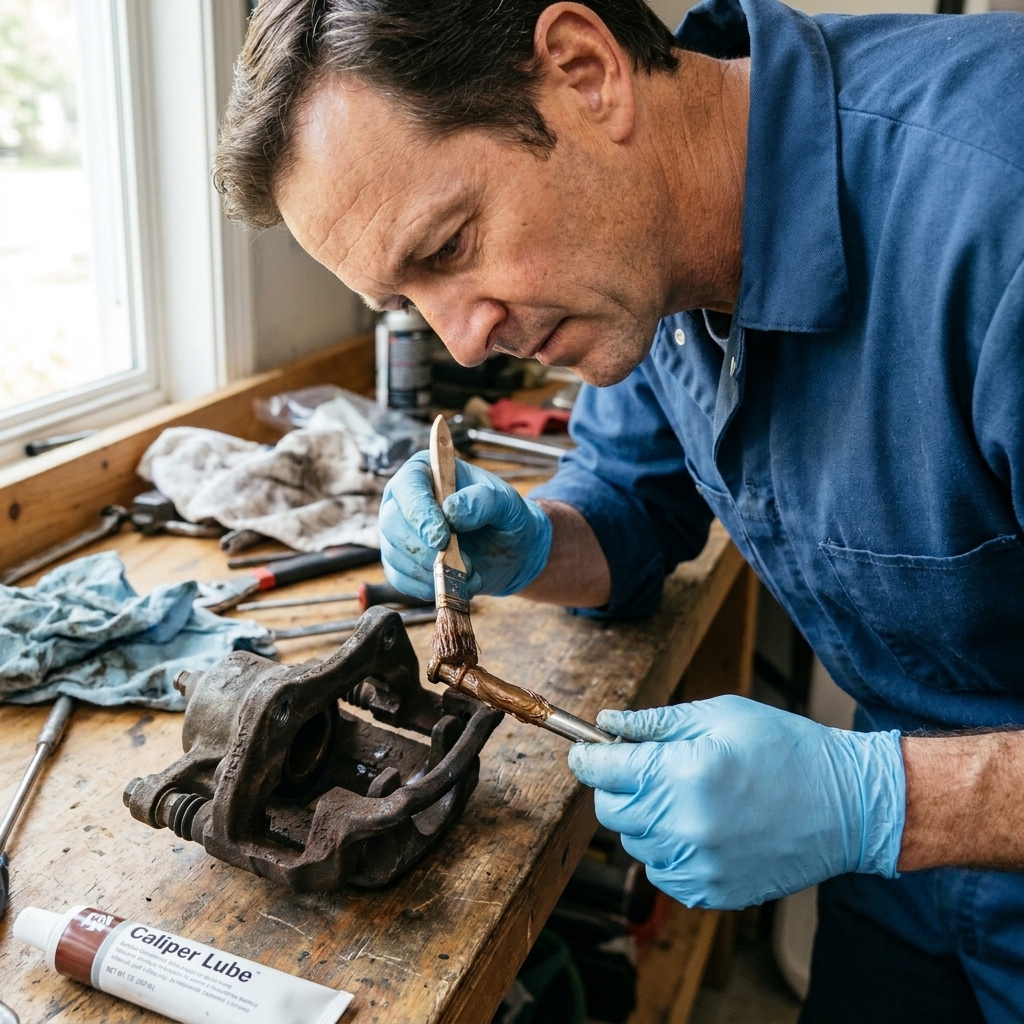
Clean and lube slide pins
- Remove slide pins one at a time.
- Wipe old grease and inspect for corrosion or scoring.
- Use the correct brake grease (silicone or synthetic brake lube, not general-purpose grease).
- Make sure boots are seated so water stays out.
Service the abutment clips
Those stainless clips where the pads ride can trap rust underneath. That rust swells and pinches the pad ears, causing dragging or uneven wear.
- Remove the clips.
- Wire brush the bracket lands clean.
- Reinstall new clips if your pad kit includes them (recommended).
- Use a very thin film of brake lube where the pad ears contact the clips. Keep lube off the rotor and pad friction surface.
When to replace parts
Hybrids can go a long time on pads, but don’t let long life turn into ignore it forever. Replace components based on condition, not just mileage.
Replace pads if
- Friction material is near 3 mm or less
- Cracks, crumbling edges, or contamination (oil or grease)
- One pad is significantly thinner than the other on the same wheel
- Persistent noise after hardware service and proper bedding
Replace or resurface rotors if
- Thickness is at or below minimum spec
- Deep grooves you can catch with a fingernail
- Heavy pitting or flaking rust on the braking surface
- Brake pulsation tied to rotor condition and runout
Resurface vs. replace: rotor resurfacing can work when the rotor is thick enough, the corrosion is light, and the surface issue is correctable. Many modern rotors do not have much extra material, and in rust-belt climates corrosion often makes replacement the better call.
Step-by-step pad replacement
This is a general process that fits many hybrids, but always check service info for your exact model.
Rear EPB warning
Some hybrids use an electronic parking brake (EPB) and may require putting the rear brakes into a service mode before pushing the caliper piston back. Some require a scan tool procedure even if there is no obvious dash or menu option. If you force it, you can damage the actuator.
1) Remove the caliper
- Loosen lug nuts, raise the vehicle, and remove the wheel.
- Remove the caliper bolts.
- Hang the caliper with a hook or bungee. Do not let it dangle from the brake hose.
2) Remove pads and hardware
- Slide out the old pads.
- Remove abutment clips and clean the bracket lands.
- Inspect the caliper bracket for rust buildup where the clips sit.
3) Compress the piston correctly
Use a piston tool or C-clamp style compressor. For some rear calipers, the piston must be rotated while compressing. Go slow and watch the brake fluid reservoir level so you don’t overflow it.
4) Install new clips and pads
- Install new clips (preferably from the pad kit).
- Apply a thin film of brake lube to pad ears and slide contact points.
- Install pads in the correct orientation. Many inner pads have a wear indicator or spring.
5) Reinstall and torque
Torque caliper and bracket bolts to spec. Good and tight is how bolts get stripped. Torque specs vary a lot by vehicle.
6) Pump the pedal
Before you move the car, pump the brake pedal until it feels firm. This seats the pads against the rotors after piston compression.
Bedding pads
Even though regen does a lot of slowing, you still want a proper transfer layer between pad and rotor. That helps reduce noise and vibration.
A safe, general bedding approach for street pads:
- Find an empty road and do 6 to 10 moderate stops from about 35 mph down to 5 mph.
- Do not come to a complete stop and hold the pedal hard during the sequence if you can avoid it.
- Drive for a few minutes afterward to let brakes cool.
If your pad manufacturer or OEM provides a bedding procedure, follow that. Some hybrids will try to use regen during these stops. That’s fine. The friction brakes still engage, especially as you near a stop. If your vehicle has a mode that changes regen behavior, follow your manual and use what’s appropriate.
Brake fluid still matters
Regen reduces pad wear, but it does not stop brake fluid from aging. Brake fluid is hygroscopic, meaning it absorbs moisture over time. Follow your manufacturer’s time-based brake fluid service interval, especially if you live in a humid climate or the car sees big temperature swings.
Tips for long brake life
- Use the friction brakes on purpose sometimes: a few firmer stops (safely) can help clean rotor surfaces.
- Rinse winter salt off: especially after storms, wash wheels and the general brake area to reduce corrosion buildup.
- Do hardware service, not just pad swaps: slide pins and bracket lands matter.
- Don’t ignore fuel economy drops: dragging brakes can sap mileage even in efficient hybrids.
FAQ
Do hybrid pads last longer?
Usually, yes. Regen often handles a large chunk of everyday slowing, so pads can last significantly longer than on a comparable gas car. But condition matters more than mileage. Rust, sticking pins, and uneven wear can still force earlier service.
Why are my rotors rusty with thick pads?
Because the pads may not be wiping the rotor clean as often. Light surface rust is normal after rain, but heavy pitting or flaking rust can cause noise and vibration and may require rotor replacement.
Can I use regular pads on a hybrid?
Use pads that match OEM type and are intended for your exact vehicle. Many hybrids use low-dust, low-noise pad compounds and specific hardware. The wrong pad can squeal, feel grabby, or wear unevenly.
Do I need to disconnect the hybrid battery?
For pads and rotors, typically no, but you do need to prevent the car from waking up and moving actuators unexpectedly. Follow the manufacturer procedure for service mode and key fob placement. If you are unsure, stop and look up the correct steps for your model.
Biggest DIY mistake?
Skipping caliper bracket cleaning and slide pin lubrication. On hybrids, that’s often the difference between brakes that last forever and brakes that drag, squeal, or wear unevenly with plenty of pad material left.
Bottom line
Regenerative braking is a gift for pad life, but it changes the maintenance mindset. Think less about when will my pads wear out and more about are my calipers and rotors staying clean and moving freely. If you inspect regularly, service the hardware like it matters, and follow the right hybrid safety procedures, your brakes can be quiet, smooth, and reliable for the long haul.