If you’ve been hearing “Tesla flying car” tossed around lately, here’s the real story from the shop-floor perspective. Tesla’s Roadster reveal wasn’t about point-to-point air travel. It was about a next-generation Roadster performing a controlled airborne stunt using cold-gas, compressed-air thrusters, plus some truly wild acceleration claims that hinge on those thrusters doing more than the tires ever could.
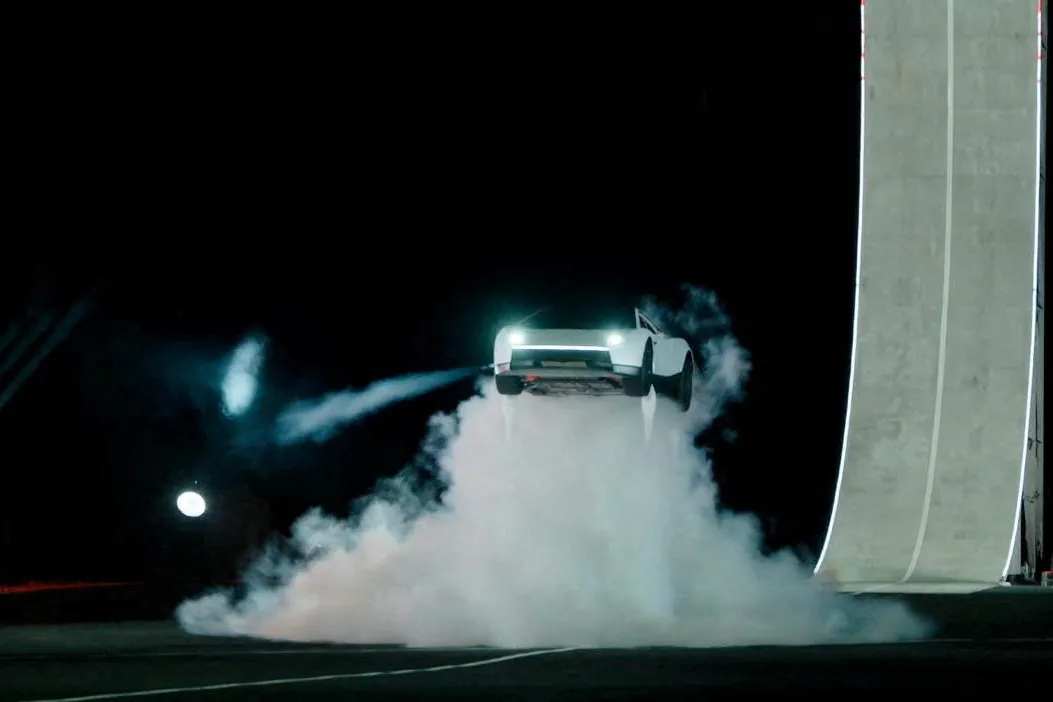
The Roadster’s airborne debut
Tesla officially unveiled its redesigned, next-generation Roadster on Oct. 15, 2026, during a livestreamed event at a SpaceX test site in McGregor, Texas. The headline moment was a ramp run where the car did not just climb and hop. It used a fan-based suction system to remain attached to the ramp until it was completely upside down, then deployed integrated cold-gas thrusters developed in collaboration with SpaceX to launch off the ramp, flip in midair, and land safely back on the ground.
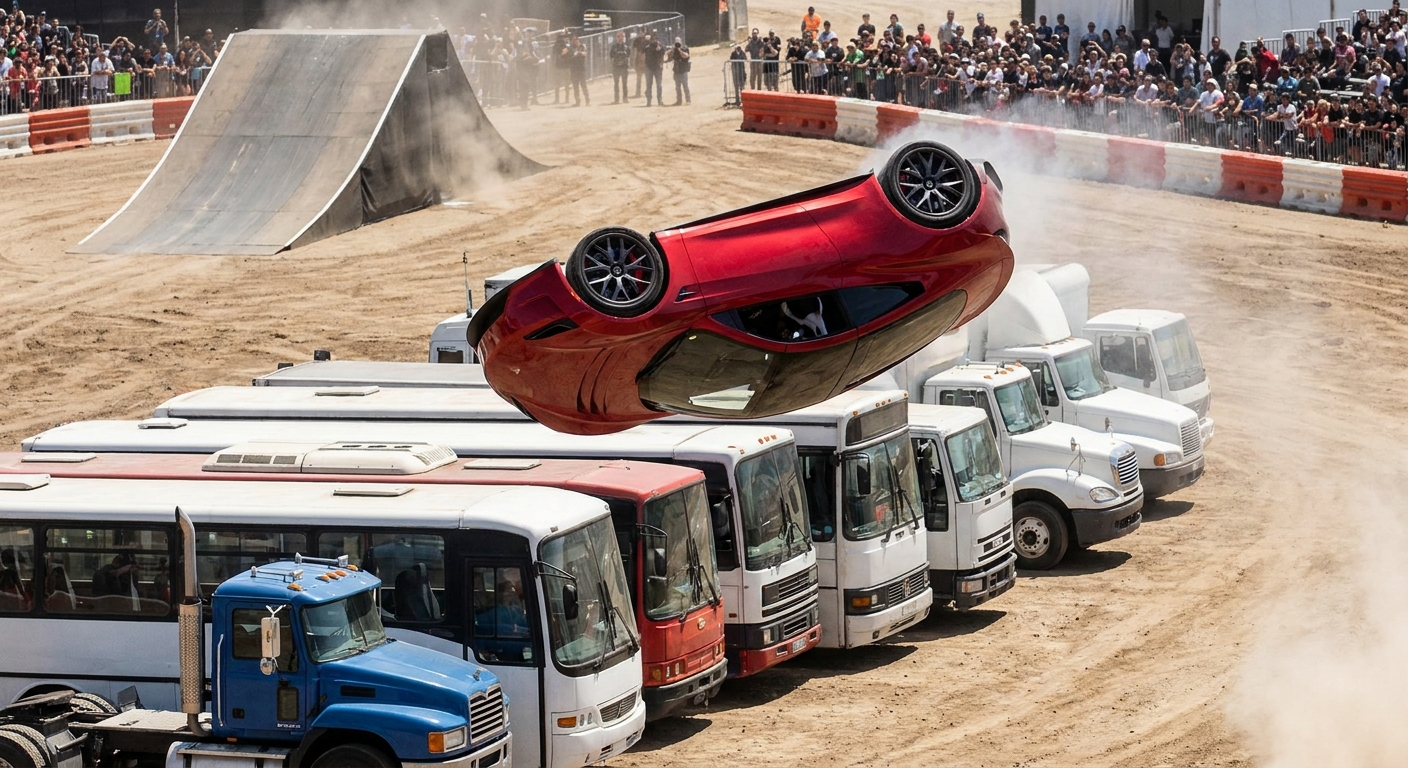
In another demonstration, the Roadster launched over a lineup of cars and a semi-truck, performed a midair flip, and landed safely on the other side.
What Tesla and SpaceX are doing
From a mechanical standpoint, the important takeaway is that Tesla is treating traction as the bottleneck and using thrusters to push past that limitation. Tesla put it this way on X: Every car on the road today is limited by one thing: tire grip. Roadster's thruster system generates 4–5x the force the tires can. More force on the same mass means significantly better acceleration – physics does the rest.
This is not a normal “flying vehicle” demo. It is a performance showcase built around thrust, and the ramp stunt was a dramatic way to show what happens when a car can apply force without depending entirely on rubber and asphalt.
The claim: under 1 second to 60
Elon Musk said certain versions of the Roadster can accelerate from 0 to 60 mph in less than one second, and that the car can reach a top speed of more than 230 mph. During the event, Tesla demonstrated a Roadster accelerating to 60 mph in under a second.
From a mechanic’s perspective, if a company is claiming sub-one-second 0 to 60, the trick is not magic batteries. The trick is how you get more force into the run than tire grip normally allows. Tesla’s answer here is thrusters.
“Flying car” vs. airborne stunt
Musk leaned into the moment, saying, Turns out the future does have flying cars.
Tesla’s Vice President of Vehicle Engineering, Lars Moravy, added, Flying cars are real.
Those lines are great showmanship, but it’s worth keeping expectations calibrated. What Tesla demonstrated was a controlled ramp launch and flip with thruster assistance, not a point-to-point flight use case.
Versions and reservations
After the event, Tesla’s reservation page listed:
- $50,000 reservation payment for the “Performance” version
- $250,000 reservation payment for the “Thrust” version, which features “acceleration thrusters”
- An invite-only “Rocket” variant described as a single-seat model with a “full flight system”
Musk and other Tesla executives did not outline the vehicle’s cost at the event. Nearly a decade earlier, the company had quoted a $200,000 base price.
Timeline to production
This Roadster has been a long time coming. Tesla revealed a prototype back in 2017 and said at that time that deliveries would begin in 2020. At the 2026 event, Tesla executives said production would begin in 2028.
My mechanic’s take
I love bold engineering, and I also love reality checks that save people from hype-whiplash. If you’re trying to understand what this means beyond the stunt, here are the practical questions I’ll be tracking:
- How the thruster system is packaged and serviced: Cold-gas thrusters and the supporting hardware are a different world than typical EV components.
- What “full flight system” ends up meaning on that invite-only Rocket variant: That wording is doing a lot of work, and details matter.
- How repeatable the performance is: One demonstration is one thing. Consistency across conditions is where engineering earns its keep.
For now, the cleanest way to say it is this: Tesla demonstrated a Roadster doing an airborne stunt using thrusters developed in collaboration with SpaceX, plus a sub-one-second 0 to 60 claim for certain versions. That is not everyday point-to-point flight, but it is a historic swing at what a “last human-driven” performance car could look like.
Quick FAQ
Did Tesla build a real flying car?
Tesla demonstrated the Roadster going airborne off a ramp and flipping using cold-gas, compressed-air thrusters. The event focused on stunts and performance demonstrations.
Where did the demo happen?
At a SpaceX test site in McGregor, Texas, during a livestreamed event on Oct. 15, 2026.
When does the new Roadster go into production?
Tesla executives said production would begin in 2028.
How fast is it supposed to be?
Musk said certain versions can do 0 to 60 mph in less than one second and exceed 230 mph top speed. Tesla demonstrated 0 to 60 in under a second at the event.