I have seen a lot of no-starts over the years that had nothing to do with the starter or the battery. One of the most frustrating is the diesel that ran perfectly yesterday, gave a few warnings you could ignore, and then suddenly will not restart today. On many modern diesel pickups and medium duty trucks, an empty DEF tank can trigger exactly that. Not because the engine cannot run without DEF, but because the emissions system may not let you.
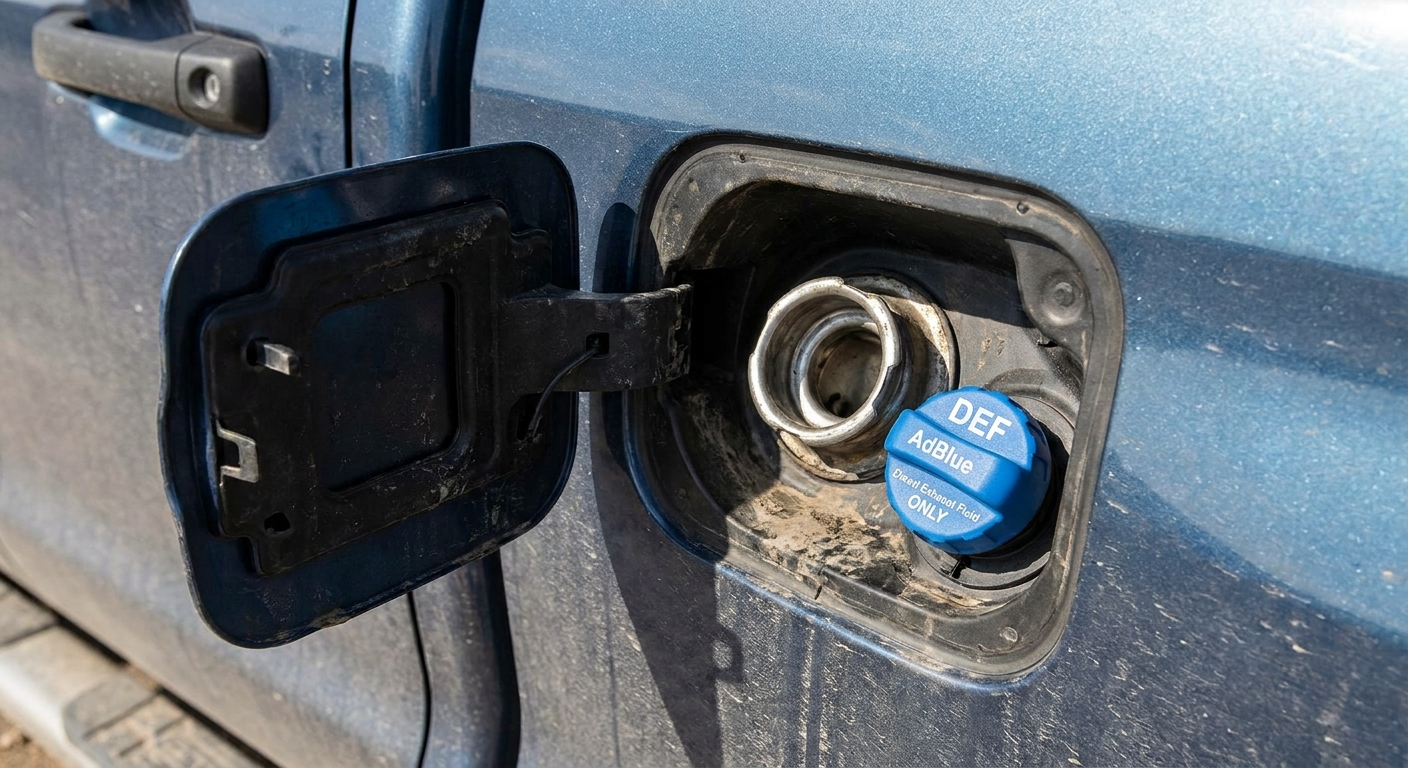
Let’s walk through what happens when a diesel runs out of DEF, what the warning and countdown actually mean, and the quickest way to get moving again without turning a simple refill into a bigger problem.
Fastest path back on the road
- Confirm the message: look for “DEF low,” “Emissions,” “Speed limited,” or “No restart in X miles.”
- Add fresh DEF that meets ISO 22241, and add enough to register.
- Key on and wait: many trucks need an ignition-on wait, a couple of key cycles, or a short drive to update the level.
- If it still will not clear: you are likely dealing with a DEF or SCR fault, not just low fluid. Scan for codes.
Quick answer: emissions inducement
DEF stands for diesel exhaust fluid. It is used by the SCR system (selective catalytic reduction) to reduce NOx emissions. When the DEF tank runs empty, most late model diesels do not immediately stall. Instead, the truck will typically do three things in sequence:
- Warn you early with messages like “DEF Low” or “Refill DEF” and a remaining distance estimate.
- Start an inducement countdown that becomes more aggressive as the level drops and time passes.
- Limit performance and, on some models and calibrations, prevent restart once the countdown expires after a key-off.
This is not a “mechanical failure” in the usual sense. It is a compliance strategy built into the engine control module to discourage driving without functioning emissions control. Also note that “ran out of DEF” is how it often gets described, but in the real world a DEF system fault (quality sensor, heater, dosing issue, tank module) can trigger the same inducement messages even when there is still fluid in the tank.
What you will see on the dash
Every manufacturer words it a little differently, but the pattern is very similar. You might see:
- “DEF level low”
- “Service DEF system”
- “Speed limited soon”
- “XXX miles until speed limited”
- “XXX miles until no restart”
That last one gets people. If you let the vehicle reach “0 miles” on a no-restart countdown, you can shut it off like normal and then find it will crank but never fire when you try to start it again. It feels like an ignition or fuel problem, but it can be the computer refusing to enable operation.
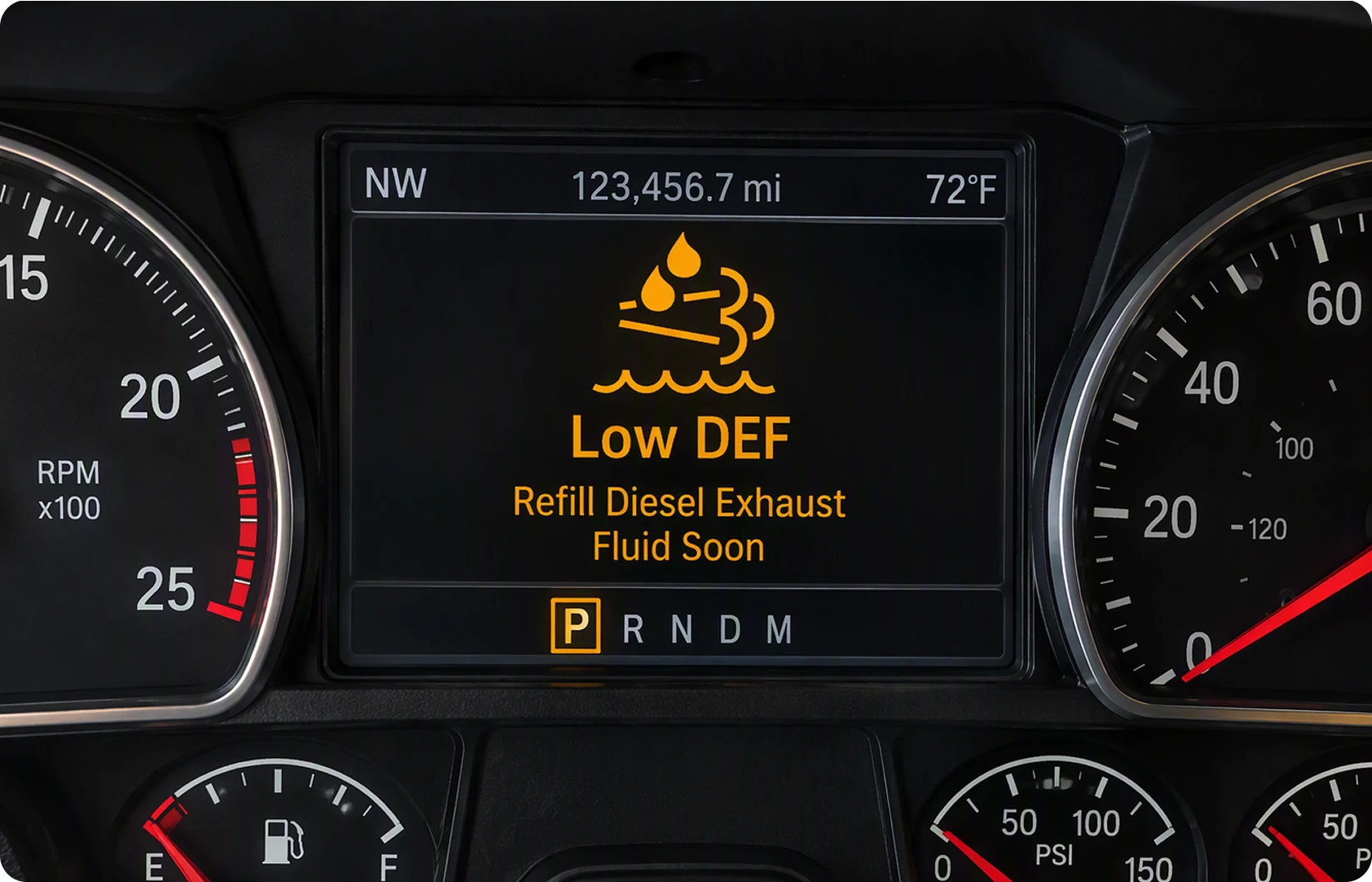
Important: the vehicle can still crank strongly with an empty DEF tank. That is why this issue gets confused with general “cranks but won’t start” situations.
Does it shut off while driving?
Usually, no. Most systems are designed to avoid creating a safety hazard by shutting the engine off at speed. Instead, they push you to refill by escalating warnings and then limiting the vehicle.
Depending on the make and model, inducement can look like:
- Reduced power (limited torque, sluggish acceleration)
- Speed cap (varies by OEM and calibration)
- Possible no-restart after key-off once the countdown expires, depending on model and market
The exact speed limit and countdown distance varies by manufacturer and calibration, so the safest move is to treat the first DEF warning as a “do it this week” item, and treat any “no restart” message as “do it today.”
What “no restart” means
When the countdown ends, the engine computer may block the conditions required for the engine to start and stay running. From the driver’s seat, it often looks like this:
- Starter engages normally
- Engine cranks at normal speed
- Engine will not catch and run
- Dash still shows DEF or emissions related messages
That is different from running out of diesel fuel, where you might crank, stumble, and need to prime the fuel system. With DEF inducement, you can have a full tank of diesel and it still will not start because the aftertreatment compliance logic has reached the lockout stage.
How to fix it: refill DEF
The fix is usually straightforward: refill the DEF tank with the correct fluid, then follow whatever restart procedure your vehicle requires. Sometimes it is as simple as key cycles and a short wait. Other times the truck needs a specific ignition-on timer, a drive cycle, or a reset after repairs. If it does not clear, do not keep guessing. Scan it.
Step 1: Find the DEF fill
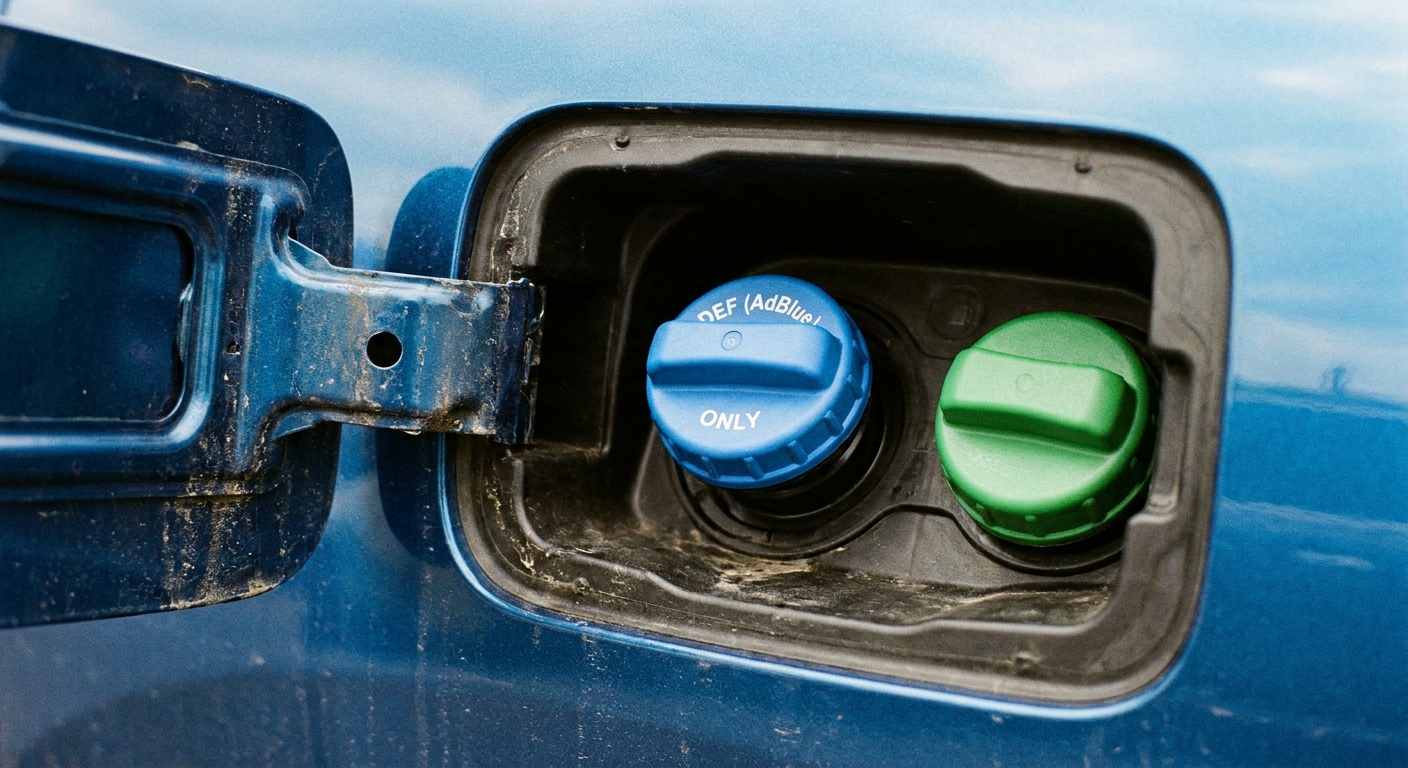
DEF goes in the DEF tank, not the diesel fuel tank. If you are unsure which cap is which, stop and confirm before you pour.
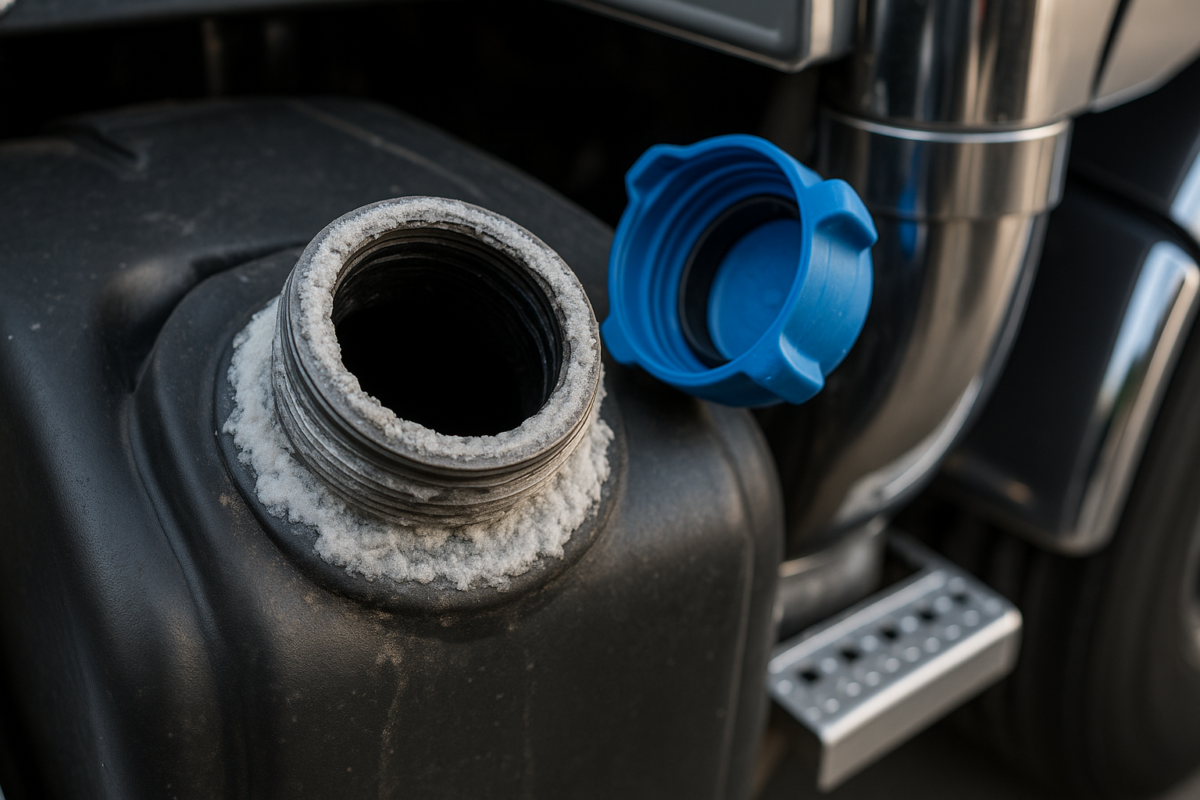
- DEF fill point is often marked with a blue cap.
- It may be beside the diesel cap, under the hood, or on the frame rail depending on the truck.
- Use DEF that meets ISO 22241 (this is what reputable jugs and pump DEF are labeled for).
Step 2: Add enough to register
Many systems do not love being topped off with a tiny amount. If you are in a no-restart condition, add a meaningful amount of DEF rather than a splash, then give the level sensor time to update. For many pickups, 2 to 5 gallons is a practical refill, but the real rule is this: some trucks require a minimum refill amount before the countdown resets, and the owner’s manual is the best place to confirm capacity and recommendations. Do not overfill.
Step 3: Key cycle and wait
After filling, some vehicles clear the countdown quickly. Others need an ignition-on wait, a couple of key cycles, and sometimes a short drive before the system recognizes the refill. If the countdown does not clear after a proper refill and a little time, that can indicate a separate DEF system fault (heater, level sensor, quality sensor, dosing issue) rather than simply “empty tank.”
Step 4: If it still will not restart, scan it
If you refilled with the correct DEF and the truck still shows “no restart” or refuses to start, it is time for a scan tool. You are looking for stored fault codes related to:
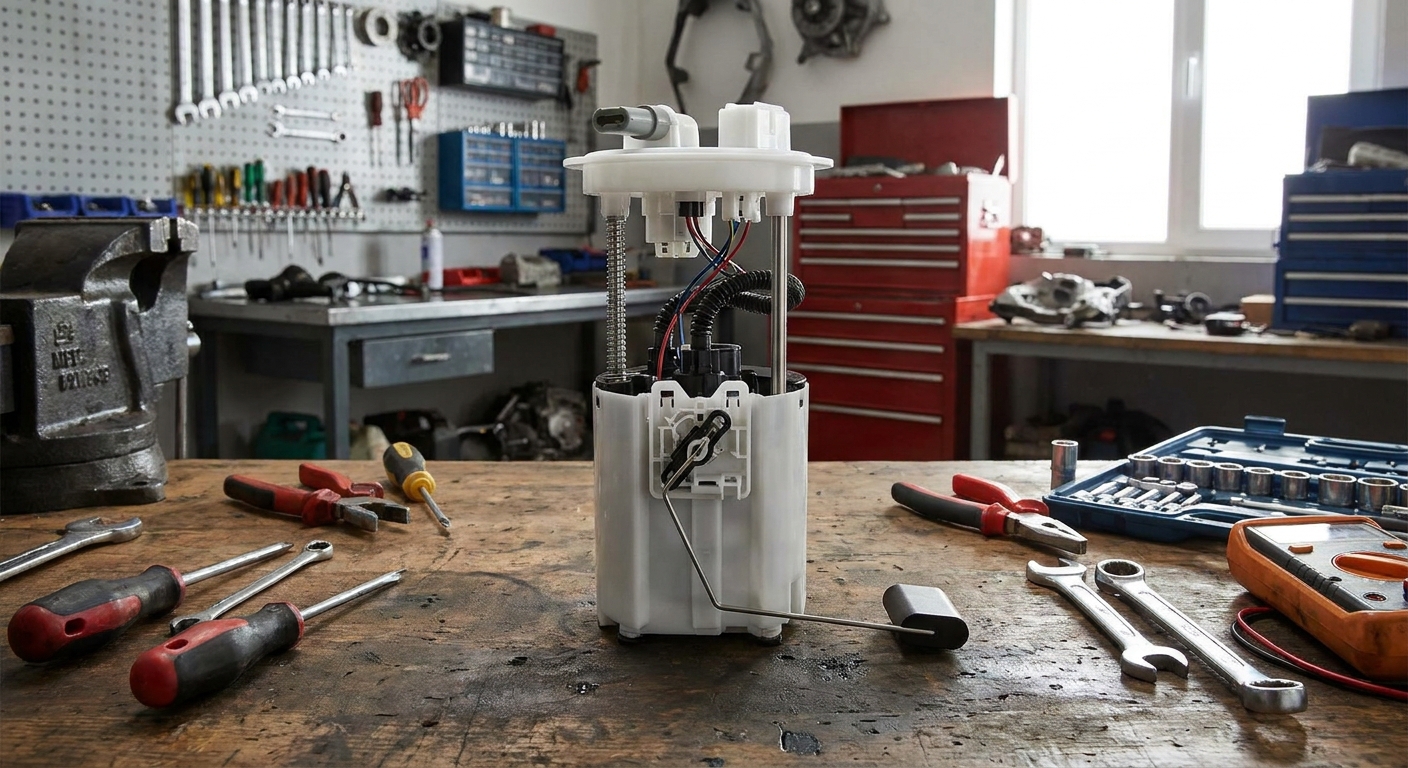
- DEF level sensor or tank module
- DEF heater circuit (common in cold climates)
- SCR efficiency faults
- DEF quality faults
At that point, the truck may need diagnosis and repairs, not just more fluid.
Common mistakes
Filling the wrong tank
This one can get expensive fast. The DEF cap is typically blue and may literally say DEF. If you are unsure, confirm before you pour.
Using old or questionable DEF
DEF is mostly deionized water with urea, and it is picky about contamination. Use sealed containers or a clean pump source, and do not store it opened for ages in a hot garage. Shelf life depends heavily on temperature. Heat and sun shorten it, and contamination can trigger “DEF quality” or inducement warnings that look like “empty DEF” problems.
Ignoring early warnings
The system gives you runway for a reason. Once you hit the lockout stage, you have fewer options and a lot less patience left.
Cold weather confusion
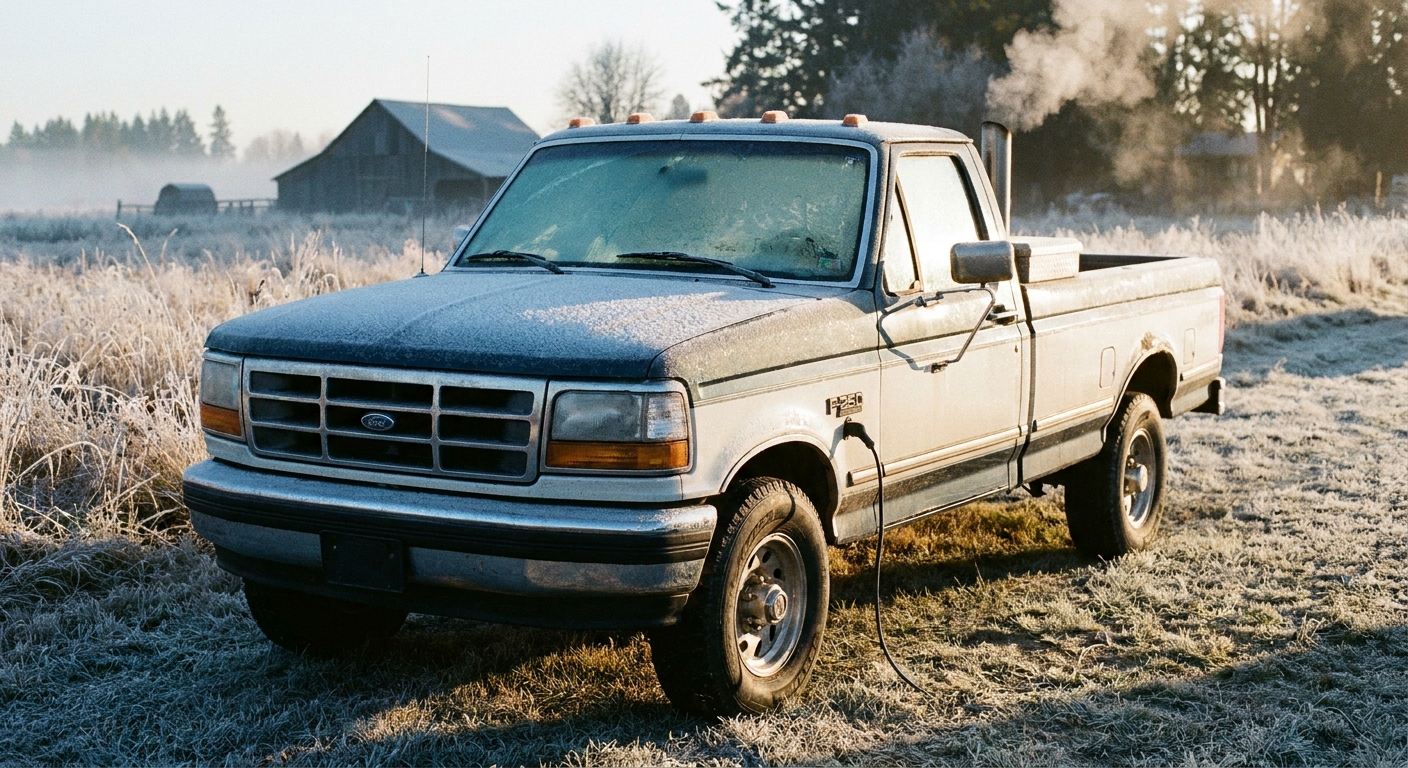
Because the symptom can be “cranks but won’t start,” it gets confused with winter diesel issues. Here is how to tell them apart.
DEF or emissions inducement
- Dash shows DEF or emissions countdown messages
- Cranks normally, will not fire
- Often shows up right after you shut it off following a long warning period
Cold weather no-start
- Typically occurs during or after extreme cold
- May crank slow due to battery drag
- May act like it wants to start but cannot, or may start and run poorly at first depending on the issue
- No DEF countdown message is required for the problem to exist
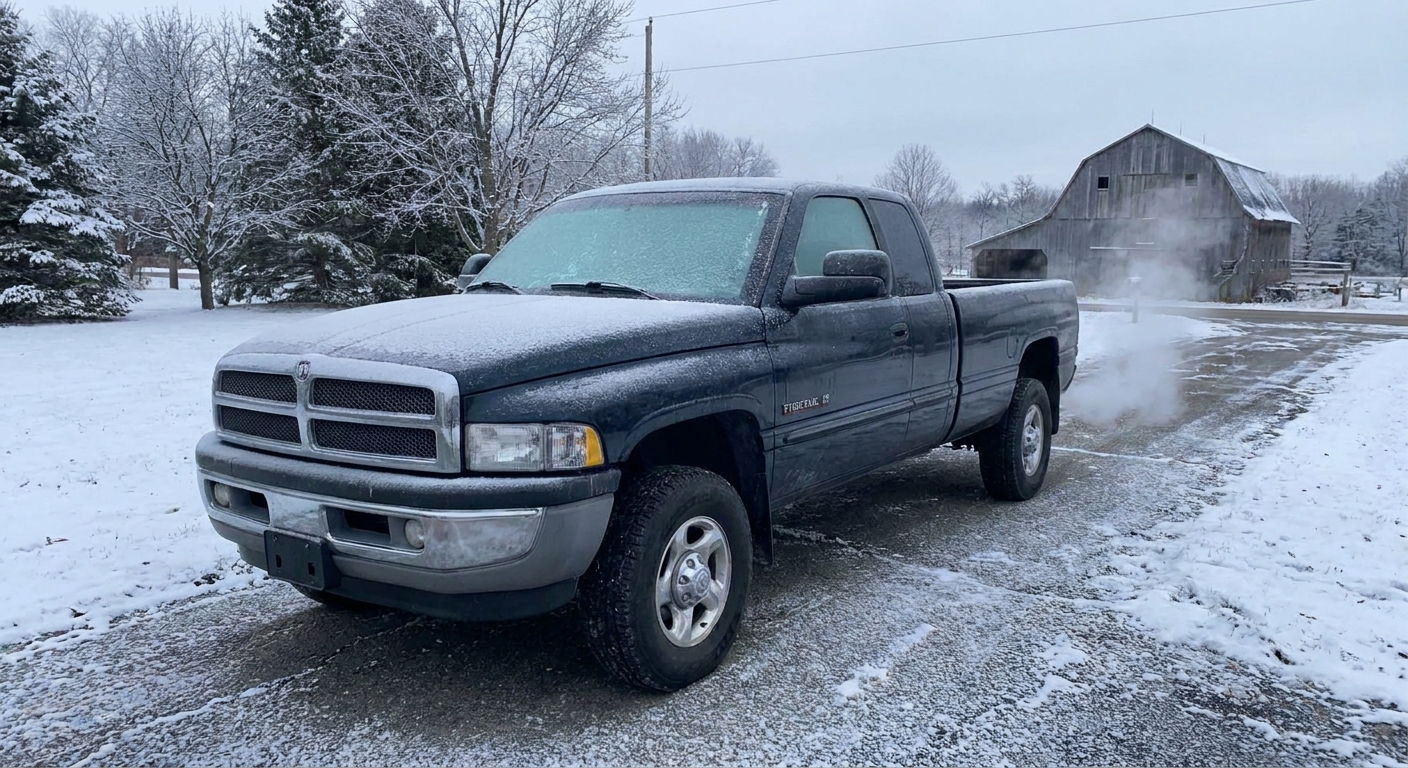
One more cold weather note that trips people up: DEF freezes around 12°F (minus 11°C). That is normal. The system is designed for it and uses tank and line heaters to thaw it after startup. A frozen tank by itself is not the same thing as “out of DEF,” although heater failures can absolutely cause DEF system faults and inducement.
If the dash is warning you about DEF and “no restart,” believe it. That message is not a suggestion.
Can you drive without DEF if you keep it running?
Some drivers ask if they can just avoid shutting it off. Practically, the vehicle may still reduce power or enforce a speed limit while running, and you still have to deal with refilling DEF. Also, idling or limp driving to avoid a restart lockout is a risky game. The best approach is simple: refill DEF as soon as you get the first serious warning.
When to call for help
If you are locked out in a parking lot and a refill does not clear the no-restart condition, it is time to bring in help. Call roadside assistance or a shop if:
- You filled DEF and the countdown did not reset after an ignition-on wait, key cycles, and a short drive if possible
- The dash says “Service DEF system” or “Service emissions system” and it stays on
- The check engine light is on with inducement active
- You suspect a tank heater or sensor issue (common in freezing climates)
A technician with a capable scan tool can quickly see whether you are dealing with low fluid, bad DEF, or an actual aftertreatment fault that is keeping inducement active.
FAQ
Will a diesel still run with no DEF?
Often it will for a while, with warnings and possibly reduced performance. Many diesels will eventually limit speed, and some will prevent restart after a key-off once the countdown ends.
How long can you drive after the DEF light comes on?
It depends on the vehicle, but you typically get a distance remaining estimate on the dash. Treat early warnings as a refill reminder, and treat any “no restart in X miles” message as urgent.
If my truck is in no-restart mode, will adding DEF always fix it?
If the only problem is low DEF, a proper refill usually restores normal operation. If there is a DEF system fault (level sensor, heater, quality sensor, SCR issue) or the truck requires a specific reset procedure, the lockout may remain until the fault is repaired and codes are cleared.
Is this the same as running out of diesel fuel?
No. Running out of diesel fuel is a fuel supply issue that may require priming and bleeding, especially on some systems. DEF related no-restart is an emissions compliance strategy, even if your diesel fuel tank is full.
The bottom line
If your diesel runs out of DEF, the engine usually does not die instantly. Instead, the vehicle escalates warnings, may limit power or speed, and on some models can eventually go into a no-restart condition after the inducement countdown expires and you key it off. The cure is almost always adding the correct DEF to the DEF tank, then giving the system time to recognize the refill. If it still will not restart, you are likely dealing with a DEF system fault that needs a scan and proper diagnosis.