I’ve seen this one a hundred times in the shop: a driver rolls in sheepish, admits they drove it until it quit, added fuel, and now the engine cranks like normal but refuses to catch. It feels like the car is punishing you for running it out of gas.
The truth is simpler. When a tank runs dry, the fuel system can ingest air, stir up sediment, or in the worst cases hurt the pump that relies on gasoline for cooling and lubrication. What you do next depends on whether you drive a gas car or a diesel, and whether it died clean or started acting weak before it stalled.
First: make sure there’s actually enough fuel in the tank
This sounds obvious, but it’s the fastest mistake to eliminate. After a run-dry event, some vehicles can be slow to update the gauge reading (especially on certain tank designs), and adding a small amount is not always enough for the pump pickup to stay covered on a slope.
- Add more fuel than you think you need. I like at least 2 to 3 gallons for most cars, more if you’re parked nose-up or on an incline.
- Cycle the key and listen. Many gas cars will run the fuel pump briefly when you turn the key to ON. Often it is about 1 to 3 seconds. A quiet hum from the rear of the car is a good sign.
- If you just filled a portable can: confirm it is gasoline, not diesel, and that the can is clean. A “shop can” that has seen mixed fluids can create a brand-new problem.
Why it cranks but won’t start after running dry
When a car quits from low fuel, four common scenarios show up in real life:
- A gas fuel pump that lost its prime and needs a few key cycles to build pressure again.
- A clogged tank pickup sock (the strainer on the pump inlet) that can plug if debris gets stirred up, usually on older or contaminated tanks.
- Air in a diesel fuel system that must be bled or primed because diesel injection systems hate air.
- A fuel pump damaged by running dry, especially if it was already weak.
Let’s break each one down with what you can do at home, and when it’s time to stop cranking.
Gas engines: a pump that lost its prime
On most gasoline cars, the electric in-tank pump pushes fuel forward and the system holds pressure when the car is off. When you run out, the pump can suck air. After refueling, it may take a moment to push that air through the lines and rebuild pressure at the fuel rail (the pipe that feeds the injectors).
What to do (safe, starter-friendly priming)
- Turn the key to ON (not START) for 5 to 10 seconds.
- Turn the key OFF for 5 seconds.
- Repeat 3 to 6 times, then try starting.
This works because many cars prime the pump briefly at key-on. You’re letting the pump do its job without overheating the starter.
When one short prime is reasonable
If the car died abruptly at a stop, you added a few gallons, and you can hear the pump hum at key-on, it’s reasonable to do a short prime sequence and try one normal start attempt.
When more cranking will not help
If you’ve done multiple key cycles and it still will not fire, endless cranking usually just:
- Overheats the starter motor and starter wiring.
- Drains the battery and slows crank speed, making starting even harder.
- Can flood some engines, especially older port fuel injection systems.
As a rule, keep individual crank attempts to 10 to 15 seconds, then rest at least 60 seconds. If it has not even sputtered after a few tries, stop and switch tactics.
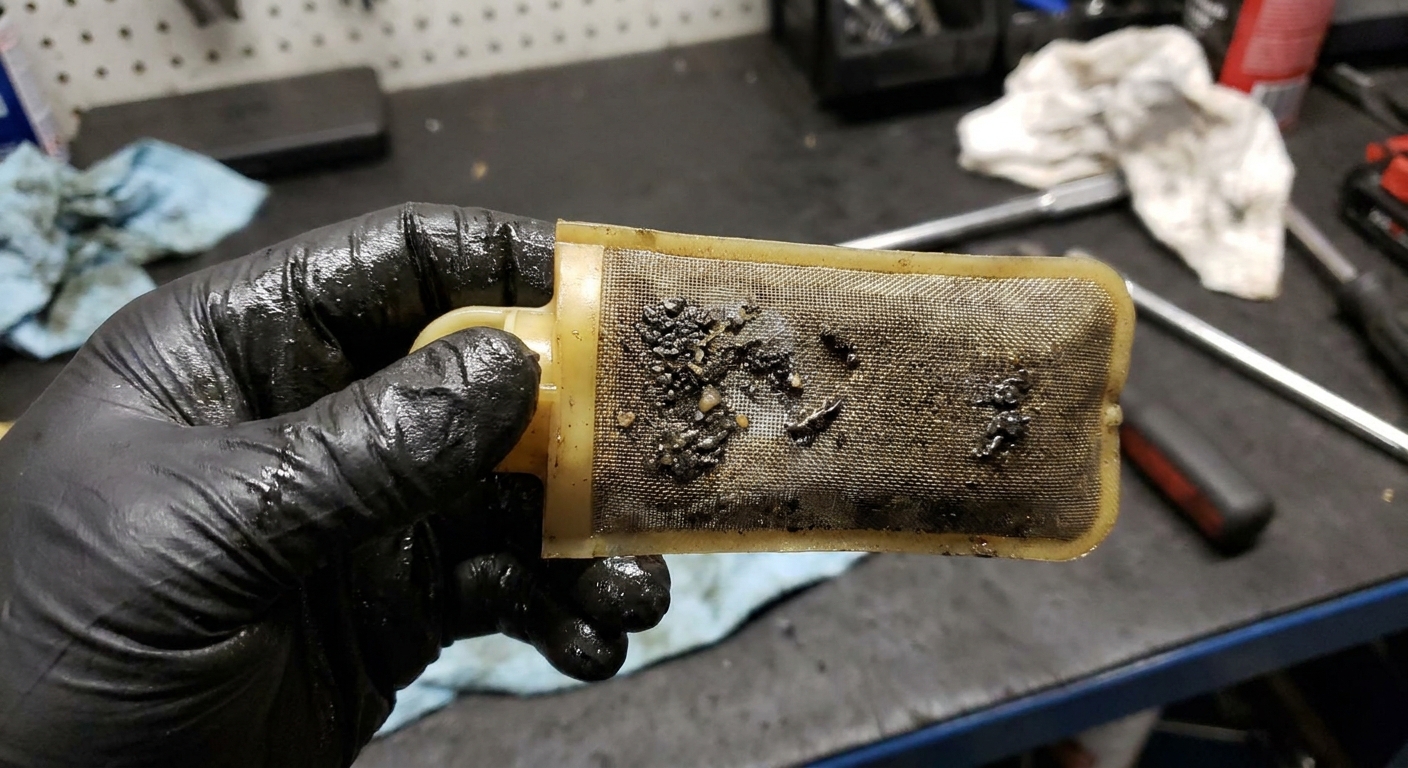
Gas engines: the tank sock packed with debris
Here’s the part people do not expect. Fuel tanks collect sediment over the years: rust dust, dirt from fueling, degraded rubber, and general grime. Normally it sits quietly at the bottom.
Most run-dry no-starts are simply a prime issue or a weak pump showing its age. But on older vehicles, or anything with a dirty tank, running the tank dry can pull junk right into the pump inlet. The in-tank strainer sock can plug enough that you refill the tank and still do not get pressure back.
Clues this is your problem
- The engine started to stumble or lose power before it stalled, not just a clean shutoff.
- You cannot hear the pump change tone during key cycling, or it sounds strained.
- It does not even try to catch after proper priming and normal start attempts.
A quick safety note about starting fluid
People reach for starting fluid as a diagnosis tool. If you use it at all, keep it to gasoline engines only, use a very small amount, and follow the product directions. Do not use starting fluid on diesel engines (especially anything with glow plugs), and avoid it on turbocharged or high-compression setups unless the manufacturer specifically allows it. Used the wrong way, it can do damage.
What fixes it
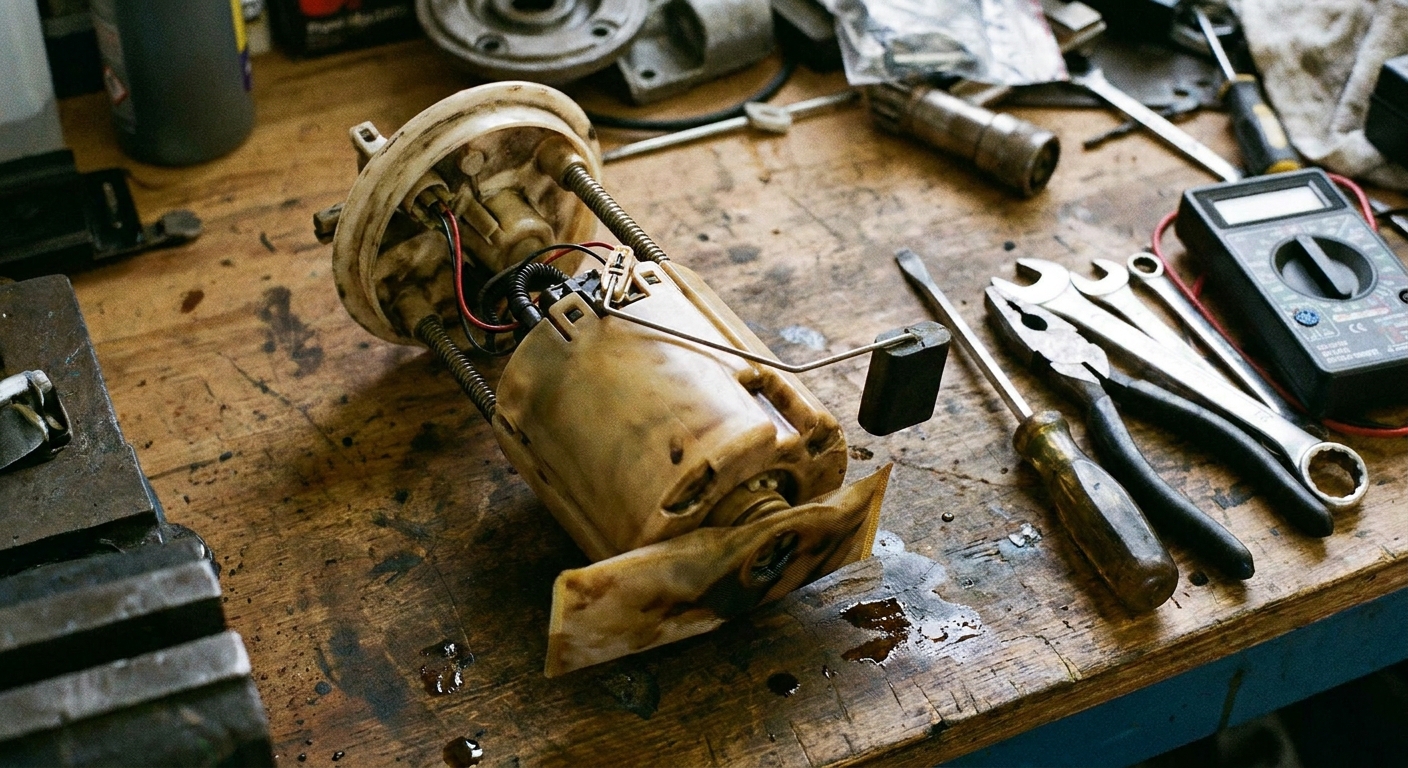
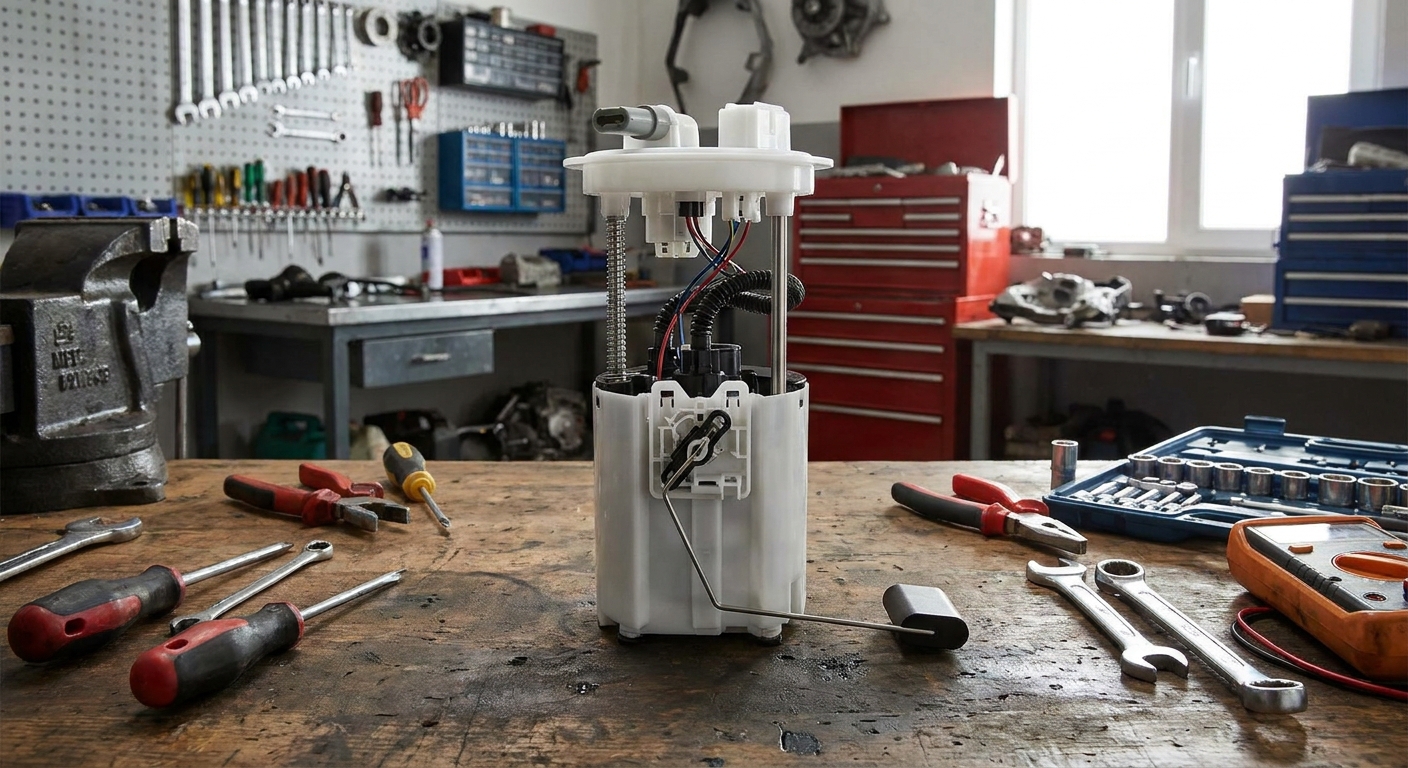
Unfortunately, a clogged sock is usually a tank access job: pulling the rear seat access panel (if equipped) or dropping the tank to service the pump module and strainer. Many times the best move is replacing the pump module or at least the strainer and fuel filter, then cleaning the tank if contamination is heavy.
If your vehicle has an external fuel filter and it is overdue, replacing it is also smart because debris can migrate forward once flow returns.
Diesel engines: air in the fuel line
Diesels are a different animal. Running out of diesel often introduces air into the low-pressure side, and the injection system cannot compress air the way it compresses fuel. The engine will crank all day and never light.
Many modern diesels have an electric lift pump and may self-prime after enough key cycles, but plenty still require manual priming or bleeding at specific points.
What to do first
- Add plenty of fuel. More than “a few gallons” is ideal on a diesel, because the return and supply system can move a lot during priming.
- Cycle key-on primes multiple times if your vehicle runs the lift pump at key-on.
- Use the factory priming method if equipped, such as a hand primer bulb or pump on the filter housing.
When to stop cranking on a diesel
Stop early. Diesel starters work hard, and repeated long crank sessions can overheat the starter and drain batteries fast, especially on high-compression engines.
If you do not have signs of firing within a few short attempts after priming, bleeding is likely required.
If you are not sure where bleed points are on your engine, this is a good moment to call a shop or consult your owner’s manual. Guessing can lead to broken fittings or a fuel mess near hot components. On many common-rail diesels, improper procedures can also create expensive problems, so follow the manufacturer steps.
The ugly one: a fuel pump damaged by running dry
Electric in-tank gasoline pumps are generally cooled and lubricated by fuel flow, and many run happier when they stay submerged. Running the tank very low regularly, or running it dry once when the pump is already tired, can push it over the edge.
Signs the pump may be failing
- No fuel pump sound at key-on.
- The car was hard to start or sluggish under load in the days or weeks leading up to the stall.
- After refueling, it briefly starts and dies again, like pressure collapses.
Diagnosis here is straightforward with a fuel pressure gauge at the rail, but that is usually a “tools required” step. Some vehicles also provide low-side or rail pressure data through a sensor and scan tool, if equipped, but not every platform gives you a useful PID. If pressure is low or drops instantly, the pump or its electrical supply is suspect.
One more warning from a former tech who has replaced too many pumps: if you keep cranking a car with a weak pump, you can overheat the pump further, drain the battery, and turn a simple tow into a bigger bill.
A quick decision tree
- Gas engine + you hear the pump prime: add 2 to 3+ gallons, key-cycle 3 to 6 times, then try short crank attempts.
- Gas engine + no pump sound: check the fuel pump fuse and relay first. If those are good, suspect a failed pump, wiring issue, or a control strategy that does not prime until crank.
- Gas engine + it stumbled before dying: suspect a restriction (filter where fitted, or in-tank strainer on older or dirty tanks).
- Diesel engine: add more fuel, prime per manufacturer method, and assume you may need to bleed air.
Also check the battery
A weak battery is a common confounder here, especially after a few long start attempts. Modern engines need adequate cranking speed and stable voltage for the computers, fuel pump, and ignition to behave.
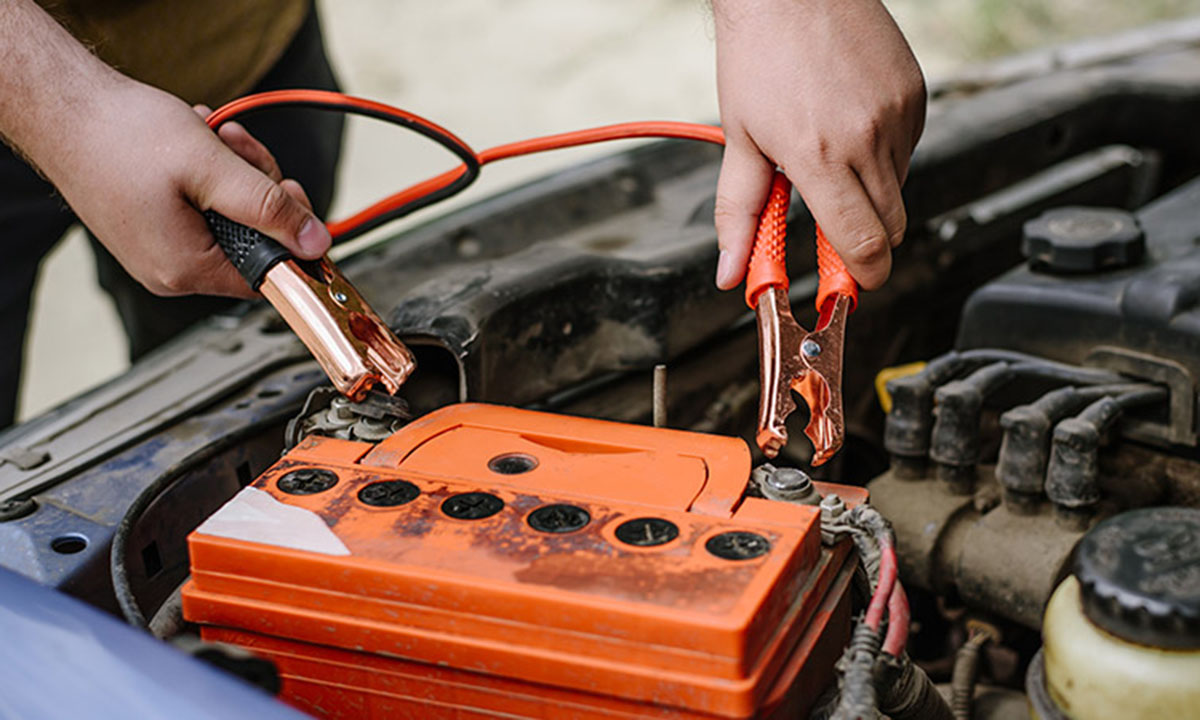
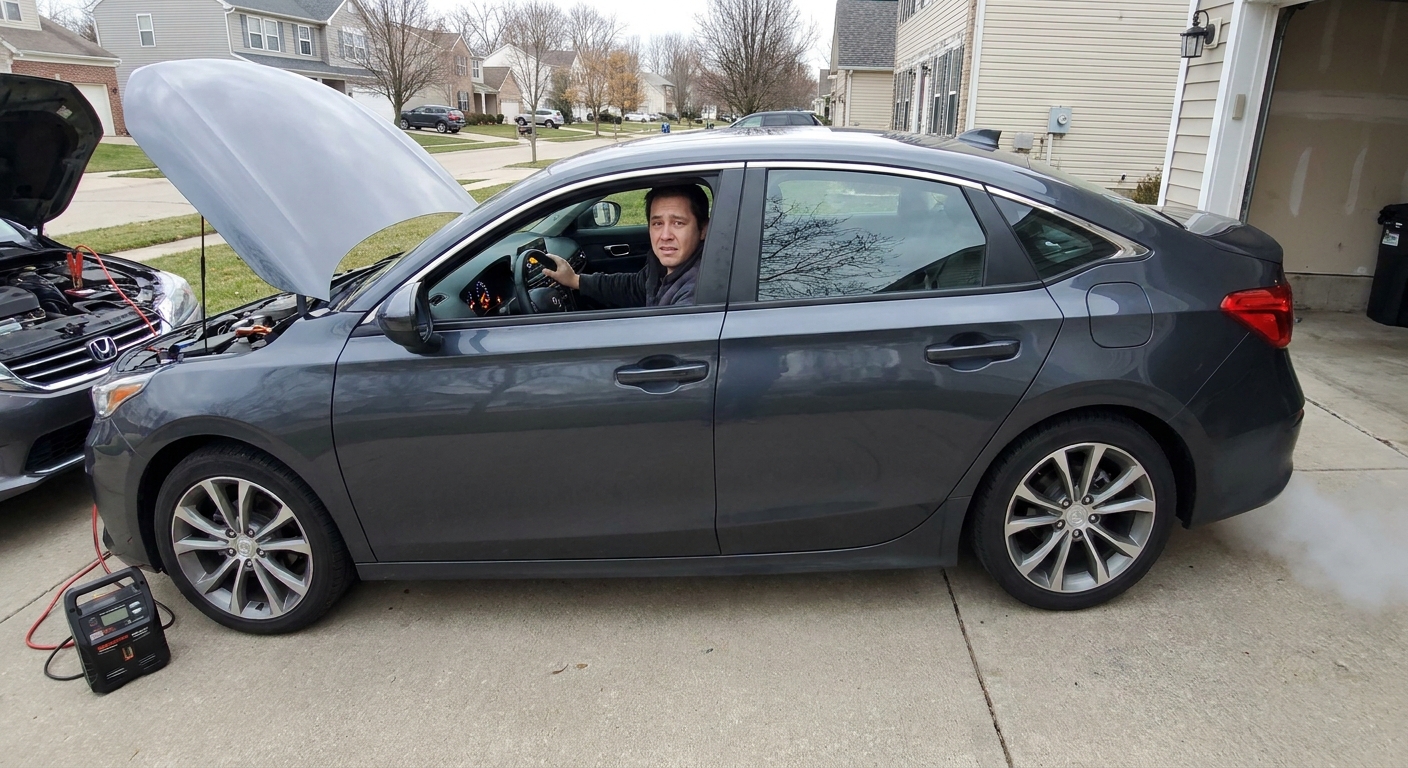
- If the cranking speed is slowing down, stop and charge the battery or use a proper jump pack.
- If the dash lights are dimming heavily while cranking, do not keep trying. Low voltage creates misleading symptoms.
How to avoid frying the starter
Starters are built for short bursts, not marathon sessions. Here’s the routine I recommend:
- Crank for 10 to 15 seconds max.
- Rest for 60 to 120 seconds between attempts.
- If the battery is slowing down, stop and charge it or hook up a proper jump pack.
If the engine has not coughed, sputtered, or shown any sign of catching after a few well-spaced tries and proper priming, more cranking is usually wasted effort.
When it’s time to call for help
I’m all for DIY, but a run-dry no-start can cross into “needs tools” quickly. Get a tow or a mobile mechanic if:
- You smell fuel strongly around the car or see dripping fuel.
- The battery is getting weak and you have no way to charge it.
- You suspect a diesel needs bleeding but cannot identify the correct procedure.
- You key-cycle and crank correctly, added plenty of fuel, and it still will not fire.
A shop can verify fuel pressure, command the pump on with a scan tool (on many vehicles), and confirm spark and injector pulse without guesswork.
FAQ
Will the car eventually start if I just keep cranking?
Sometimes, but it’s a bad bet. If it’s a simple loss of prime on a gas car, key cycling helps more than extended cranking. If it’s a clogged strainer, air in a diesel system, or a damaged pump, cranking longer mostly just overheats the starter and drains the battery.
Do I need to press the gas pedal while starting?
On most modern fuel-injected cars, no. Let the computer handle it. If you think the engine may be flooded from repeated attempts, some vehicles enter “clear flood” mode with the pedal held to the floor while cranking, but do not start there as your first move.
Can running out of gas ruin my fuel pump?
It can, especially if the pump was already weak or you regularly drive on a near-empty tank. Low fuel can raise pump temperatures and reduce pump life over time.
Should I add fuel system cleaner after running out?
It will not fix a no-start. Once the car is running again, a quality cleaner can be fine as maintenance, but if debris got stirred up, the real fix is addressing the filter and strainer situation.