I can’t count how many times a car has rolled into a shop with this exact complaint: “It won’t start, but it makes a horrible grinding sound,” or, “It just whirs like a blender.” Those two noises are cousins, but they usually mean very different things at the starter and flywheel.
The big takeaway is this: repeated start attempts can turn a small starter issue into an expensive ring gear problem. So before you keep cycling the key, let’s decode what you’re hearing and what to inspect before you buy parts.
Grind vs whir: what the sound says
If it grinds
A grind is typically metal-on-metal contact between the starter pinion gear and the engine’s ring gear, the toothed gear on the flywheel or flexplate. That contact can happen because the gears are only partially meshing, meshing at the wrong angle, or slamming into each other.
- Typical description: harsh “grrrrr” or “rrrrk” right as you turn the key.
- Most common meaning: the starter gear is trying to engage, but it is not engaging cleanly.
If it whirs (free-spins)
A whir is usually the starter motor spinning fast, but the starter drive is not actually engaging the ring gear. Think of it like pedaling a bike while the chain is off. The motor is working, but it is not turning the engine.
- Typical description: smooth, high-speed “whiiiiir,” often with no engine cranking sound at all.
- Most common meaning: the starter drive (Bendix or overrunning clutch) is slipping, or the solenoid is not pushing the gear into the ring gear.
Stop doing this first
If you hear grinding, the worst thing you can do is keep trying “just one more time.” Every grind can burr the ring gear teeth. Once those teeth get rounded off or chipped, a brand-new starter may still struggle because it has nothing solid to grab.
Here’s what I recommend instead:
- Stop after 1 to 2 attempts if grinding continues.
- Give it at least 30 seconds between attempts, longer if you were cranking for more than a couple seconds. Starters overheat fastest during long, repeated cranks.
- If you must move the car: try starting in Neutral (automatic) or with the clutch fully depressed (manual) and make one careful attempt.
If the noise changes from a grind to a whir, or vice versa, that is useful information. It often means the gears are intermittently catching or skipping.
Common causes of grinding
1) Starter not aligned
On many vehicles, the starter’s position is fixed by the mounting flange. But on some applications, missing hardware, incorrect bolts, damaged dowel alignment, or improper shims (common on certain older GM setups) can put the starter slightly out of position. That tiny misalignment is all it takes to grind.
2) Worn starter pinion gear
If the starter pinion teeth are rounded, chipped, or heavily worn, they can clash instead of mesh. This can happen with age or after lots of “crank-crank-crank” attempts on a weak battery.
3) Damaged ring gear teeth
Engines tend to stop in a couple of favorite positions. That means the ring gear often wears most in the same spots. If those teeth are chewed up, you may get grinding only sometimes, or the starter may work if the engine stops in a different spot later.
4) Weak battery or voltage drop
This one surprises people. The starter solenoid needs adequate voltage to shove the pinion gear fully into the ring gear. If the battery is weak or there is heavy voltage drop in the cables or grounds, the starter can slam, chatter, engage halfway, and grind.
Common causes of whirring
1) Starter drive is slipping
Inside the starter drive is a one-way clutch designed to let the engine spin faster than the starter after the engine starts. When that clutch wears out, the starter motor can spin without transferring torque to the engine. You get a clean whir, but no crank.
2) Solenoid is not pushing the gear out
The solenoid is both an electrical switch and a mechanical actuator. If it is weak, sticky, or has internal contact problems, it may spin the motor without fully extending the pinion into the ring gear.
3) Wrong starter
This happens more than you’d think, especially with remanufactured starters and vehicles that have multiple engine or transmission options. A starter that bolts up but has the wrong gear depth can whir because it never reaches the ring gear correctly.
4) Ring gear missing teeth
If a chunk of ring gear teeth is broken off, the starter may engage fine when the engine stops away from that area, and then whir when it lands on the damaged section. This “sometimes it starts, sometimes it doesn’t” pattern is a classic clue.
5) Heat soak (intermittent hot starts)
If it starts fine cold but acts up after a heat soak, the starter solenoid can get lazy when hot. Depending on the failure, you might hear a click, a weak attempt, or a free-spin style whir. It is common enough that I keep it on the short list, especially on higher-mileage cars.
Quick sound clues
- Single loud click, then whir: solenoid is moving, the motor is spinning, but the drive is not engaging or is slipping. Low voltage or a bad connection can contribute, especially if the battery is marginal.
- Rapid clicking: usually low battery voltage or a poor cable connection, not a starter gear problem, but low voltage can lead to grinding if you keep trying.
- Grind only at the start of cranking: partial engagement or misalignment.
- Grind after the engine catches: starter may be sticking and not disengaging quickly. Stop driving it and address it, because that can destroy the starter and ring gear.
- Whir with no engine movement at all: classic free-spin, drive not engaging.
What to inspect first
I’m not against swapping parts, but starters are just expensive enough, and just annoying enough to replace twice, that a little inspection saves real money.
1) Battery health and cable condition
Even if your dash lights look normal, the starter is the biggest electrical load in the car. Check:
- Battery voltage: about 12.6V fully charged at rest. Below about 12.2V is already getting weak.
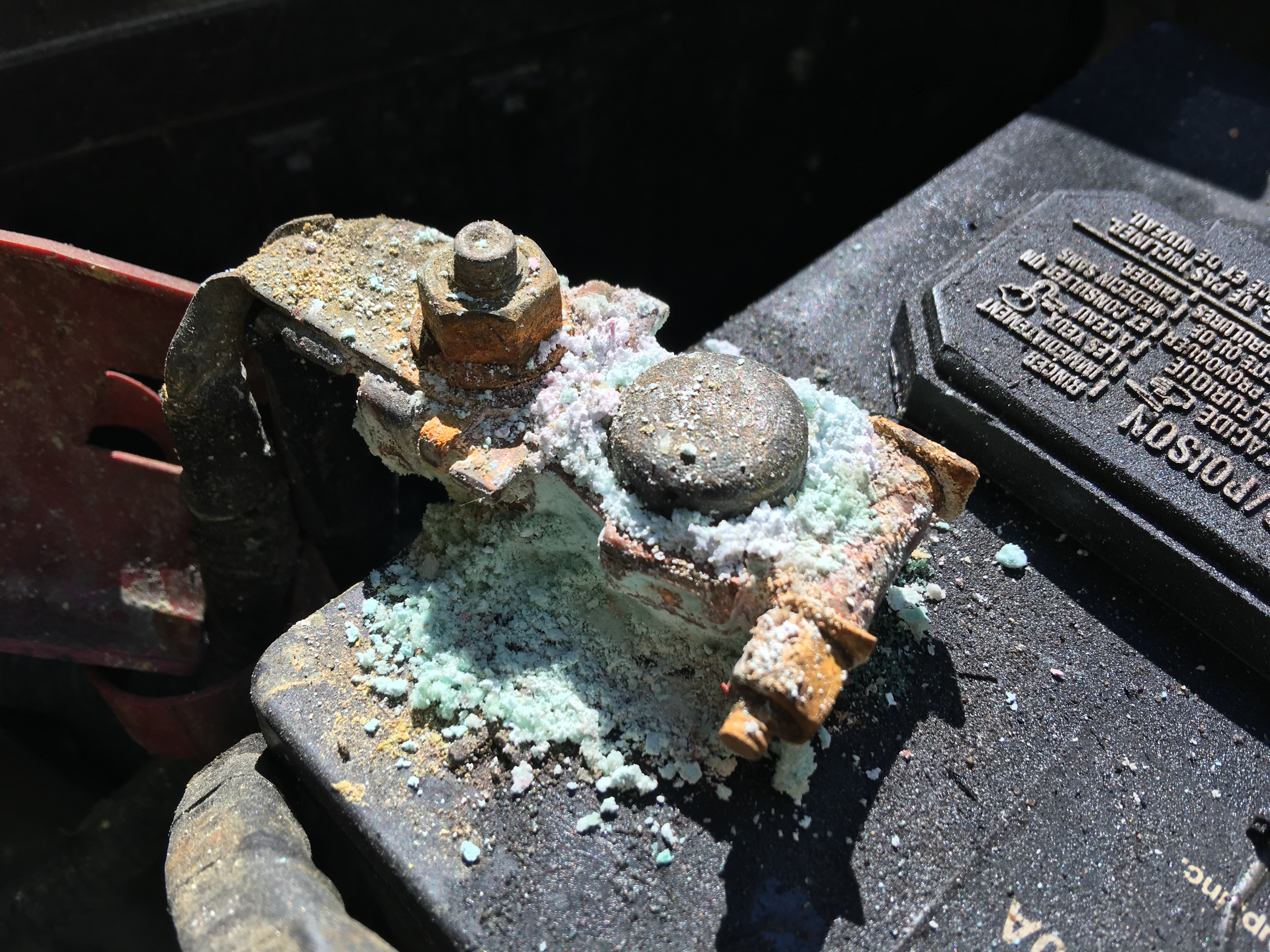
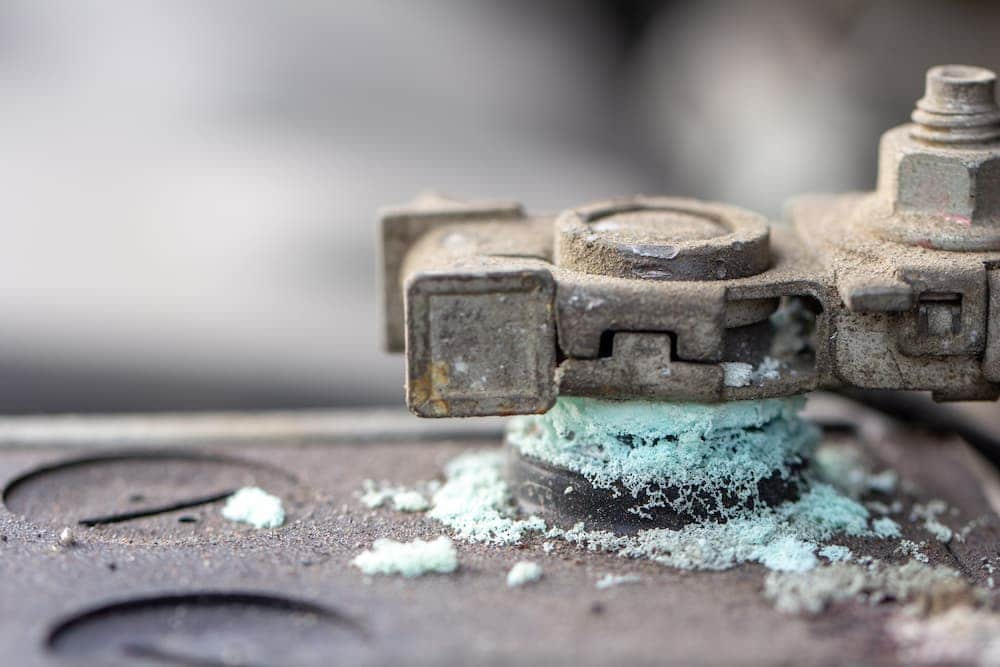
- Terminal tightness and corrosion: clean and tight matters.
- Ground cable: make sure the engine ground strap is intact and connections are clean.
2) A quick voltage drop check
If you have a multimeter, voltage drop testing beats guesswork. You are looking for high resistance under load.
- Positive side: meter leads from battery positive post to the big starter B+ terminal. Crank and watch the reading. Lower is better.
- Ground side: meter leads from battery negative post to the starter case or a clean engine ground. Crank and watch the reading.
If the drop is high, the starter can act weak, fail to engage cleanly, or free-spin depending on what part of the circuit is starving it.
3) Listen for solenoid engagement
A healthy start attempt often includes a solid “clunk” as the solenoid kicks the gear outward. No clunk plus a whir can point to a solenoid or drive issue, or voltage drop.
4) Check starter mounting bolts and surfaces
Loose bolts can let the starter twist under load. That misalignment is a grinding recipe. If you can access it safely, inspect:
- Missing or loose bolts
- Cracked mounting ear on the starter
- Damaged bellhousing mounting surface
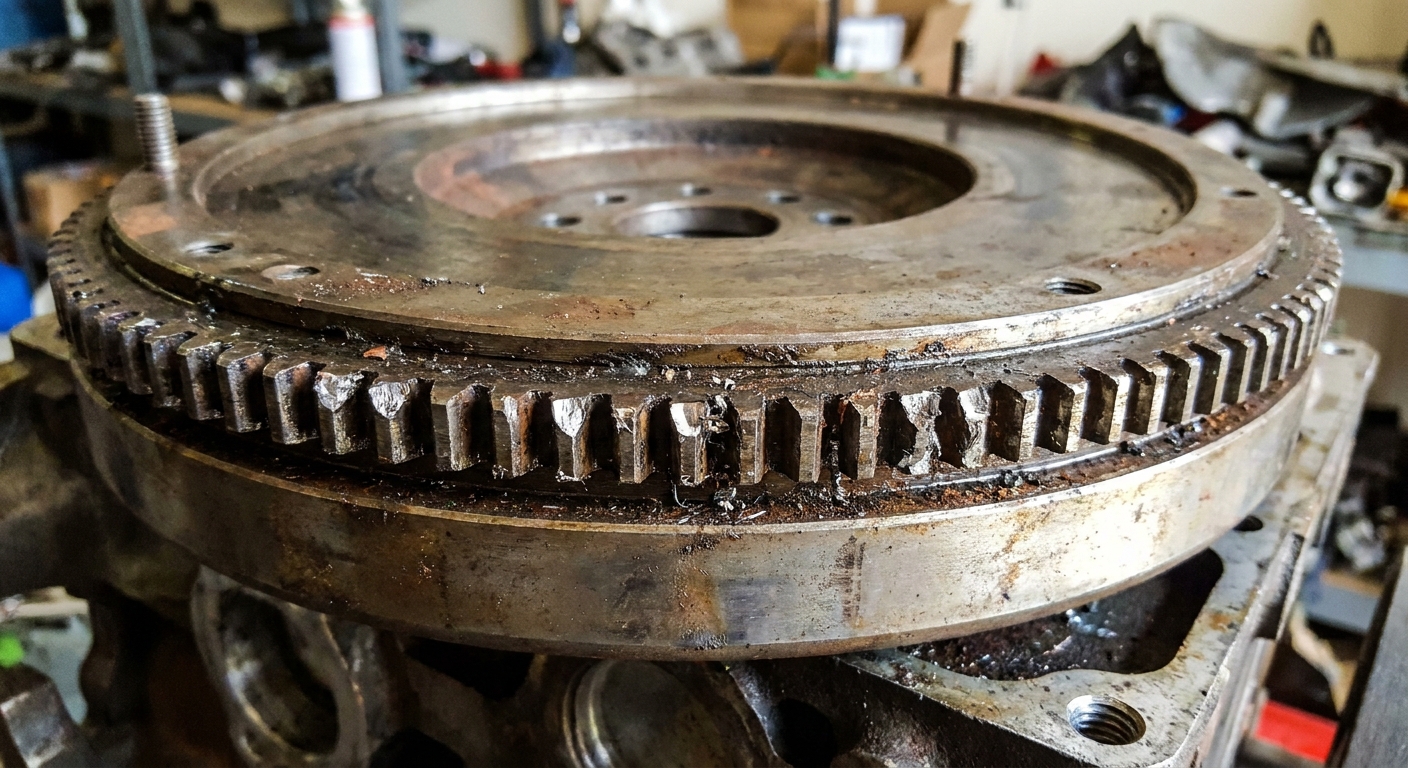
5) Inspect the ring gear teeth if possible
On many cars you can peek through the inspection cover on the transmission bellhousing, or sometimes through the starter opening once the starter is removed. You’re looking for:
- Teeth that are sharp and even (good)
- Teeth that are rounded, chipped, or missing (problem)
6) Confirm the correct starter part number
Before ordering:
- Match by VIN when possible
- Confirm engine size and transmission type
- Be cautious with “it fits” listings if your model has multiple starter options
If you need it to start once
I’m not a fan of roadside tricks as a long-term plan, but I get it. If you are stuck:
Try starting in Neutral
For automatics, try Neutral instead of Park. A marginal neutral safety switch can prevent proper crank, although that usually causes a no-crank condition rather than grind or whir. Still, it is a fast, safe check.
Change the engine’s stopping position
If you suspect a bad patch of ring gear teeth, moving the engine a tiny amount can help. The cleanest way is on a manual transmission: put it in a higher gear and gently rock the car (key off) to rotate the engine slightly, then try starting once. If you are not comfortable doing this safely, skip it.
Know when the rules change
On some hybrids and some stop-start setups, what you hear and when you hear it may not match the classic starter noise patterns, because the engine may be restarted by a different system than a traditional starter motor. If your vehicle is equipped that way, it is worth checking the service info for your specific model before you chase a “starter” that might not be the real starter.
When to call a pro
Get help sooner rather than later if:
- The car grinds consistently on every start attempt
- You hear grinding after the engine starts (starter may be hanging up)
- You suspect ring gear damage (repair may require transmission removal)
- You replaced a starter and the noise is unchanged (likely alignment, wrong part, or ring gear issue)
FAQ
Is it safe to drive if it finally starts after grinding?
If it started after grinding, you might get away with driving once, but you are likely damaging the ring gear each time. The next start can leave you stranded. I treat grinding as a fix-it-now warning.
Why does it only grind sometimes?
Because the engine often stops in the same few positions. If the ring gear teeth are damaged in one area, you’ll only hear it when the starter hits that spot.
Can a weak battery cause a grinding noise?
Yes. Low voltage can keep the solenoid from fully engaging the pinion gear, causing partial mesh and grinding. Battery and cable checks are not optional when diagnosing starter noise.
If I hear a whir, does that mean the starter is good?
Not necessarily. A whir often means the starter motor spins fine, but the drive is slipping or not engaging. Many whir problems are still starter failures, just a different failure mode than a dead starter.
The bottom line
Grinding usually means the starter gear and ring gear are clashing, and every extra attempt can make the damage worse. Whirring usually means the starter spins but never engages the engine. In both cases, do a quick battery and cable sanity check, verify the starter mounting and correct part number, and inspect ring gear teeth if you can before you spend money.
If you’re handing this problem off to a shop, you will save time and money by showing up with specifics: when the noise happens (cold, hot, or both), whether the engine ever cranks, whether it is consistent or intermittent, and whether the sound is a grind, a clean whir, or a click-then-whir. That information helps a tech go straight to the likely failure instead of playing parts roulette.