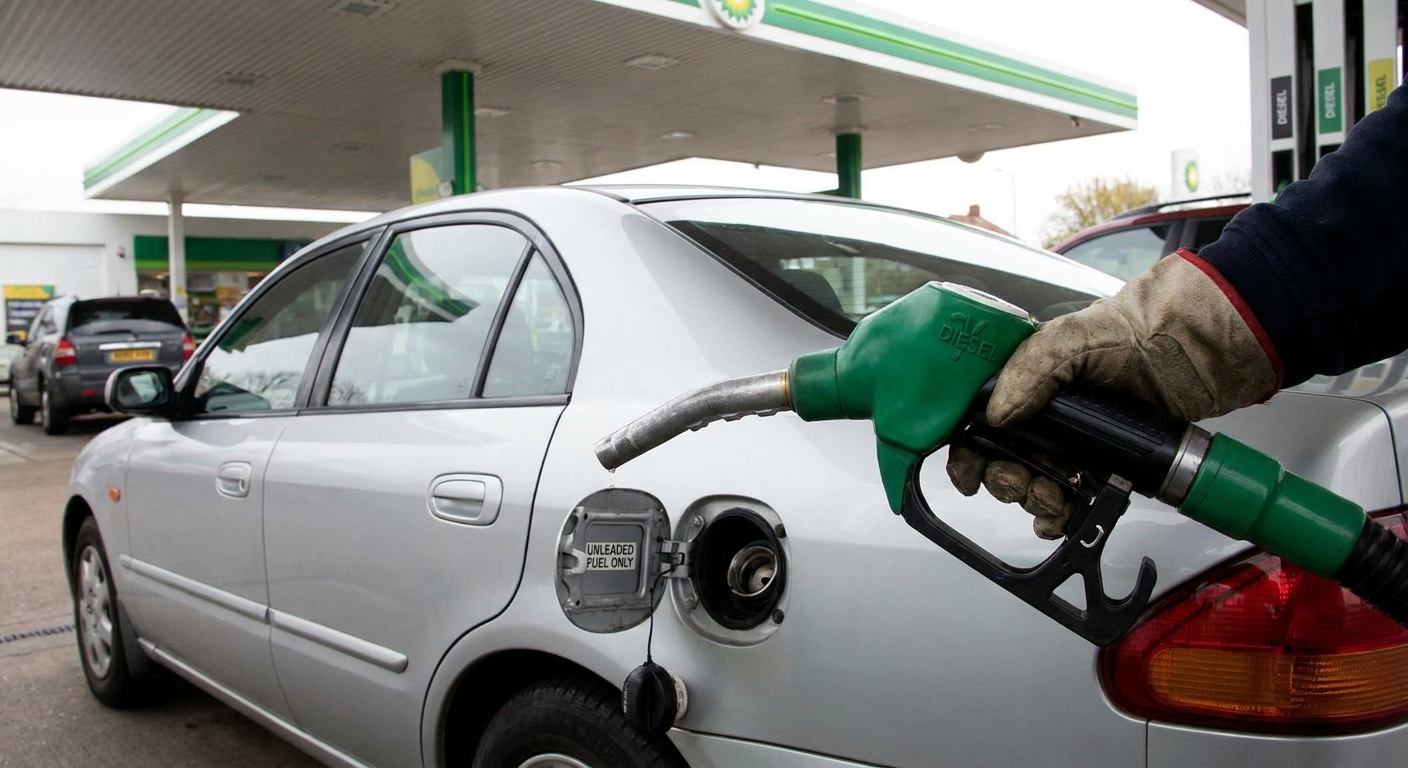
I have watched tough, experienced drivers go pale the moment they realize the blue DEF nozzle just went into the wrong hole. If that is you right now, take a breath. This is fixable, but only if you do the right thing before you try to start the engine.
The most important rule: if you put diesel exhaust fluid (DEF) into the diesel fuel tank, do not start the engine. Do not cycle the key to “prime.” Do not “just move it over there real quick.” The less DEF that gets pulled into the fuel system, the better your odds and your repair bill.
Immediate steps (do this in order)
- Stop fueling immediately. Cap the diesel tank and avoid spills.
- Do not start or crank the engine. On some diesels, even turning the ignition on may run an electric lift pump and move fluid forward.
- Move it safely. If you are blocking a pump, ask for help pushing it only if it is safe and allowed, and you still have steering and brakes. Otherwise, get it towed. A flatbed is ideal.
- Call a shop that works on diesels and tell them exactly what happened: “DEF went into the diesel tank.” If you know roughly how much, say that too.
- If you already started it, shut it off immediately. Do not attempt restarts. Every extra second can move contamination farther downstream.
If you are in a work truck and someone suggests “diluting it with diesel,” ignore that advice. Dilution is not a real fix for DEF contamination.
One more practical tip: if you can do it without delaying the tow, take a quick photo of the pump and keep the receipt. If insurance or a fleet policy is in play, that documentation can help later.
Why DEF is so destructive in the fuel system
DEF is not a fuel additive. It is a separate fluid used in the emissions system (SCR). DEF is a standardized mix, typically 32.5% urea and 67.5% deionized water (often called AUS 32, under ISO 22241). Diesel fuel systems, especially modern high-pressure common rail systems, are built around lubricating fuel and tight tolerances.
What goes wrong
- It introduces water. Water can cause corrosion and quickly compromises lubrication in pumps and injectors.
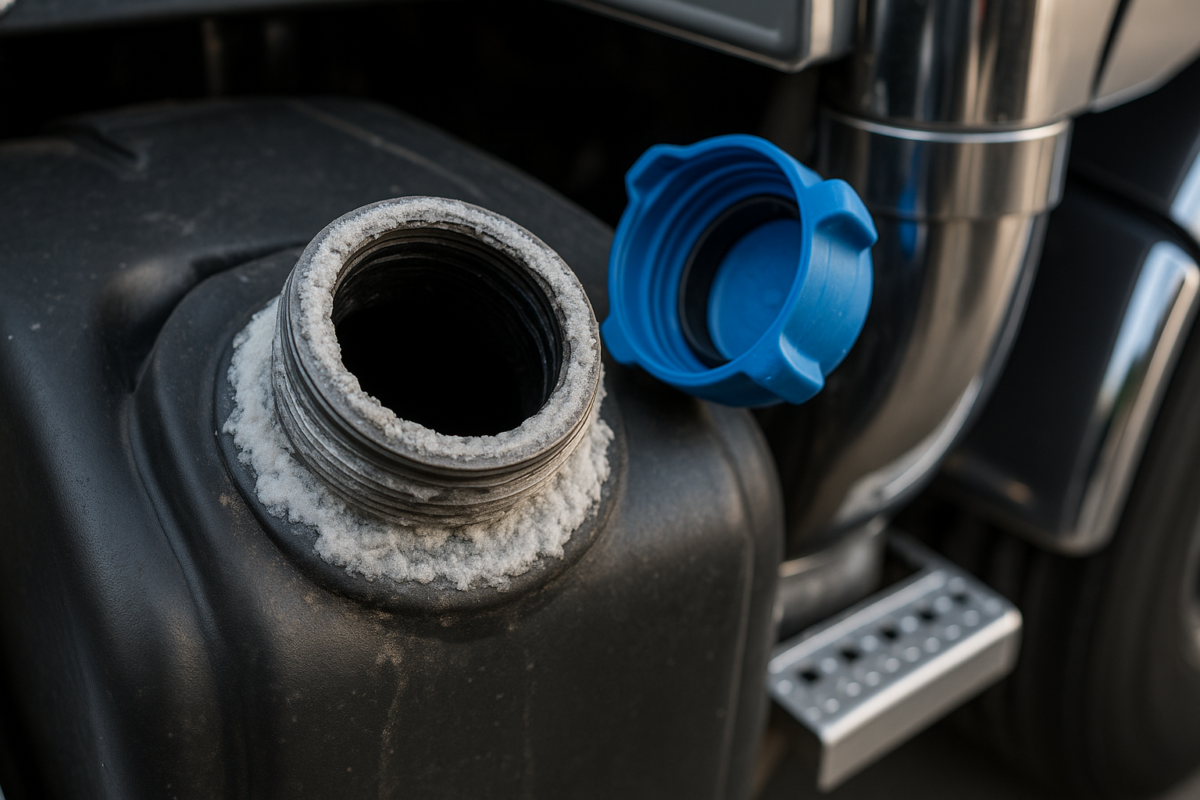
- It can crystallize as it dries. When DEF is exposed to heat and air, urea can form hard crystals. Those crystals can clog pickup screens, fuel filters, metering valves, injector inlets, and tiny internal passages.
- It changes how the fuel behaves. Contaminated fuel can look cloudy or milky and it does not lubricate or burn like diesel.
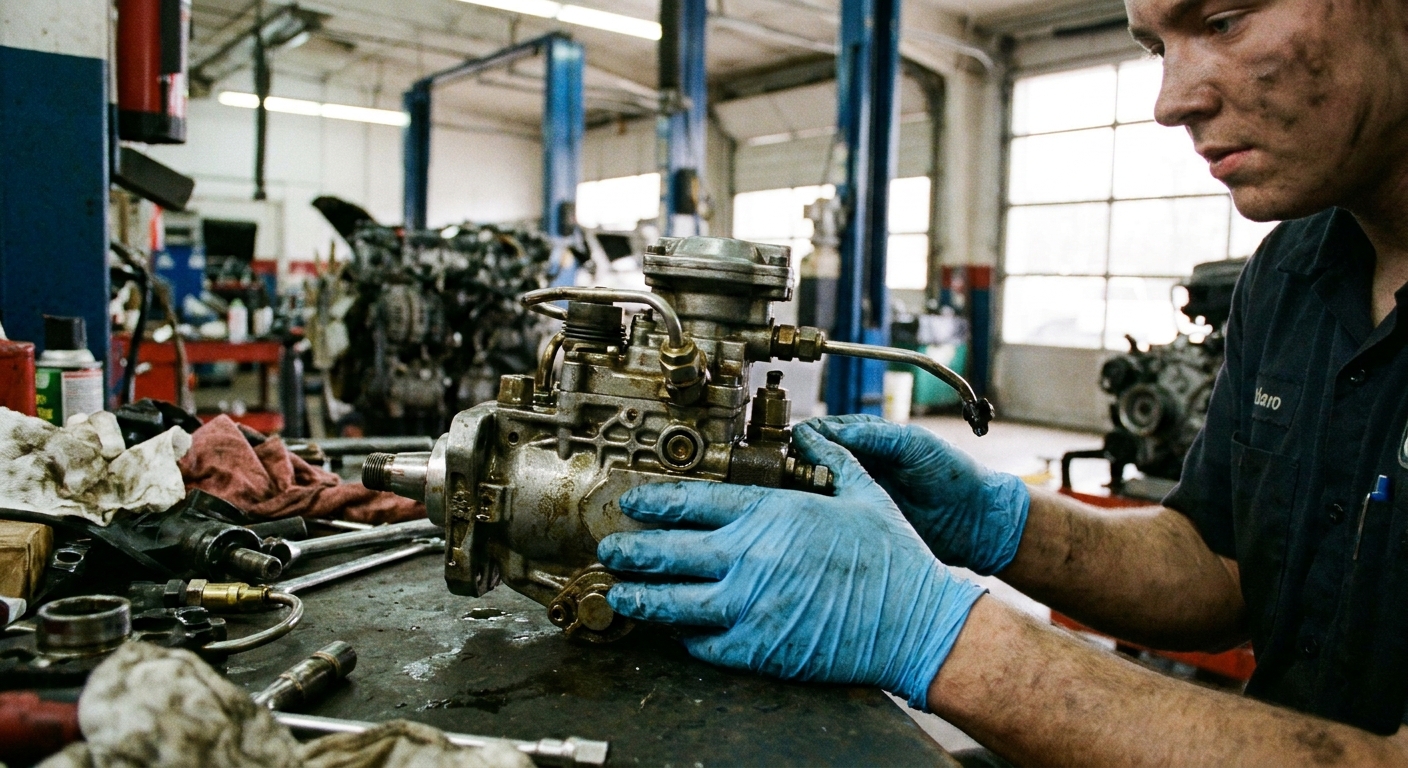
The big money risk is the high-pressure fuel pump. If DEF reaches that pump, it can score internal surfaces and shed metal. Once that happens, metal debris can get distributed through fuel rails and injectors, turning a “drain and flush” into a full system rebuild.
What a proper fix looks like
The correct repair depends on whether the vehicle was started and how far the DEF traveled.
If you did not start the engine
This is the best-case scenario. Most of the time, the fix is focused on removing contamination before it reaches pumps and injectors:
- Drain the fuel tank completely.
- Remove and clean the tank when possible, especially if DEF volume was significant.
- Flush fuel lines from tank to filter housing.
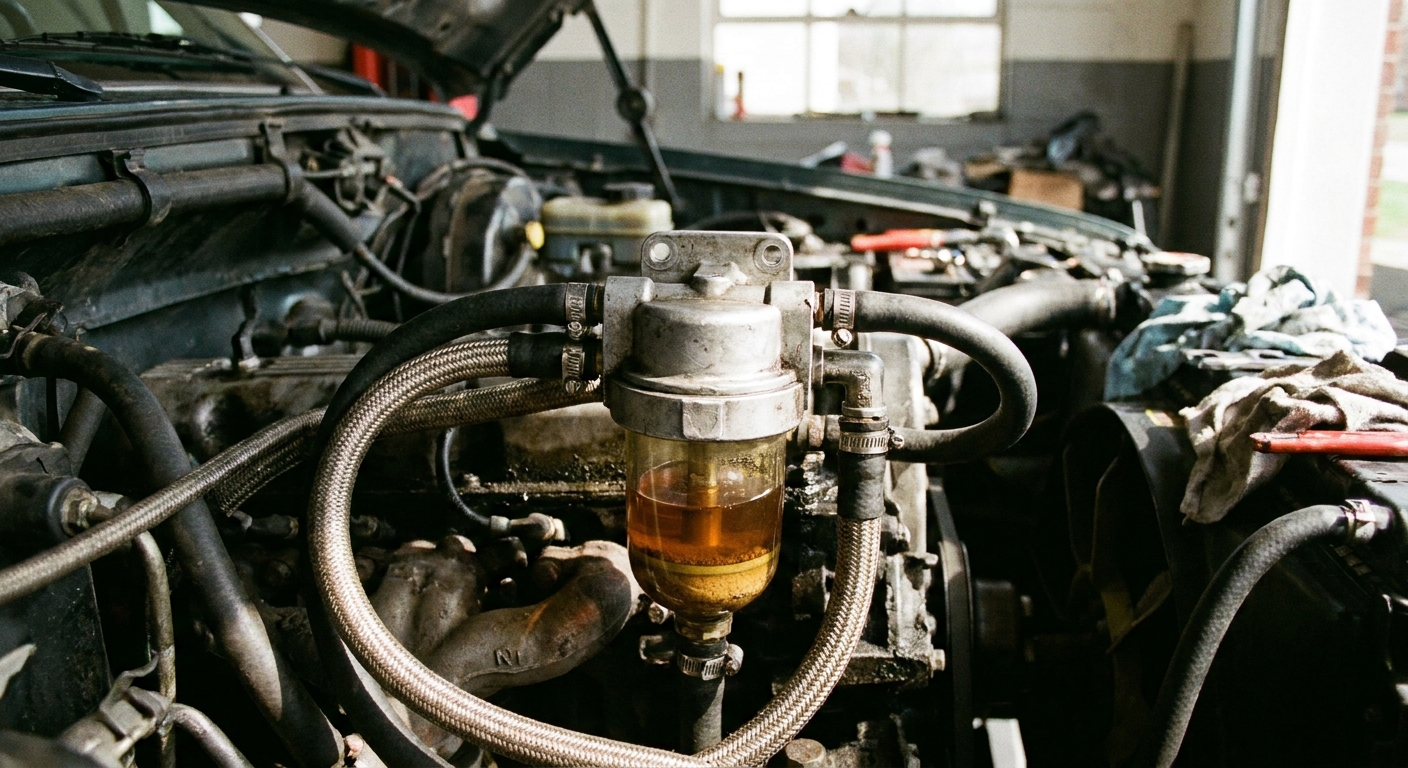
- Replace the fuel filter(s). Many modern diesels have more than one filter or a water separator integrated into the assembly.
- Refill with fresh diesel and perform the correct prime and bleed procedure.
If you started or drove it
Now we assume the DEF may be in the low-pressure side and possibly beyond the filters. Depending on the vehicle and what the shop finds, a thorough repair can include:
- All steps above, plus tank removal and wash
- Filter housing cleaning or replacement
- Fuel rail cleaning
- Injector testing and potential replacement
- High-pressure pump replacement if contamination or scoring is present
On some platforms, manufacturers specify replacing multiple components rather than attempting to clean everything because crystal residue can hide and show up later.
Can you just add more diesel?
In the shop world, “dilute it” is what people say when they are thinking about small amounts of gasoline in diesel, or they are trying to get a stranded vehicle moved. DEF is different. Because DEF contains water and urea and can crystallize, dilution does not reliably prevent damage.
If you are trying to avoid a tow bill, I get it. I have been there. But the cheapest path is still: leave it off, tow it, drain it correctly.
How to tell the DEF filler from the diesel filler
Automakers tried to make this hard to mess up, but it still happens, especially at night, in bad weather, or when you are using jugs.
Clues you are at the DEF fill
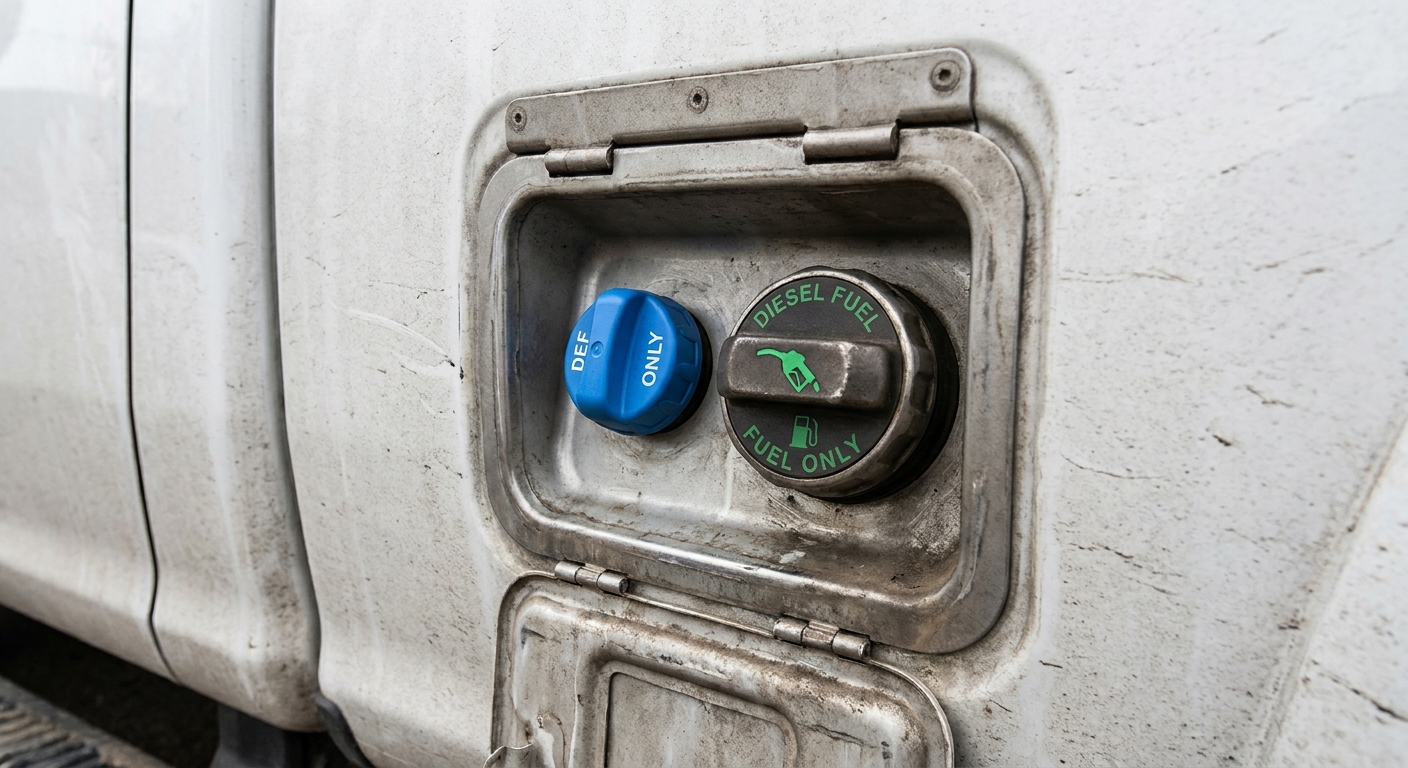
- Blue cap or blue ring around the filler neck is the most common indicator.
- Smaller opening than the diesel filler on many trucks.
- Labeled “DEF” on the cap or door (not always, and labels get dirty or scratched).
- Location varies: DEF fill can be next to the fuel door, in the engine bay on some vehicles, or accessible near the frame on certain commercial setups.
Clues you are at the diesel fill
- Cap labeled Diesel or showing a diesel-only icon.
- Usually the larger filler and sometimes has a misfuel guard designed for diesel nozzles.
My personal habit is simple: when I am tired or distracted, I physically touch the cap and read it before I pour. It sounds silly until it saves you thousands.
Symptoms if DEF made it into the fuel system
If you already drove the vehicle, you might see anything from mild to severe drivability problems. Some show up immediately, others show up after crystals build up and filters clog.
- Hard start or crank-no-start
- Rough running, misfiring, low power
- Stalling shortly after starting
- Check engine light and fuel system related codes
- Rapidly clogged fuel filter, water-in-fuel warnings
Important: these symptoms overlap with many diesel issues. The difference is the timeline. If symptoms started right after a misfuel event, treat it as contamination until proven otherwise.
Repair cost expectations (realistic ranges)
Costs vary wildly by vehicle, region, and how far the contamination traveled. These numbers are rough ranges based on what I have seen in shops, not a quote. Also, some OEM procedures lean toward replacing components instead of cleaning them, which can push costs up fast.
Best case: engine never ran
- Tank drain, flush, new filters, refill: often $500 to $1,500
- More if the tank must be removed for access, or if the vehicle has complex underbody shielding
Middle case: started briefly, shut down fast
- Deeper flush, multiple filters, more labor: often $1,500 to $4,000
Worst case: high-pressure system contaminated
- High-pressure pump, injectors, rails, lines, tank cleaning: commonly $6,000 to $12,000+
- On some heavy-duty or newer systems, it can climb beyond that
If your vehicle is under warranty, understand that misfueling is typically considered user error and may not be covered. If you have comprehensive insurance or a specific roadside or fleet policy, it is worth a quick call, but do not delay getting the vehicle shut down and towed.
If you put diesel in the DEF tank
This article is about DEF in the diesel tank, but the reverse mistake is common too. If diesel fuel goes into the DEF tank, the vehicle will often throw SCR or DEF quality codes and may derate. Diesel contamination can ruin the DEF pump, heaters, and the DEF doser (injector). The fix is generally drain the DEF tank, clean the DEF system as needed, and refill with fresh DEF. Do not drive and hope it clears.
DIY vs shop
If you have the tools, a safe way to capture and dispose of contaminated fuel, and service information for your exact vehicle, a careful DIY drain and filter swap can be doable on some older diesels.
For many late-model diesels, I strongly recommend a shop because:
- Accessing the tank can be time-consuming and unsafe without a lift.
- Priming procedures matter, and improper priming can create hard-start issues or damage components.
- Some systems require scan-tool commands for proper bleeding and checks.
- If contamination reached the high-pressure pump, you want professional diagnosis fast.
Also, think about disposal. A DEF and diesel mix is not something you want dumped on the ground or poured into a random container forever. Disposal rules vary by location, so a shop is often the simplest and most compliant way to handle it.
At minimum, do not do anything that pushes contamination deeper into the system. Avoid cycling the ignition repeatedly and avoid cranking “to see if it runs.”
Quick FAQ
How much DEF does it take to cause damage?
There is no magic safe amount. Even a small amount can cause problems because water and urea do not belong in the fuel system, and crystals can clog tiny passages. Treat any DEF-in-diesel event as serious.
Will the truck throw a code right away?
Not always. Sometimes it fails quickly, sometimes it runs poorly as filters load up, and sometimes damage shows up later. The absence of a code does not mean you are safe.
Can a fuel additive fix it?
No. Additives do not remove water and urea contamination and they do not prevent crystallization residue from clogging components.
What should I tell the tow company or shop?
Say: “DEF was added to the diesel fuel tank. The engine has not been started” or “It was started and ran for about X minutes.” That detail changes the entire diagnostic path.
The bottom line
DEF in the diesel fuel tank is one of those mistakes where your next minute matters more than your next 60 miles. Keep it off. Get it towed, have the tank drained, the system flushed, and the filters replaced. If you caught it early, you can often avoid the wallet-destroying scenario of a contaminated high-pressure fuel system.
If you want, tell me what you drive and whether it was started. I can help you sanity-check what a shop recommends before you authorize the work.