Buying a used hybrid can be a smart move. You get excellent fuel economy, a quieter commute, and often a car that has had an easier life in stop-and-go driving because the engine is not running constantly. But hybrids also add high-voltage components that you do not want to “find out about” after the paperwork is signed.
Below is the same checklist I would use if you and I were looking at a used hybrid together in a parking lot, plus a few steps you can ask a shop to handle with a scan tool that can read hybrid and brake modules.
Start with the paperwork
Before you look at a single warning light, look at the car’s story. Hybrids are generally reliable, but neglected maintenance and missed campaigns can turn “reliable” into “expensive.”
What you want to see
- Consistent oil changes at reasonable intervals. Hybrids still have engines, and lots of short trips can be tough on oil.
- Cooling system service documentation when applicable. Many hybrids have separate cooling loops for the engine and the inverter electronics.
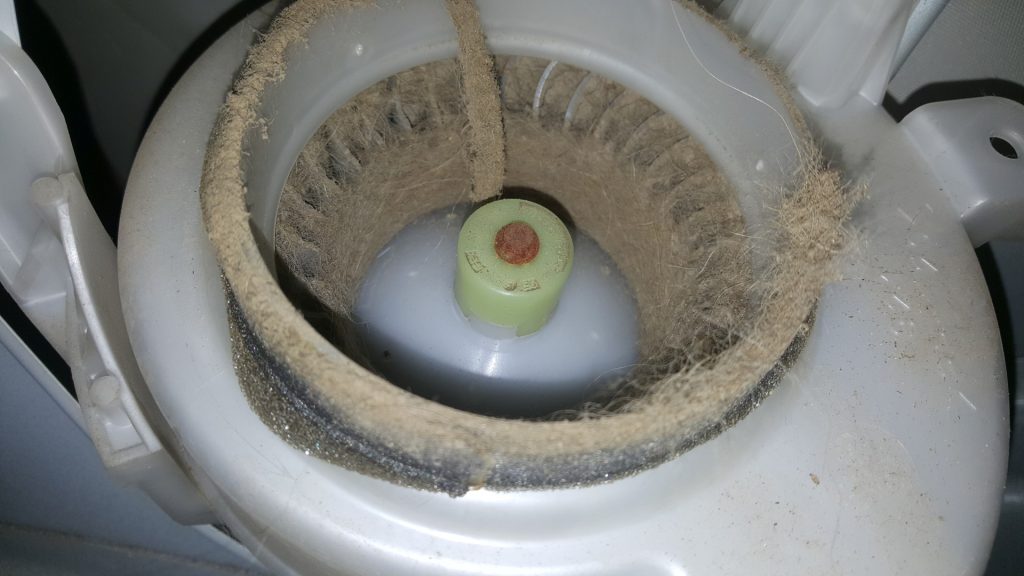
- Hybrid-system-related services like inverter coolant changes (model dependent) and hybrid battery cooling fan cleaning (common on some Toyota and Ford models).
- Brake service history. Regenerative braking reduces pad wear, which sounds great, but it can also mean pads and slide pins sit for long periods and corrode.
- Proof recalls were completed, especially anything involving inverter software, fuel system updates, brake system updates, or hybrid battery inspections.
Red flags
- “No records, but it was maintained.” Maybe. Maybe not.
- Repeated visits for 12V battery replacements, no-start complaints, or electrical gremlins.
- Any invoice that mentions water intrusion, flood damage, mold odor, or “interior detail due to smell.” High-voltage wiring and moisture do not mix.
Battery health
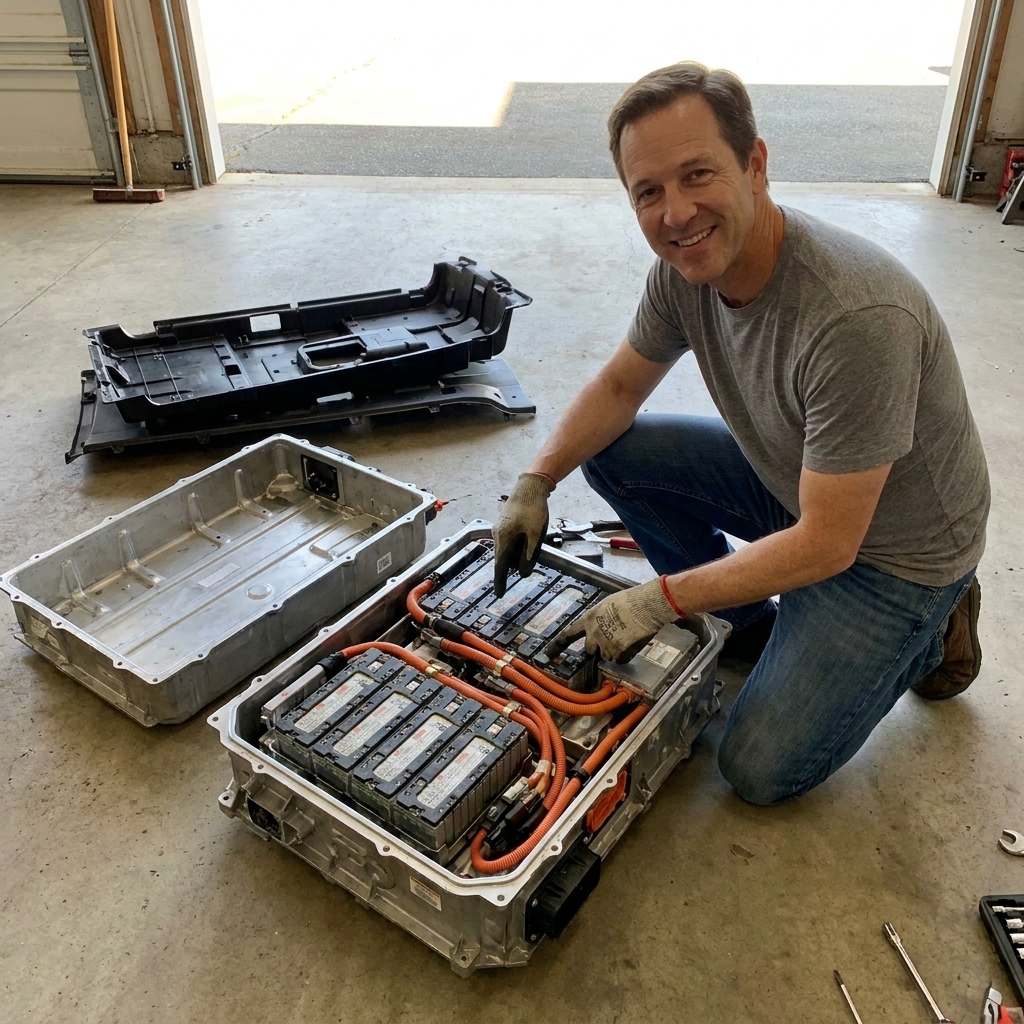
The hybrid battery is the headline item everyone worries about. The good news is that many last a long time. The bad news is that when they do fail, the bill can be real.
This is a good moment to slow down and reset expectations: dash battery gauges are often filtered and non-linear, so you are looking for patterns that seem off for that model, not trying to diagnose a pack by the bars alone.
Quick checks on the spot
- Ask how it was stored. Hybrids that sit for long stretches can develop battery imbalance, and the 12V battery may also suffer.
- Listen for the battery cooling fan. Some cars pull cabin air across the battery. If the fan is roaring on mild days, it can suggest the pack is running hot or the fan is clogged.
- Check the battery intake vent (often near the rear seat or cargo area). If it is packed with dust, pet hair, or lint, the battery has likely been heat stressed.
Checks worth paying for
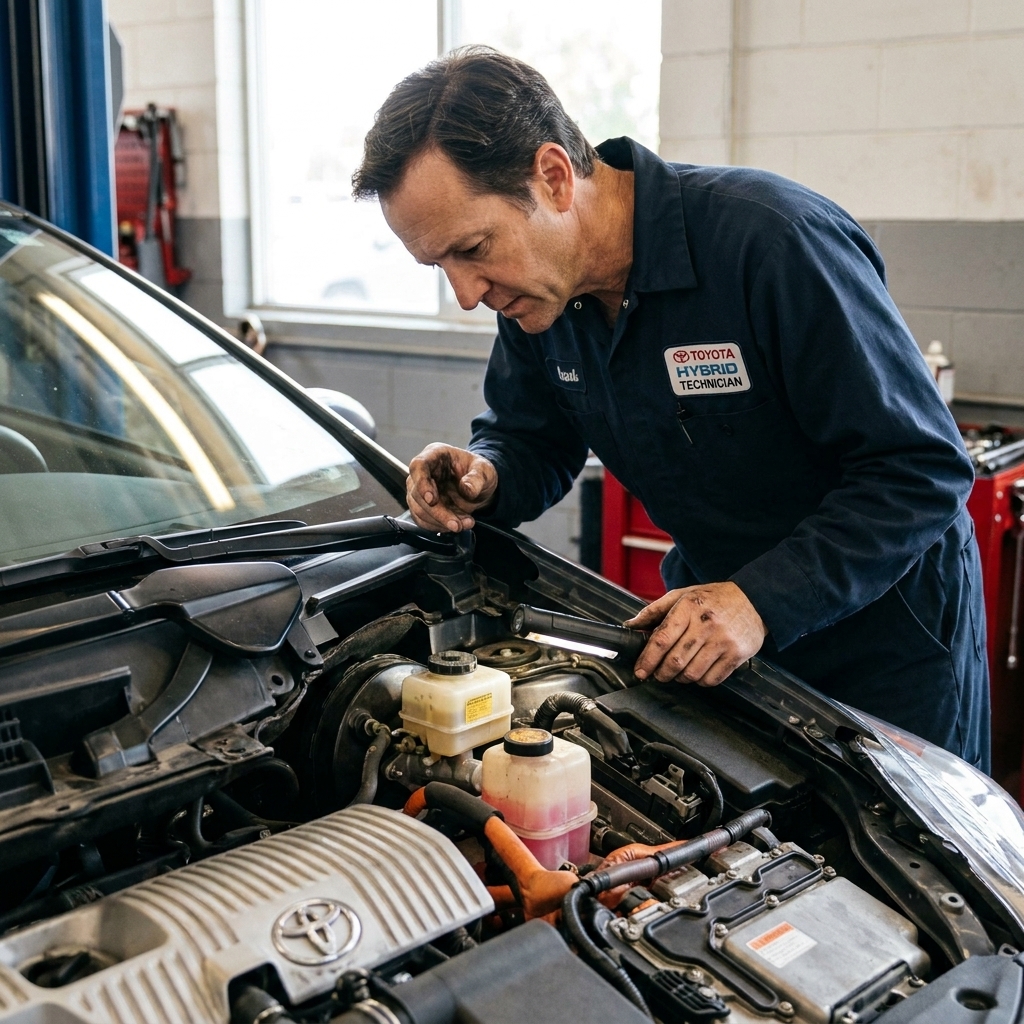
If you are serious about the car, have a hybrid-capable shop run a pre-purchase inspection that includes:
- Scan for hybrid-specific codes in all modules, not just generic OBD-II. Some sellers clear codes and hope you do not look deeper.
- Review state of charge behavior during a drive with live data. The tech can spot abnormal swings, temperature issues, or weak blocks or cells (model dependent).
- Load test the 12V battery. A weak 12V battery can cause strange hybrid warnings and intermittent no-start issues.
Tip from the shop floor: lots of “hybrid battery failures” start as a neglected battery cooling fan or a weak 12V battery. Do not skip those basics.
Inverter and cooling
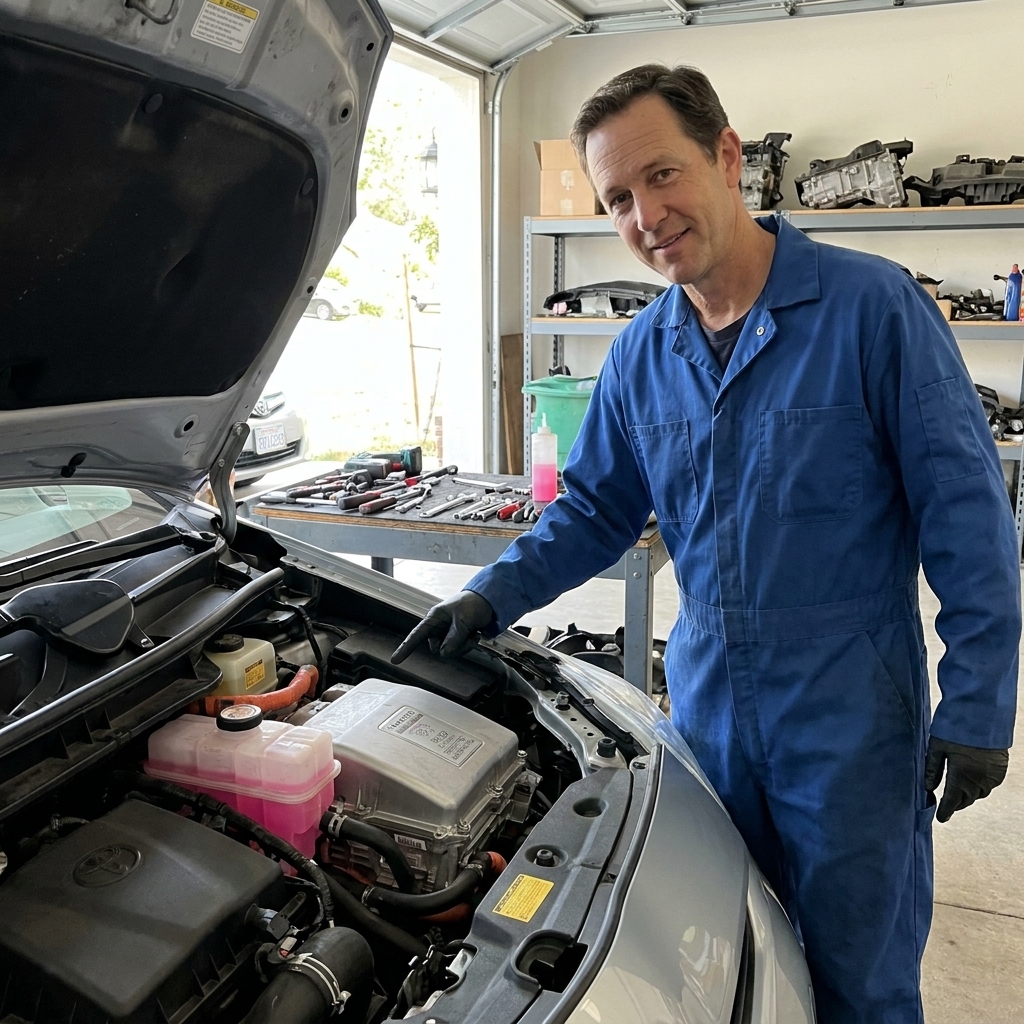
The inverter converts high-voltage DC from the battery into AC for the electric motors, and it creates heat doing it. Most hybrids use a dedicated inverter cooling loop with its own pump, coolant, and reservoir, but designs vary by brand and model.
Why it matters: when inverter cooling is marginal, the car can feel fine until it suddenly does not, often under load or in warm weather.
What to inspect under the hood
- Locate the inverter coolant reservoir (your owner’s manual or a quick model-specific lookup can help). With the car in READY mode, some vehicles show visible coolant movement.
- Check coolant level and condition. Low coolant or dried coolant residue or crystallization around the reservoir can point to leaks.
- Look for signs of past overheating such as brittle connectors, stained plastic around the inverter area, or mismatched hoses and clamps.
Red flags on a drive
- Sudden reduced power warnings, especially on warm days or longer climbs.
- Cooling fans roaring constantly even when engine temp looks normal.
- Intermittent warning lights that “go away” after a restart.
Those symptoms can fit an inverter cooling pump issue, but they can also come from A/C demand, battery cooling, radiator fan control, or other sensor inputs. The deciding factor is what the codes and live data say.
Warning lights
Hybrids are very good at tattling when something is off. The trick is not letting a seller hand-wave it away.
Lights that deserve extra attention
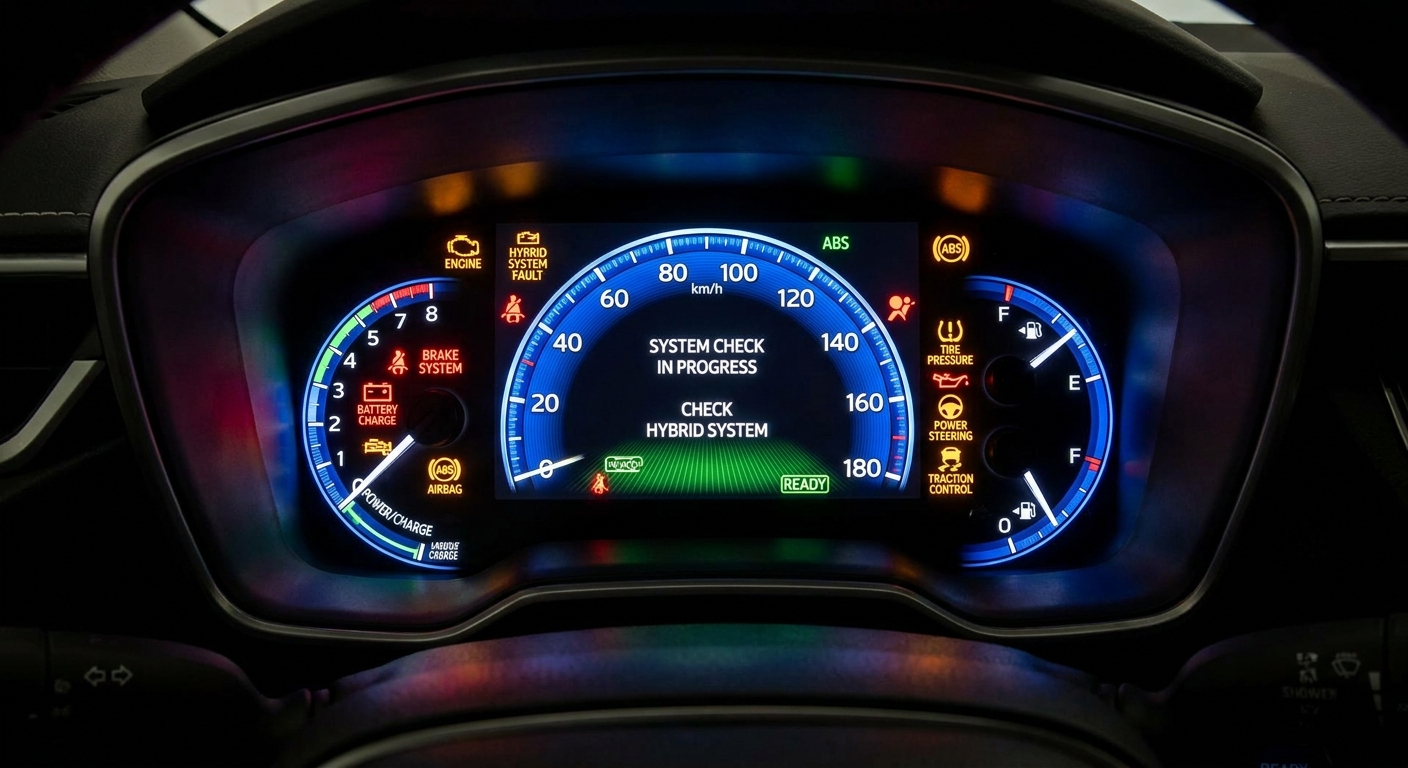
- Check Engine Light: could be anything, but you need the stored codes and freeze-frame data.
- Hybrid system warning (often a car icon with an exclamation mark): treat it seriously.
- ABS, brake, or traction control lights: on many hybrids, these can tie into regenerative braking behavior and brake actuator systems.
- Battery icon: often relates to the 12V charging system, which on hybrids is handled differently than traditional alternators.
What to do on the lot
- Turn the key on (or press start without your foot on the brake, if applicable) and confirm all warning lights illuminate briefly. If some never light up, they may be removed or masked.
- Then start the car normally and confirm all lights go out after the self-check.
- If any light stays on, do not guess. Get the codes pulled with a tool that can read hybrid and brake systems.
Test-drive feel
A hybrid that is operating correctly tends to feel smooth, predictable, and quiet. Most red flags show up when you change speed, ask for power, or come to a stop.
Before you move
- Start it cold if you can. A warm start can hide rough engine behavior.
- Listen for odd noises when the engine kicks on: rattles, knocking, or loud vibration.
At low speeds
- In a parking lot, gently accelerate and lift off. Watch for surging or a “hunting” feel where power comes and goes.
- Check for clunks from the driveline when shifting from Reverse to Drive (mounts, axles, or wear in the transaxle area).
Under moderate acceleration
- A little engine flare can be normal on some eCVT systems, but it should not feel like slipping.
- Watch for battery gauge behavior that seems unusually jumpy or inconsistent for that model and conditions. Then confirm with scan data if you can.
Braking feel matters
- Regenerative braking should feel smooth and consistent.
- If braking transitions feel grabby, inconsistent, or you feel a “step” as you come to a stop, it could be normal regen-to-friction blending. It can also point to calibration issues or brake actuator and ABS problems on certain models, so treat it as a clue, not a diagnosis.
Heat and A/C test
- Turn the A/C on and confirm it blows cold quickly. Many hybrids use an electric A/C compressor, and repairs can be expensive.
- Check that the engine reaches temp normally and the cabin heat works without a sweet coolant smell.
Underside and brakes
Hybrid-specific parts are not the only costs. You still have suspension, tires, brakes, and rust to worry about.
Brakes
- Look through the wheels for rotor rust ridges and uneven pad wear. Because regen handles a lot of braking, friction brakes can corrode and stick.
- During the drive, find a safe spot for a couple of firmer stops. Feel for pulsation, pulling, or noise.
Rust and damage
- Check rocker panels, rear subframes, and brake lines for corrosion.
- Look for crushed pinch welds and bent underbody panels from improper jacking.
Tires
- Mismatched tires can cause odd behavior on some stability systems and AWD hybrids.
- Uneven wear can point to alignment issues or worn suspension components, which eats into your fuel savings fast.
Under-hood clues
You do not need to be a technician to spot signs of neglect.
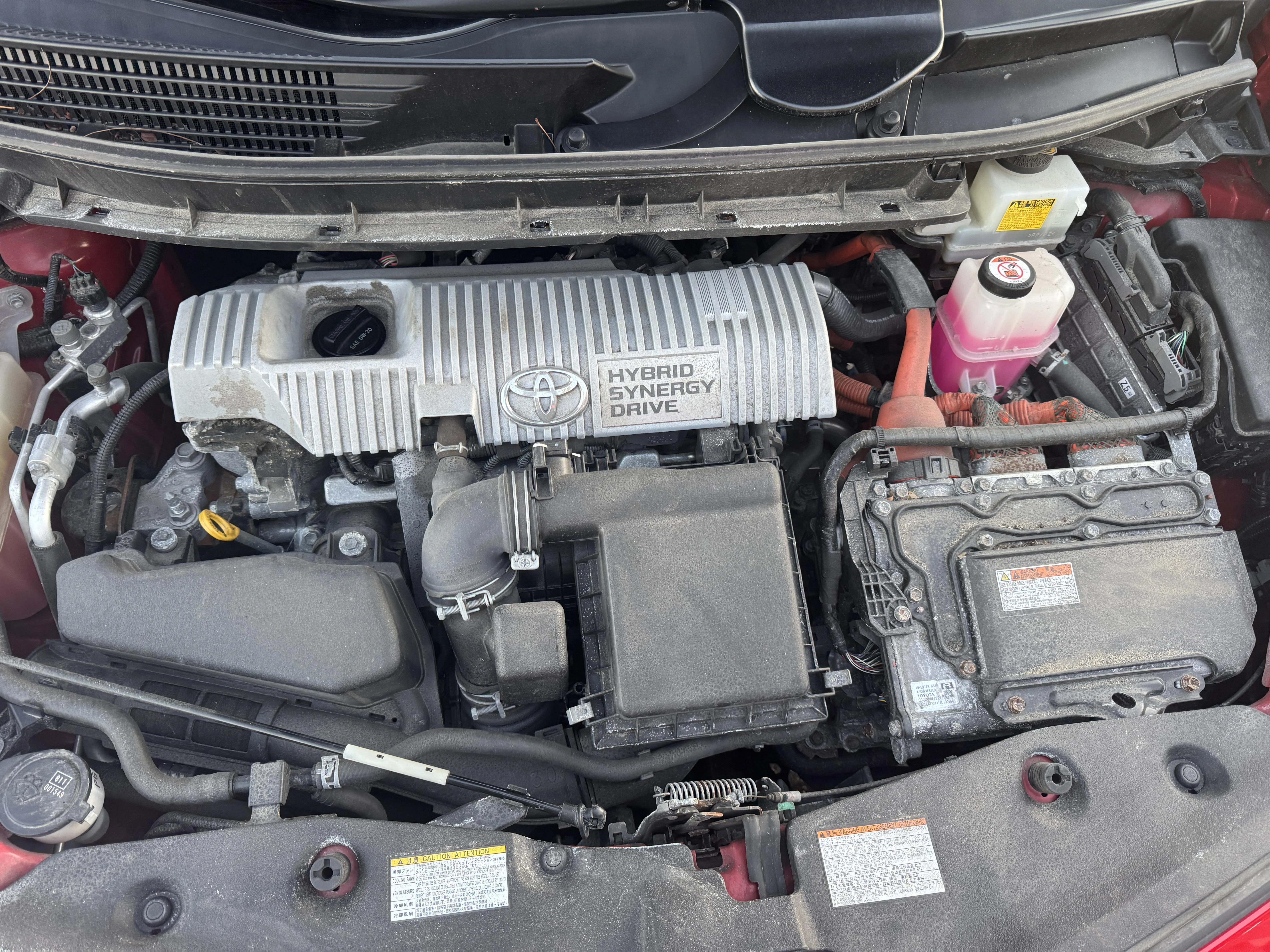
- Fluid check: oil level and condition, engine coolant level, and any separate inverter coolant reservoir if equipped.
- Look for rodent damage: chewed insulation, nesting material, and gnawed wiring. Hybrids have lots of wiring.
- Check for aftermarket wiring: poorly installed stereos or alarms can create parasitic draws and weird electrical issues.
- Sniff test: burned electronics smell under the hood is never a good sign.
Safety note: do not touch orange cables or probe high-voltage components. A proper inspection should follow high-voltage safety procedures.
Questions to ask
“Has the hybrid battery ever been replaced?”
A replacement is not automatically bad. It can be a plus if it was done with a new OEM pack and documented. Ask whether it was new, used, refurbished, or reconditioned, and get the paperwork. Part numbers, warranty terms, and who performed the work matter.
“Any warning lights recently?”
“It comes and goes” usually means a real problem that is being ignored or temporarily cleared.
“How long has it been sitting?”
Long sitting periods can lead to a weak 12V battery, stale fuel, flat-spotted tires, and battery imbalance. Not a deal-breaker, but price it accordingly and plan preventive work.
“Do you have both keys?”
Smart keys can be expensive, and programming is not always cheap. Missing keys are a negotiation point.
Model issues and warranty
Before you commit, spend ten minutes doing targeted homework: search your exact year, make, and model plus “common problems,” “TSB,” and “recall.” Many hybrids have a few repeat offenders, and it is better to know them before you are standing in a driveway trying to decide.
Also ask about remaining hybrid component warranty. Coverage varies by brand and region, and some areas have extended emissions or hybrid warranties that can change the math on an older car.
When it is a pass
If any of these show up, I usually advise walking unless the price leaves plenty of room for repairs and you have a solid specialist lined up.
- Hybrid warning light on, seller refuses a scan.
- Overheating history, coolant loss, or evidence of repeated cooling system top-offs.
- Strong signs of flood damage: musty smell, corrosion under seats, moisture in lamps, or multiple electrical issues.
- Jerky power delivery paired with odd battery gauge behavior.
- No title clarity, salvage branding you did not expect, or sketchy documentation.
Pay for a hybrid PPI
If you take one thing from this list, make it this: a generic used-car inspection is good, but a hybrid-capable pre-purchase inspection is better. You want a shop that can scan every module, read hybrid data, and recognize hybrid cooling and brake system quirks.
Spending a little up front is the easiest way to avoid buying someone else’s “almost fixed” hybrid.
Quick FAQ
How long do hybrid batteries last?
It varies by model, climate, and use, but many last well into six-figure mileage. Heat, neglect of battery cooling, and long storage periods can shorten life.
Can I check hybrid battery health with a basic code reader?
You can sometimes pull generic codes, but many hybrid faults live in manufacturer-specific modules. For shopping, you want a scan tool that can read hybrid control, battery control, ABS, and body modules.
Is an older hybrid still worth buying?
Often, yes, if the overall car is clean, service history is solid, and the hybrid system checks out. The best buys are usually the ones that were driven regularly and maintained, not the ones that sat.