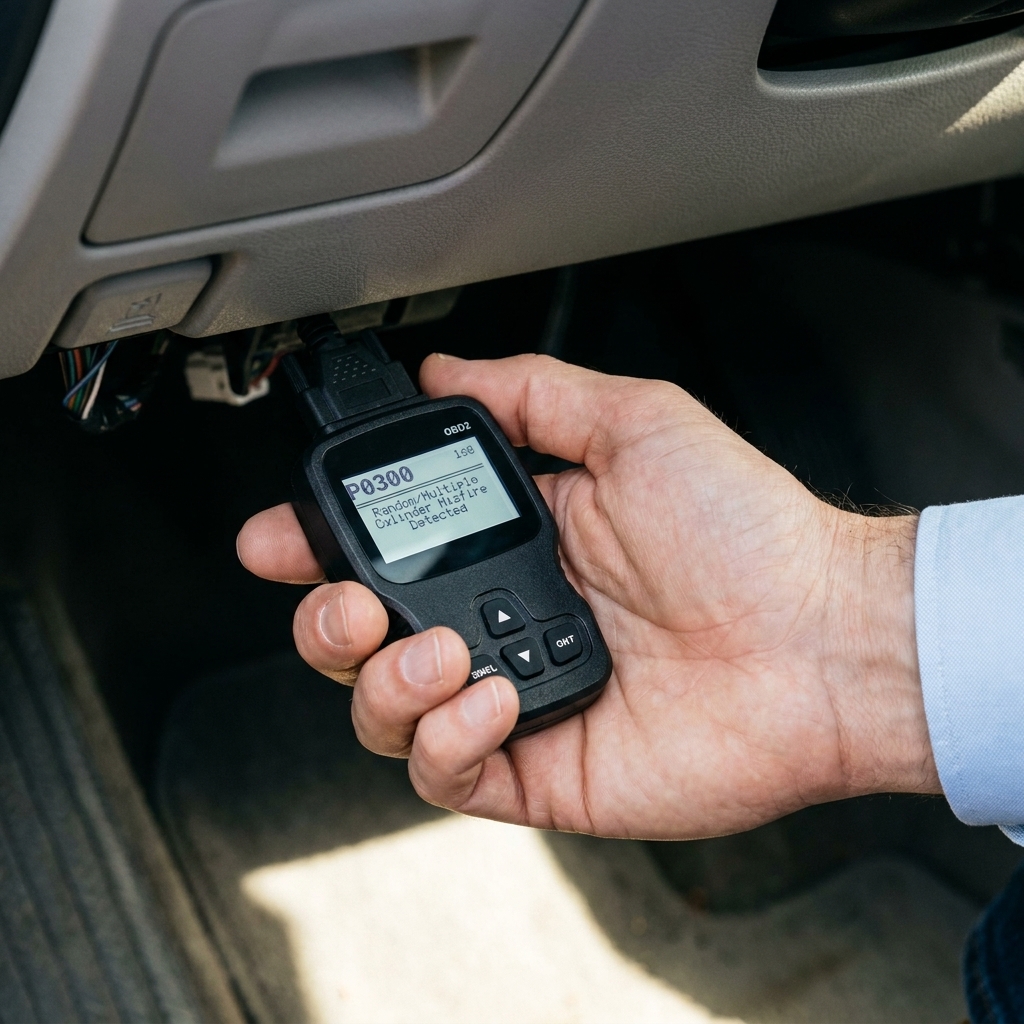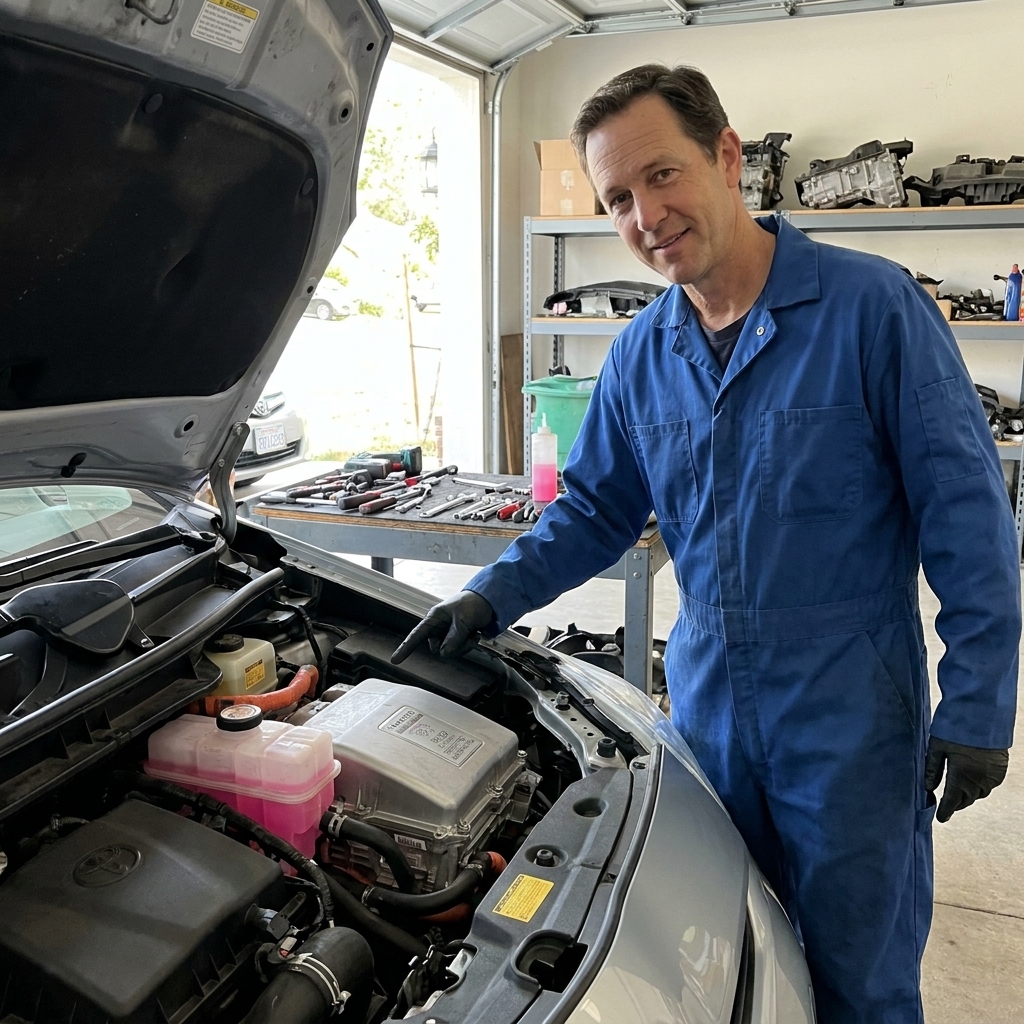
Hybrid batteries are tough, but they are not magic. After years of heat cycles, thousands of charge and discharge events, and the occasional neglected air filter or clogged fan, they start to show their age. The good news is you can catch most hybrid battery issues early with a little observation and a basic OBD2 scan , no dealer visit required.
In this guide, I will walk you through the five problems I see most often, what they feel like from the driver’s seat, and the safest ways to confirm what is actually going on at home.
Before you diagnose anything: hybrid safety basics
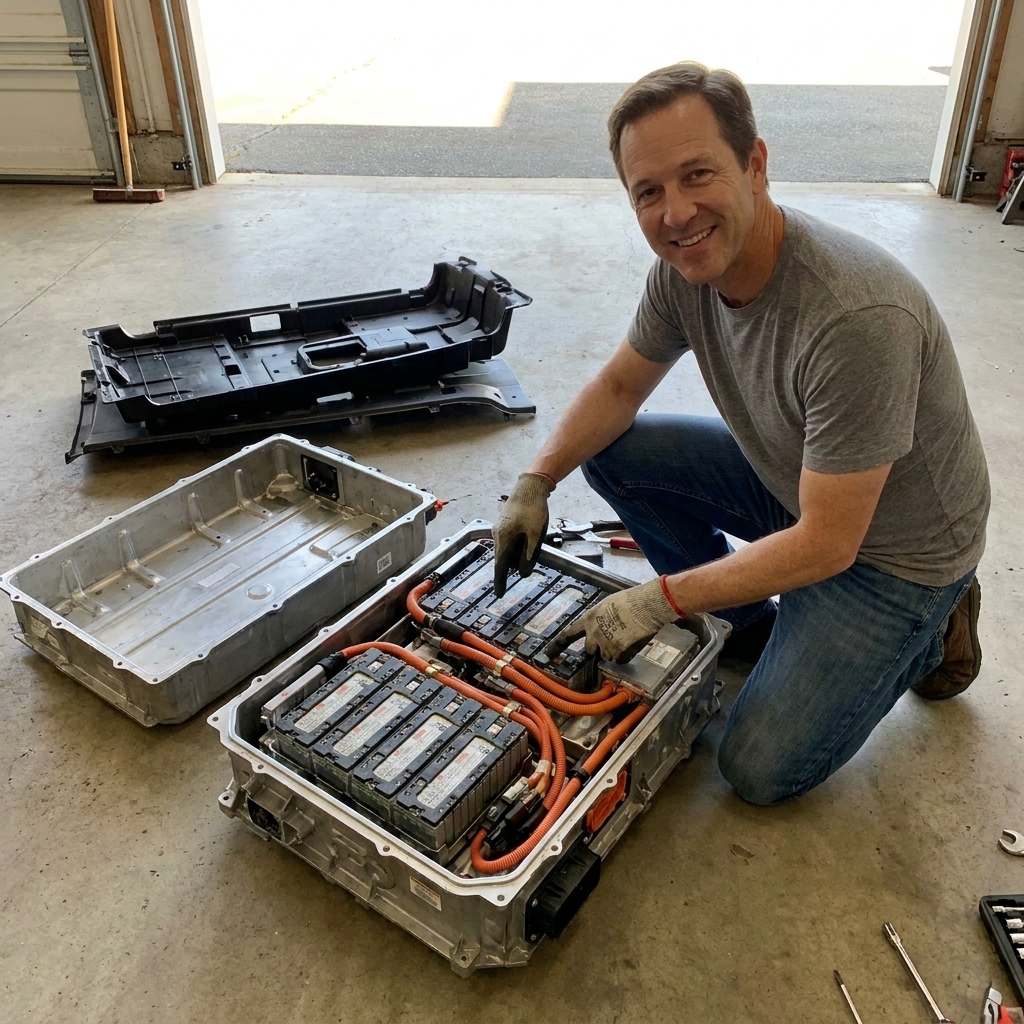
I am all for DIY, but high voltage deserves respect. Many hybrids run roughly 150V to 300V nominal at the pack, with some designs higher (some newer systems go well beyond that). You can do a lot of useful diagnosis without touching any orange cables or opening the battery case.
- Do not open the hybrid battery pack at home unless you have the proper training, PPE, and a service manual procedure. Most owners do not need to go that far to get answers.
- Never unplug orange connectors just to “see what happens.”
- Work in a ventilated area and keep the 12V battery in mind. A weak 12V can cause weird hybrid behavior that looks like traction battery trouble.
- If you smell burning, see smoke, or get a “Stop Safely Now” type warning, park it and get professional help.
What we will do here is smart, non-invasive troubleshooting: check warning signs, pull codes, look at battery data, and inspect easy-access cooling components.
Tools that make this easy (and cheap)
You do not need a dealer scan tool for a first pass, but you do need the right kind of scanner.
Minimum toolkit
- OBD2 scanner that can read hybrid and manufacturer-specific codes . Many basic code readers only grab generic engine codes and miss hybrid battery details.
- A phone app or software that can display live data (battery block voltages, state of charge, battery temperatures, fan command). Support varies by vehicle, and some models do not expose block-level voltages in generic apps.
- Digital multimeter for the 12V battery check.
- Flashlight and basic hand tools for inspecting the battery cooling intake and fan area.
Quick note on what to look for in live data
Different makes label things differently, but the same concepts show up again and again. Also, terminology varies: what Toyota calls a block, another brand might show as a module pair, a cell group, or nothing at all.
- Battery state of charge (SOC) should change smoothly, not bounce wildly.
- Battery block/module voltages should stay close together. A weak group will sag more under load.
- Battery temperature sensors should read plausibly and fairly close to each other.
- Battery current helps you see whether voltage drops are happening under real load.

Problem 1: Battery capacity loss (normal aging)
This is the slow, boring one, and it is the most common. Over time, the pack holds less usable energy. The car still runs, but it cannot buffer acceleration and regen like it used to.
What you will notice
- Fuel economy drops over months, not days.
- The engine runs more often, especially in town.
- EV assist feels weaker, or the car “gives up” on electric-only mode sooner.
- State of charge swings more than it used to (for example, the gauge falls quickly after a stoplight and climbs quickly on light braking).
At-home diagnosis steps
- Rule out tire and brake drag first. Low tire pressure and sticky brakes can mimic a tired battery by killing mpg.
- Check the 12V battery correctly. Measure after the car has been off for several hours (surface charge can fool you). Temperature and battery type matter, but as a rough guide: many healthy systems read about 12.4V to 12.8V at rest. If you are seeing 12.2V or lower after a proper rest, consider it suspect.
- Scan for codes. Capacity loss does not always throw a code immediately, and different makes flag it at different points. But if you see battery performance or “pack deterioration” type faults, that is a big clue.
- Look at SOC behavior on a consistent route. With live data, watch for rapid SOC drop under gentle acceleration and rapid SOC recovery on light regen. Smooth is healthy. Jumpy usually means reduced usable capacity.
What this usually means: If everything else checks out, you are likely dealing with normal degradation. The next step is deciding whether to live with it, recondition (on certain chemistries and designs), or plan for repair or replacement when the car starts setting persistent battery codes.
Problem 2: One weak block causing imbalance
If capacity loss is the slow fade, imbalance is the limp. Most hybrid packs are built from many smaller cells grouped into modules or blocks. When one group gets weaker than the rest, the computer sees the spread and starts protecting the system.
What you will notice
- Warning lights like “Check Hybrid System,” MIL, or a hybrid battery warning.
- Power feels inconsistent, especially during acceleration or climbing hills.
- SOC swings wildly even on short trips.
- Cooling fan runs loudly more often (not always, but common).
At-home diagnosis steps (live data helps most here)
- Pull codes and freeze frame data. Many vehicles will set codes related to battery deterioration or voltage deviation. Write them down.
- Monitor block voltages at idle and under load. The key is to watch what happens when current demand increases. A weak block often looks “fine” at rest, then sags more than the others when you accelerate.
- Look for voltage spread. There is no universal magic number, but a noticeably larger delta between highest and lowest block during acceleration is a classic sign.
- Repeat the test consistently. Same road, similar throttle. You are looking for repeatable behavior, not a one-off blip.
What this usually means: The pack is becoming unbalanced, typically because one or more modules are failing. Some owners choose module-level repair, but it is worth knowing that mixing old and used modules can lead to repeat failures if the pack is generally aged.
Example codes (varies by make): Toyota often uses P0A80 (replace hybrid battery pack) and P3011–P3024 style block codes on some generations. Use these as examples only, and always confirm what your specific code means for your vehicle.

Problem 3: Battery overheating from airflow problems
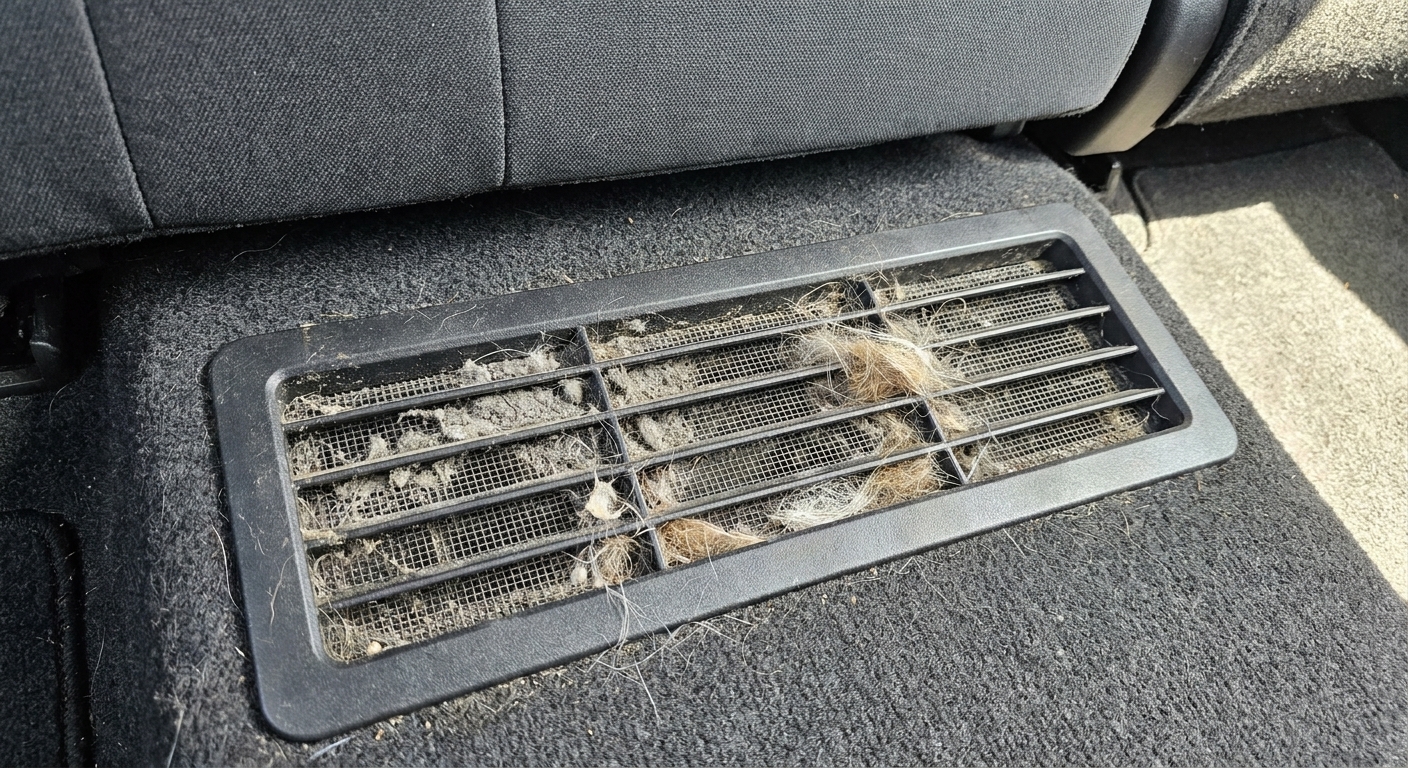
This one is sneaky because the battery itself may be fine. Hybrids rely on airflow to keep the pack in its happy temperature range. Pet hair, dust, and lint can clog the intake grille or the fan, especially if the intake is near the rear seat or cargo area.
Restricted airflow is the big one, but it is not the only one. A failed fan, broken ducting, or a bad temperature sensor can also push the system into heat protection.
What you will notice
- Fan noise from the rear seat or cargo area that seems louder than normal.
- Reduced hybrid assist on hot days or long climbs.
- More engine run time as the system limits battery use to protect it.
- Battery temp readings higher than expected on live data.
At-home diagnosis steps
- Locate the battery cooling intake. Check your owner’s manual or a trusted repair guide. Many are on the side of the rear seat or near the rear interior trim.
- Inspect the intake grille. If it is packed with lint or pet hair, that is your first fix.
- Check the cabin air path. Blocked vents, piled cargo, and seat covers can restrict airflow to the intake.
- Use live data to verify. Watch battery temperature sensors. If temps climb quickly in normal driving, and the fan command ramps up, you likely have an airflow problem. If the car is commanding high fan but temps keep rising, suspect fan or ducting issues.
What this usually means: Clean airflow can bring a “dying battery” back from the dead, at least symptom-wise. If overheating has been happening for a long time, heat can accelerate real battery degradation, so do not ignore it.
Problem 4: Jumping SOC and odd behavior (sometimes sensors)
Sometimes the issue is not that the battery is suddenly bad. It is that the car is getting bad information about the battery. Hybrids estimate SOC using current sensors, voltage feedback, and internal modeling. If a sensor is drifting or a connection is unhappy, you can see odd behavior that feels like battery failure.
One important caveat: a truly weak or imbalanced pack can also cause jumpy SOC. This section is about the cases where the data or control side is the culprit.
What you will notice
- SOC display drops quickly then jumps back up after a brief stop.
- Regenerative braking feels inconsistent .
- The engine starts and stops at strange times compared with what you are used to.
- Intermittent warnings that clear after a restart.
At-home diagnosis steps
- Scan for codes in all available modules. Not just the engine. Look for battery current sensor, voltage sensor, or communication-related faults.
- Compare battery temperature sensors. If one sensor reads wildly different from the others on a stable drive, the system may be limiting output based on a bad reading.
- Check 12V health and grounds. Low 12V voltage can cause modules to misbehave and throw misleading data. Clean, tight terminals matter more on hybrids than most people think.
- Observe if the issue is temperature-related. If it only happens in extreme heat or cold, it may be more about sensor inputs and pack resistance than a hard failure.
What this usually means: You might be dealing with a sensor, wiring, 12V issue, or software calibration problem. This is also where a professional scan tool can be extremely helpful because it can run battery ECU tests and verify sensor plausibility.
Problem 5: Contactor or isolation faults (do not ignore)
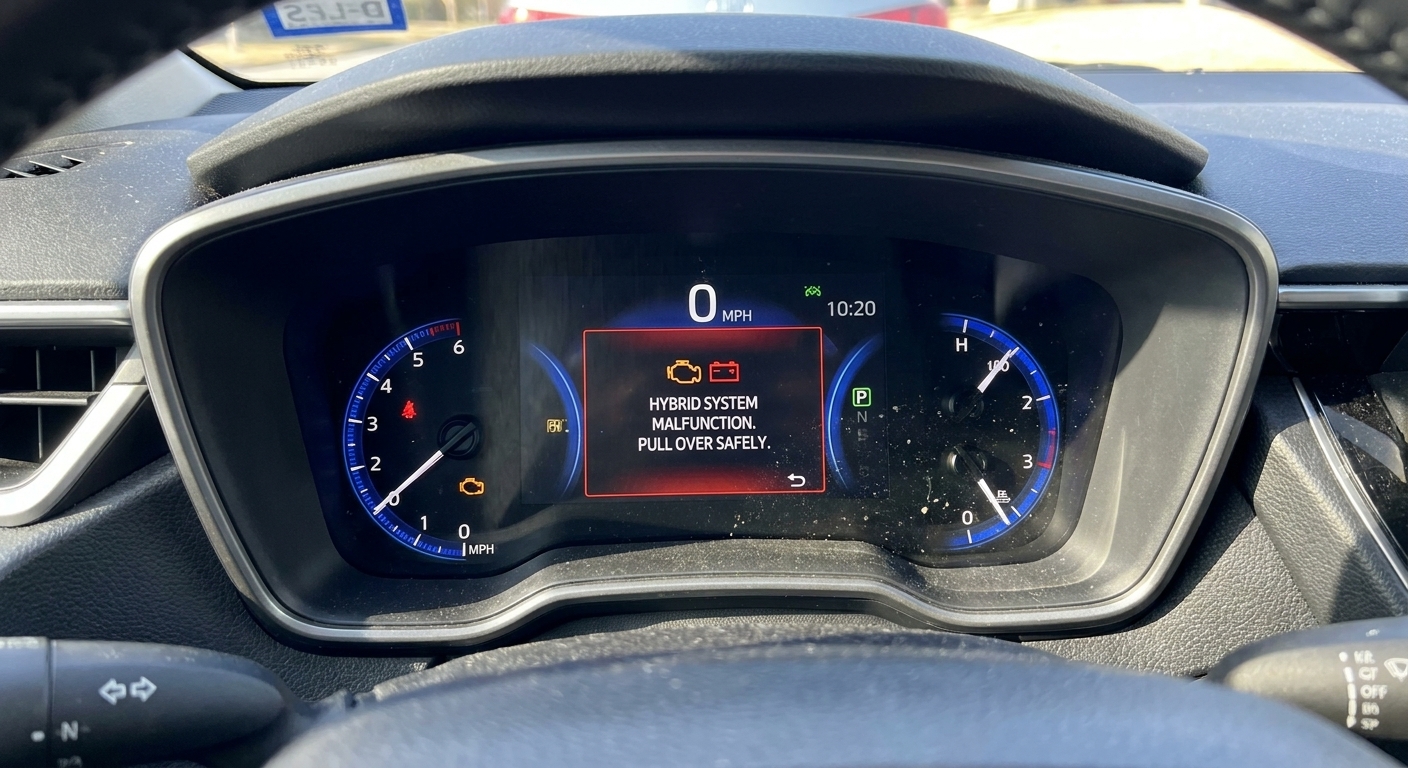
Inside the battery pack are high-voltage relays called contactors that connect and disconnect the pack from the rest of the car. There is also isolation monitoring on many systems to detect leakage from high voltage to the chassis. If the car thinks the high voltage system is not isolating correctly, it will often limit power or refuse to ready up.
What you will notice
- Car will not go into READY or starts, then immediately faults.
- Urgent warnings (varies by brand).
- Intermittent no-start in READY that seems random.
- Possible burning smell or unusual electrical odor in more severe cases.
At-home diagnosis steps (keep this non-invasive)
- Pull codes and write down exact code numbers. Contactor, precharge, or isolation-related codes are not the kind you guess on.
- Do a 12V battery reality check. Low 12V can prevent contactors from operating correctly because the control side is still 12V.
- Listen for the normal click sequence. Many hybrids click when going to READY. No click or repeated clicking can support a contactor or precharge issue.
- Stop short of opening anything. Isolation faults in particular can indicate moisture intrusion, wiring damage, or internal pack issues that should be handled with proper high-voltage safety procedures.
What this usually means: This can be a battery pack internal issue, a high-voltage cable issue, or related control hardware. If you have persistent isolation or contactor codes, plan on professional diagnosis. It is not about being afraid, it is about being safe.
Example codes (varies by make): Some hybrids use P0AA6 for isolation faults. Contactor and precharge codes vary widely by brand and model, so treat any high-voltage safety code as a stop-and-verify situation.
How to use an OBD2 scanner
If you have never scanned a hybrid before, here is a simple routine that works on most vehicles.
1) Pull codes first, then look at live data
Codes tell you where the computer is unhappy. Live data helps you confirm whether the problem is consistent and what conditions trigger it.
2) Save freeze frame and screenshots
Freeze frame shows what the car was doing when the fault set. If you clear codes too early, you lose that context. I like to grab screenshots of:
- Battery block voltages (if available)
- Battery temperatures (all sensors)
- SOC
- Battery current (amps)
- Fan command or fan speed (if available)
3) Do a short, repeatable drive test
Pick a safe loop: a couple of gentle accelerations, a moderate hill if you have one, and a few regen events. The goal is not to beat on the car. The goal is to see how the battery behaves under light and moderate load.
4) Focus on patterns
A one-time temperature spike or a single low block reading can be noise. A repeated voltage sag on the same block during every acceleration is a pattern.
Problems that can look like a bad battery
If your hybrid feels “off,” do not forget the basics. I have seen plenty of “battery problems” that were actually something else.
- Tires and alignment: underinflation or bad alignment can crush mpg.
- Brake drag: a sticking caliper or parking brake issue can make the system work harder.
- Engine issues: misfires, a failing O2 sensor, or a lazy MAF can force the engine to run more and mask as hybrid weakness.
- Cooling system faults: some models have known failure points like inverter coolant pumps, and heat management issues can cause reduced assist.
- 12V battery and grounds: still one of the biggest repeat offenders.
What not to do
- Do not clear codes until you have saved freeze frame and any screenshots you need.
- Do not probe orange high-voltage cables with a meter or test light.
- Do not try to load-test the high-voltage pack with improvised methods.
- Avoid hard driving with warning lights on, especially if the car is limiting power or showing high-voltage warnings.
When you can keep driving, and when you cannot
Usually OK to drive cautiously while you diagnose
- Slight mpg drop with no warning lights
- Mildly increased engine run time
- Occasional fan noise, especially in hot weather, with normal temps in live data after cleaning the intake
Park it and get help
- Car will not enter READY
- Isolation or high-voltage safety related codes
- Severe power reduction with warning messages
- Burning smell, smoke, or evidence of water intrusion near battery areas
FAQ
Can a weak 12V battery mimic hybrid battery problems?
Absolutely. The traction battery is high voltage, but the computers, relays, and control logic still rely on a healthy 12V supply. Low 12V can cause false codes, odd start behavior, and inconsistent readiness.
Do I need a special OBD2 scanner for a hybrid?
You need one that can access hybrid control modules and display battery live data. A basic reader that only pulls generic powertrain codes may miss the information you actually need.
What is the most common reason hybrid batteries overheat?
Restricted airflow. Clogged intakes and fans are very common, especially with pets, dusty environments, or rear-seat passengers who block the intake area. Failed fans, damaged ducting, and bad temp sensors can also cause overheating symptoms.
Is it worth replacing a single module instead of the whole pack?
Sometimes, but it depends on overall pack age and balance. One replaced module in an otherwise tired pack can buy time, or it can become a repeat repair. Your scan data, mileage, and the vehicle’s history matter here.
Bottom line
Most hybrid battery problems leave clues long before the car strands you. Pay attention to SOC behavior, cooling fan noise, and fuel economy trends, then confirm what you are seeing with codes and live data. If you keep your diagnosis non-invasive and data-driven, you can make a confident call on whether this is a simple airflow fix, a weak 12V, or a traction battery issue that needs professional attention.
If you want, tell me your year, make, model, mileage, and any codes you pulled. I can help you interpret what the data is trying to say.