I have lost count of how many times I have heard some version of: “My hybrid won’t start, but the dash lights up.” That detail matters. In most hybrids, the 12-volt battery is still the gatekeeper. If it is weak, the car may not boot its computers or close the high-voltage contactors, so you never get the Ready light, even though the radio and interior lights might still work.
The good news is you can jump-start a hybrid’s 12-volt system much like a normal car, with two big differences: you usually use an under-hood jump post (not the battery itself), and you must stay well away from anything related to the high-voltage system (typically marked with orange cables and HV labels). When in doubt, follow your owner’s manual. Jump points and whether the donor car should be on or off can vary by manufacturer.
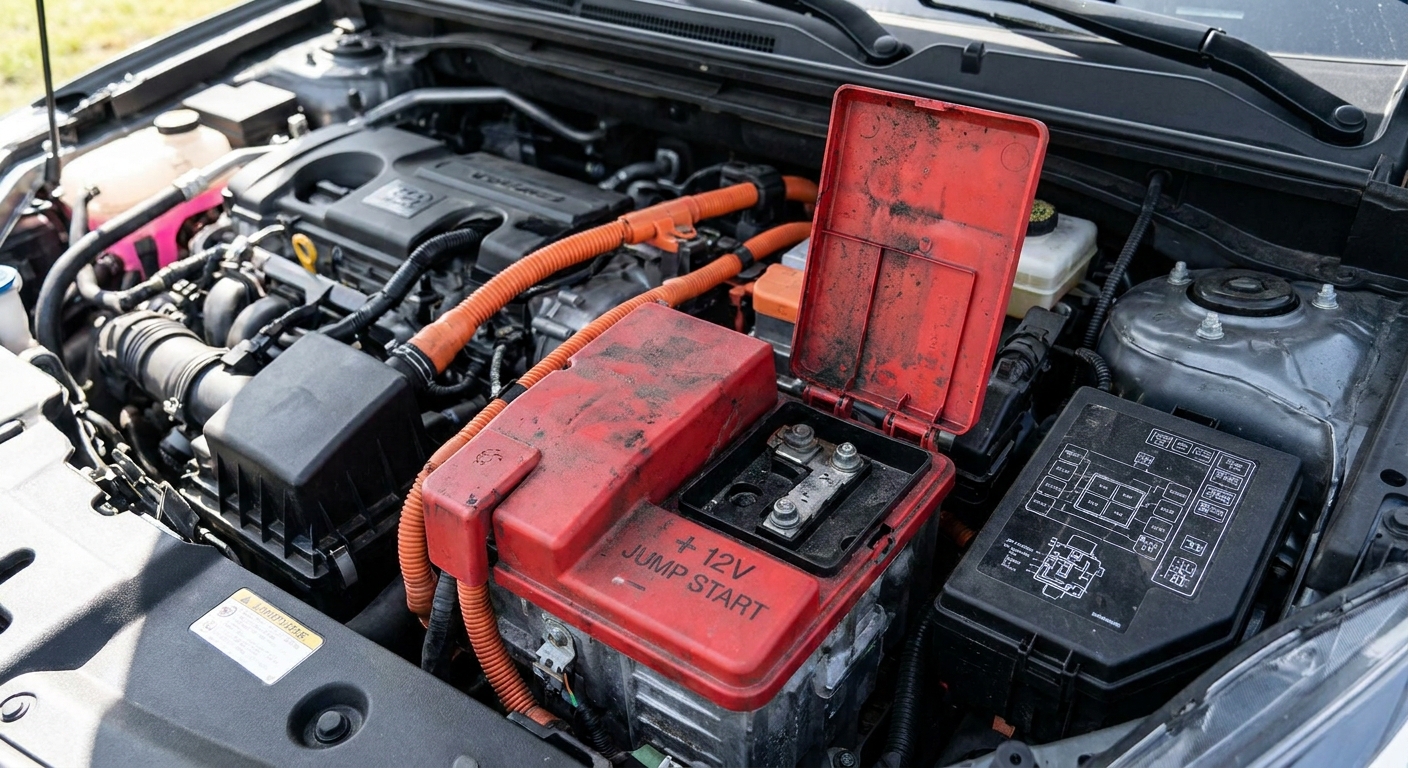
Hybrid jump-start basics
In a conventional gas car, you are often jump-starting so the starter motor can crank the engine. In a hybrid, your goal is usually simpler: provide stable 12-volt power long enough for the car to boot up and enter Ready.
Once the car is in Ready, the hybrid system can typically keep the 12-volt side supported through a DC-DC converter. That is why you should think “Ready light” instead of “engine cranking sound.”
Safety rules
Hybrids are safe to work around when you follow a few rules. The main hazard is confusing the 12-volt system with the high-voltage system.
- Stay away from orange cables and any components they run to. Orange usually indicates high voltage.
- Do not try to jump anything high-voltage. You are only boosting the 12-volt electrical system.
- Keep metal tools and jumper clamp jaws away from moving parts and from multiple metal points at once.
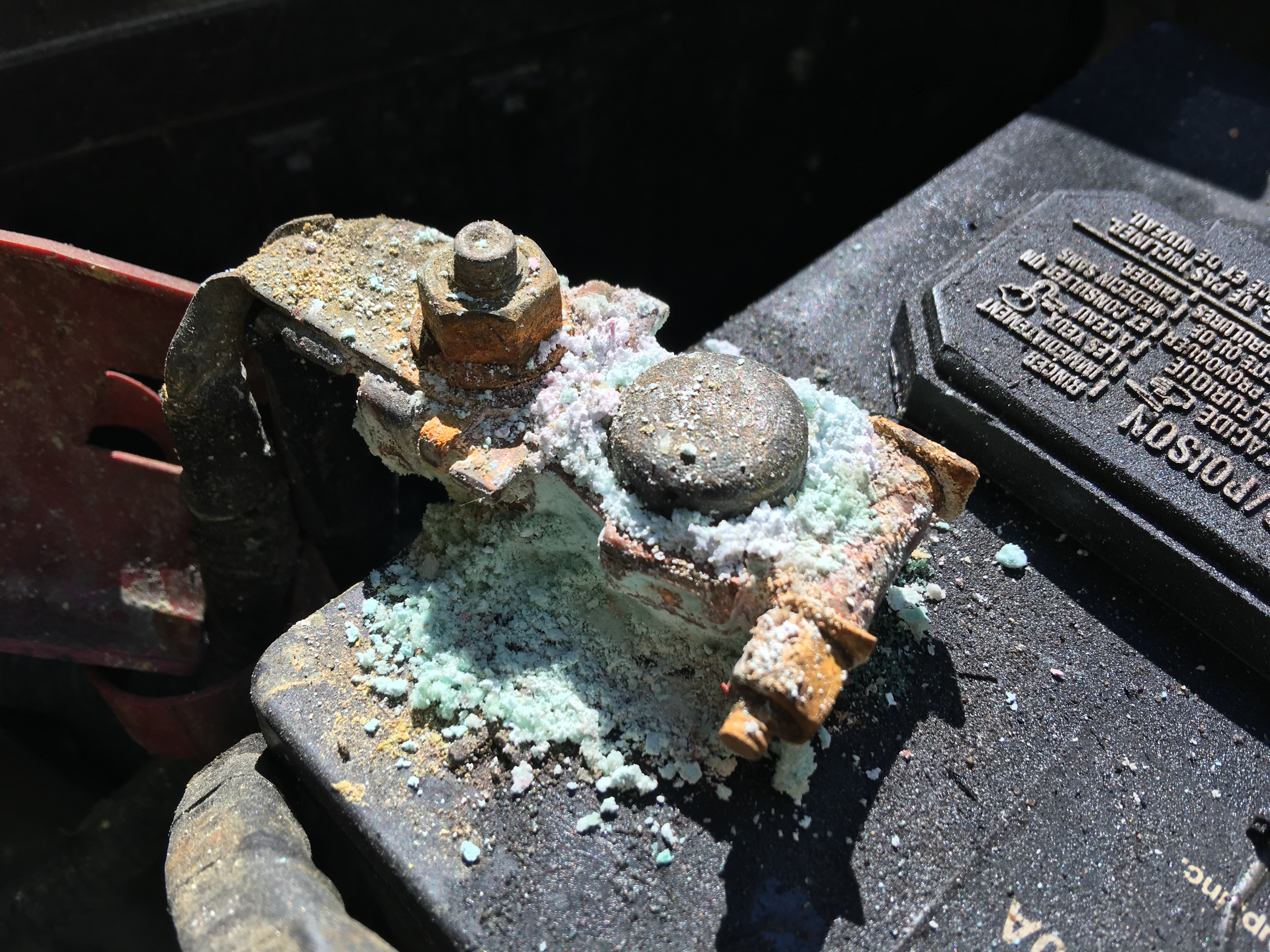
- If the 12-volt battery is damaged (swollen case, leaking, melted terminals) do not jump it. Call for help.
A few more “do not” items that prevent most mishaps:
- Do not let the clamps touch each other once any clamp is connected to a battery or jump post.
- Do not rev the donor vehicle to “make it stronger.” If the manufacturer says the donor should be running, let it idle.
- Do not connect the black clamp to the hybrid’s positive post. Slow down and confirm symbols before clamping.
- Do not touch the hybrid service plug or anything high-voltage related “to reset it.”
If you have ever worked under a hood, this will feel familiar. Just be extra intentional about clamp placement and cable routing.

What you will need
- Jumper cables in good condition or a portable jump pack
- A donor vehicle (if using cables)
- Owner’s manual if you are unsure where your under-hood jump post is, or if your model has a special procedure
- Eye protection is a smart idea, especially if the battery is old
Note: some plug-in hybrids and EVs have different layouts and jump points. The process is similar, but the locations and steps can vary. The manual wins.
Step 1: Confirm it is 12 volts
These clues usually point to a weak 12-volt battery on a hybrid:
- The car will not go into Ready
- Dash lights flicker or dim when you press the start button
- Key fob range seems weak, locks behave strangely, or you get random warning messages
- You can hear relays clicking, but nothing “wakes up” fully
If you have a multimeter, measure at the jump post or battery terminals with the car off after it has been sitting (not immediately after charging or driving). As a rough guide at moderate temperatures: around 12.6V is healthy, around 12.2V is weak, and below about 12.0V is where many hybrids start throwing strange behavior. Temperature and surface charge can skew readings, so treat these as rules of thumb, not absolutes.
Step 2: Find the jump points
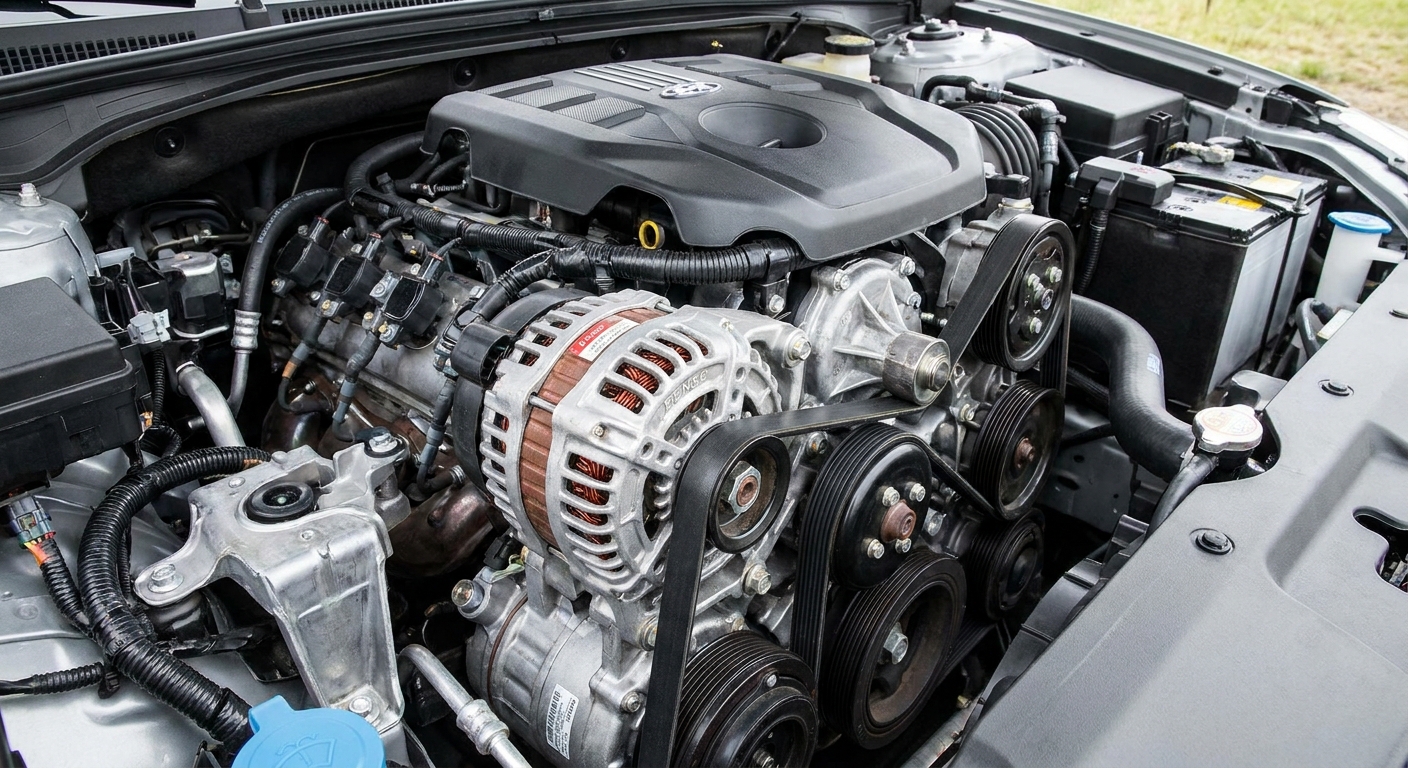
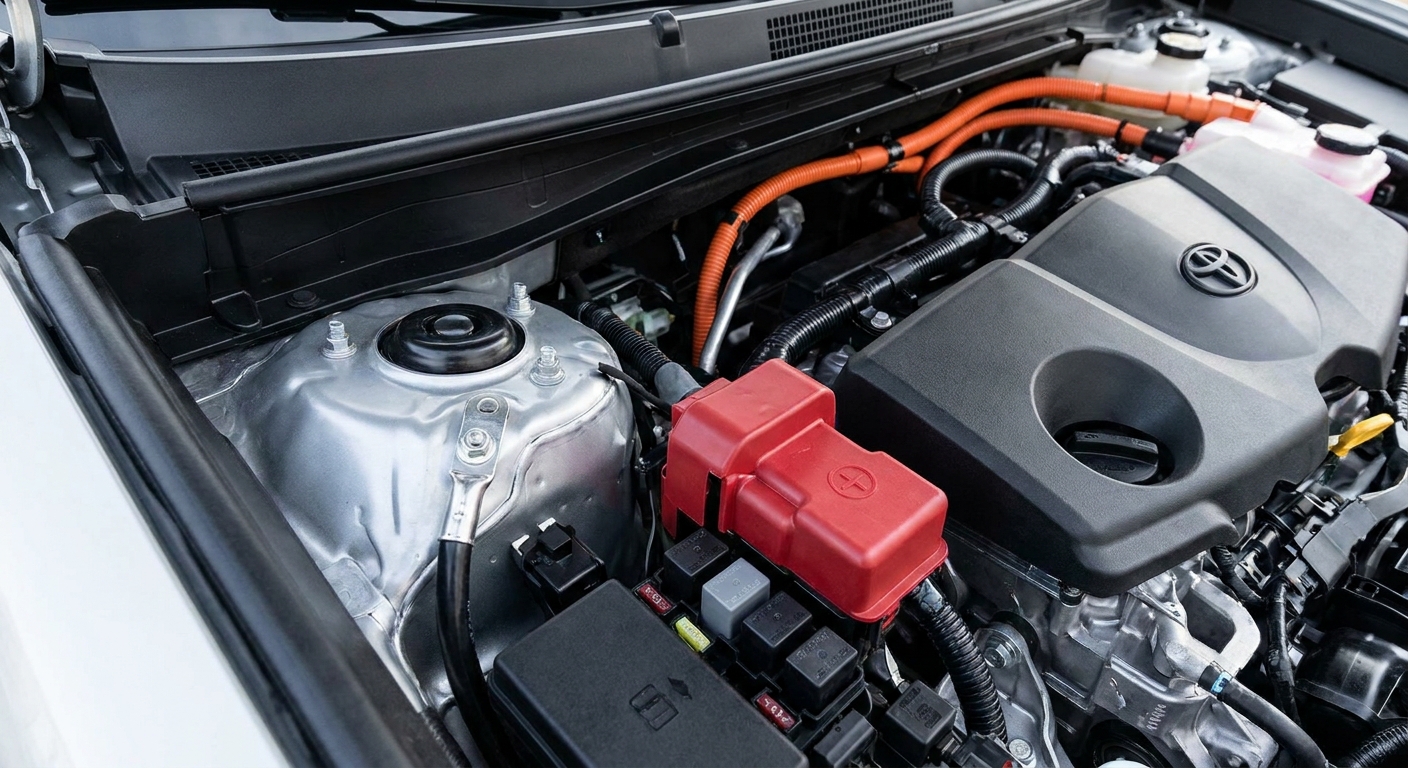
Many hybrids tuck the 12-volt battery in the trunk, under a seat, or behind interior panels. That is why manufacturers often provide a dedicated under-hood jump-start terminal.
Where it usually is
- Near the fuse box in the engine bay
- Under a small red plastic cap with a plus sign
- A nearby ground point on the body or engine, or a designated ground stud
If you are not sure, check the owner’s manual section for “jump starting” or “12V battery.” Do not guess on a hybrid.
Step 3: Connect in order
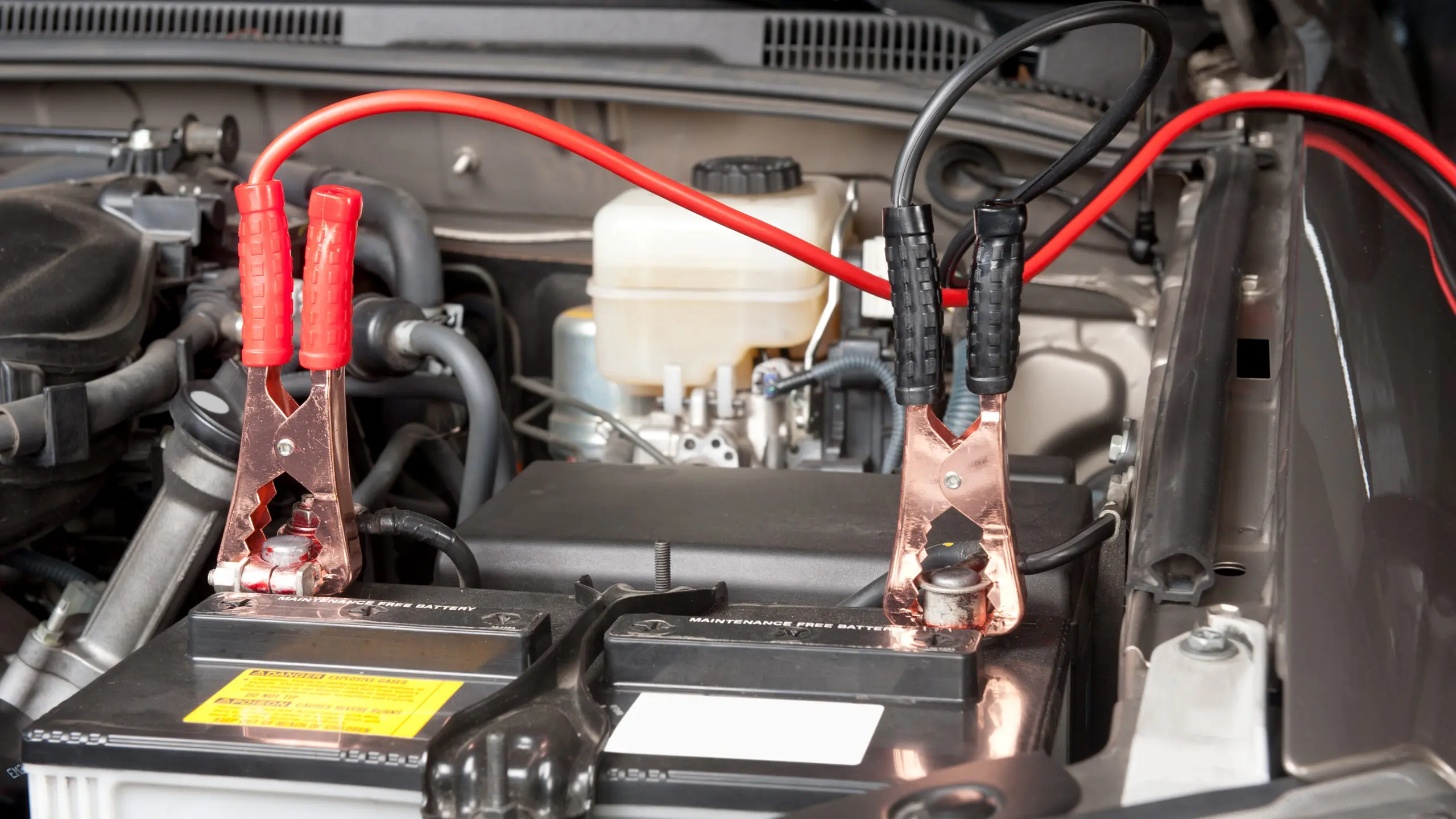
Make sure both vehicles are in Park, parking brakes set, and accessories off. Route cables so they cannot drop into belts or fans. Keep the jumper cable clamps from touching each other once you start connecting.
Connection order (cables)
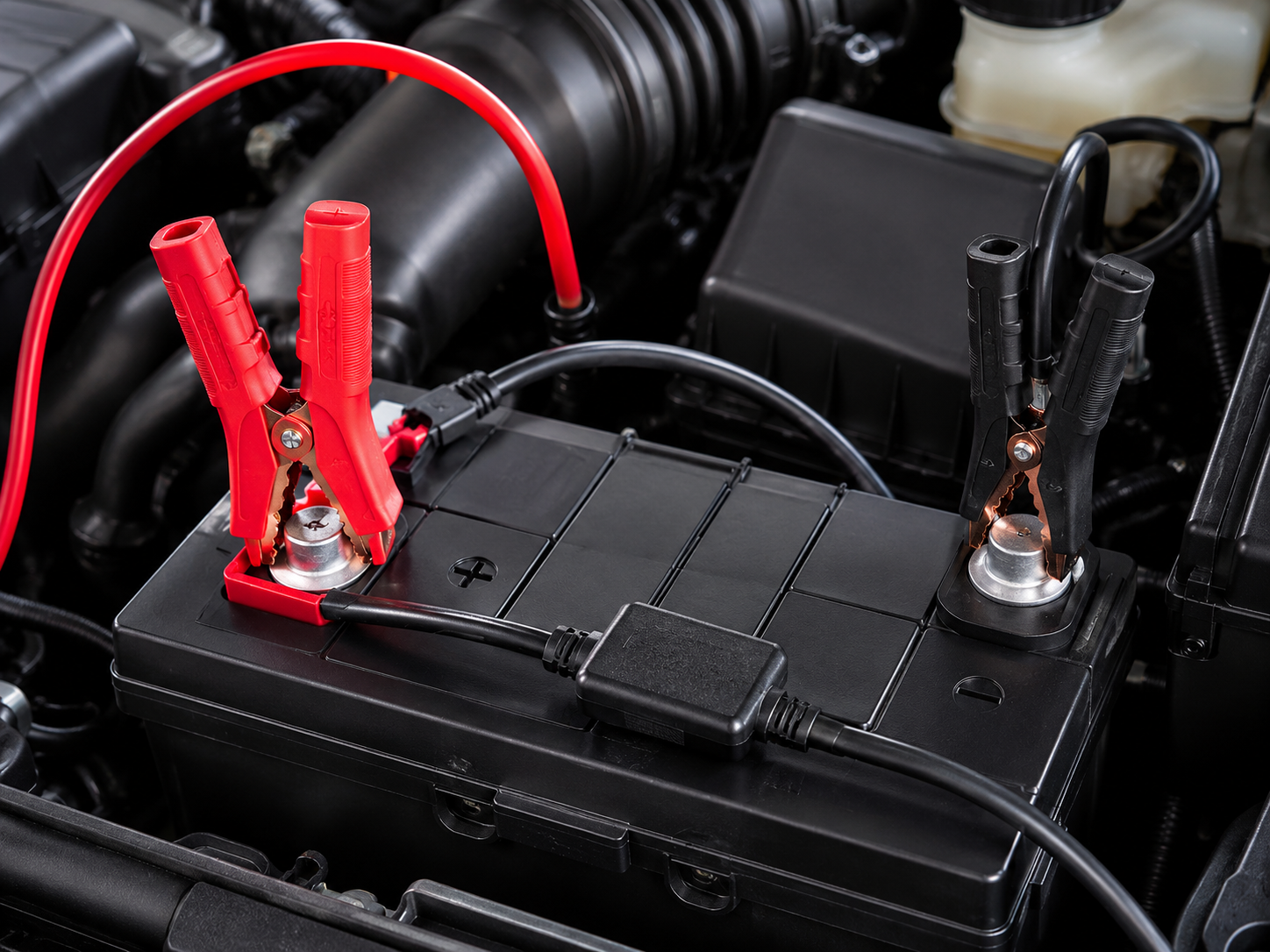
- Red clamp to the hybrid’s positive jump post (under-hood terminal).
- Red clamp to the donor car’s positive battery terminal.
- Black clamp to the donor car’s negative battery terminal.
- Black clamp to the hybrid’s ground point (a solid, unpainted metal point away from the 12-volt battery area and away from high-voltage components).
That last step matters. Using a good chassis ground on the dead car reduces the chance of sparks near the battery.
If you are using a jump pack
Connect red to the hybrid’s jump post and black to the designated ground point. Then turn the pack on if it has a power switch.
Step 4: Get to Ready
This is where hybrids differ from conventional cars. You are not waiting for a starter to spin. You are waiting for the car to boot and go into Ready.
Do not confuse ACC, ON, and Ready
On many push-button hybrids, pressing Power without your foot on the brake can put the car in ACC or ON, which lights up the dash but does not make the car drive-ready. For a normal start, keep your foot on the brake and then press Power so the car goes to Ready.
Donor car on or off
Some manufacturers prefer the donor vehicle off, others say on is fine. If you can check the manual quickly, do that. In general, it is often helpful to have stable 12-volt support for a minute or two before you try to start the hybrid, but do not treat that as universal.
- In the hybrid, keep it in Park with the parking brake on.
- Press the brake pedal and start the car as you normally would.
- Watch for the Ready indicator on the dash.
Once you see Ready, the hybrid system is awake. The engine may start immediately or it may stay off, depending on battery state and temperature. Either way, Ready is the green light.
If it does not go to Ready after a few tries, stop and reassess. Forcing repeated start attempts can create low-voltage confusion and throw a stack of warnings that disappear once proper voltage is restored.
Step 5: Disconnect safely
Once the hybrid is in Ready, remove the cables carefully.
- Black clamp off the hybrid’s ground point
- Black clamp off the donor vehicle’s negative terminal
- Red clamp off the donor vehicle’s positive terminal
- Red clamp off the hybrid’s positive jump post
Keep clamps from swinging into metal as you pull them free. Close the jump-post cover when you are done.
After it starts
Here is the part many people miss: a jump-start is not a repair. It is a temporary assist.
Let it charge
With a hybrid in Ready, the DC-DC converter typically supports the 12-volt system. If you can, let the car sit in Ready for 20 to 30 minutes in Park with the parking brake set, then drive normally.
If the 12-volt battery is old or has been deeply discharged, it may not recover. You might be right back where you started the next morning.
Warning lights may clear later
A low 12-volt event can trigger warning lights and odd messages. Often, once voltage is stable again and you complete a few drive cycles, those warnings clear. If a warning persists, scan codes with an OBD-II scanner that can read manufacturer-specific systems (not just generic engine codes). Hybrids can store low-voltage related history codes in multiple modules.
When a charger is better
As a former shop guy, I will say this plainly: if the 12-volt battery is merely low, a battery charger is kinder than repeated jump-starts.
Use a charger when:
- The car has been sitting for weeks and the 12-volt is drained
- You needed a jump recently and it is happening again
- You only drive short trips and suspect the 12-volt never gets fully topped off
- You want to test battery health after charging fully
A smart charger (often called a maintainer or tender) can bring the battery back slowly and consistently. The bigger concern with boosting is not that every jump pack is “spiky,” it is that repeated deep discharge and jump cycles are hard on a small 12-volt battery.
If your hybrid has an AGM 12-volt battery, use a charger with an AGM setting. Charging profile matters for longevity.
If it will not go Ready
If you have good 12-volt voltage and it still will not enter Ready, the issue may not be the 12-volt battery itself. A few common possibilities:
- Loose or corroded 12-volt connections at the battery, body ground, or jump terminal
- Blown fuse related to the 12-volt system or jump terminal
- Brake switch or shifter interlock issue (the car does not see the brake applied or does not confirm Park)
- Key fob problem (dead fob battery, immobilizer not seeing the key)
- Hybrid system fault unrelated to 12 volts
If you are getting a “Check Hybrid System” type message that does not clear with stable 12-volt power, it is time for a proper scan with a hybrid-capable tool or a trip to a shop that is comfortable with hybrids.
Quick FAQ
Can you jump a hybrid from another car?
Yes. You are jump-starting the hybrid’s 12-volt system, not the high-voltage battery. Use the under-hood jump terminal and a proper ground point, and follow the normal clamp order.
Should the donor car be running?
It depends on the manufacturer. Many people do it with the donor idling, but some OEMs recommend the donor vehicle be off. If you can check your owner’s manual, follow that guidance. Either way, keep accessories off on both vehicles and do not rev the donor car.
Is it safe to jump directly at the hybrid’s 12-volt battery?
Sometimes it is possible, but I prefer the manufacturer-provided under-hood jump post because it is designed for this and is usually easier to access safely. If you do connect at the battery, follow the manual exactly and use a safe ground point.
How long should I wait before trying to start?
Give it a moment to stabilize, then try to start and look for Ready. If the battery was very low, a bit more time connected can help, but if it will not go Ready after several minutes, stop and investigate.
Will driving recharge the 12-volt battery?
Often, yes, once the car is in Ready. But if the 12-volt battery is aged or sulfated, it may not hold a charge anymore. A full charge and a battery test will tell the story.