I’ve had more than a few cars roll into the shop on a hook (tow truck) for something that sounded dramatic, but wasn’t: “The engine starts, but it won’t come out of Park.” Almost all late-model automatics have a shift-lock (also called a brake-shift interlock) system that requires you to step on the brake before the shifter will move. If anything in that chain fails (a fuse, brake switch, solenoid, wiring, or even the shifter cable), the lever can feel like it’s welded in place.
The good news is you can often narrow it down in minutes. The bad news is forcing the shifter is a great way to break expensive plastic parts in the console or stretch the shift cable, turning a small electrical problem into a bigger mechanical one.
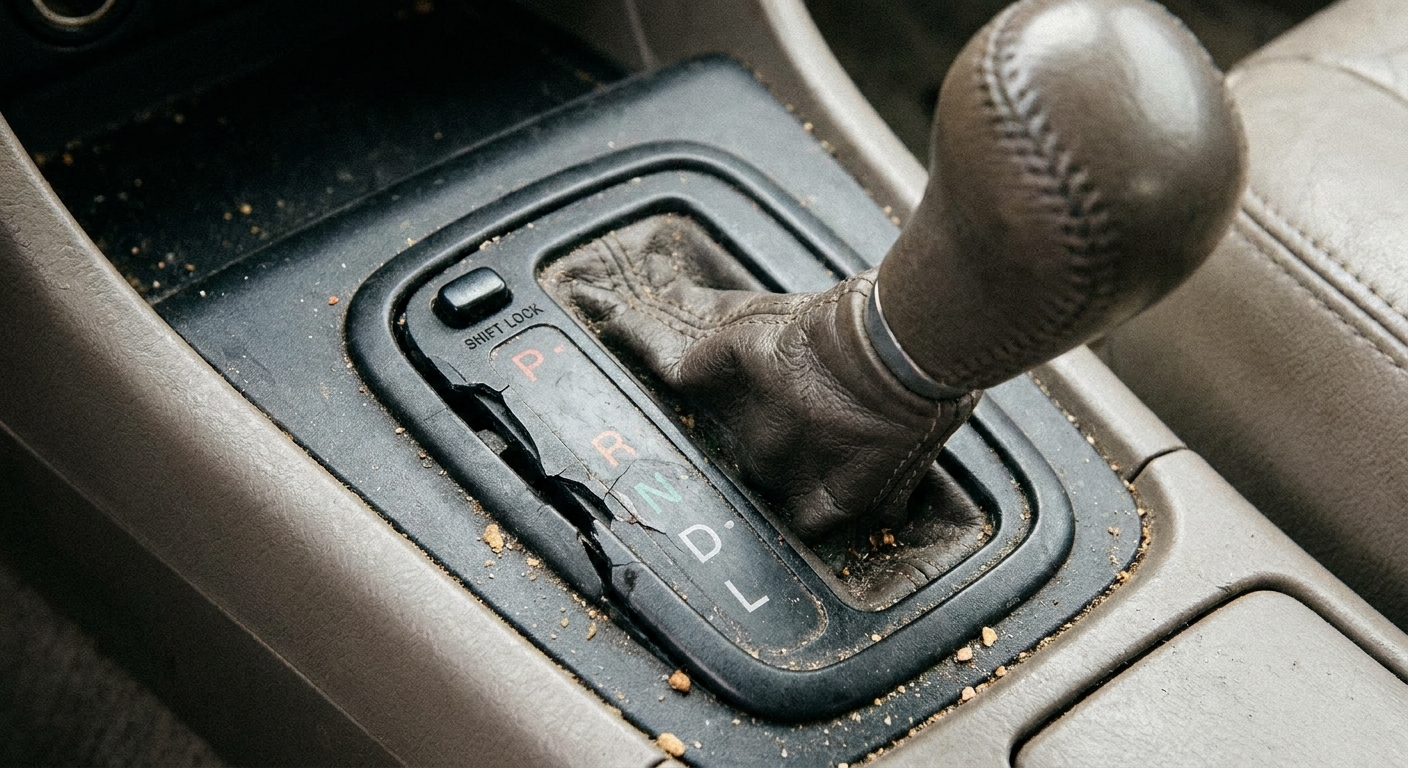
First, make sure it’s a shift-lock issue
Before chasing parts, confirm the basics. Different problems can feel the same from the driver’s seat.
- Press the brake pedal firmly and try shifting while holding the button on the shifter (if equipped). A soft pedal press sometimes will not trigger the brake switch.
- Make sure the ignition is in the right mode. On push-button start cars especially, make sure you are in RUN (not ACC) and your foot is on the brake. Some vehicles will power up accessories but will not energize the shift-lock system until they are truly in RUN.
- Verify the car is fully in Park. If you shut the car off while it was not seated in Park, the shifter can bind. If you are on level ground, try a small, gentle rock of the vehicle while you keep steady brake pressure, then try again. If you are on an incline, set the parking brake firmly and chock a wheel if you can before trying to relieve any bind.
- If the key will not turn, address the steering lock first. On some older column-lock setups, steering wheel tension can keep the key from turning to ON, which means the shift-lock may never power up. In that case, gently turn the steering wheel left and right while turning the key. If the engine is already running, this is usually not your main problem.
- Try a clean restart. Key off, foot off brake, key on, foot on brake, then attempt to shift. On some vehicles, a glitchy body control module can wake up correctly after a clean restart.
Quick check: do your brake lights work?
This is my favorite first test because it’s fast and it tells you a lot. The shift-lock system often uses the same brake pedal switch assembly as your brake lights. When the car sees the brake signal, it allows the shifter to move.
Important nuance: brake lights are a great clue, but not a 100 percent proof. Many vehicles use a multi-circuit brake switch. One circuit can feed the lamps while another feeds the BCM/ECU and interlock. So brake lights working does not always guarantee the interlock is seeing the same signal.
How to check
- With the ignition on, press the brake and look for brake light reflection on a wall or garage door.
- Better: have someone stand behind the car and confirm both brake lights and the center high-mount brake light illuminate.
- If you are alone: back up near a storefront window at night, or use your phone on selfie video aimed at the rear while you press the pedal.
If the brake lights do not come on, that is a huge clue. A failed brake-light switch or a blown brake fuse can keep the shifter locked even though the engine is running fine.
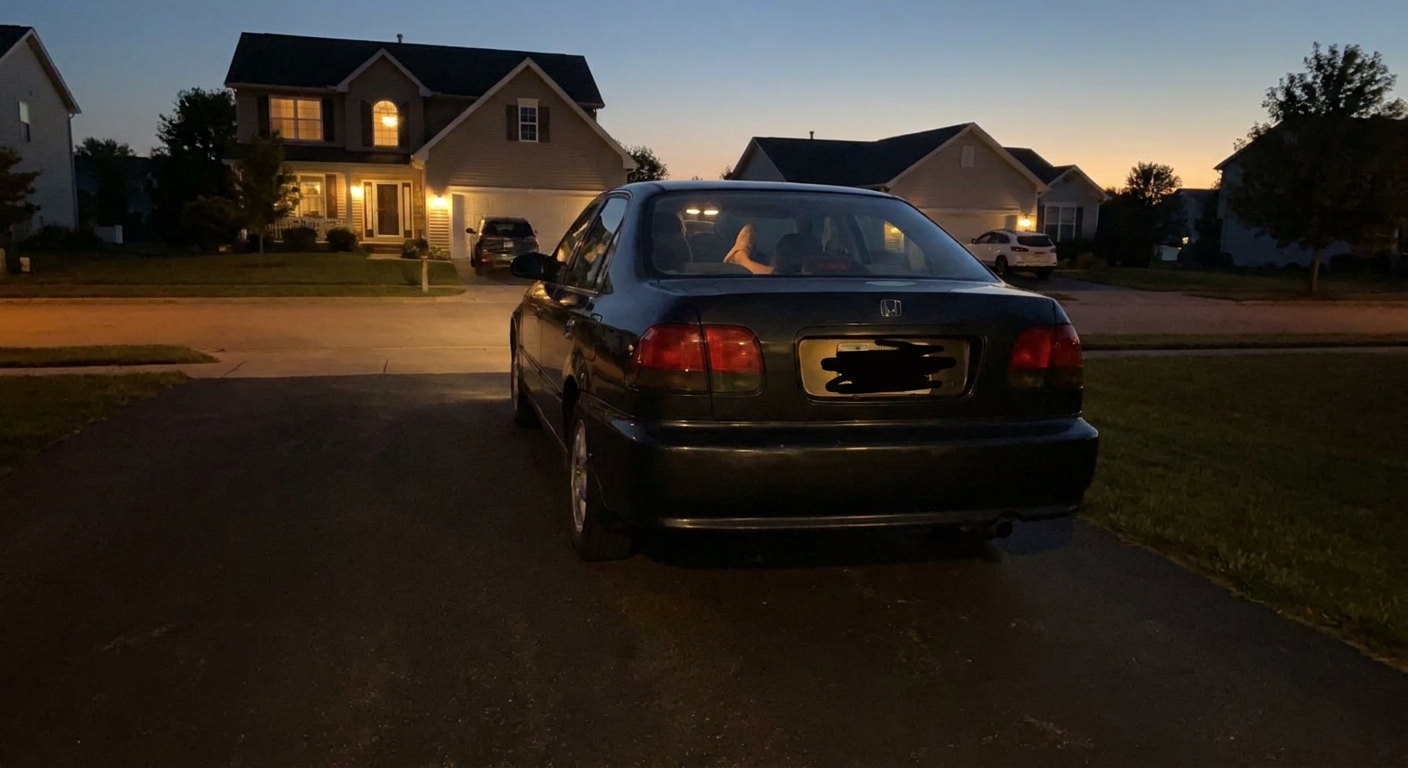
Check the brake-lamp fuse (and related fuses)
If your brake lights are out, check the fuse next. Many vehicles have:
- a dedicated STOP or BRAKE fuse
- and sometimes a separate fuse for shift interlock, body control module, or transmission control
Your owner’s manual or fuse box cover usually lists fuse locations. Use the correct fuse rating when replacing one. If the new fuse pops immediately, stop there. You likely have a short in the brake light circuit (common culprits are trailer wiring, a pinched harness in the trunk, or water intrusion in a tail light).
Also keep an eye out for a bigger clue: if other ignition-fed items are dead (like the shifter area illumination, power outlets, or certain dash functions), the problem may be an ignition-fed fuse, relay, or ignition switch feed rather than the shift-lock solenoid itself.
Brake-light switch: the most common culprit
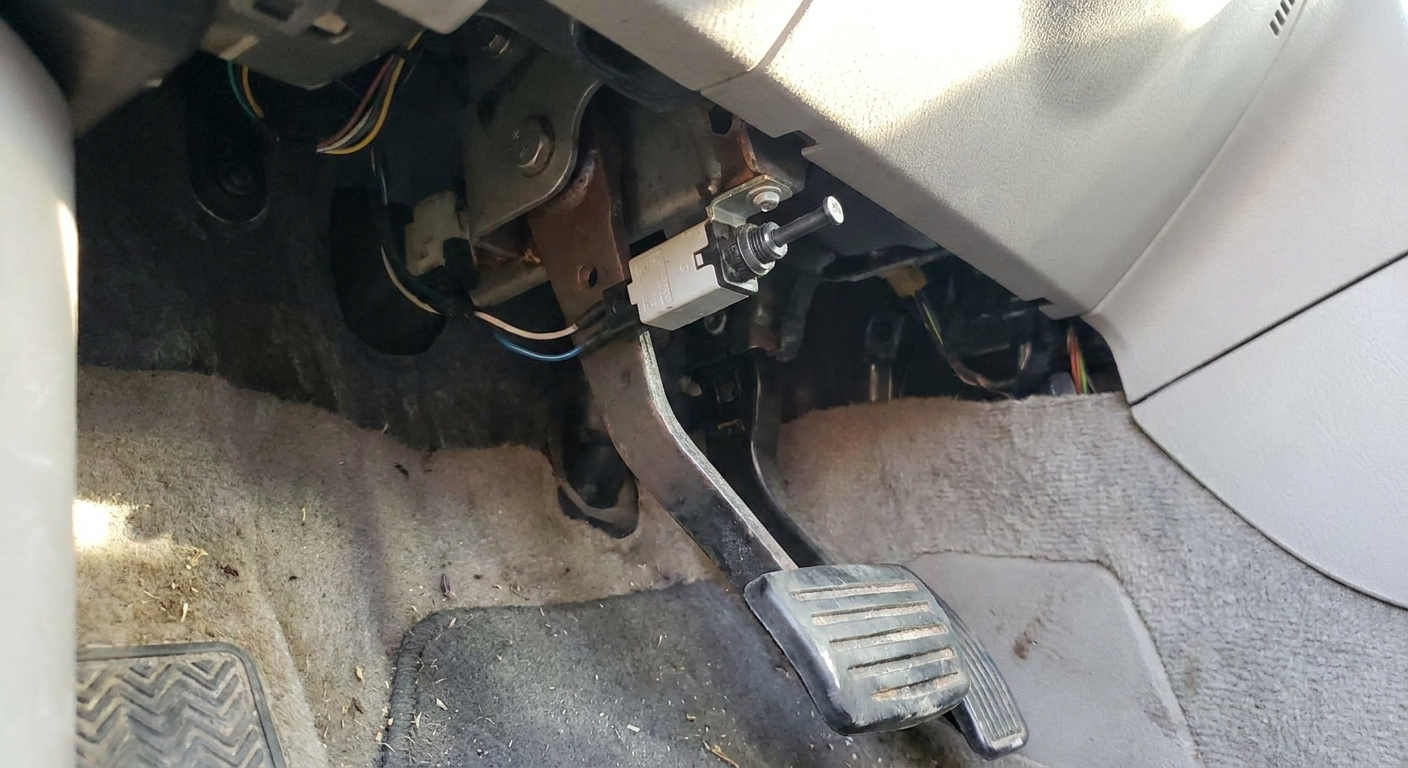
The brake-light switch (often mounted at the top of the brake pedal) tells the car you are stepping on the brakes. When it fails or slips out of adjustment, you can get:
- no brake lights
- a shifter stuck in Park
- cruise control that won’t set
- push-button start issues on some models
What you can do at home
- Look under the dash at the brake pedal arm. You will usually see a small switch with a connector.
- Check the connector is fully seated and not kicked loose by floor mats or a driver’s foot.
- Watch the switch plunger while you press and release the pedal. If it doesn’t move, is broken, or looks cocked at an angle, it may be failed or misadjusted.
Some brake switches are twist-lock style and can be installed incorrectly after a previous repair. If you recently had brake work done, interior work, or a remote start installed, that context matters.
Shift-lock solenoid: listen for a click
Inside the shifter assembly is a shift-lock solenoid (or actuator) that physically blocks the shifter until the brake signal is received. When it works, you may hear or feel a faint click near the shifter when you press the brake with the ignition on.
Try this
- Key on (engine off is fine).
- Put your hand near the shifter bezel and press the brake pedal.
- Listen for a click and feel for a small movement.
No click does not prove the solenoid is bad, but it points you toward: a dead solenoid, no power/ground, a brake switch signal problem (including the non-lamp circuit), or a control-module issue.
If you do hear a click but the shifter still won’t move, that can indicate mechanical binding in the shifter mechanism, a jammed button, or a shift cable issue.
Spills and debris: an easy one to miss
This is more common than people want to admit. If coffee, soda, or sticky residue gets into the shifter button or the gate, the shifter can mechanically hang up even when the solenoid is doing its job.
- If the button feels gummy or slow to return, do not force it.
- If you hear the solenoid click but the lever will not move, look closely for coins, crumbs, or something wedged in the shifter gate.
If it needs disassembly to clean, I would rather see you bring it to a shop than crack the console trim and break clips.
Shift cable problems
The shifter in the cabin is connected to the transmission by a shift cable. If it is stretched, out of adjustment, or the cable end has popped off, you can see symptoms like:
- the shifter feels stuck or unusually loose
- the indicator says Park, but the transmission is not truly in Park
- you can’t get it out of Park, especially after towing or a hard curb hit
- it releases sometimes, then binds again
Many vehicles have a visible linkage or cable end at the transmission. If you are comfortable under the hood and can safely access it (engine off, parking brake on, wheels chocked), you can sometimes spot a disconnected cable end or a broken bushing.
If you suspect cable issues, this is a good time to involve a shop. A misadjusted cable can create a dangerous situation where the car can roll even though the shifter says Park.
How to use the shift-lock override slot
Most automatics include a manual override so you can move the car if the shift-lock system fails. It’s typically a small slot or removable cap near the shifter labeled something like SHIFT LOCK or LOCK RELEASE.
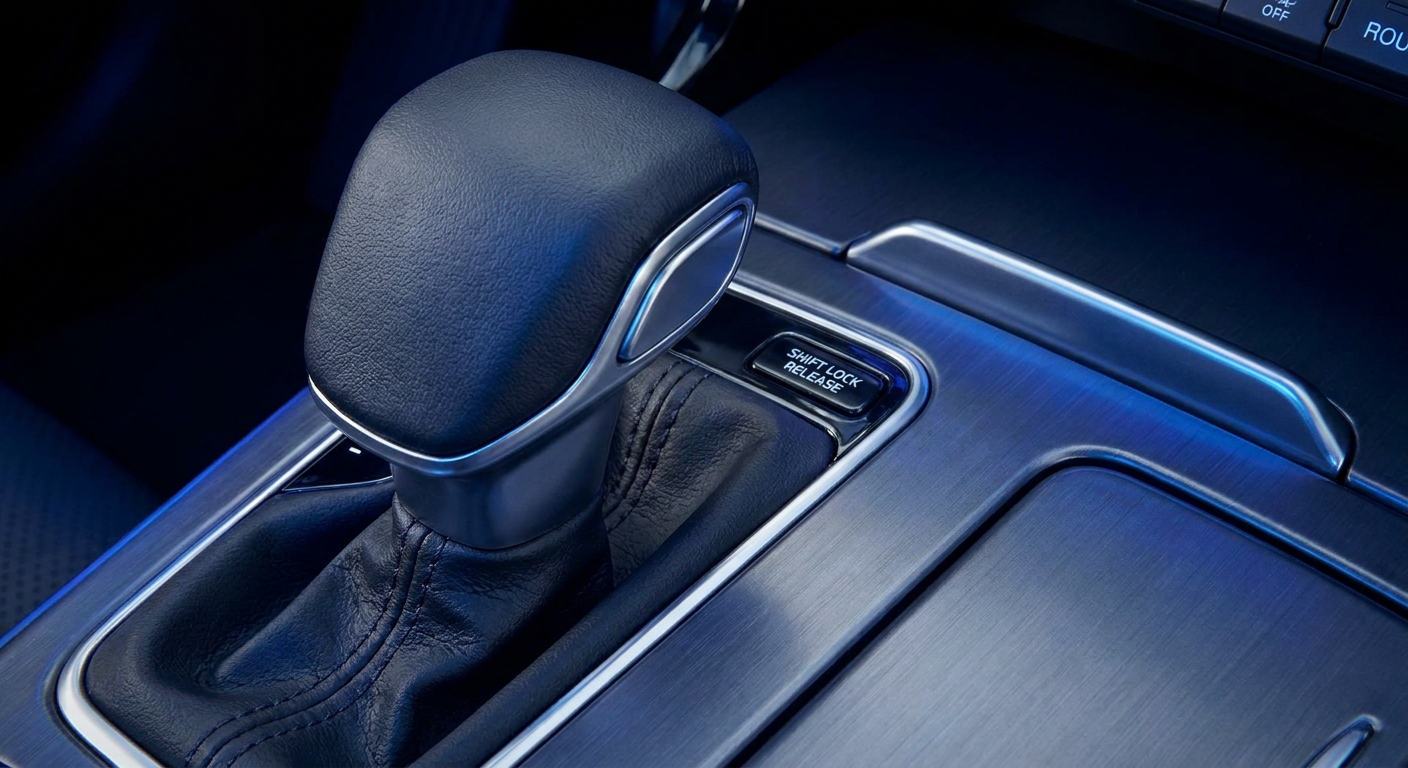
General steps
- Set the parking brake firmly. If you are on any incline, chock a wheel if you can.
- Turn the ignition on. Some cars require key-on; some require the engine running.
- Find the override slot or cap next to the shifter. Use the key blade or a small flat screwdriver to pop a cover if needed.
- Press and hold the release inside the slot (you may feel a spring-loaded button).
- While holding it, move the shifter out of Park, usually into Neutral, then start the engine if needed.
Important: The override is for moving the car short distances, like out of a parking spot or onto a tow truck. It does not fix the underlying problem, and it is not a license to keep driving like nothing happened.
Do not force the shifter
I get it, you are stuck and late. But yanking harder usually breaks one of three things:
- the plastic gate and internal shifter parts
- the shift cable (or its bushings)
- the interlock mechanism, which can create future no-start or no-shift problems
If it feels locked, treat it as a system that needs diagnosis, not a lever that needs muscle.
If it releases, is it safe to drive?
Sometimes the shifter will “randomly” come out of Park after you wiggle things, wait a few minutes, or use the override. Here’s how I decide whether a car should drive or should get towed.
Usually unsafe to drive
- No brake lights, even if you got it out of Park. If drivers behind you cannot see you braking, that’s a real accident risk and likely to earn you a ticket.
- Intermittent shifting where it locks again unexpectedly. Getting stranded in an intersection is not a fun way to learn.
- Shifter position does not match reality (for example, indicator shows Drive but it feels like Neutral). That points to a cable/linkage problem.
- You had to use the override and you do not know why it failed. That’s a “move it to a safe spot” tool, not a repair.
Sometimes okay to drive carefully
- Brake lights work normally and the problem was clearly a one-time bind from wheel tension on a steep incline.
- You replaced a blown brake fuse and it did not blow again, and the brake lights and shifter now operate consistently.
If you are unsure, err on the side of a tow. Paying for one tow is cheaper than paying for one crash.
Common scenarios
Brake lights work, still stuck in Park
Often points to the shift-lock solenoid, shifter assembly issue, wiring/ground problem, or a control module not commanding unlock. It can also be a sticky shifter mechanism or a jammed shifter button, especially if something spilled in the console. And remember, on some cars the brake lights can work while the interlock brake input does not.
Brake lights do not work
Think brake-light switch first, then fuses, then wiring. Fixing the brake-light circuit commonly restores shifting.
It only happens sometimes
Intermittent problems are classic for failing brake switches, weak solenoids, or borderline wiring connections. Take notes: temperature, time of day, whether the car was just started, and whether the brake lights were working during the event. That helps a technician diagnose faster.
When to call a pro
If you have any of the following, I’d get professional help:
- blown fuses that keep blowing
- brake lights not working
- shifter indicator mismatch (PRNDL does not match the gear)
- you smell electrical burning, or see melted plastic near the fuse box
- the car had recent wiring accessories added (remote start, trailer harness, stereo) and the issue started afterward
A shop can verify switch inputs with a scan tool, test power and grounds at the solenoid, confirm the shifter is not mechanically jammed, and verify cable adjustment. That beats guessing and swapping parts.
FAQ
Can a low battery cause a shifter to get stuck in Park?
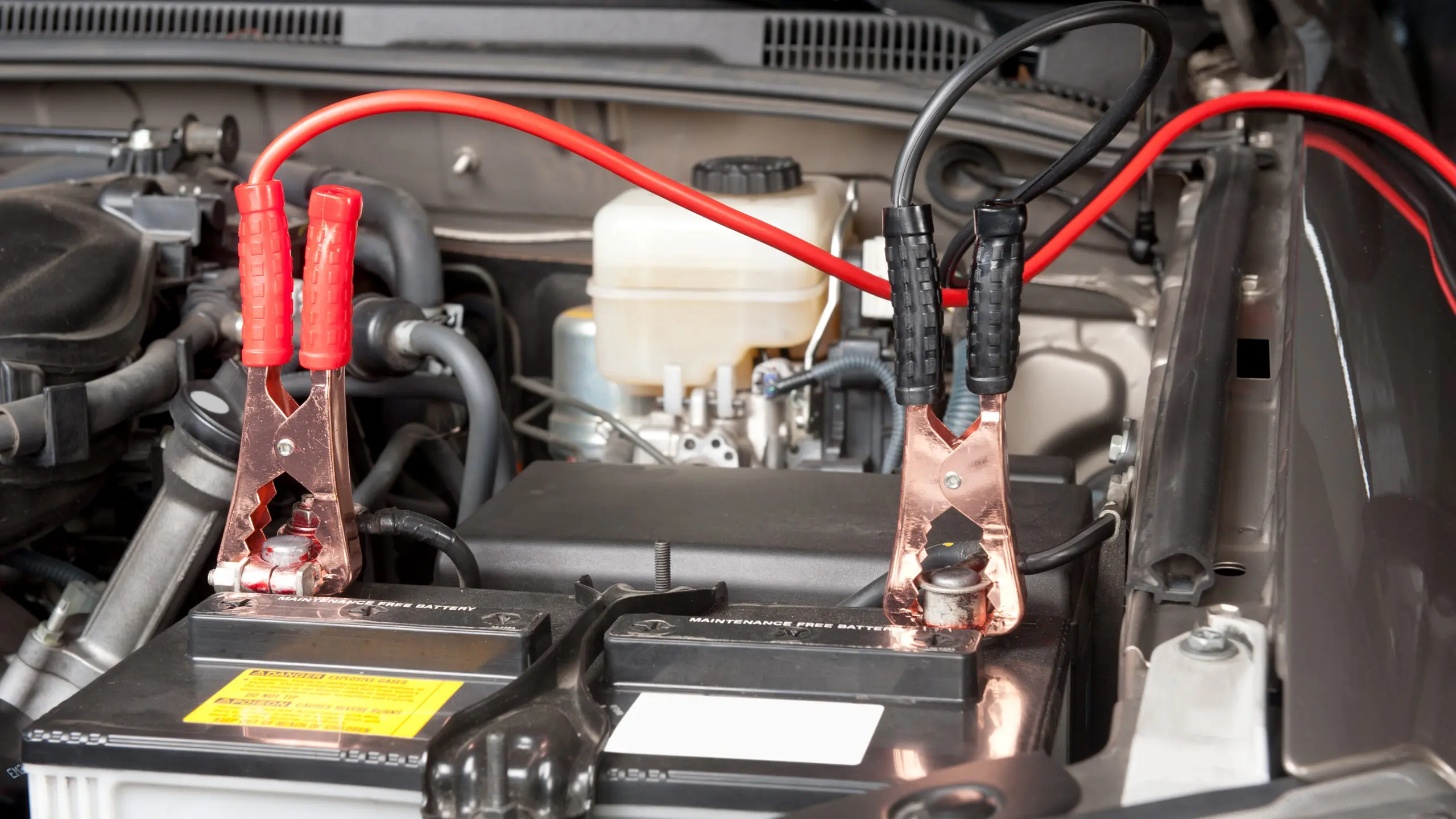
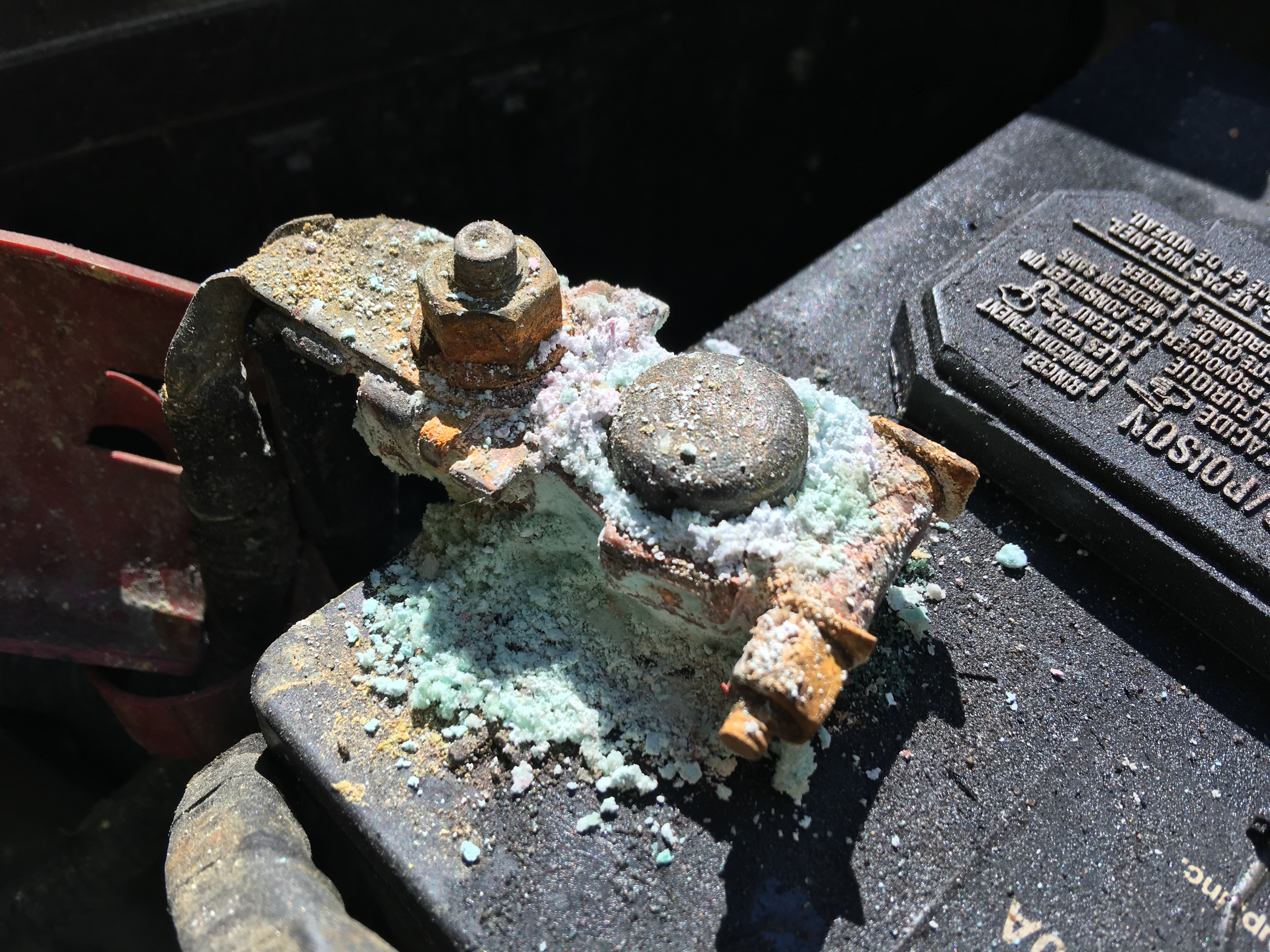
Yes, on some vehicles. Low voltage can prevent the body control module or shift-lock solenoid from operating correctly. It is not the most common cause, but if the dash lights are dim, accessories are acting weird, or the car needed a jump recently, battery and charging system testing is smart.
Why does pressing harder on the brake sometimes work?
A failing or misadjusted brake switch may only trigger at the very end of pedal travel. Pressing harder can temporarily make contact. That’s not a fix, it’s a symptom.
Can I drive if I used the shift-lock override?
I don’t recommend it. The override bypasses a safety device designed to prevent unintended movement. Use it to relocate the vehicle to a safer spot and then diagnose the cause.
Is this a transmission failure?
Usually not. A shifter stuck in Park is most often an electrical interlock or linkage issue, not an internal transmission problem.