I have seen this movie a hundred times in the shop: the truck ran fine, you changed the fuel filter, and now it cranks strong but will not fire. The good news is that in most cases you did not “break” anything. You just introduced air into a diesel fuel system that really does not tolerate it.
This guide walks you through the practical stuff that gets a diesel running again after a filter change: priming, bleed screws, dealing with a dry housing, and when to stop cranking before you cook a starter. I will also show you how to tell the difference between a system that simply lost prime and a lift pump that is not doing its job.
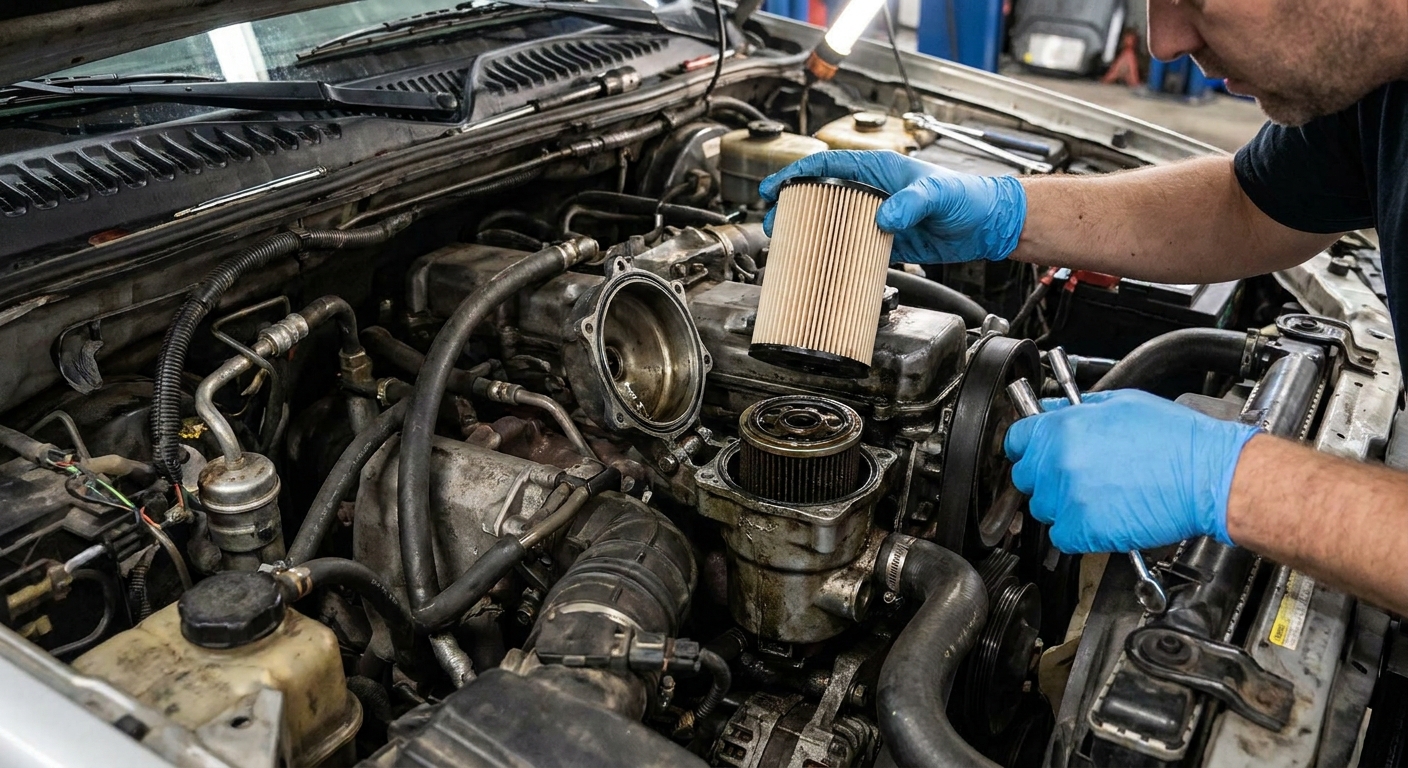
Why this happens after a filter change
Diesels do not ignite fuel with a spark. They rely on very high compression to light off a precisely metered spray of diesel. Air bubbles in the low-pressure supply side can keep the high-pressure pump from building rail pressure, or keep the injectors from getting solid fuel at all.
After a filter change, air gets in through a few common paths:
- A dry filter or dry filter housing was installed and the system was not primed.
- The filter gasket did not seal or the water separator drain is not fully closed, letting the system pull air.
- O-rings on the filter cap (common on cartridge style setups) are nicked, rolled, missing, or installed in the wrong groove.
- Quick-connect fittings are not fully seated.
- A bleed screw was left slightly loose.
On older mechanical-injection engines, you can sometimes crank your way out of it. On many modern common-rail diesels, the system often will not self-prime quickly if the low-pressure side is full of air. Some platforms will eventually recover, others want the exact OEM bleed routine, and a few require a scan tool prime function.
Before you crank
What you will want handy
- Shop rags
- Eye protection and gloves
- Basic hand tools for the filter cap and bleed screw
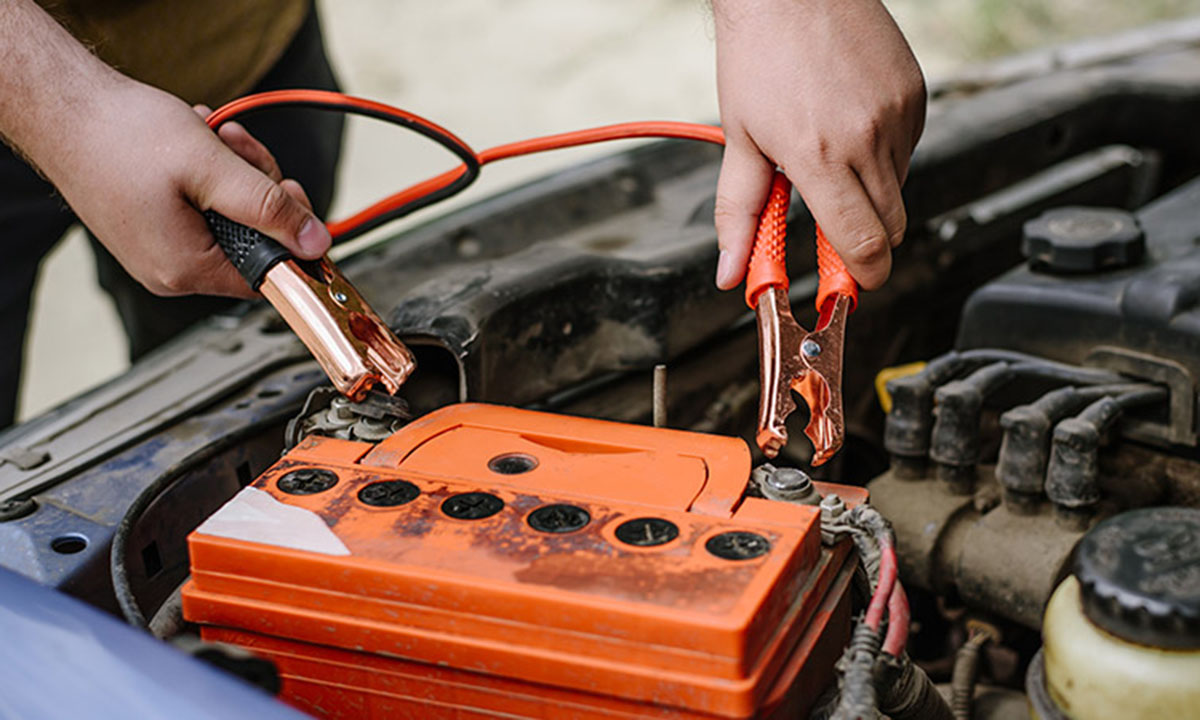
- A fully charged battery, or a charger or jump pack if you have one
1) Verify the filter install
- Confirm the filter is the correct part number and installed in the correct direction (look for an arrow or “IN/OUT” markings).
- On cartridge filters, double-check the large cap O-ring and any smaller stem O-rings are present, lightly lubricated with clean diesel, and not twisted.
- Make sure the water drain valve or petcock is fully closed.
- If your filter housing has a water-in-fuel sensor in the bottom, make sure the connector is plugged in and the sensor O-ring is not pinched or leaking. On some models, a damaged sensor seal can also become an air leak.
- If the housing uses a top cap, confirm it is tightened evenly. Hand tight plus a little more is common, but follow the service info for your engine if you have it.
2) Listen for the lift pump
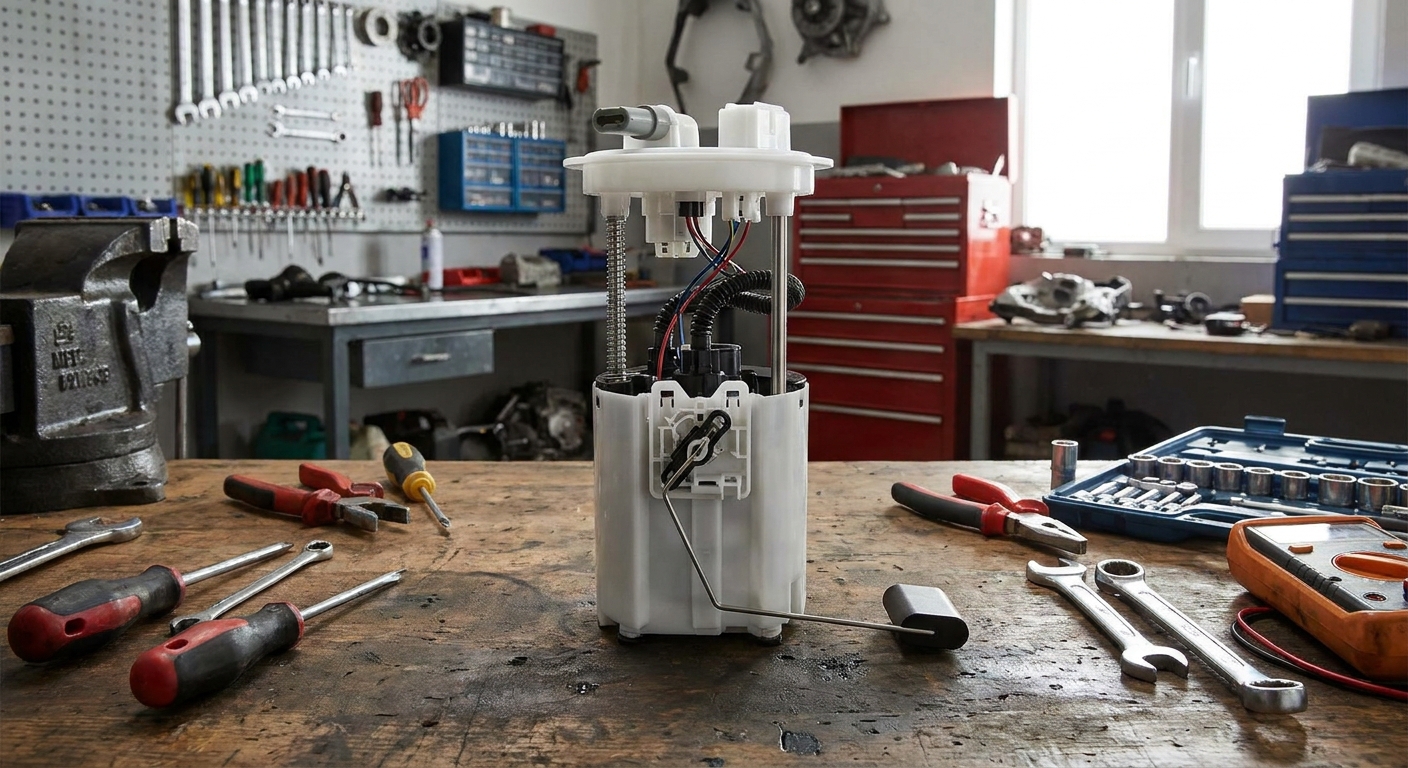
Cycle the key to ON without cranking. Many diesels will run an in-tank or frame-mounted electric lift pump for a few seconds. You may hear a humming sound from the tank area or along the frame.
- If you hear it: great, you likely just need to prime and bleed.
- If you do not hear it: do not assume it is dead yet. Some systems only run the pump while cranking, and some are quiet. You will verify it below.
3) Check fuel level (seriously)
A borderline-low tank can turn a simple filter change into a no-start. If you were close to empty, fill up before you troubleshoot. Low fuel makes it easier to lose prime and harder for the lift pump to recover.
How to prime it
The correct priming method depends on what your vehicle has. Here are the safe, common approaches.
If you have a hand primer pump
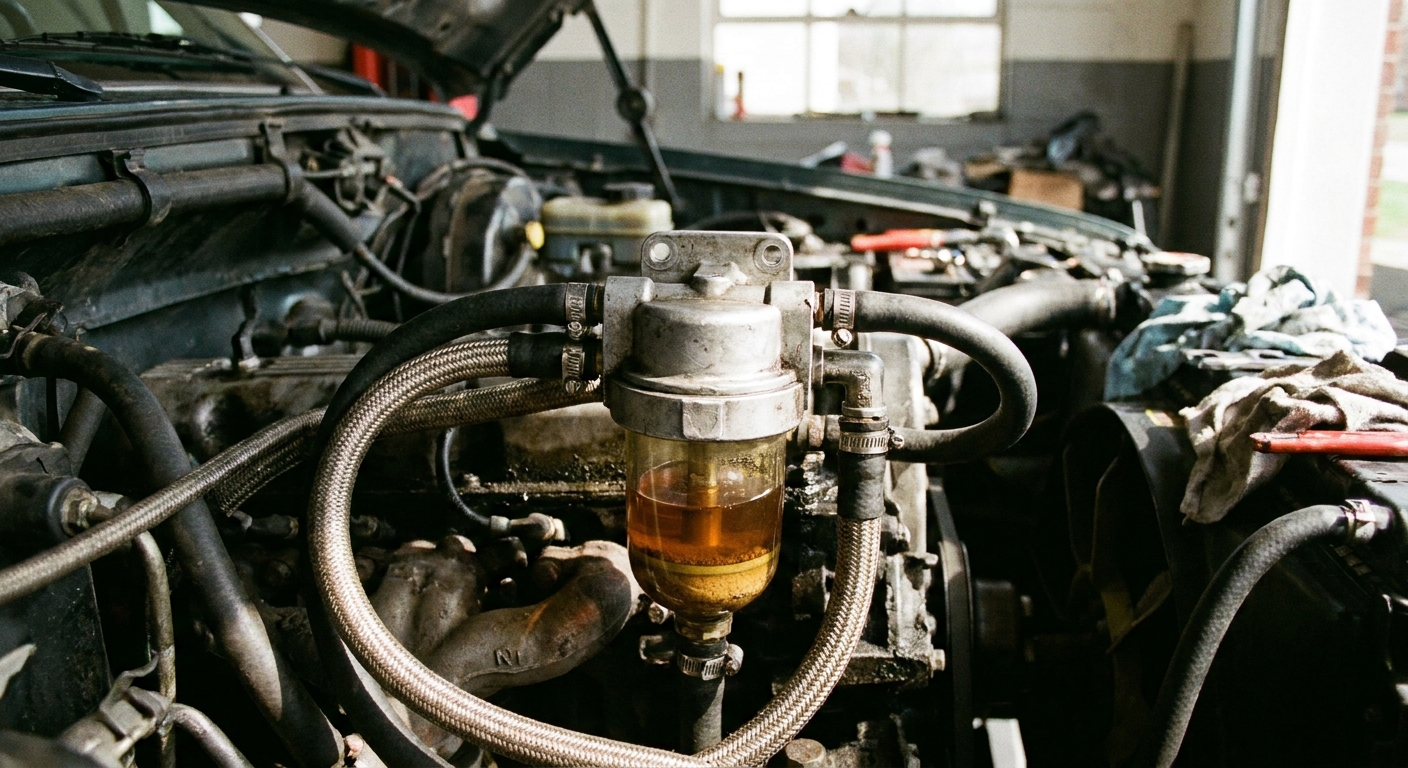
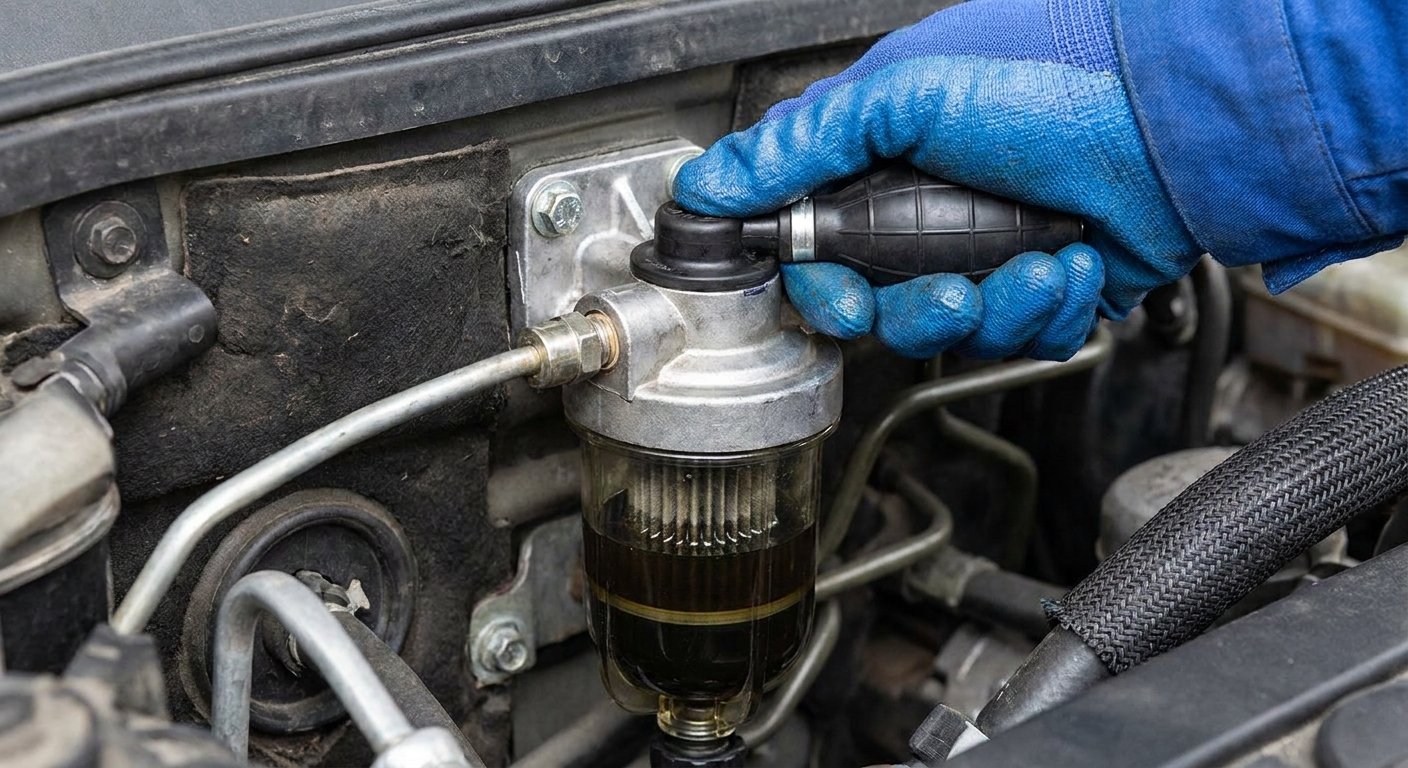
Many diesels have a rubber primer bulb or a plunger-style hand pump on or near the filter housing.
- Turn the key OFF.
- Work the hand primer slowly at first. You will often feel it go soft while it is pushing air.
- Keep pumping until it firms up and you feel strong resistance.
- If there is a bleed screw on the filter housing, crack it open slightly while pumping (see below) until fuel comes out clean and mostly bubble-free, then snug it.
If you have an electric lift pump (key cycling)
This is the most common modern setup.
- Turn key to ON for 10 to 20 seconds (do not crank).
- Turn key OFF for 10 seconds.
- Repeat 5 to 10 times.
- Then crank for a short burst (see cranking limits below).
Key cycling lets the lift pump push fuel forward and purge air back toward the return, or out at the filter housing bleed point, depending on design.
If the housing is totally dry
Some engines hate starting with a dry filter canister because it is a big pocket of air. Whether you can pre-fill depends on the filter location and the manufacturer’s procedure.
- Only pre-fill if the OEM procedure allows it. Many manufacturers warn against it because it is easy to introduce contamination, and on some designs you can effectively send unfiltered fuel downstream depending on how the housing routes flow.
- Spin-on filter mounted vertically: Sometimes allowed. If the service info permits it, fill with clean diesel from a clean container and leave a little room at the top so it does not spill during installation.
- Cartridge filter in a housing: Usually do not pour fuel into the housing unless the service procedure specifically says to. It is easy to put fuel into the wrong passage or carry dirt in with it.
Using the bleed screw
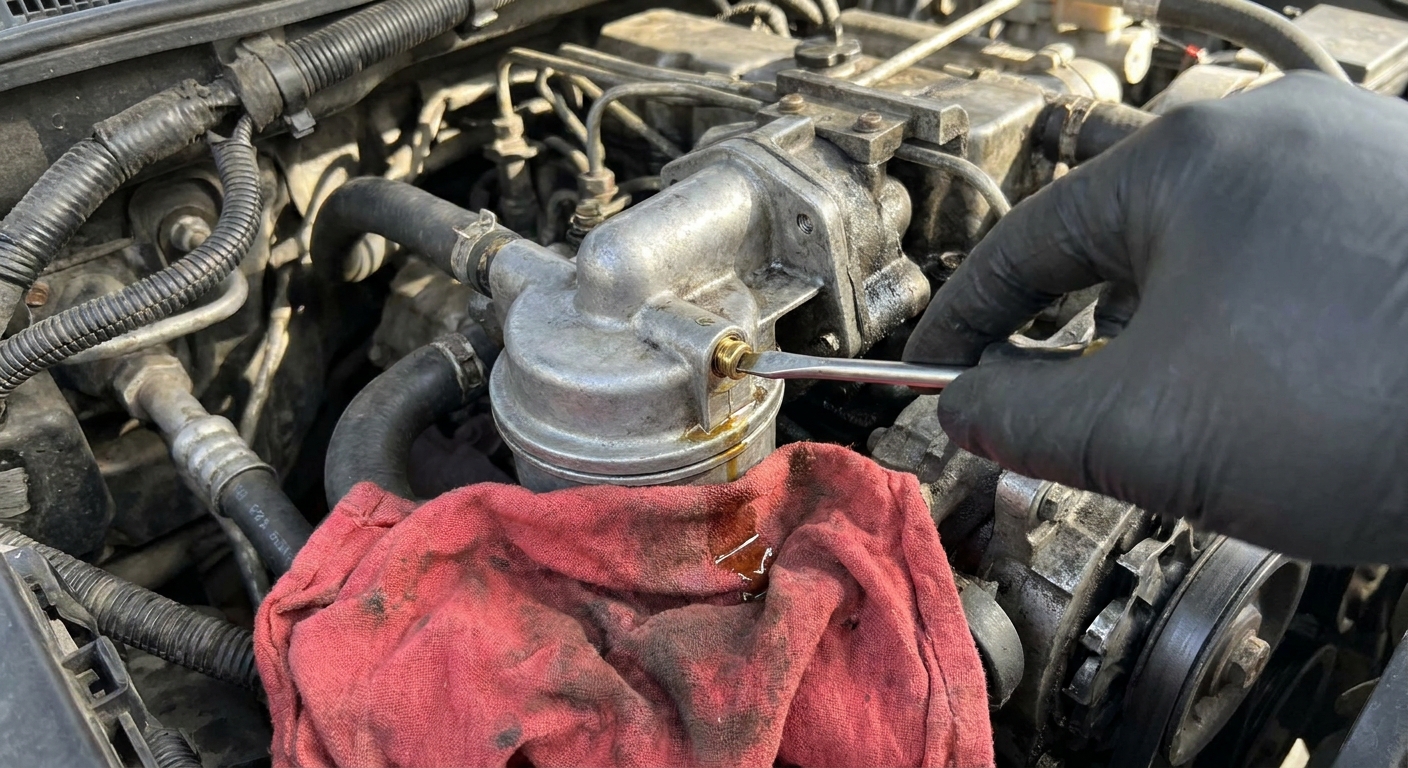
Not every diesel has a bleed screw, but if yours does, it is there for a reason.
Basic technique
- Place a rag under the bleed screw to catch fuel.
- Crack the screw loose about a quarter to half turn.
- Prime the system with the hand pump or key cycling.
- Watch what comes out. You will often see foamy fuel or spurts at first.
- When you get a solid stream of fuel with minimal bubbles, snug the screw back down.
Two cautions
- Do not over-tighten the bleed screw. Stripping or cracking the housing is an expensive lesson.
- Do not crank with the bleed screw open unless the OEM procedure calls for it. On some setups, you can pull more air in or make a bigger mess than necessary.
How much to crank
Cranking limits are about saving your starter, your battery, and sometimes your high-pressure fuel system. If your owner’s manual or service info gives a specific cranking limit, follow that first. If you do not have that info, this is a safe rule of thumb:
Rule of thumb
- Crank for 10 to 15 seconds max per attempt.
- Rest for 60 to 90 seconds between attempts so the starter can cool and the battery can recover.
- After 3 to 5 attempts, stop and re-prime. More cranking without improving prime is usually wasted effort.
Stop immediately if
- Starter speed slows down fast (battery is dropping).
- Hot electrical smell near the starter or battery cables.
- Dash lights flicker heavily while cranking.
- You are still seeing obvious air at the bleed point.
If you keep cranking a modern common-rail diesel that is not primed, you can run the battery down and still end up needing a proper prime, plus a jump pack, plus extra time.
Lost prime vs bad lift pump
This is the fork in the road. Most no-starts after a filter change are lost prime or an air leak. But sometimes the filter change just happens to expose a weak lift pump.
Signs it is still air
- It ran normally right up until the filter change.
- You can get it to sputter, start briefly, or run rough, then die.
- Hand primer firms up after some pumping.
- Key cycling changes the sound of the engine while cranking, like it wants to catch.
- You see bubbles or foam at the bleed screw that gradually clears with priming.
Signs the lift pump is the issue
- No lift pump sound on key ON (where the vehicle normally primes).
- No change after many key cycles, and the hand primer never gets firm (if equipped).
- Fuel does not reach the filter outlet line even after priming attempts.
- The engine may start on residual rail pressure or fuel, then die immediately and will not recover.
A simple driveway check
If you can safely access the filter outlet line or a test port (and you are comfortable doing so), you can check whether low-pressure fuel is actually being delivered during key ON prime or during cranking.
- If fuel arrives strongly and steadily: the lift pump is probably OK, focus on bleeding and sealing air leaks.
- If fuel barely dribbles or does not show up: suspect lift pump power, relay, fuse, clogged pickup, or a failing pump.
Because layouts vary a lot, I will keep this general: if you are not sure where the safe test point is, it is better to stop and look up the procedure for your exact engine than to crack random lines.
When it starts, then stalls
This is the pattern that wastes the most time because people keep chasing batteries and starters. If it fires for a second and dies, do this in order:
- Prime again (hand primer until firm, or 5 to 10 key cycles).
- Re-check the water drain valve and any sensor at the bottom of the housing for tightness and sealing.
- Put hands on every quick-connect and line you touched and make sure it is fully seated.
- Re-check filter cap O-rings for correct groove placement and any nicks.
- Bleed again if you have a bleed screw until fuel runs with minimal bubbles.
Common mistakes after service
- Double gasket on a spin-on filter: the old gasket sticks to the base, the new filter goes on, and it draws air or leaks. Always confirm the old gasket came off.
- Wrong O-ring placement: cartridge caps sometimes have two grooves. The O-ring must sit in the correct one.
- Dry, unprimed housing: install and crank, install and crank. Prime first.
- Loose water drain: it may not leak diesel much, but it will happily suck air.
- Unplugged water-in-fuel sensor: some trucks will set a fault, go into reduced power, or act up enough to confuse the diagnosis.
- Aftermarket filter with poor sealing: not every off-brand filter matches the OEM sealing surfaces perfectly. If you are chasing a mystery air leak, swapping to a known-good filter is not a bad move.
If it still will not start
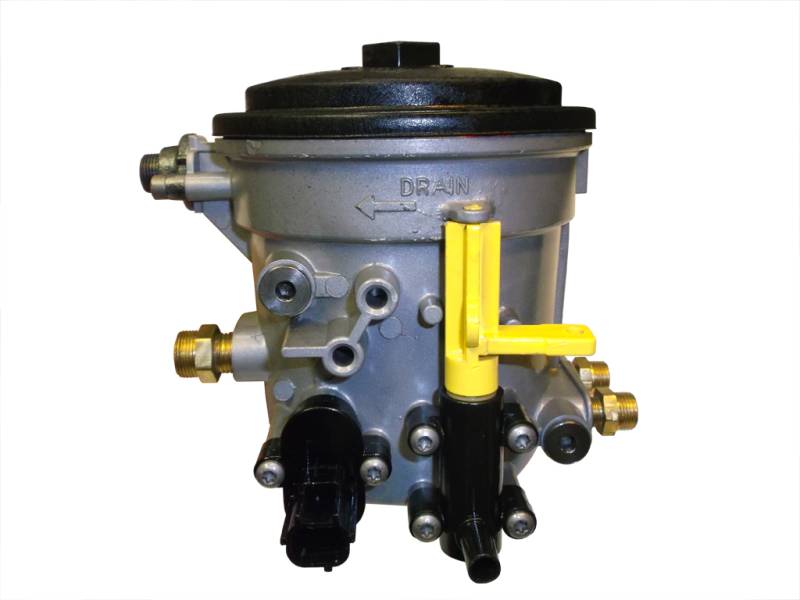
Scan-tool priming is real
Some late-model diesels have an electric pump prime routine, a filter service bleed routine, or a fuel system test that must be commanded with a scan tool. If you have done the basics correctly and key cycling does not seem to run the pump long enough to move fuel, it is time to check the OEM service procedure for your exact engine. This is especially true if the vehicle ran out of fuel, the filter housing was completely drained, or there is no obvious manual bleed point.
Other issues that can look similar
If you have confirmed fuel is reaching the filter and the system is properly primed, but it still will not start, broaden the diagnosis. A few possibilities that can mimic an air issue:
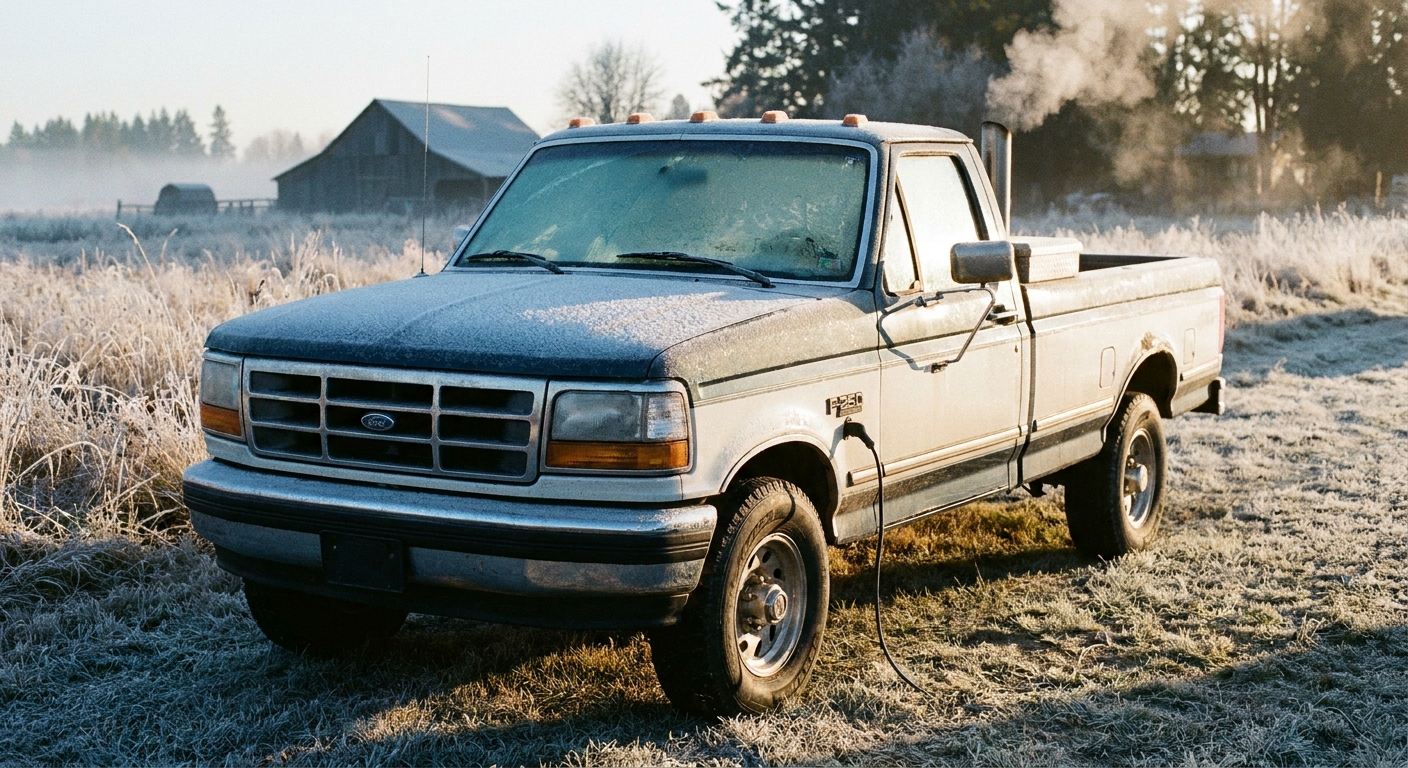
- Gel fuel in cold weather (waxed fuel plugs the filter fast, especially right after a fresh filter swap).
- Weak batteries or slow cranking speed (diesels need strong cranking RPM).
- Glow plug or grid heater issues (more noticeable in cold starts).
- Crankshaft position sensor problems (no injection event, no start).
- Immobilizer or security lockout (cranks but the ECU will not allow fuel).
But if the only variable that changed was the filter, you are still statistically in “air or sealing” territory.
Safety notes
- Keep diesel off belts and hot exhaust parts, and wipe spills promptly.
- Do not smoke or use open flame around fuel, even diesel.
- Be cautious around high-pressure injection components. Common-rail pressures can be dangerous. Do not crack injector or high-pressure pump lines on modern systems unless the service procedure calls for it and you know what you are doing.
- Never loosen high-pressure lines with the engine running. Depressurize per the OEM procedure.
- Use eye protection. A small bleed screw can still spray.
FAQ
Will it eventually start on its own?
Some older diesels with mechanical lift pumps can self-bleed with enough cranking, but many modern diesels often will not recover quickly on cranking alone. If it has an electric lift pump or a filter housing with a primer and bleed point, use those tools instead of brute force. If the OEM procedure calls for a scan-tool prime, do that.
Why does it start and then die a few seconds later?
That is classic “still pulling air” behavior. It will run on the fuel that made it into the high-pressure side, then stumble and quit as bubbles reach the pump and rail. Re-check seals, drain valve tightness, sensor seals, and quick-connect fittings.
Can I use starting fluid?
I avoid it unless the manufacturer explicitly allows it for your engine and you understand the risks. Ether and glow plugs or intake grid heaters can be a bad combination, and many OEMs prohibit it outright. If you need a chemical assist to start after a filter swap, the system is not properly primed or it has an air leak.
How long should I key-cycle?
Typically 5 to 10 key cycles (ON for 10 to 20 seconds, OFF for 10 seconds) is enough to see progress. If nothing changes after that, stop and verify the pump is actually running and that you do not have an air leak at the filter housing. Then check whether your vehicle requires a scan-tool priming routine.
How do I know if I have air in the fuel line?
If your setup has a clear line section, you may see bubbles. Otherwise, the best clue is foamy fuel at a bleed screw, repeated start-then-die behavior, and a hand primer that never firms up until the air is purged.
My shop order
- Re-check filter orientation, O-rings, sensor seals, and the water drain.
- Prime with the hand pump or key cycling until the primer firms up or fuel runs mostly bubble-free at the bleed screw.
- Crank in short bursts, rest between attempts.
- If it sputters, keep priming and bleeding until it will idle cleanly.
- If it never improves, verify lift pump operation and fuel delivery to the filter and beyond.
- If your platform calls for scan-tool priming, do not fight it. Follow the OEM routine.
If you tell me your year, make, model, and engine, plus whether your filter is on the engine or frame, I can point you to the priming method that usually works best for that layout.