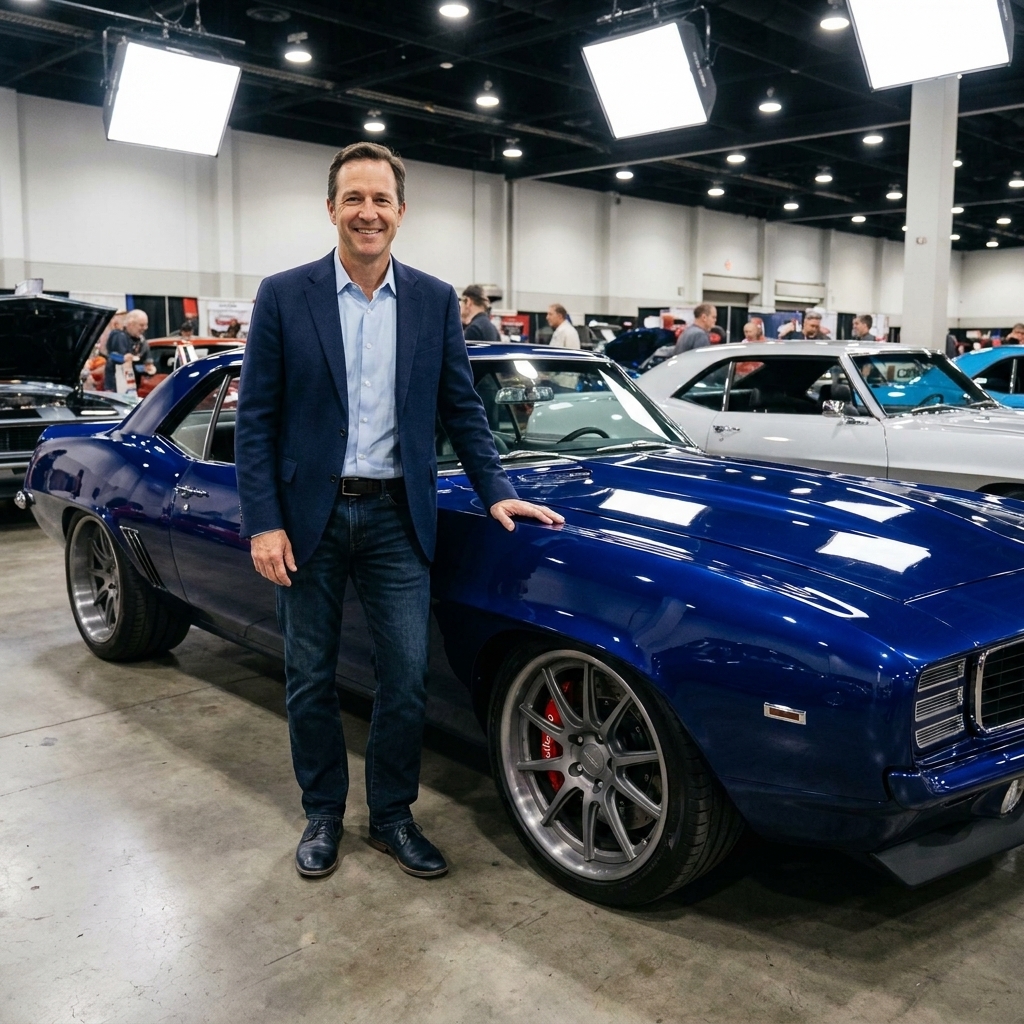
Walking into a classic car auction for the first time feels a little like stepping into a foreign country where everyone speaks in trim codes, lot numbers, and hand signals. The good news is you do not need to be a seasoned collector to buy smart. You just need a plan, a clear budget, and the discipline to stick to both when the room gets loud.
At recent high-profile collector events, a few themes keep repeating: buyers tend to pay up for documented, correctly restored cars, “cheap” projects often stop being cheap once they cross the block, and online bidding makes it easier than ever to overcommit from the comfort of your couch. Let’s walk through how to register, how to inspect like a pro, and how to bid without letting adrenaline write checks your budget cannot cash.
How auctions work
Most collector auctions follow the same rhythm:
- Cars are listed as lots with a description, photos, and sometimes a condition report.
- Preview and inspection days happen before the car crosses the block.
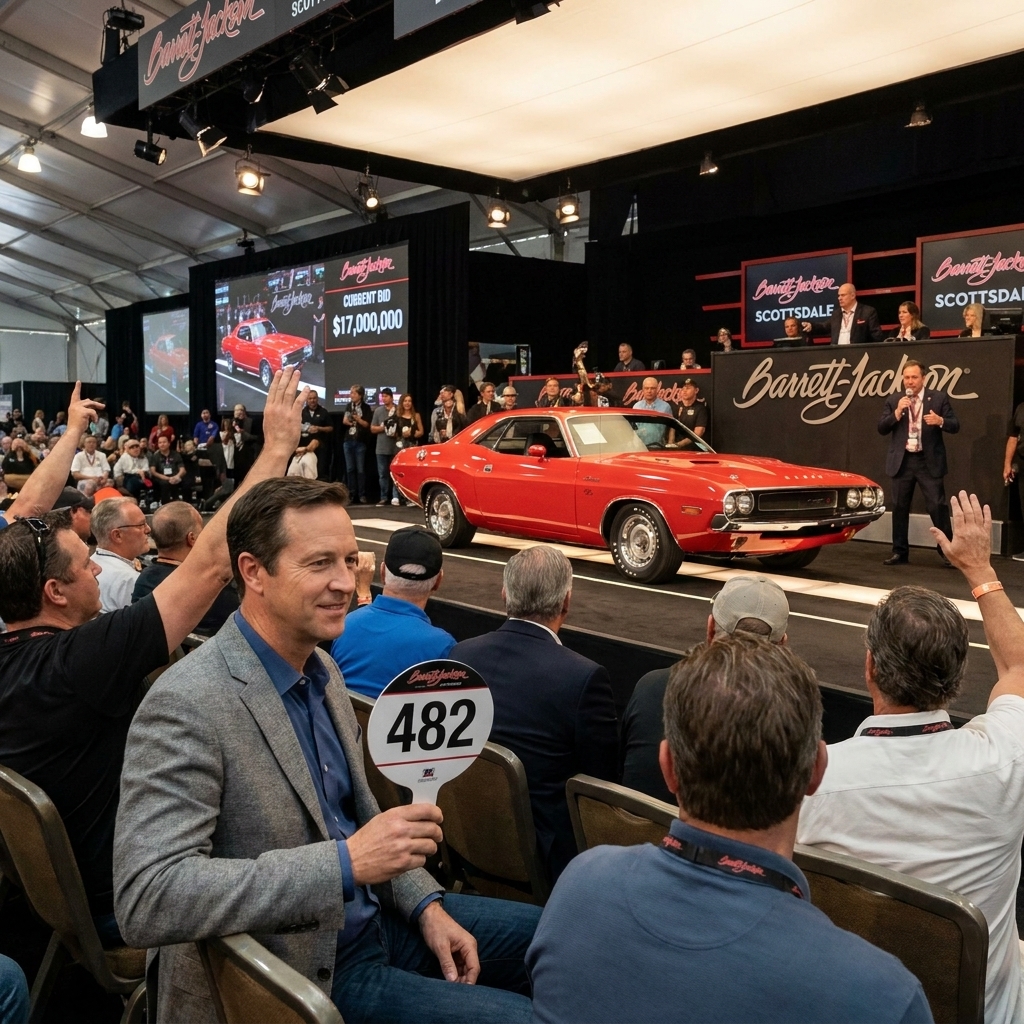
- Bidding happens live (in-person and often online or by phone), usually with a reserve or no reserve.
- The hammer price is not your total. You will also pay a buyer’s premium, plus taxes and sometimes additional fees.
Reserve vs. no reserve
Reserve means the seller has a minimum price in mind. If bidding does not reach it, the car may not sell. No reserve means it sells to the highest bidder, subject to the auction’s terms and any announcements or policies in the room. Beginners often love no-reserve auctions because they feel more transparent, but the pricing can still climb fast when two bidders want the same car.
One more reality check: most cars sell as-is, where-is. That phrase matters. Your inspection and your reading of the terms are what you are buying with.
Registration
Every auction house has its own process, but expect the following:
- Create an account (online in advance is easiest).
- Provide identification and sometimes proof of funds for higher-value bidding.
- Pay a bidder registration fee in some cases.
- Choose your bidding method: in-person paddle, online, or phone bidding.
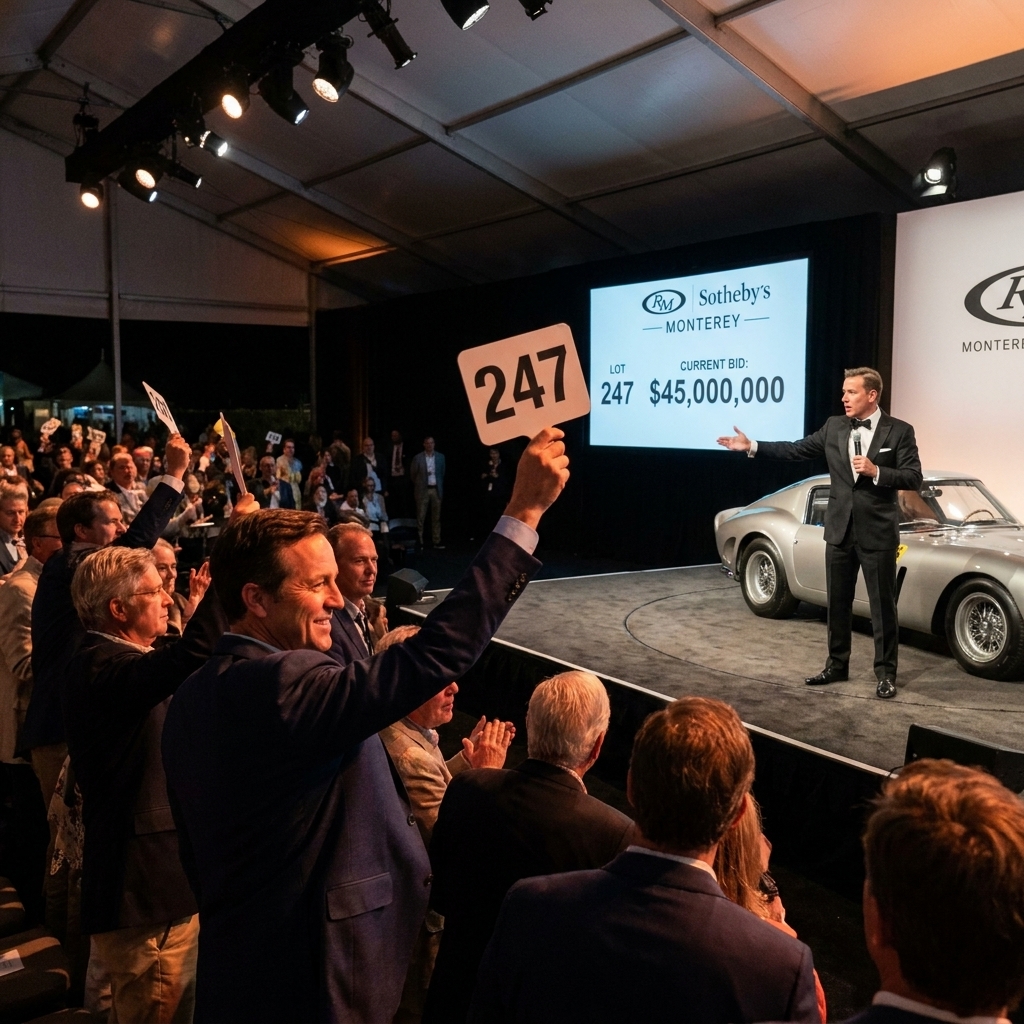
My practical advice: register early, then spend your first hour on-site not looking at cars, but learning the flow. Watch a few lots sell so you understand cadence, bidder signals, and how quickly the auctioneer moves.
Read the terms first
This is the unglamorous part that saves you money and headaches. Before you bid, read the auction’s terms for the specific sale and platform you are using. Look for:
- Buyer’s premium percentage (and whether it changes for online bids).
- Online platform fees or app surcharges, if any.
- Payment methods and deadlines (wire timing, cashier’s check rules, credit card limits).
- Storage and late pickup fees after a certain number of days.
- Title and paperwork timelines (some take weeks, especially with older titles or out-of-state processing).
- Dispute and arbitration policies and what, realistically, your recourse is.
Also remember: auction catalogs, online listings, and condition reports are typically full of disclaimers. Treat them as a starting point, not a warranty.
Know the real cost
This is where first-timers get blindsided. The number you bid is only the start.
Common add-ons
- Buyer’s premium: a percentage added on top of the hammer price. It varies by auction and by bidding method, and it can be substantial.
- Sales tax: depends on the state rules, your residency, the delivery location, exemptions for out-of-state shipment, and the auction’s terms. Some buyers can legally avoid certain taxes by shipping out of state or using specific exemptions, but do not assume. Confirm in writing.
- Documentation and administrative fees: sometimes a flat charge.
- Shipping and transport: enclosed transport is safer for high-value cars, and it is not cheap.
- Immediate needs: battery, tires, fluids, belts, fuel system cleanup, and a full safety inspection after transport.
If you set a hard cap of $40,000, you need to work backwards from your cap, not forwards from the hammer price. In other words: your maximum bid is usually lower than you think.
Quick example: If your all-in cap is $40,000 and the buyer’s premium is 10%, your hammer-price ceiling is about $36,300 ($36,300 x 1.10 ≈ $39,930). And that is before tax, transport, and the first service baseline. That is why the math comes first.
Inspection
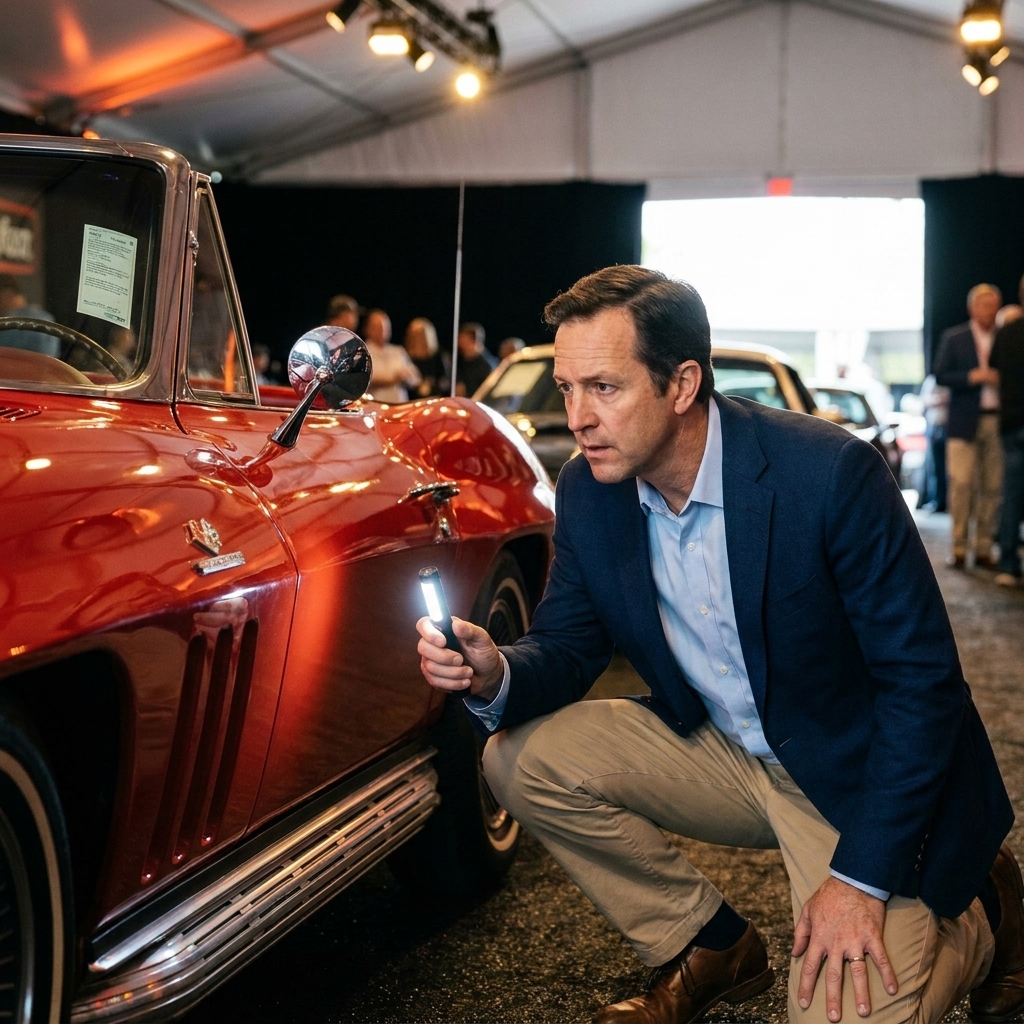
Auctions are not the place to “figure it out later.” Your inspection is your protection. The strongest prices usually follow the same recipe: clean undercarriage, consistent paintwork, documented history, and a drivetrain that matches what the catalog promised.
Quick inspection checklist
- VIN and tags: confirm the VIN plate, body tags, engine stamps if applicable, and that they align with the paperwork.
- Authenticity claims: if the listing says “matching numbers,” “rare drivetrain,” or “factory color,” verify what you can. Re-stamps, reproduction tags, and creative paperwork exist. On high-dollar models, consult a marque registry or specialist.
- Cold start behavior: if starts are allowed, listen for timing chain rattle, valvetrain noise, smoke, and unstable idle.
- Fluids: check oil condition, coolant color, brake fluid clarity, and look for fresh undercoating hiding leaks.
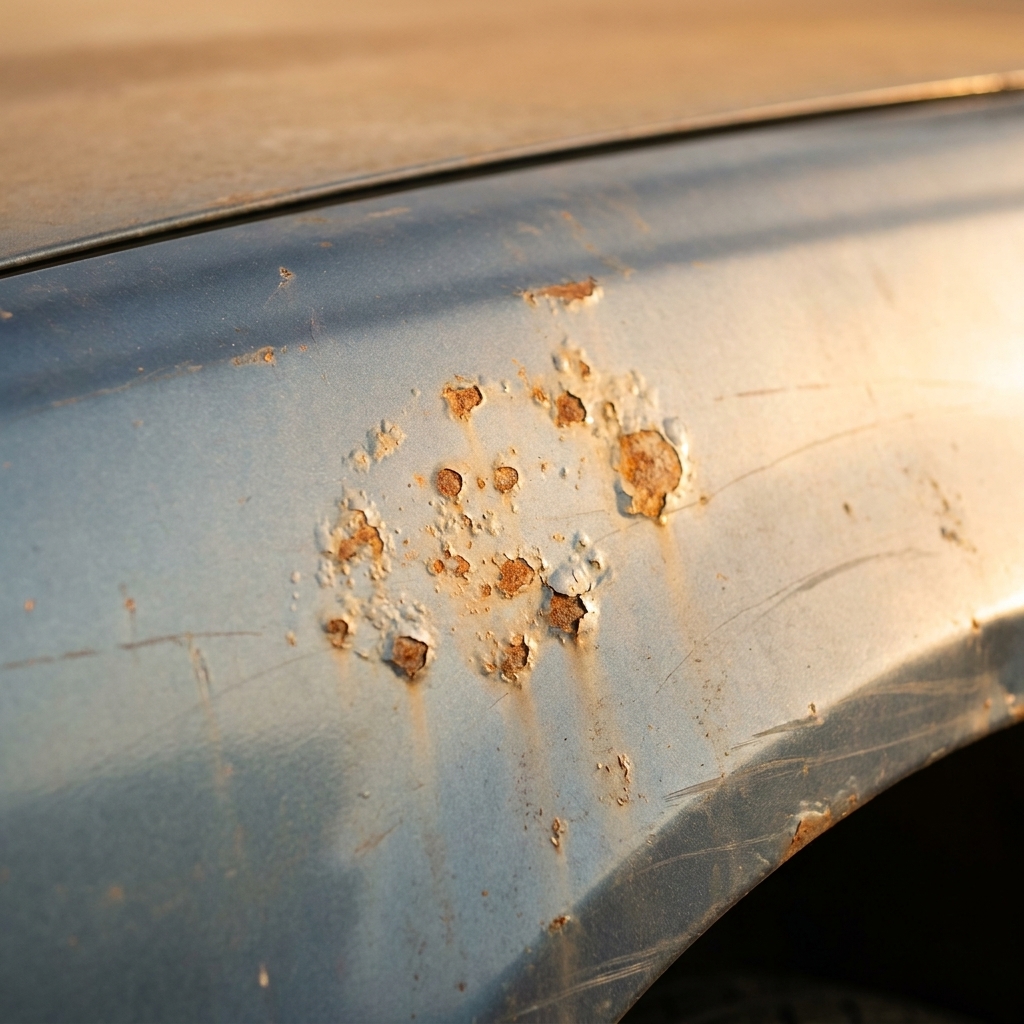
- Rust and repairs: inspect rocker panels, floor pans, trunk floor, lower fenders, and around glass. Look for bubbles, seams, or thick undercoating where it should not be.
- Paint and body: mismatched orange peel, overspray on trim, or tape lines can mean quick cosmetic work.
- Interior and electrics: windows, lights, gauges, wipers, HVAC. Electrical gremlins are common in older restorations.
- Brakes and tires: check date codes and tire condition. A “nice” car on old tires is a red flag for low use or corner cutting.
- Modifications: restomods can be awesome, but verify workmanship. Wiring quality and fuel system routing are big tells.
Condition reports and third-party inspections
If the auction provides a condition report, read it carefully, then read the disclaimers right next to it. Many reports are explicitly non-warranty. If you are spending real money and cannot inspect in person, hire a marque specialist or reputable inspector near the event. I have seen too many buyers assume “older restoration” means “sorted.” Sometimes it means “pretty, but tired underneath.”
What the market is doing
You do not need to memorize sale totals to learn from them. Here are patterns that commonly show up across major collector auctions.
Documentation brings money
Cars with factory paperwork, known ownership history, and build documentation routinely outperform similar-looking examples. If two cars are identical to the casual eye, the documented one is usually the safer bet and the stronger long-term hold.
Quality restorations are separating
Buyers are getting pickier. The cars bringing top-of-the-room numbers are typically the ones with consistent panel gaps, correct finishes, and evidence the work was done with care, not just to sparkle under stage lights.
Drivers stay popular
Well-sorted, usable classics with tasteful upgrades often draw intense interest because owners want to participate in events, not just park the car. The key word is sorted. Sloppy swaps and half-finished builds still get punished.
Online bidding raises the temperature
Remote bidding adds more participants, which can push certain lots higher quickly. That is great if you are selling, and risky if you are buying without a firm ceiling.
Bidding strategy
Step 1: Pick three targets
If you walk in obsessed with a single lot, you will overpay. Have backups. It keeps you calm and gives you leverage over your own emotions.
Step 2: Decide your all-in number
Write down your total maximum including buyer’s premium, taxes, transport, and a post-purchase service baseline. Then calculate your maximum bid from that.
Step 3: Learn the rhythm
Auctions have a pace. Some are rapid-fire. Others slow down when a high-value lot hits. Watch the auctioneer, but also watch the bidders. You will see who is decisive, who is hesitant, and who is signaling through a rep.
Step 4: Bid like you belong
- Keep bids deliberate. Small, confident bids beat frantic jumps.
- Do not rescue a car. If you are at your limit, you are done.
- Let someone else win the argument. If two bidders are emotionally committed, the car is already overpriced for a rational buyer.
My rule from the shop days still applies: the most expensive car is the one you buy in a hurry.
Online and phone bidding
Remote bidding is awesome for access, but it can hide important details.
Remote bidding tips
- Assume the camera is flattering. Ask for additional photos of known rust areas, undercarriage, and door jambs.
- Verify the fee structure. Some platforms price the buyer’s premium differently depending on how you bid.
- Have transport lined up in advance. The best carriers book quickly around major events.
- Build in a first service fund. Even great classics benefit from a baseline inspection and fluids after shipping.

After the hammer
Winning the bid is the middle of the story, not the end.
Post-win checklist
- Finalize payment within the auction’s required timeline.
- Confirm title status and any state-specific paperwork requirements.
- Arrange insurance before transport, not after the car arrives.
- Choose transport wisely: enclosed for higher-value or freshly restored cars, open for sturdy drivers if budget demands it.
- Document condition with photos at pickup and delivery, and confirm the carrier’s cargo insurance limits.
- Confirm the pickup window so you do not get hit with storage fees.
- Do a baseline service once it lands: fluids, filters, brake inspection, tire age check, and a full safety look-over.
Even if the car is “turnkey,” I like to treat the first month as an evaluation period. Small issues show themselves once you start driving and heat-cycling everything.
Dealer, export, and import notes
Consumer protections are usually limited at auctions, and rules differ if you are buying as a dealer, buying for resale, or exporting. If you are crossing borders, confirm import eligibility, duties, emissions, and paperwork requirements before you bid.
Common beginner mistakes
- Not factoring buyer’s premium into the bid cap.
- Skipping the undercarriage inspection because the paint looks great.
- Assuming a detailed engine bay means mechanical health.
- Buying someone else’s unfinished project without pricing the missing parts and labor.
- Getting pulled into a bidding war to “win,” not to buy.
Quick FAQ
Should I buy my first classic at an auction?
You can, but be picky. Auctions reward preparation. If you are brand new to classics, target well-documented driver-grade cars and budget for a thorough post-purchase inspection.
Is no reserve always a better deal?
Not automatically. No reserve guarantees a sale, not a bargain. Popular models can still run past market when bidding gets competitive.
What is the single best way to avoid overpaying?
Set an all-in budget before you arrive and treat it like a hard limiter. When you hit it, stop. There will always be another car.
Final advice
Classic car auctions are fun because they are a mix of history lesson, theater, and car culture all in one room. But the best buyers are boring on purpose. They read the fine print, inspect the car like it is going on a lift tomorrow, and bid like they have done it a hundred times.
If you do those three things, you will walk out with the right car, not just a story about the one that got away or the one you overpaid for. And if you end up parked next to me at a cars and coffee someday, I want to hear that your auction win drives as good as it looks.