Every classic car project starts with the same fork in the road. Do you bring it back exactly the way it rolled off the line, right down to the hose clamps and paint code? Or do you keep the soul and update the bones so it starts easier, stops shorter, and cruises like it belongs on today’s roads?
Neither is “more correct.” It’s about what you want to do with the car, how you feel about history, and how much you enjoy hunting obscure parts at 11 p.m. Ask me how I know.
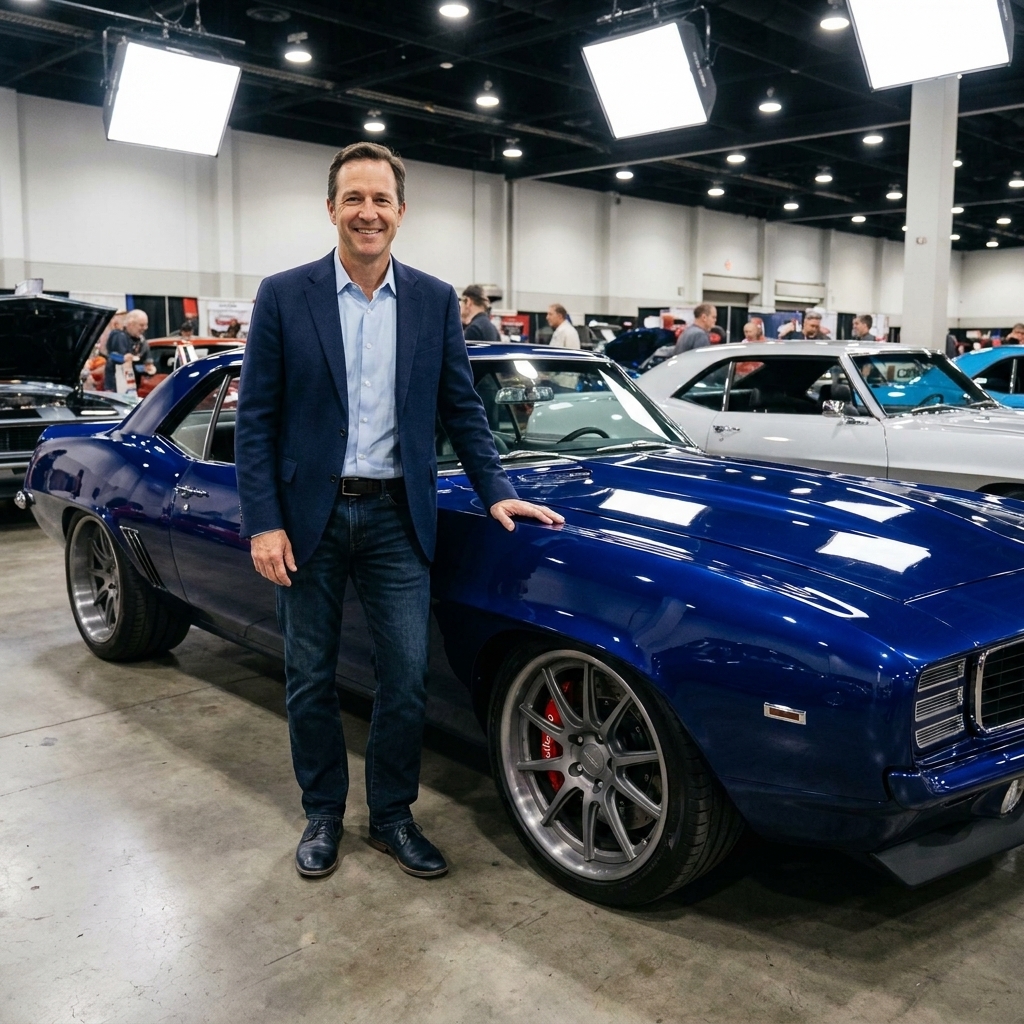
What “factory original” means
A factory-original restoration aims to recreate the vehicle as it was delivered new. That can mean a numbers-matching drivetrain, correct finishes, correct interior materials, period-correct hardware, and even factory-style overspray and markings if you are going for a concours-level build.
Pros of factory-original builds
- Historical authenticity: You are preserving a time capsule. For certain models, that matters a lot.
- Clear judging standards: Most marque clubs and concours events have established rules. You know what you are aiming at.
- Stronger appeal to purists and collectors: Especially when the car is rare, documented, and truly correct.
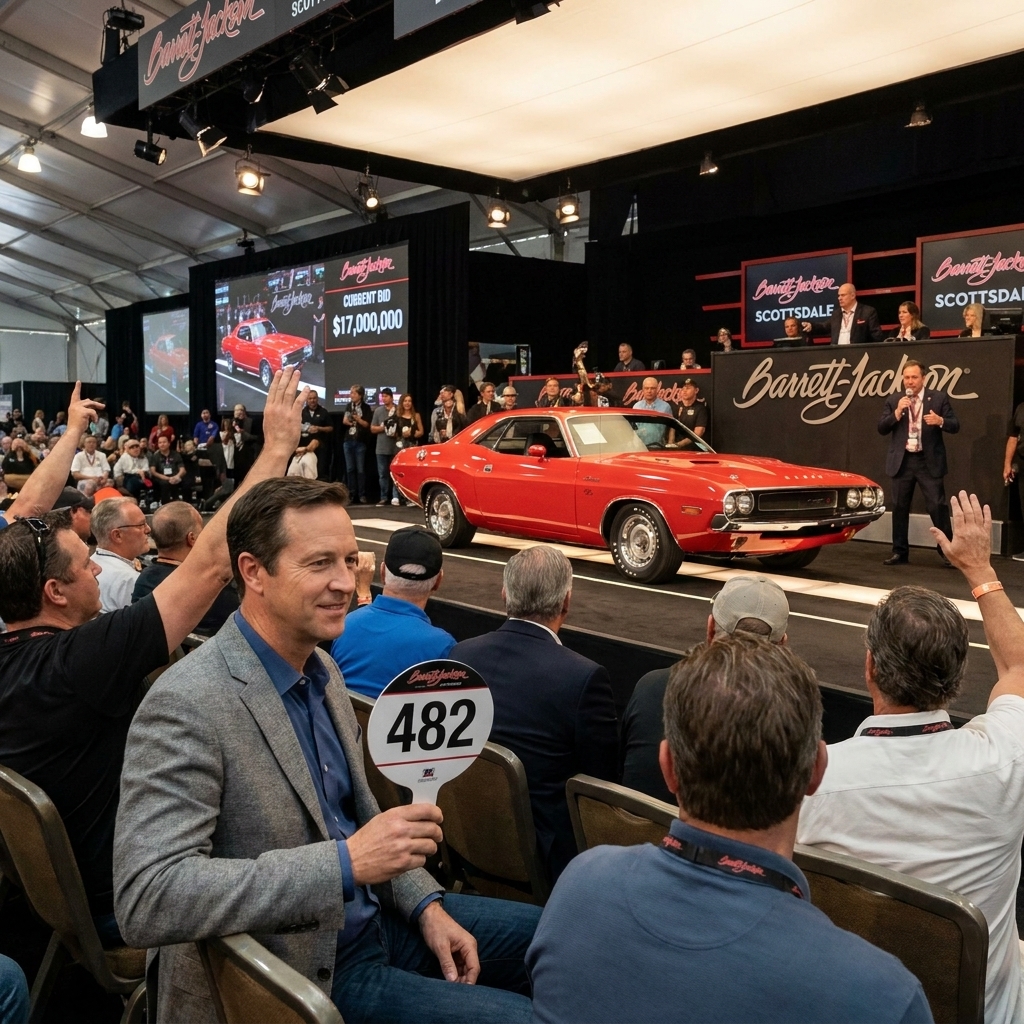
- Long-term value stability for the right cars: A well-documented, correct restoration tends to hold its lane in the collector market.
Cons of factory-original builds
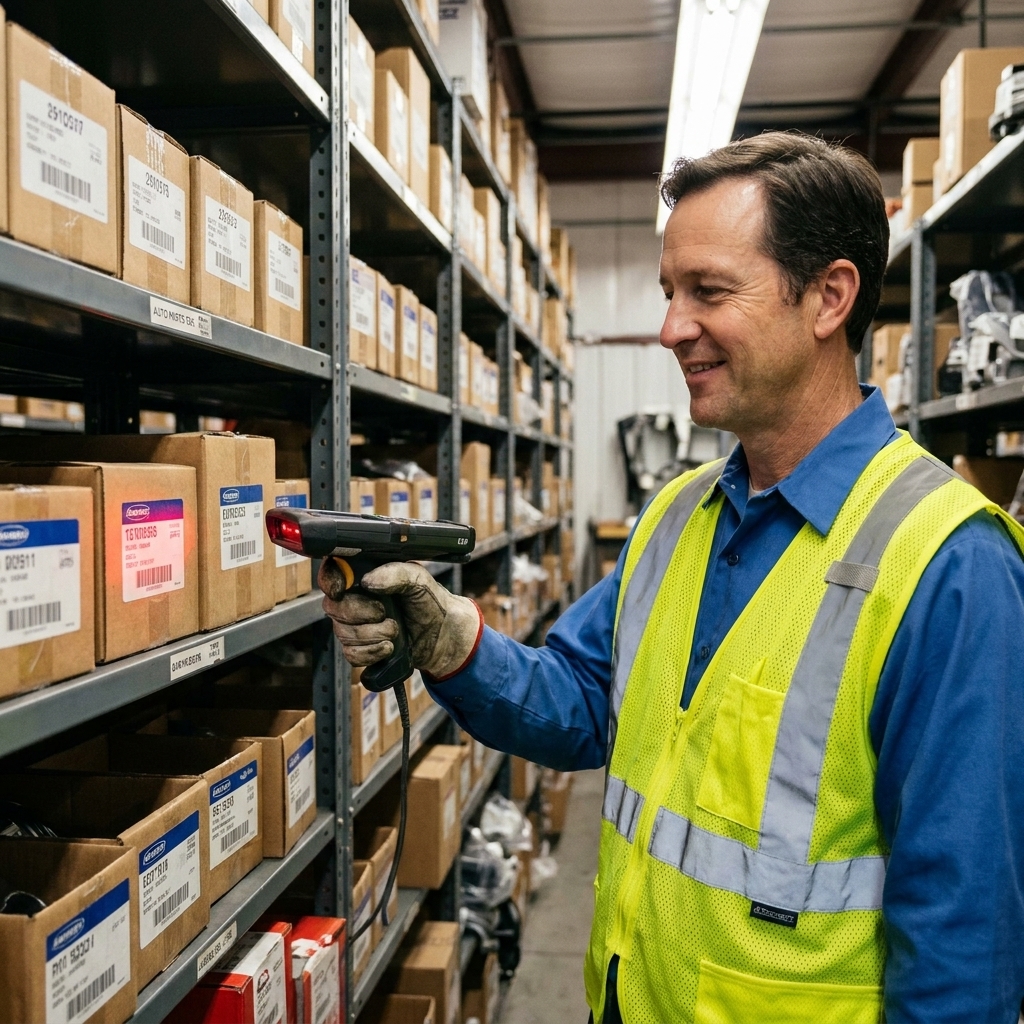
- Parts can be expensive or painful to source: Correct carbs, date-coded glass, and one-year-only trim pieces can eat a budget fast.
- Drivability stays period-correct too: On many models, manual drum brakes, older steering geometry, and factory cooling systems can feel charming until you are stuck in modern traffic.
- Originality anxiety: You may find yourself hesitant to drive the car because every mile feels like risk.
- Not all factory choices were great: Some classics were under-braked, under-cooled, and over-complicated from day one.
If your dream is to open the hood and see it exactly like the brochure, a factory-original build can be deeply satisfying. It is also the path where patience and documentation are non-negotiable.
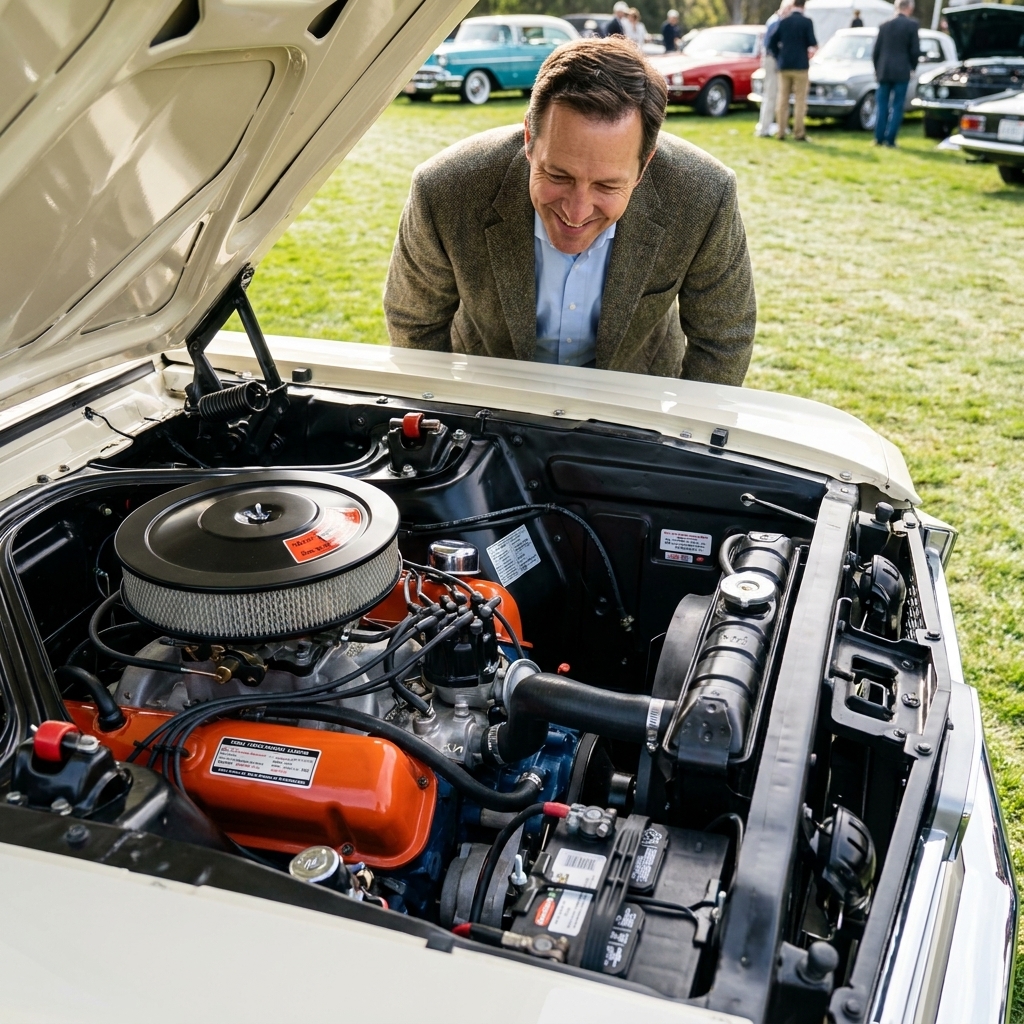
What “restomod” covers
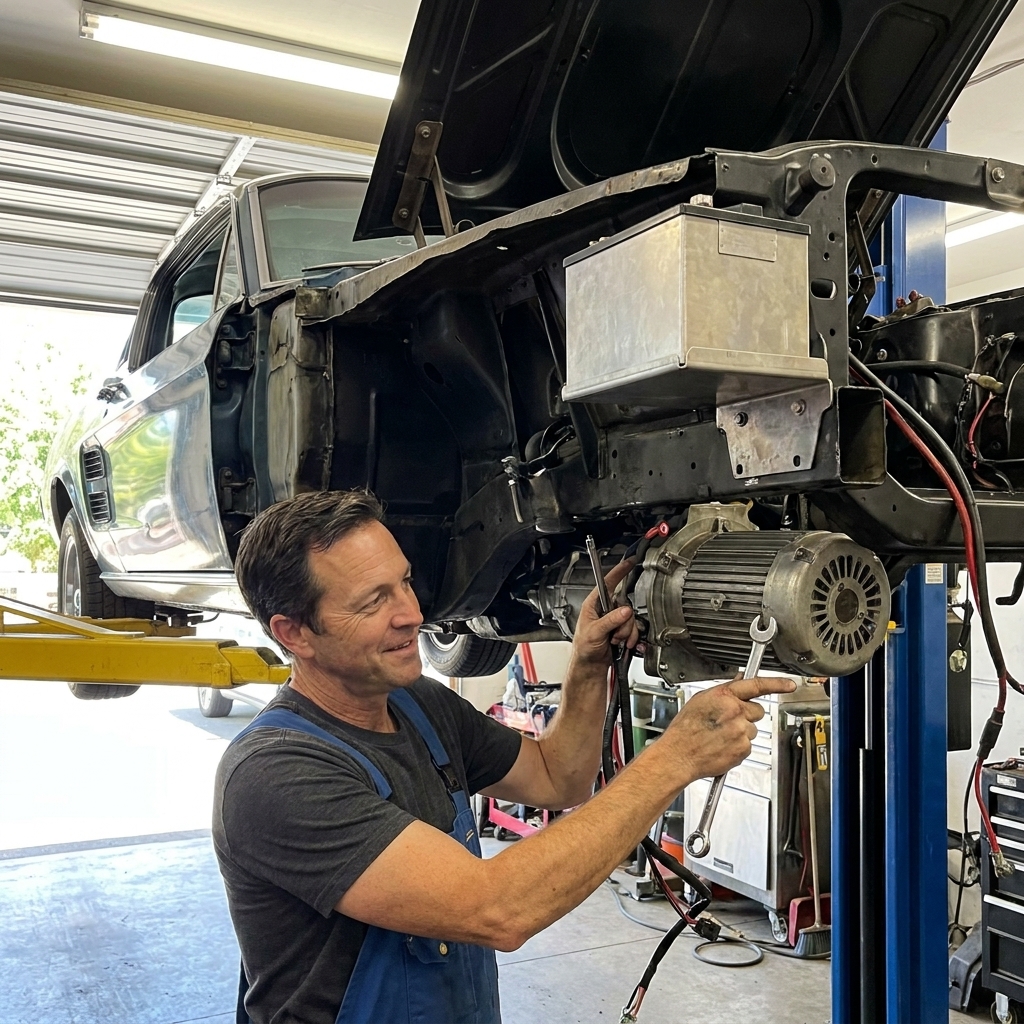
Restomod is a big umbrella. On one end you have mild upgrades like electronic ignition and radial tires. On the other, you have a classic body sitting on a modern chassis with fuel injection, big brakes, overdrive, and a full A/C system that actually works in July.
The best restomods keep what makes the car special and fix what makes it stressful. The worst restomods are a pile of mismatched parts with no plan, no documentation, and wiring that looks like spaghetti night.
Pros of restomod builds
- Modern road manners: Shorter stops, steadier tracking, improved lighting, and tires that do not feel like they belong on a shopping cart.
- More usable power: Fuel injection and modern ignition can solve hot-start drama, and overdrive keeps highway RPM sane.
- Safety upgrades are on the table: Disc brakes, improved seat belts, modern tires, and better visibility are not just nice to have.
- Built for your life: If you want to road trip, commute, or hit Cars and Coffee without a toolbox in the trunk, restomod is tempting.
Cons of restomod builds
- You can spend a fortune quickly: The slippery slope is real. One upgrade reveals another weak link.
- Integration issues: A modern engine in an old bay is easy on paper. Cooling, wiring, fuel delivery, and driveline angles are where projects stall.
- Resale can be narrower: Your exact taste might not be the next owner’s taste. The pool of buyers can be smaller than for a correct restoration.
- Judging and club acceptance varies: Some events welcome tasteful updates. Others want factory details down to the chalk marks.
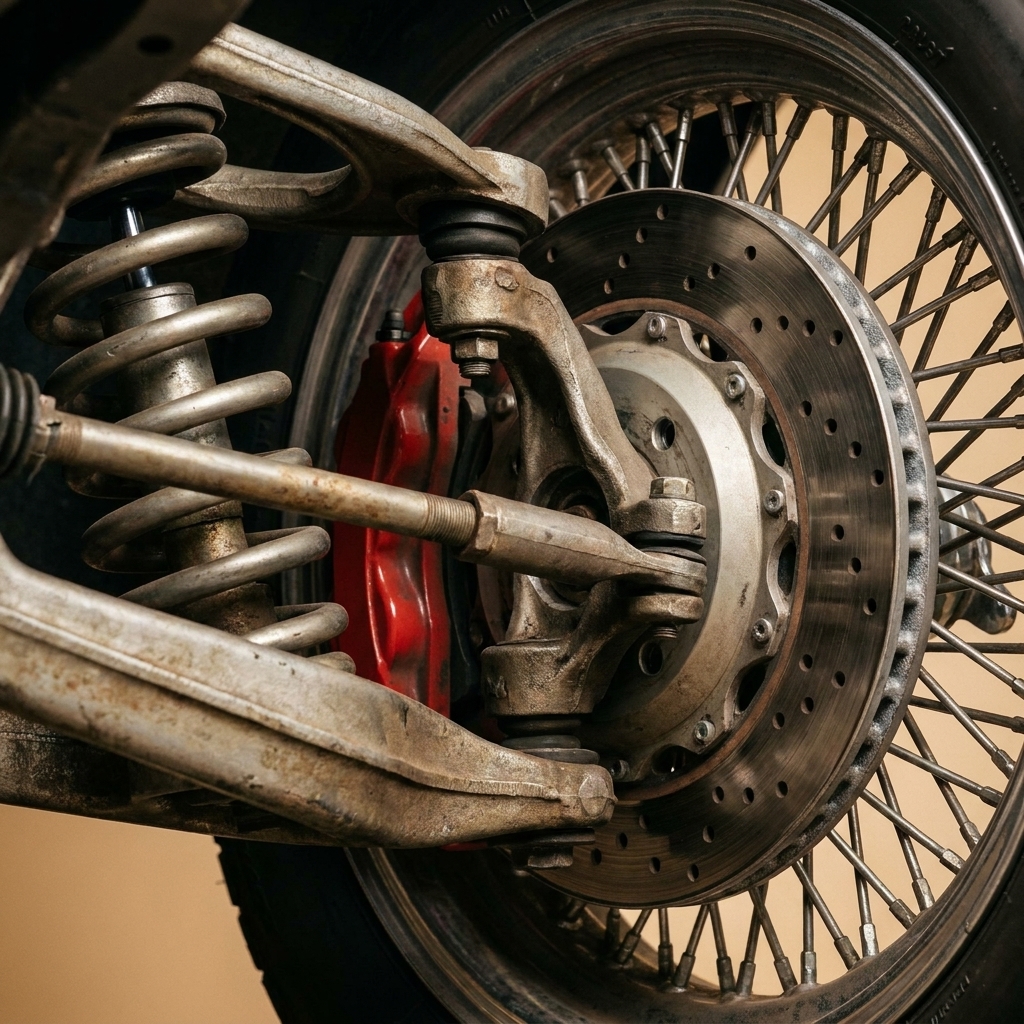
What people will say
Car culture is a funny thing. Two people can love the same model and disagree on what “respect” looks like. Here is the real-world vibe you will run into.
How factory-original builds are viewed
- Respect for craftsmanship: A correct restoration signals commitment, research, and attention to detail.
- Purist approval: Marque clubs and concours crowds tend to rally around originality.
- The “don’t touch it” energy: Some folks will treat the car like museum property, even if you built it to drive.
How restomods are viewed
- “Best of both worlds” praise: Many enthusiasts love a classic that starts instantly, tracks straight, and can handle highway speeds comfortably.
- Debates about authenticity: Some will call it “ruined.” Others will call it “saved.” You will hear both.
- More conversation, more opinions: Restomods invite questions about parts choices, fabrication, and performance. That is part of the fun.
My take after years in shops and plenty of parking-lot bench racing: the community is biggest when you can drive the car. A dead-perfect restoration that never leaves the trailer is impressive, but a well-built driver tends to create more memories.
Decision factors
If you are torn, focus on a few practical questions. They cut through the noise fast.
1) What is the car, and how rare is it?
Rarity changes the math. A high-production classic with plentiful parts is a great restomod candidate. A documented, rare trim or historically significant example often deserves a lighter touch. When a car is truly scarce, originality is part of its identity.
2) What do you want to do with it?
- Local shows, judging, collecting: Factory original starts to make more sense.
- Weekend cruises, road trips, real traffic: Restomod starts to look smarter.
- Track days or spirited canyon runs: Modern brakes, tires, suspension, and cooling stop being optional.
3) How important is period feel?
This is the one most people miss. Some drivers want the original steering weight, the smell, the sounds, the quirks. Others want the classic look with a modern driving experience. Neither is wrong, but you should be honest with yourself now, not halfway through a wiring harness.
4) Do you enjoy parts hunting or systems planning?
Factory-correct builds reward detail work: stampings, finishes, casting dates, and correct fasteners. Restomods reward planning and systems thinking: wiring, fuel, cooling, and drivetrain compatibility. Pick the kind of problem-solving you actually enjoy.
5) What is your realistic budget?
Both paths can be expensive, just in different ways.
- Factory original money pits: rare trim, correct interior materials, specialized plating, authentic rebuilds.
- Restomod money pits: custom fabrication, drivetrain swaps, modern A/C, wiring integration, upgraded suspension and brakes.
If you want a driver either way, budget for the unglamorous stuff first: brakes, tires, steering components, fuel lines, cooling, and electrical. The shiny parts are the easy part.
Value and resale
Resale value is never guaranteed, but patterns show up. Market trends also vary by model, provenance, build quality, and current demand, so treat any blanket advice as a starting point, not a promise.
Factory original value tends to be strongest when
- the car is rare or highly sought-after
- it is documented and numbers-matching
- the restoration is correct and high quality
- modifications are minimal and reversible
Restomod value tends to be strongest when
- the build is cohesive, not a parts pile
- the workmanship is clean and documented
- the car retains its classic identity
- the upgrades improve function without looking out of place
The resale trap with restomods is personal taste. Wild colors, highly customized interiors, or unconventional swaps can narrow the buyer pool. The resale trap with factory restorations is almost correct. A near-miss restoration can cost just as much but get judged like it is wrong.
Reversible middle ground
Not ready to declare a side? You are not alone. A reversible approach lets you improve the driving experience without permanently closing the door on originality.
Upgrades that are often reversible
- Electronic ignition inside a stock distributor for easier starts and steadier spark
- Quality radial tires in a period-correct size for safety and handling
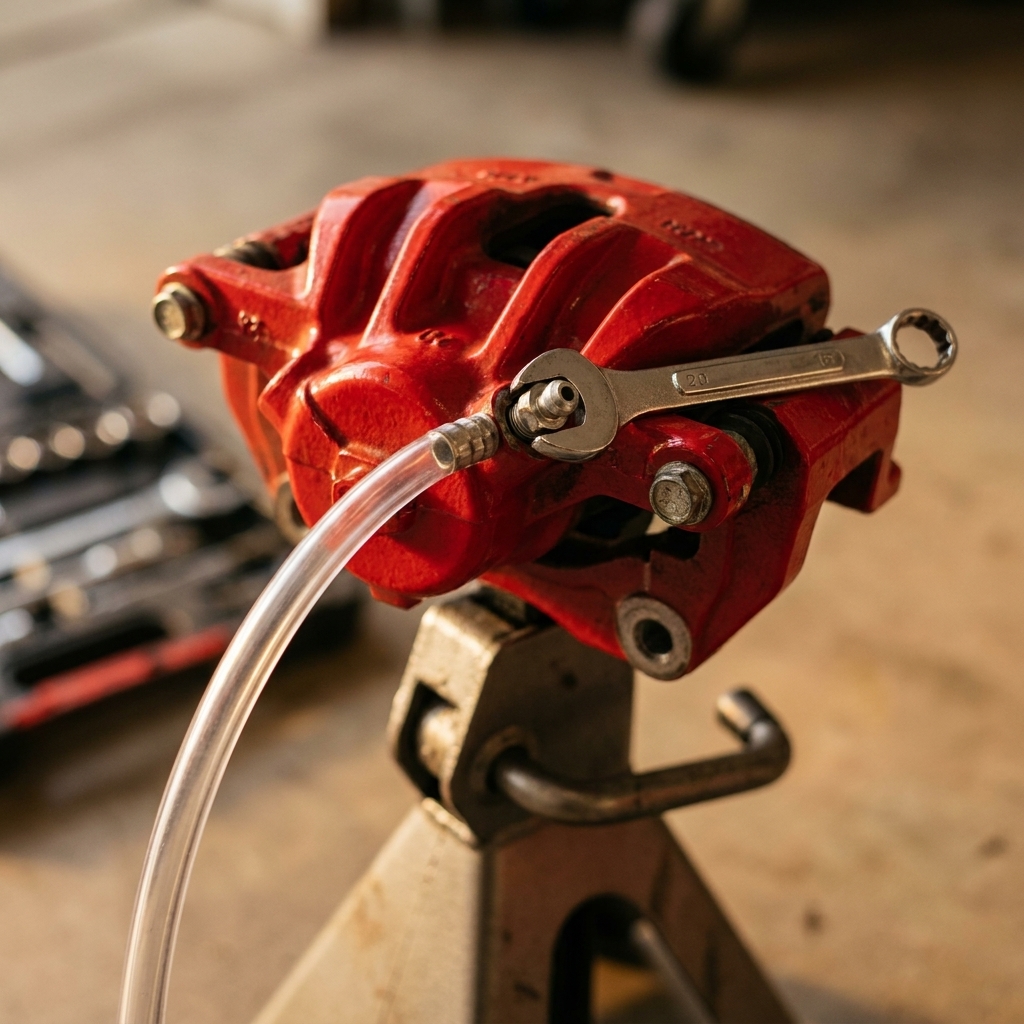
- Front disc brake conversion using well-supported kits, especially if the car had drums, but only if the hydraulics are engineered correctly (master cylinder sizing, proportioning, and pedal feel matter)
- Modern shocks and fresh suspension bushings for stability without changing the car’s character
- Upgraded charging system if you are adding electrical load like A/C, EFI, or better lighting, and if originality is the goal, a correct generator rebuild can be the better fit
- Better lighting that still fits stock housings, as long as it is legal where you live
This is how a lot of classics become enjoyable, regular drivers without losing what makes them classics.
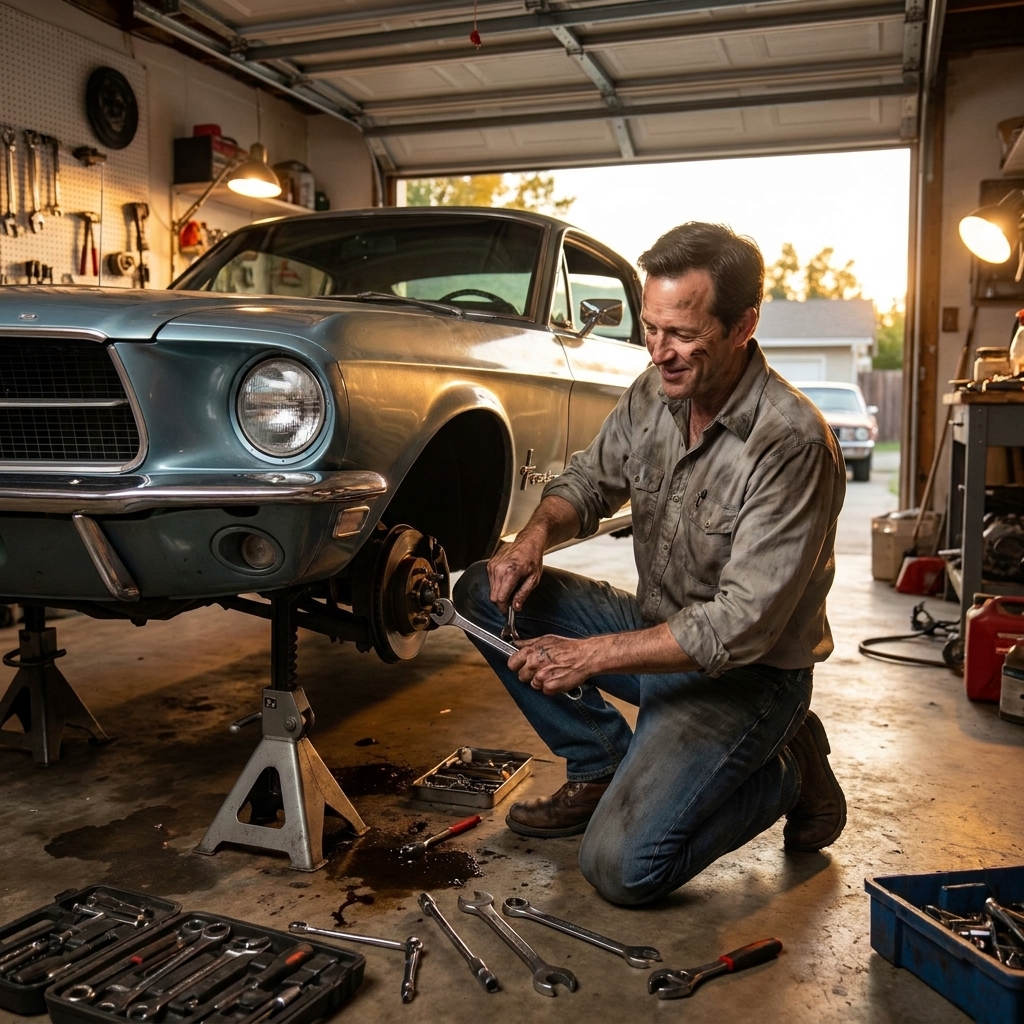
Legal, insurance, and safety
This stuff is less glamorous than wheels and horsepower, but it is what keeps projects on the road and out of paperwork purgatory.
Legal and emissions
- Rules vary wildly: Inspections, emissions testing, and engine-swap requirements depend on your state or country.
- Swaps can trigger compliance issues: Some areas require the engine to be from the same year or newer, and may require keeping emissions equipment like catalytic converters and evap systems.
- Keep receipts and donor info: It can save you a headache if you ever have to prove what is in the car.
Insurance and appraisals
- Modified cars should be documented: Agreed value policies often want photos, build sheets, and receipts.
- Tell your insurer the truth: Hidden mods can become a problem at claim time, which is the worst possible time.
Safety beyond brakes
- Seat belts and seating: Three-point belts, solid seat mounts, and headrests can make a huge difference in real-world safety.
- Fuel system modernization: Ethanol-safe hose, proper venting, and good routing reduce leaks and vapor issues.
- Fire readiness: A clean electrical system, correct fusing, and a small extinguisher are cheap peace of mind.
Common mistakes
Factory-original pitfalls
- Chasing correctness before safety: Get the brakes, tires, steering, and fuel system right first.
- Skipping documentation: Keep receipts, photos, casting numbers, and build notes. It matters for resale and insurance.
- Over-restoring: Some cars did not leave the factory perfect. A too-perfect finish can look wrong to judges and enthusiasts.
Restomod pitfalls
- No plan for systems: An engine swap is not just an engine swap. Cooling, fuel, wiring, and driveline alignment make or break the build.
- Cheap wiring and connectors: Electrical gremlins are morale killers. Use proper terminals, fusing, and routing.
- Ignoring brakes and chassis: More power without better stopping and handling is backwards.
- Unfinished details: A car can be mechanically sorted and still feel sloppy if the interior, trim fit, and small touches are neglected.
Quick self-check
Factory original fits you if you want
- authenticity and history above all
- club judging and concours events
- the original driving experience, quirks included
- a build guided by factory documentation
Restomod fits you if you want
- reliable starts, modern braking, and confidence in traffic
- road trips and regular use
- personalization and performance
- the classic look with a modern feel
If you are building the car to drive, prioritize safety and reliability first. You can always add polish later. A classic that leaves you stranded stops being romantic fast.
FAQ
Is a restomod cheaper than a factory-original restoration?
Sometimes, but not automatically. A mild restomod can be budget-friendly if you stick to proven kits and avoid custom fabrication. A full restomod with a modern drivetrain, A/C, suspension, and a high-end interior can cost more than a correct restoration.
Will modifying a classic car ruin its value?
It depends on the car and the mods. Rare, documented, numbers-matching examples usually lose value with permanent changes. Common models with tasteful, well-documented upgrades can sell very well, especially if the build is cohesive and professionally executed. Market swings are real, too.
Can I restomod a car and still keep it classic?
Absolutely. The sweet spot is upgrades that improve safety and drivability while keeping the car’s original proportions, styling cues, and overall vibe. When the modifications start to fight the car’s identity, that is when it stops reading as a classic.
What is the best first upgrade if I want to drive my classic more?
Brakes and tires, every time. Then steering and suspension bushings, then cooling and charging. Power is fun, but control and reliability are what make you actually use the car.
Bottom line
If you want a faithful time capsule, factory original is a rewarding path that honors history and tends to play well in collector circles. If you want a classic you can drive hard and often, a well-planned restomod can deliver modern confidence without losing the soul that made you fall in love with the car in the first place.
Pick the build that matches your life, not someone else’s comment section. The best classic is the one that gets driven.