The first time I saw this complaint in a shop, the customer swore the battery was fine because the radio worked and the headlights were bright. Then they showed me the trick: pop the hood, grab the battery cable, wiggle it, and suddenly the car cranked like nothing was wrong.
That “wiggle fix” is a dead giveaway. Your battery might be perfectly healthy. The problem is usually that the starter is not getting solid current through the battery connections, and moving the cable temporarily restores contact.
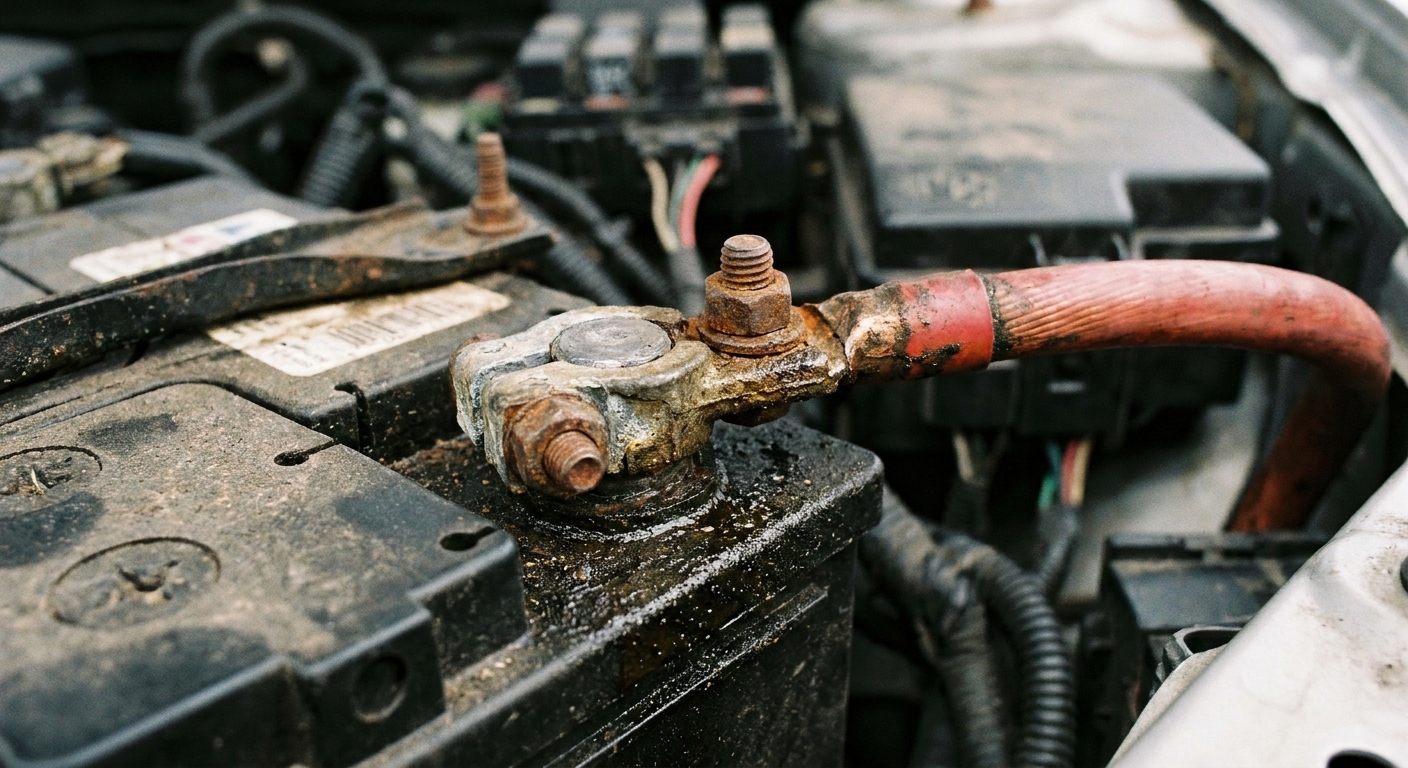
Why wiggling the cable makes it start
Starting a car takes a big surge of current. Many passenger vehicles will pull often 150 to 300+ amps for a moment, and larger engines, cold starts, and diesel setups can be higher. Your lights and radio might only need a few amps, so they can still work even when the main connection is poor.
When you wiggle the cable, you are often doing one of these things:
- Temporarily improving metal-to-metal contact between the battery post and the terminal clamp.
- Breaking through corrosion that is acting like an insulator.
- Reconnecting broken cable strands inside the cable end for a moment.
- Shifting an internally corroded cable so it conducts briefly.
The fix depends on which of those is happening. The good news is you can diagnose most of it in your driveway with basic tools.
Safety first
Before you put a wrench on anything:
- Turn the car off, remove the key, and keep it in your pocket.
- Wear eye protection and gloves if you have them. Battery corrosion is nasty.
- Do not let a metal tool touch the positive terminal and any metal body part at the same time. That can create a dead short.
If you disconnect the battery, remove the negative (minus) cable first. When reconnecting, install the negative cable last.
One more real-world note: disconnecting the battery can reset settings (clock, radio presets, window auto-up calibration). Some vehicles also have a battery monitoring system that needs a proper reset procedure after replacement. If your car has quirky electrical behavior after reconnecting, check the owner’s manual for the relearn steps.
Step 1: Confirm the symptom
The symptom we are chasing is specific: it will not crank or cranks slowly, then cranks normally after you move the battery cable or terminal.
Common patterns:
- No-crank: You hear a single click, or nothing at all, but the dash lights come on.
- Rapid clicking: Often low voltage at the starter, which can come from a weak battery, bad connections, or both.
- Slow-crank: It turns over sluggishly, then suddenly improves after moving the cable.
If instead the car starts only when you jiggle the key in the ignition, that is usually an ignition switch or worn ignition cylinder issue, not a battery cable issue. Different circuit, different diagnosis.
Step 2: Check the terminal clamp
This is the number one cause I see. Battery posts are tapered, and the terminal clamp must be snug enough to grip that taper.
Quick test
- With the engine off, grab the terminal clamp (not the cable insulation) and try to rotate it on the battery post.
- If it twists or lifts easily, it is too loose.
What to do
- Tighten the terminal bolt until the clamp no longer moves by hand.
- Do not over-tighten to the point you deform or crack a soft lead clamp.
Important: If the clamp bottoms out (the bolt feels tight) but the clamp still wiggles, the clamp may be stretched or the wrong size. That clamp needs replacement. No amount of tightening will make it grip correctly.
If you have side-post battery terminals (common on some GM vehicles), be extra careful not to over-tighten. It is easy to strip the threads in the battery, and that turns a simple fix into a bad day.
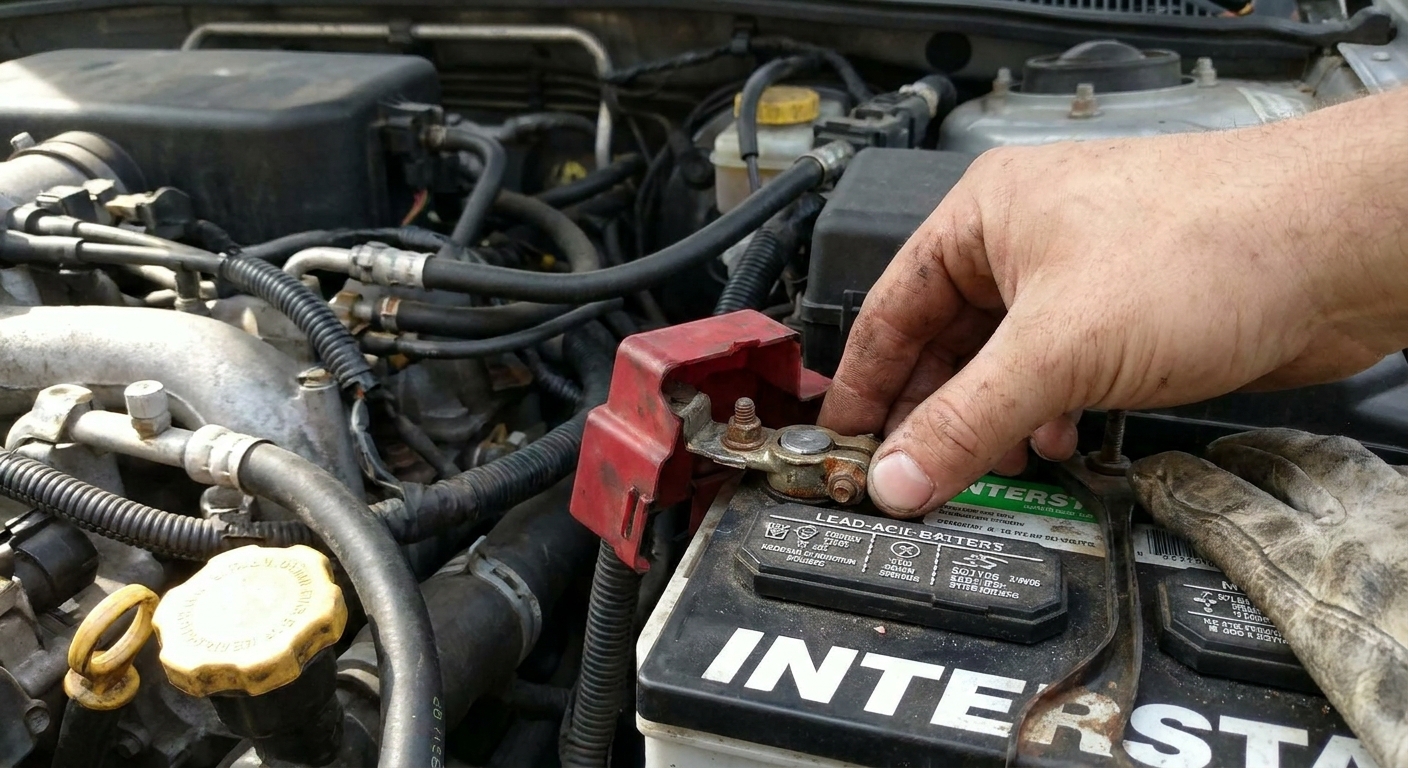
Step 3: Look for hidden corrosion
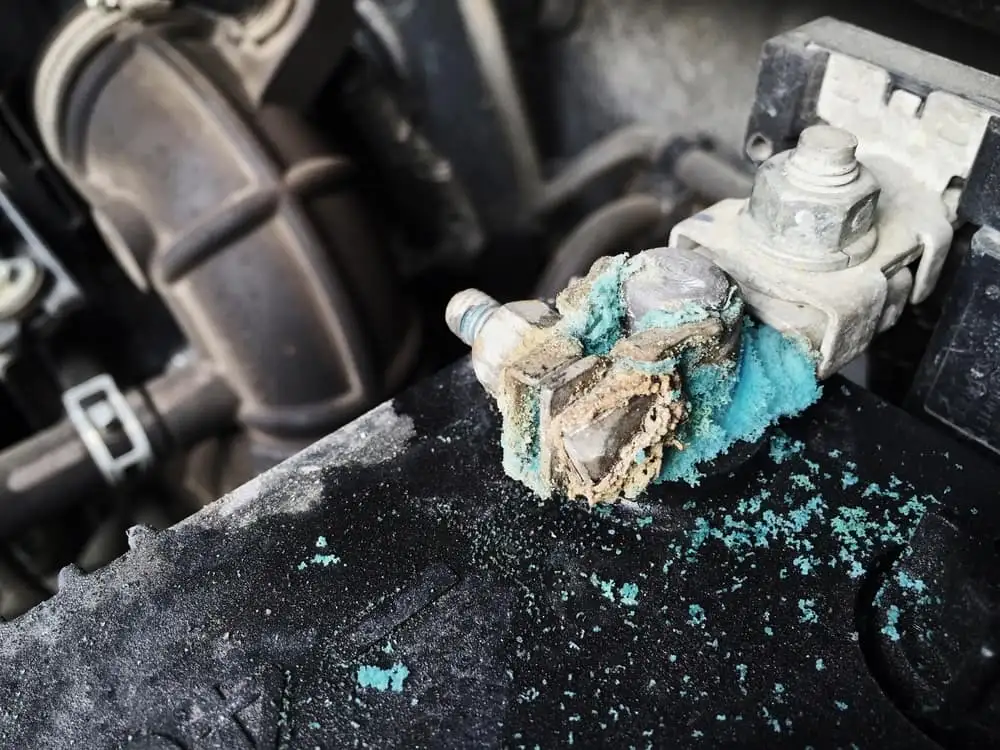
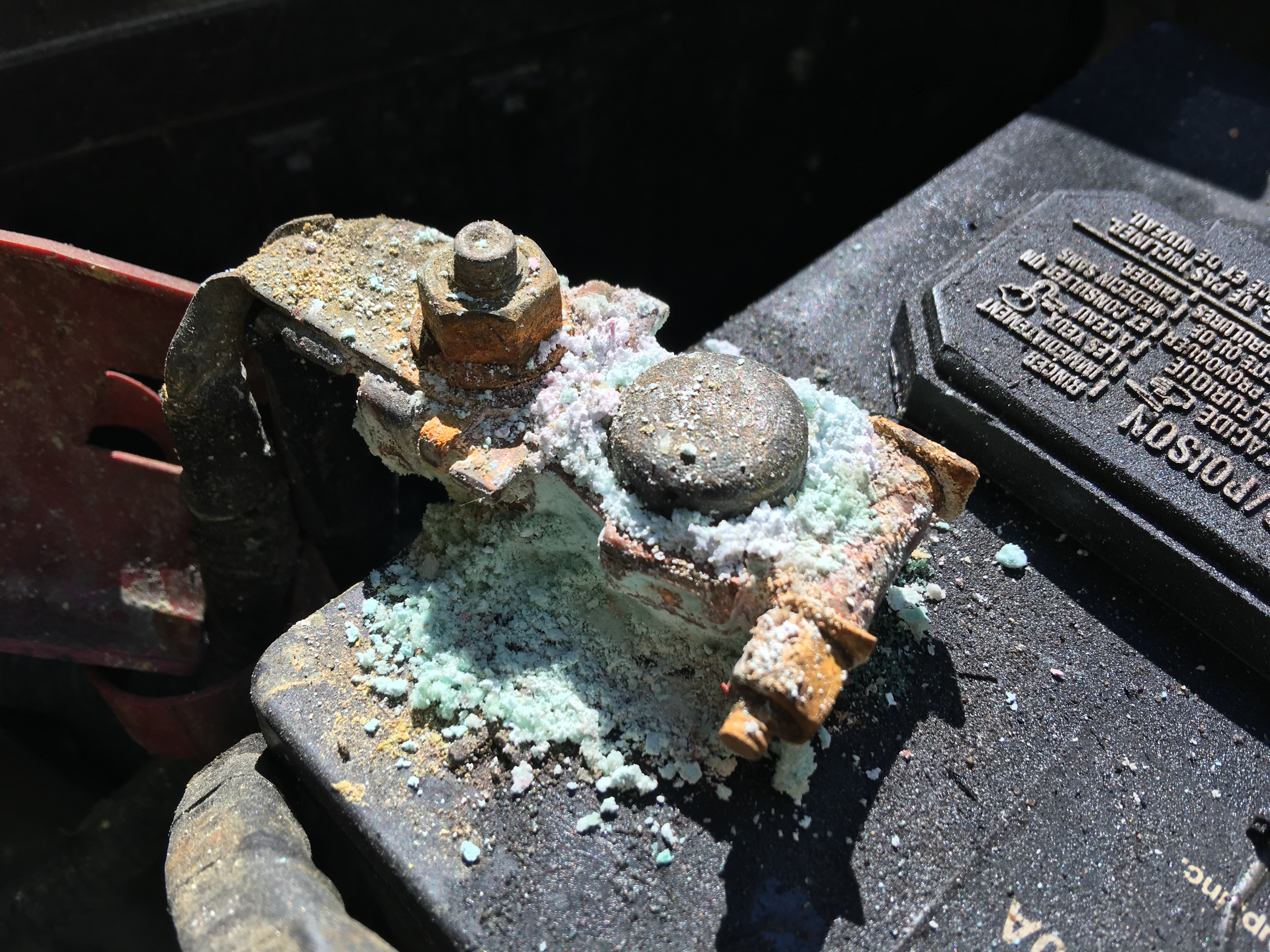
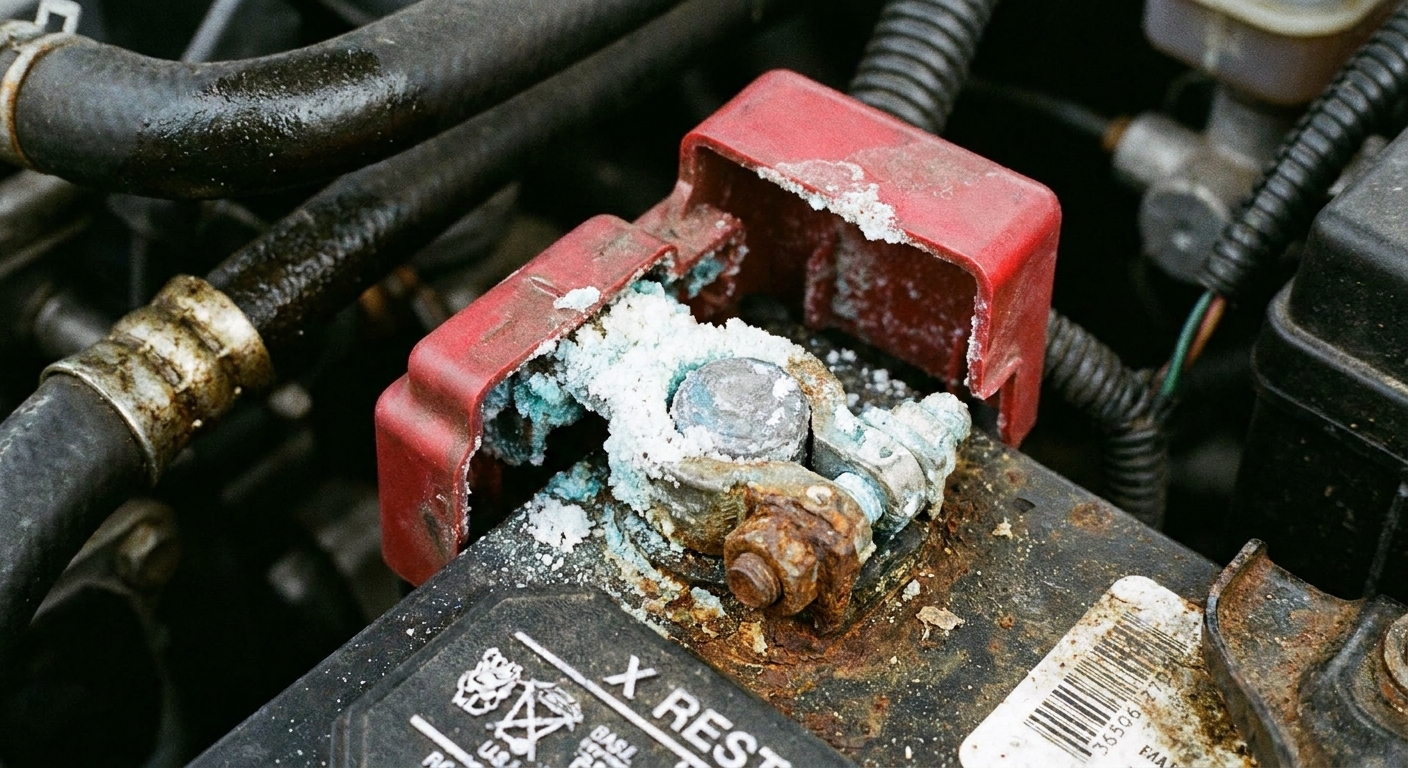
Most people look for the fluffy blue or white powder on top of the battery and call it a day. But the sneaky stuff is often:
- Between the clamp and the battery post, where you cannot see it until you remove the clamp.
- Inside the cable end, where the copper cable meets the terminal.
- Under the insulation, where acid fumes and moisture wick into the cable over time.
What corrosion does electrically
Corrosion adds resistance. High resistance plus high starter current equals voltage drop. That is why you can have bright interior lights but still get a click or a slow crank when you try to start.
How to check
- If you disconnect the battery, remove the negative cable first, then the positive.
- Inspect the battery posts and inside of the clamps. You want clean, shiny metal contact surfaces.
- Inspect the cable where it enters the terminal. If you see green crust, swelling, or dampness, suspect corrosion inside the cable.
Clean the terminal right
If the cable itself is solid and the corrosion is mostly on the clamp and post, cleaning often fixes the “wiggle to start” issue.
What you need
- 10 mm wrench or appropriate socket for terminal bolts (varies)
- Battery terminal brush or a stiff wire brush
- Baking soda and water (optional)
- Shop towels
- Dielectric grease or battery terminal protectant spray (optional)
Steps
- Disconnect negative, then positive.
- If corrosion is heavy, neutralize it with a small amount of baking soda and water. Avoid getting the solution into battery vents or vent caps.
- Brush the battery posts and the inside of each clamp until you have clean metal.
- Wipe dry and reassemble: positive first, negative last.
- Tighten so the clamps do not move by hand.
A thin film of terminal protectant can slow future corrosion, but the real key is clean, tight metal contact.
When the cable needs replacement
Here is where a lot of DIYers lose time: you clean the posts, tighten everything, and it still acts up. That is often because the cable itself is failing.
Replace the cable if you see this
- Green or white crust creeping under the insulation near the terminal, sometimes with a swollen or “puffy” look.
- Broken strands at the cable end (common if the cable has been flexed a lot).
- Heat damage: melted insulation, brittleness, or a terminal that looks blued or scorched.
- After cleaning and tightening, the symptom returns quickly, especially in damp weather.
Hidden corrosion inside a cable can travel several inches or more. You might clean the outside and still have high resistance inside the copper. In that case, replacement is the honest fix.
A simple feel test
With the car off, gently bend the cable near the terminal. If it feels crunchy, unusually stiff, or the insulation looks bubbled, the copper inside may be compromised.
Voltage drop test
If you have a multimeter, a voltage drop test is the fastest way I know to stop guessing.
You are measuring how much voltage is being lost across a connection while cranking. On a healthy connection, voltage drop is low.
Positive side test
- Set meter to DC volts.
- Place the red lead on the battery positive post (the post itself, not the clamp).
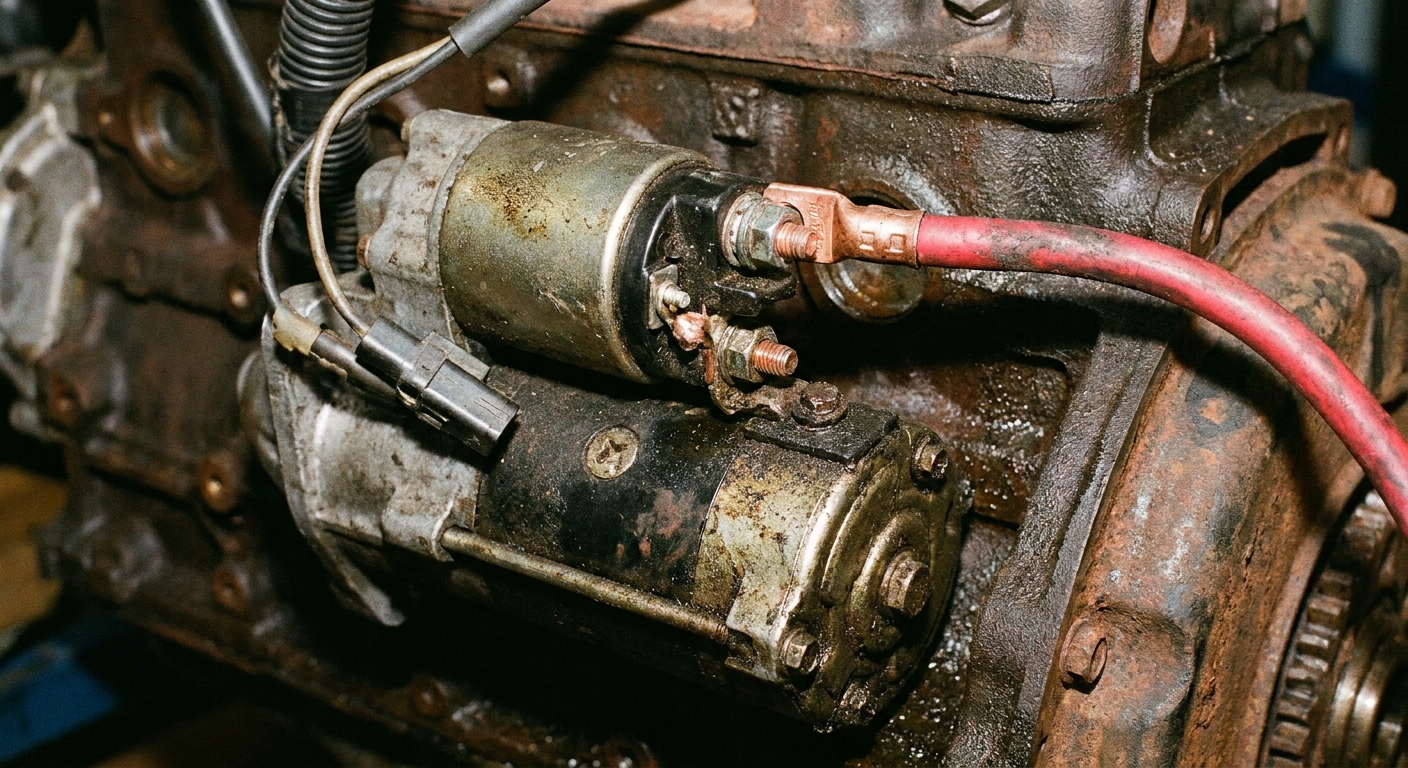
- Place the black lead on the starter positive terminal (or the main power stud at the fuse box if the starter is hard to access).
- Have a helper crank the engine.
- Read the meter while cranking.
Rule of thumb: aim for under 0.5 volts drop on the entire positive path while cranking, and ideally closer to 0.2 to 0.3 volts on a healthy setup. If you are seeing significantly higher, you have resistance in the cable, terminals, or a high-current fuse link.
Negative side test
- Red lead on the battery negative post.
- Black lead on a clean metal part of the engine block.
- Crank and read.
Same idea here: under 0.5 volts total on the ground path is a good target, with lower being better. High drop points to a bad ground cable, a loose ground connection, or corrosion at the chassis or engine ground.
If you do not have a meter, many parts stores can test starting and charging systems. But if the car only starts with the wiggle, focusing on connections first saves everyone time.
Check grounds too
It is easy to obsess over the positive terminal and ignore the negative side. The starter circuit needs a complete loop, and the ground path is half of it.
Check:
- The negative battery clamp tightness and cleanliness.
- The negative cable connection to the body.
- The engine ground strap (a braided strap or cable from engine to chassis). If it is loose, frayed, or corroded, starting can be intermittent.
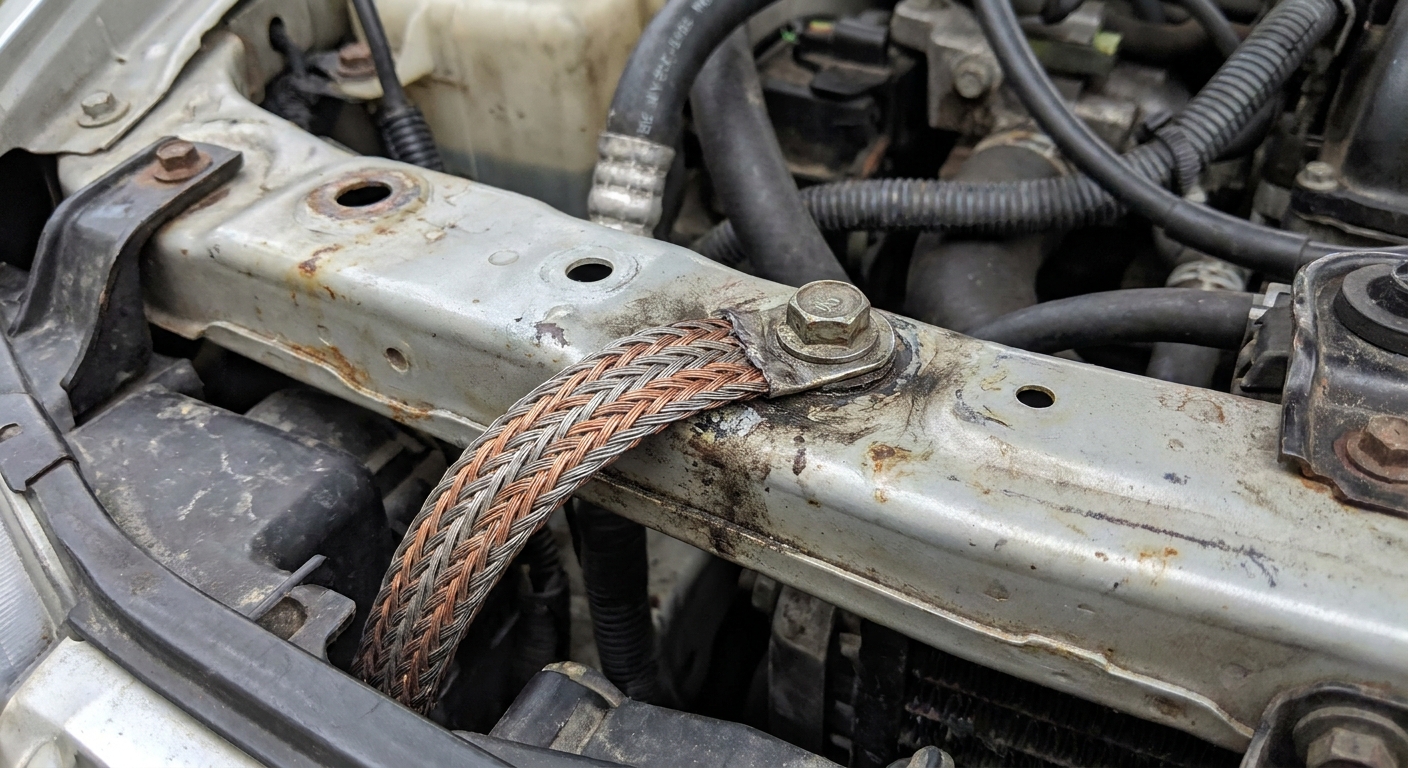
What about the battery?
Yes, a weak battery can mimic some of these symptoms. But the “wiggle makes it start” detail strongly suggests a connection issue.
Still, if your battery is older, get it load tested. How long batteries last is climate-dependent. In hot climates, 3 to 5 years is common, while mild climates sometimes see closer to 4 to 6. A basic voltage reading is not enough. A battery can show 12.6 volts at rest and still fall on its face under starter load.
Clues it is more battery than cable
- The car cranks slowly even with rock-solid, clean terminals.
- You need frequent jump starts.
- Battery voltage drops very low during crank. The often-quoted 9.6 volts benchmark is a rough guideline at about room temperature. In colder temps, voltage can dip lower and still be normal, so use it as a clue, not a verdict.
It is also possible to have both: a battery on its way out and marginal connections. In real life, that combo is common.
Battery in the trunk?
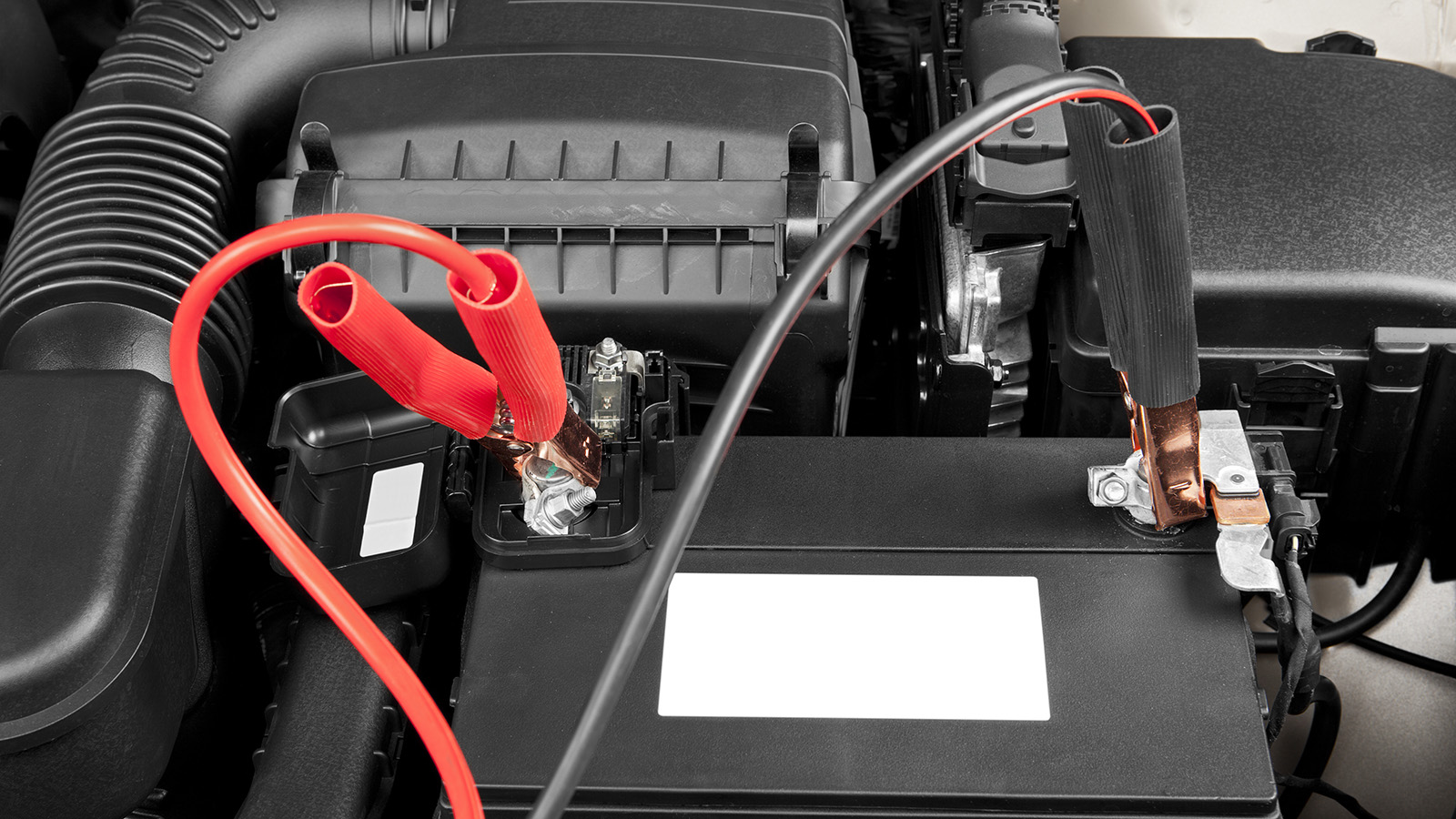
On some vehicles, the battery is in the trunk, under a seat, or behind panels, and there may be an under-hood remote positive jump post and ground point for jump starting. If that is your setup, inspect and clean those connections too. A loose or corroded remote terminal can mimic a bad battery clamp.
Also keep an eye out for a high-current fuse link or mega-fuse near the battery or power distribution block. It is not the first thing I blame for a wiggle-to-start issue, but corrosion or heat damage there can cause big voltage drop under crank.
When to call a pro
Get help if:
- You see damaged insulation on the positive cable where it could short to metal.
- Your vehicle has the battery in a hard-to-reach spot (under a seat, trunk panels) and you are not comfortable accessing it.
- After cleaning, tightening, and verifying the cables and grounds, the issue persists. At that point, you may be into starter solenoid control circuits, relays, neutral safety switch issues, or other electrical diagnosis.
Quick checklist
- Clamp moves on post: tighten or replace stretched clamp.
- Powdery buildup on posts or inside clamps: disconnect and clean.
- Green crust under insulation or stiff, swollen cable: replace the cable.
- Good positive terminal but still intermittent: check negative cable and engine ground strap.
- Everything clean and tight but cranks weak: load test the battery.
FAQ
Is it safe to keep wiggling the battery cable to start the car?
It is not a great habit. A loose connection can heat up under starter load, damage the terminal, and in worst cases cause arcing. Consider the wiggle a diagnostic clue, not a long-term workaround.
Why do my lights work if the battery connection is bad?
Lights and accessories draw far less current than the starter. A high-resistance connection can still pass small current while failing under the huge starter load.
Can I just tighten the bolt more?
Only if the clamp is the right size and not stretched. If the bolt bottoms out and the terminal still moves, tightening harder can crack the clamp. Replace it.
My car starts when I jiggle the key, not the battery cable. Is it the same issue?
No. That usually points to the ignition cylinder, ignition switch, or the electrical portion of the steering column controls. The battery cables can be perfect and you can still have a worn ignition switch.