I’ve lost count of how many cars I’ve seen get towed in for a “dead starter,” only for the fix to be a dirty battery terminal or a loose ground strap. The symptom you’re describing is specific though: you turn the key, you hear one solid click, the dash lights stay bright, and the engine does not rotate at all.
That “one click and nothing” usually means the starter solenoid is trying to do its job, but power is not making it through the high-current path that actually spins the starter motor. Your goal is to figure out which of these buckets you’re in:
- High resistance in the battery cables or grounds (common, cheap to fix)
- Starter solenoid clicks but the internal contacts are not carrying current (often a starter replacement)
- Starter motor is worn out or stuck (starter replacement, sometimes a gentle tap test helps confirm)
- Low voltage (usually rapid clicking, but a marginal battery can still show up as a single click)
- Engine or accessory is locked up (rare, but serious and worth ruling out)
Identify the click
Not all clicks mean the same thing, and chasing the wrong click wastes time.
- One solid click from the engine bay: usually the starter solenoid engaging.
- A click from the fuse box or dash area: often a relay. Some relays click loudly enough to fool people into thinking the starter is clicking.
- Rapid clicking: usually low battery voltage or a poor connection dropping voltage under load.
If your click is a single, heavier “clunk” from down low near the engine, keep going.
Quick safety rules
- Do not crank it 20 times in a row. If the solenoid is partially making contact, repeated attempts can overheat and damage the contacts. In rare cases a solenoid can stick engaged, which is a fast way to cook a starter and cables.
- Limit attempts to a few short tries with a pause between them.
- Set the parking brake. Automatic: Park. Manual: Neutral with the clutch fully depressed. Keep clear of belts and fans.
Fast checks first
1) Battery terminals: tight beats “looks fine”
Bright lights only tell you the battery can supply a small load. The starter asks for a huge burst of current. A slightly loose or corroded connection can pass enough power for lights and still fail the starter.
- Turn the headlights on, then turn the key to Start and watch the lights.
- If the headlights dim hard when you try to crank, that points toward voltage drop (weak battery, bad connections, or a starter drawing too much current).
- If the headlights stay bright and you only get a click, that often points toward an open or high-resistance path, meaning current cannot flow to the starter motor because of a bad connection, cable, or solenoid contact.
Pop the hood and physically check:
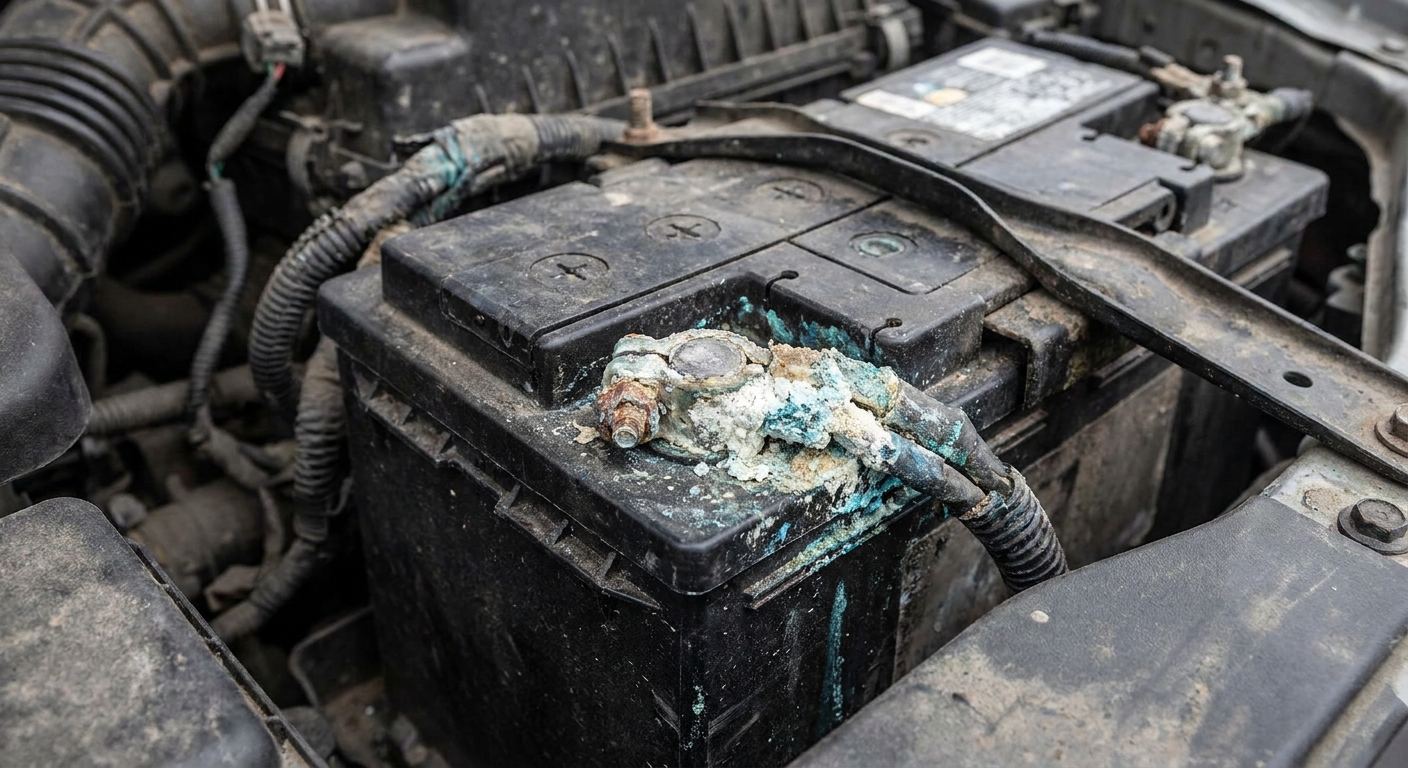
- Positive terminal tight on the battery post
- Negative terminal tight on the battery post
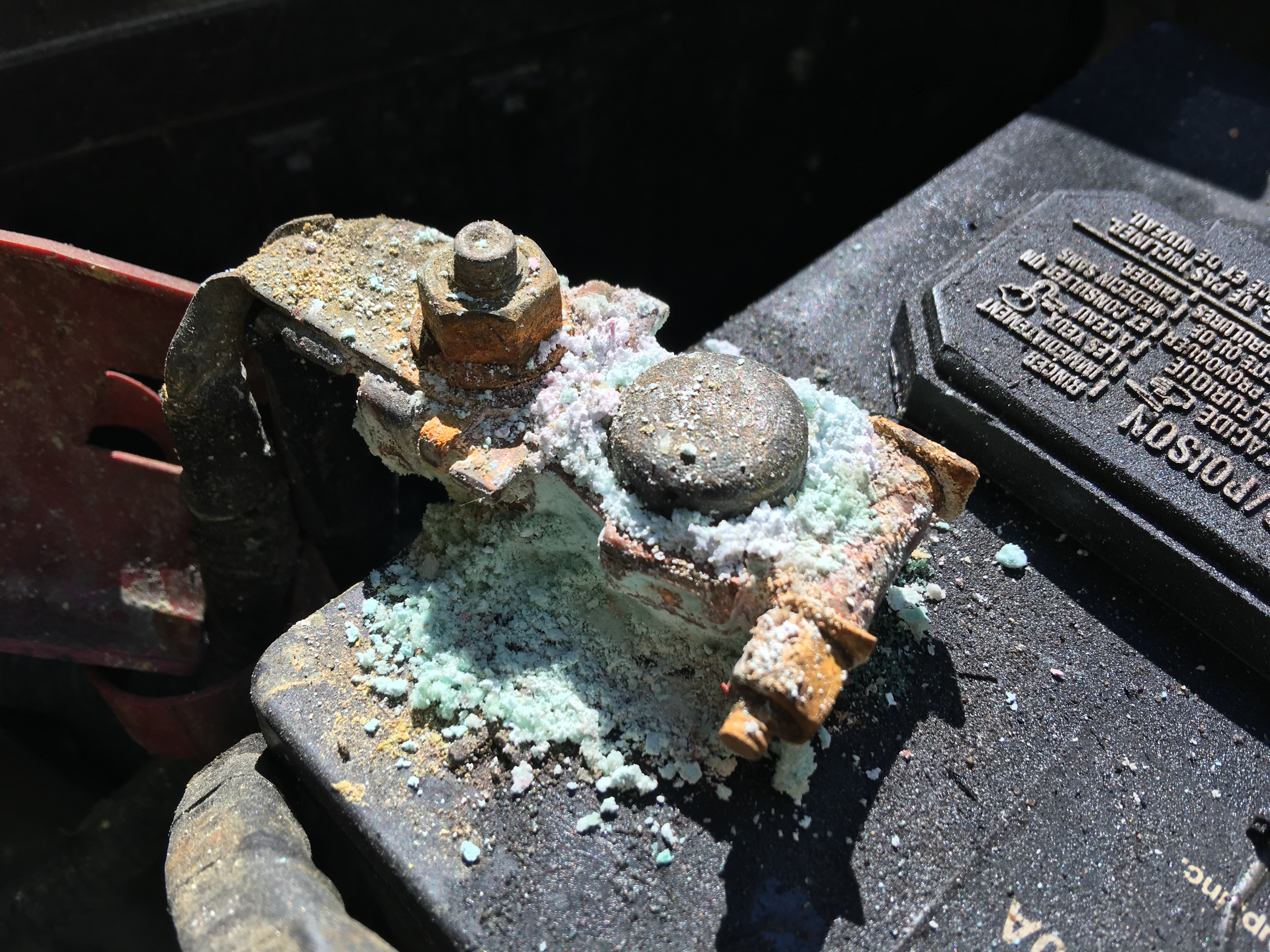
- Battery posts and terminals not furry or crusty
- Main ground cable secure where it bolts to the chassis and engine block
Solenoid contacts vs cable resistance
Here’s the simplest way to think about it: the solenoid has two jobs. It shoves the starter gear into the flywheel and it closes a heavy-duty electrical switch that feeds the starter motor.
When you hear one click, the solenoid is at least trying to move. The question is whether the motor is not getting power because:
- The solenoid internal contacts are burned and not passing current, or
- The power or ground cables cannot carry current because of hidden corrosion, looseness, or a damaged cable.
Best at-home test: voltage drop
If you’ve got a basic digital multimeter, you can get a confident answer without guessing. The numbers below are guidelines, not hard pass or fail limits. Cable length and design matter. In general, you want voltage drop to be low on both the positive and ground sides.
- Test A: Positive side drop
- Set meter to DC volts.
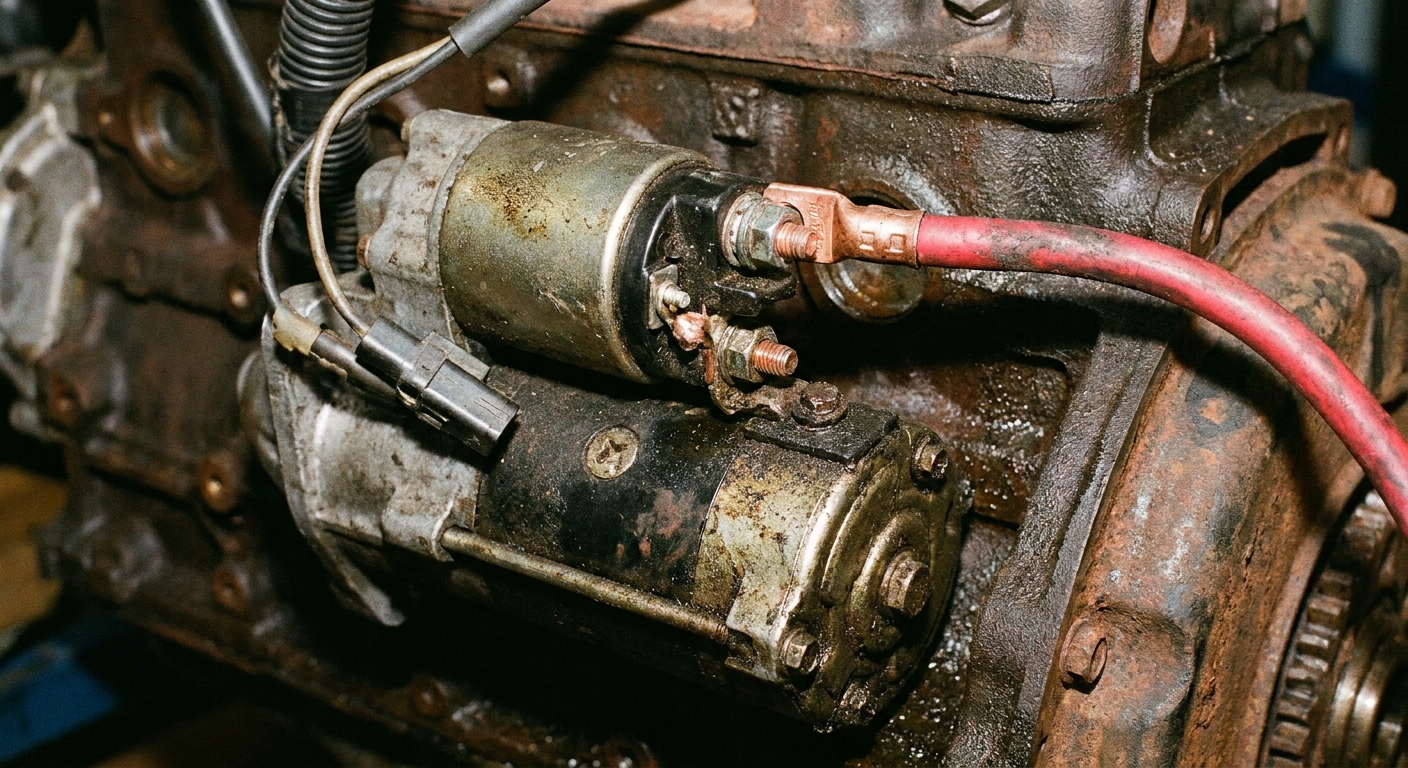
- Put the red lead on the battery positive post (not the clamp), and the black lead on the starter’s large B+ terminal (the big stud with the battery cable).
- Have a helper turn the key to Start.
- Ideally stay under about 0.2V to 0.3V. Above about 0.5V on the positive side during a crank attempt is a strong sign you have excessive resistance somewhere on that path.
- Test B: Ground side drop
- Red lead on the starter housing (bare metal), black lead on the battery negative post (post, not clamp).
- Key to Start.
- Ideally stay under about 0.2V to 0.3V. Higher suggests a ground problem (engine ground strap, battery negative cable, corroded chassis ground).
If voltage drop is high, fix the cables and connections first. Starters get blamed for bad wiring constantly.
Extra clue: battery voltage under load
Another quick check is watching battery voltage while someone turns the key to Start. Many vehicles will still crank with battery voltage around the high 9s to low 10s during cranking, but if your battery drops well below that during an attempted crank, suspect a weak battery or a major connection issue. Again, treat it as a guideline, not gospel.
No multimeter? Use heat as a clue
After a start attempt, carefully feel the battery cable ends at the battery only. Do not reach down and touch the starter or nearby exhaust parts. If one clamp or cable end is noticeably warm, that’s a classic sign of resistance at that joint. Warmth means energy is being wasted as heat instead of turning the starter.
What a single click can mean
1) Solenoid clicks, contacts do not carry current
This is extremely common on higher-mileage starters. The solenoid plunger moves (click), but the copper contacts inside are burned or pitted so the motor never gets full power.
Typical clues:
- Single click every time you try
- Lights stay bright
- Battery tests “good”
- Sometimes it starts after several tries, then gets worse over days or weeks
Fix is usually a starter replacement (or solenoid/contact service on some designs).
2) High-resistance connection that fails under starter load
You can have a battery that runs accessories perfectly and still cannot feed the starter through a corroded cable end, loose clamp, or compromised ground strap.
Typical clues:
- Intermittent no-crank that changes if you wiggle cables
- Click is present, but behavior changes after cleaning terminals
- Warm battery clamp or cable end after a start attempt
3) Starter motor failure or mechanical bind
If the solenoid is sending power but the motor is worn, has a dead spot, or the starter drive is binding, you can get one click and no spin.
Typical clues:
- One click, no crank, then it randomly works later
- Tap test changes the outcome (more on that next)
Tap test
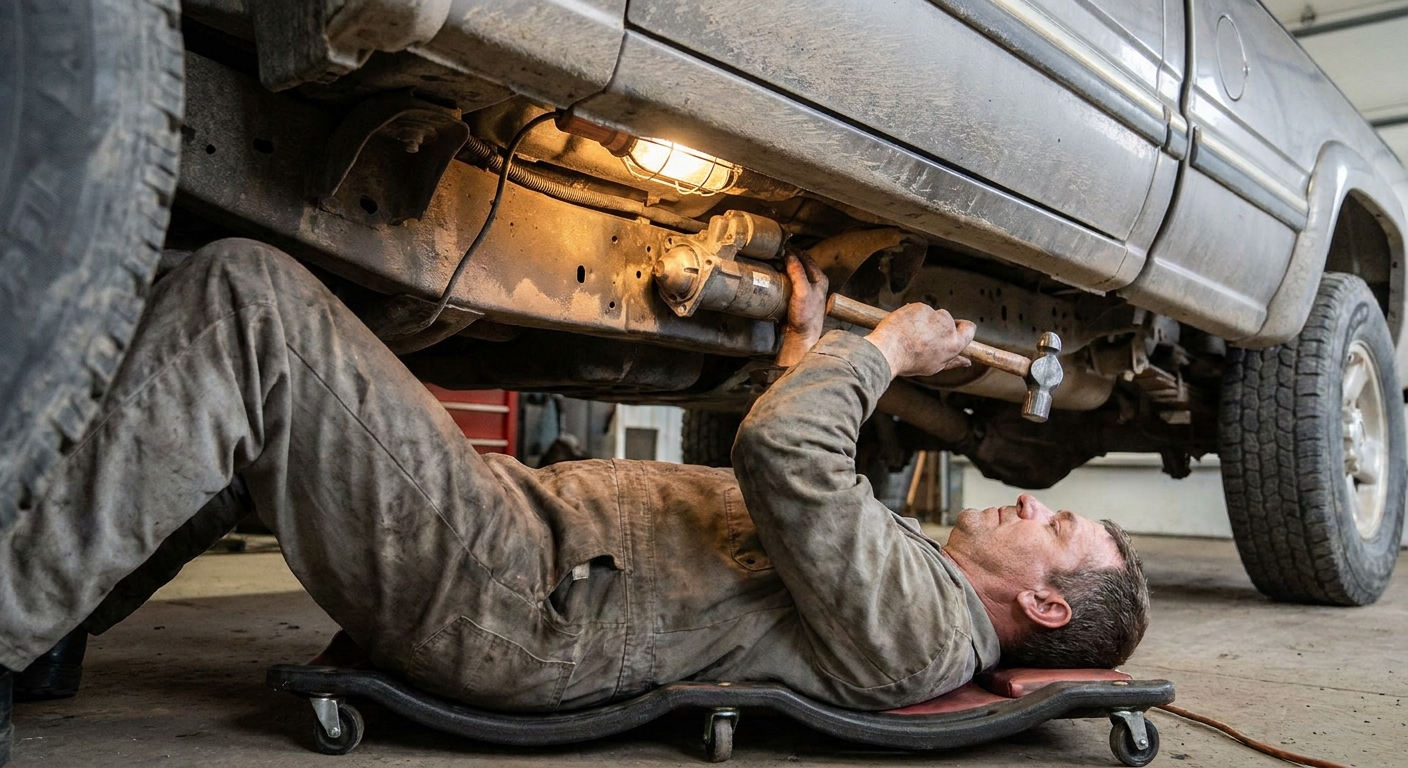
The old-school “tap the starter” trick is not magic. It works for one narrow reason: a worn starter motor can have brushes that are not making good contact, or an armature with a dead spot. A light impact can jostle things enough to make contact one more time.
How to do it safely
- Key off.
- Use a small hammer or the handle of a ratchet.
- Tap the starter body, not the plastic solenoid cap or wiring.
- Try starting once.
If it suddenly cranks after the tap, treat that as confirmation the starter is failing. It is not a fix, it’s a get-you-home clue.
When to stop
- If you smell hot electrical odor, see smoke, or hear a harsh grinding noise, stop.
- If the starter ever seems like it stays engaged after you release the key, stop immediately and disconnect the battery if you can safely do so.
- If repeated tries change nothing, stop before you overheat cables or damage the solenoid.
Rapid clicking is usually low voltage
You asked about a single click, but it’s worth drawing a bright line here because people mix these up.
Rapid clicking is typically:
- A weak battery
- Loose or corroded battery terminals
- A failing battery cable
In rapid clicking situations, voltage is collapsing as soon as the solenoid pulls in, then popping back up when it releases, over and over. Jump starting often changes the symptom immediately.
Relays and safety switches
The neutral safety switch, clutch switch, starter relay, and ignition switch can absolutely cause a no-crank. They usually do not produce a heavy click at the starter, but relays can click loudly and confuse the diagnosis.
If you’re not sure where the click is coming from:
- Try starting in Neutral instead of Park (automatic).
- For a manual, fully depress the clutch and try again.
- Listen carefully: a click inside the cabin or fuse box is often a relay, not the starter.
If you have no click at the starter at all, you’re in a different diagnostic tree: control circuit, relay, fuse, ignition switch, immobilizer, or wiring.
Rule out a locked engine
This is not the common outcome, but it’s important. A seized engine or a locked accessory can mimic a no-crank with a single click.
- If you had overheating, a sudden shutdown, or you heard ugly mechanical noises right before this started, take it seriously.
- If you can safely access the crank bolt and you know what you’re doing, confirming the engine can rotate by hand is a solid check. If you cannot, do not force it. Get help.
If the engine cannot rotate, the starter is not your problem, and continuing to crank can make things worse.
How I’d prioritize this
- Clean and tighten battery terminals and check both ends of both cables (battery end and engine or starter end).
- Check grounds: battery to chassis and engine ground strap.
- Confirm where the click is coming from: starter area vs relay or fuse box.
- Do a voltage drop test while attempting to crank.
- If voltage drop is acceptable and you still get a single click, suspect the starter or solenoid.
- If tapping changes the outcome, plan on replacing the starter soon.
FAQ
Can my battery be bad even if the lights are bright?
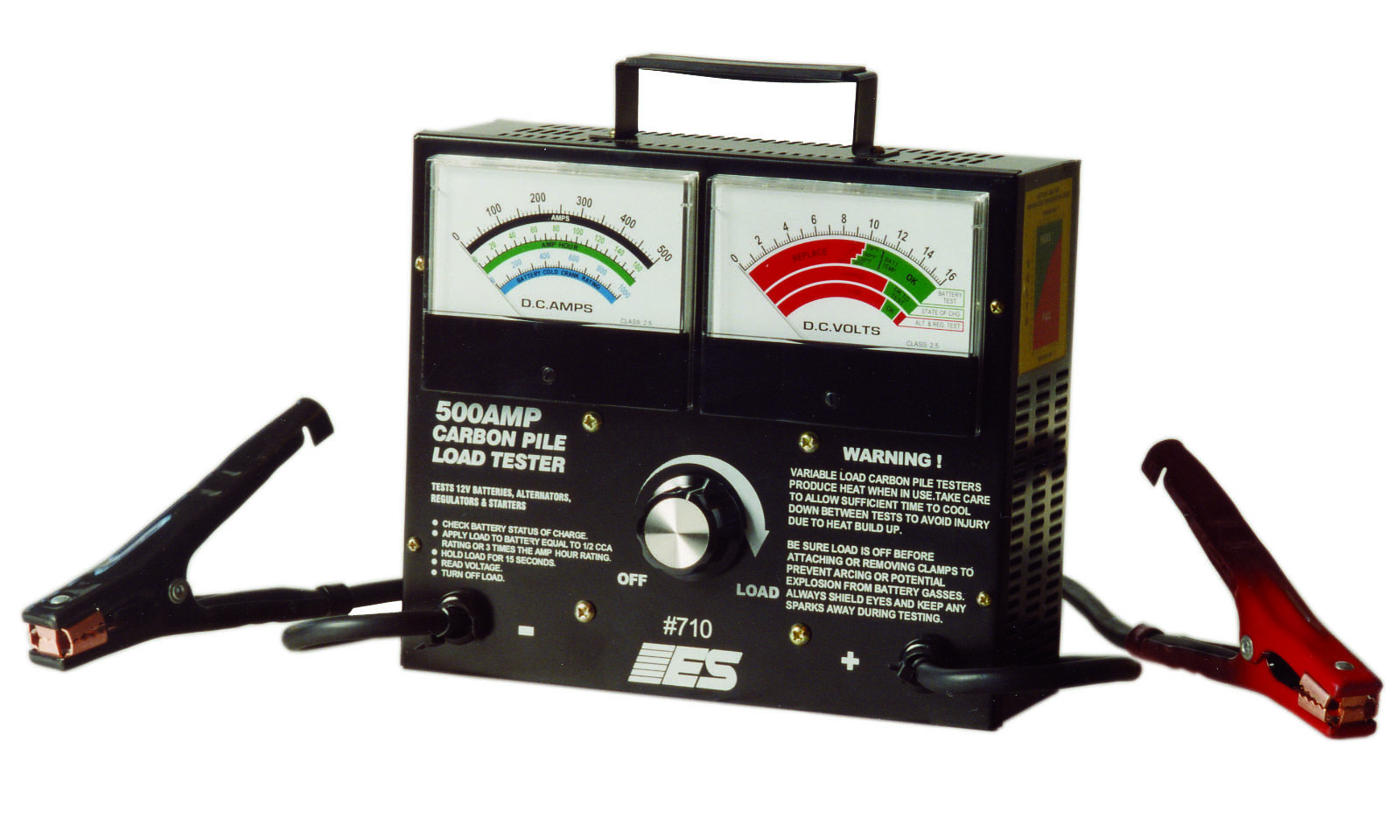
Yes. Lights draw a small load. A battery can show decent voltage at rest and still collapse under the 150 to 300+ amp load of a starter. Load testing, or watching voltage during a start attempt, tells the real story.
Why does it sometimes start after several key turns?
That pattern strongly suggests worn solenoid contacts or a starter motor with brush wear or a dead spot. Repeated attempts sometimes land the internals in a position where contact happens. It usually gets worse, not better.
Is it safe to keep trying until it starts?
I wouldn’t. A few attempts are fine, but repeated cranking can overheat cables and damage connections. If it is not cranking after a handful of tries, switch to diagnosis or call for help.
Should I jump start it if it only clicks once?
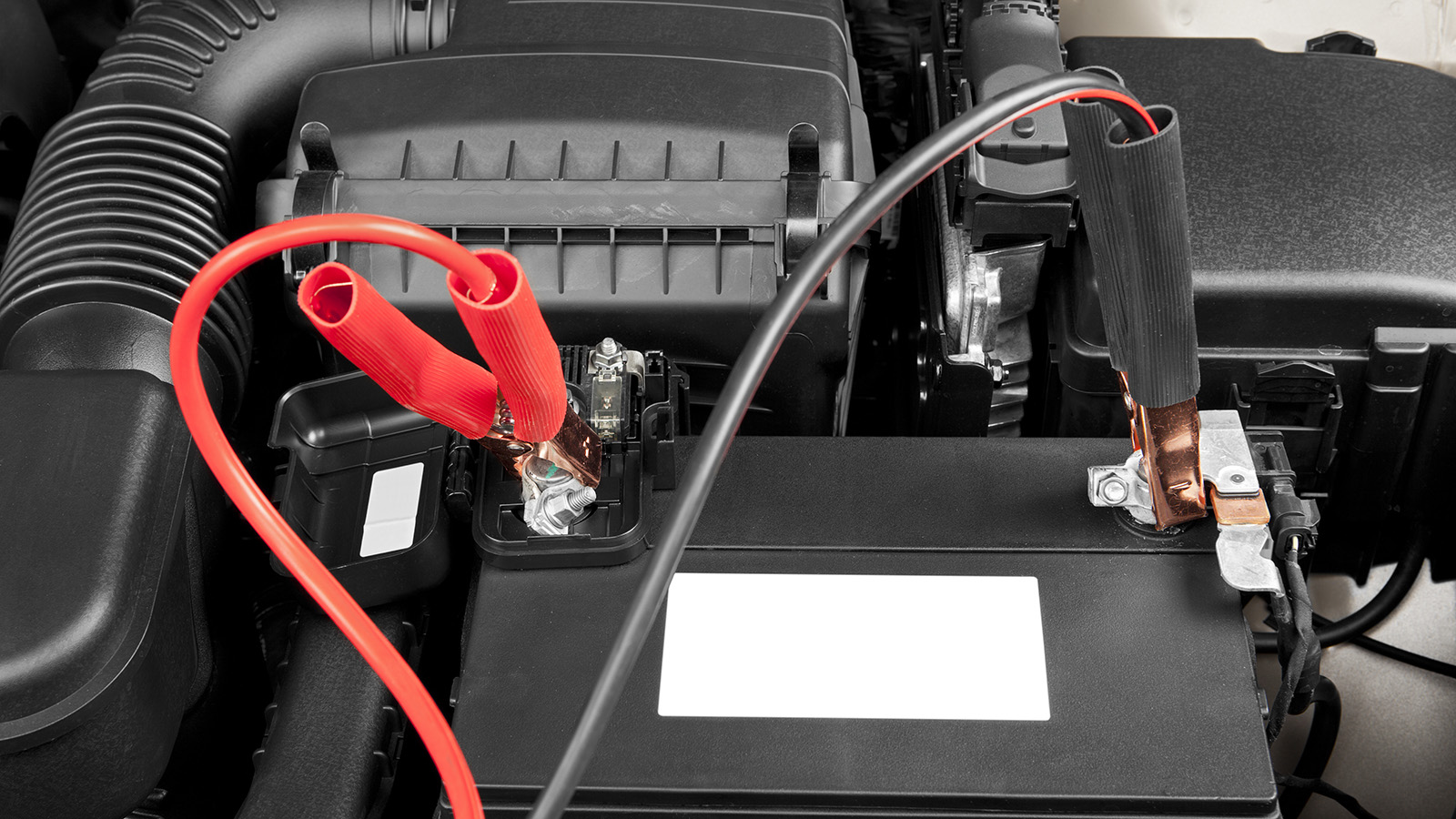
It can help rule out low battery voltage, and it’s usually worth trying if you do it correctly. If a jump makes no difference and the symptom stays “one click, no crank,” that points you back toward cables, grounds, solenoid contacts, or the starter itself.
When to call a pro
If you cannot access the starter safely, do not have the tools to test voltage drop, or you suspect a cable is overheating, it’s time to get a shop involved. A good tech can confirm the fault in minutes with a meter and save you from throwing parts at it.
If you tell the shop, “It’s one solid click at the starter, lights stay bright, and I checked voltage drop,” you’ll sound like you’ve been hanging around my old service bay.