I have seen it more times than I can count at the shop. A car comes in running fine, someone swaps the battery in the parking lot, and suddenly it is a no-start. The good news is that when the problem appears right after a battery replacement, it is usually something simple and close to the work you just did, not a random starter or fuel pump that picked the exact wrong moment to die.
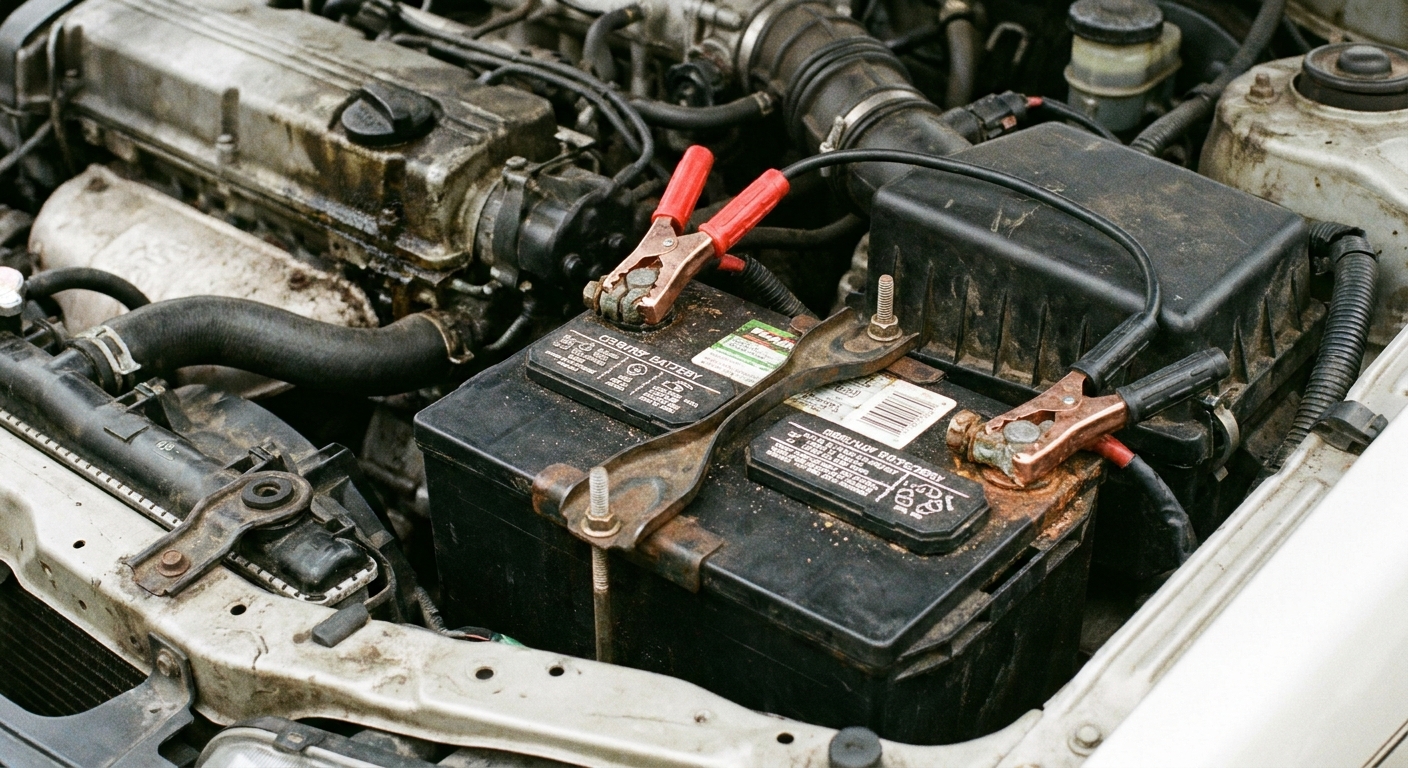
Below is the same troubleshooting order I use when a no-start happens during a battery swap. This is strictly post-install fault isolation, not jump starting and not corrosion cleaning.
Start with safety and basics
Before you re-check anything, make sure the car is in Park or Neutral, parking brake set, and the key is out of the ignition. If your vehicle has keyless start, keep the fob away from the car while you are working around the battery.
- Wear eye protection. Batteries can spark if a tool bridges power to ground.
- Do not short the terminals with a wrench. One accidental contact to the body can blow a fuse instantly.
- Confirm the battery is correct for your car (group size and terminal layout). A battery that physically fits but has reversed post orientation can set you up for a cable stretch or a polarity mistake.
- Grab basic tools: the correct wrench or socket for your terminals and hold-down (often 10mm or 13mm), a flashlight, and a multimeter if you have one.
Quick triage
The exact symptom narrows the hunt.
- Absolutely nothing (no crank, no click, dash dead): think loose connections at the battery, a main fuse or fusible link, or a disconnected ground.
- Dash lights work but no crank (maybe one click): think poor terminal contact, a blown main fuse, or a start enable issue triggered by low voltage during the swap.
- Cranks but will not start: think security or key recognition, low voltage during cranking, or something you bumped loose near the battery or air intake.
- Starts then stalls or runs rough: think an idle or throttle relearn after power loss, or an unplugged intake sensor.
1) Check cable polarity
Reversing the terminals is one of the quickest ways to turn a simple battery swap into an immediate no-start. Many vehicles protect themselves by blowing a main fuse or fusible link, but reverse polarity can still damage electronics (alternator diodes, control modules, and more) even if a fuse opens.
How to confirm polarity
- Find the + and - markings molded into the battery case near the posts.
- Match the cables: the positive cable usually has a red cover and typically routes to a fuse box or starter feed. The negative usually routes to the body and engine block.
- Do not rely on cable color alone. On older cars or repaired harnesses, colors can lie. The battery markings do not.
If you did connect them backwards, disconnect the cables (negative off first), and move to the main fuse section below. There is a strong chance something protective opened up.
2) Tighten the terminals
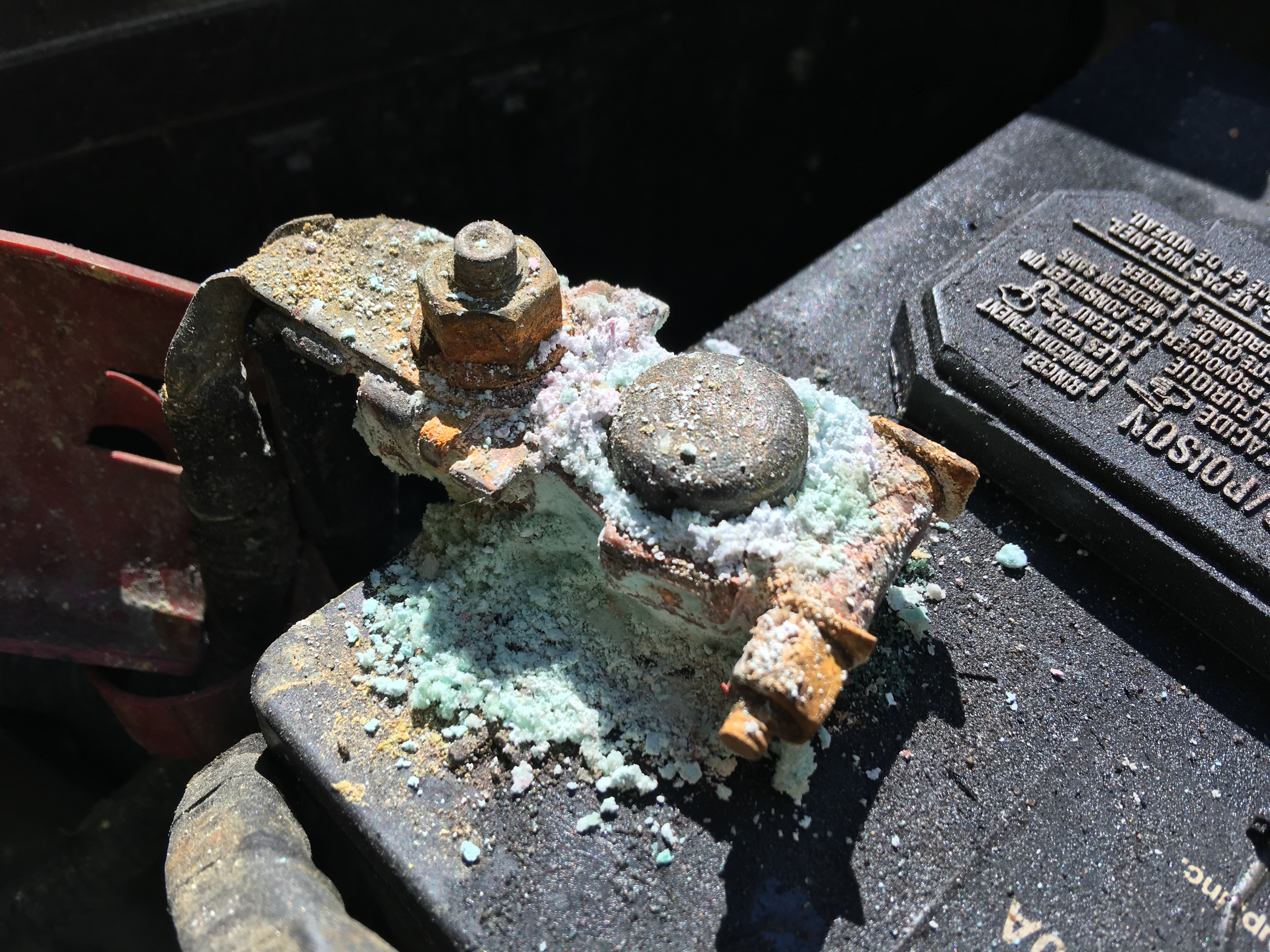
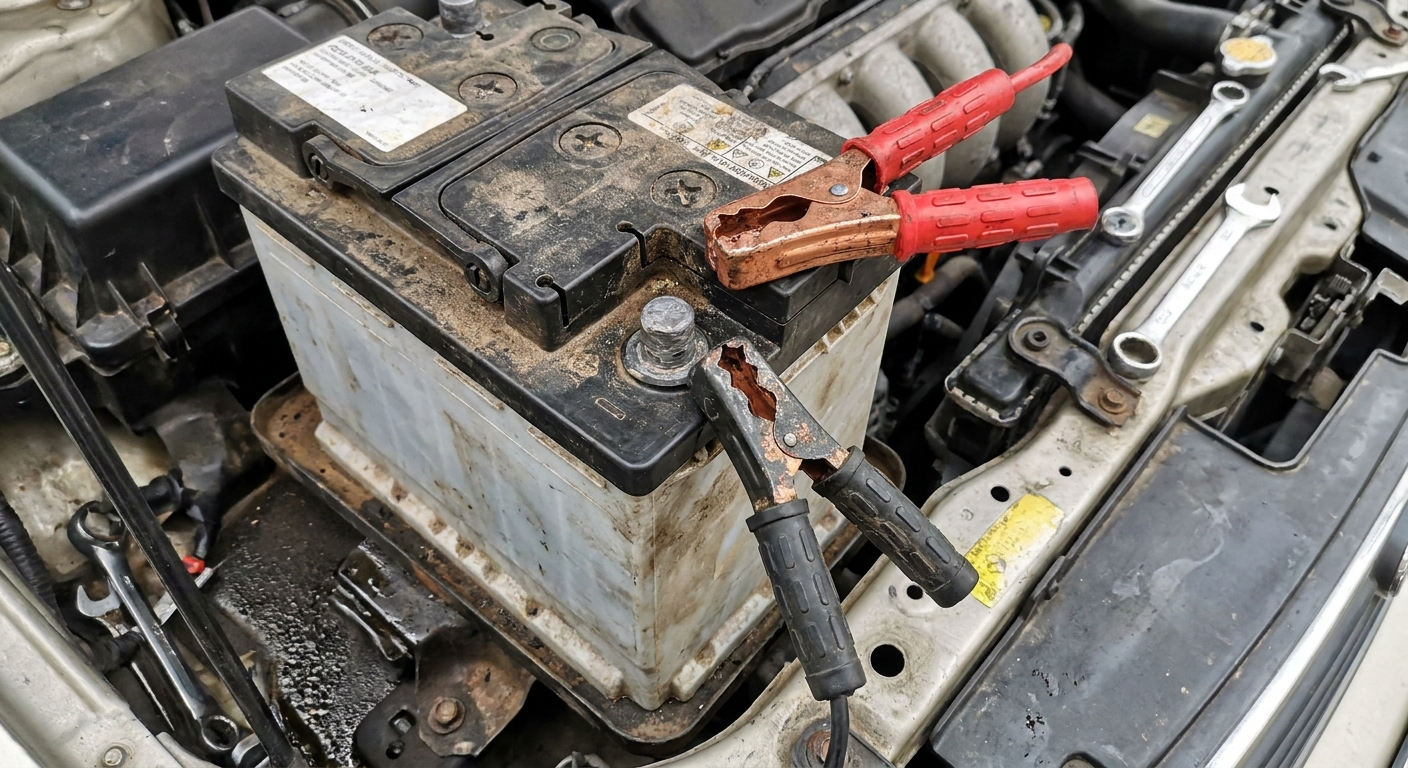
If I had to bet lunch money on one cause, it is this. Battery posts are tapered. A clamp can feel snug but still not make solid contact where it matters, especially if it is sitting high on the taper.
What a loose terminal looks like
- The clamp is installed but you can twist it by hand on the post.
- The car powers up, but when you try to crank, everything dims or resets.
- You hear a single click and then nothing.
What to do
- Remove the negative terminal first, then the positive.
- Re-seat the clamps so they sit fully down on the posts.
- Tighten until the clamps do not rotate. Do not crush them. If the clamp bottoms out and is still loose, it may be stretched or the wrong style and needs replacement.
- Watch for common mismatches like side-post vs top-post adapters, or aftermarket clamps that bottom out before they actually clamp.
- Quick gotcha: make sure you did not leave a protective terminal cap or shipping insulator on a battery post.
Also look for a second smaller wire on the negative cable. Many cars have a battery sensor on the negative terminal. If that connector is not seated, you can get weird electrical behavior.
3) Check hold-down and strain
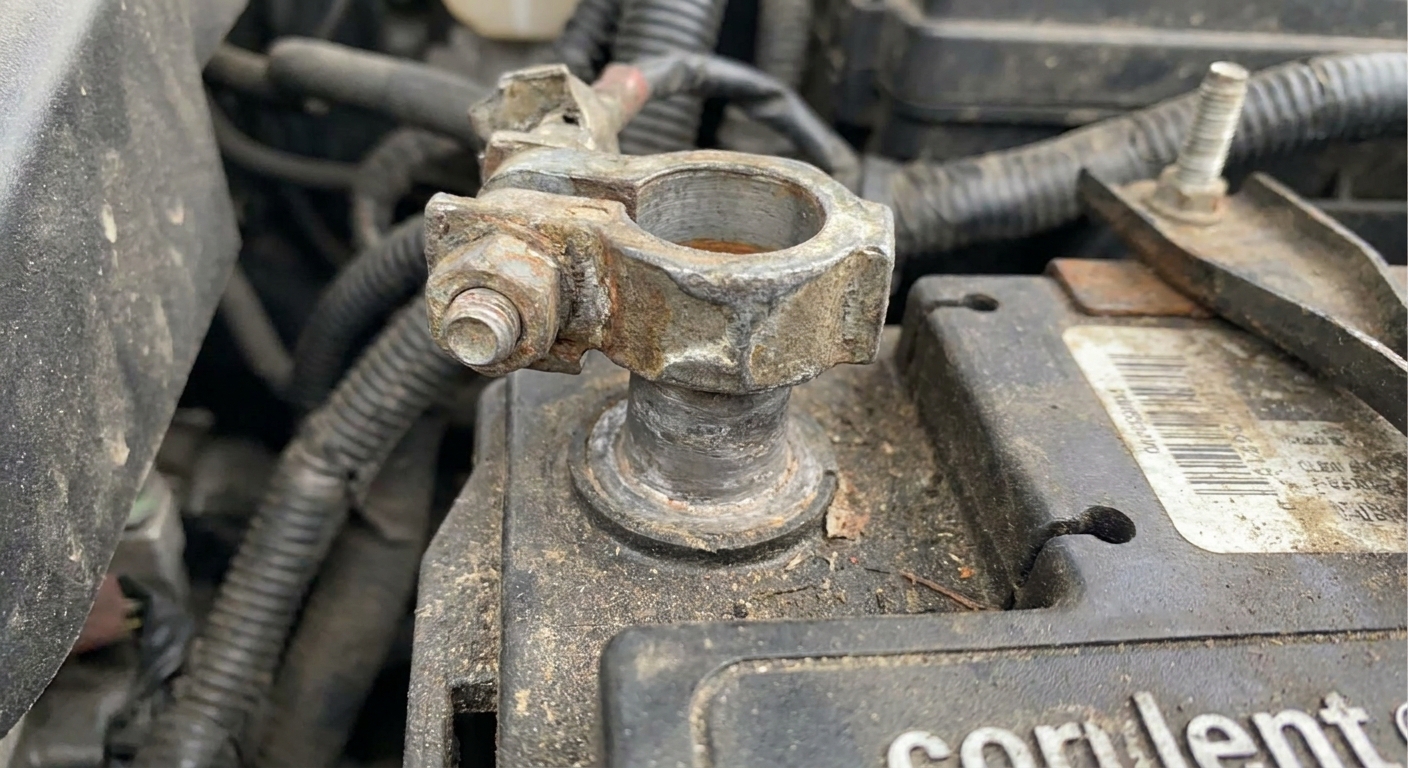
This sounds minor, but it matters. If the battery is not clamped down, it can shift and tug the terminals when you close the hood or hit a bump. Also, if the battery is the wrong height, the cables can be stretched to reach, leaving you with intermittent contact.
- Make sure the hold-down bracket is installed and snug.
- Verify the cables are not pulled tight or rubbing sharp metal.
4) Verify the ground
When the dash is acting dead or the starter will not engage, I always give the ground side a hard look. A loose or missing ground can mimic a dead battery instantly.
- Follow the negative cable to where it bolts to the body and make sure that fastener is tight.
- Look for the engine to body ground strap near the battery tray or engine mount area. If it is loose, broken, or left off during access, you can get a no-crank or all sorts of weird resets.
5) Check battery charge
Do not assume a brand-new battery is fully charged. I have tested plenty that were low right off the shelf.
- With the car off, a healthy fully charged battery is typically around 12.6V.
- If you are seeing 12.2V or less right after install, you are already starting from behind.
- During cranking, voltage dropping very low can cause computers and security systems to act up. If you have a meter and can safely watch voltage while someone cranks, a major dip is a clue.
Low battery voltage can also make an immobilizer look guilty when the real issue is the car is browning out during crank.
6) Main fuse or fusible link
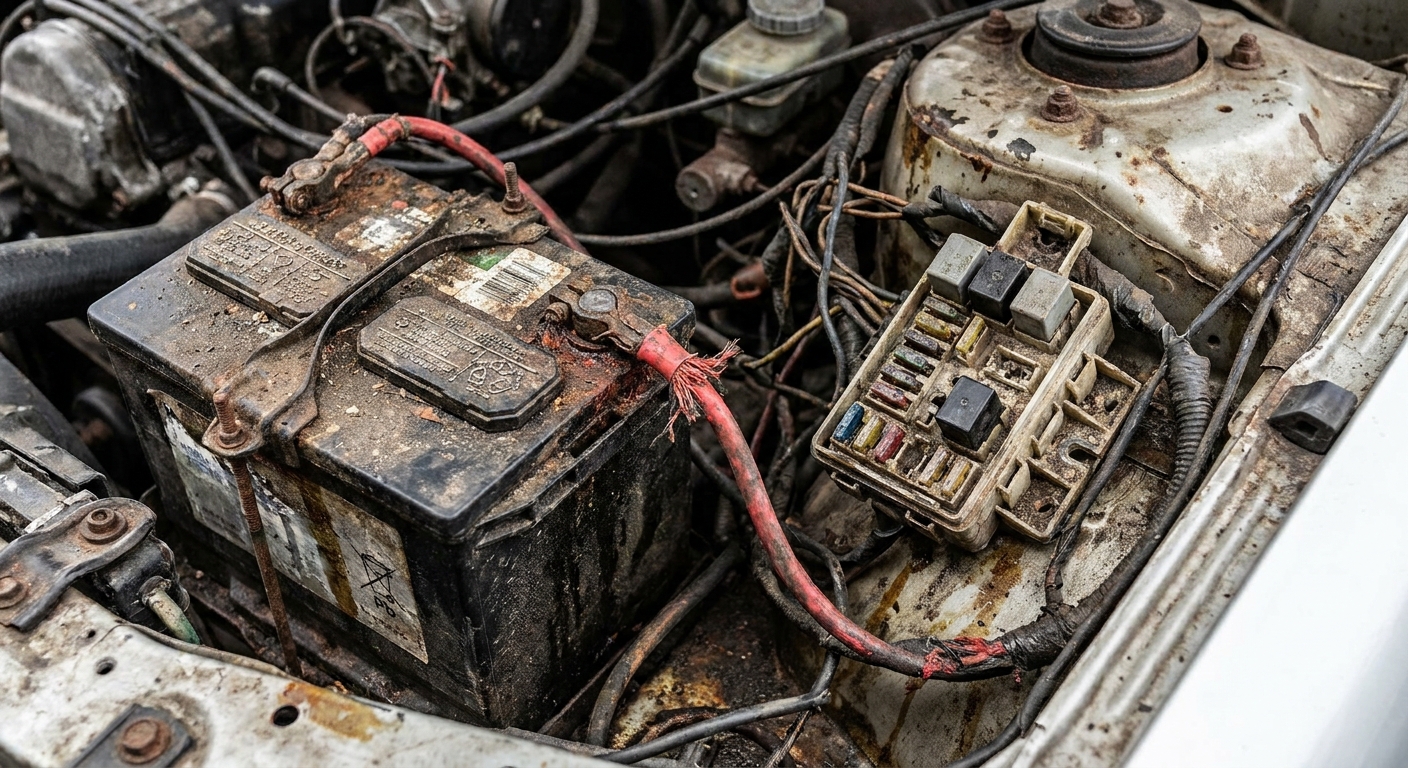
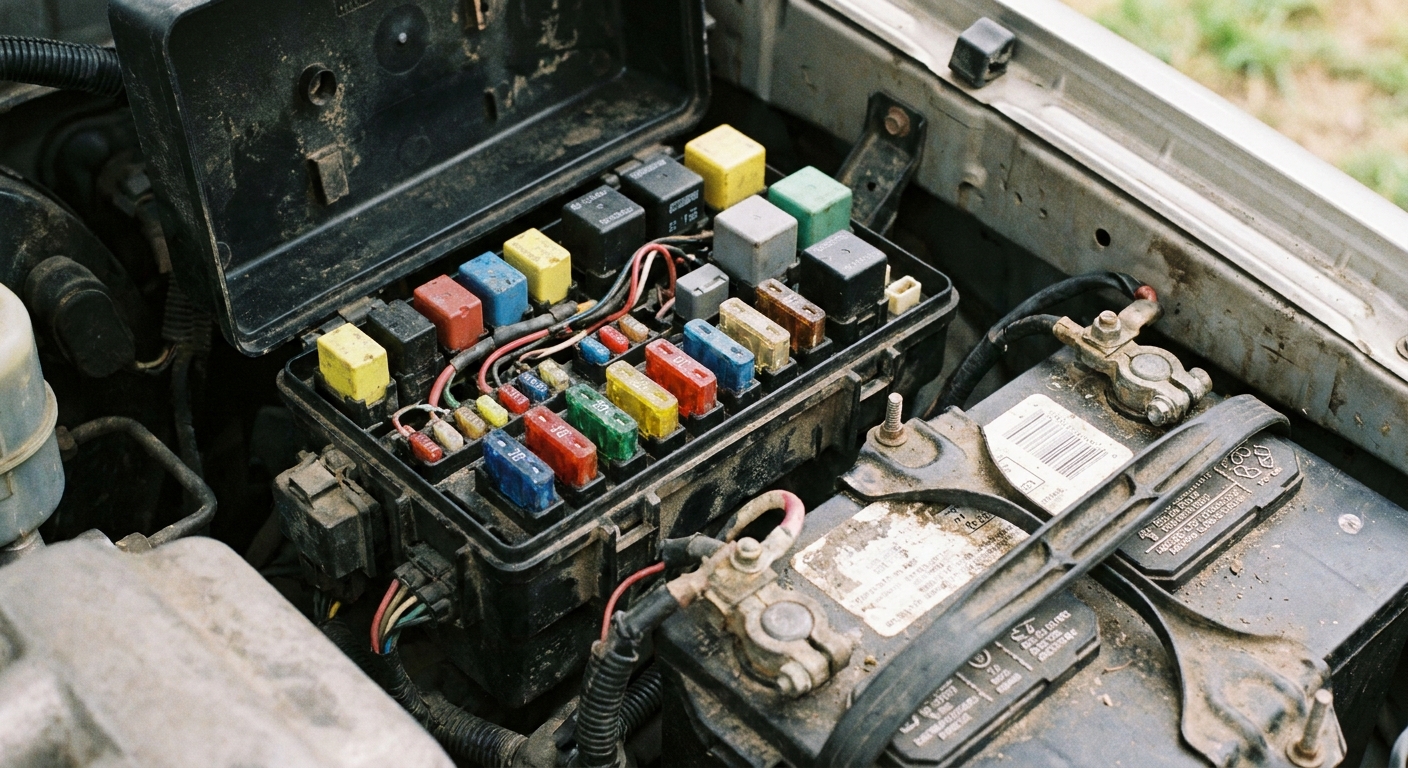
If your lights come on but the car will not crank, or you have partial power but the starter never engages, check the high-amp protection. Many vehicles have a main fuse in the under-hood fuse box. Some have a fusible link built into the battery cable.
Common clues
- You connected the battery backwards, even for a second.
- You accidentally touched a wrench from the positive terminal to metal.
- You now have power in the cabin but no crank, or the car seems dead in certain circuits (no ignition power, no fuel pump prime, and so on).
What to check
- Under-hood fuse or relay box: look for fuses labeled MAIN, BATT, ALT, IGN, or similar.
- Fusible link at the battery: some cars have a multi-fuse block attached to the positive terminal.
If you find a blown high-amp fuse, do not just replace it and call it done. Identify what caused it first. If it blew during the swap, the cause is usually a short or reversed polarity, which you need to correct before installing a new fuse.
7) Security and key issues
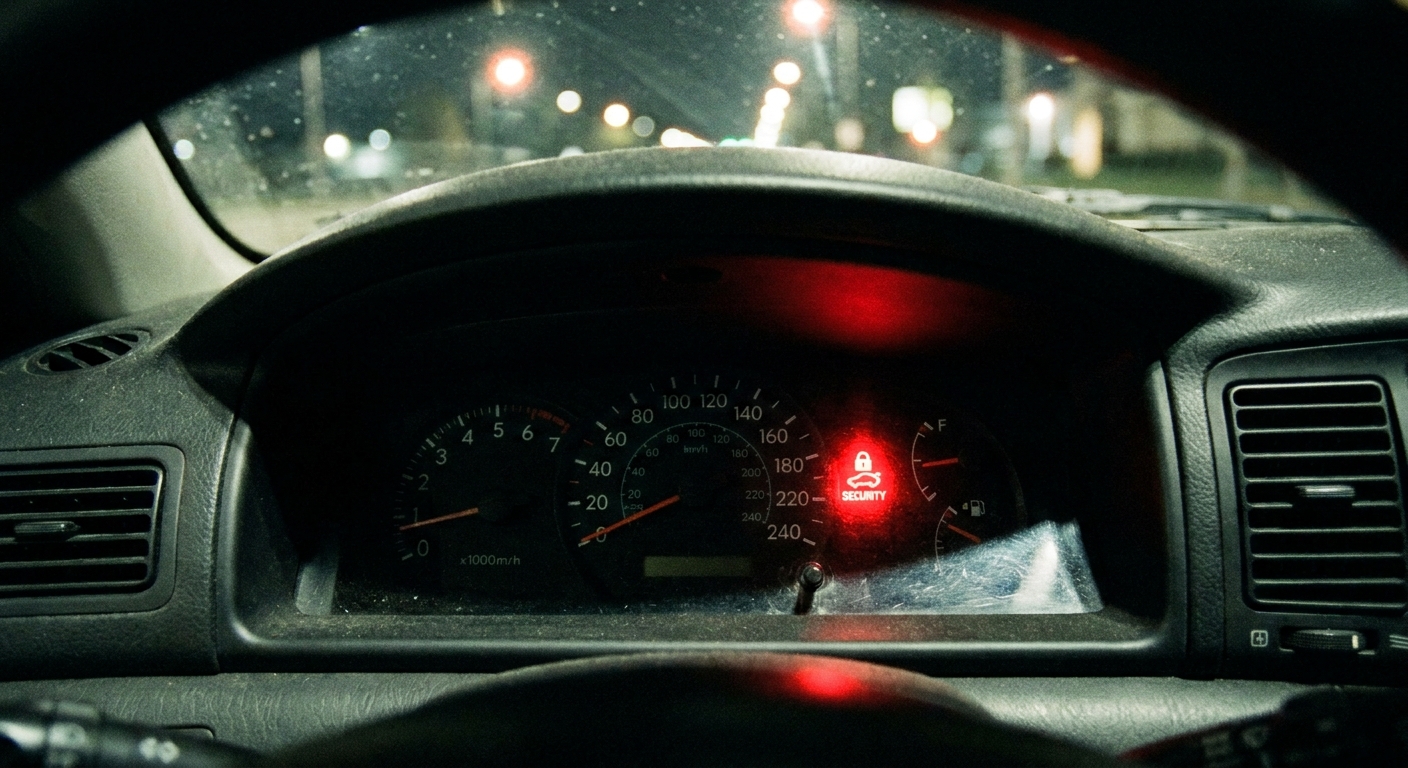
Some vehicles get cranky after losing battery power, and low system voltage during cranking can make it worse. You can also get a false alarm if the key fob battery is weak right when the car is trying to wake everything back up.
Signs it may be security related
- The engine cranks but will not start.
- A security light is flashing on the dash, or a key icon stays on.
- Keyless start shows Key Not Detected even though the fob is present.
A simple sequence that may help
- Lock the car, wait 30 to 60 seconds, then unlock it.
- Turn ignition to ON (do not crank) for 10 to 20 seconds.
- Turn it OFF, wait a few seconds, then try to start.
This will not fix every immobilizer problem. Some makes require a specific relearn process, scan tool steps, or time-based relearns. If the security light stays active, stop guessing and look up the make-specific procedure for your vehicle, or get it diagnosed.
If you have push-button start and suspect the fob battery, try holding the fob against the start button (many cars have a passive pickup there) and attempt to start again.
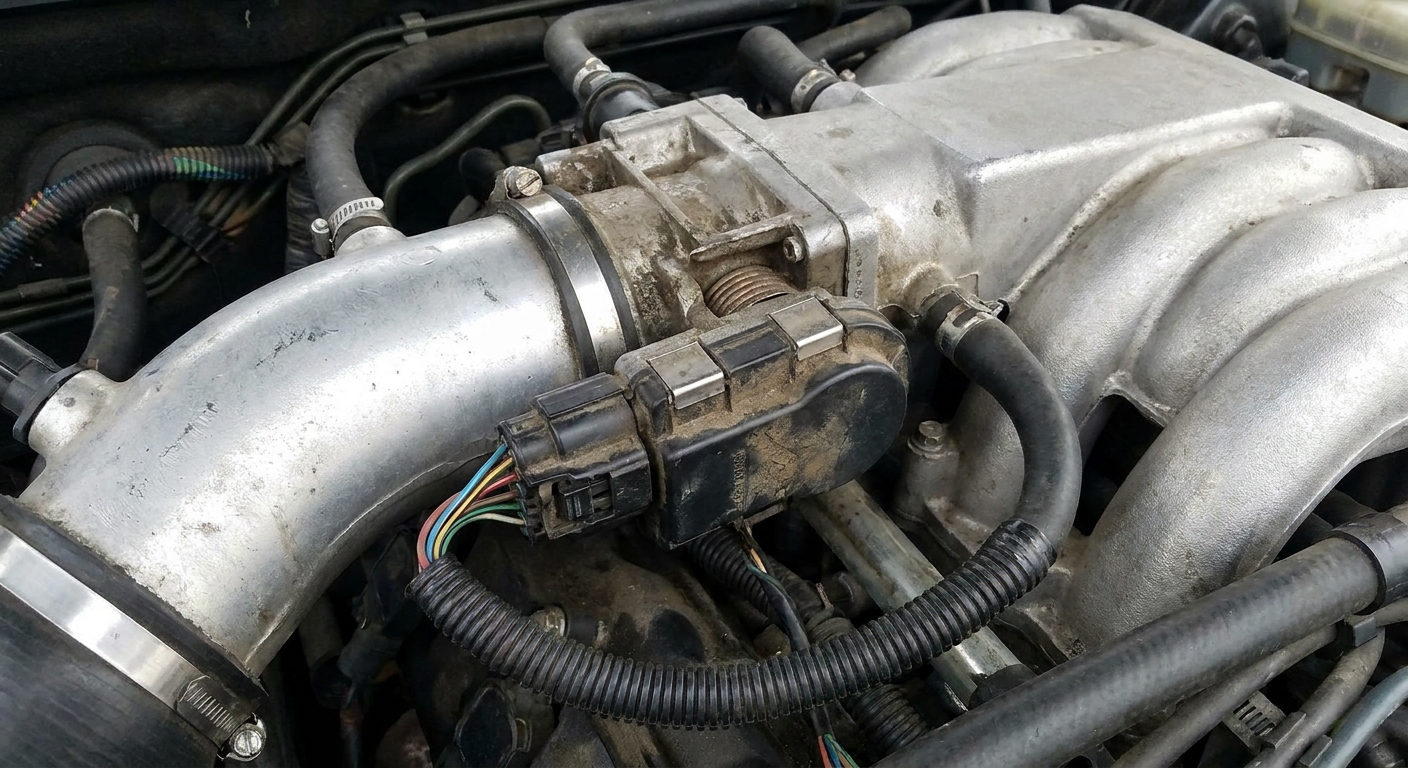
8) Idle and throttle relearn
This is for start then stall, rough idle, or hunting idle after power loss, not for a true no-crank. On a lot of modern vehicles, the engine computer learns idle airflow and throttle position over time. When you disconnect the battery, that learned data can reset.
Common post-swap symptoms
- Starts, then immediately stalls unless you hold the throttle.
- Starts but idle hunts up and down.
- Cranks longer than normal before catching.
A safe general approach
Exact procedures vary by make and model. This is a safe baseline that often helps:
- Turn the key to ON for 30 seconds (engine off), then OFF for 10 seconds.
- Start the engine without touching the accelerator.
- Let it idle with all accessories off for 5 to 10 minutes.
- Then turn on headlights and blower fan and let it idle another couple minutes.
If it will not stay running long enough to relearn, you may need a manufacturer-specific procedure or a scan tool idle relearn function. When in doubt, check your owner’s manual or service information for your exact vehicle.
9) Check nearby connectors
This one is sneaky. Many batteries are packed next to the air intake, fuse box, or a harness junction. It is easy to lean in, shift the intake tube, and partially unplug something.
- Quickly check the MAF sensor connector on the intake tube near the air filter box.
- Look for any ground strap you might have removed to access the battery hold-down.
- Inspect the under-hood fuse box area for a connector that is not fully seated.
A loose MAF connection usually shows up as a start then stall, rough running, or a check engine light. Some vehicles will still start and limp along, but it is close enough to the battery that it gets disturbed often.
10) Battery registration
Some makes, especially vehicles with smart charging systems, benefit from or require battery registration or a battery management system reset after replacement. This usually does not cause an immediate dead no-start, but it can cause charging issues, warning lights, or strange electrical behavior.
If your vehicle is known for this, you may need a scan tool capable of battery registration. If you are seeing a charging warning light, fluctuating voltage, or repeated low-voltage warnings after the swap, this is worth looking into.
When to stop
If you have verified correct polarity, tight terminals, and you do not see an obvious blown main fuse, do not keep cranking the starter endlessly. You can overheat a starter and drain a brand-new battery quickly.
- Stop immediately if you smell hot plastic or see smoke near the battery or fuse box.
- If a main fuse blows again as soon as you replace it, you likely still have a short or wiring damage and should get professional diagnostics.
- If the car cranks strong but will not start and the security light is active, you may need a dealer-level scan tool or locksmith support for immobilizer faults.
3-minute checklist
- Battery cables on the correct posts (+ to +, - to -)
- Terminals fully seated and cannot twist by hand
- Battery hold-down installed, cables not under tension
- Negative cable and engine ground strap secure
- Battery voltage is reasonable, not already low
- Main fuse and any fusible links intact
- Security light behavior normal, try a key cycle that may re-sync
- If it starts then stalls or idles rough, do a basic relearn
If you want, tell me your year, make, model, and what exactly happens when you turn the key (no power, clicks, cranks, start-stall). That symptom pattern usually points to the right section of this list immediately.