If your engine cranks strong but the fuel pump stays dead silent, the fuel pump relay is one of the quickest make or break checks you can do in your driveway. In the shop, I treated it like a fork in the road: is the pump not being commanded, or is the pump commanded but not running?
This guide walks you through the practical tests that actually narrow it down: listening for the prime, swapping with an identical relay, and then using a multimeter or test light at the relay socket to see what is missing.
Before you start: quick safety and setup
You will be working around fuel system electronics. Keep it simple and safe.
- Work in a well-ventilated area. No smoking, no open flames.
- Set the parking brake and keep the transmission in Park or Neutral.
- If you need to probe connectors, avoid spreading terminals. Use proper back-probing pins if you have them.
- Have a basic tool list ready: a flashlight, a small pick, a multimeter (preferred) or 12V test light, and needle-nose pliers.
Heads-up: On many cars, the pump runs for about 2 seconds at key-on to build pressure. That is the prime you are listening for. Some vehicles will not prime if a safety input is triggered (like an inertia switch) or if the immobilizer is active. A few vehicles are also quieter than you expect, or only run the pump after certain wake-up events, so do not treat “I can’t hear it” as the only deciding factor.
Step 1: Listen for the fuel pump prime
This is the fastest check, and it tells you whether the relay and pump are at least sometimes doing their job.
How to listen
- Turn the key from OFF to ON (do not crank).
- Listen near the rear seat area or fuel tank. A faint whirring or humming for 1 to 2 seconds is typical.
- If you cannot hear it, have a helper cycle the key while you listen at the fuel filler area with the fuel door open.
If you hear the prime: the relay circuit is likely functioning at least intermittently. A no-start then points you toward fuel pressure, injector pulse, spark, or a sensor issue. You can still have a weak pump, clogged filter, or low pressure even if you hear it run.
If the pump stays silent: keep going. Silence can be a bad relay, blown fuse, wiring issue, inertia switch issue, bad ground, a fuel pump control module issue, or a dead pump.

Step 2: Find the fuel pump relay
Most fuel pump relays live in one of these places:
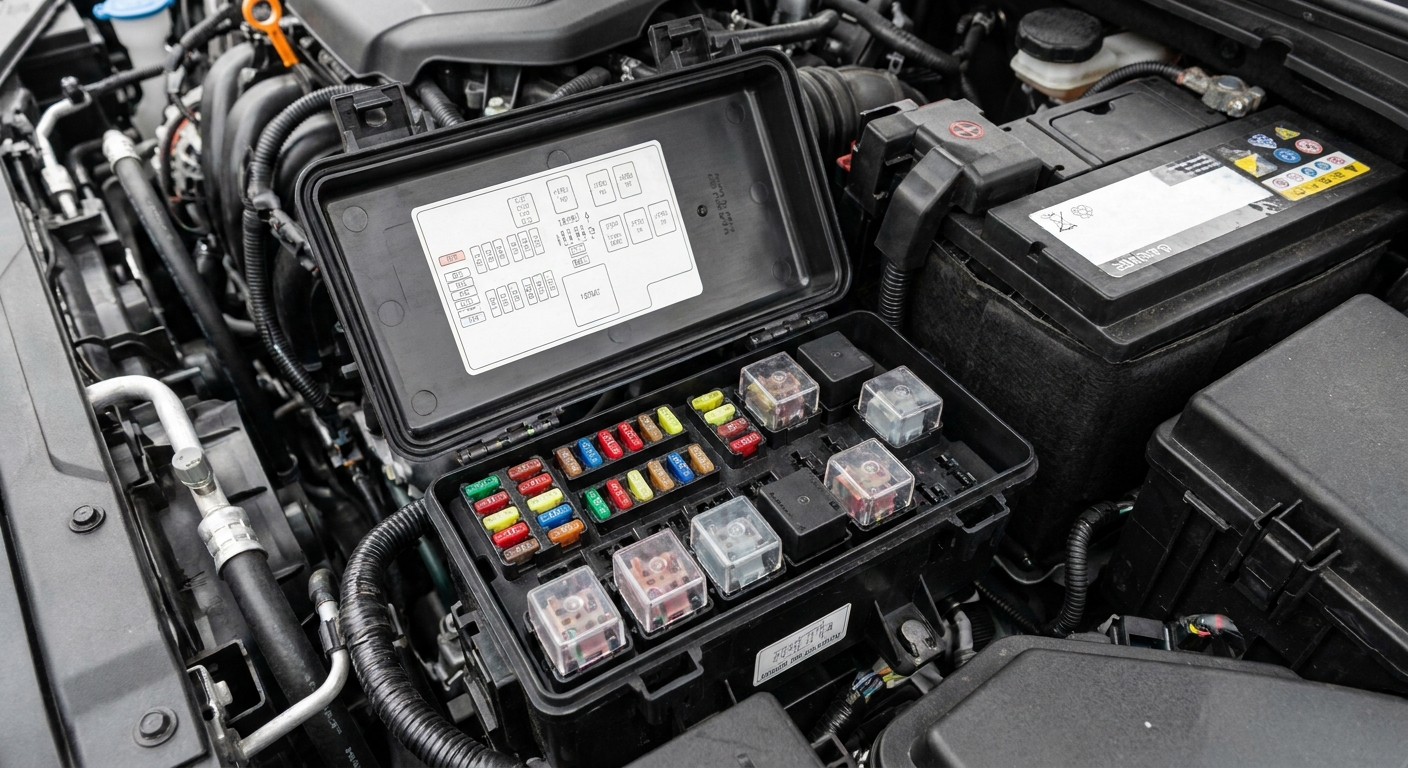
- Underhood fuse and relay box near the battery
- Interior fuse panel under the dash or at the side of the dashboard
- Rear fuse panel in the trunk or cargo area (common on some European models)
Your owner’s manual often has a relay map for the fuse box cover. If it does not, the inside of the fuse box lid sometimes has a diagram.
Also check related fuses: do not stop at the fuse labeled “FUEL PUMP.” Many no-prime problems are really an IGN, ECM, EFI, or INJ fuse that feeds the relay coil or the ECU.
Tip from the bays: If the cover just says “R1, R2, R3…” with no function listed, look for a legend in the manual or a service information diagram. Guessing relays wastes time fast.
Step 3: The fast test, swap with an identical relay
If there is another relay with the same part number and same pin layout (often the A/C clutch relay, horn relay, or fog lamp relay), swapping is a quick sanity check.
How to do it
- Key OFF.
- Pull the suspected fuel pump relay straight up.
- Swap it with the identical relay.
- Cycle key to ON and listen for prime. Then try to start the car.
If the pump wakes up and the car starts: you almost certainly had a bad relay.
If nothing changes: do not assume the relay is good yet. The relay might be fine and the problem could be missing power, missing command, missing ground, or an open wire between relay and pump. Time to test the socket.
Step 4: Test the relay socket (power, ground, command, and output)
A relay is just an electrically controlled switch. Inside, there are two sides:
- Control side (coil): gets power and ground to energize the relay
- Load side (contacts): sends battery power to the fuel pump when the relay closes
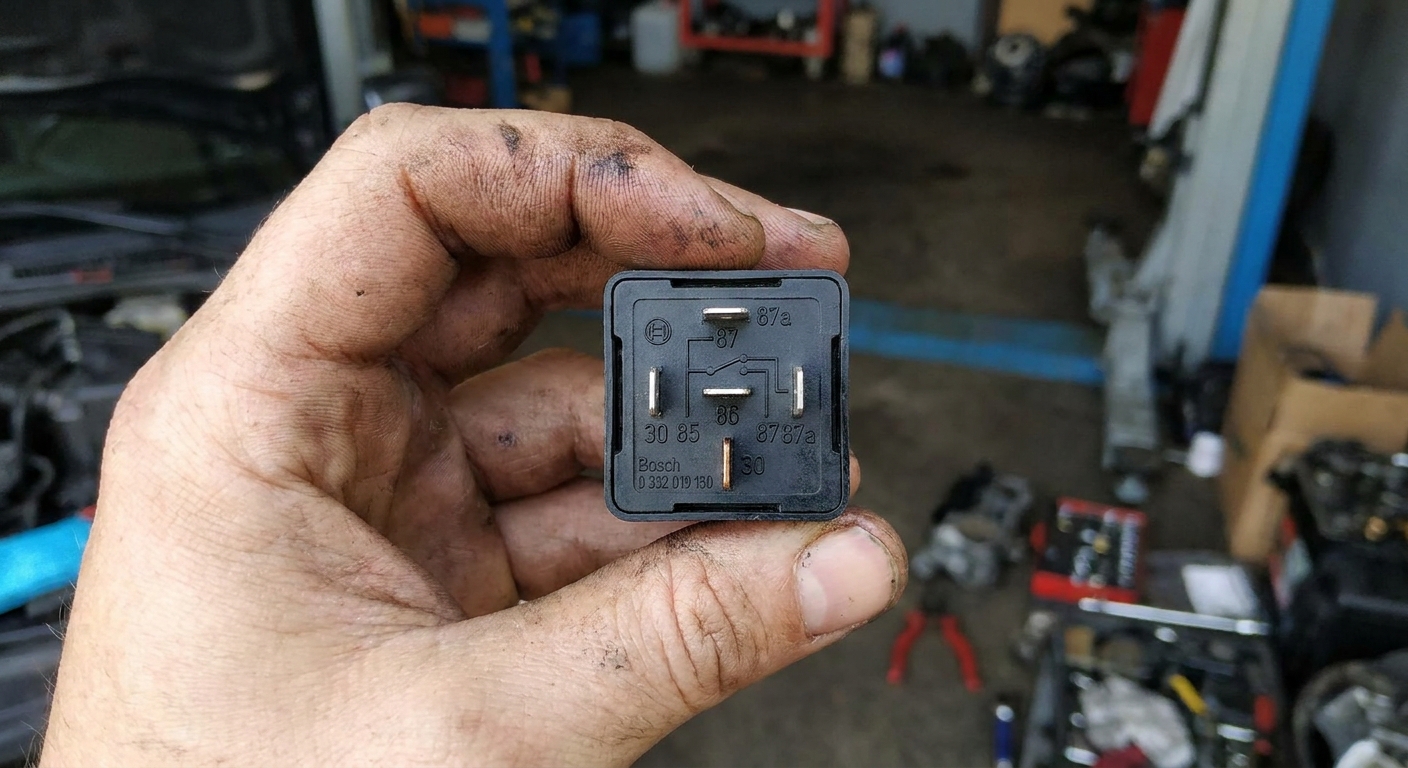
Many automotive relays use terminal numbers like 30, 87, 85, and 86 (Bosch or ISO style). Not every vehicle uses those exact markings, and some fuse blocks label cavities differently. Use the relay diagram on the relay itself, the fuse box legend, or service info when you can. The logic stays the same: two smaller pins are the coil, two larger pins are the load.
Multimeter vs test light: a test light puts a small load on the circuit, which can expose a weak power feed or bad connection. A digital multimeter is more precise, but it can show “ghost voltage” on some circuits. If you see voltage on the meter but a test light will not light, treat it as a clue that the circuit cannot carry real current.
Step 4A: Check for constant battery power at the relay
This checks the feed that will eventually power the pump.
- Set your multimeter to DC volts.
- Put the black lead on a known good ground (clean metal or battery negative).
- Probe the relay socket terminal that corresponds to
30(often the battery feed).
What you should see: roughly battery voltage. On a healthy, fully charged battery that is often around 12.6V at rest, but you might see closer to 12.2V to 12.8V depending on battery state. If you see 0V, check the fuel pump fuse, main fuse links, and the power distribution to the fuse box.
Step 4B: Check that the relay coil is being commanded
Now you are verifying the car is actually trying to turn the pump on for that 1 to 2 second prime, and during cranking.
Two common command styles
- ECU provides ground: One coil terminal has key-on power, the ECU momentarily grounds the other to energize the relay.
- ECU provides power: One coil terminal is grounded, the ECU sends power to the other.
A practical way to test it
- Keep your black meter lead on a good ground.
- Probe each of the two small-pin terminals in the relay socket while a helper cycles the key to ON, then cranks.
What you are looking for: you should find at least one coil terminal that has battery voltage with key ON (or briefly during prime). On many ground-switched systems, you may see 12V on one coil terminal all the time with key ON, and the other side will get pulled low (toward 0V) by the ECU only during prime and cranking. If you prefer using a test light, clip it to battery positive and probe the ECU-controlled side. The light should flicker or light during prime if the ECU is grounding that circuit.
No command during key-on prime and no command while cranking: that is usually not a relay problem. That points to an ECU control issue, a crankshaft position signal issue, an immobilizer issue, a tripped inertia switch on some vehicles, or a blown ECU or ignition feed.
Command is present but the pump is silent: move to the output test next.
Step 4C: Check relay output to the pump
This tells you whether the relay is actually passing power to the fuel pump circuit.
- Identify the relay socket terminal that corresponds to
87(the output to the pump). - Back-probe it while a helper cycles key ON, then crank.
What you should see: battery voltage for 1 to 2 seconds at key-on, and battery voltage during cranking as long as the ECU is seeing engine rotation (RPM signal). Some systems will shut the pump back off quickly if the ECU does not see RPM.
If you have voltage at 87 but the pump is silent: the relay is doing its job. Your next steps are below, because the issue is likely after the relay.
If you do not have voltage at 87 but you do have battery power at 30 and the coil is being commanded: the relay is bad or the relay terminals are loose or corroded.
Step 4D: A controlled jump test (bypass the relay)
This is a powerful test because it takes the ECU command and relay coil out of the equation and feeds the pump circuit directly.
- Key OFF.
- Use a fused jumper wire if possible.
- Jump the socket terminal for
30(battery feed) to87(pump output).
What should happen: the fuel pump should run continuously while the jumper is installed.
If the pump runs with the jumper: wiring to the pump is probably okay, and your issue is relay control (bad relay, no coil command, poor ground for the coil, or ECU not commanding it).
If the pump does not run with the jumper: the problem is downstream. Think broken wire to the pump, poor pump ground, a failed pump motor, or a control module in the pump circuit on vehicles that do not feed the pump directly from a simple relay.
Important: Do not leave the jumper installed longer than needed. You are bypassing normal safety shutoffs, and if there is a short or high resistance in the circuit you can overheat wiring or the pump. Keep the test brief and controlled.
If the relay tests good but the pump is still silent
This is the most common outcome I saw: the relay is fine, the car is trying to run the pump, but the pump does not spin.
Next checks
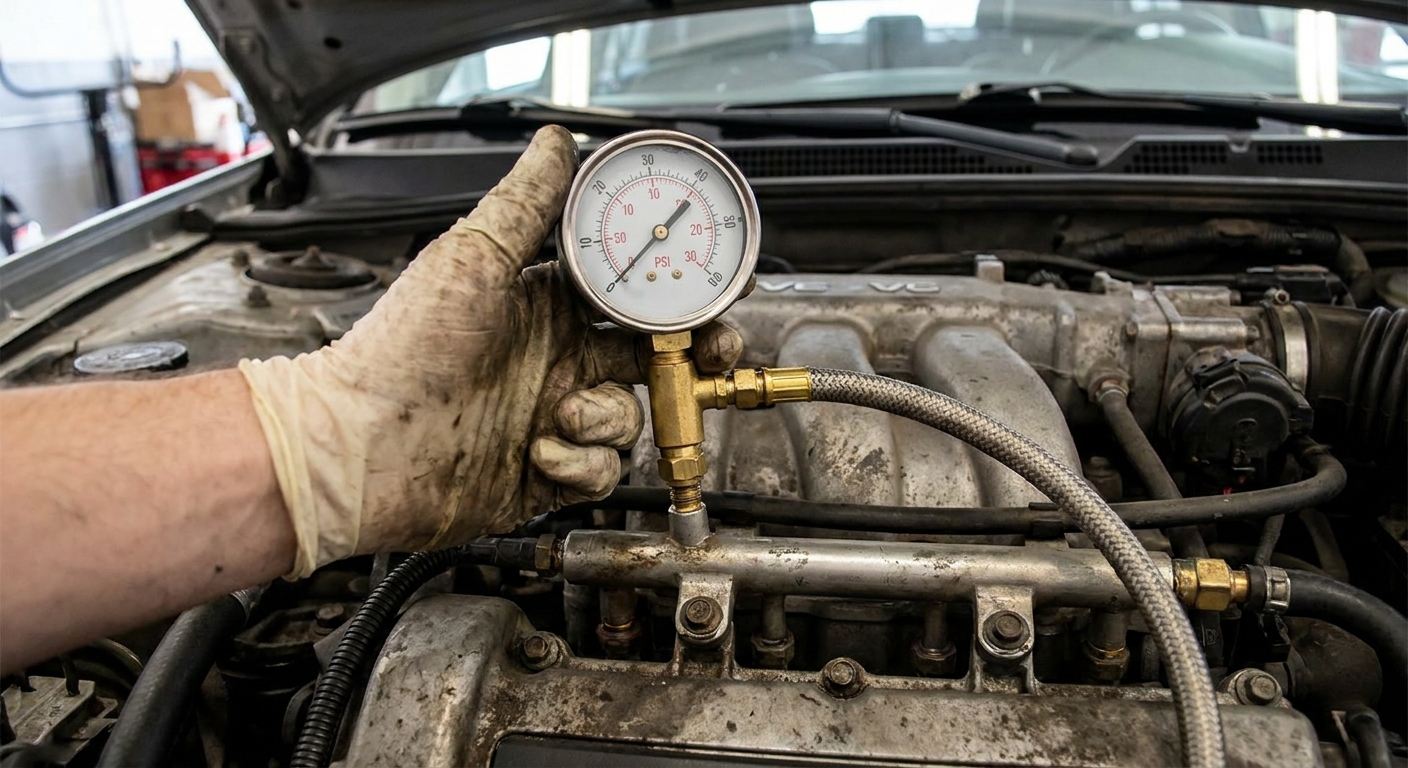
- Check fuel pressure at the rail: Even if the pump is running, it may not build pressure. Use a proper fuel pressure gauge on the service port if equipped. Compare the reading to the spec for your vehicle.
- Check power and ground at the fuel pump connector: If you have battery voltage at the pump connector during prime or cranking but the pump stays silent, the pump is very likely dead.
- Inspect the pump ground: A rusty frame ground near the rear of the car can mimic a bad pump.
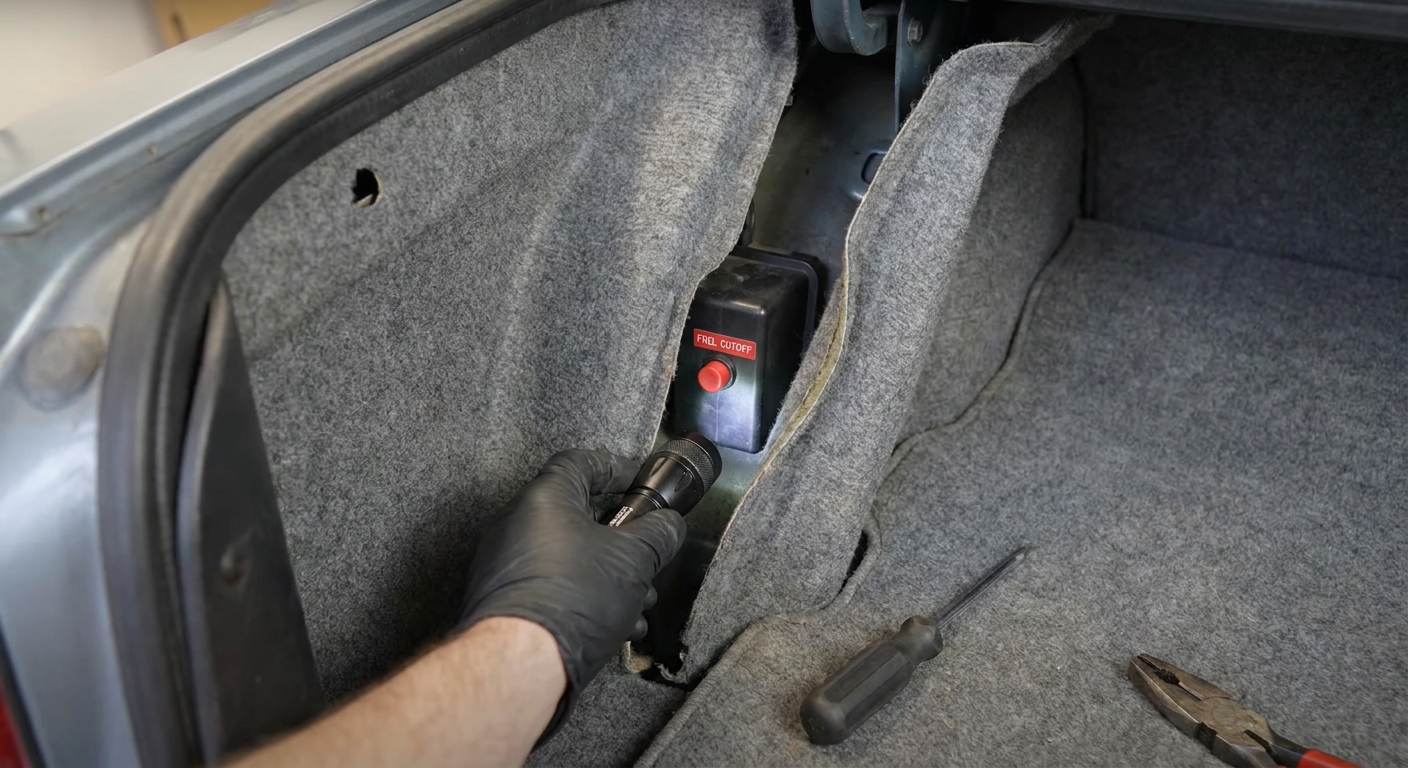
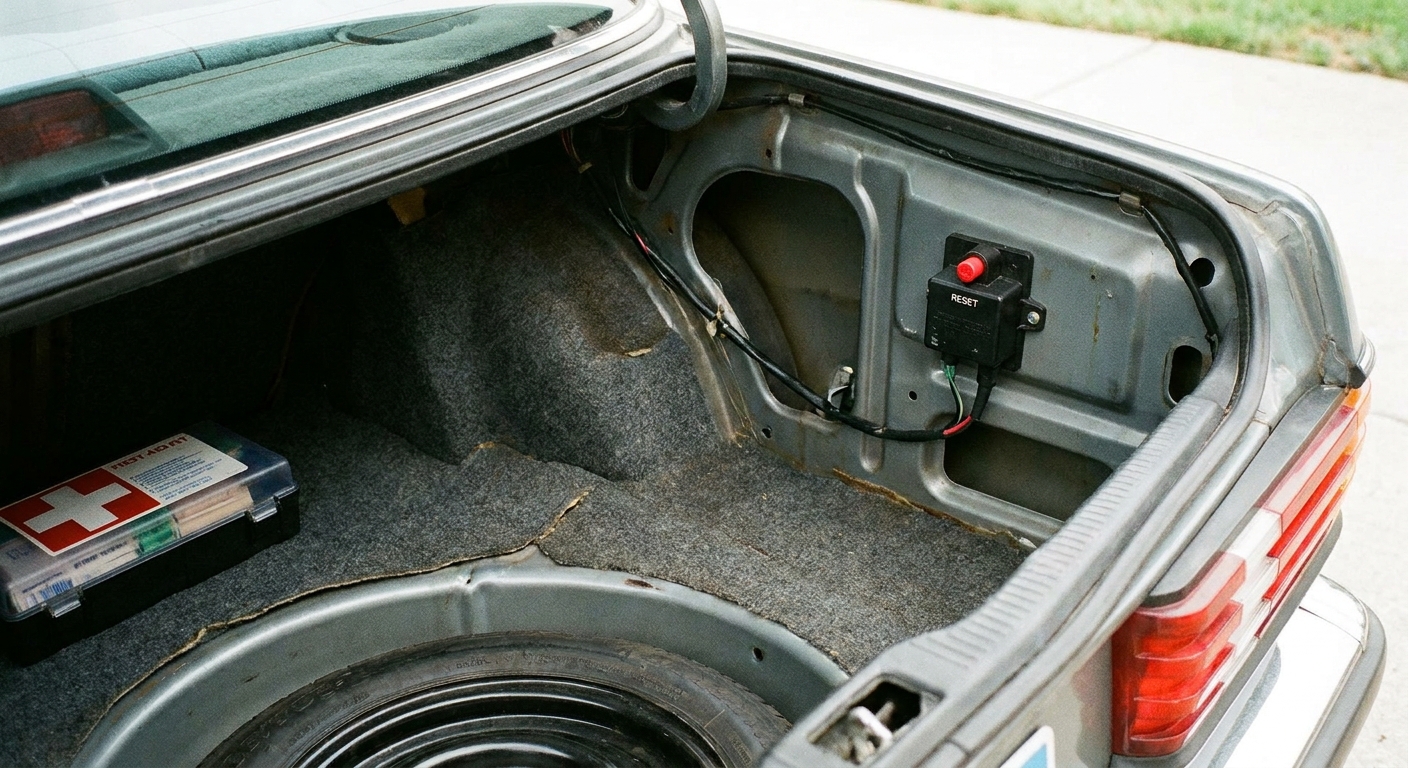
- Consider an inertia switch: Some vehicles have a fuel cut-off or inertia switch that trips after an impact. If you recently hit a pothole, curb, or got bumped in a parking lot, this is worth checking.
Real-world note: I have seen cars “randomly” die after a minor bump because the inertia switch was already weak and finally tripped, or because a relay was sitting loose in its socket and the jolt unseated it just enough to lose contact.
When it is not really a serviceable relay
One more fork-in-the-road that trips people up: some vehicles do not have a simple, swappable fuel pump relay you can pull out and bench-test.
- Fuel pump driver module (FPDM) or pump control module: common on some Ford and other makes. The relay might only command the module, and the module actually powers the pump.
- TIPM, BCM, or integrated fuse box control: on some vehicles, the “relay” function is built into a module or fuse box. You may still have a relay label on the cover, but no removable relay exists.
If your fuse box diagram does not match what you see, or the “relay” will not come out because there is no relay there, step back and confirm the system design in service info before you start jumping terminals.
Inertia switch and it died after a bump
If your car cranks but will not start right after a minor impact, do not ignore the basics:
- Re-seat the fuel pump relay and any related fuses. A relay not fully clicked in can act exactly like a failed relay.
- Check for a fuel cut-off or inertia switch (common on some Ford, Jaguar, Land Rover, and others). If it is tripped, resetting it can restore pump power instantly.
If you are not sure whether your vehicle has one, the owner’s manual sometimes lists its location under emergency procedures.
Cheat sheet: results and next steps
- No prime, no power at relay terminal 30: check fuel pump fuse, main fuses, power distribution, and the feeds that power the fuse box.
- Power at 30, but no coil command during key-on or crank: look at ECU command inputs, immobilizer, crank sensor signal, inertia switch where applicable, and related IGN or ECM fuses.
- Power at 30 and coil is commanded, but no output at 87: bad relay or poor socket contact.
- Voltage at 87 but pump silent: test at pump connector, check pump ground, likely failed fuel pump or a downstream control module issue.
- Pump runs when you jump 30 to 87: wiring to pump likely OK, problem is relay control side or relay itself.
FAQ
Can a fuel pump relay fail intermittently?
Absolutely. Heat soak, vibration, and worn internal contacts can make a relay work one moment and fail the next. If your car starts cold but dies hot, swapping relays is a smart first move.
Is it normal that the fuel pump only runs for a second with the key on?
Yes. Many vehicles prime for 1 to 2 seconds, then shut the pump off until the ECU sees engine rotation during cranking.
If I have a good relay, does that mean I need a fuel pump?
Not automatically. A good relay with a silent pump means the next test is at the pump connector: do you have power and ground there during prime or crank? If yes and the pump is quiet, the pump is the prime suspect. If you do not have power at the pump, you have a wiring, connector, ground, inertia switch, module, or control issue downstream.