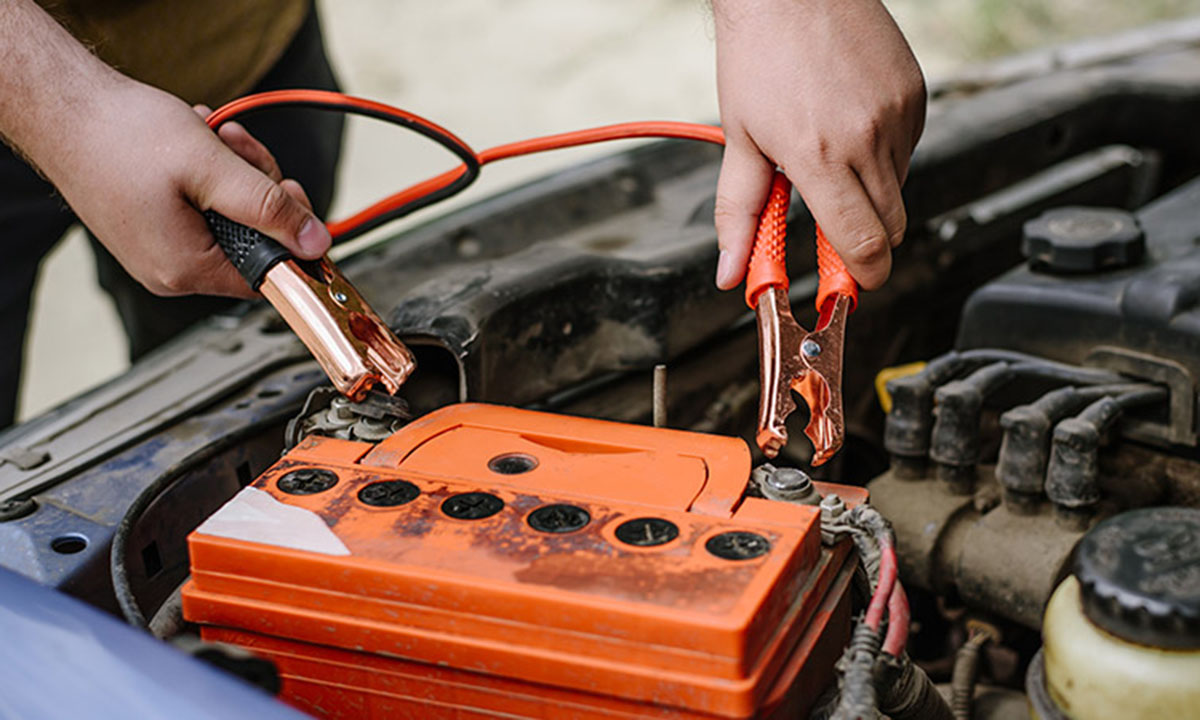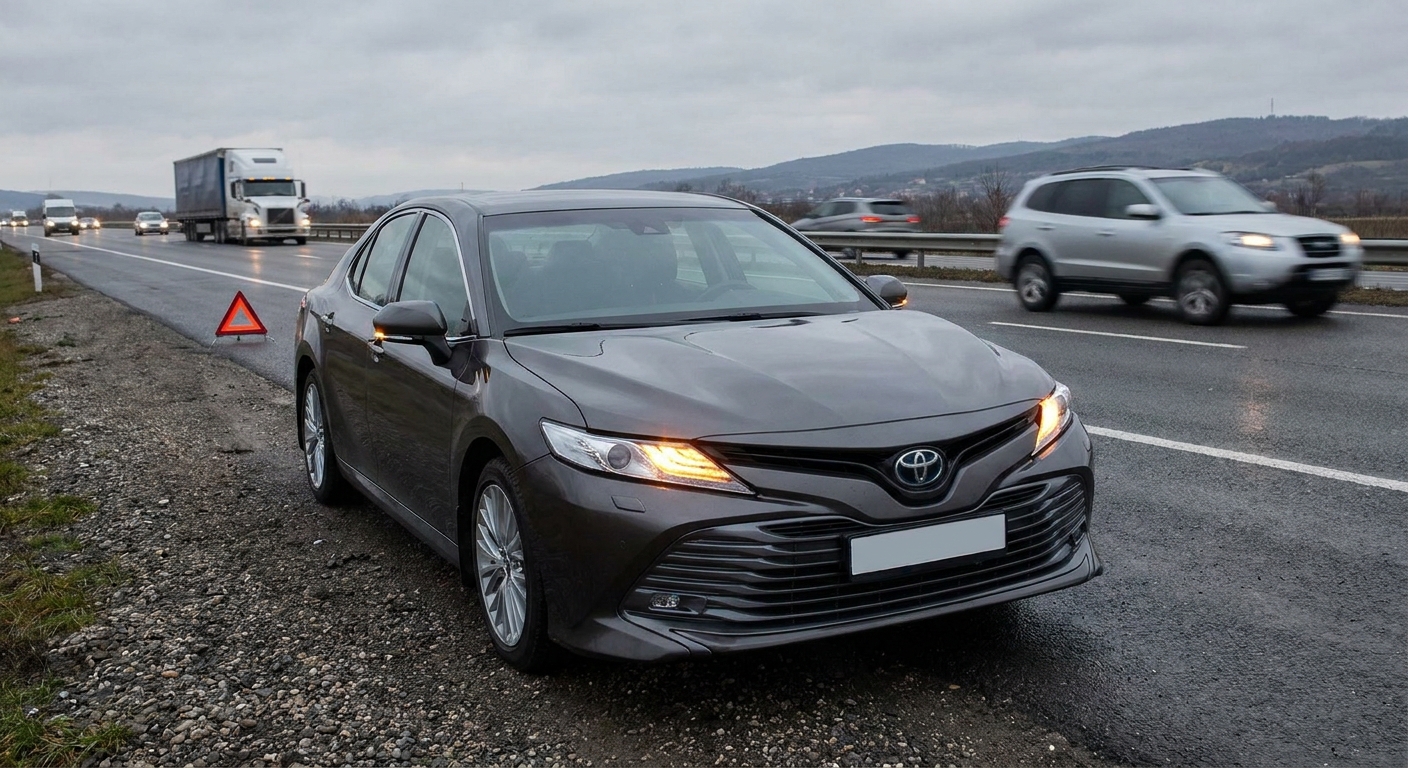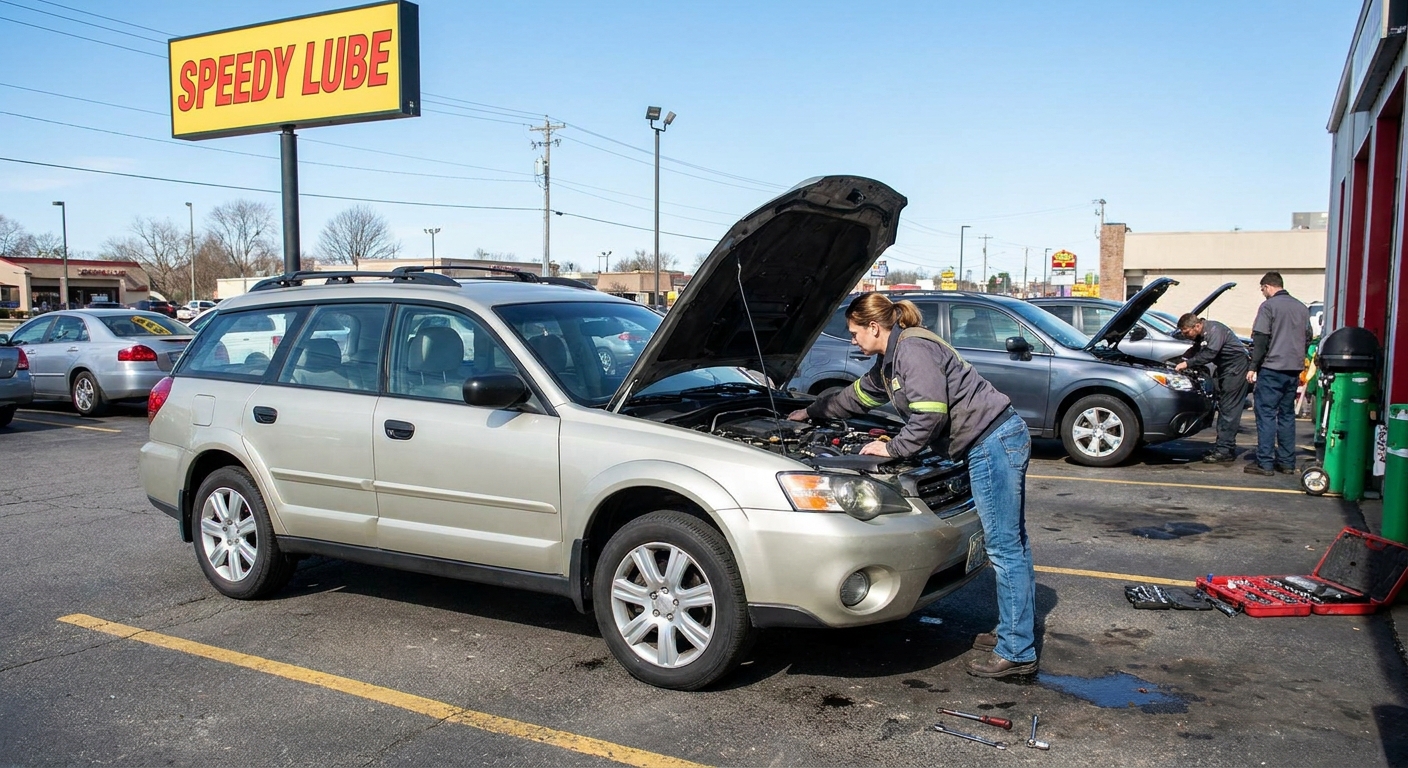
I’ve seen this one play out in shop driveways more times than I can count: you clip a curb, thump a pothole, or bottom out a little harder than you meant to and the car feels fine. Then you go to restart it and it just cranks and cranks. No security light flashing. Just a sudden crank-no-start that started the moment the car took a jolt.
The good news is a “bump-triggered” no-start is often something simple: a safety fuel cutoff got tripped, a fuel pump relay opened up, or a connector got tugged loose. The trick is knowing what to check first and when to stop turning wrenches and call a tow.
First, confirm your no-start
This article is for a car that cranks normally (starter spins the engine at normal speed) but will not fire up right after a minor impact.
If any of these are true, you are in a different situation than this guide covers:
- No crank or single click: likely battery, cable, starter, or a serious connection issue at the battery or starter.
- Security light flashing or “key” warning: could be an immobilizer issue that just happened to show up at the same time.
- It starts, then dies immediately: still could be fuel cutoff, but also consider air intake damage or a major vacuum leak if something broke loose.
Assuming it cranks normally, the jolt strongly points to fuel delivery or an electrical connection to fuel and ignition systems.
Quick safety check
Before you try to restart the car again and again, take 60 seconds to look and smell around.
- Fuel smell, visible dripping, or a fresh wet spot under the car: stop and tow it. Do not keep cranking.
- Coolant pouring out or steam: tow it.
- Oil pressure light on while cranking is normal because the engine is not running, but if you heard a loud bang or grinding right after the bump, tow it.
Set yourself up safely, too: pull well out of traffic if you can, put the car in Park or Neutral, set the parking brake, and keep hands and clothing away from belts and fans.
Also, if you hit something hard enough to deploy airbags or bend a wheel badly, treat it as a tow situation even if you can “maybe” get it started. You do not want to drive a car with hidden suspension or steering damage. On some vehicles a severe impact can also trigger a crash-related fuel shutoff strategy that is not resettable at the roadside.
Top bump-related suspects
1) Inertia fuel-cutoff switch (if equipped)
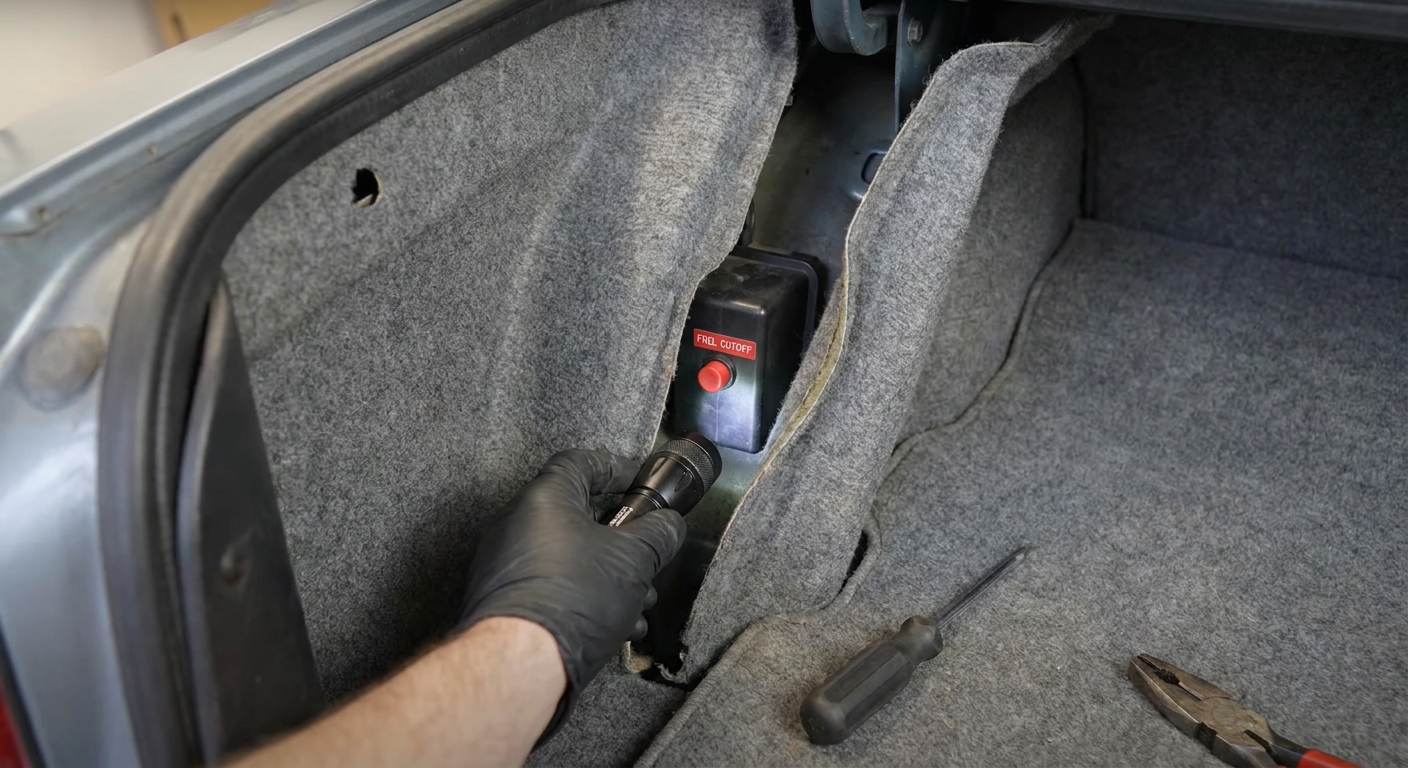
Some vehicles have an inertia switch designed to shut off the fuel pump during a collision. A pothole or curb hit can occasionally trip it, especially on older vehicles or if the switch is a little sensitive.
Common on: many Ford, Lincoln, and Mercury models across multiple decades, plus some other makes depending on year and market. Not every vehicle has one. Many newer vehicles (often 2010s and up) use a module-controlled crash fuel shutoff instead of a physical reset switch.
What it feels like: the car cranks normally but acts like it is getting no fuel. You may not hear the fuel pump “prime” when you turn the key to ON.
What “prime” means: on many cars, the fuel pump runs briefly when you first turn the key to ON to build pressure before cranking. Some cars prime very quietly, prime for less than a second, or use a strategy that is harder to hear, so treat this as a clue, not a verdict.
Where it usually lives:
- Behind a trunk side panel
- Behind a passenger-side kick panel
- Near the rear quarter panel area
- Sometimes behind the glovebox area
How to reset it:
- Turn the key OFF.
- Locate the switch and press the reset button (often a rubber or plastic button on top).
- Turn the key to ON and listen for the fuel pump prime (a brief hum from the rear on many cars).
- Try to start the engine.
When it is OK to reset and drive: If the car starts immediately, idles normally, and you do not smell fuel or see leaks, you can usually drive. Still, I recommend you take a slower route home and keep an eye out for a check engine light, rough running, or fuel odor.
When to tow instead of resetting:
- You smell fuel or see dampness near the tank or lines
- The bump was hard enough to damage the rear of the car
- The switch trips again shortly after resetting
2) Fuel pump relay or fuse jarred loose or failing
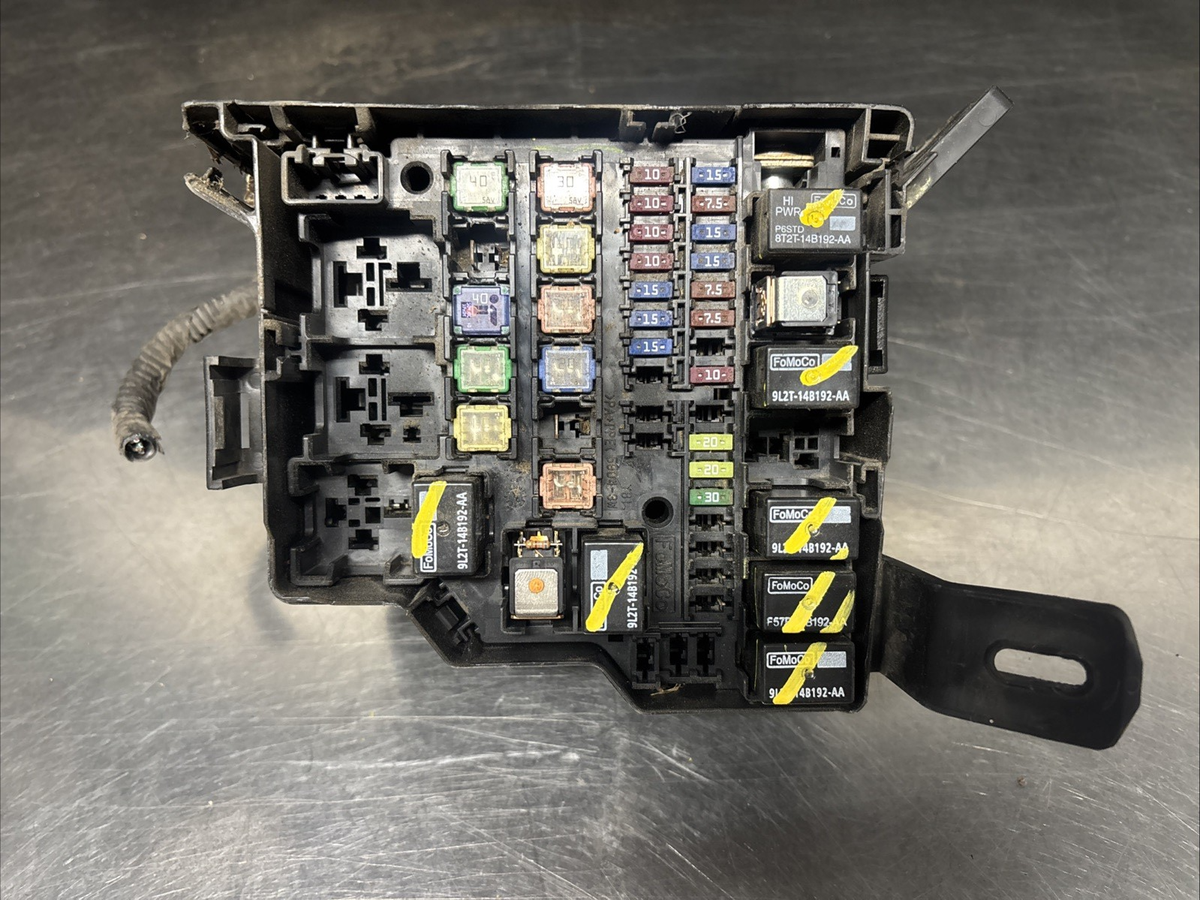
A minor impact can be the straw that breaks the camel’s back for an aging relay, a loose fuse box connection, or a relay that was already running hot. Sometimes the internal contacts open up after a jolt and simply do not close again.
Fast checks you can do at the curb:
- Listen for pump prime: With the key turned to ON (not START), many cars run the pump briefly. If you hear nothing, it can mean the pump is not being powered, or it can simply be hard to hear on your vehicle.
- Check the fuel pump fuse: Pull it, inspect it, and reseat it firmly. A fuse can look OK but have poor contact if it was not seated well.
- Swap a matching relay: Many fuse boxes use identical relays (for example, horn, A/C clutch, fog lamps). If the relay part numbers match, swap temporarily and see if the car starts.
Important: not all relays are interchangeable even if they fit. Only swap with an identical relay from a non-critical circuit and put everything back where it belongs.
3) A connector pulled loose
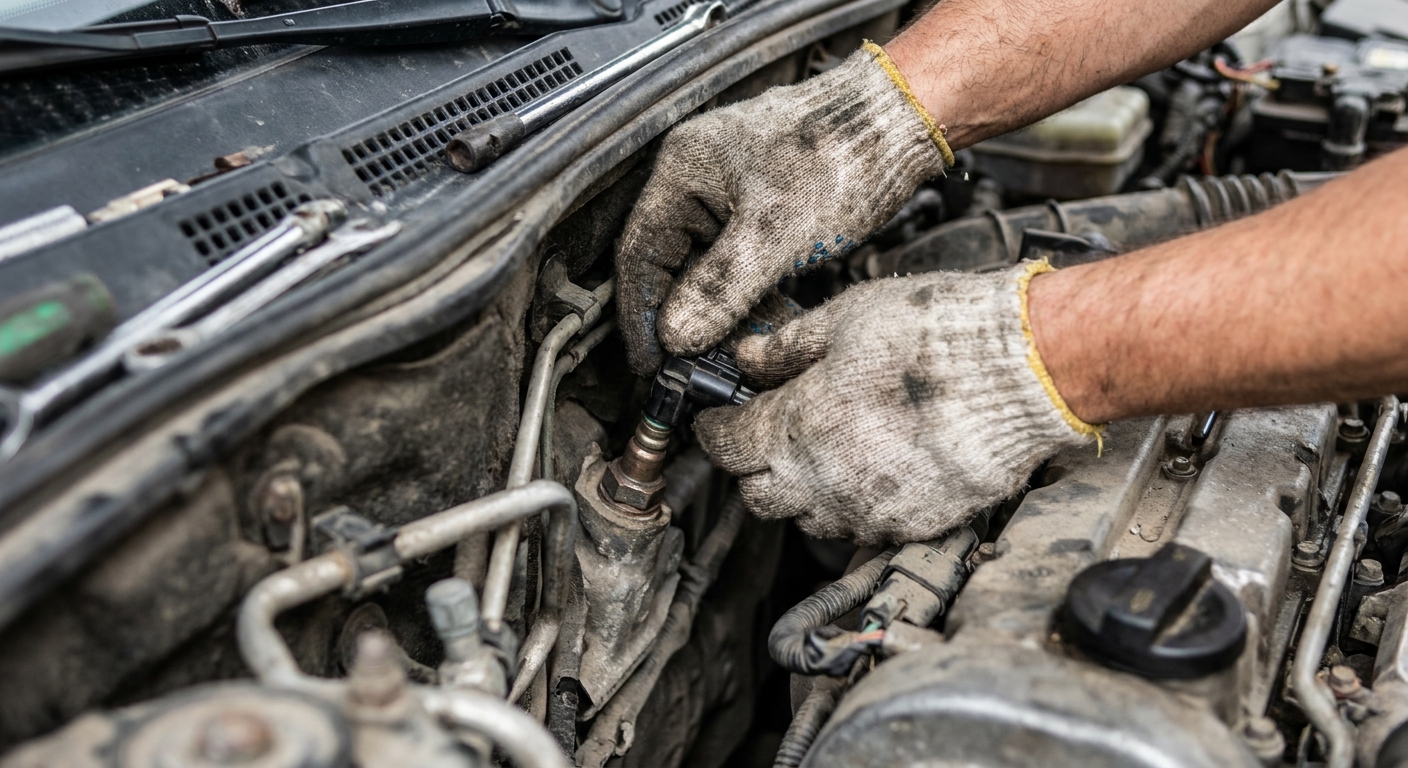
If I had to bet coffee money on one thing after a pothole, it is this: a plug connection was already marginal and the impact finally pulled it loose.
Start with connectors that can instantly cause a crank-no-start:
- Crankshaft position sensor connector (often low on the engine, sometimes near the crank pulley)
- Camshaft position sensor connector
- Ignition coil connectors (coil-on-plug setups can be sensitive to a half-latched plug)
- Fuel injector connectors (less likely to stop all injectors, but it can if there is a shared power feed or a main harness connector issue)
- Ground straps and ground wires (battery to body, engine to chassis)
- Fuel pump connector near the tank or under rear seat access panel (vehicle dependent)
Where to look first after a bump:
- If you hit something with the front of the car, check around the radiator support area, airbox, and any harness routing near the front lower engine.
- If you bottomed out in the middle, check harnesses that run along the underbody and transmission area for a snag or pulled clip.
- If the impact was toward the rear, check near the fuel tank area and rear body harness routing.
What you are doing: You are not yanking on wires. You are looking for anything visibly unplugged, half-seated, or broken clips. A good reseat is: press the connector in until you feel or hear the latch click, then lightly tug to confirm it is locked.
Simple test plan
If you are stuck in a parking lot or your driveway and you want a logical order of checks, here is how I would do it.
Step 1: Key ON, listen for pump
- Hear a brief hum: the pump is at least being commanded on and has power. The problem could still be low pressure, ignition, or sensor related, but it is a useful clue.
- No hum: go straight to inertia switch (if equipped), fuel pump relay, fuse, and pump wiring.
Step 2: Reset inertia switch (if equipped)
If you find it and it was tripped, reset it and try once. If it starts, do a careful leak check before driving.
Step 3: Reseat relays and fuses
Pull and reseat the fuel pump relay and fuse. If you have a known identical relay, swap temporarily.
Step 4: Connector walkaround
Focus on anything low on the engine or near the impact area. Give special attention to crank and cam sensor connectors and major grounds.
Step 5: Quick tach clue (vehicle dependent)
On some cars, if you watch the tachometer while cranking, a totally dead tach (no flicker at all) can be a hint the engine computer is not seeing an RPM signal, which can point you back toward a crank sensor signal or its wiring. This is not universal, but it is a decent clue when it applies.
If you have a scan tool
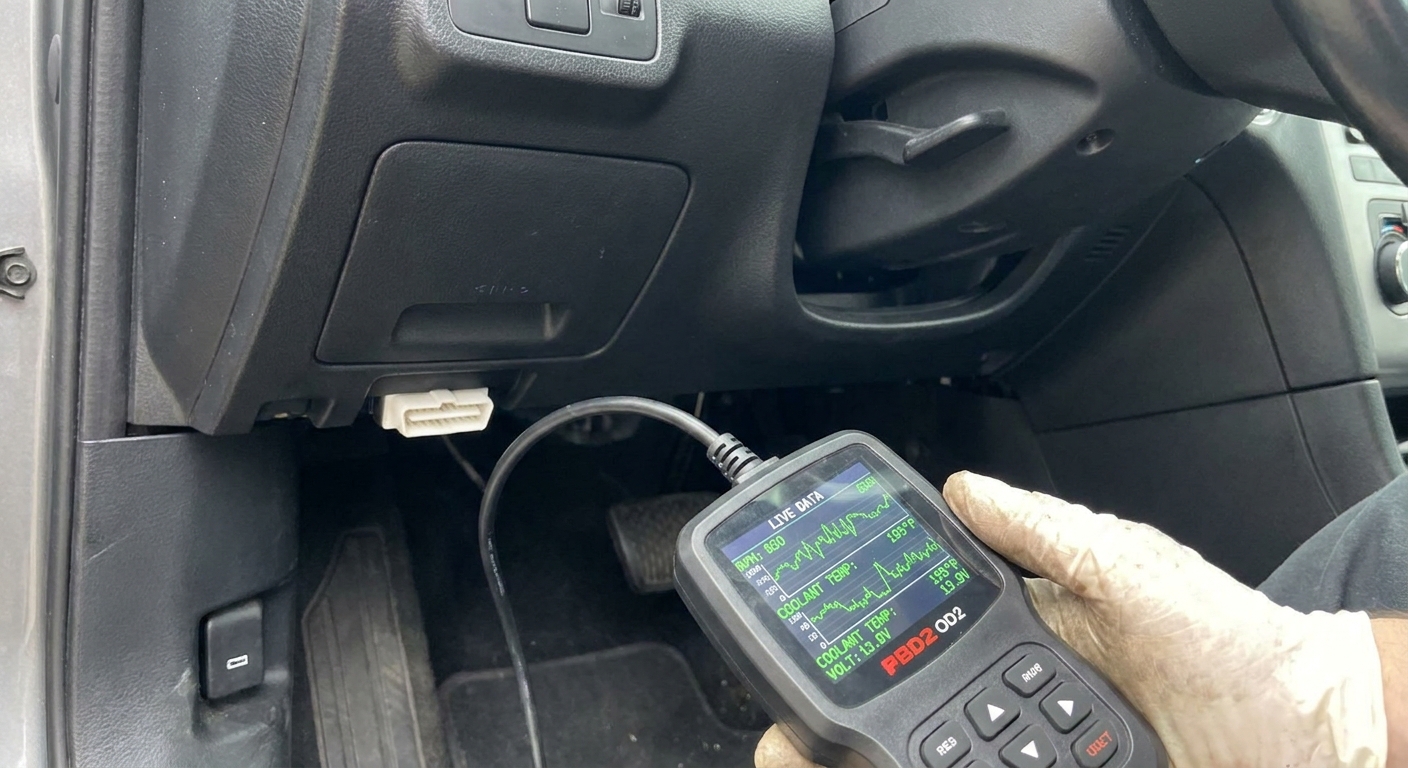
A $30 code reader can save hours. Even if the check engine light is not on, many cars will store pending codes during repeated no-start attempts.
Codes that often show up with a sudden bump-related crank-no-start include:
- P0335 and related: crankshaft position sensor circuit
- P0340 and related: camshaft position sensor circuit
- P0230 or P0231: fuel pump primary circuit or low fuel pump circuit voltage (generic examples, exact meaning varies by vehicle)
- P0087: fuel rail or system pressure too low (generic example, vehicle dependent)
A code does not guarantee the part is bad. It often points to a connector, wiring, or power and ground issue that the bump made worse.
When to stop and tow
I love a good DIY save, but there are times where towing is the cheaper and safer move.
- You smell fuel, see fuel dripping, or suspect a damaged fuel line or tank.
- The impact was strong enough that you now have vibration, a steering pull, a bent wheel, or visible underbody damage.
- The car starts briefly then dies repeatedly and the inertia switch keeps tripping again.
- You do not hear the fuel pump and relay and fuse checks do not change anything. At that point you are into electrical testing territory (power, ground, command signals) and you can burn time and battery quickly.
- You hear abnormal mechanical noises while cranking, like grinding, clunking, or a sudden change in cranking rhythm.
If you do tow it, tell the shop exactly what happened: “crank-no-start immediately after hitting a pothole or curb.” That one sentence helps a tech prioritize the inertia switch, relay, wiring, grounds, and low-mounted sensor connectors.
FAQ
Can a pothole really shut off fuel?
Yes. On vehicles with an inertia fuel-cutoff switch, a sharp jolt can trip it. Even without an inertia switch, the jolt can open a weak relay contact or pull a marginal connector loose.
My car cranks strong. Is my battery fine?
It suggests the battery has enough power to spin the starter, but it does not guarantee perfect voltage under load for every module. Still, with a sudden impact trigger, I would look at fuel cutoff, relays, and connectors first.
What if I hear the pump but it still won’t start?
Then you are likely dealing with spark, timing signals (crank or cam sensor), or a fuel pressure issue that is not as simple as “pump off.” A scan tool check and a careful connector inspection are your next best moves.
Is it safe to keep trying to start it?
A few attempts are fine, but do not crank endlessly. If there is a fuel leak or wiring short from the impact, repeated cranking can make a bad situation worse. If anything smells off, stop and tow.
My bottom line
When a crank-no-start begins immediately after a minor bump, think like a diagnostician, not a parts cannon. Start with the “jolt-sensitive” items: inertia fuel cutoff (if equipped), fuel pump relay and fuse seating, and connectors and grounds, especially anything low on the engine or near the impact area.
And if you find fuel odor, visible damage, or repeated cutoffs, do not force it. A tow bill hurts, but not as much as turning a small problem into a big one.