When an engine cranks but will not fire, I like to split the problem into three buckets: spark, fuel, and timing. Fuel itself splits again into two parts: pressure (is there fuel at the rail?) and pulse (is the computer actually telling the injectors to open?). This guide is all about that second part: injector pulse.
If you can confirm injector pulse in a couple minutes, you avoid guessing, avoid throwing parts at it, and you move to the next measurement with confidence.
Quick scope note before we start: The tests below are aimed at gasoline port injection systems where the ECU commonly pulses an injector circuit during crank and run. Not every vehicle is wired the same. Some are high-side driven, some only power injectors during crank and run, and gasoline direct injection (GDI) and diesel systems can require different tools, adapters, and procedures.

Safety first: avoid sparks near fuel
Any time you are working around injectors, fuel rails, or open engine bays, treat fuel vapor like it is already there.
- Do not use an old-school incandescent test light that can spark at the probe tip.
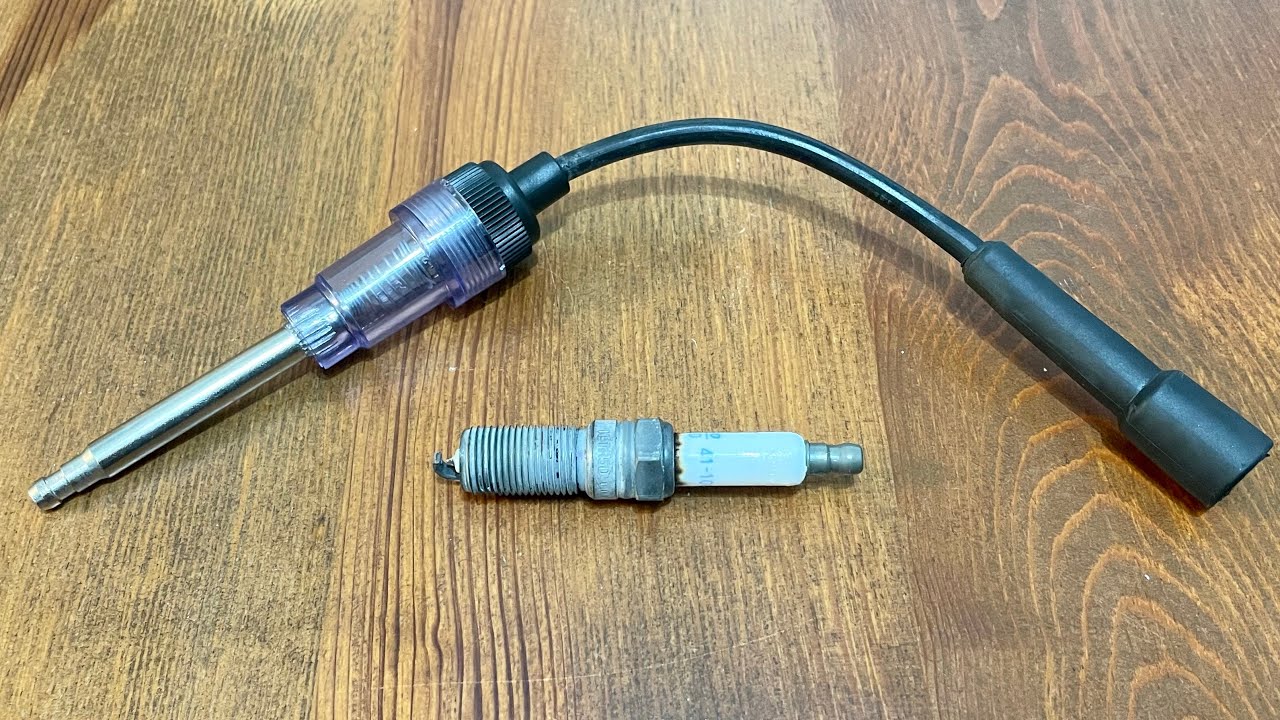
- Use an LED test light or a proper noid light designed for injector circuits.
- If you smell raw fuel, see wet hoses, or spot a drip, stop and fix the leak before doing any electrical testing.
- Keep rags and tools off the battery terminals and away from the starter main cable.
Also, set the parking brake and keep hands, leads, and clothing clear of belts and fans while the engine is cranking.
What injector pulse means
On many port-injected gasoline engines, injectors have a power feed on one wire and the engine computer (ECU/PCM) switches the other side on and off in quick bursts while cranking and running. That on-off command is the injector pulse.
Because it is not universal, do not get hung up on which side is power and which side is control without checking a wiring diagram. The goal of this article is simpler: Is the injector circuit being pulsed during cranking?
If pulse is missing on all cylinders, the issue is usually something upstream, like a crankshaft position signal problem, immobilizer, ECU power or grounds, or a wiring fault. If pulse is present but the engine still will not start, you are typically looking at fuel pressure problems, clogged injectors, incorrect fuel, or an engine that is flooded.
Tools that work well
- Noid light set that matches your injector connector type
- LED test light (or a logic probe) for quick checks
- Basic hand tools to remove an engine cover or intake duct if needed
- A helper to crank the engine, or a remote starter switch if you know how to use one safely
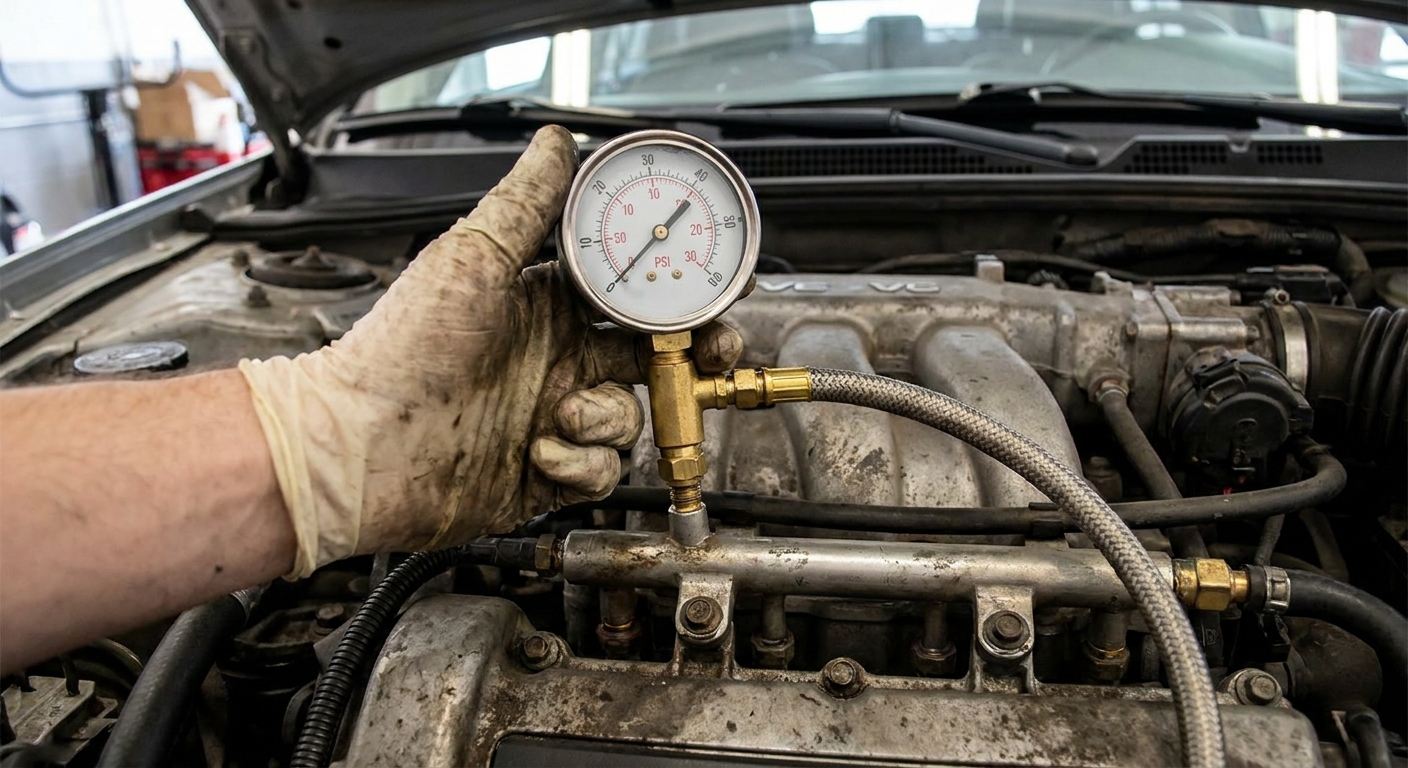
Note: I am intentionally leaving fuel pressure gauge hookup and spark testing out of this article because those are separate measurements. Here, we are only answering: Are the injectors being commanded to fire?
Method 1: Noid light test
This is my favorite on a crank-no-start because it is fast and hard to misread.
Step-by-step
- Pick an easy injector to reach. Usually cylinder #1 at the front of the engine is simplest.
- Key off. Unplug the injector electrical connector.
- Plug in the noid light to the harness connector (not the injector).
- Have a helper crank the engine while you watch the noid light.
- Watch the flash pattern for 3 to 5 seconds of cranking.
What a healthy flash looks like: a consistent, rhythmic flicker during cranking. You are not counting flashes. You are looking for a steady pattern, not a single blink or a weak, random flutter.
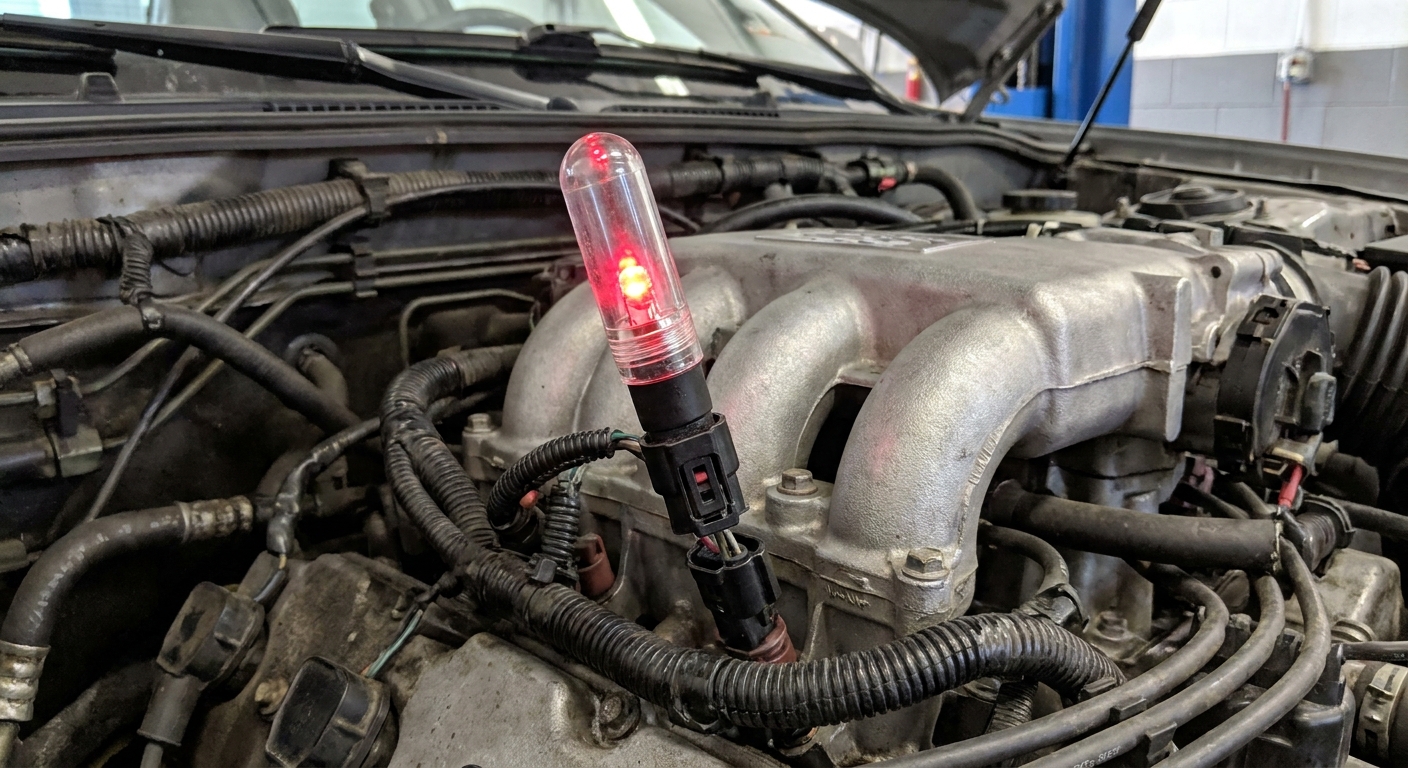
Reading noid light results
1) Noid light flashes normally
Meaning: The ECU is commanding the injector circuit, and the harness can carry a pulse under a light test load.
Where to go next: If the engine still will not start, think in terms of:
- Fuel pressure being too low, missing, or bleeding off (a separate gauge test)
- Fuel quality issues (stale fuel, wrong fuel)
- Injectors not flowing even though they are commanded (stuck injectors, clogged, no rail pressure)
- Flooding (see the flooded section below)
2) Noid light does not flash
Meaning: Could be no injector command, no power feed, wiring damage, or a poor connection.
Next move: Test a second injector connector. This is huge for narrowing it down:
- No flash on any injector usually points to a system-wide issue (crank signal, ECU power or ground, security or immobilizer, blown EFI fuse, main relay problem).
- Flash on some injectors but not one points more toward a local wiring or connector problem, or a driver issue for that channel (less common, but possible).
3) Noid light stays on solid, or dim and steady
Meaning: This can happen with a short to ground, a short to power, a driver being held on, or the wrong noid light for that connector or strategy. Some noid lights are polarity-sensitive, and some vehicles use injector control strategies where a basic noid light is less definitive.
Next move: Confirm you are on the injector connector (not another solenoid), try a different noid light from the kit, and inspect the harness for rub-through. If the pattern still looks wrong, this is where a scan tool and scope diagnosis starts paying for itself.
Quick power-feed check (before you declare no pulse)
If you get no flash, I like to take 60 seconds and confirm the injector has power available. Many systems feed injector power through an EFI fuse and relay, and some only energize it during cranking.
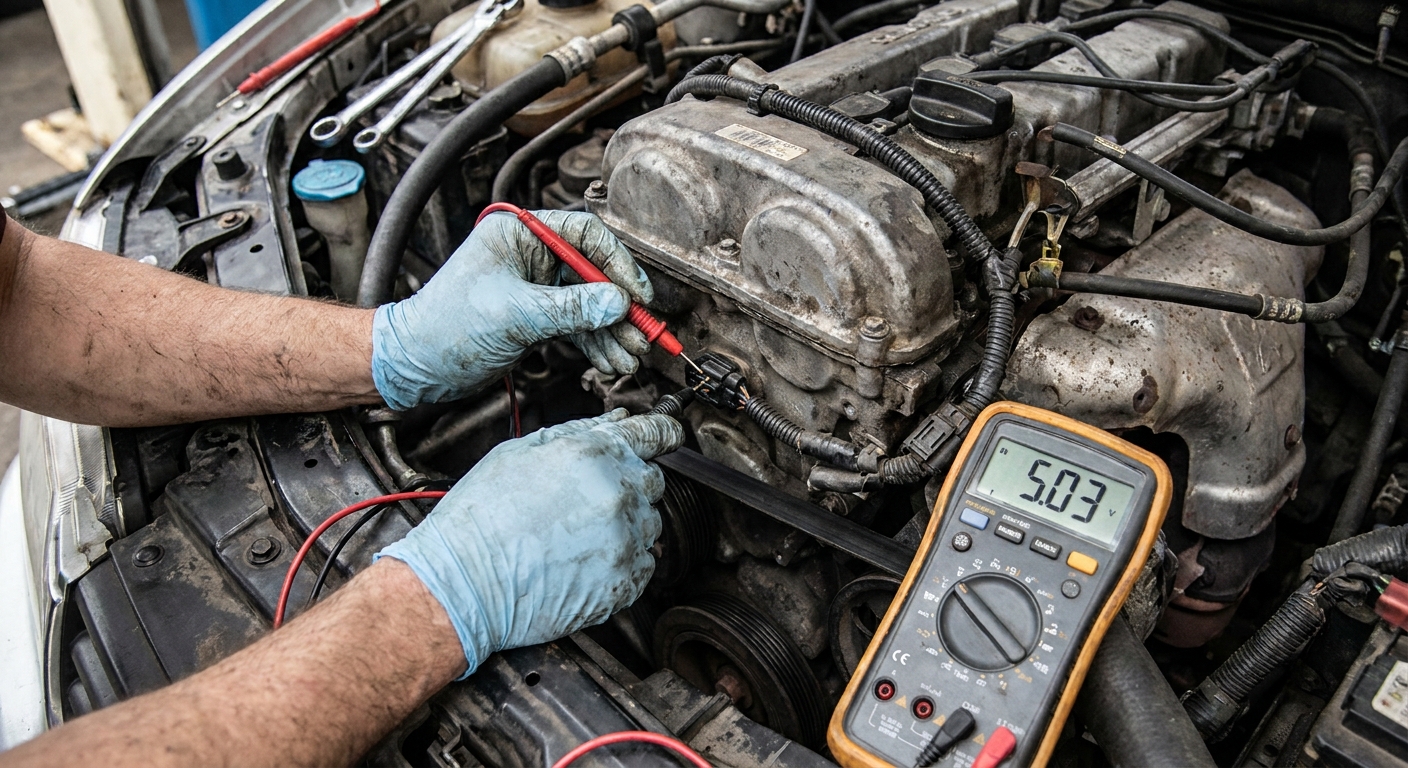
- With the connector unplugged, use a DMM or LED test light.
- Check for power on one terminal with key on. If you see nothing, try again while a helper cranks.
- If you never find power on any injector connector, chase the basics: injector fuse, EFI or main relay, and the power feed wiring.
This step prevents the classic mistake of blaming the ECU for “no pulse” when the injectors are simply not powered up.
Method 2: LED test light (field method)
If you do not have a noid light, an LED test light can still tell you a lot. The idea is the same: you are looking for a rapid flicker during cranking.
Step-by-step
- Unplug an injector connector with the key off.
- Back-probe the connector carefully and crank the engine while watching for flicker.
- If you already confirmed a power feed at the connector, use the LED light to look for the switching side changing state during cranking.
Two important cautions:
- Do not force oversized probes into the connector. Spread terminals cause future no-starts that feel like witchcraft.
- An LED test light is a quick indicator, but it is not a substitute for proper circuit testing. A noid light is usually a closer functional check than an LED, but neither one truly replicates injector current and inductive behavior the way a scope and current ramp can.
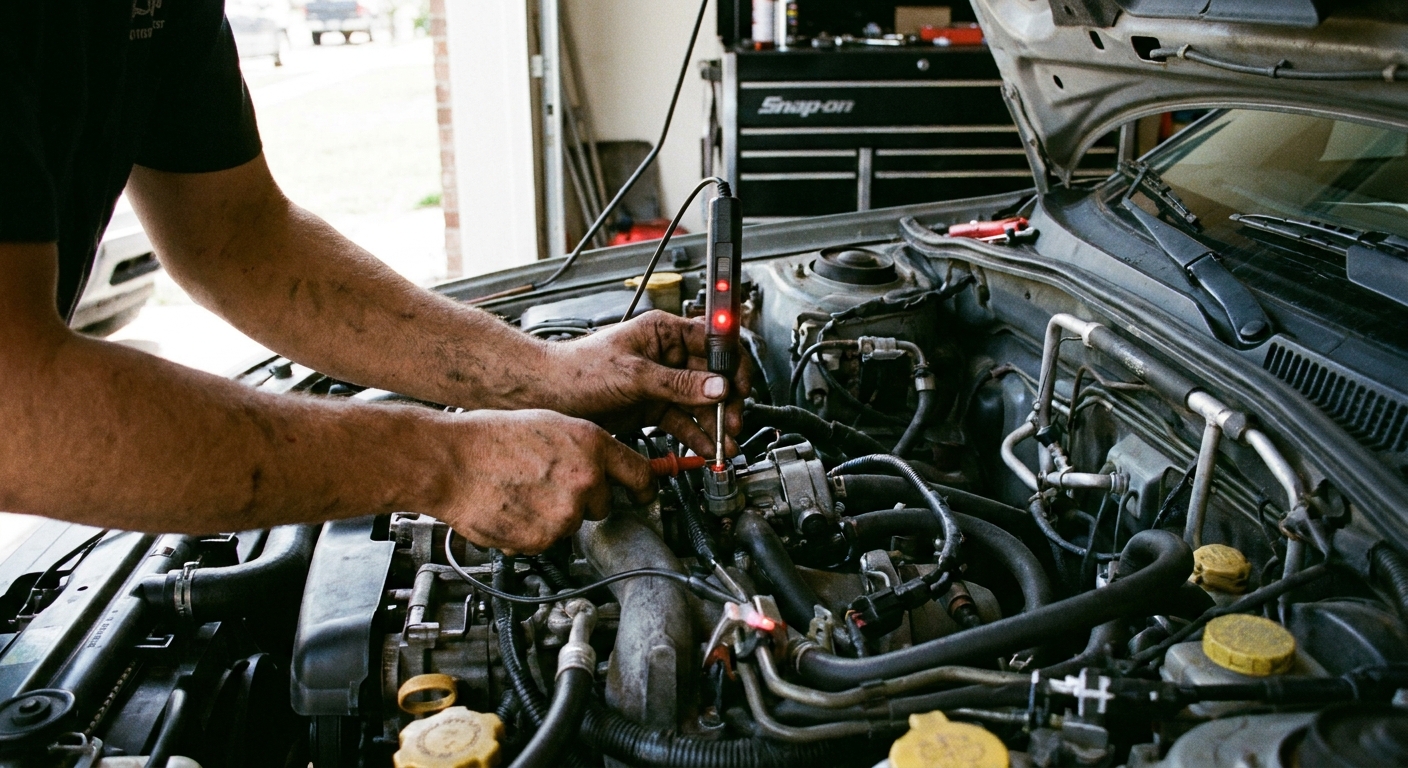
Three common outcomes
No pulse on any cylinder
If you check two or three injectors and get no flash anywhere, treat it like an “ECU is not firing injectors” situation. Common real-world causes I saw in the shop:
- Crankshaft position sensor signal missing (the ECU will often cut fuel if it cannot see engine speed)
- Cam sensor or timing correlation issues on some platforms
- Immobilizer or security intervention (cranks but no start is a classic symptom on some cars)
- Main relay / EFI relay / injector fuse issue (no power feed to injector circuits)
- ECU power or ground problem
- Harness damage from rodents or chafing near the intake
Quick sanity check: if you have a scan tool that shows live data, see if you have RPM while cranking. No RPM often means no crank signal, and many ECUs will not pulse injectors without it. That is beyond an injector-pulse-only check, but it is a fast clue.
Pulse present, still no start
When pulse is present, the ECU is doing its job commanding fuel. Now your suspicion shifts to fuel pressure and fuel delivery issues, or a spark issue that happens to be concurrent. This is where you move to those other measurements rather than trying to interpret pulse any further.
I have also seen engines with great injector pulse that will not start because the fuel pressure is low enough that the injectors spray poorly or not at all.
Flooded engine (too much fuel)
Sometimes the problem is the opposite. If you pull a plug and it is soaked, or you smell heavy raw fuel at the tailpipe after multiple crank attempts, you may be flooded.
What flooding can look like:
- Strong fuel smell during and after cranking
- Wet spark plugs
- Engine tries to catch with the throttle held open, then dies
Common causes: leaking injector, fuel pressure regulator diaphragm failure (on older return-style setups), bad coolant temp sensor reading extremely cold, or repeated start attempts with a weak ignition system.
What to do next: Let the engine air out, and consider “clear flood” mode. Many vehicles reduce or cut fueling when cranking with the throttle wide open, but not all do, so check service information for your specific model. If you suspect a leak, do not keep cranking. Fuel wash can dilute oil and damage cylinders.
Common DIY mistakes
- Using a spark-producing test light near a suspected fuel leak
- Testing only one injector and assuming it represents all cylinders
- Mixing up connectors (purge valve, VVT solenoid, or other similar plugs)
- Damaging terminals by jamming probes into weather-sealed connectors
- Ignoring battery condition: slow cranking can cause misleading results across multiple systems
When to stop and get help
If you have no injector pulse on any cylinder and you have already verified basic fuses and relays and injector power feed, it can turn into a deeper diagnostic job quickly. Immobilizer issues, crank and cam signal problems, and ECU power integrity are all solvable, but they often require a scan tool, wiring diagrams, and sometimes an oscilloscope.
And if you see any sign of fuel leakage while cranking, stop right there. Fix the leak first. No-start problems are frustrating, but a flash fire is worse.
Quick FAQ
Can injector pulse be present even if the fuel pump is dead?
Yes. Injector pulse is a command signal. The ECU can pulse injectors all day, but without rail pressure the engine still will not start.
My noid light flashes, so does that mean the injectors are good?
Not necessarily. It means the circuit is being commanded. An injector can still be clogged, stuck, or have a mechanical issue. That is a separate test path.
Is it normal for the noid light to flash very fast?
Yes. At cranking speed the pulses are quick. You are usually looking for a clear flicker, not counting flashes.
What if it flashes once and then stops?
That can happen if the ECU sees an error condition during cranking and shuts down injection, if security locks it out, or if the engine speed signal drops out. It is a clue to look at RPM signal and ECU inputs next.