I have watched tough, capable DIYers go from confident to panicked in about two seconds flat after realizing the jumper cables were connected backward. If that just happened to you, take a breath. Reverse polarity can be a big deal, but the smartest move is also the simplest: stop, disconnect safely, and check the car’s main protection points before you try to crank it again.
This is one of those moments where “one more try” can turn a blown fuse into a fried module. Let’s keep it from snowballing.
Immediate steps: make it safe
1) Turn everything off
Ignition off, headlights off, climate fan off, radio off. You want the electrical system as calm as possible before you disconnect anything.
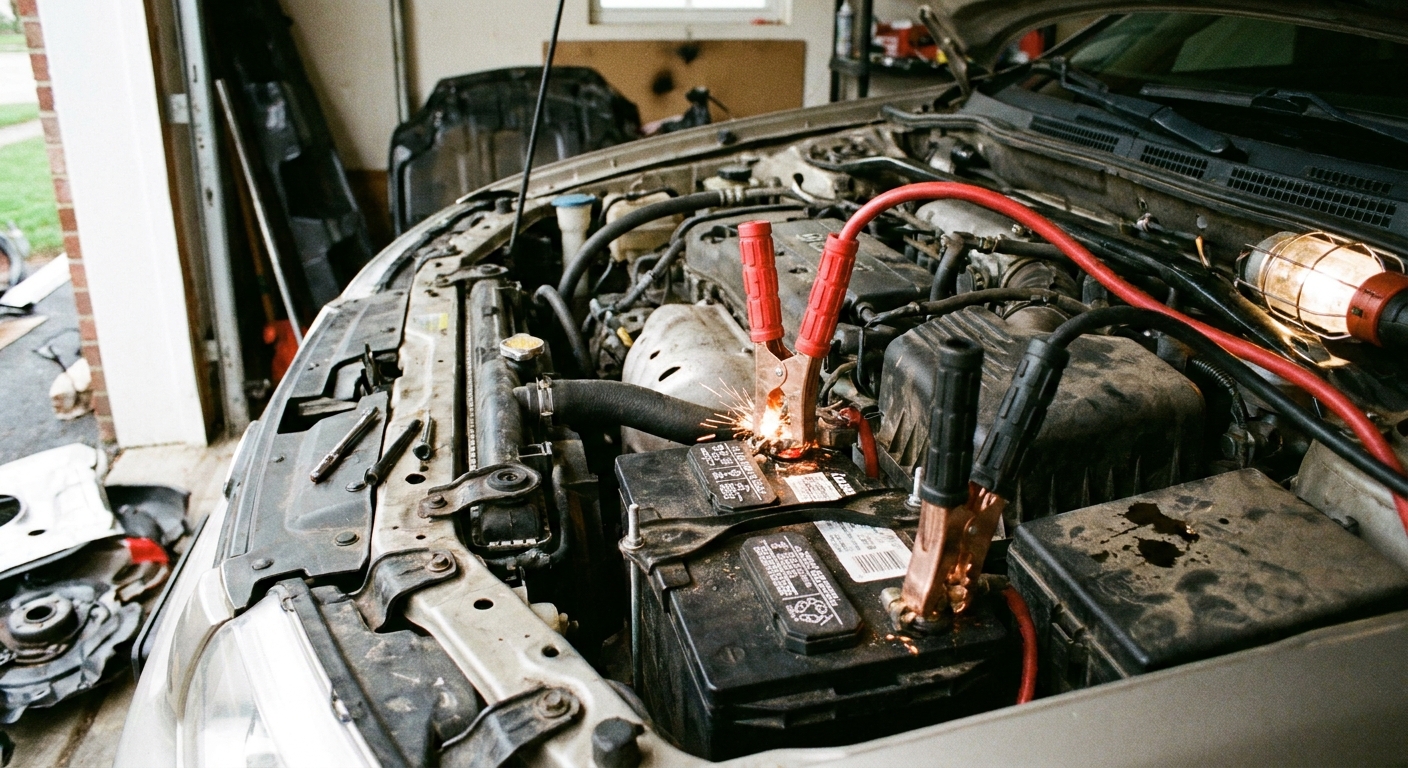
2) Disconnect the cables with spark control
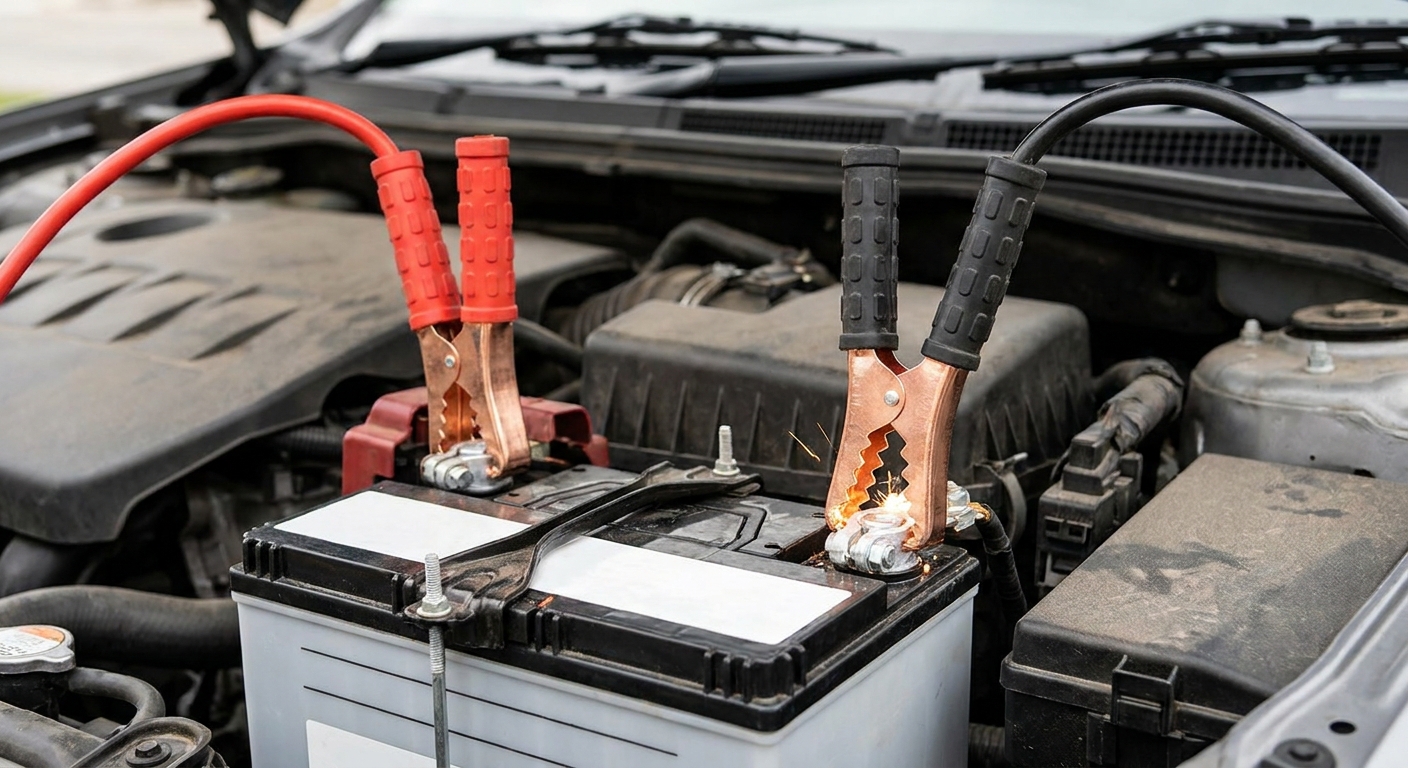
If the cables are still connected backward, do not “test it” or try to crank. Give yourself space so you can remove clamps without them bumping each other, and keep sparks away from the battery. A battery can vent hydrogen gas, and you do not want arcing near the vent area.
There is not one universally agreed-upon order for every car, but the priority is always the same: break the circuit in the safest, least-spark way and keep clamps from touching.
- Remove the last connection you made first, which is often the ground or negative-side clamp on the vehicle that was being jumped (frequently clamped to an engine ground).
- Then remove the remaining clamps one at a time, keeping them separated so they cannot touch each other.
- Do not let the clamps touch each other while any clamp is still attached to a battery or ground point.
- If any clamp is hot, smoking, or stuck, back away and call for help. Heat can mean very high current flow.
3) Look, listen, and smell
Pop the hood and do a quick safety scan.
- Battery swelling, hissing, bubbling, or leaking
- Rotten egg smell (sulfur) near the battery
- Smoke from the fuse box area or wiring looms
If you see or notice any of the above, stop and have the vehicle towed. A battery can fail violently and melted wiring can ignite.
What can be damaged
Modern cars have a lot of electronics, and most of them expect the battery to be connected one way only. When polarity is reversed, current can flow in directions circuits were never designed to handle.
Quick vocabulary, because it helps when you open the fuse box:
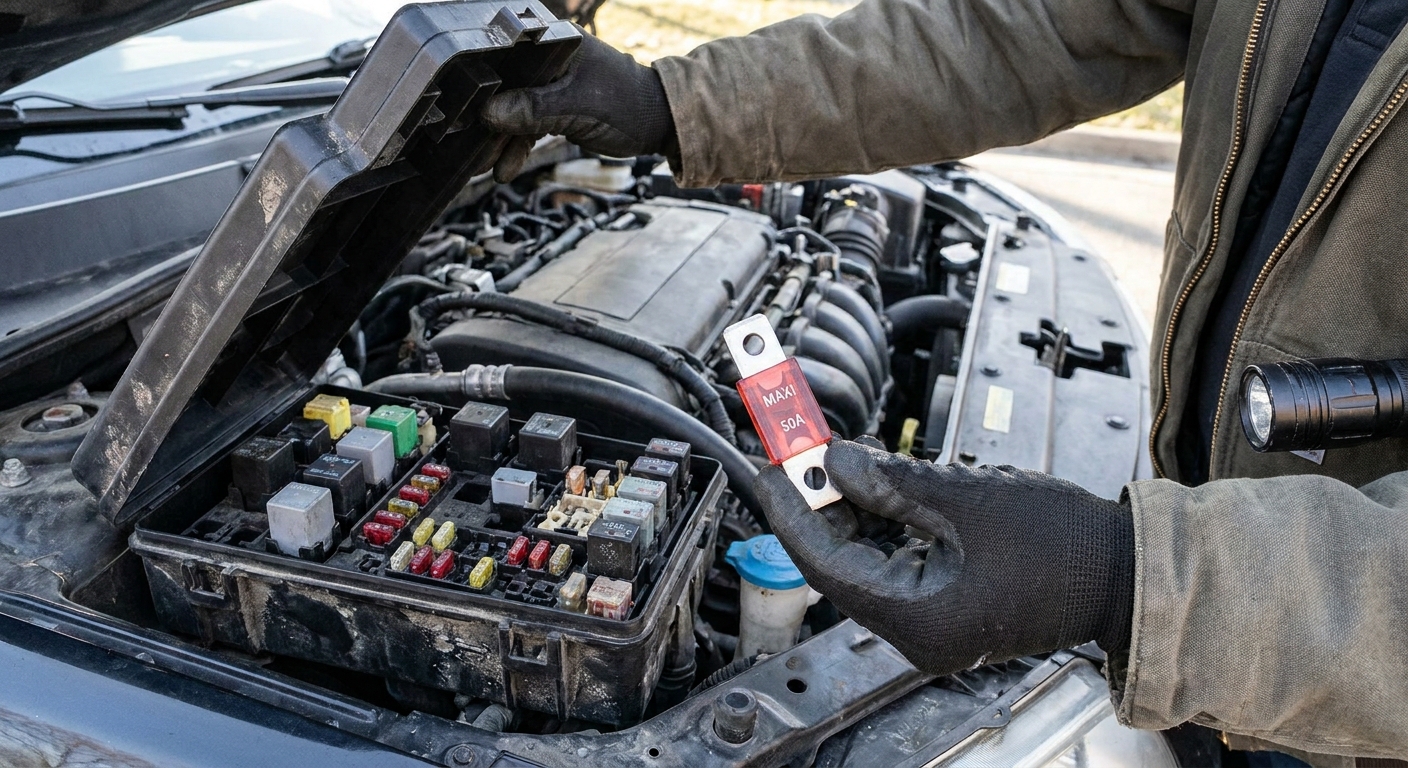
- Main fuse: a high-amperage fuse (often in the under-hood fuse box) that feeds major systems.
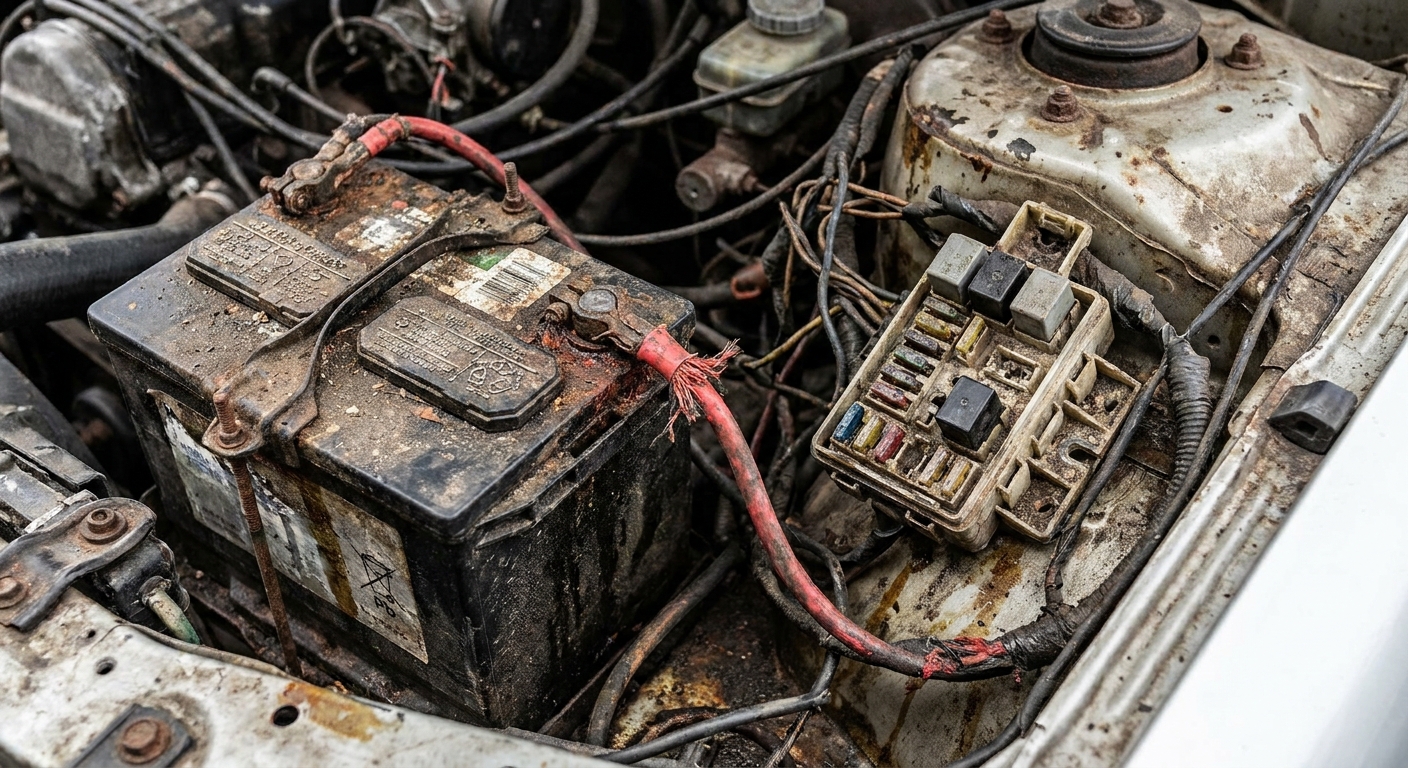
- Fusible link: a short, special piece of wire or link assembly near the battery that is designed to burn open during a major electrical event.
- Main fuses and fusible links: These are the car’s sacrificial protectors. They often blow first, which is good news because they may have saved bigger components.
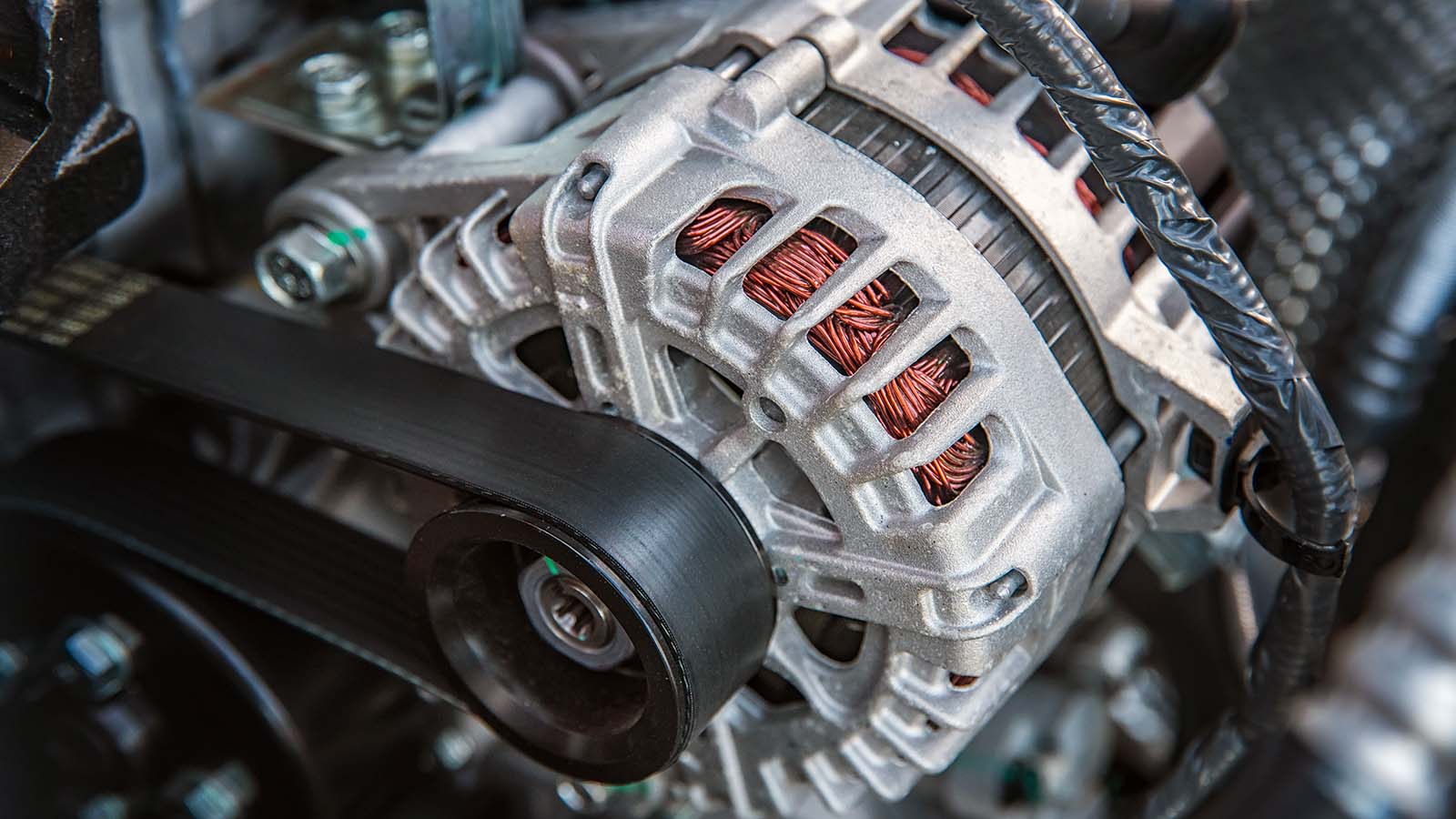
- Alternator diodes: Alternators use diodes to convert AC to DC. Reverse polarity can damage those diodes, leading to no charging or odd electrical behavior later.
- ECU and control modules: Engine computer, body control module, ABS module, airbag module. Some cars have protection, some do not. Damage here can get expensive fast.
- Audio and infotainment: Head units can be vulnerable during a polarity event.
That’s why the next step is not “try a different jump.” The next step is inspection.
Before you try to start it
If a car was subjected to reverse polarity, I treat a fuse check as mandatory. Even if the dash lights up, a blown main fuse can prevent starting, charging, or communication between modules.
Also, some vehicles have reverse-polarity protection built into a battery terminal fuse block or distribution unit. If you cannot clearly identify the main protection components on your car, your owner’s manual and a vehicle-specific wiring diagram or service information can save a lot of guessing.
Step 1: Check the battery
- Confirm the battery terminals are clean and tight.
- If you have a multimeter, check voltage at the battery with everything off. Ideally, let the battery rest a bit with no load for a more meaningful reading.
- A healthy, fully charged lead-acid battery is typically around 12.6V at room temperature. Around 12.2V is roughly half charged. Around 12.0V or below is very discharged, especially once surface charge has settled.
If the battery is very low, charge it with a proper charger rather than jumping again right away. Slow charging is gentler on electronics.
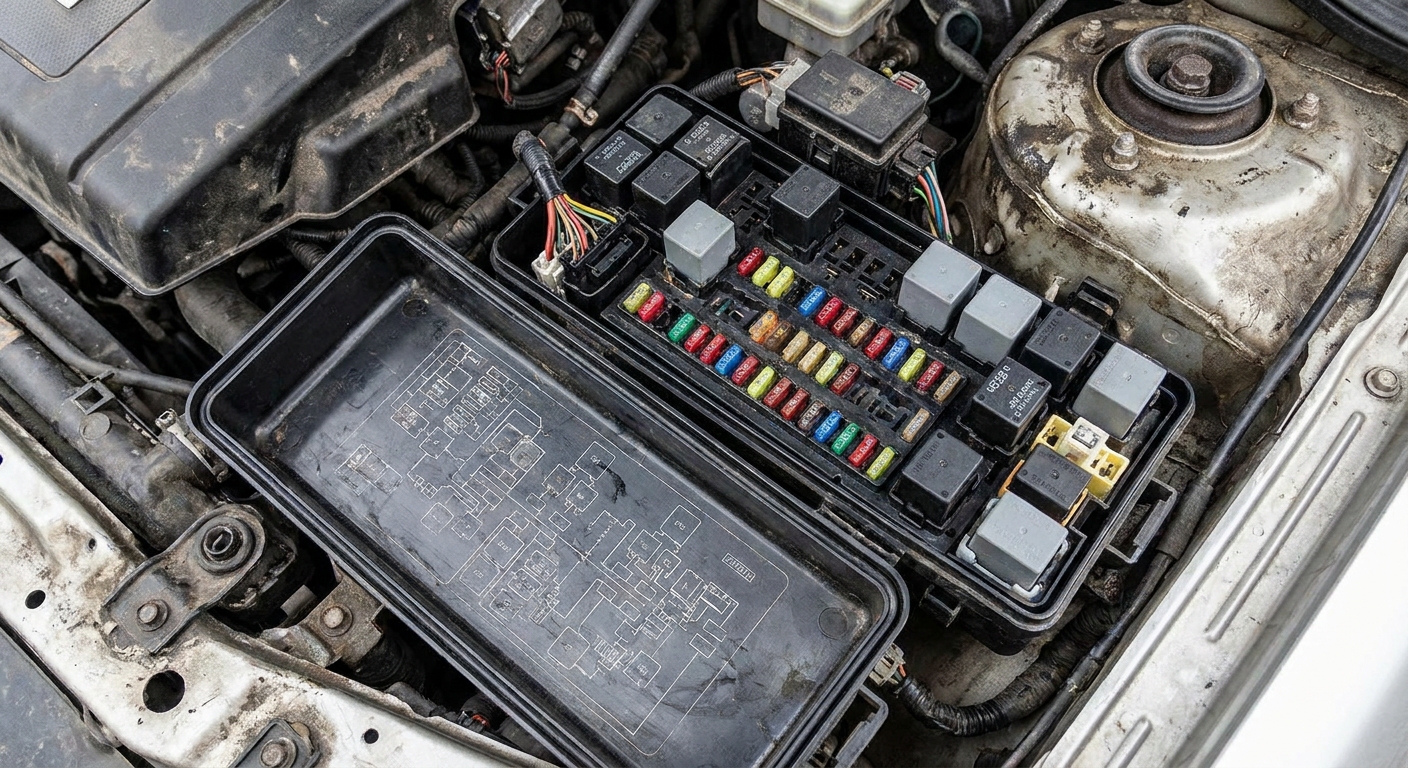
Step 2: Check the under-hood fuse box
Look for fuses labeled:
- MAIN
- ALT
- BATT
- IGN
- ECU / ECM
- EFI
- AM1 / AM2 (common on Toyota and Lexus)
Some of these are large bolt-down fuses instead of the small blade type. A visual check is not always enough, especially on higher-amperage fuses. If you can, test continuity with a multimeter.
Step 3: Find and check fusible links
Fusible links are short sections of special wire or a link assembly designed to open during a major electrical event. Many live near the battery positive terminal, sometimes in a small harness or plastic holder. If a link blew, you might see:
- A section that looks bubbled, stretched, or melted
- A plastic holder that is heat-damaged
- No power to large parts of the car even though the battery is good
Do not bypass a fusible link with random wire. That is how you trade a simple repair for a harness fire.
Common symptoms after reversal
Nothing happens
This often points to a blown main fuse or fusible link. You may have a good battery but no power getting to the ignition switch or starter circuit.
Lights work, but no crank
This is common. Accessories can still get power through smaller circuits while the main starter feed or ignition feed is protected by a larger fuse that blew. Treat it as a main fuse or fusible link investigation before replacing a starter or battery.
Cranks, but will not start
Possible ECU power fuse blown, fuel pump fuse blown, or a control module issue. Do not keep cranking repeatedly. You can flood the engine on some cars and stress the starter.
Starts, but warning lights everywhere
Reverse polarity can trigger multiple low-voltage and communication codes. Some will clear after a proper battery charge and a few drive cycles. Others can point to a module that got hurt. If you have a scan tool, now is the time to use it.
Runs, but battery light is on
That is a big charging-system warning sign after a polarity event. The alternator may not be charging due to damaged diodes or a blown alternator fuse. Driving far in this state can leave you stranded when the battery drains.
Should you jump it again?
Sometimes, but only after the basics check out.
It is reasonable to try a jump start again if:
- You have confirmed correct polarity and clean, solid connections
- You checked main fuses and found no blown fuse or fusible link
- There was no smoke, no melted wiring, no battery swelling
- The battery is simply discharged (for example, you left lights on)
Do not try jumping it again if:
- You saw smoke, smelled burning insulation, or found melted plastic in the fuse box
- The battery is hot, swollen, hissing, or leaking
- The car now has no electrical power (often indicates a main protection failure)
- You already tried once after the mistake and things got worse
- The vehicle is a hybrid or EV and you are unsure where the designated 12V jump points are
In those cases, you are past jump-start territory. You need diagnosis, not more current.
Hybrids and EVs
When I say “hybrid” or “EV” here, I am talking about the 12V system that powers computers, locks, lights, and contactors. The high-voltage battery system is separate, but it is also exactly why you should use the manufacturer-designated jump terminals and follow the owner’s manual. If you are not 100 percent sure where to connect, stop and look it up before you clamp anything.
When to tow
I am all for DIY, but I am also big on knowing when the risk is not worth it. Tow the car if:
- Main fuse or fusible link is blown and you cannot access or confirm the correct replacement
- Hybrid or EV systems are involved and you do not have model-specific guidance
- Multiple warning lights appear and the car will not communicate with a scan tool
- Charging system failure is suspected (battery light on, voltage not rising with engine running)
- Any wiring harness damage is visible
A tow to a trusted shop often costs less than the damage caused by repeated jump attempts or improvised fuse bypasses.
If it starts: charging check
If you have corrected polarity, checked fuses, and the engine starts, do a basic charging sanity check before you declare victory.
With a multimeter
- Engine off: battery around 12.4V to 12.6V if charged.
- Engine running: commonly 13.7V to 14.7V, but smart-charging systems can vary with temperature and operating mode, and may run lower or higher at times.
If voltage stays near 12V with the engine running, the alternator is likely not charging, the alternator fuse is blown, or the system is commanding low charge for a reason that needs diagnosis.
Without tools
- Watch for a battery warning light.
- Note headlight brightness at idle versus slight revs.
- Listen for unusual whining from the alternator area.
These are not perfect tests, but they are good “do I need to stop driving right now?” indicators.
What not to do
- Do not replace random parts before checking fuses. I have seen people buy starters, batteries, and alternators when a $10 main fuse was the real issue.
- Do not bypass a fusible link with plain wire or a bolt.
- Do not keep trying to crank if the car is dead or behaving oddly.
- Do not disconnect a battery cable while the engine is running to “test the alternator.” On modern cars that can spike voltage and damage modules.
FAQ
Will connecting jumper cables backward always ruin the car?
No. Many vehicles will blow a main fuse or fusible link and survive with minimal damage. The problem is you cannot assume you got lucky until you check those protection points and confirm the charging system is healthy.
I saw sparks when the cables were connected wrong. Is that normal?
Sparks can happen even during a correct jump when the final connection is made, but heavy arcing, instantly hot cables, smoke, or a loud pop are red flags. Treat those as signs to stop and inspect fuses and wiring before any restart attempt.
Can reverse polarity drain my battery even if nothing seems broken?
It can, especially if a component internally shorted during the event. If the car starts but the battery goes dead again quickly, you may have a charging problem or a new parasitic draw. That is a good time for a shop-level diagnosis.
Is it different on newer cars?
Yes. Newer vehicles typically have more modules and more sensitive electronics. Some have better protection built in, but the cost of getting it wrong is higher, which is why I am cautious about repeated jump attempts after a mistake.
My bottom line
If jumper cables were connected backward, your best move is to disconnect safely, then inspect the main fuses and fusible links before you try to start the car again. Once those check out, verify the charging system is actually charging, because alternator damage is a known risk after a polarity event.
And if you saw smoke, smelled burning, found melted wiring, or the car went completely dead afterward, skip the driveway gamble and get it towed. I would rather see you spend money on a tow than spend a lot more money chasing electrical ghosts later.