I have been the guy in a parking lot who is sure the jumper cables are on right… and still gets nothing but a click, or worse, absolute silence. When a jump start fails, it usually is not “mystery electrical gremlins.” It is almost always one of a handful of very specific problems: the cables are not actually delivering current to the starter, the donor battery collapses under load, a main fuse link is blown, or the starter circuit is not being allowed to engage.
This guide starts from the assumption you already tried a normal, safe jump procedure and the engine still will not crank or start.
First: what happens when you turn the key?
Your next steps depend on the symptom. Pay attention to the sounds and the dash behavior.
- No crank, no click, dash lights stay bright: likely poor cable connection, bad ground point, blown main fuse, bad starter relay, neutral safety switch, or immobilizer.
- Rapid clicking from engine bay: low voltage under load, high resistance connections, weak donor pack, or failing battery cables.
- Single click: starter solenoid tries to engage but voltage drops or the starter motor is failing or jammed.
- Cranks strong but will not start: not a jump problem anymore. Think fuel, spark, air, or immobilizer. See “Cranks but won’t start” below.
- Everything goes dead when you try to crank: donor or cables cannot supply current, battery internal short, poor terminal contact, or a main connection issue.
Clamp mistakes that fool everyone
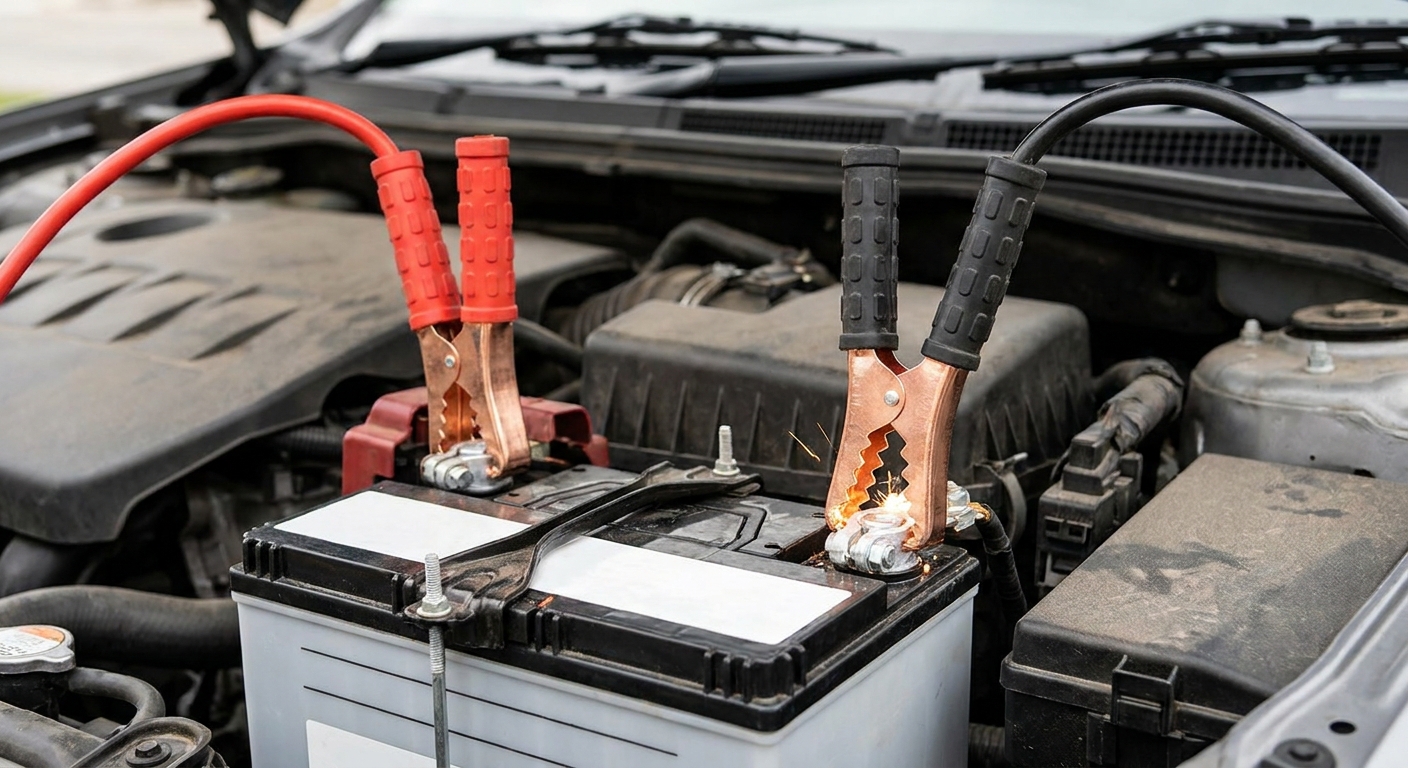
I cannot count how many “bad starter” diagnoses were really just a clamp sitting on the wrong part of the terminal. You can have headlights and radio and still not have the hundreds of amps needed to spin a starter.
1) The clamps are on the terminal, not the post
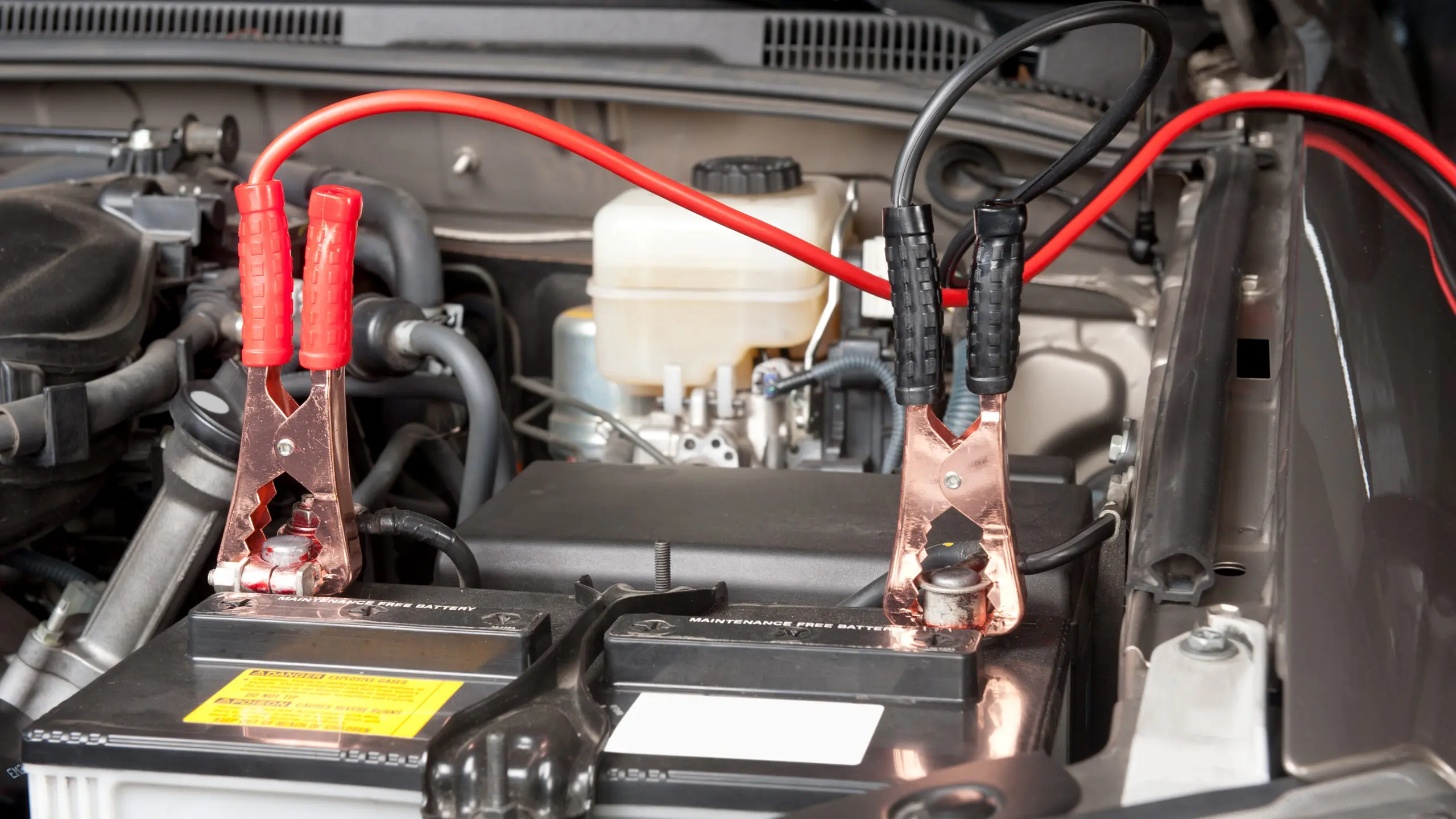
Many batteries have bulky lead terminals with a little bolt and clamp assembly. If your jumper clamp is biting a bolt head, a plastic cover edge, corrosion, or a tapered part that is not making full contact, it can pass a little current but not starter current.
- Re-seat the clamps so they bite clean metal on the round battery posts or a clean, solid remote jump point.
- Wiggle test: a properly clamped jaw should not rotate easily by hand.
2) Your ground is on paint or oxidation
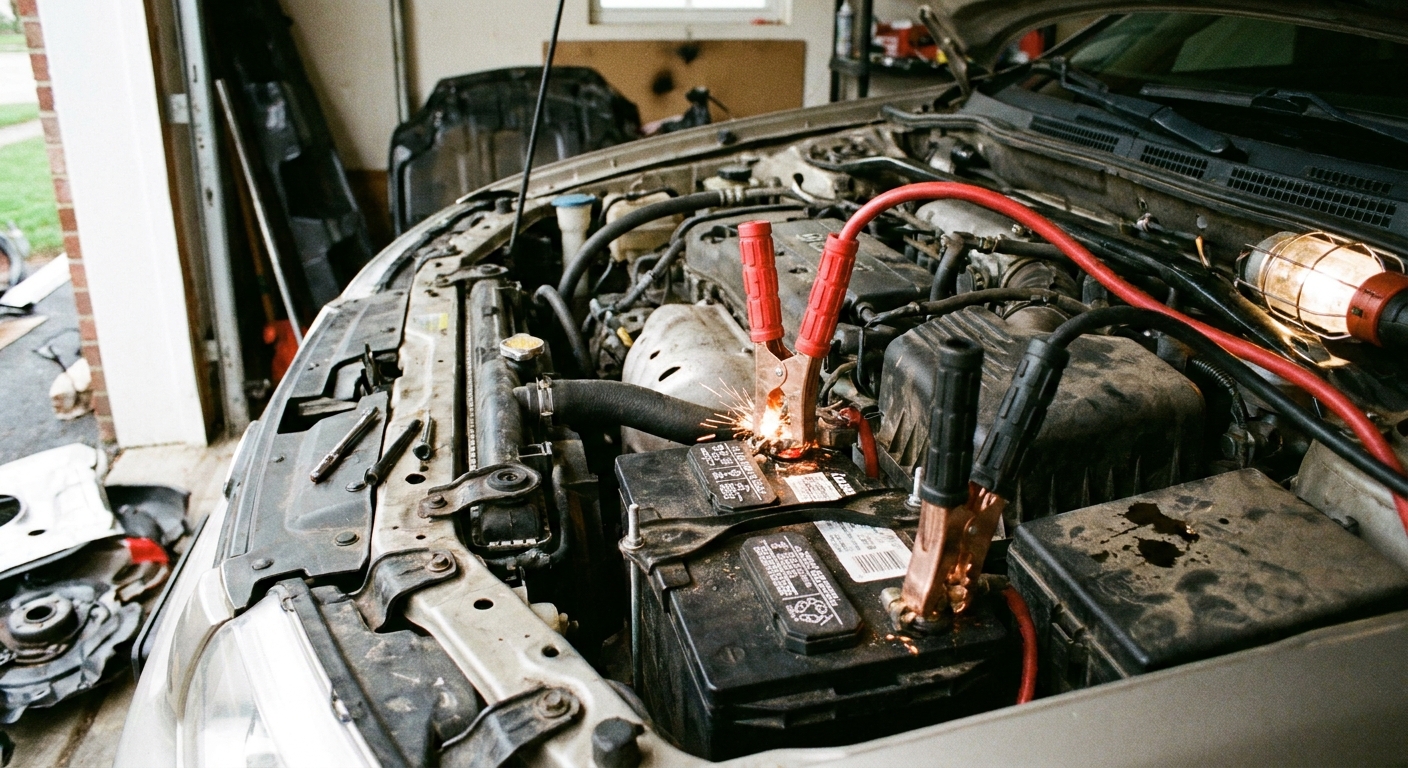
The most common failed jump I see: the black clamp is on a painted strut tower or a powder-coated bracket. Paint is an insulator. Some aluminum parts also develop an oxide layer that resists current.
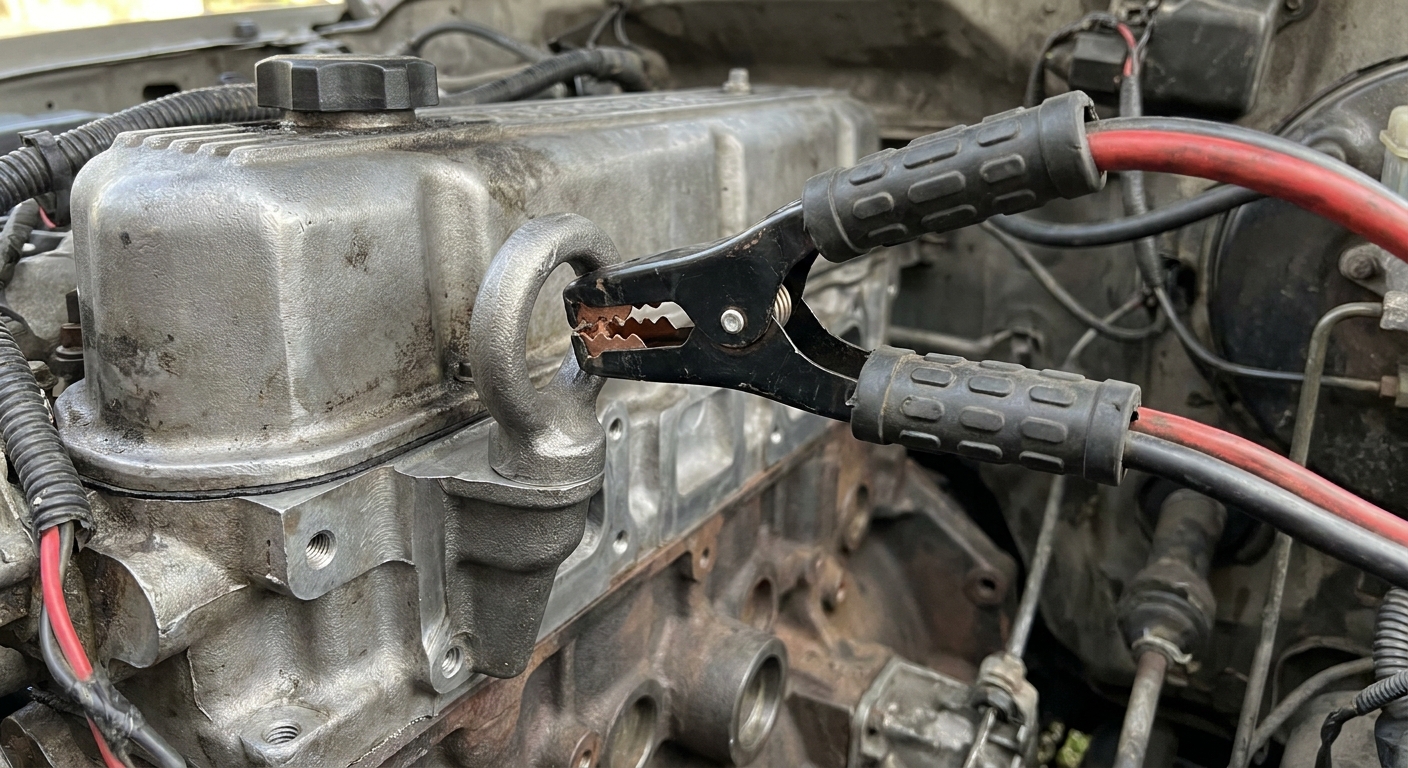
Fix: move the black clamp to bare, thick metal on the engine or a substantial bracket bolt. Think:
- a clean engine lifting eye
- a large alternator bracket bolt
- a thick, unpainted engine block ear
If you have to, scratch a small spot of paint off a robust bracket to get bare metal. Do not clamp to thin sheet metal.
Bonus safety point: many OEM procedures recommend connecting the negative clamp to an engine ground away from the battery to reduce the chance of igniting battery hydrogen gas.
3) Smart clamps are stopping the jump
Some portable jump packs have smart clamps that will refuse to output power if they do not sense correct polarity or they do not detect a battery voltage in range. If your pack is flashing an error, it is not actually delivering the jump.
- Check the clamp module lights or display for a fault indicator.
- Confirm red is on positive (+) and black is on a good ground.
- If the car battery is extremely dead, some packs have a manual override mode, but only use it if the manufacturer specifically instructs it for your model and situation.
Terminal corrosion and remote jump points
Another sneaky one: you clamp onto what looks like a “battery terminal,” but the real problem is corrosion between the terminal and the post, or you are not using the vehicle’s designated jump point.
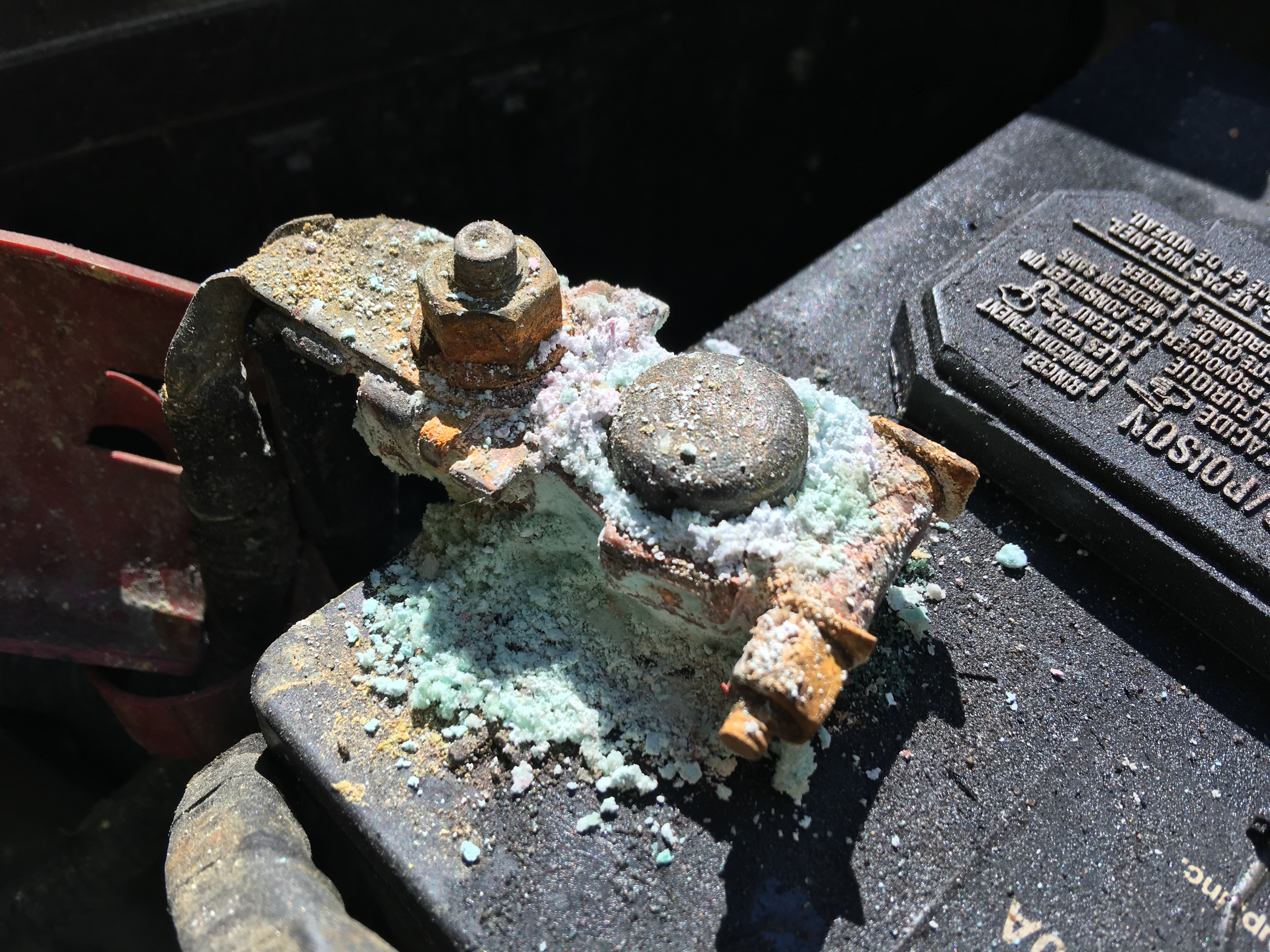
- Top-post batteries: white or blue-green crust can act like an insulator. If the clamp is biting corrosion, it can light the dash but starve the starter.
- Side-post batteries: the recessed bolt can be corroded or stripped, and the jumper clamp may not make a solid bite.
- Remote jump terminals: many vehicles have a positive jump stud under a red cap and a specific ground point. If you have them, use them. They are there for a reason.
When the donor collapses under load
A jump start is not just “12 volts.” Starting is about current. A weak donor vehicle, a small jump pack, or skinny bargain cables can show decent voltage until you twist the key. Then everything sags and the starter never gets fed.
Signs the donor is collapsing
- Donor vehicle idle drops hard or nearly stalls when you try to crank the dead car.
- Jump pack suddenly shuts off or goes from full bars to empty.
- Cables get hot fast and the clamps feel warm within 10 to 20 seconds.
- Dash lights go dim or reset when you turn the key.
What to do instead of trying over and over
This matters: repeated jump attempts can overheat cables, melt clamp insulation, and damage the donor battery or jump pack. If your cables are heating up, stop.
- Let the donor vehicle run for 5 to 10 minutes at a fast idle (around 1,500 RPM) to push some charge into the dead battery.
- Use heavier gauge jumper cables if available, or move to a higher output jump pack.
- If possible, connect to a second donor vehicle rather than cooking one weak source.
- If the car battery is old, sulfated, or has a bad cell, no amount of “more time” will make it accept enough charge to crank.
If you have a multimeter, a quick reality check helps. With cables connected and the donor running, you will typically see something in the mid-13s to mid-14s at the donor battery. At the dead car’s battery posts, you may see similar numbers, but a heavily discharged or failing battery can pull that down.
Here is the useful diagnostic part: if the donor battery reads around 13.8 to 14.6 volts but the dead car’s battery posts are much lower, that points to a connection, clamp, ground, or cable issue more than an alternator issue.
Blown main fuse or fusible link
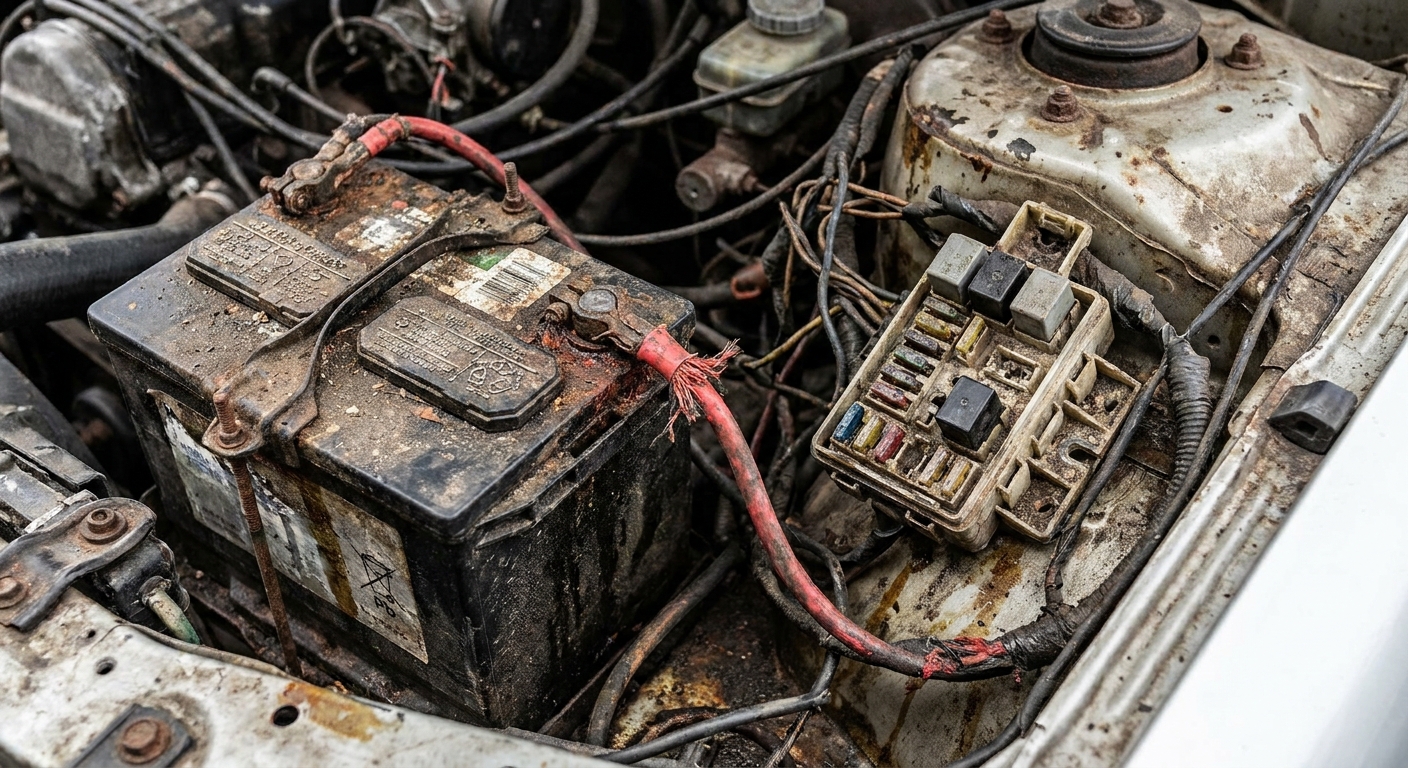
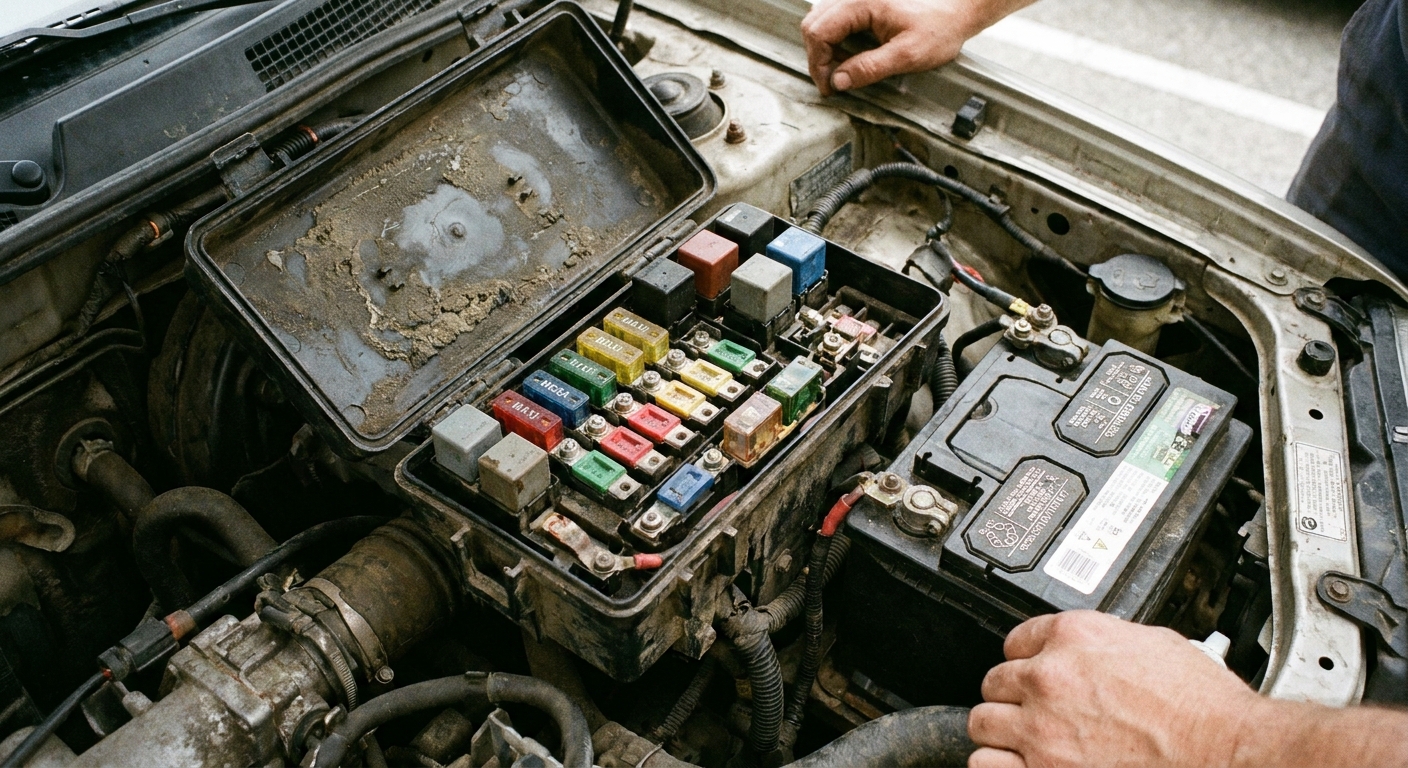
Some cars will light up the dash but still be unable to crank if a high-amperage fuse, main fusible link, or battery junction link is blown. This can happen after an accidental reverse polarity event, a short, or sometimes just age and corrosion at the fuse block.
Common clues
- Interior lights work, but you have no crank and no click.
- Some major systems are dead: no power to starter relay, no power at underhood fuse box sections, or no power windows even though the dome light works.
- You see a visibly melted link near the battery cable or inside a battery junction box.
Quick checks you can do
- Locate the underhood fuse box and inspect any MAIN, AM1/AM2, IGN, or high-amp fuses (often 40A to 200A). Replace only with the same amperage.
- Look at the battery positive cable where it enters a small box or junction. Many vehicles hide fusible links there.
- If you are not sure, do not keep jumping. A shorted circuit can get hot quickly.
Starter will not engage
1) Bad starter relay or starter fuse
In many modern vehicles, the ignition switch (or push-button system) triggers a starter relay, which then feeds the starter solenoid. If that relay fails, you get silence even with a good battery and a solid jump.
- Check your fuse box legend for START or ST fuse and the starter relay.
- If the fuse is blown, replace it once. If it blows again, stop and get it diagnosed. Something is shorting.
2) Neutral safety or clutch switch
If the vehicle does not believe it is in Park or Neutral (automatic), or it does not see the clutch pressed (manual), it may refuse to crank.
- Automatic: move the shifter to Neutral and try starting. Then back to Park and try again.
- Manual: fully depress the clutch and try. If possible, try pumping the clutch once or twice.
- Check if the reverse lights or gear indicator behave strangely, which can hint at a range switch issue.
3) Immobilizer or key issues
Many cars may crank then die, or not crank at all, if the anti-theft system is unhappy. A weak key fob battery can cause odd no-start behavior on some push-button vehicles.
- Look for a flashing security light on the dash.
- Try your spare key if you have one.
- For push-button starts, hold the fob against the start button (many cars have an emergency RFID reader there) and try again.
If you hear one click
A single solid click often means the starter solenoid is trying to do its job, but the starter motor is not spinning. That can be low voltage under load, bad cable connections, or a starter that is failing mechanically.
What helps you decide quickly
- Cables or terminals get hot: high resistance. Clean and re-seat connections. Another jump attempt will just heat things up more.
- Everything stays bright but starter does not spin: suspect the starter motor or solenoid contacts.
- It starts after a few tries, then fails again later: classic worn starter symptom.
On some vehicles, a failing starter will respond briefly to a light tap on the starter housing while someone turns the key. That is an old-school trick and it is not a real fix, but it can confirm the diagnosis. If you cannot safely access the starter, do not try it roadside.
Cranks but won’t start
If the engine is cranking at normal speed, you have enough battery power and starter operation. Now you are chasing fuel, spark, air, or security.
Fast checks I do in the bay
- Listen for the fuel pump: many cars will hum for 2 to 3 seconds when you turn the key to ON. No hum can mean fuel pump, fuse, relay, or wiring.
- Check the tach behavior while cranking: on some vehicles, a dead crankshaft position sensor results in no RPM signal and no start.
- Flooded engine (gasoline): if you smell raw fuel, hold the accelerator to the floor while cranking. Many modern gasoline vehicles have a clear-flood mode that cuts fuel in this condition. Stop if it does not improve within a few seconds.
- Immobilizer: if it cranks and immediately dies, suspect key recognition.
If you have a check engine light on, a basic scan tool can point you in the right direction fast. A jump start will not fix a failed fuel pump or a missing crank signal.
When another jump will just make heat
Here is the line I use at the shop and in parking lots: if you are getting hot cables or hot clamps, stop trying to brute-force it.
- If the copper in the cables is undersized, repeated cranking attempts turn them into a space heater.
- Heat means resistance, and resistance means the starter is not getting the current it needs.
- You can melt insulation, damage the donor battery, and in worst cases create a burn hazard.
Also keep an eye on the “everything goes dead” symptom. If the dead battery has an internal short, a jump pack may fault out and a donor setup can get hot fast. That is your cue to stop and move to diagnosis.
At that point, the right move is to correct the connection (especially the ground point), switch to heavier cables or a stronger pack, or move to diagnosis rather than repetition.
Quick checklist
- Red clamp on dead car battery positive (+) post, solid bite on clean metal.
- Black clamp on a bare metal engine ground, not on paint.
- Donor vehicle running, headlights and blower on donor turned off to reduce load.
- Try to crank for no more than 5 seconds, then rest 30 to 60 seconds to let the starter and cables cool.
- If clamps or cables get hot, stop and fix the connection or change equipment.
- If there is still no response, check main fuses and starter relay.
When to call for a tow
I love DIY, but I also love not wasting your afternoon. Call for a tow or mobile mechanic if any of the following are true:
- Battery cables or clamps are heating up quickly.
- You smell burning plastic or see smoke.
- You have power but no crank and no click after verifying clean, solid clamp contact and a proper ground.
- The engine cranks fine but will not start and you suspect immobilizer or a fuel issue.
- Main fuses keep blowing.
FAQ
My lights and radio work. Why will it not start even with a jump?
Lights and radio need a tiny amount of current compared to a starter. You can have enough power for accessories but not enough for cranking, especially with corroded terminals, a bad ground point, or a donor source that collapses under load.
Could it be the alternator if it will not start after a jump?
An alternator problem typically shows up as a battery that keeps dying after you do get it running. If you cannot crank even with a solid jump, focus first on connections, battery condition, main fuses, and the starter circuit.
Is it safe to jump start a hybrid or EV?
Many hybrids and EVs still have a 12V battery that can be jump-started, but procedures vary and jump points may be specific. Check the owner’s manual and use the designated jump points if provided. Do not attempt to “jump” the high-voltage traction battery. If you connect incorrectly, you can blow expensive fuses or damage electronics.
How long should I wait with the cables connected before trying again?
If the dead battery is just low (not failed), 5 to 10 minutes connected to a running donor can help. If you are seeing hot cables, repeated tries are not helping. Fix the connection or stop and diagnose.