Winter is where EV range anxiety earns its reputation. Cold air is denser, wet snowy or salty roads increase rolling resistance, tires get stiffer, and your battery chemistry slows down. Add cabin heat on top, and it can feel like your miles are melting away.
The good news is you can get a lot of that range back with a few habits that are easy to repeat. Think of this like a winter tune-up for your routine: start warm whenever you can, heat the people not the air, and drive like you are carrying a crockpot of chili in the back seat.
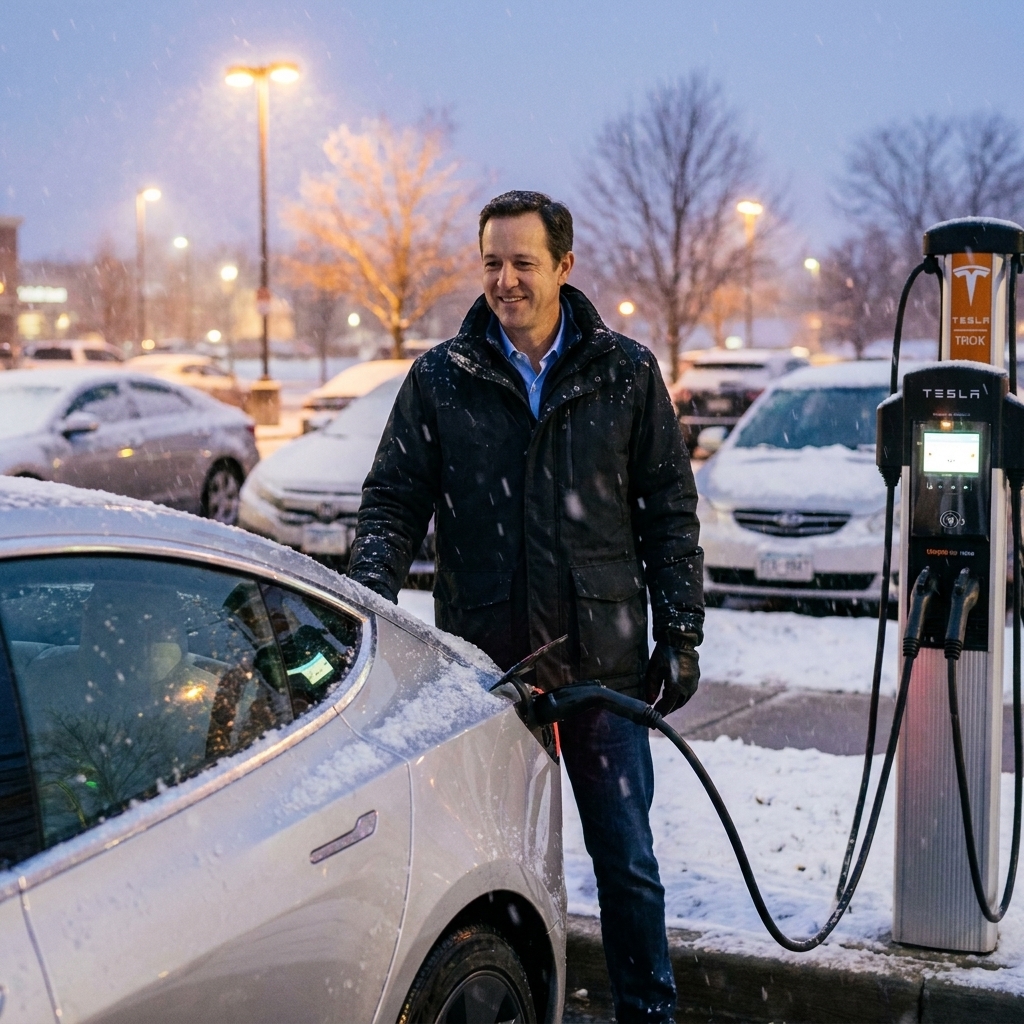
Why EVs lose range in the cold
Two main things are happening when temps drop:
- The battery is less efficient when cold. The pack cannot accept or deliver energy as easily, so you see reduced usable capacity and lower regen until it warms up.
- Heating takes real energy. In a gas car, cabin heat is basically “free” waste heat. In an EV, the car has to make heat, and that comes from the battery.
On top of that, winter brings higher rolling resistance (cold tires, slush, snow), more aerodynamic drag (cold dense air), and more time spent warming everything up on short trips.
Precondition like a pro
If you take only one tip from this article, make it this: start warm whenever you can. Getting the battery and cabin up to temp while you are still plugged in is the closest thing to free range.
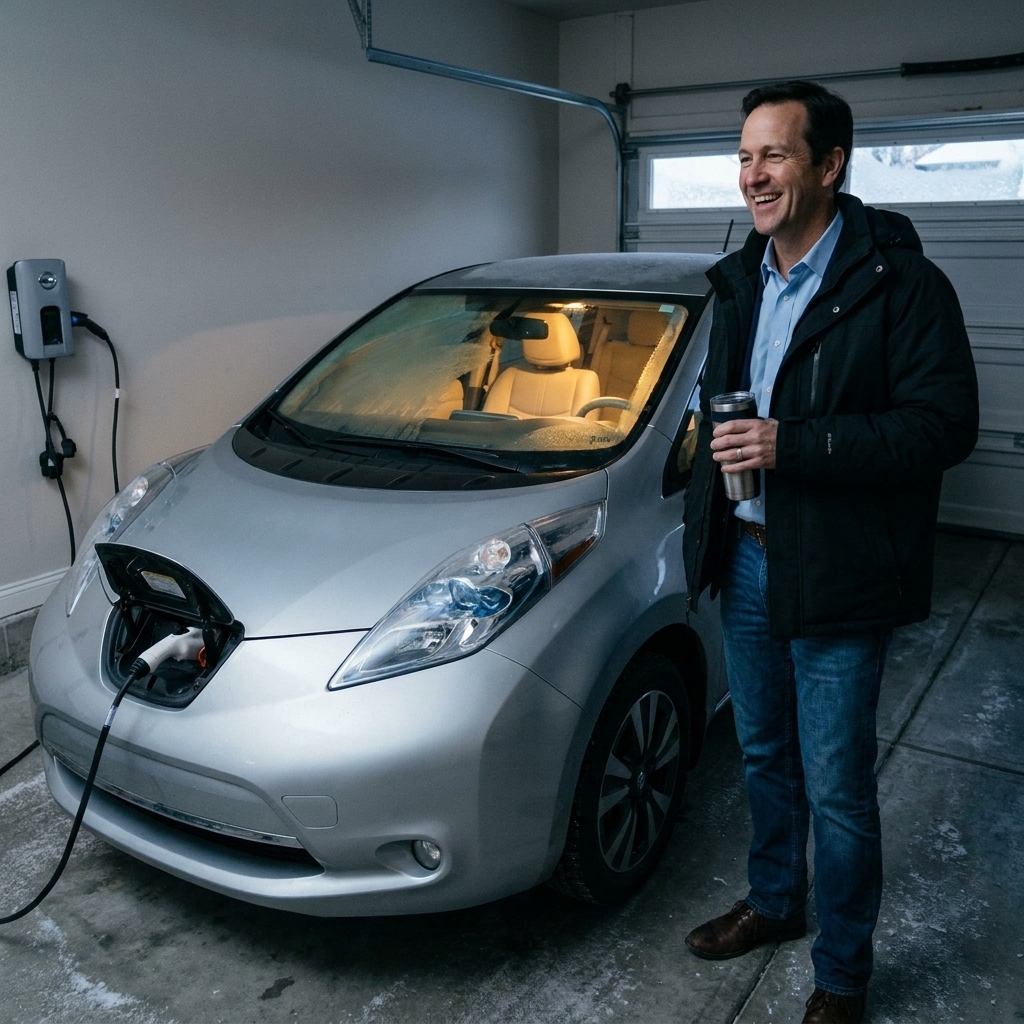
Preheat while plugged in
Use your app or the car’s schedule feature to start climate control about 10 to 30 minutes before you leave. In mild cold, 10 minutes can do it. In deep cold, or if you are on Level 1, you may want closer to 20 to 30 minutes.
Schedule departure, not just charging
Many EVs have a “scheduled departure” or “ready by” feature. This does two helpful things:
- Warms the battery for better efficiency and stronger regen sooner.
- Warms the cabin using shore power if you are plugged in.
If your EV supports battery preconditioning for DC fast charging, use it when you are en route to a fast charger. Preconditioning does use energy, but a warm pack usually charges faster once you arrive and can shorten your stop.
Garage parking helps
A garage that stays even 10 to 20 degrees warmer than outside can help your car start closer to operating temperature. The real impact varies by battery size, trip length, and whether your car can actively precondition, but starting less cold is almost always a win.
Heat smart
Cabin heat can be the biggest winter range hit, especially on shorter drives. The trick is to stay comfortable while asking the HVAC system for less.
Use seat and wheel heaters first
Heated seats and steering wheels use far less power than blasting hot air, and they make you feel warm quickly. Set the cabin temp a little lower and let the contact heat do the heavy lifting.
Try these HVAC settings
- Lower the setpoint a couple degrees and use seat heat to compensate.
- Use Eco climate mode if your EV has it. It limits heater output and reduces fan power.
- Defrost with intention. Full defrost is often max heat plus max fan plus A/C for dehumidification. Use it to clear the glass, then back it down to a lighter windshield setting.
- Recirculate once the cabin is warm to reduce the load of heating ice-cold outside air. If windows start fogging, switch back to fresh air briefly.
Heat pump vs resistive heat
If your EV has a heat pump, it is generally more efficient than a traditional resistive heater, especially in cool but not brutally cold conditions. In deep cold, many heat-pump cars still use some resistive assist. Either way, the habits above still matter, because the biggest waste is overheating the cabin and running high fan speed longer than necessary.
Driving habits that save miles
Winter range is won in the boring moments: gentle takeoffs, smooth speed control, and planning ahead so you are not constantly correcting traction.
Slow down on the highway
Speed is a range multiplier, and cold weather makes the penalty worse. Dropping from 75 to 65 mph can be the difference between arriving relaxed and arriving tense. On longer drives, pick a steady speed and let faster traffic go.
Smooth inputs
Hard acceleration is fun, but it pulls big current from a cold battery and can trigger traction events on slick surfaces. Smooth throttle keeps things efficient and stable.
Use regen wisely on slick roads
Regenerative braking can feel grabby on snow and ice, especially in one-pedal modes. A few practical tips:
- Consider lowering regen (if your car allows it) when roads are icy, so lift-off does not unsettle the car.
- Brake earlier and gentler so the system can blend regen and friction smoothly.
- Expect limited regen when the battery is cold or full. That is normal. Give yourself extra stopping distance.
Combine trips
Short trips are range killers because you pay the “warm-up tax” repeatedly. One longer outing is usually more efficient than three cold starts.
Tires and traction
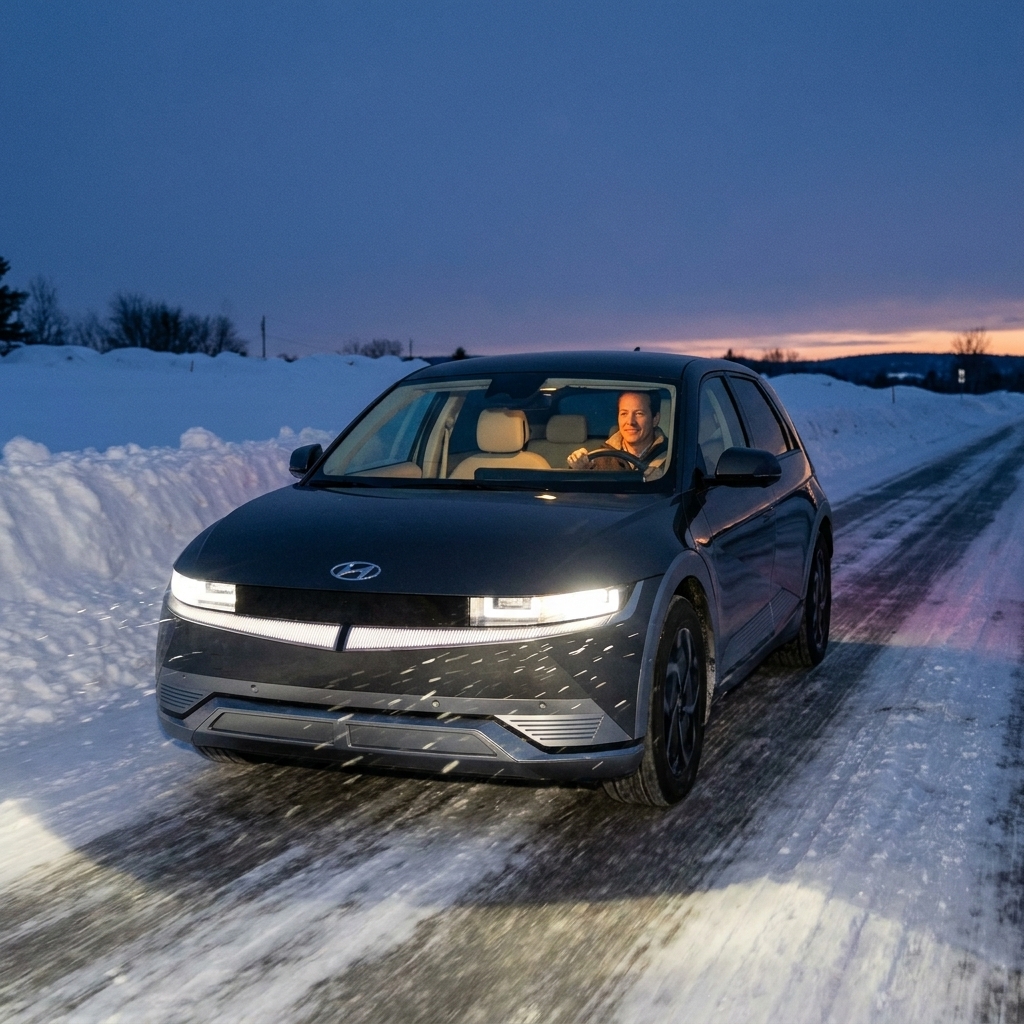
As a former shop guy, I will tell you this straight: tires are the part of the car that decides whether winter is stressful or easy.
Use real winter tires in real winter
Winter tires improve grip, braking, and confidence. They often cost a bit of range because rolling resistance can be higher than low rolling resistance all-seasons. The trade is worth it. Better traction can also prevent inefficient wheelspin and constant corrections in messy conditions. Safety first, always.
Check tire pressure often
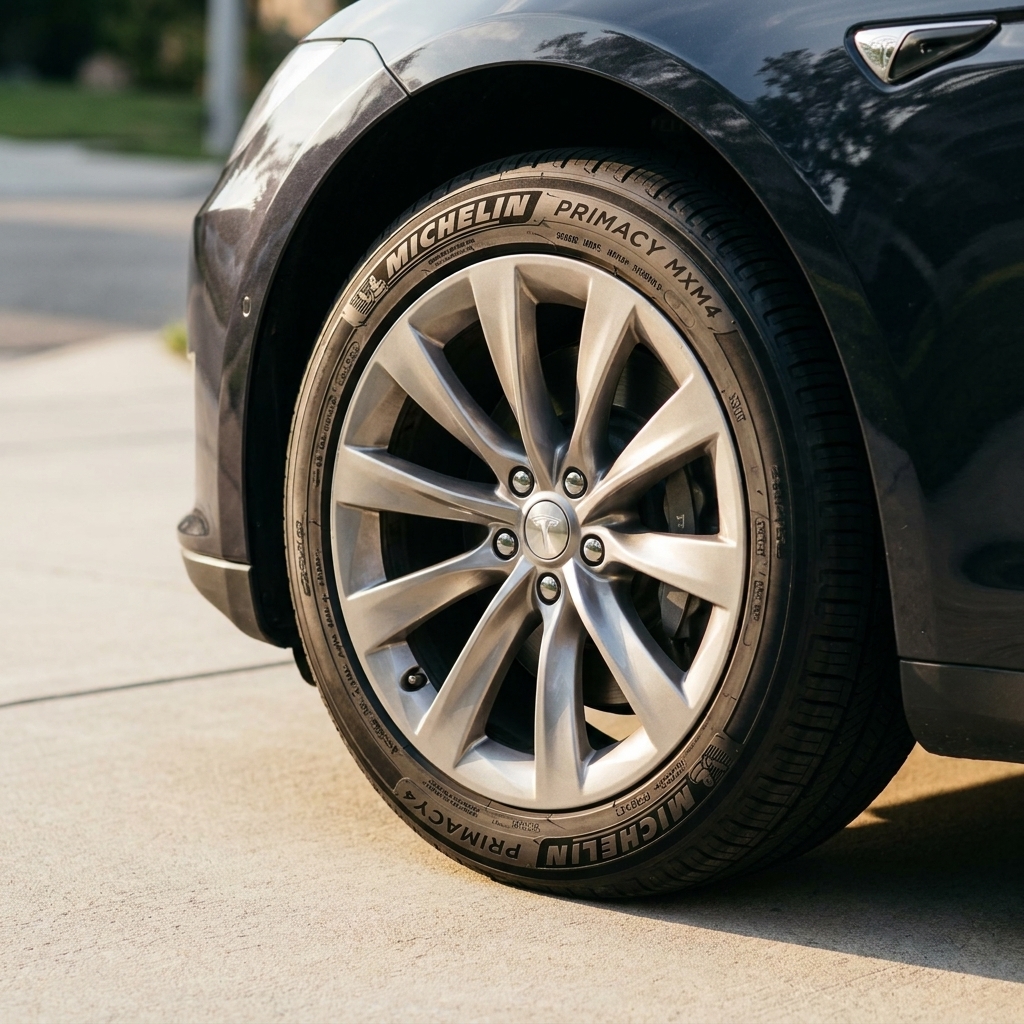
Tire pressure drops as temperatures fall. Underinflated tires increase rolling resistance and reduce range, and they also handle worse. Check pressures when tires are cold and inflate to the door-jamb spec.
Remove weight and drag
- Clear snow and ice off the car, especially around the wheels.
- Roof racks and cargo boxes can take a real bite out of winter range. If you do not need them, pull them off.
Charging strategy
Winter is where a little planning makes charging feel effortless instead of stressful.
Keep a healthy buffer
In deep cold, build in extra margin. If you normally arrive at 10 percent, aim for 15 to 20 percent until you learn your winter consumption. Also remember winter can throw curveballs like slower traffic, snow-covered roads, and chargers that are iced in or temporarily offline.
Fast charging: warm the battery
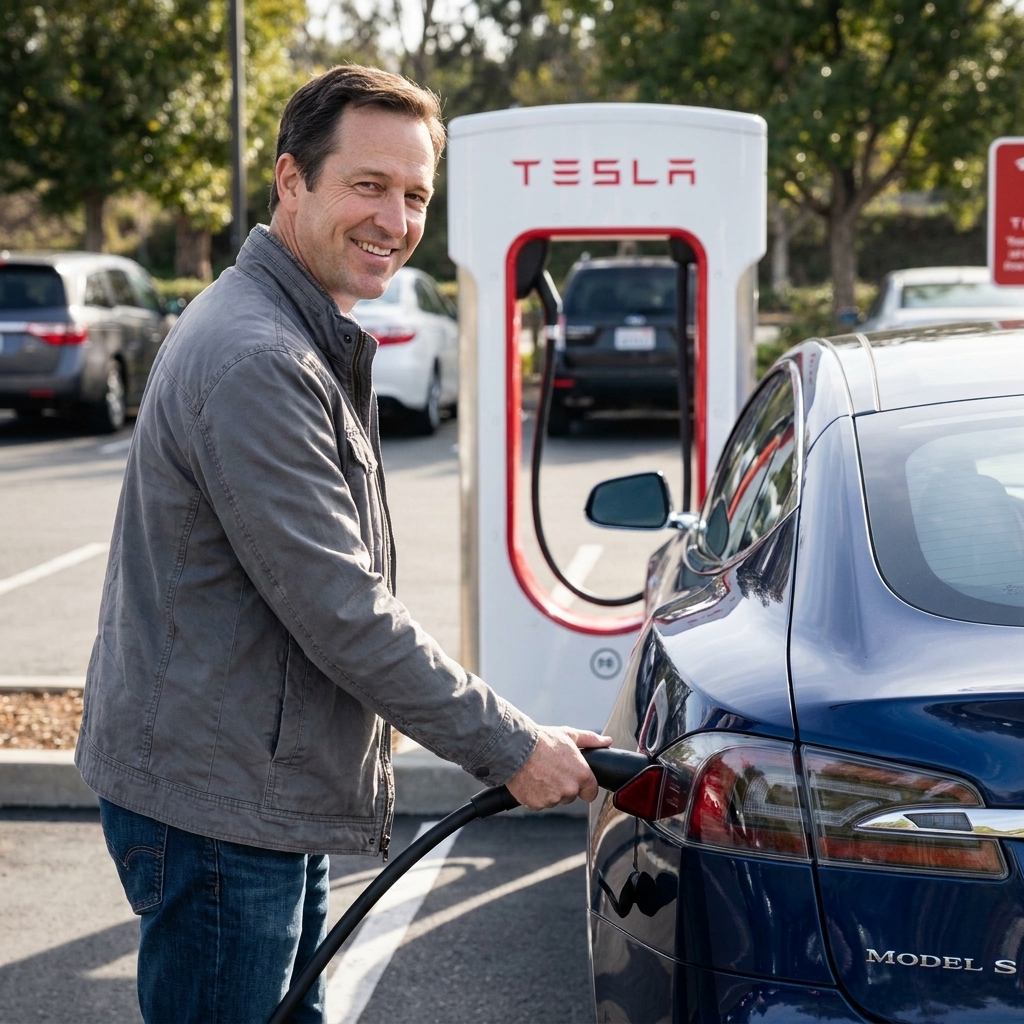
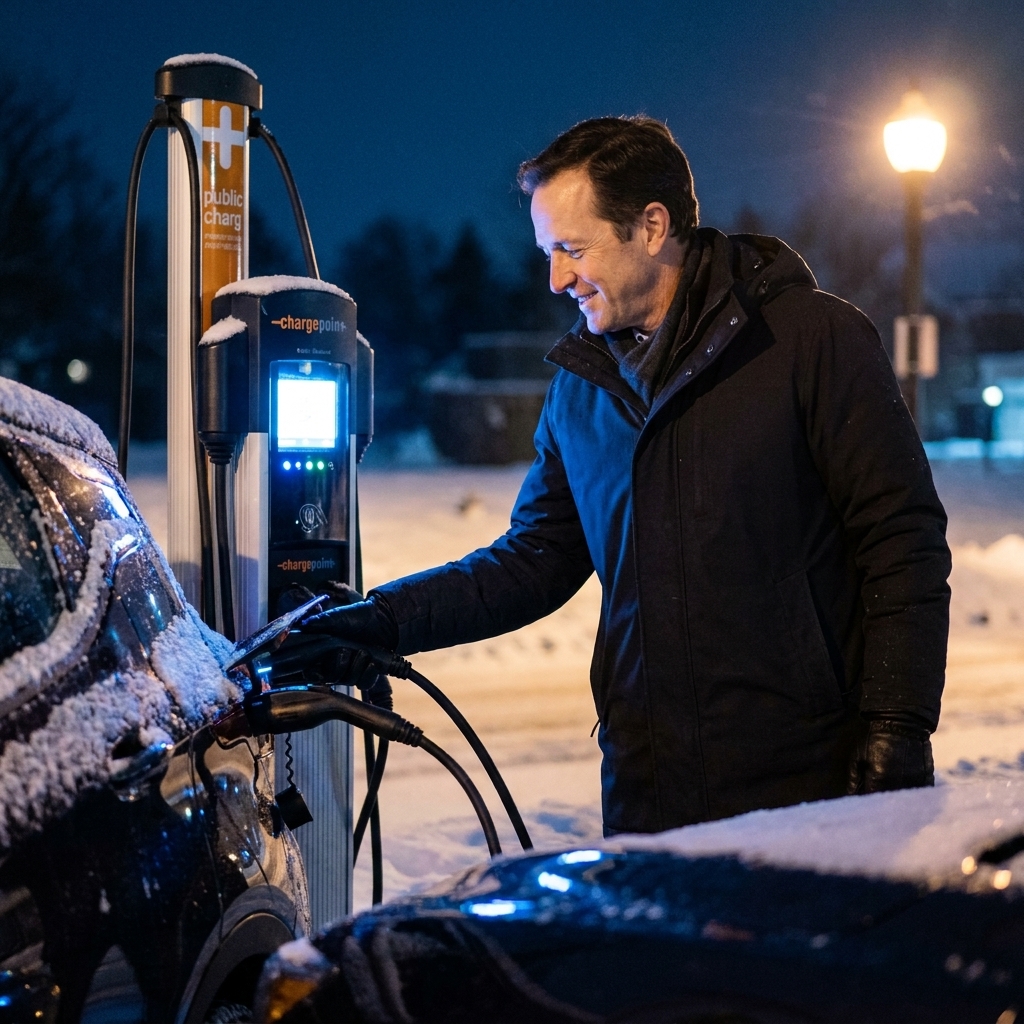
Cold packs charge slowly. If your EV supports it, navigate to the fast charger using the built-in route planner so the car can precondition the battery on the way. You will usually see better charge rates and a shorter stop.
Charge more often, for less time
Many EVs charge fastest in the lower to mid state-of-charge range. In winter, shorter and more frequent fast charge stops can be more time-efficient than trying to push to a high percentage at one stop, especially if the pack cools down between long sessions.
Home charging: keep it simple
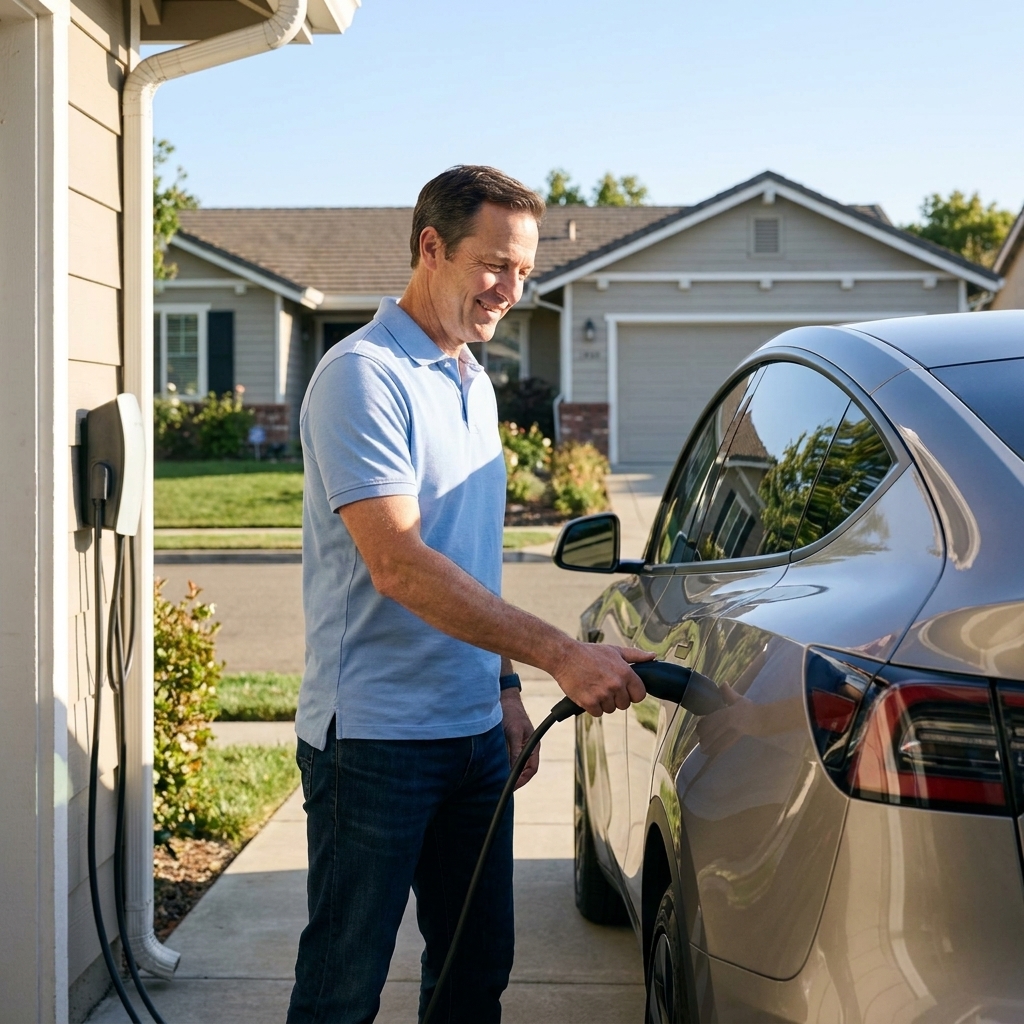
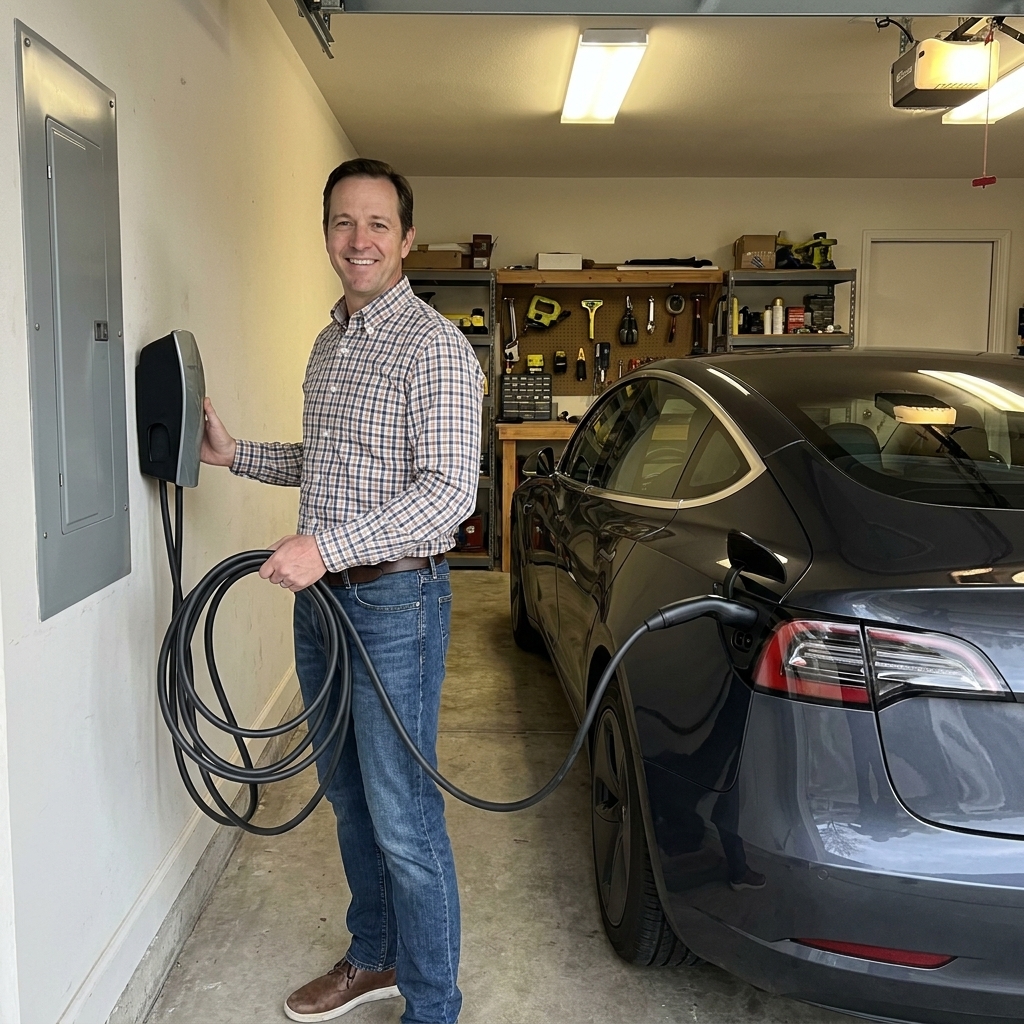
- If you can, plug in every night. Even a basic Level 1 or Level 2 setup helps you start warm and full.
- Use scheduled charging so the session finishes close to departure time. That helps the pack start warmer.
- In extreme cold, leaving the car plugged in when parked can help the car maintain the battery temperature (if your vehicle supports active thermal management). Use your normal charge limit for daily driving and follow your manual.
Common winter mistakes
- Cranking the heat to max right away and leaving it there. Preheat, then back down and use seat heaters.
- Ignoring tire pressure until the low-pressure light comes on.
- Blasting down the highway like it is July and wondering where the miles went.
- Pulling into a fast charger with a stone-cold battery and getting frustrated with slow charge speeds.
- Letting snow pile up on the car. Extra drag and wheel-well packed snow adds up fast.
Quick checklist
If you want the “sticky note on the fridge” version, here it is:
- Precondition cabin and battery while plugged in
- Use seat and wheel heat, lower cabin temp a bit
- Drive smooth, slow down on the highway
- Adjust regen for slick roads if possible
- Check tire pressure regularly
- Warm the pack before DC fast charging
- Keep extra arrival buffer in very cold temps
Winter range FAQ
How much range do EVs lose in cold weather?
It varies by model, temperature, speed, and how much heat you use, but many EVs see roughly a 10 to 30 percent drop around freezing. Bigger hits can happen on short trips with lots of cabin heat and high speeds, or well below 0°F. The point is not chasing one number, it is building habits that shrink the loss.
Is it OK to charge to 100 percent in winter?
For daily use, most automakers recommend staying below 100 percent unless you need the miles. For a road trip or a long winter drive, charging higher right before you leave can make sense. Follow your vehicle’s guidance for battery health.
Should I let my EV warm up like a gas car?
You do not need to idle for engine health, but preheating the cabin and battery while plugged in is genuinely useful for range and comfort. If you are not plugged in, a short preheat is fine, just remember it comes out of your driving battery.
Does snow mode help range?
Snow modes are usually tuned for traction and smoother torque delivery, not maximum efficiency. They can help you avoid wheelspin and instability, which is worth far more than a tiny efficiency gain. Use the mode that makes the car predictable and safe.
Bottom line
Winter range is not about a secret trick. It is about stacking small wins: start warm, heat efficiently, drive smoothly, and charge with a plan. Do that and your EV will feel a whole lot less like a science project and a whole lot more like a normal car that just happens to run on electrons.