I have seen a lot of “sudden” breakdowns that were actually one small part reaching the end of its life. A serpentine belt snapping is high on that list because it feels dramatic. One second everything is normal, the next the dash lights up and the steering wheel feels like it gained 200 pounds.
If your serpentine belt breaks while driving, the biggest takeaway is this: your engine might keep running for a short time, but several critical systems can stop working immediately. Two things set your real limit: the water pump (overheating risk) and the alternator (how long the car can run on battery power). Which one bites first depends on how your engine is designed.
One quick caveat: this article is aimed at most gasoline vehicles. Hybrids, EVs, and a few newer platforms can handle accessory drives and 12V charging differently.
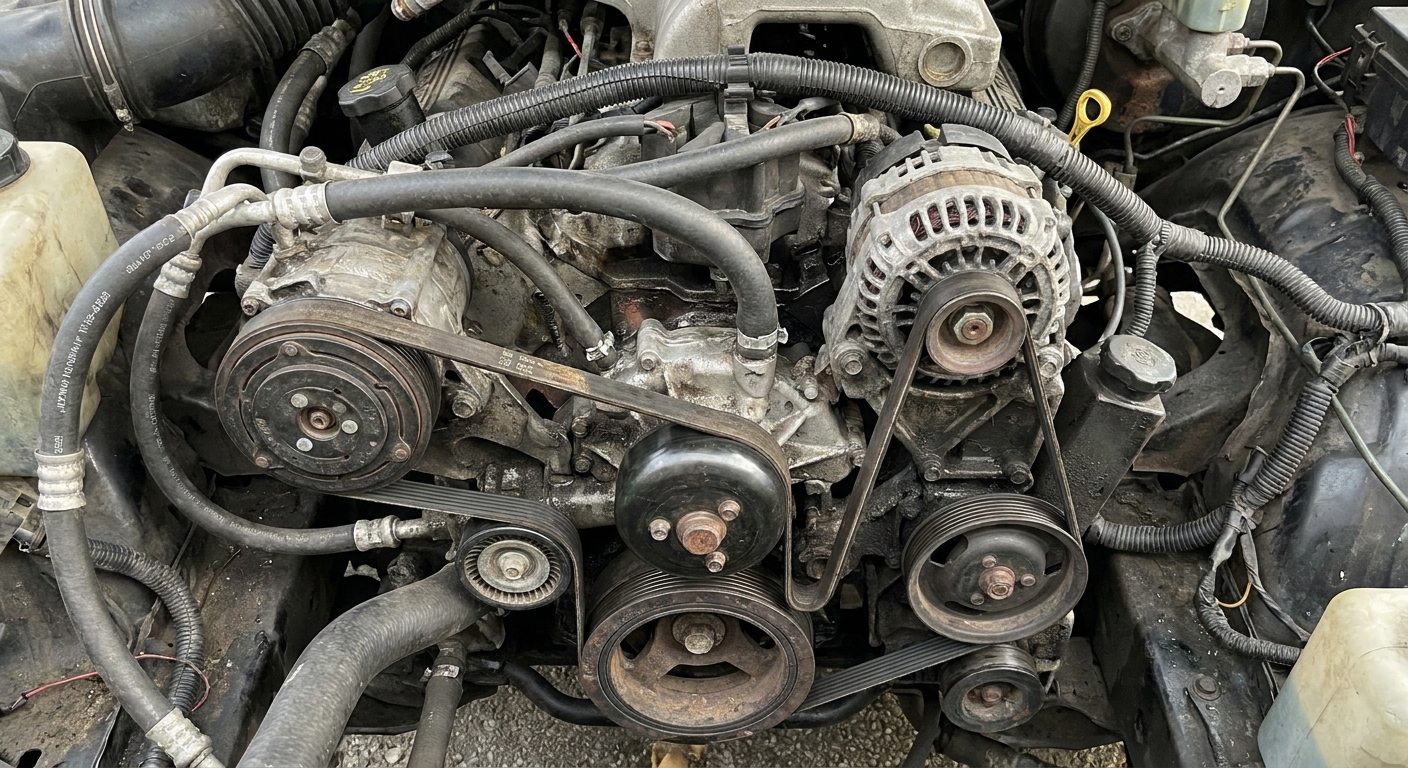
What the belt drives (and what you lose)
The serpentine belt is the long, ribbed belt that spins multiple accessories off the crankshaft pulley. When it breaks, the crankshaft keeps turning, but the belt-driven accessories stop.
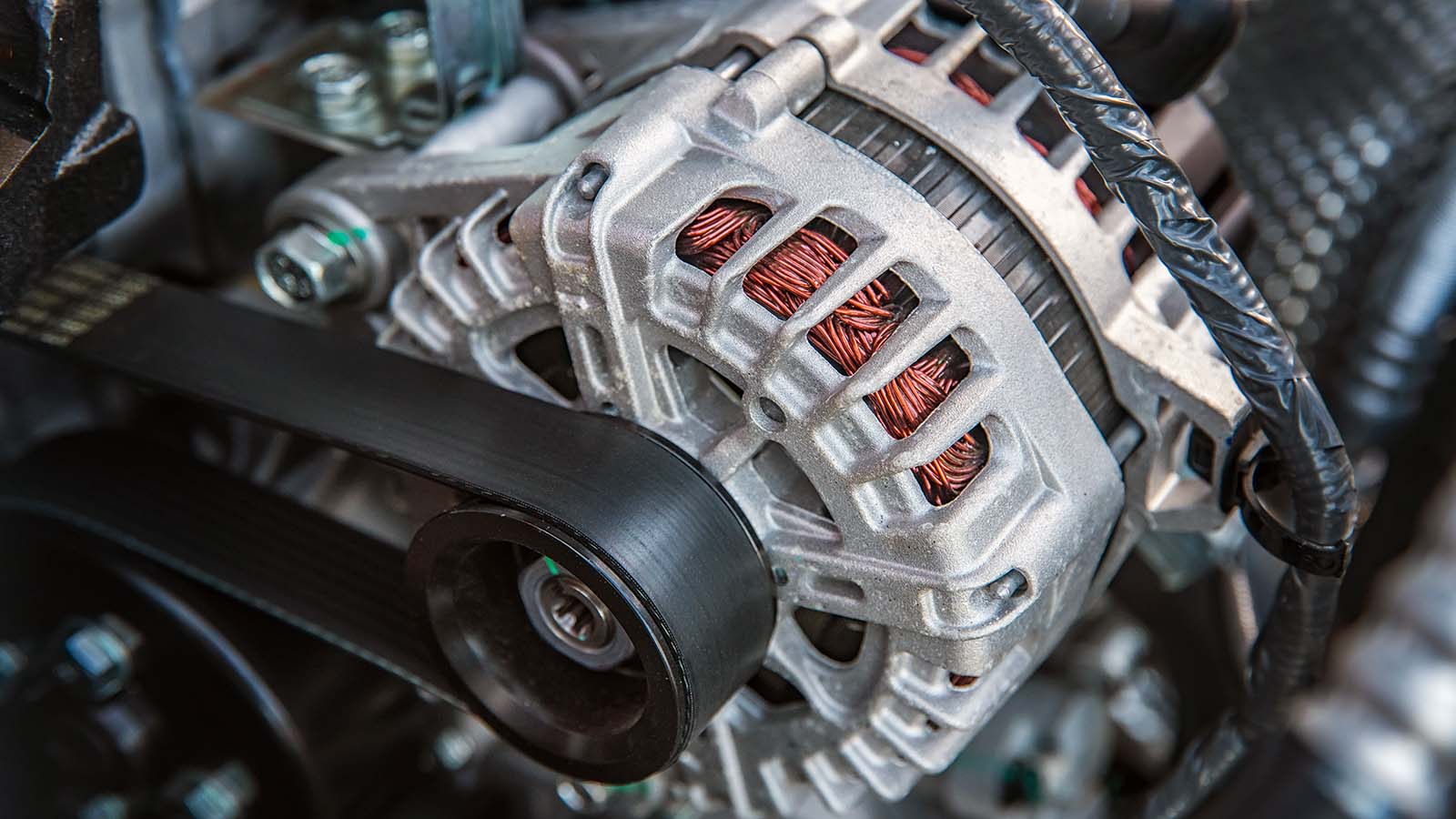
Alternator (charging system)
On most gasoline vehicles, the alternator is belt-driven. When the belt breaks, the alternator stops producing power. Your car then runs on the battery alone.
- What you notice: battery light or charging warning on the dash, headlights may dim, electronics may act weird.
- What happens next: the battery voltage steadily drops until the computer, fuel system, and ignition can no longer operate.
Power steering assist
If you have hydraulic power steering, the belt also spins the power steering pump. When it stops, steering effort increases a lot, especially at low speeds.
- What you notice: heavy steering, harder turns, more effort pulling into a shoulder or parking lot.
If your car has electric power steering (EPS), the assist motor itself is not belt-driven. However, EPS still needs electrical power. With the alternator offline, EPS can shut down once voltage drops far enough. Some vehicles also use electro-hydraulic systems, but the big picture is the same: loss of belt can mean loss of steering assist, either immediately or once voltage gets low.
Water pump (cooling system) on many cars
This often determines whether you have a couple of minutes or a brief window to pull over. On many engines, the serpentine belt drives the water pump. If it stops, coolant circulation can stop and the engine can overheat fast.
- What you notice: temperature gauge climbing, “engine temp” warning, possible steam or coolant smell.
Some engines use a separate belt for the water pump, an electric water pump, or a timing belt or timing chain driven water pump. That is why two cars can have very different outcomes from the same belt failure.
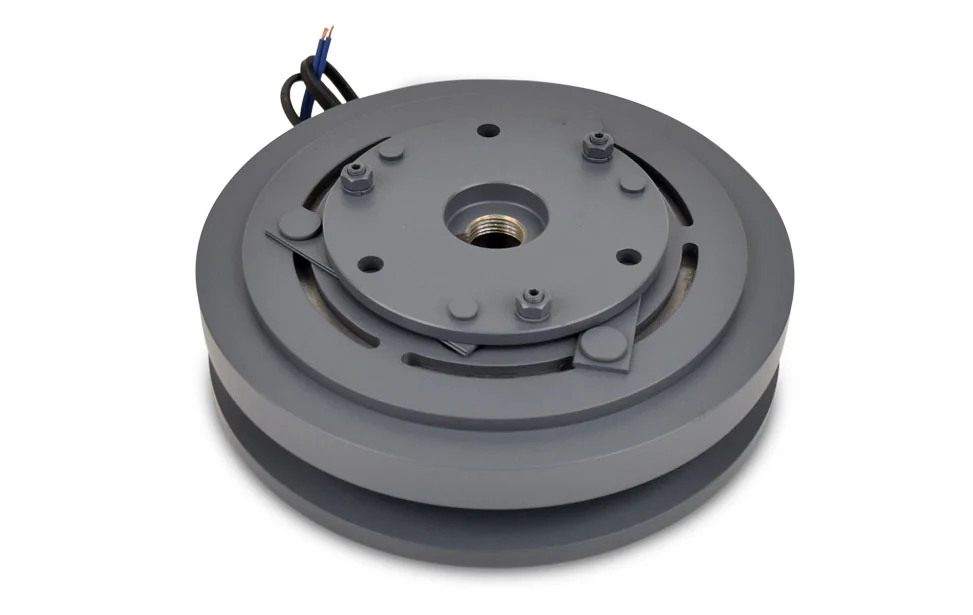
A/C compressor and other accessories
Your A/C will usually quit immediately. Depending on the vehicle, you may also lose a belt-driven air pump or other accessory.
Signs the belt broke
A serpentine belt failure can be loud or subtle. Sometimes it is a bang and a flapping noise. Sometimes it is just the battery light coming on and the steering getting heavy.
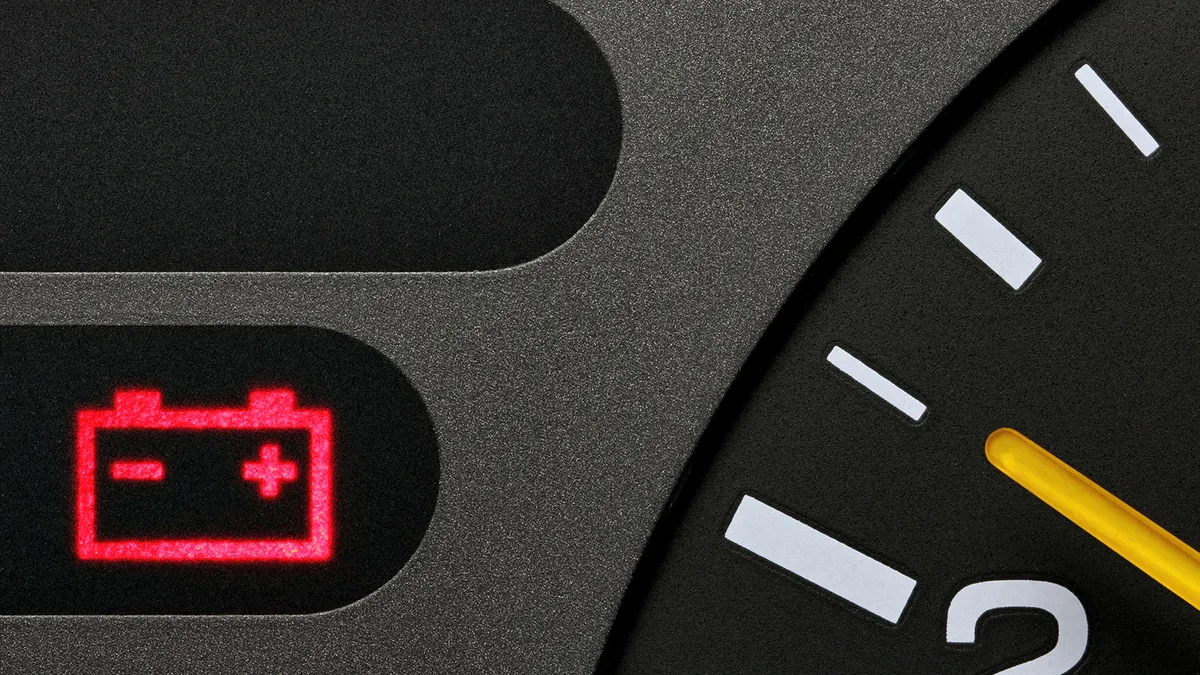
- Battery/charging light comes on (often the first clear sign)
- Power steering suddenly gets very heavy (if hydraulic assist)
- Temperature gauge starts rising (if water pump is belt-driven)
- Electrical glitches like flickering lights, warning messages, radio cutting out
- Multiple warning lights at once (ABS, traction control, steering, etc.) because low voltage confuses modules
- Burning rubber smell if the belt is slipping before it finally lets go
- Whining or squealing beforehand from a failing tensioner or pulley
How far can you drive?
The honest answer: as little as possible, and ideally not at all once you realize what happened. In the real world, you might need to get out of traffic and into a safer spot.
If the water pump is belt-driven
Assume you have minutes before overheating becomes a serious risk. Overheating can warp cylinder heads, damage head gaskets, and turn a belt problem into an engine rebuild problem.
Your goal should be to get to the nearest safe shoulder or parking lot immediately. If the temp gauge is rising, do not try to “just make it home.”
If the water pump is not belt-driven
You may be able to drive a short distance on battery power alone, but the clock is still ticking. Modern vehicles draw a surprising amount of power for the fuel pump, ignition coils, injectors, engine computer, and modules.
In my experience, you might get anywhere from 5 to 30 minutes depending on battery health, state of charge, temperature, and how many electrical loads are on. It can be shorter with a weak battery or lots of accessories running, and it can be longer with a strong, fully charged battery and minimal load. Either way, treat it like borrowed time, not a plan.
How to buy a little time (safely)
- Turn off high draws: A/C, seat heaters, rear defroster, extra chargers.
- Keep it simple: avoid stop and go if possible, and head to the closest safe place to stop.
- Use hazard lights: if traffic is fast or visibility is poor, make yourself obvious early.
- Watch the temp gauge: if it moves above normal, your priority becomes stopping before it overheats.
What to do right away
1) Stay calm and plan your exit
Grip the wheel with both hands. If steering assist is gone, the car is still steerable, it just requires more effort. Signal early, avoid abrupt lane changes, coast, and move toward the shoulder or a lot.
2) Check the dash fast
If you see the battery light, assume charging is gone. If you also see temperature rising, treat it like an overheating emergency.
3) Do not keep driving once it starts overheating
If the needle climbs past normal or you get an engine temp warning, pull over as soon as you can do it safely. Driving an overheating engine even a short distance can cause expensive damage.
4) Shut the engine off once you are safely stopped
With no belt, idling does not help you. If the water pump is not spinning, idling can still overheat the engine. And with no alternator, every minute of runtime drains the battery.
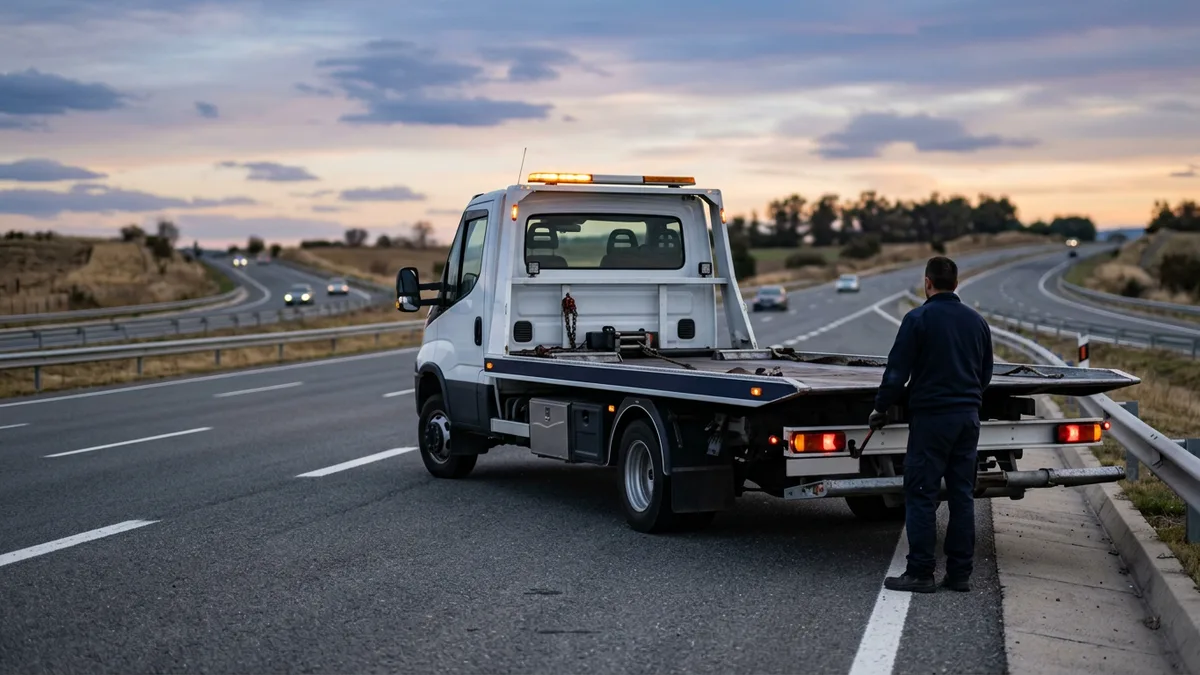
5) Call for a tow or roadside assistance
A belt replacement is often straightforward, but only if nothing else got damaged. Towing is cheaper than cooking an engine.
Do not do this
- Do not open the radiator cap if the engine is hot. Hot coolant can spray out under pressure and cause severe burns.
- Do not pour cold water on a hot engine or radiator. Rapid temperature change can crack components.
- Do not put hands near pulleys or try to “see what is moving” while the engine is running.
- Do not keep driving to test it if the temperature gauge is climbing.
Why it might not restart
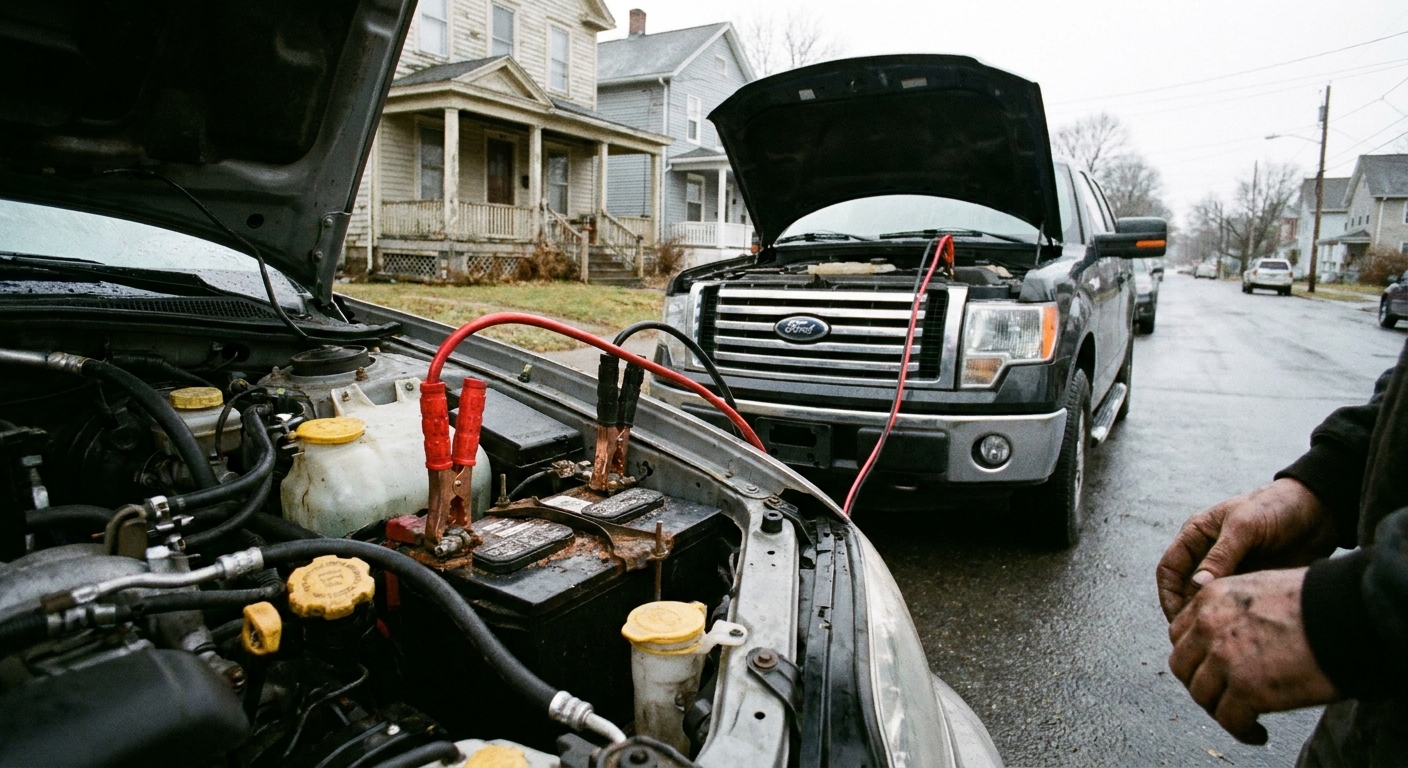
This is the part that confuses people: you might limp to a safer spot, shut the engine off, and then the car will not restart even though the lights still work.
Here is why. With the alternator disabled, the battery has been doing all the work. Once voltage drops far enough:
- The starter may crank slowly or just click.
- The engine computer and fuel system may not operate reliably.
- Modern cars can throw strange warnings because modules are starved for voltage.
Even if the cabin lights come on, the battery may not have enough reserve to crank the engine. Starting takes a large current draw compared to running small electronics.
Belt break vs alternator failure
Both problems can land you in a “dead battery” situation, but they feel different.
When the serpentine belt breaks
- Immediate change: battery light pops on right away.
- Often steering changes: hydraulic power steering assist disappears instantly.
- Possible rapid overheating: if the belt drives the water pump.
- May be noisy: snap, slapping, or flapping sounds.
When the alternator fails gradually
- Symptoms build: dimming headlights, intermittent battery light, slow cranking over days or weeks.
- Steering usually feels normal: the belt is still intact, so the power steering pump still spins (if hydraulic).
- Engine temp stays normal: because the belt is still turning the water pump.
In short: a belt break is often a sudden multi-system event. A failing alternator is usually a slower electrical decline.
After you are safe
Belt age is one piece of it, but a belt often breaks because something else made its life miserable.
- Worn belt tensioner (weak spring or bad damping lets the belt flutter and slip)
- Bad idler pulley bearing (can seize or wobble and shred the belt)
- Accessory pulley issue (alternator, A/C compressor, power steering pump bearing failure)
- Misalignment from a bent bracket or incorrect installation
- Oil or coolant contamination that degrades the rubber
If your belt snapped, the repair should include a careful check of all pulleys by hand. A new belt installed over a seized idler will fail again quickly.
Also, in rare cases a broken belt can whip around and damage nearby wiring, hoses, or sensors. That is another reason I lean toward towing instead of gambling on a long limp home.
Quick FAQ
Will the engine shut off right away?
Not usually. The engine can keep running on battery power for a short time. But you may immediately lose charging, steering assist (on hydraulic systems), and possibly coolant circulation.
Can a broken belt damage my engine?
The belt itself usually does not harm the engine internally, but the overheating that can follow absolutely can. Overheat damage is the expensive part.
Is it safe to drive without power steering?
You can steer, but it takes much more effort. The biggest risk is trying to muscle the car through low speed turns or tight maneuvers while distracted by warning lights. Prioritize getting to a safe stop.
Should I try to restart it?
I would avoid it unless you must move the vehicle out of immediate danger. Restarting can drain the remaining battery reserve quickly, and if the water pump is not turning, you can overheat again fast.
Bottom line
If your serpentine belt breaks while driving, treat it as a short countdown. You are likely losing the alternator right now, possibly power steering assist, and on many cars the water pump. Get somewhere safe as quickly as you reasonably can, shut it down, and arrange a tow.
Fixing a belt and a tensioner is annoying. Fixing an overheated engine is heartbreaking.