I have had plenty of customers swear their car was “eating batteries” because the battery went dead while it was sitting on the workbench with both cables off. Here is the good news: if the battery is truly disconnected, your car cannot be the thing draining it. A parasitic draw needs a complete circuit through the vehicle, and with the battery on the bench, that circuit does not exist.
So when a battery loses charge while disconnected, you are usually looking at one of three buckets: normal self-discharge, an aging battery that cannot hold a charge anymore (often from sulfation), or an internal defect like a shorted cell. The trick is telling which one you have without guessing.

First: a disconnected battery cannot have a parasitic draw
Let’s clear up the biggest misconception. Parasitic draw is when something in the vehicle continues to pull current after the car is shut off, like a stuck relay, glovebox light, aftermarket accessory, or a module that will not go to sleep.
That kind of drain requires the battery to be connected to the vehicle wiring. If you remove both battery cables and the battery still goes dead sitting on a bench, the car is off the suspect list.
What it can be instead
- Normal self-discharge over time, made worse by heat and by an older battery
- Reduced capacity from age, sulfation, or chronic undercharging, so it seems to “go dead” quickly
- An internal short or failed cell that drains the battery or prevents it from holding voltage
Normal self-discharge: how long on the bench?
All lead-acid batteries self-discharge even when nothing is hooked up. The chemical reactions inside never fully stop. A healthy, fully charged battery stored in decent conditions can often sit for weeks and still crank an engine, sometimes longer.
But two things make “normal” look like a failure:
- Heat: Storing a battery in a hot garage or shed speeds self-discharge and aging. Heat is harder on batteries than cold storage.
- Age: As batteries get older, they self-discharge faster and hold less usable capacity.
If you charge a battery fully, disconnect it, and it drops a little over a couple weeks, that can be normal. If it drops hard overnight or within a day or two, that is not normal self-discharge.
When it drops fast: sulfation vs short
Sulfation (common)
If a battery spends a lot of its life partially charged, lead sulfate crystals build up on the plates. This is called sulfation. Sulfation reduces the battery’s ability to accept a charge and reduces capacity. In the real world it looks like this: you charge it, it shows decent voltage, then it falls on its face quickly or cannot deliver enough current to crank.
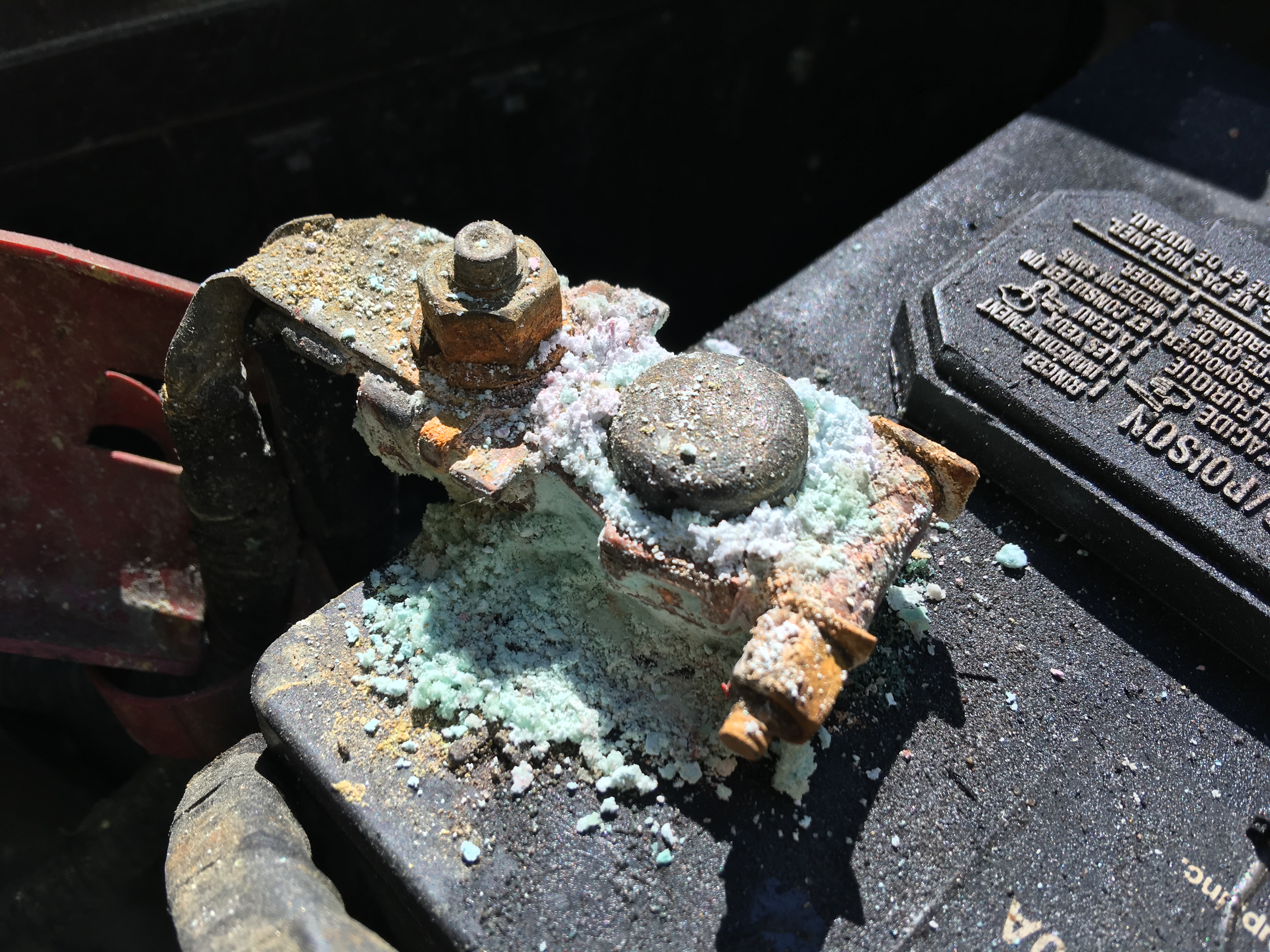
Common causes include lots of short trips, long periods of sitting, a weak alternator, corrosion at terminals causing undercharging, or simply a battery nearing the end of its life.
Internal short or failed cell
An internal defect can create a leakage path inside the battery. Sometimes a plate sheds material that bridges plates, sometimes a separator fails, sometimes a cell is simply damaged. A battery with an internal short can self-discharge very quickly and may never stabilize at a healthy resting voltage even right after charging.
Classic clues:
- The battery seems to charge “fast” (the charger shows “full” quickly or voltage rises quickly), but it does not hold it
- Resting voltage is low soon after charging
- Under load, voltage collapses immediately
- Battery may feel warm after charging or sitting (not always)
Check the date code
Before you run deep diagnostics, check how old the battery is. Most 12-volt lead-acid car batteries last around 3 to 5 years in typical use, sometimes longer in mild climates with good charging habits, sometimes shorter in extreme heat.
Date codes vary by brand, but you will usually find one of these:
- A sticker with a month and year
- A stamped code on the case or top, often a letter for month and a number for year
- A heat stamp or small label near the negative terminal area
If the battery is already in that 4 to 6 year neighborhood, a “goes dead on the bench” complaint is very often just end-of-life capacity loss. In that situation, you can waste a lot of time hunting a “mystery drain” that is not there.
Resting-voltage test
Resting voltage is one of the simplest ways to sort out what is happening, but it has to be done with a little discipline. Also, voltage targets vary a bit by battery type (flooded vs AGM) and temperature. Most charts assume around 70°F (21°C). Colder temps usually read a little lower and deliver less cranking power, even when the battery is healthy.
Step 1: Fully charge the battery
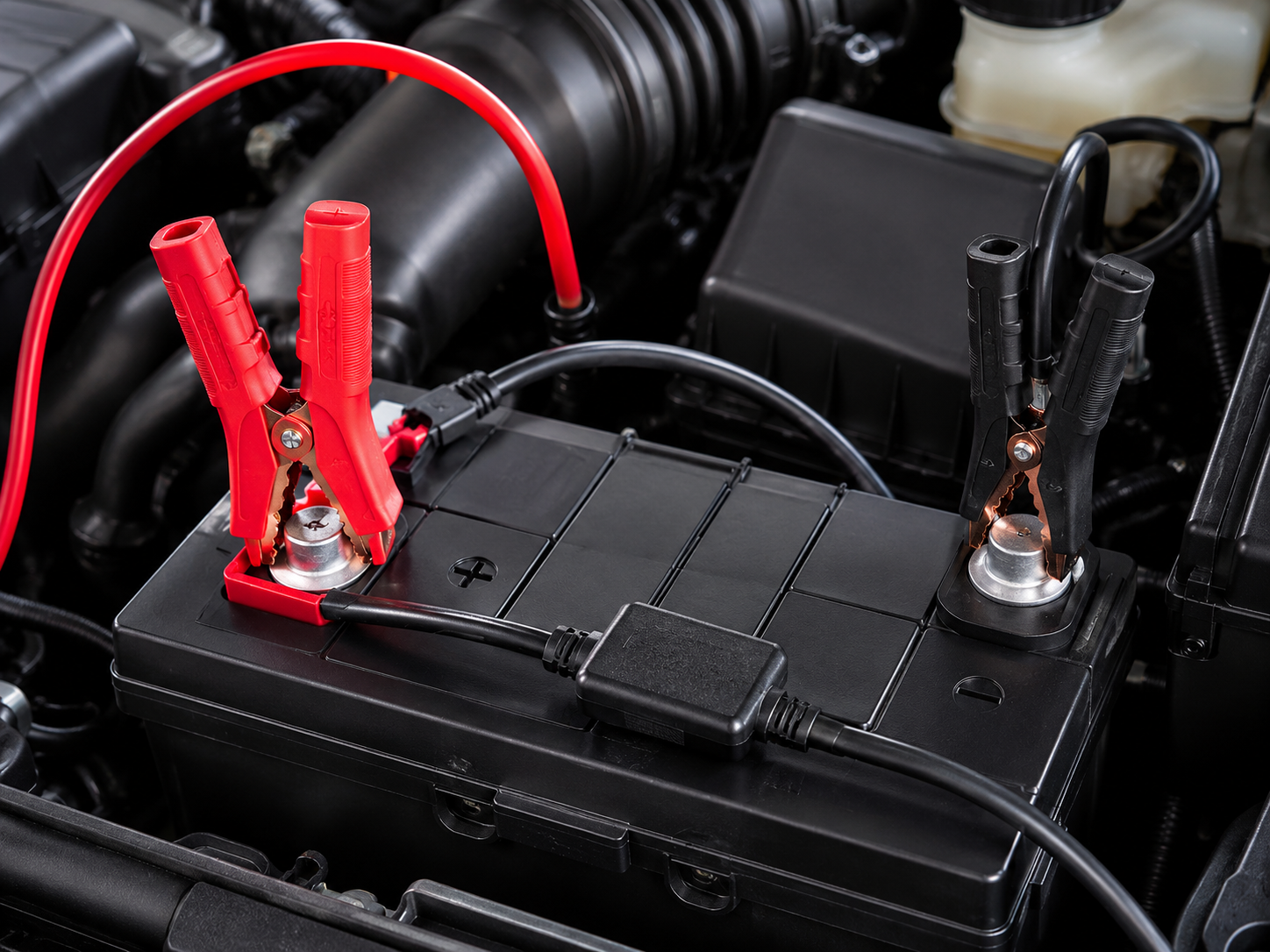
Use a proper battery charger, not just a quick jump and a short drive. Get it to a true full charge.
Step 2: Remove surface charge
Right after charging, voltage can read artificially high due to surface charge. Let it sit disconnected for a few hours (overnight is even better), or turn on the headlights for 30 seconds if the battery is installed in a vehicle, then shut them off and wait a minute.
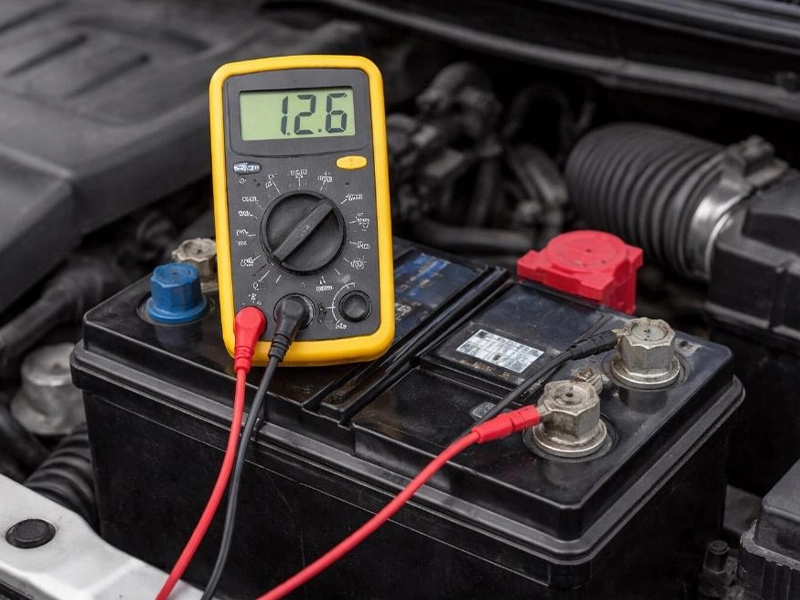
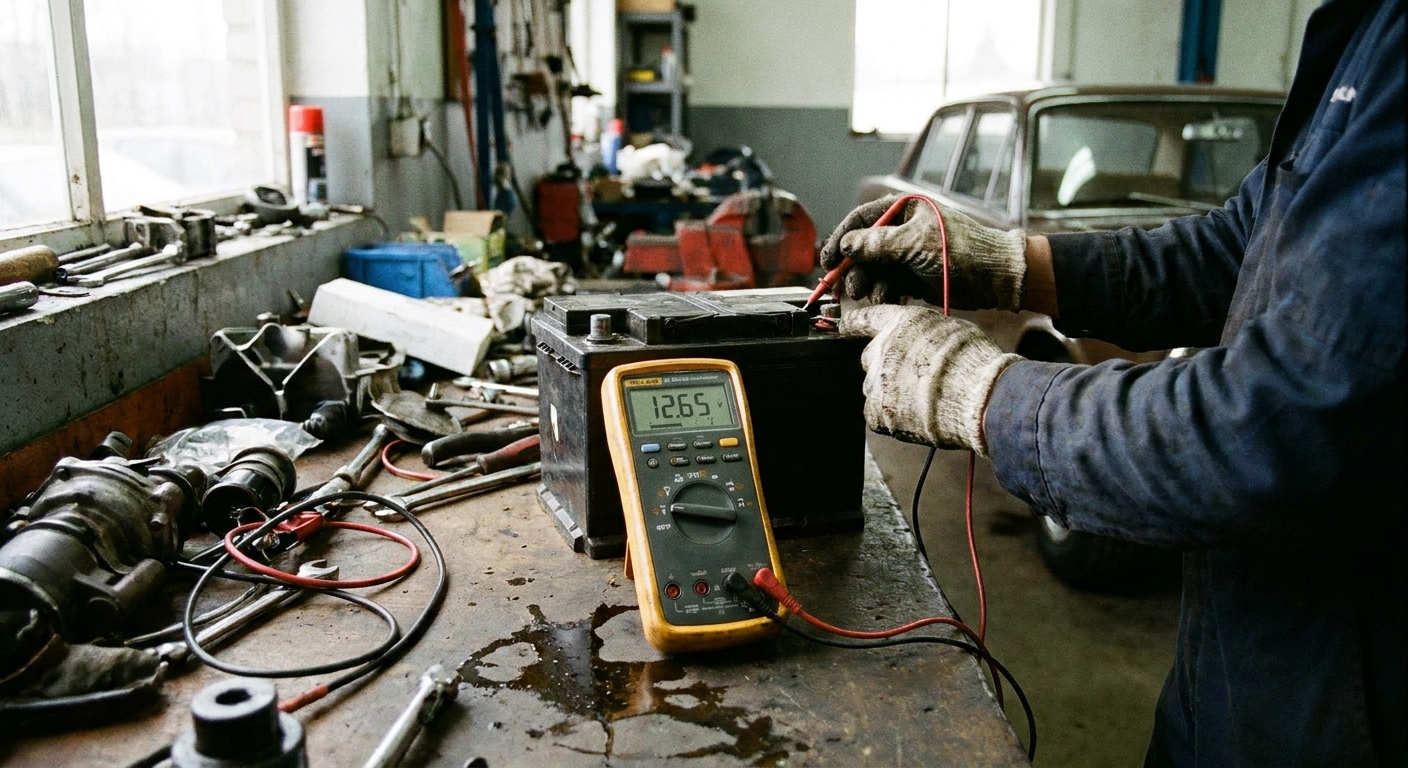
Step 3: Measure voltage with a multimeter
Here is a practical rule of thumb for a typical 12-volt lead-acid battery at rest at room temperature:
- 12.6 to 12.7V: typically full for many flooded batteries
- 12.8V: can be normal for some AGM batteries at full charge
- 12.4V: roughly 75% charged
- 12.2V: roughly 50% charged
- About 12.0V or below: very low state of charge (near discharged)
How this applies to a disconnected battery: If you fully charge it, let it rest, and it is still down around 12.2V or lower, that battery is either not truly taking a full charge or it is bleeding off internally.
If it starts in the mid 12.6V range after resting and then drops below about 12.4V within 24 to 48 hours at room temperature while fully disconnected, that is a strong hint of internal leakage or a failing battery. If you want to be extra sure, repeat the measurement over 3 to 7 days. A healthy battery should not fall off a cliff just sitting there.
Voltage is not cranking power
This is where people get burned. A battery can show 12.6V and still be junk under load. Voltage is only part of the story. The ability to deliver current is what starts the car.
If your battery dies while disconnected, you are often dealing with low capacity. It may accept enough charge to look good on a meter, but it cannot deliver cranking amps or it cannot hold that energy for long.
If you have access to one, a load test or a conductance test (most parts stores have this) is the fastest way to confirm a weak battery. Just remember to start with a fully charged battery for the most accurate result.
A simple DIY check
If the battery is installed in the car and you are trying to get a quick feel for capacity, turn the headlights on for a couple minutes (engine off), then shut them off and watch voltage. A healthy battery will dip and then recover some. A weak one tends to sag hard and keep sliding. This is not a replacement for a real load test, but it can keep you from getting fooled by a pretty voltage number.
Other bench-drain culprits
Battery left discharged too long
Letting a battery sit dead or near-dead accelerates sulfation. Sometimes you can recharge it, but it often will not fully recover. If the battery was left flat for weeks, do not be surprised if it will not hold a charge afterward.
Dirty or damp battery top
It is not common, but grime and moisture across the top of the case can create a tiny conductive path between terminals that encourages slow discharge. A quick cleaning with a damp rag, then drying it, is cheap insurance if the battery lives in a dirty environment.
Extreme temperatures
Cold reduces available power. Heat accelerates chemical aging and self-discharge. If a battery goes dead quickly while disconnected in a very hot garage, it is often a sign it is near the end, not proof of an external drain.
Safety basics
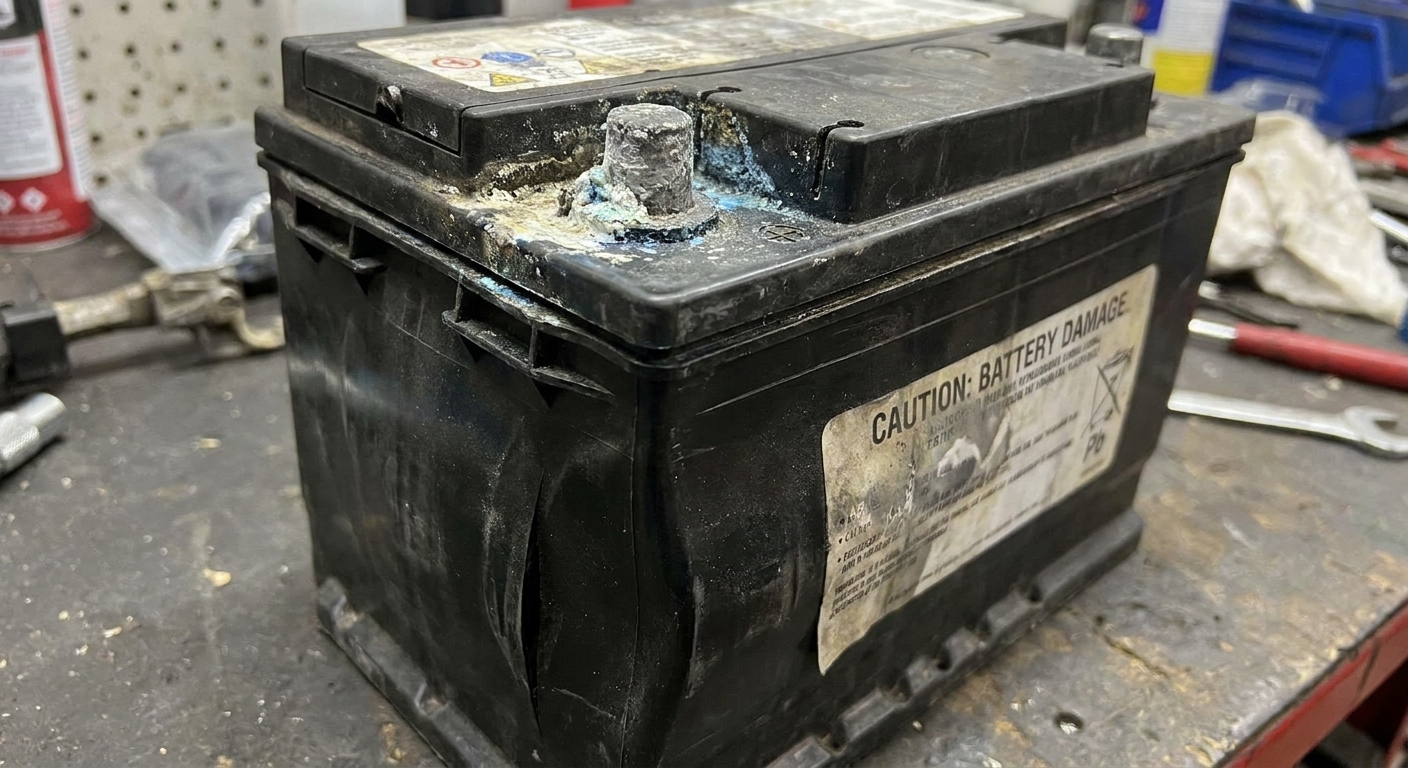
Batteries can vent hydrogen gas during charging, and a failing battery can leak or swell. Charge in a ventilated area, keep sparks and smoking away from the battery, and do not ignore bulging, cracks, or a strong rotten-egg smell. If the case is swollen or leaking, replacement is the smart move.
What to do next
If the battery is older
Check the date code. If it is in the typical replacement window and it is dropping voltage quickly while disconnected, replacement is usually the correct call. You can chase your tail otherwise.
If the battery is fairly new
- Fully charge it
- Let it rest disconnected overnight
- Check resting voltage
- If voltage drops hard, get it load-tested and ask about warranty replacement
If it is fine on the bench but dies in the car
That is when you pivot back to the vehicle. A battery that holds its charge disconnected but goes dead when installed can absolutely be a parasitic draw, a charging system issue, or poor cable connections. The key is you have now separated the battery from the car and proven where the problem lives.
FAQ
Can a battery drain with one cable disconnected?
If one battery post is truly isolated so there is no complete path from one post to the other through the vehicle, a normal parasitic draw cannot drain it. In plain English, if you remove the negative cable from the battery post and it is not touching anything metal, the car cannot pull power from the battery.
Where people get tripped up is the “almost disconnected” situations, like a loose cable still making contact, a battery current sensor setup where you disconnected in the wrong spot, or an add-on wired directly to the battery that still has a return path. Also, if the positive cable is still on the battery and it contacts grounded metal, you can create a drain or a dead short. If the battery is going dead with a cable removed, double-check that it is actually isolated the way you think it is, then suspect battery condition next.
My battery reads 12.6V but the car will not crank. Is it dead?
It may not be “dead” by voltage, but it can still be too weak to supply cranking amps. That is why a load test matters. Also check terminal tightness and corrosion, because a bad connection can mimic a bad battery.
How fast is too fast to lose charge disconnected?
Dropping from fully charged to struggling in a day or two on the bench is a red flag for internal problems or a battery that has lost most of its capacity. If you are on the fence, log the resting voltage after an overnight rest, then check it again 48 hours later at similar temperature and compare.