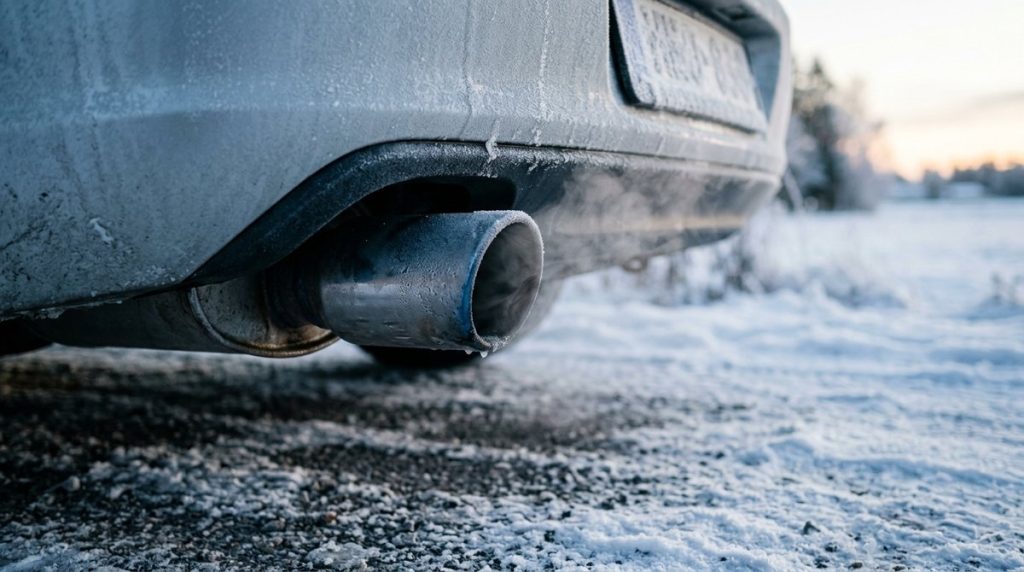
I still remember the first winter I owned my 280Z. I fired it up before dawn, saw a cloud roll out the tailpipe, and had that split second of panic where you assume the worst. Most of the time, though, white smoke right after a cold start is just water vapor. The trick is knowing when it is normal condensation that clears quickly, and when it is your engine making coolant steam.
First, what kind of white smoke is it?
Drivers use “white smoke” to describe two very different things:
- Normal condensation vapor: thin, wispy white vapor that shows up right after startup and fades as the exhaust warms up.
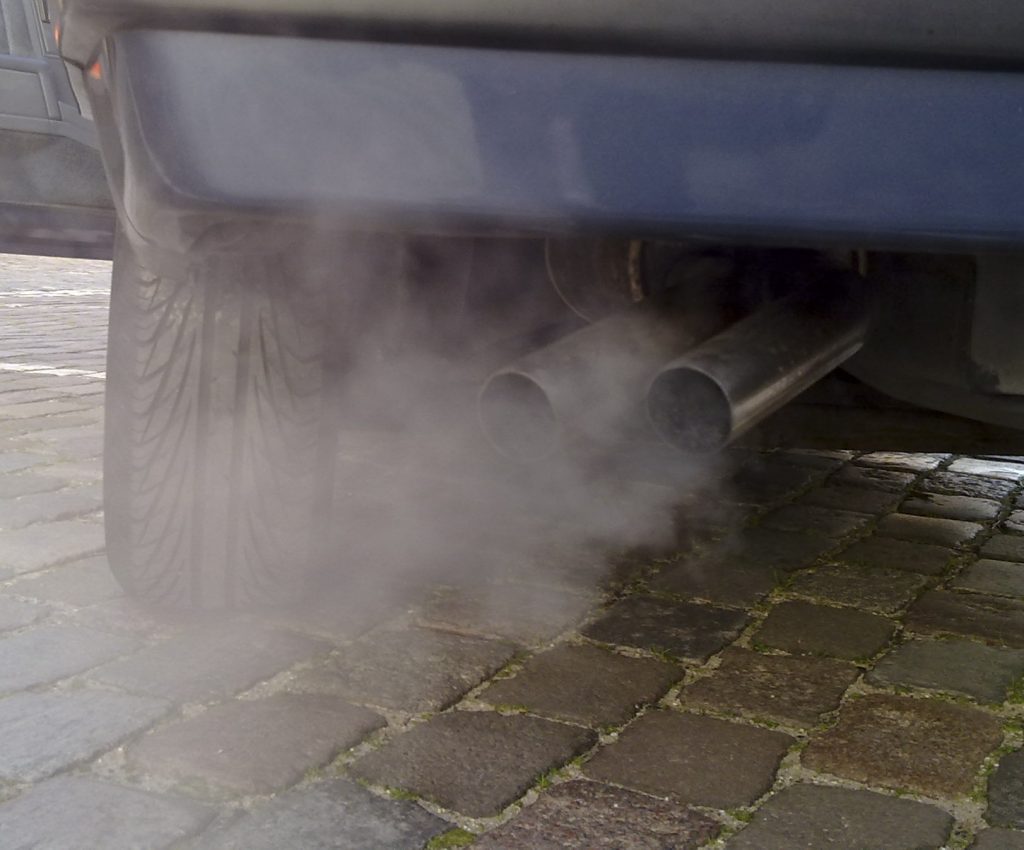
- Coolant steam: thicker, lingering white smoke that keeps going after warm-up and is usually paired with other warning signs.
Here is a quick way to separate them without getting lost in the weeds.
Normal cold-start condensation
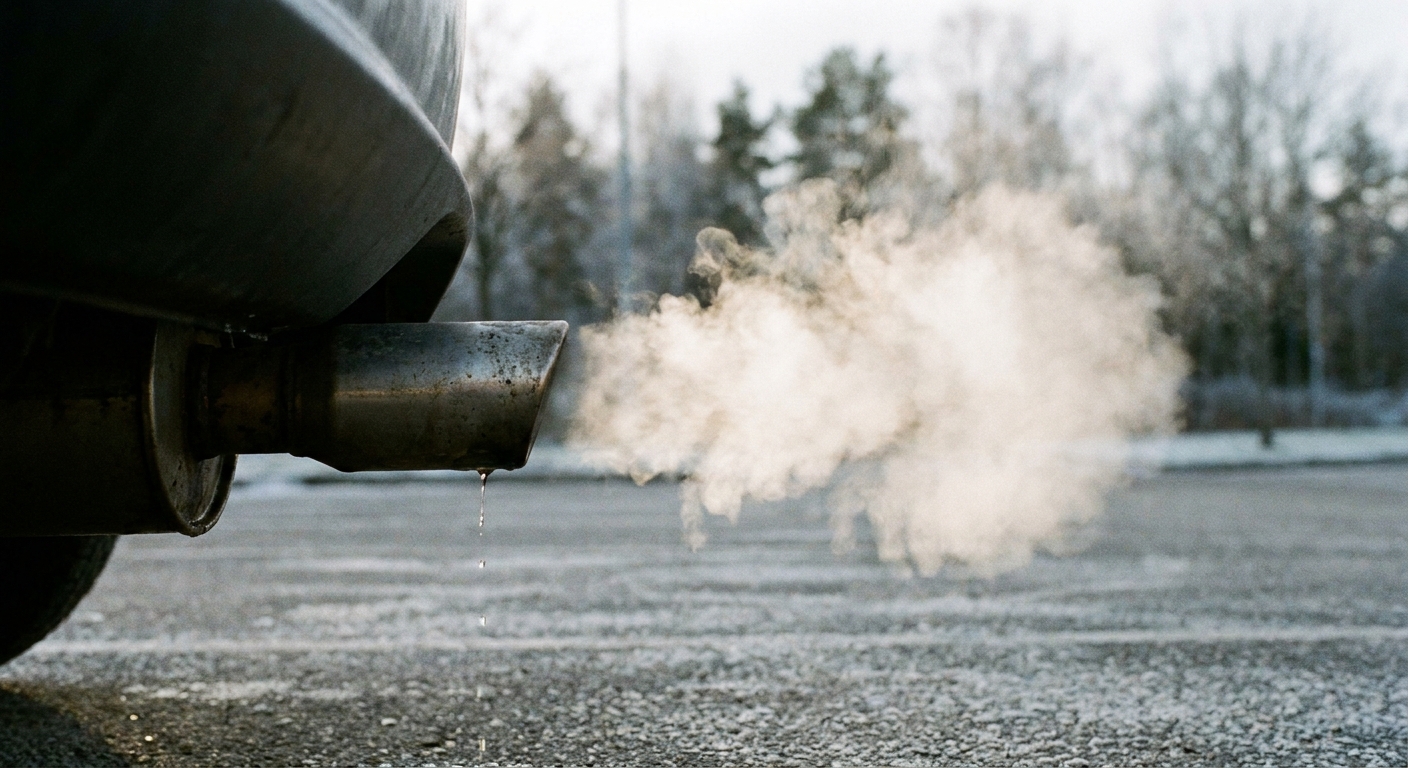
When an engine is cold, the exhaust system is cold. One of the natural byproducts of combustion is water, and that moisture condenses in the exhaust. On startup, it flashes into vapor and you see it as a white cloud.
Signs it is just condensation
- The vapor is light and wispy, not dense like a fog machine.
- It clears within a few minutes as the car warms up.
- It is worse in cold or humid weather.
- You do not see your coolant level dropping over days.
- No overheating, no rough running, no sweet smell.
If that describes your situation, drive normally and keep an eye on things. A little vapor on a cold morning is about as exciting as your breath in winter.
When white smoke means coolant steam
If the smoke is thick and does not go away, you have to consider coolant getting into the combustion chamber or the hot exhaust stream where it turns into steam. The most common paths are a failed head gasket, a cracked cylinder head, a cracked engine block, or in some engines a leaking intake manifold gasket.
Less commonly, coolant can enter the exhaust stream through specific parts that have coolant running through them, such as a water-cooled turbocharger center housing or an EGR cooler (common on many diesels and some gas engines). Those are not the first suspects on most cars, but they are real mechanisms.
Red flags that point to coolant
- Smoke keeps going after warm-up and may get worse with throttle.
- Sweet smell from the exhaust, often described like syrup or candy. Not every coolant has a strong smell, so do not rely on this alone.
- Coolant level drops in the radiator or reservoir with no visible external leak.
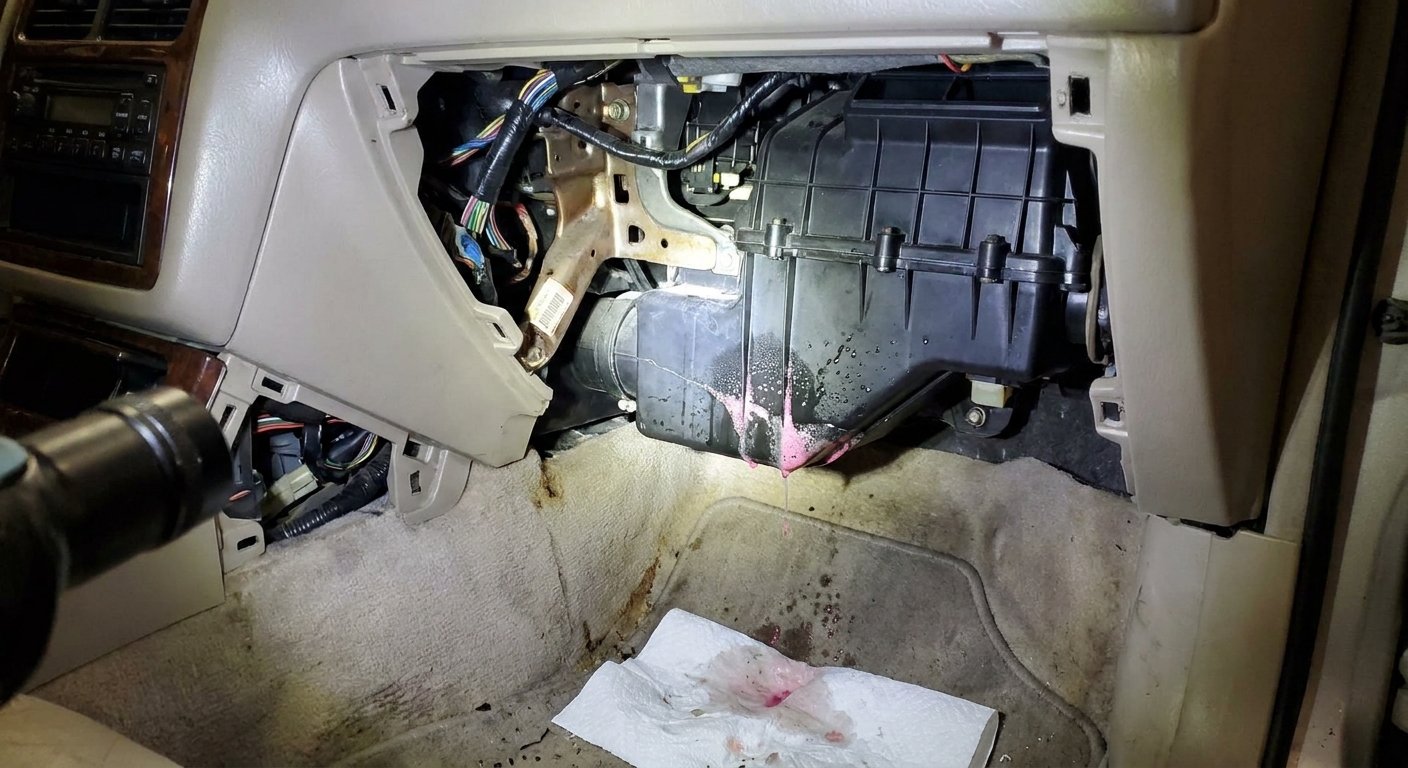
- Overheating, temperature gauge creeping up, or cabin heat can go cold at idle (often from low coolant or air pockets).
- Rough idle or misfires, especially on first start, as a cylinder tries to fire with coolant present.
- Milky oil on the dipstick or oil cap, or oil level rising (not always present, but a big clue when it is).
- Bubbles in the coolant reservoir shortly after startup, which can indicate combustion gases pressurizing the cooling system.
Do this quick check
If you are seeing persistent white smoke, do not just hope it goes away. These checks take a few minutes and can save an engine.
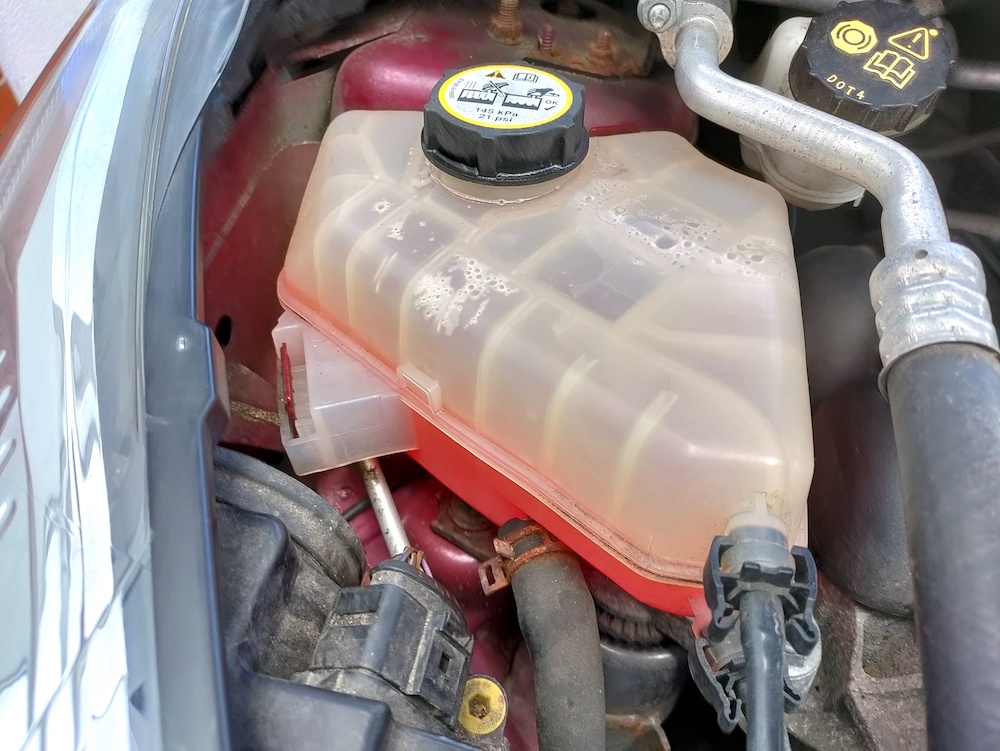
1) Check the coolant level safely
- Park on level ground and let the engine cool completely. A hot cooling system is pressurized.
- Look at the overflow reservoir first. The level should be between the MIN and MAX marks when cold (some tanks are labeled COLD FILL).
- If the reservoir is low, top off with the correct coolant mix if you have it. In a pinch, adding water to reach a safe level can get you to a shop, but correct coolant should be restored ASAP.
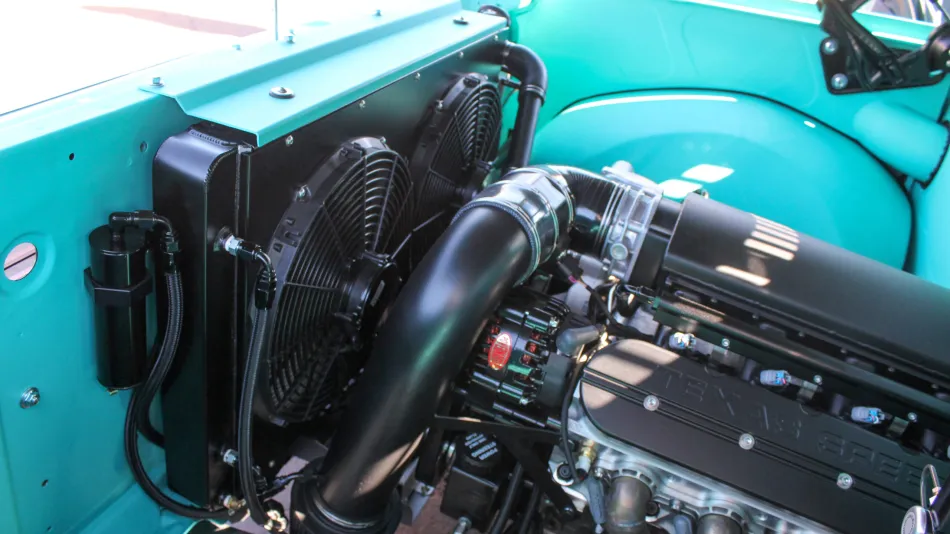
- If you can access the radiator cap, only remove it when the engine is cold. The coolant should be near the top of the radiator neck.
2) Look for external leaks
- Check under the car for wet spots, especially near the radiator, hoses, and water pump area.
- Look for crusty residue around hose connections and the radiator end tanks.
- Sniff around the engine bay after shutdown. A sweet coolant smell under the hood is often a clue.
3) Watch the exhaust as it warms
Let the car idle and observe from a safe distance. Condensation vapor should fade as the exhaust system heats up. As a rule of thumb, if it stays thick after about 5 to 10 minutes in mild weather, treat it as a fault until proven otherwise. In freezing temperatures, normal vapor can hang around longer, so look harder at the other clues like coolant loss, overheating, and rough running.
When to stop driving
I am all for getting you home, but some combinations of symptoms mean you should shut it down to avoid turning a repair into an engine replacement.
- The temperature gauge climbs toward hot, you get a warning light, or the car starts overheating.
- The coolant reservoir is empty or you have to keep adding coolant to drive.
- Thick white smoke continues and the engine runs rough or misfires.
- You see milky oil on the dipstick or under the oil cap, or oil level is rising.
- You get a flashing check engine light along with rough running (active misfire can damage the catalytic converter).
If any of these apply, stop driving, let the engine cool, and arrange a tow. Running an engine that is ingesting coolant can wash oil off the cylinder walls, overheat the combustion chamber, and if the intrusion is severe, hydrolock a cylinder.
Common causes
Blown head gasket
This is the classic culprit. A breach between a coolant passage and the cylinder lets coolant enter the chamber and flash into steam. It can also force combustion gases into the cooling system, which pushes coolant out and creates overheating.
Cracked cylinder head or block
Less common, but it happens, especially after severe overheating or in certain known-problem castings. Symptoms can mimic a head gasket failure.
Intake manifold gasket leak
On some V-style engines and certain designs, coolant flows through the intake manifold. A failed gasket can let coolant enter an intake runner and get pulled into a cylinder, often showing up as a rough cold start plus white smoke.
Turbocharger or EGR cooler leak
On some engines, coolant runs through the turbocharger center housing or an EGR cooler. If those leak internally, coolant can be pulled into the intake or enter the exhaust flow and turn into persistent white steam.
Less common look-alikes
- Transmission fluid ingestion (older automatics): Some older vehicles with a vacuum modulator can pull ATF into the intake, creating pale smoke that people describe as white. It usually has its own distinct smell.
- Overfueling on startup: A very rich mixture more often looks gray or black, but in certain lighting it can read as “white haze.” If you smell raw fuel and the car runs loaded up, that is a different path than coolant.
What a shop will do
If you bring a car in with lingering white smoke and a dropping coolant level, a good shop typically confirms the problem with tests like:
- Cooling system pressure test to see if the system holds pressure and to help expose leaks.
- Combustion gas test at the radiator or reservoir to detect exhaust gases in coolant. This is the same basic idea as the at-home chemical block tester kits you can buy at parts stores.
- Borescope inspection of cylinders for signs of coolant intrusion.
- Compression or leak-down test to pinpoint where sealing is lost.
That diagnosis matters because “white smoke” can come from several paths, and you want to fix the right thing the first time.
FAQ
Why is it only white smoke for a few seconds?
If it is only a brief puff and it disappears quickly, it is most often condensation burning off in the exhaust. If it is a brief puff every morning plus a slow coolant loss, that is when I start suspecting a small internal coolant leak that is pooling overnight.
Is white smoke the same as blue smoke?
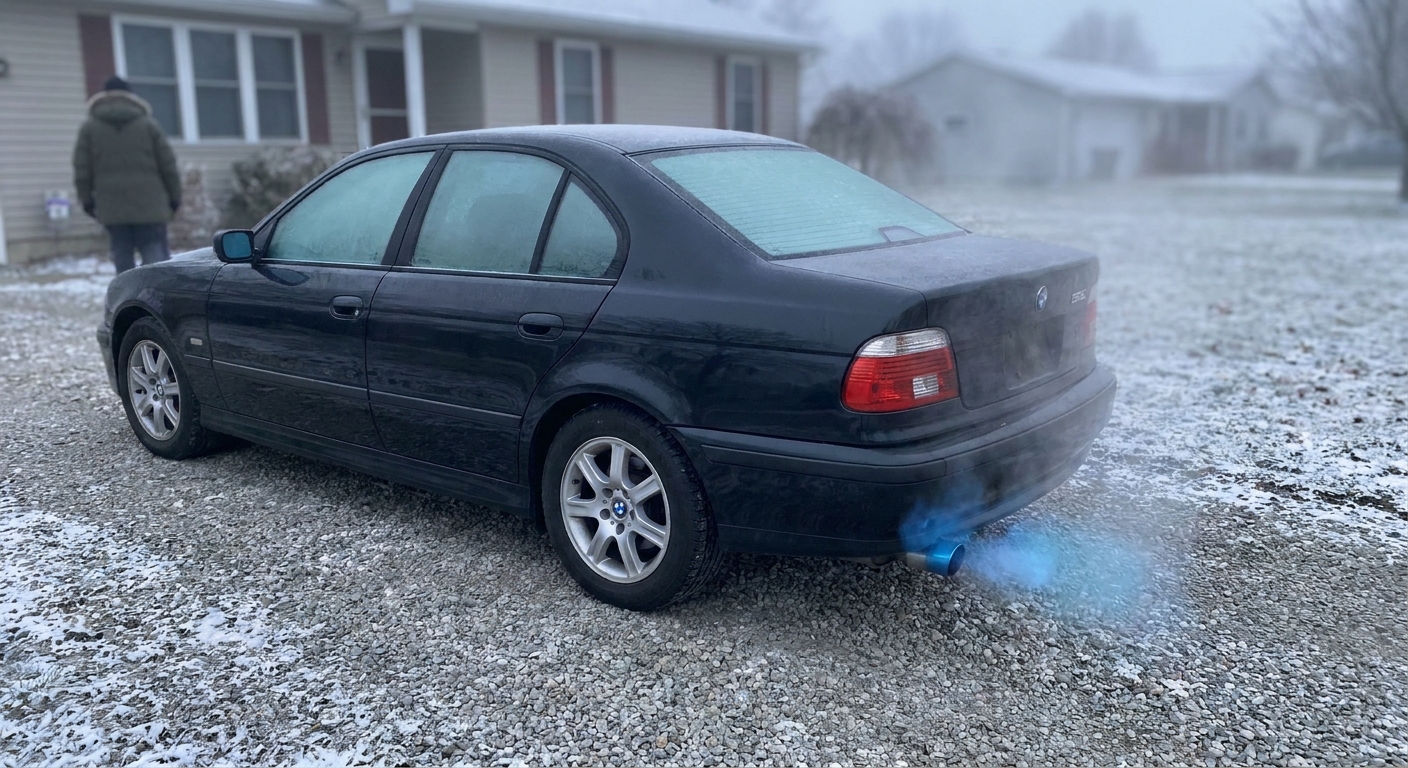
No. Blue smoke is typically oil burning. White smoke is usually condensation or coolant steam. If your smoke has a bluish tint and smells like burnt oil, that is a different diagnostic path.
My car blows white smoke when I crank it but it never starts. Is that the same problem?
Not necessarily. If the engine never actually fires, the “smoke” you see may be normal vapor puffing out of a cold exhaust during repeated cranking, or fuel vapor from an overfueling or flooded condition. It can also be steam rising off a cold exhaust in damp weather. This page is specifically for white smoke after a successful cold start, so if it will not start, you are dealing with a different set of likely causes.
Can I drive if the coolant is just a little low?
If the engine temperature stays normal, the smoke clears quickly, and topping off the reservoir brings it back to the proper cold level, you can usually drive short-term while you monitor. But if the level drops again, treat it as a real leak and get it diagnosed before it overheats.
The takeaway
Quick, wispy white vapor that disappears as your car warms up is usually normal condensation. Thick white smoke that lingers and comes with a dropping coolant level is a warning sign you should not ignore. Check the coolant level and overflow tank when cold, watch your temperature gauge like a hawk, and if the smoke persists or the engine starts overheating, stop driving and get it towed.