If your car suddenly smells sweet inside and the windshield keeps fogging up with a stubborn, slightly oily film, I want you to treat that as more than “normal condensation.” In most cases, that combo points to engine coolant getting into the HVAC housing under the dash, usually from a leaking heater core.
I have seen this plenty of times in the shop: the car still drives fine, the temperature gauge looks normal, and the owner thinks it is just a humid day. Meanwhile, they are breathing air that has been passing through an HVAC system contaminated by a hot coolant seep. Let’s break down what is happening and what to do next.
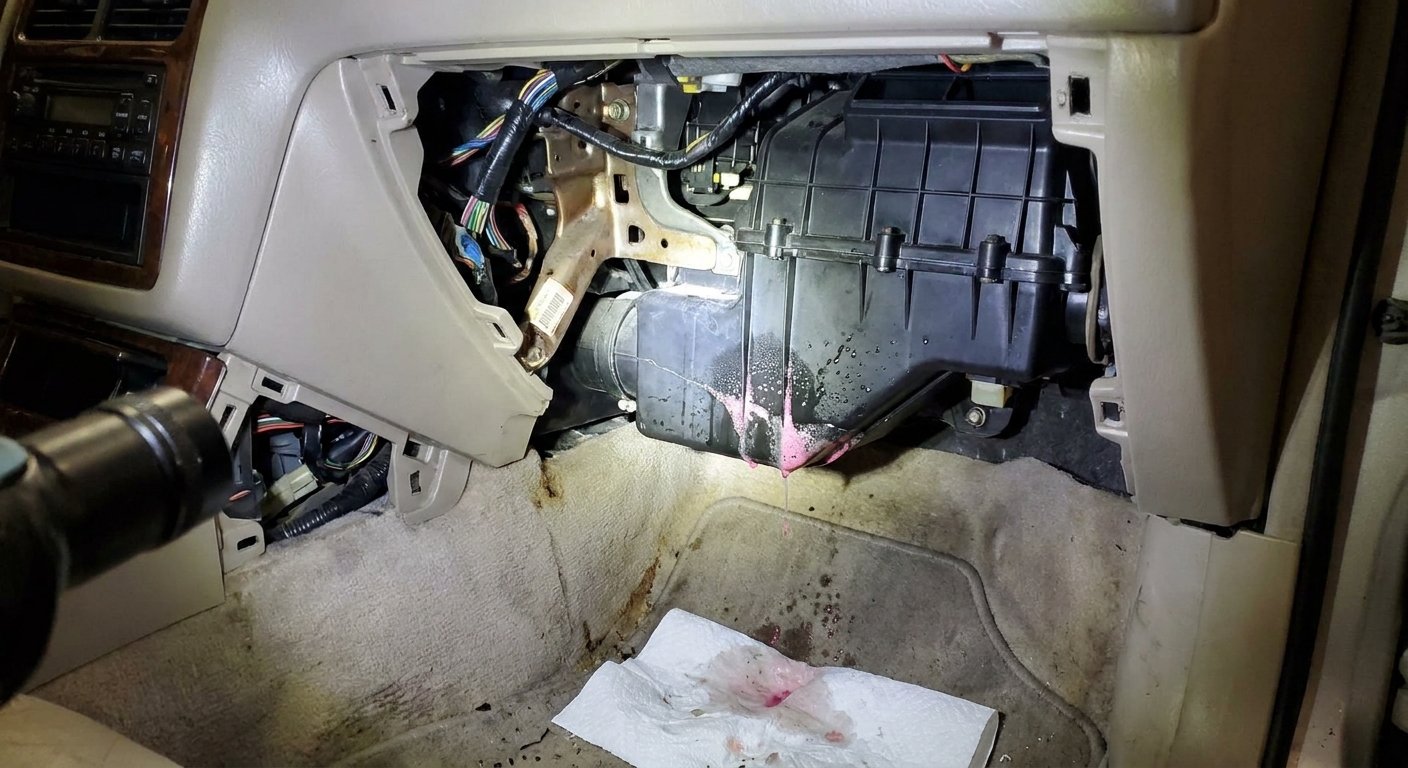
Why it smells sweet and fogs the glass
Most modern engine coolants are a water and glycol mix with corrosion inhibitors. That glycol is what gives coolant its sweet smell. When the heater core starts leaking, coolant can seep into the HVAC case and either:
- Evaporate off the warm heater core and get carried through the vents, creating a sweet odor in the cabin.
- Turn into vapor or a fine aerosol that can condense on the inside of the windshield, leaving a film that looks like fog but wipes “greasy” and comes back quickly.
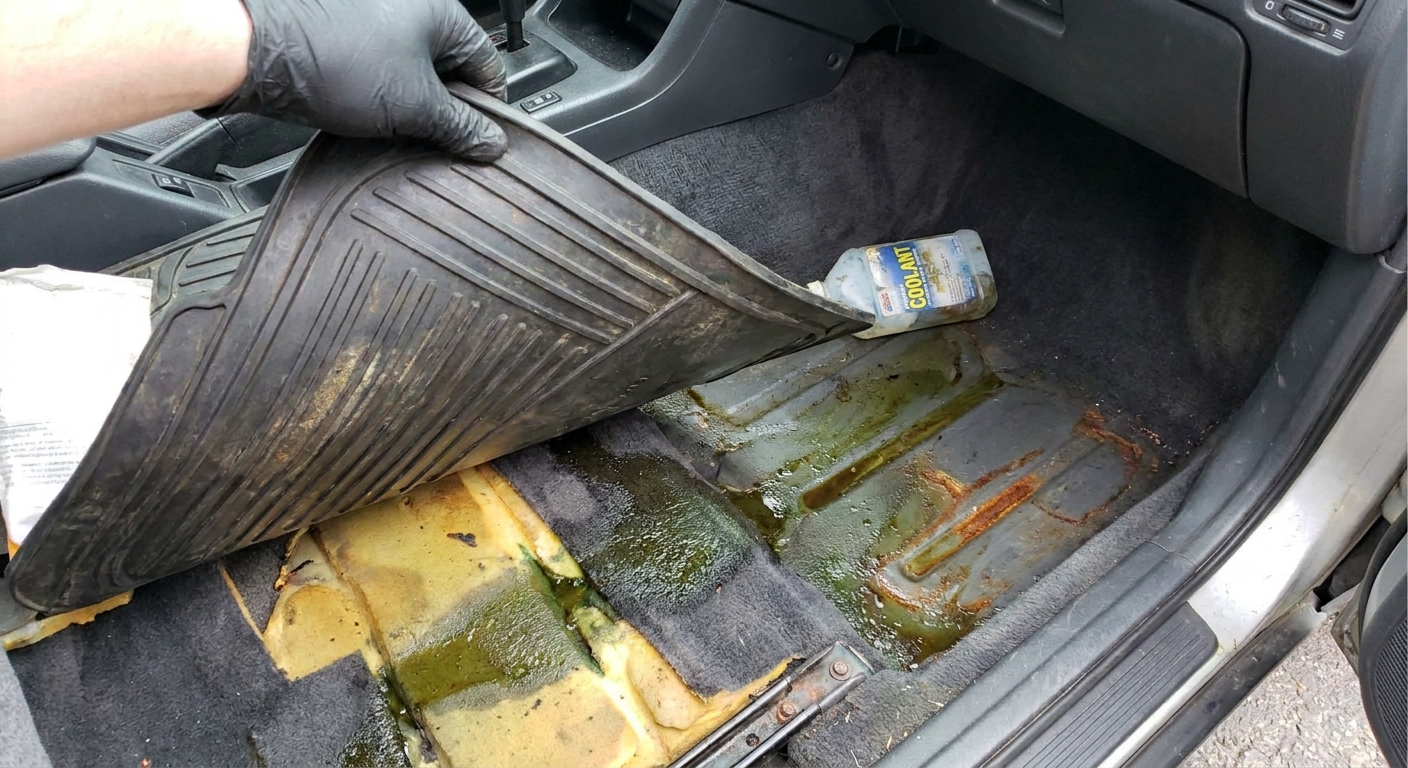
- Drip onto carpet or insulation, often on the passenger side, sometimes hidden under floor mats.
The heater core is basically a tiny radiator under the dash. Hot coolant flows through it, and your blower pushes air across it to heat the cabin. If it leaks, the HVAC system becomes the delivery method for that smell and haze.
Heater core leak checks (5 minutes)
Here are quick, real-world checks I recommend before you start buying parts.
1) Feel the windshield on the inside
Normal defrost fog is just water condensation. It wipes clean with a towel.
Coolant contamination often leaves a slick film. If you wipe the inside glass and your towel feels slightly oily or smears, that is a big clue.
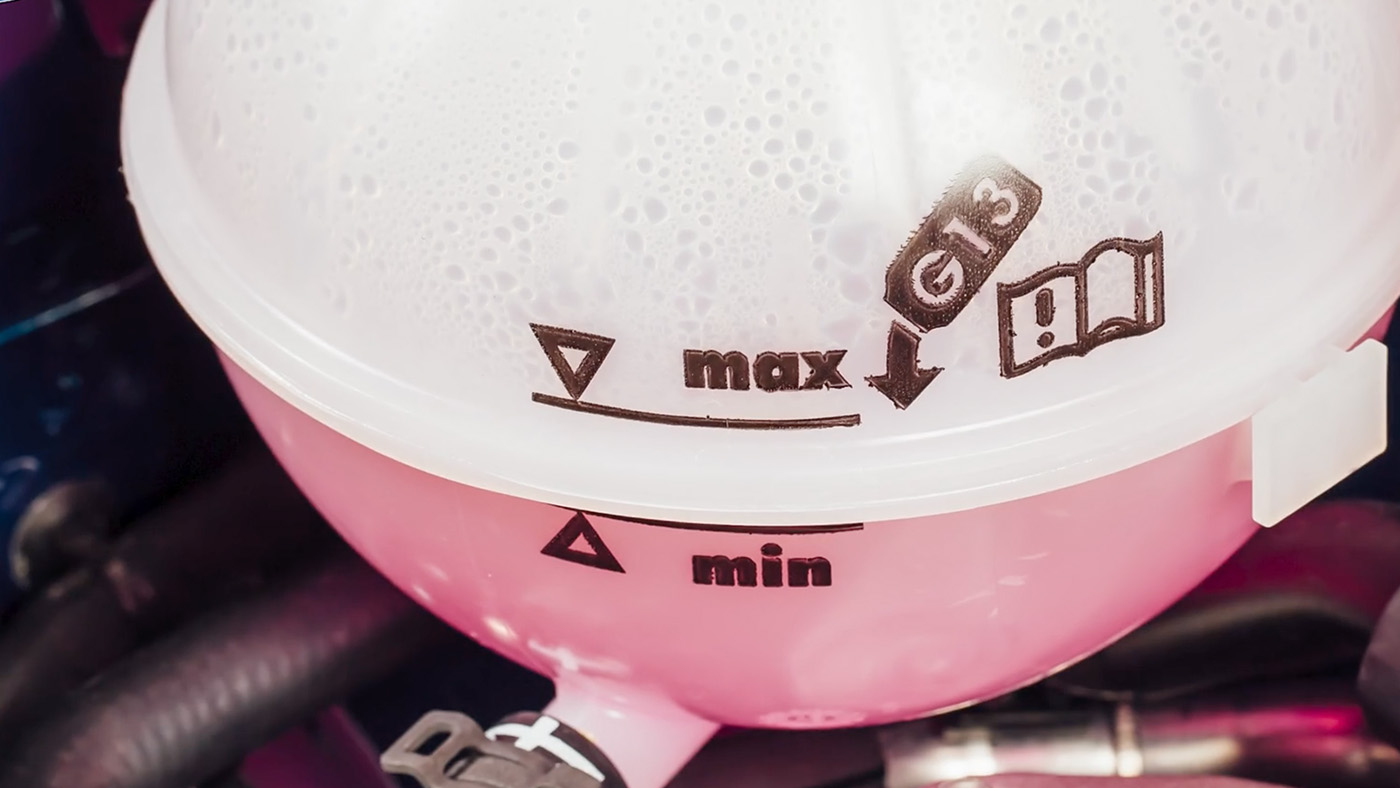
2) Check coolant level (engine cold)
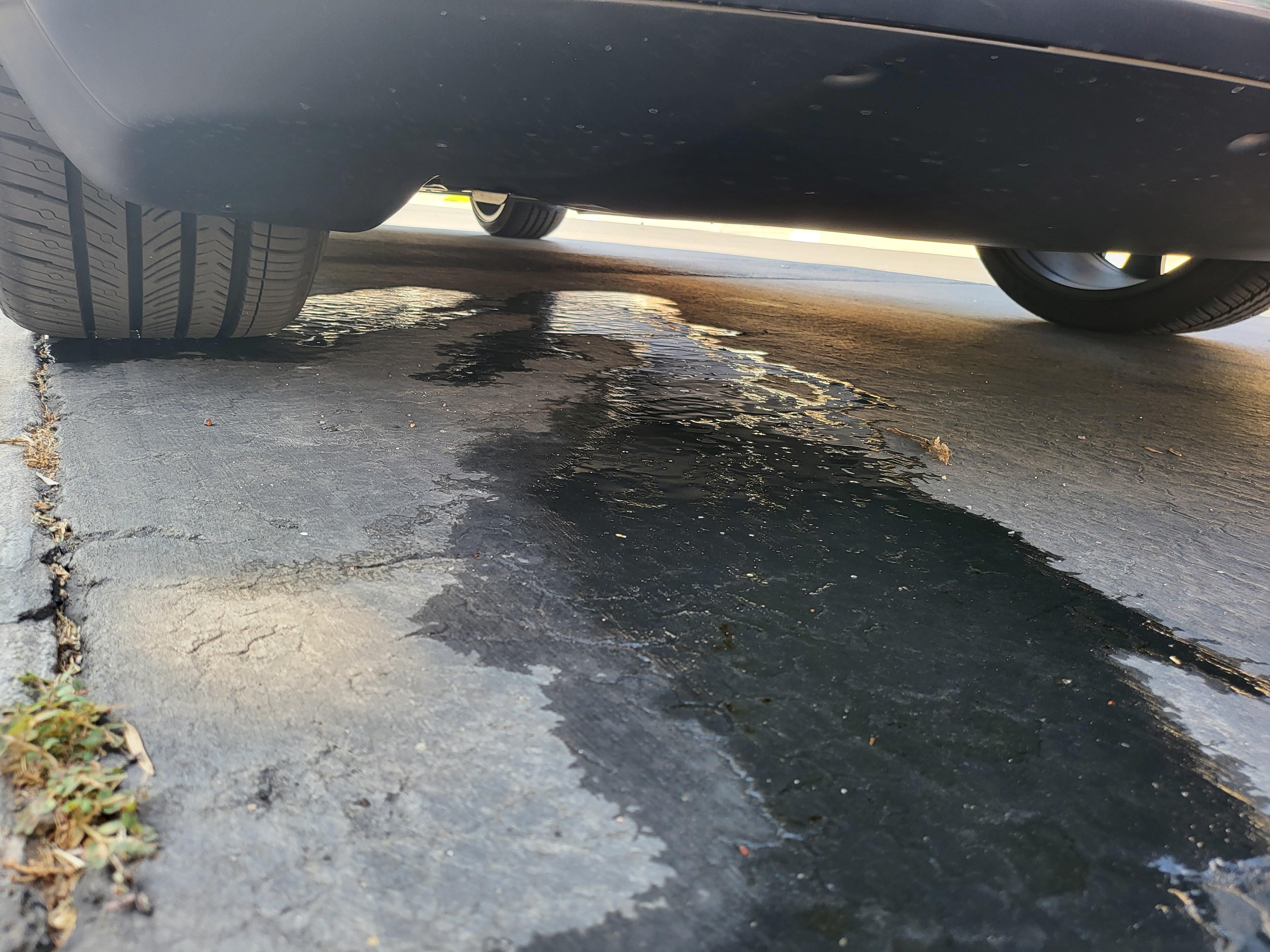
When the engine is stone cold, check the coolant reservoir level. If it is slowly dropping over days or a couple weeks, and you do not see an obvious external leak, the heater core moves way up the suspect list.
Safety note: never open a hot radiator cap or pressurized cooling system. Wait until it is fully cool.
3) Sniff test at the vents
With the engine warmed up, fan on low, smell near the vents. Coolant odor is usually strongest with:
- Heat on
- Defrost selected
- Fan speed increased (it pushes more air across the leak)
4) Check the passenger footwell and under the mat
Look and feel for damp carpet, sticky residue, or crusty dried coolant. Coolant can feel slightly slick compared with plain water.
Why the temp gauge can look normal
This part confuses a lot of drivers: “If I have a coolant leak, why is the engine temp normal?” Because a heater core leak is often small and internal at first.
- Small leak rate: You can lose coolant slowly without overheating, especially in mild weather and short trips.
- Modern gauges are damped: Many cars do not show small temperature swings. The needle sits at “normal” until temps are well out of range.
- Cooling system still works: The radiator, fans, water pump, and thermostat can all be fine. You are just losing coolant somewhere you cannot easily see.
That said, if the leak worsens and the system gets low, overheating can show up later. A sweet smell inside the cabin is often an early warning, not a “you are already stranded” sign.
Why cabin exposure matters
Let’s be plain about it: if coolant is getting into the cabin air stream, you do not want to be exposed to it any longer than necessary.
Engine coolant can contain ethylene glycol or propylene glycol depending on the formulation. In most cabin-leak situations, the bigger inhalation concern is usually irritation (eyes, nose, throat), and the most serious hazard with coolant is still ingestion or prolonged skin contact. How much it affects you depends on leak rate, cabin ventilation, and how long you are driving with it.
What to do right now
- Ventilate: Crack windows to get fresh air moving through the cabin.
- Avoid using heat/defrost if you can: Those settings route air across the heater core, which can intensify the smell and haze.
- Do not run recirculation: Recirc keeps cabin air cycling through the HVAC case. Use fresh air mode.
- If you develop symptoms: If you notice burning eyes/throat, headaches, or feel lightheaded, pull over and get fresh air. If symptoms persist, consider medical advice and towing rather than continuing to drive.
If you have kids, pets, or anyone with asthma riding with you, I would be even more cautious.
Normal fog vs coolant fog
Normal windshield fog is usually just moisture in the cabin condensing on cold glass, then clearing when you run the defroster correctly.
Typical condensation
- Smell: No sweet odor
- Glass residue: Wipes clean, no oily smear
- When it happens: Rainy days, wet shoes or floor mats, high humidity, big temperature swings
- Fix: A/C on with defrost, fresh air mode, remove wet floor mats, check for water leaks
Coolant-related haze
- Smell: Sweet, chemical-like coolant odor
- Glass residue: Leaves film that smears and returns
- When it happens: Often worse with heat on, may come and go with fan speed
- Fix: Repair the leak source, often the heater core or its connections
Not the same as musty A/C smell
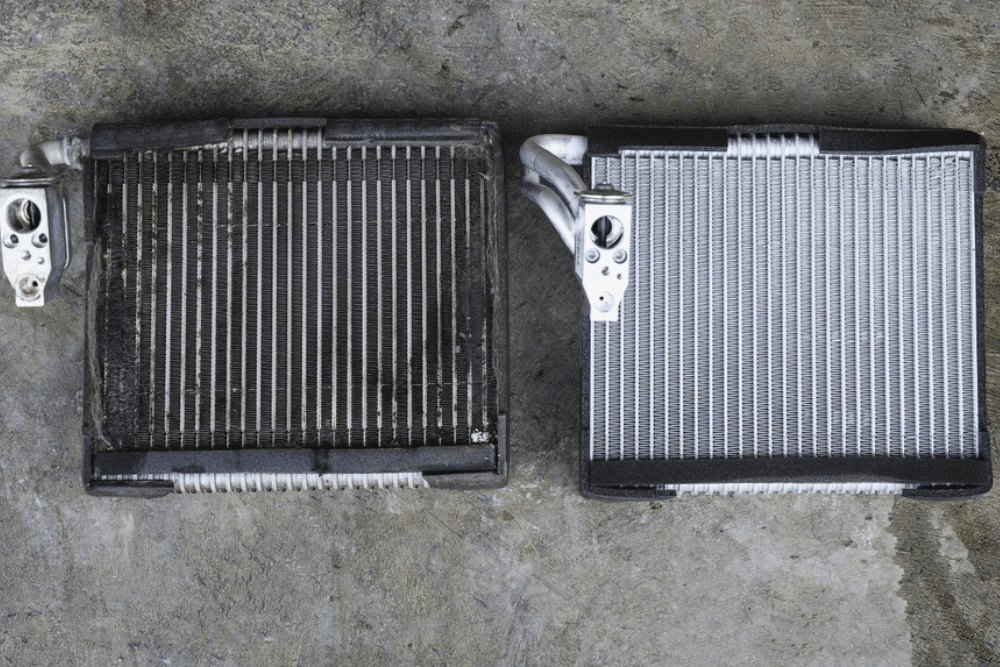
A musty smell is a different lane. That is typically mold or mildew growing on the A/C evaporator or in the drain area, especially in hot, humid climates or cars that sit.
Musty evaporator odor
- Smell: Damp socks, gym bag, earthy mildew
- When it happens: Often strongest right after you start the A/C
- Glass film: Usually not an oily haze, more like ordinary humidity issues
- Coolant level: Unrelated, coolant stays stable
If your symptoms are a sweet smell plus a recurring oily inside-glass film and any coolant loss, that is not the typical “dirty evaporator” story.
One more lookalike: washer fluid
One quick curveball: some windshield washer fluids smell sweet or fruity, especially if there is a leak around the cowl area or you spilled it during a refill.
- Coolant clue: Coolant level drops, oily film that comes back with heat or defrost, damp passenger carpet is possible.
- Washer fluid clue: Coolant level stays stable, smell may be strongest right after you use the washers, and you may find wetness near the cowl or under the hood around the washer reservoir.
Other leak points to check
The heater core itself is the headline suspect, but there are a few related places that can mimic it:
- Heater hoses at the firewall: A leak can run down and enter the fresh air intake area on some vehicles, then get drawn inside.
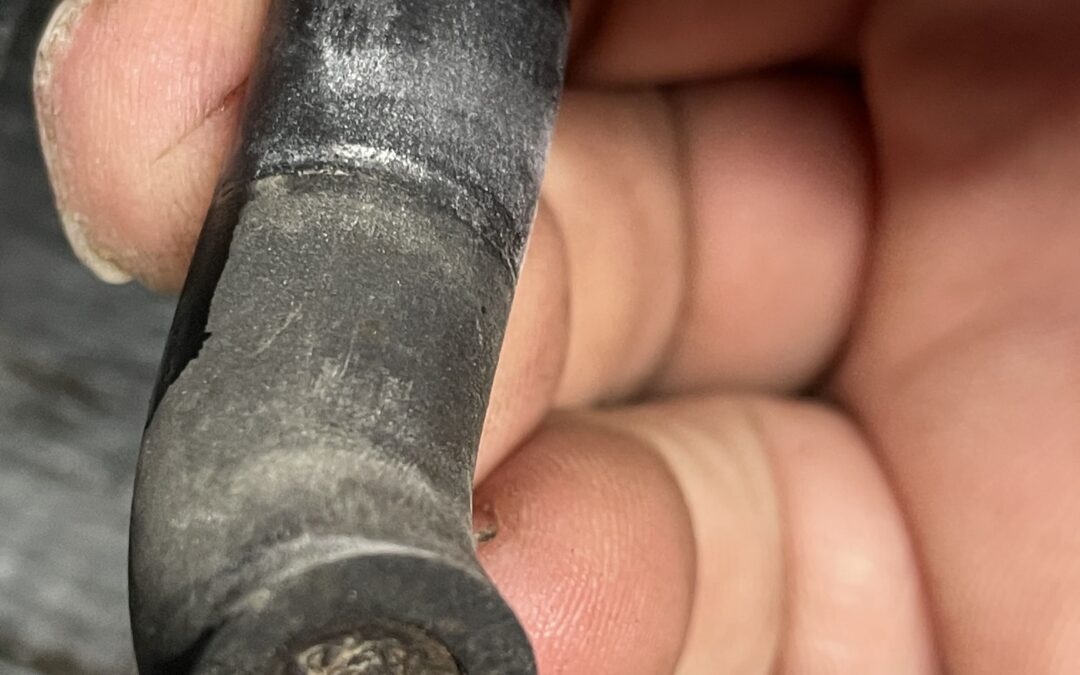
- Heater hose quick-connect fittings: Some are notorious for seeping and spraying a fine mist under certain conditions.
- HVAC case seams: The leak source is still coolant, but where it shows up can vary.
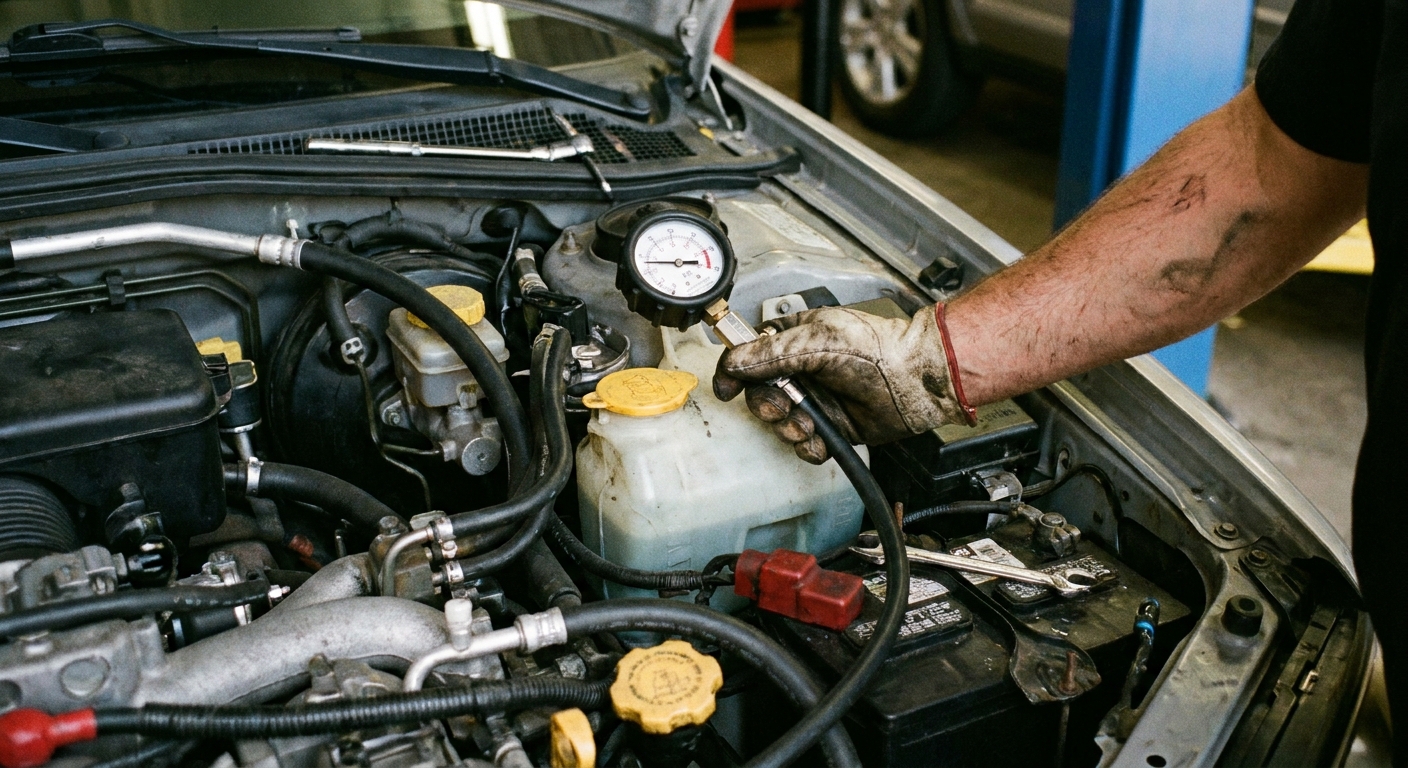
A shop will often use a cooling system pressure test to force the leak to reveal itself without overheating the engine. Depending on the vehicle, you may see coolant evidence under the dash, at case seams, or sometimes at a drain point.
If the pressure test is not conclusive, another common method is UV dye in the coolant plus a UV light to track where the leak is actually coming from.
Can you drive it?
If it is a mild smell with no visible haze and your coolant level is holding steady, you might be able to drive short distances while you schedule service. But if you have active inside-glass haze, a strong sweet odor, or the coolant level is dropping, I would not treat it as a “drive it for weeks” situation.
Two reasons:
- Visibility and comfort: Film on the windshield is a safety issue, especially at night when oncoming headlights scatter. And if it is irritating your eyes or throat, that matters.
- Overheating risk: Coolant loss rarely stays small forever. Once it drops enough to introduce air into the system, overheating can happen fast.
What the fix looks like
Best fix: replace the heater core
Heater core replacement can be labor-intensive because it is buried in the dash. Parts are usually not outrageous. Labor is what gets you.
When doing it right, a shop should also:
- Inspect heater hoses, fittings, and clamps
- Refill with the correct coolant type and proper mixture
- Bleed air from the cooling system correctly
- Clean the interior glass and address any coolant-soaked insulation as needed
Temporary workaround: heater core bypass
In some vehicles, the heater core can be bypassed in the engine bay by connecting the inlet and outlet heater hoses together. This can stop the cabin leak and let you drive without losing coolant, but you will have no cabin heat and often weaker defrost performance.
This is a temporary or emergency move. In cold or wet weather, no heat and weak defrost can be a real safety problem. Also, the cooling system still needs to be filled and bled properly to avoid air pockets.
What I do not recommend: stop-leak
Stop-leak can sometimes slow a seep, but it can also clog small passages in radiators, heater cores, and thermostats. If you are already dealing with HVAC contamination, stop-leak is a gamble that can make the eventual repair more expensive.
Cleaning the film off the windshield
Even after the repair, you may have lingering film on the glass. Here is the simple approach that works well:
- Use a dedicated glass cleaner and two microfiber towels (one to clean, one to buff dry).
- Do a final wipe with isopropyl alcohol diluted with water (on the towel, not sprayed everywhere) to cut oily residue.
- Replace the cabin air filter if it smells sweet or feels damp.
If the leak was heavy, it can take a couple cleaning passes over a few days to fully knock it down.
FAQ
Is a sweet smell always coolant?
Not always. Spilled drinks, air fresheners, and even some washer fluids can smell sweet. The difference is that coolant issues often come with a recurring oily film on the inside glass and, in many cases, a coolant level that slowly drops over time.
Why is it worse when I turn on the heat?
Because coolant is flowing through the heater core and the core is hot. Heat helps the coolant evaporate, and the blower pushes that air straight into the cabin.
My heat still works. Can the heater core still be leaking?
Yes. Early heater core leaks can be small enough that the core still transfers heat normally. Heat output usually drops later, after the system gets low on coolant or the leak becomes severe.
What if I only get haze on defrost mode?
Defrost mode usually routes air across the A/C evaporator and then to the windshield. If coolant is leaking into the HVAC case, defrost airflow can make the residue show up most obviously on the glass.
Bottom line
A sweet smell inside the cabin plus a foggy windshield that leaves an oily film is one of those symptoms I take seriously. It is frequently a heater core leak, and the two practical concerns are visibility and coolant loss that can eventually lead to overheating.
If you want a quick plan: check coolant level cold, confirm the film is oily, keep the cabin on fresh air with windows cracked, and schedule a pressure test (or UV dye check) and repair sooner rather than later.