I still remember the first time I had a customer’s car refuse to shut off in the bay. Key out, engine still chugging along like it had a mind of its own, and the owner standing there with that look that says, “Is my car possessed?” The good news is this is usually explainable, and in many cases, fixable without tearing half the car apart.
When an engine keeps running after you turn the key to Off, you are typically dealing with one of three buckets:
- A gas engine “dieseling” (it is running-on without spark)
- An ignition switch or electrical circuit staying in Run (the ignition system is still powered)
- A diesel engine not shutting off fuel (shutoff solenoid or control issue)
Let’s walk through how to stop it safely first, then how to tell which problem you actually have.
Stop it safely first
If your engine will not shut off, focus on safety before diagnosis. The right move depends on whether it is a gas engine or a diesel.
If it is a gas engine
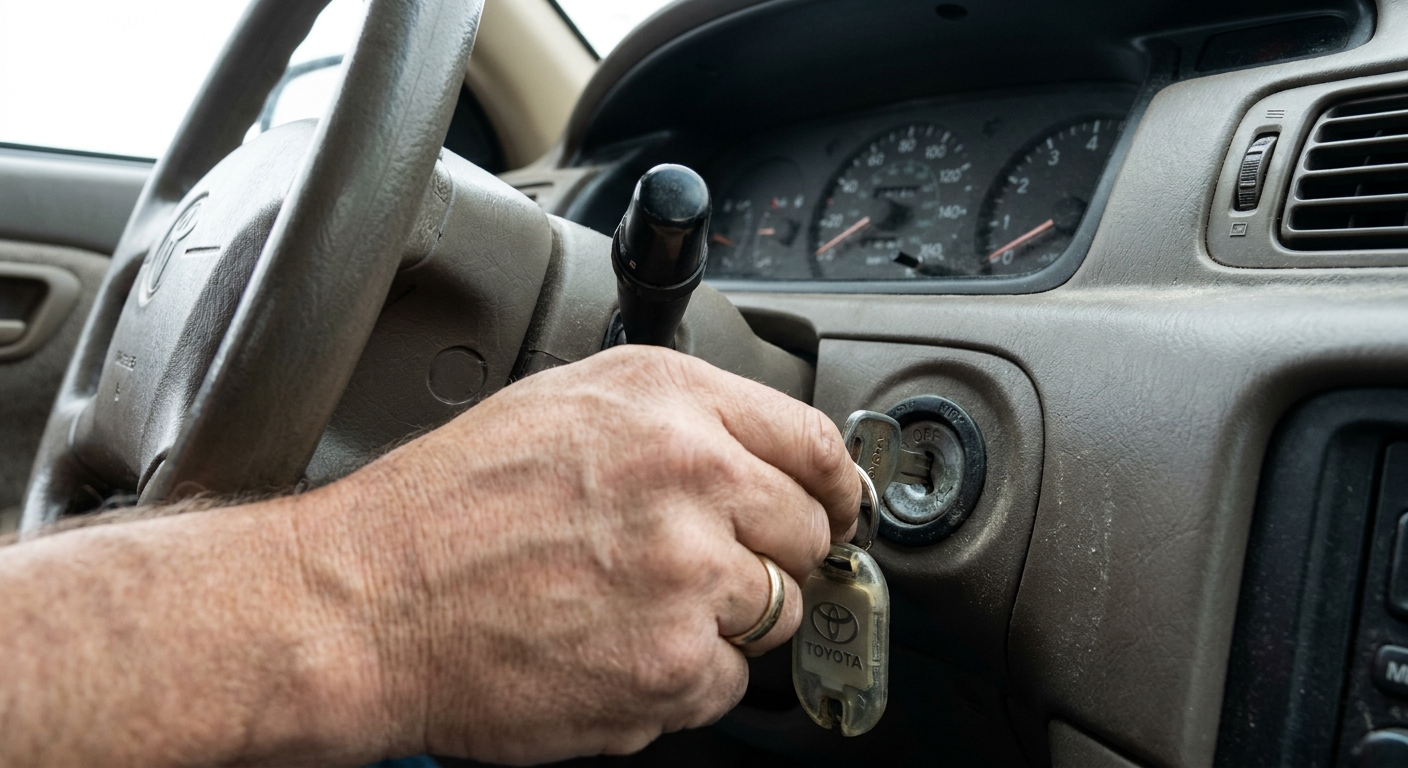
- Turn the key fully to Off, then remove it.
- Set the parking brake and keep your foot on the brake if you are in a vehicle that can creep.
- Try stalling it only if you can do so safely. With most automatics, this is not practical or safe. With a manual, you can sometimes stall it by selecting a high gear, holding the brake, and letting the clutch out smoothly. Only do this in a safe, open area.
- Do not open the hood and start yanking wires around a running engine unless you know exactly what you are doing and can avoid belts and fans.
If it is a diesel engine
- Do not try to block the intake by hand. Emergency shutdown on a runaway diesel is about starving it of air, but the airflow and suction at the intake can pull loose objects in and can injure you. If you are not trained and do not have the correct tool, do not attempt it.
- If it is truly running away (RPM climbing on its own, thick smoke, won’t respond to key), move away from the vehicle and call for help. A diesel runaway is rare, but it is an emergency.
If you just need it to stop right now
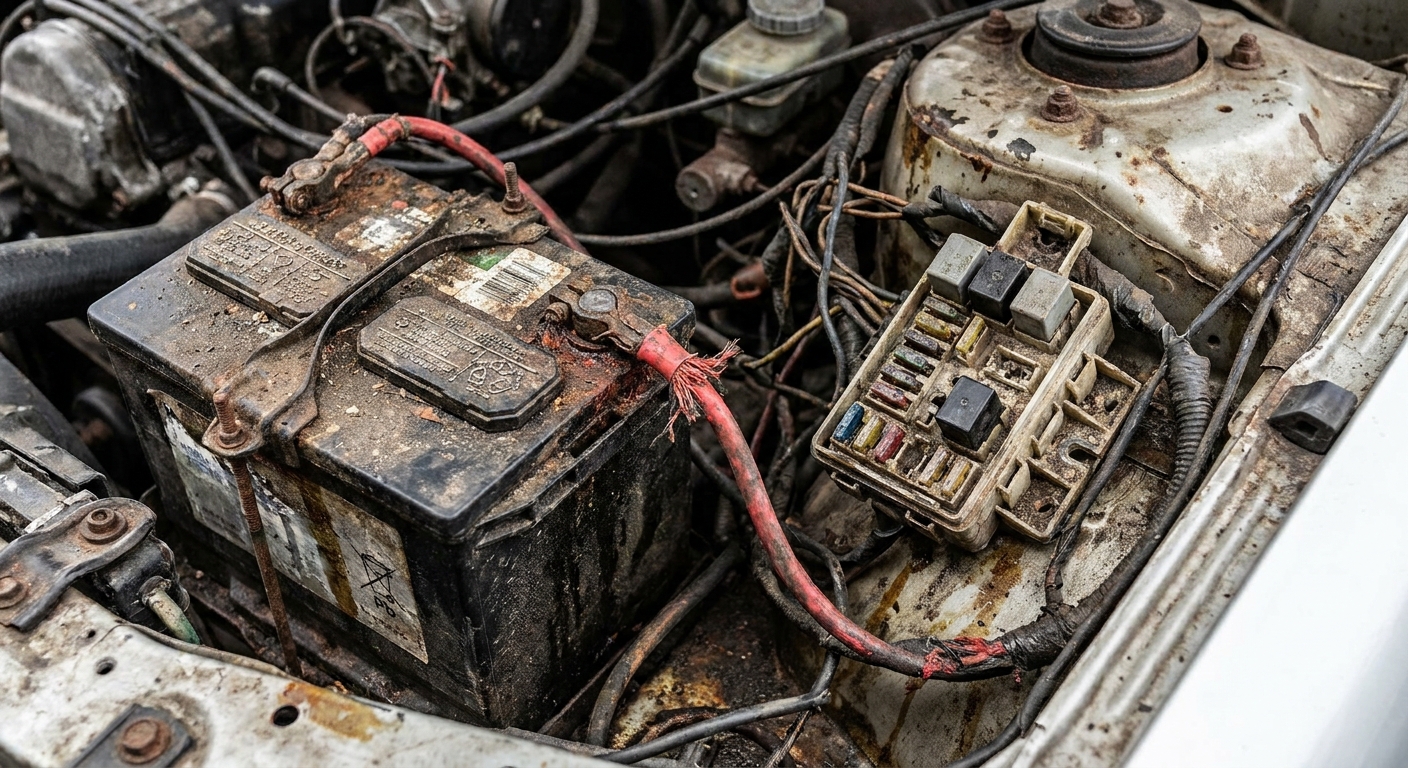
In a controlled situation, one common way to stop a gas engine that is still being kept alive by an electrical issue is to remove power from the ignition and engine control circuits, often by pulling the IGN or ECM/PCM fuse or disconnecting the battery negative cable. This is often effective, but it is not foolproof, and it depends on the vehicle and the exact cause.
- Pulling a fuse can be safer than disconnecting the battery near moving parts, but you need access to the fuse box and correct fuse identification. Pulling the wrong fuse can do nothing, or create new problems.
- Disconnecting the battery negative will usually kill power to an electrically powered run-on, but it can reset modules and, in some cases, create electrical transients depending on what loads are active. Also, battery disconnect may not instantly stop a gas engine that is dieseling since that combustion can continue briefly without electrical power.
If you are on the side of the road, uncomfortable, or you smell burning plastic, it is smarter to shut the car down as best you can, step away, and get a tow.
First tell: smooth or stumbling?
This one observation separates “dieseling” from an electrical issue fast.
- Steady, normal idle like nothing happened: the ignition system and engine management are likely still powered. Think ignition switch, relay, or wiring backfeed.
- Shaking, coughing, rattling, chug-chug-chug, then it eventually stops: that is classic dieseling or run-on in a gas engine.
- Diesel engine runs normally with key off: the engine is still getting fuel, often a shutoff solenoid or a control problem.
Cause #1: Gas engine dieseling
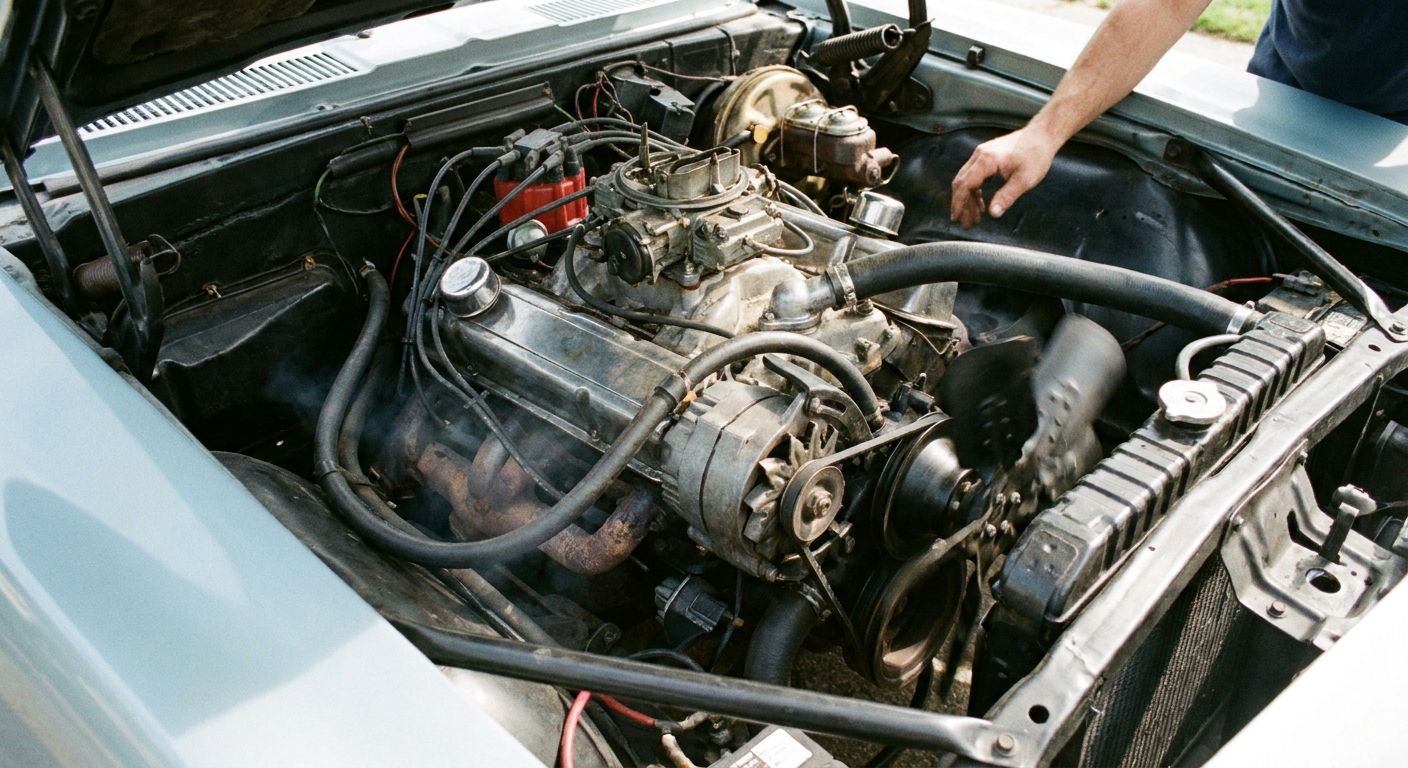
“Dieseling” in a gas engine is when the engine keeps firing for a few seconds even though the ignition is off. It is not running on diesel fuel. It is running because something inside the cylinders is hot enough, and there is enough fuel, for combustion to continue without a spark.
This is more common on older engines (especially carbureted setups), but it can happen on fuel-injected vehicles too when conditions are right.
What it sounds and feels like
- Rough, lumpy running
- Shuddering or knocking
- Usually lasts a few seconds, sometimes longer
- Often worse when the engine is hot
Most common reasons
- High idle speed at shutdown (dirty throttle body, idle air control issues, vacuum leaks on older cars)
- Carbon buildup creating hot spots in the combustion chamber
- Overheating or very high underhood temperatures
- Lower-than-recommended octane for the engine’s needs can make hot shutdown and run-on more likely in some conditions
- Timing issues on older distributor-equipped vehicles
- Carburetor-specific issues on older vehicles (for example, a missing or failed anti-diesel solenoid, dashpot problems, or idle set too high)
What to check and fix
- Check idle speed. If it is idling unusually high right before shutdown, solve that first.
- Clean the throttle body (and the idle air passage if applicable). A sticky throttle plate can hold idle too high.
- Address overheating. If your temp gauge is creeping, fix the cooling system before you chase anything else.
- Consider a decarbon service. Some engines respond well to a professional induction cleaning. Severe buildup may require deeper work.
- Verify correct spark plugs. Plugs that run too hot can contribute to run-on.
Quick tip from the shop
If the engine only “runs on” for 1 to 3 seconds and does it mostly after hot driving, I start with idle speed and carbon. If it keeps running with a steady idle for 10, 20, 30 seconds, I shift to electrical.
Cause #2: Ignition staying in Run
If your engine continues to run with a steady idle after you turn the key off and even remove it, your car is still powering the ignition and fuel systems. In other words, the car still thinks it is in Run.
Common culprits
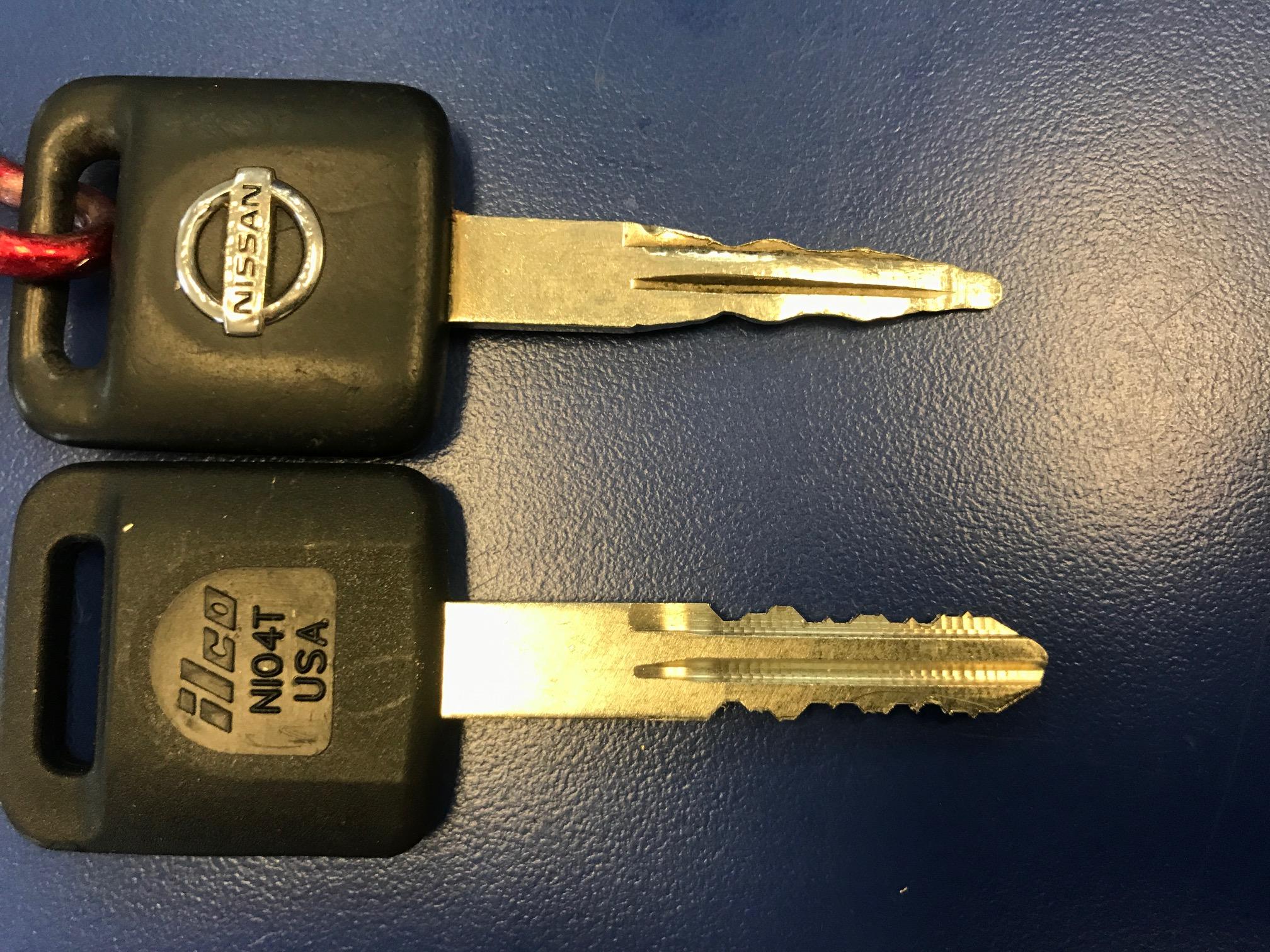
- Worn ignition switch (electrical portion failing internally)
- Ignition lock cylinder or actuator issue (mechanical parts not rotating the switch fully)
- Stuck main relay or ignition relay
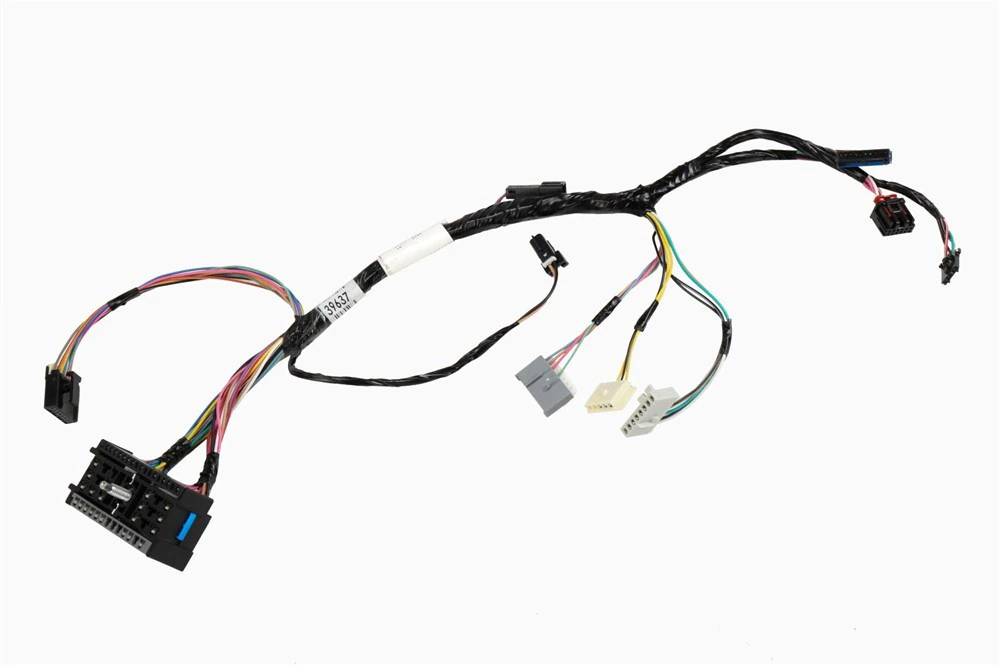
- Backfeeding from an aftermarket accessory (remote start, stereo wiring, trailer wiring, poorly installed LED lighting)
- Backfeed through charging or lighting circuits (for example, alternator exciter circuits or trailer wiring tied in incorrectly)
- Faulty body control module logic (less common, but possible on modern vehicles)
Easy clues you can spot
- Dash lights stay on as if the key is still on
- Radio and blower keep working normally with key out
- Wiggle test: turning the key slightly or moving the steering column tilt changes the behavior
What to do in your driveway
These checks are simple and can save you time before you book a diagnostic appointment.
- Try a second key if you have one. A worn key can contribute to cylinder issues.
- Wiggle the key gently at the Off position. If the engine cuts out when you move the key or tilt the column, that points toward a mechanical or switch issue.
- Listen for relays after shutdown. You are listening for a relay that does not click off or stays energized.
- Inspect recent electrical work. If the issue started after a stereo install, remote start, trailer connector, alarm, or LED conversion, suspect backfeed first.
What a shop will test
- Check ignition switch outputs in Off and Run
- Check for voltage present at ignition coils, injectors, or ECU control circuits when the key is off
- Pull relays one at a time to see what drops out
- Inspect for backfeed paths using wiring diagrams and voltage testing
Important: If your engine keeps running because the ignition circuit stays live, your battery can drain and you can overheat components. It is worth fixing quickly, not “sometime later.”
Cause #3: Diesel fuel shutoff
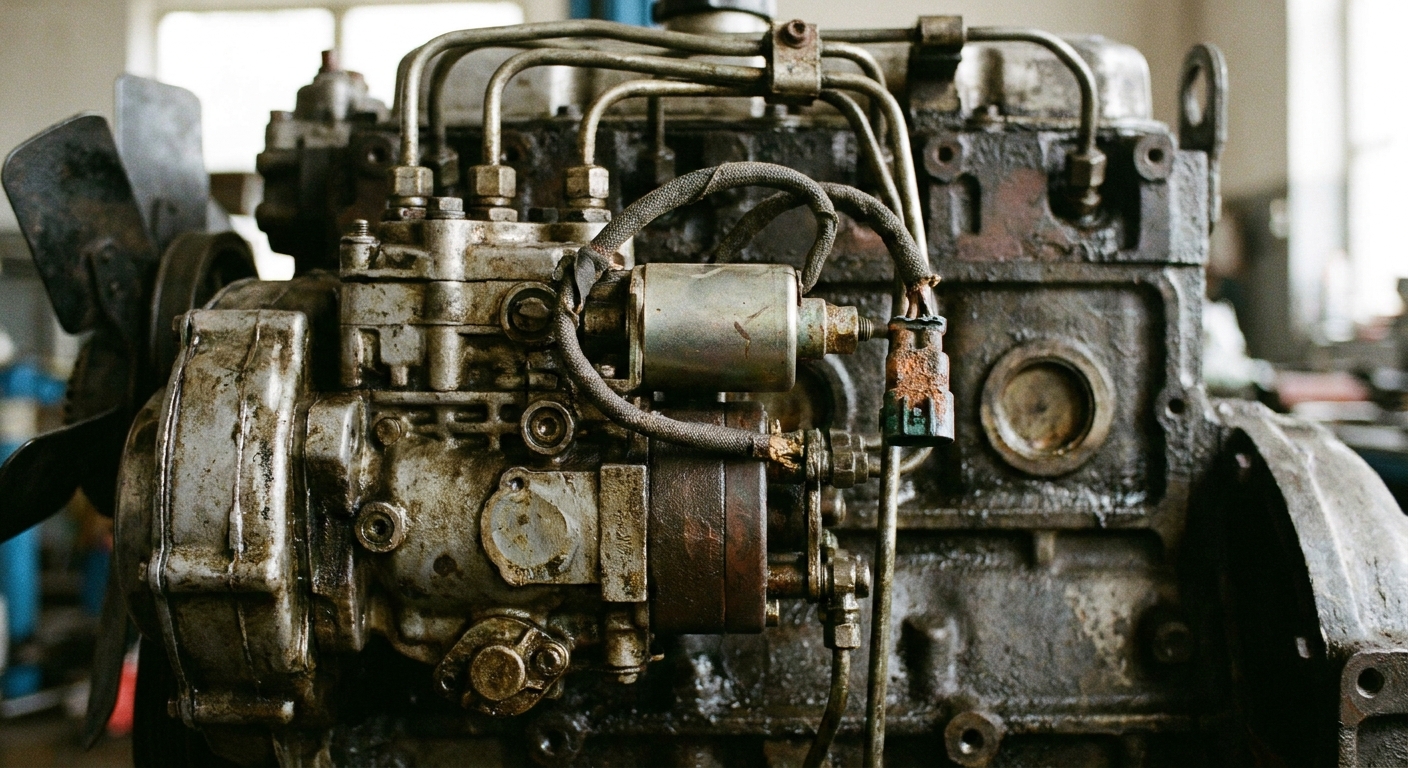
Diesel engines shut down by cutting fuel, not spark. On many older mechanical diesel setups, an electric fuel shutoff solenoid is involved. Some designs are energized-to-run (power keeps it open) while others are energized-to-stop (power triggers shutdown). Either way, if the solenoid sticks, loses its ground, or the control circuit behaves incorrectly, the engine can keep running when it should be shutting down.
What this looks like
- Key off, engine continues to run steadily
- May not stop until fuel is cut or the system is repaired
- May or may not stop if you disconnect power, depending on solenoid design
Common causes
- Failed fuel shutoff solenoid (stuck plunger, burned coil)
- Wiring issue (broken wire, corroded connector, poor ground)
- Relay staying energized
- Fuel control actuator fault on electronically controlled diesels (needs scan tool diagnosis)
What you can check
- Locate the shutoff solenoid on the injection pump (common on many older diesels) and check whether it has voltage with key off. What you expect depends on the design, but it should match the way that solenoid is supposed to behave.
- Check for a loose or corroded connector. Diesels vibrate, and connections can work loose over time.
- Try cycling the key while listening near the injection pump. Many solenoids make a faint click when they actuate.
If you suspect a diesel fuel shutoff problem and you are not familiar with your engine’s fuel system layout, this is a good place to bring in a diesel-focused shop. A small misstep can create a no-start, a fuel leak, or worse.
Not the engine: stuck starter
Sometimes drivers say “the engine won’t shut off” when what they really hear is the starter still engaged. This is a different problem, and it can destroy a starter, damage the flywheel or flexplate, and even start an electrical fire if left unchecked.
The sound difference
- Engine running: normal exhaust note, normal idle sound
- Starter stuck: a harsh whirring, grinding, or high-pitched spinning sound that continues after the engine has started
What to do if the starter is stuck on
- Turn the key to Off immediately.
- If the noise continues, disconnect the battery negative cable as soon as you can do it safely.
- Do not keep driving it. You can cook the starter and wiring in minutes.
Likely causes
- Bad starter relay welded closed
- Bad starter solenoid sticking
- Ignition switch problem keeping the start circuit energized
Push-button start notes
If your vehicle has push-button start, shutdown is often controlled by modules instead of a simple key switch. The exact behavior varies, but these are common, safe things to try:
- Press and hold the Start/Stop button (often 3 seconds) to force a shutdown.
- Make sure you are in Park (or Neutral, depending on the situation) and keep your foot on the brake.
- Follow the owner’s manual emergency shutdown procedure for your model. Manufacturers often spell it out clearly.
If it will not shut down and you smell burning or see smoke, step away and call for help.
Quick troubleshooting flow
- Rough, stumbling run-on for a few seconds → likely gas engine dieseling (idle too high, carbon, heat, octane)
- Steady idle with key off → likely ignition switch, relay, or electrical backfeed
- Diesel keeps running with key off → likely fuel shutoff or fuel control issue
- Grinding or high-pitched whir after it starts → likely starter staying engaged
When to call a pro
I love a good driveway diagnosis, but a few situations deserve professional help quickly.
- Burning smell, melting plastic odor, smoke from under the dash or hood
- Starter sounds like it is staying engaged after the engine starts
- Engine will not shut off consistently and you are forced to disconnect the battery repeatedly
- Diesel runaway symptoms (RPM climbing on its own, heavy smoke, no response to key)
- Push-button start vehicles when the normal shutdown procedure does not work
If you end up at a shop, tell them exactly what you observed: steady idle vs coughing, whether accessories stayed powered, whether wiggling the key changed anything, and whether any aftermarket electronics were installed recently. That information saves diagnostic time.
FAQ
Can I damage my engine if it keeps running after I turn the key off?
Yes, potentially. Short gas-engine dieseling events are usually more annoying than destructive, but repeated run-on points to overheating, carbon buildup, or idle issues that can cause long-term wear. If it is an electrical issue keeping ignition powered, you can also drain the battery and overheat components. If it is a stuck starter, damage can happen very quickly.
Will disconnecting the battery always shut it off?
It will usually shut off an engine that is running because the ignition or fuel control is still being powered. It may not instantly stop a gas engine that is dieseling since that combustion can continue briefly without electrical power. Disconnecting the battery should only be done when you can do it safely.
My key comes out but the engine stays on. What does that mean?
That strongly suggests the ignition switch is still providing Run power, or the mechanical actuator between the key cylinder and switch is not returning fully. It can also happen with electrical backfeed from an accessory, but key-out, engine-on is a classic ignition switch family of problems.
Could the wrong gas cause it to keep running?
Using lower-than-recommended octane can contribute to run-on and hot shutdown issues on some engines, especially if there is carbon buildup. If it only happens after a fuel stop, try the recommended octane from a reputable station and address underlying causes like idle speed and deposits.
The takeaway
An engine that will not shut off is scary, but it usually falls into a recognizable pattern. If it is rough and sputtery, think gas-engine dieseling and focus on heat, carbon, and idle control. If it keeps a steady idle, think ignition switch, stuck relay, or backfeed. If it is a diesel, think fuel shutoff control. And if you hear whirring or grinding, treat it like a stuck starter and shut it down immediately.
If you want, tell me what you drive and what the shutdown sounds like, steady idle vs coughing, and I can help you narrow the most likely culprit.