I have smelled a lot of strange things in engine bays over the years, but a hot battery that reeks like rotten eggs will get my attention fast. If your battery case is bulging, you hear bubbling or boiling after a drive, or you catch that sharp sulfur smell, treat it like an active safety issue, not a “I will deal with it this weekend” issue.
A lead-acid car battery can swell or vent gases when it is being overcharged, overheated, or failing internally. That rotten egg odor is commonly hydrogen sulfide, but overcharging can also vent hydrogen and oxygen, and hydrogen is extremely flammable. The big takeaway: if it is bulging, hissing, or boiling, stop charging it, stop jump-starting it, and do not lean over it while the car is running.
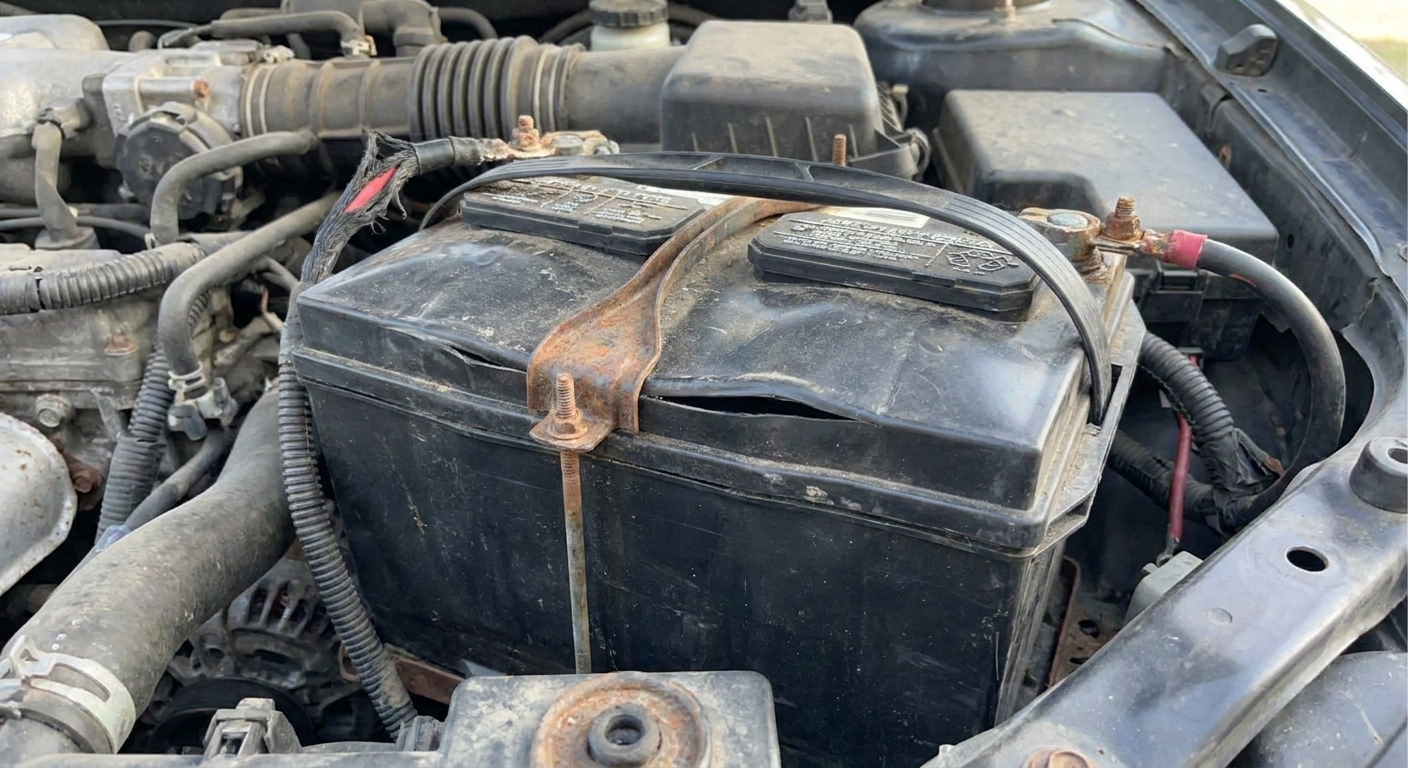
Danger signs you should not ignore
If any of the following are happening, assume the battery is venting gas or building internal pressure.
- Bulged or distorted battery case, especially on the long sides
- Bubbling, hissing, or boiling sound from the battery during or after driving
- Rotten egg or sulfur smell (often hydrogen sulfide)
- Battery feels very hot to the touch (do not keep your hand there)
- Wetness around vents or signs of electrolyte seepage
- Headlights that suddenly get very bright while driving, or dash lights acting weird (suggestive, not definitive)
People ask what “boiling” looks like. Most of the time it is an audible fizzing/hissing and a strong sulfur smell. Sometimes you will see dampness at the vent area. Do not put your face over the battery to look for it.
Safety first: vented hydrogen is flammable, and a failing or overcharged battery can rupture. Avoid sparks, smoking, and making or breaking electrical connections right at the battery.
If you have to be near it, wear eye protection and gloves. If electrolyte gets on skin or in eyes, flush with clean water right away and get medical help for eye exposure.
What causes a battery to swell or boil
In plain terms, boiling is the electrolyte gassing off. That can happen for a few different reasons, and separating them matters because the fix is not always “just replace the battery.”
1) Alternator overcharging (most urgent to diagnose)
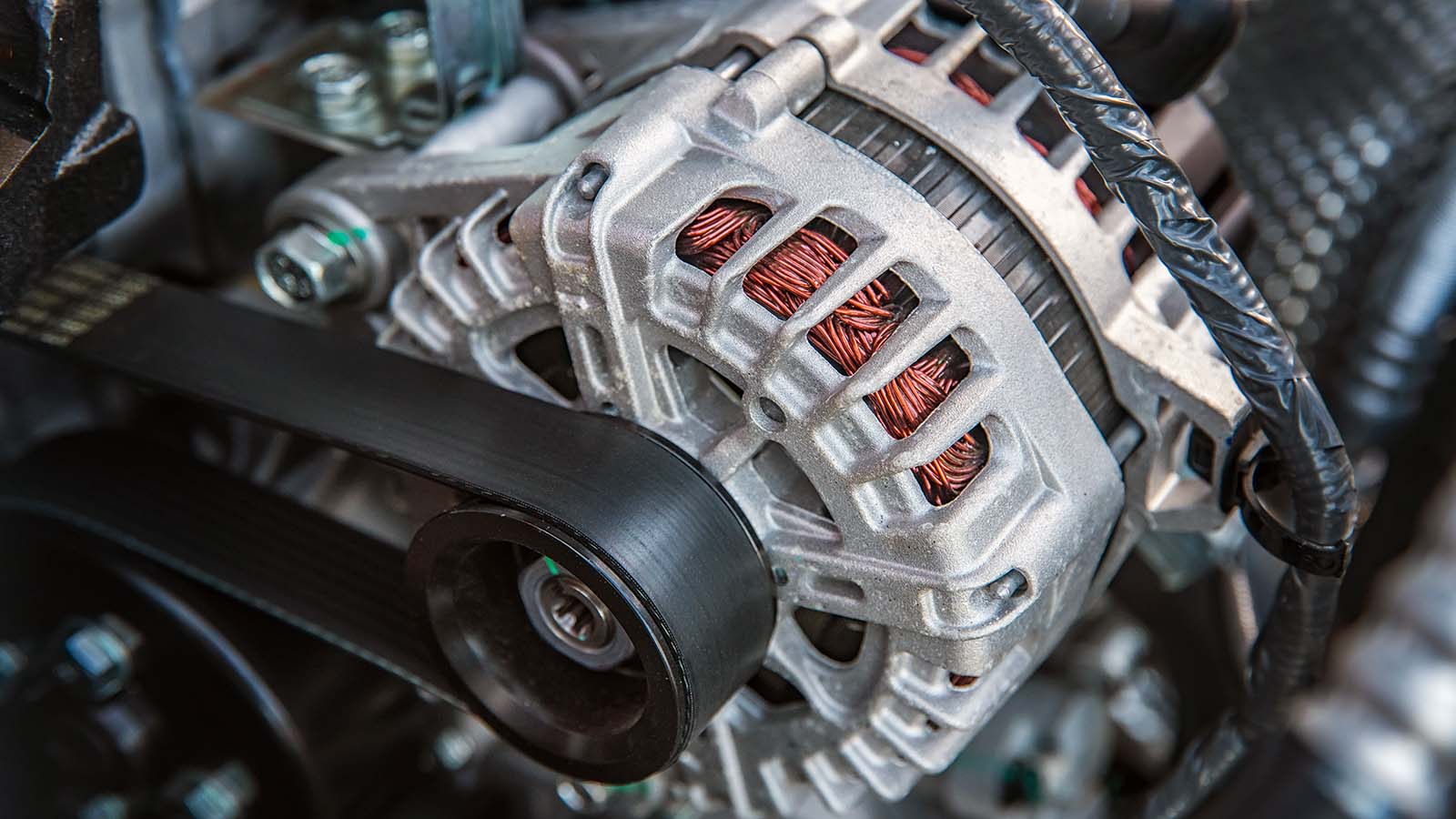
If the alternator or its voltage regulator is overcharging, it is basically force-feeding the battery too much voltage. That overheats the battery, causes excessive gassing, and can swell the case.
Common clues it is overcharging:
- Battery boils while the engine is running, not just after a drive
- Multiple bulbs keep burning out, or lights get unusually bright
- Electronics act erratic: radio glitches, warning lights flicker, weird smells
- You replaced the battery recently and the new one is already acting up
2) Heat soak and underhood temperature
After you shut the engine off, underhood temps climb for a bit. A battery that is already old or slightly overcharged may start venting after a hot drive, especially in summer or in stop-and-go traffic.
Common clues heat is a big factor:
- Sulfur smell shows up after shutdown, not while cruising
- It happens on very hot days or after long idling
- The battery is near the exhaust or lacks a heat shield (some vehicles are worse than others)
3) Shorted cell or internal battery failure
A battery can fail internally even if the charging system is fine. A shorted cell reduces the battery’s effective voltage and can make it heat up, gas excessively, and struggle to accept a normal charge. This is one reason people get stuck in the loop of charging and jump-starting a battery that is already done.
Common clues the battery itself is failing:
- Slow cranking or repeated no-starts even after charging
- Battery will not hold a charge overnight
- Battery gets hot during charging on an external charger
- One battery “corner” looks more swollen than the rest
4) Incorrect charging or jump-start habits
Using the wrong charger setting, charging a frozen battery, or repeatedly jump-starting and immediately driving short trips can all contribute to a battery overheating. A smart charger helps, but it cannot fix a battery with an internal defect.
What to do right now
- Turn the engine off if it is safe to do so. If you are on the roadside and need to move, keep it minimal.
- If it is bulging, hissing, or boiling, stop charging it with a battery charger and do not keep jump-starting it “one more time.”
- Let it cool with the hood open. Stay back and avoid leaning over the battery.
- Avoid sparks: do not disconnect and reconnect cables while it is actively venting.
- If you see electrolyte leaking or the case is badly distorted, plan on replacing the battery and inspecting the charging system before installing the new one.
If the smell is strong inside the cabin or you see smoke, treat it like an emergency. Get away from the vehicle and call for help.
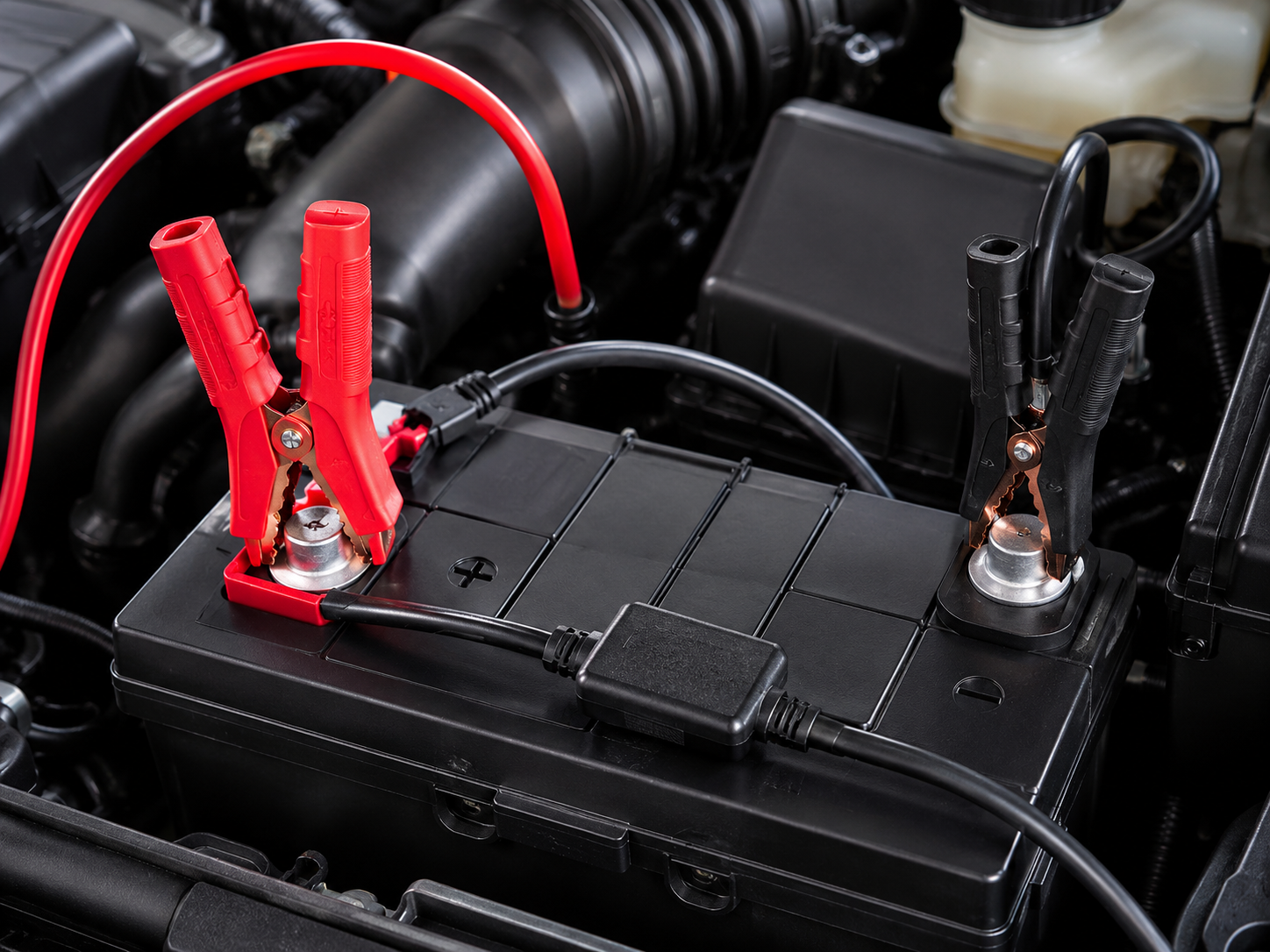
If you absolutely must connect a jump pack or charger and the battery is not actively venting, use the vehicle’s designated jump-start posts if it has them. If it does not, a common safer practice is connecting the negative lead to a solid chassis ground point away from the battery, not directly to the negative post. Always follow the owner’s manual for your vehicle.
How to narrow it down
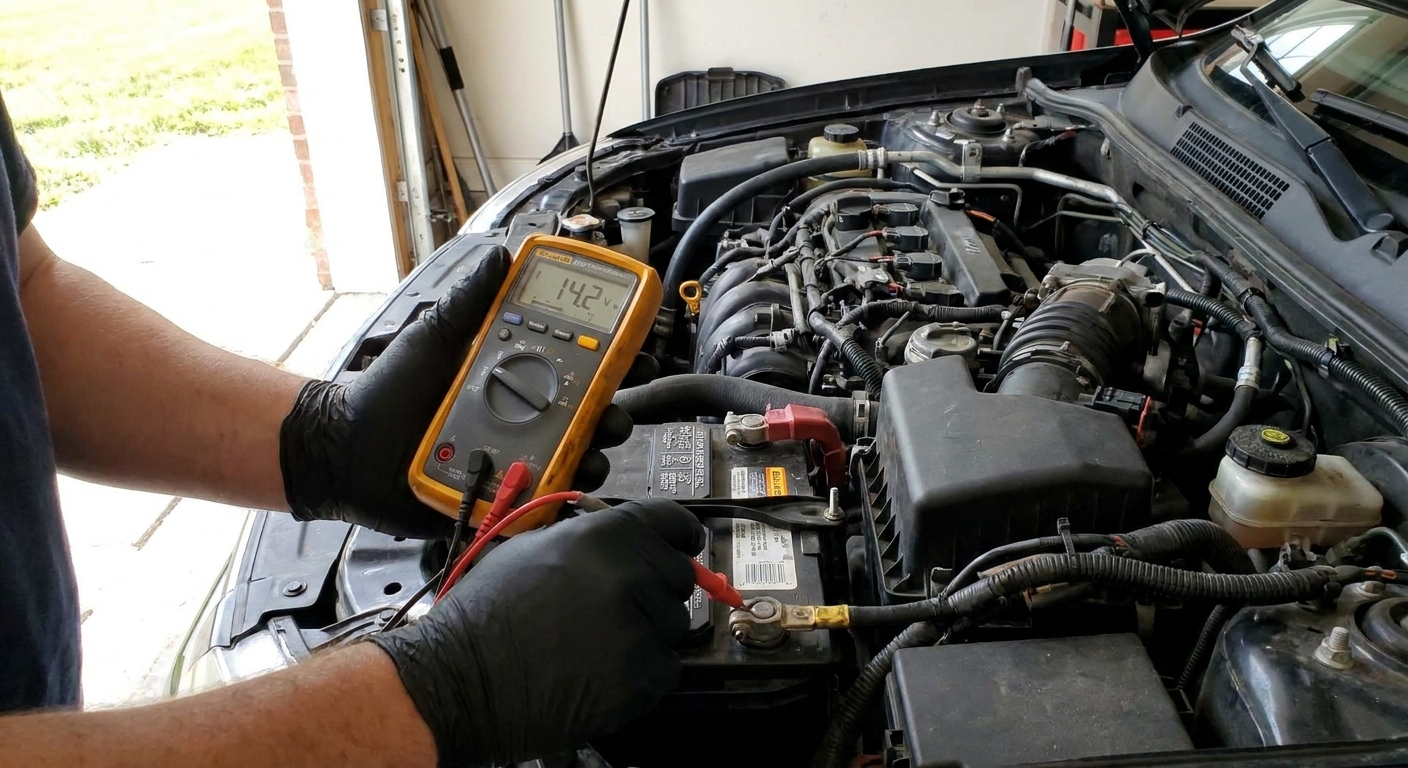
You can do a lot with a basic digital multimeter. The goal is to check whether the car is feeding the battery an abnormal voltage.
Step 1: Battery voltage (engine off)
With the car off for a bit (even 15 to 30 minutes helps), measure across the battery terminals.
- ~12.6V: fully charged healthy battery at rest
- ~12.2V: partially charged
- ~12.0V or less: very low, failing, or heavily discharged
This alone does not diagnose swelling, but it sets the baseline.
Step 2: Charging voltage (engine running)
Start the engine and measure voltage at the battery terminals.
- Typical normal range: about 13.8V to 14.7V on many vehicles, depending on temperature and smart charging strategy
- Likely overcharge: sustained readings consistently above ~15.0V
- Severe overcharge: sustained 15.5V+ is a big red flag, especially if the battery is hot or venting
Some newer vehicles use ECU-controlled charging and can vary voltage more than older systems, sometimes in short spikes. What matters is what it does over time and what the OEM spec says. A battery that is boiling plus high, sustained voltage is not “normal behavior.”
Step 3: Cross-checks
- If charging voltage is normal but the battery heats up rapidly, vents, or will not accept or hold a charge, suspect internal failure.
- If the battery only vents after a hot shutdown and charging voltage is normal, heat soak plus a weak battery is common.
Do not confuse it with other issues
I want to separate swelling or boiling from two other battery issues that look dramatic but mean something different.
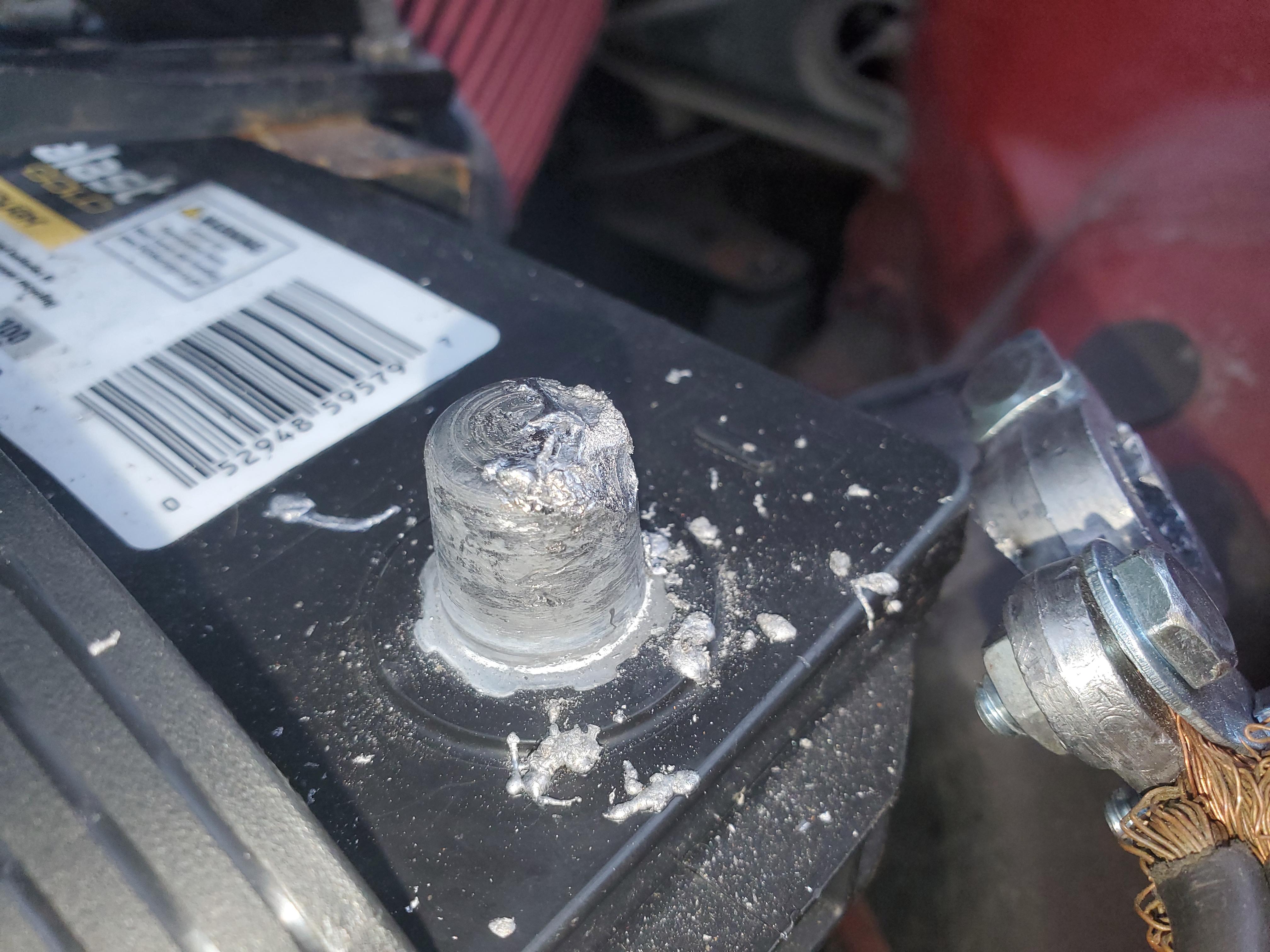
Corrosion on the posts
That fuzzy white, blue, or green crust around the terminals is usually acid vapor reacting with metal. It can cause no-starts and charging issues, but corrosion by itself is not the same thing as a battery boiling.
- Corrosion points you toward dirty or loose terminals, acid seepage, or age.
- Swelling or boiling points you toward overcharge, overheating, or internal failure.
Melted clamp or hot cable end
If a battery terminal clamp is melted or the cable end looks cooked, that is often high resistance from a loose or poor connection. High resistance creates heat at the connection point, especially during cranking, and it can mimic bigger electrical failures.
You still need to take it seriously, but the repair path is different: clean and properly tighten or replace the terminal and cable as needed, then verify charging and starting system operation.
What a shop will check
If you tow it in, a good technician will usually do a quick, structured set of checks:
- Charging system test: alternator output and voltage regulator behavior
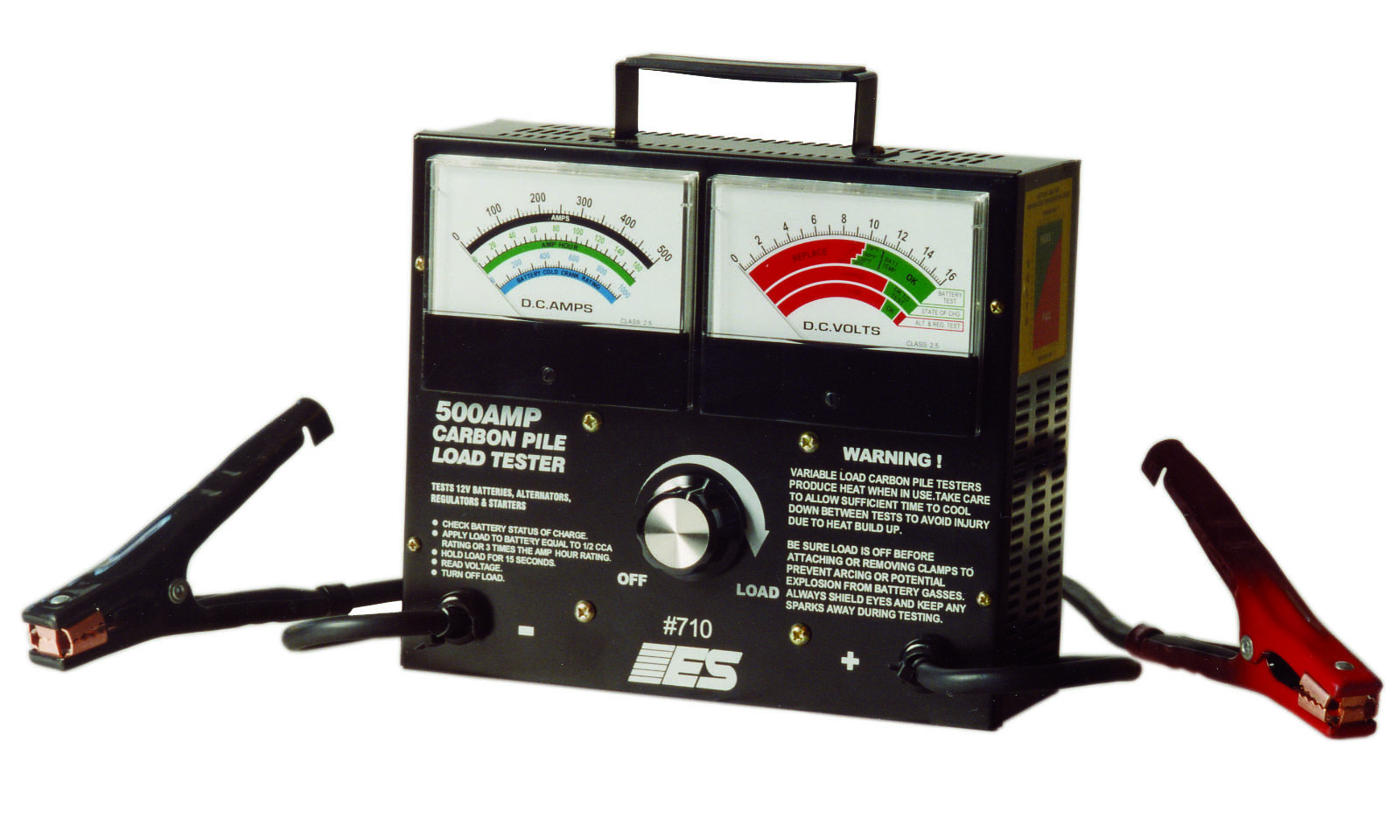
- Battery test: conductance or load test, plus visual inspection for swelling and leakage
- Cable and ground inspection: loose terminals, corrosion, damaged grounds
- Parasitic draw check if the battery keeps dying (separate issue, but often found in the same visit)
If the battery swelled, many shops will recommend replacement even if it still “tests okay.” Once the case is distorted, internal damage is likely and reliability goes downhill fast.
Can you drive with it?
I would not. A battery that is actively boiling or bulging is telling you pressure, heat, and gas are building. Best case, you end up stranded. Worst case, you risk a rupture and acid spray under the hood.
If you must move the car for safety, keep it as short as possible and avoid restarting it repeatedly. In most cases, the right move is a tow and a charging system check.
FAQ
Why does my battery smell like sulfur after I turn the car off?
Often it is heat soak plus a battery that is gassing from being worked hard, overcharged, or internally weak. If the smell is new and strong, treat it like a warning and get the charging voltage checked.
Is a boiling battery always the alternator?
No. Overcharging is a major cause, but a shorted cell or a failing battery can also overheat and vent even with normal charging voltage.
Can I just add water to a battery that boiled?
Most modern car batteries you will see today are sealed (including AGM types) and not meant to be topped off. Even on older, serviceable flooded batteries, “boiling” is a symptom, not the root cause. You need to fix the overcharge or replace the failing battery, or it will happen again.
Is it safe to disconnect the battery when it is hissing?
Not ideal. Making or breaking a connection can create a spark, and a venting battery may be surrounded by flammable hydrogen. Let it cool, keep sparks away, and consider a tow if the battery is actively venting.
What should I do with the old battery?
Do not toss it in the trash. Return it for recycling, which most parts stores and many shops handle automatically (often tied to the core charge).
My rule of thumb
If the battery case is bulged, you hear it boiling, or you smell sulfur, stop treating it like a normal dead-battery situation. Do not keep charging it or jumping it in that condition. Verify charging voltage with a meter if you can do it safely, then plan on diagnosing the alternator and replacing the battery as needed.
That one decision can save your alternator, your wiring, and a whole lot of headache. It can also keep you safe.