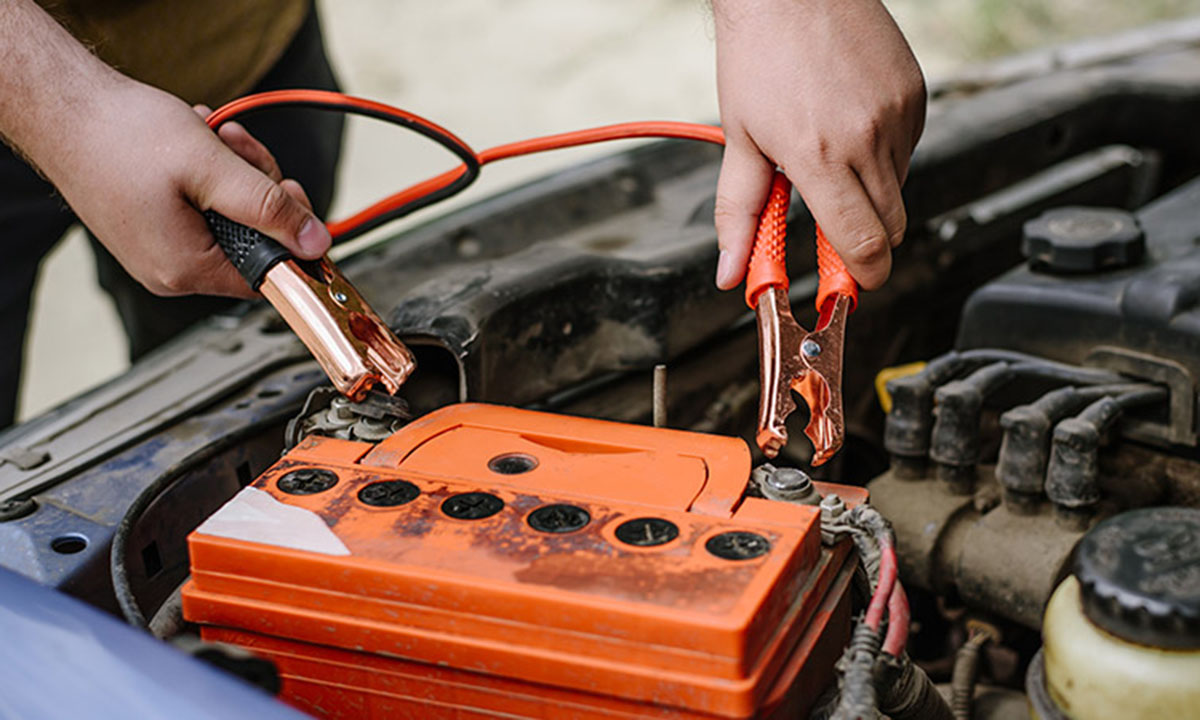
I have a soft spot for push-starting a stick shift because it feels like an old-school party trick, and sometimes it genuinely saves the day. But it is still a controlled emergency procedure, not something you want to wing in a busy parking lot.
If your manual car has a weak battery or a dead starter motor, you can often get it running by using the car’s rolling momentum to spin the engine through the drivetrain. Below is the exact sequence I use, plus the situations where you should skip the bump-start and go straight to a jump or a tow.
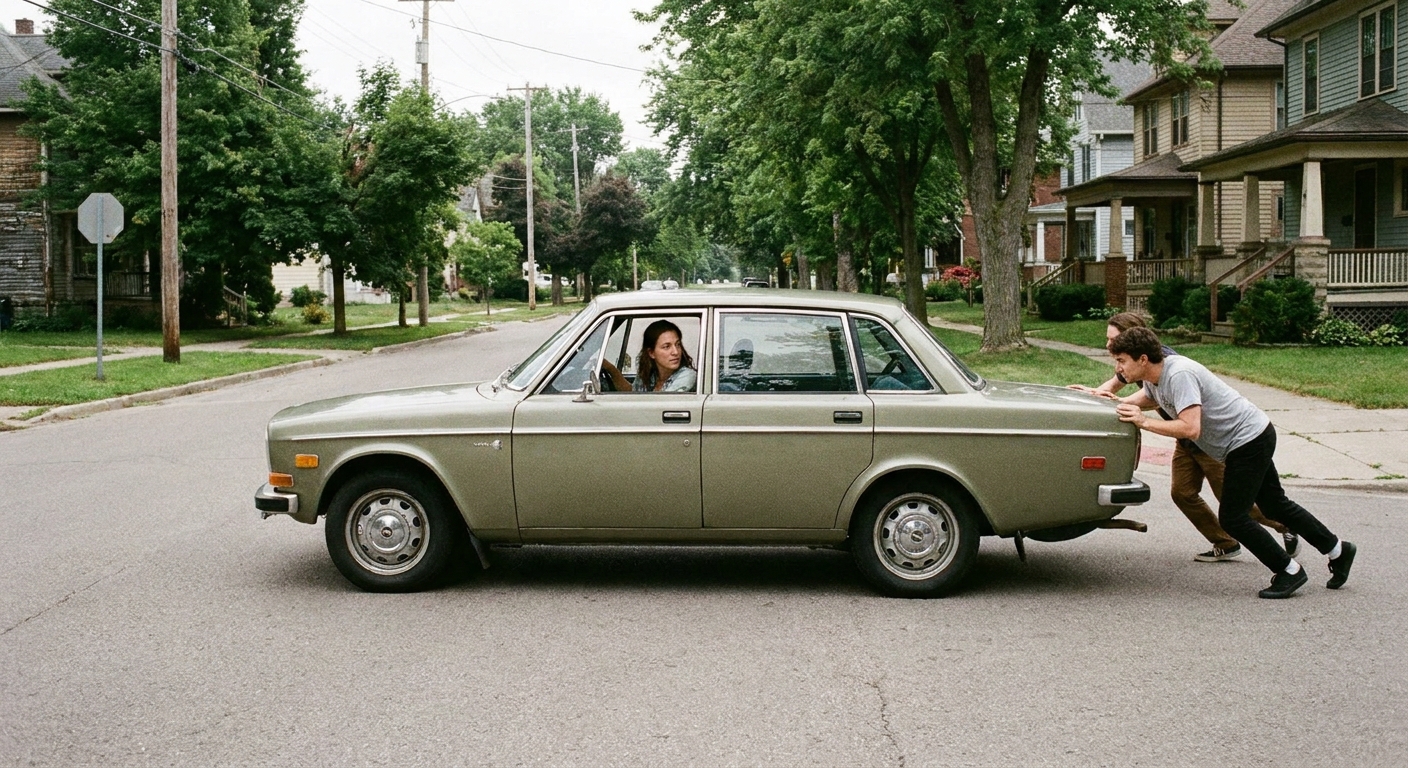
Before you try: quick safety check
Push-starting only works when the engine can run once it is spinning. You are just bypassing the starter motor.
Good candidates
- Manual transmission
- Weak battery (dash lights come on, fuel pump primes on many cars, but cranking is slow or impossible)
- Starter circuit problem (a click, or no crank) which can include a bad starter, but also things like a clutch safety switch, wiring, or an immobilizer issue
- Flat or gently downhill space with a clear path and minimal traffic
Do not push-start if any of these are true
- You suspect an engine or timing issue (loud mechanical noises, sudden stall with banging, timing belt concerns). Forcing the drivetrain can make damage worse.
- The battery seems completely dead (no dash lights, no sign of life). On most modern fuel-injected cars, the ECU and fuel system need some power, so a true no-power situation usually will not bump-start.
- You are on a steep hill or in traffic. It is not worth the risk of losing control.
- You have questionable brakes. Your brake booster may have less assist if the engine is not running.
- The surface is slick (ice, heavy rain, gravel). A sudden clutch engagement can break traction.
Modern car caveat: some newer manuals, especially push-button start cars, may not keep ignition and fuel systems fully on unless a valid key fob is present and recognized. Even if some dash lights are on, the car may still refuse to run. If your car is fob-dependent or finicky, a jump is often faster than fighting it.
Bottom line: If you cannot do this calmly and safely, choose a jump start or a tow. Getting home is not worth a fender bender.
Push-start steps
Here is the clean, repeatable order of operations. Read it once before you try it so you are not learning mid-roll.
1) Set up the car
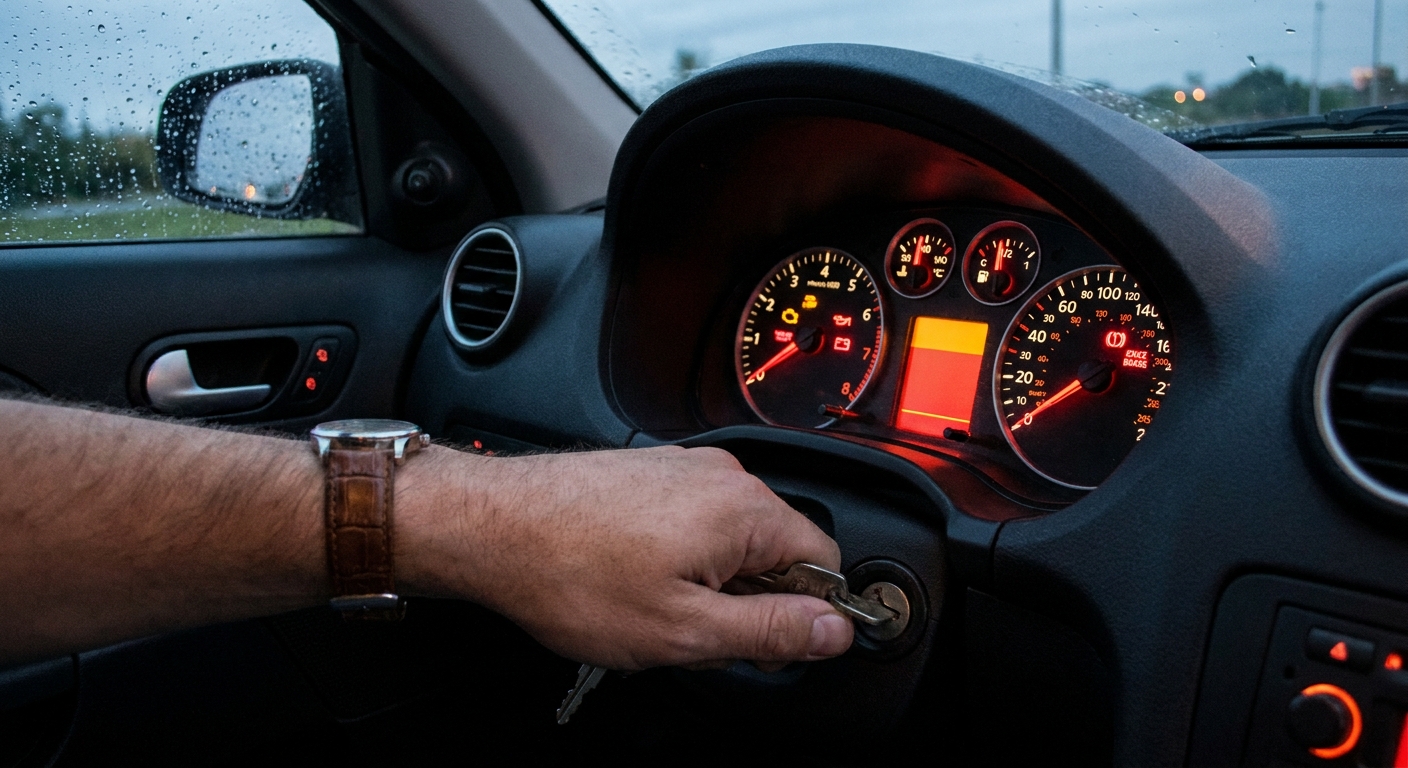
- Turn the key to ON (not Start). You want the dash lit and the fuel system awake. If you have push-button start, follow your car’s “ignition on” procedure with the fob present.
- Press the clutch in and hold it down.
- Put the shifter in 2nd gear for most situations. Second is the sweet spot because it turns the engine without the harsh jolt you often get in 1st.
- Release the parking brake once you are ready to roll and the path is clear.
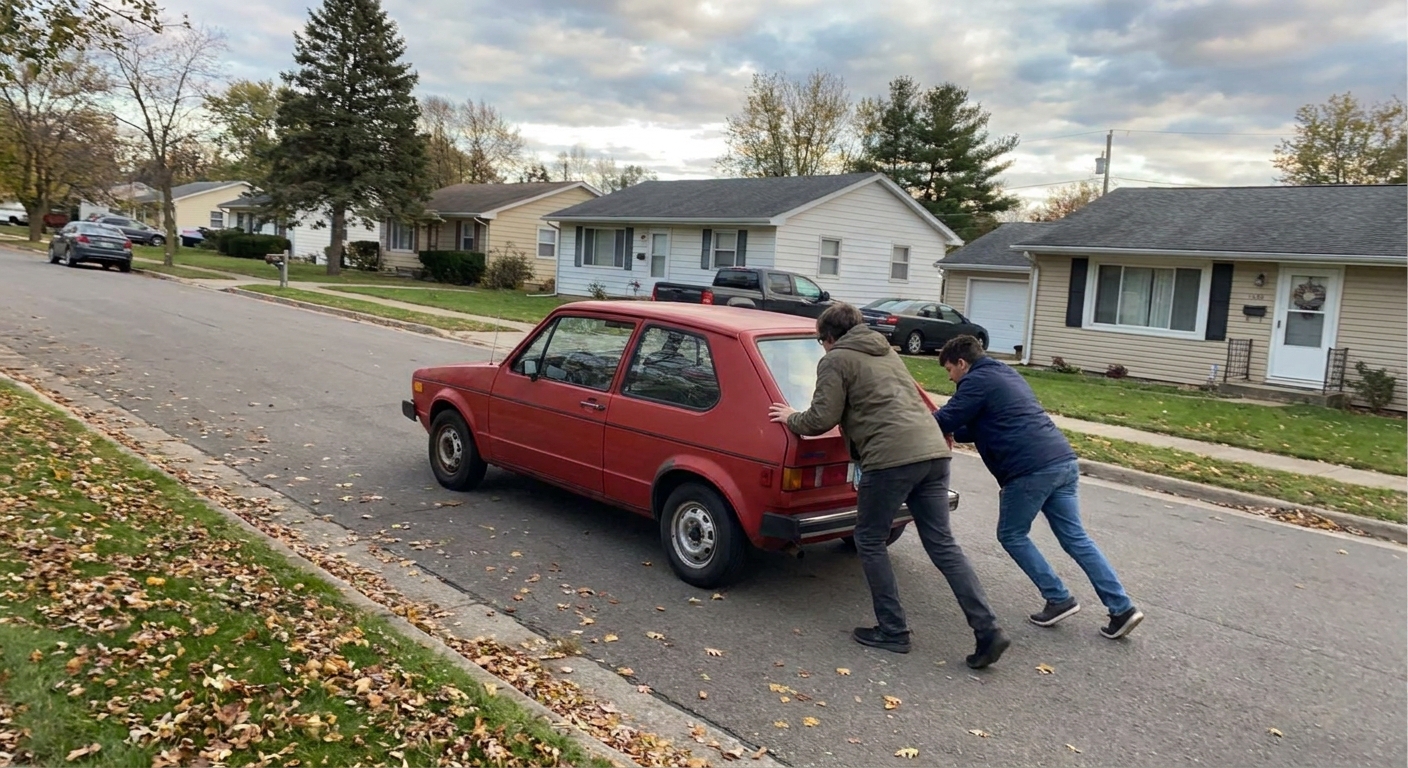
If you are alone, the easiest method is to use a gentle downhill. If you have helpers, have them push from the rear using palms on sturdy body areas. Avoid glass, spoilers, and thin trim, and do not have anyone standing directly behind the car on a slope.
2) Get rolling
Aim for about 5 to 10 mph (8 to 16 km/h). You do not need a sprint, just steady momentum.
- Flat ground: closer to 8 to 10 mph usually helps.
- Downhill: 5 to 7 mph is often enough.
If you are trying this in a parking lot, pick a straight line with lots of runoff room. Avoid tight turns until the engine is running.
3) The start: engage, catch, clutch in
Once you are rolling and the key is ON:
- Release the clutch briskly and smoothly in 2nd gear. Think “decisive,” not a violent dump. Your goal is to connect the rolling wheels to the engine long enough to spin it.
- As soon as you feel it catch, press the clutch back in to prevent stalling and smooth out the jolt.
- Add a small amount of throttle to help it stay running, then shift to neutral or keep the clutch in until the idle stabilizes.
If it does not catch the first time, clutch in, roll a little more speed, and try again. A couple attempts is normal on a weak battery.
Do not grind on it forever: if it is not starting after a few tries, stop and reassess. Repeated attempts and lots of throttle can flood some engines, and if there is a no-spark or no-fuel problem, pushing harder will not fix it.
Which gear to use?
Most of the time, start with 2nd gear.
- Use 1st gear only if you cannot get much speed at all (very short push area). It is more abrupt and easier to break traction.
- Use 3rd gear if traction is low or the car bucks hard in 2nd. Third is smoother but usually needs a bit more speed.
In other words: lower gear needs less speed but hits harder, higher gear is gentler but needs more speed.
After it starts
Once the engine is running, do not just shut it off at the first stop sign.
- Let it idle for a minute, then hold a slightly elevated idle (around 1,500 to 2,000 rpm) for 30 to 60 seconds to help the alternator start replenishing the battery.
- Turn off big electrical loads for a few minutes: rear defrost, heated seats, high blower speed, extra lighting if safe to do so.
- Drive to a safe place where you can diagnose the real problem, or go straight to a parts store or shop if you are not comfortable testing.
If it starts and then dies immediately: treat that as a sign the battery is extremely weak, the alternator is not charging, or there is another underlying issue. Keep loads off, keep revs slightly up briefly, and consider a jump start or a proper charge rather than more push-start attempts.
Why it works (and why it may not)
Your starter motor normally spins the engine fast enough for spark and fuel to take over. When you bump-start, the rolling tires spin the transmission, which spins the engine when the clutch is engaged.
It fails when the engine cannot run on its own once it is spinning. Common reasons include:
- Battery voltage is too low to power the engine computer, ignition, or fuel pump reliably (common on modern cars even if some lights work).
- Fuel delivery issues (empty tank, failed fuel pump, bad relay).
- Ignition issues (no spark).
- Immobilizer or key recognition problems, especially on some push-button start vehicles.
Can you push-start an automatic?
In almost every case, no. A typical automatic transmission needs hydraulic pressure from an internal pump that is driven by the engine. If the engine is not spinning, the transmission usually cannot couple wheel speed to the crankshaft the way a manual can.
There are a few rare exceptions on certain older automatics, but for modern vehicles the practical answer is: plan on a jump start or a tow.
When a jump or tow is smarter
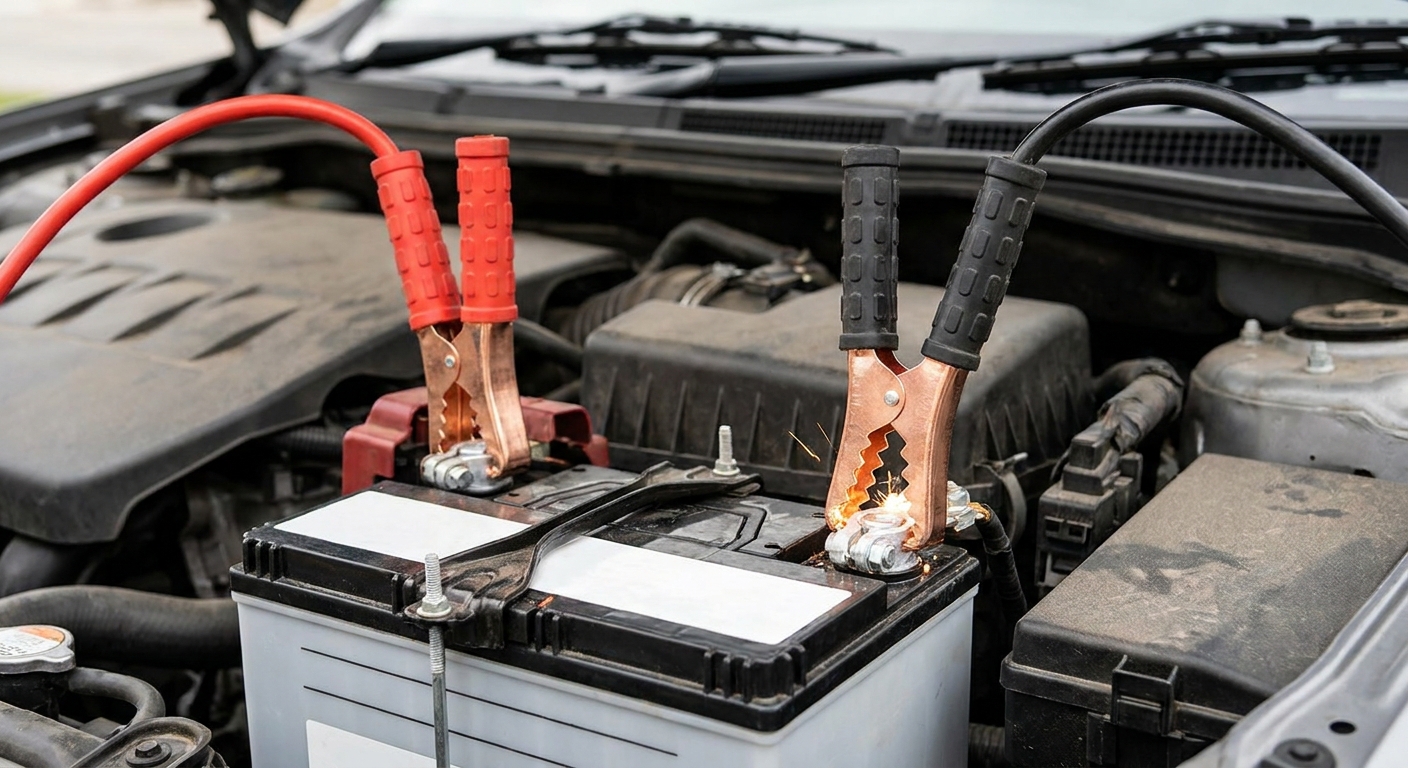
Push-starting is handy, but it is not always the smartest call. Choose a jump start (or a tow) when:
- You are stuck in a tight area (parking garage, busy lot) where you cannot roll straight.
- You are on an incline you cannot control safely.
- It is dark, raining hard, or visibility is poor.
- The engine cranks normally but will not fire. That is not a starter problem, and pushing will not fix it.
- Your owner’s manual warns against certain towing or rolling procedures (some AWD/4WD setups, some transfer case configurations, and some modern drivetrains). The big issue is following manufacturer guidance if you are considering being pulled, towed, or rolled for long distances.
In most bump-start situations, the immediate risk is traction and control, not drivetrain damage. If your manual specifically says not to do it, listen to it.
Common mistakes I see
- Key not in ON. If the ignition is off, you are just dragging the engine along for the ride.
- Trying in 4th or 5th gear. The engine spins too slowly to catch unless you are going much faster than you should be for this.
- Engaging the clutch too aggressively. You want decisive engagement, then clutch back in once it catches, not a long shock-load.
- Not enough speed. A slow walking pace often is not enough, especially on heavier cars.
- Doing it in a crowded area. If you are juggling steering, brakes, helpers, and traffic, it is time to call for help.
FAQ
What speed do I need?
Typically 5 to 10 mph. Flat ground usually needs the higher end of that range.
Should I use 1st or 2nd gear?
2nd gear is the default. Use 1st only if you cannot build enough rolling speed.
Will this hurt my clutch or transmission?
If you do it correctly a few times in an emergency, it is usually fine. The risk goes up if you repeatedly shock-load the drivetrain, do it at high speed, or do it on slippery surfaces where the tires can hop or skid.
My lights come on but it will not crank. Will a push-start work?
Sometimes. If the issue is a weak battery or a no-crank starter circuit problem, a bump-start can get you running. If it rolls and still will not fire, the problem is likely not the starter, and pushing is unlikely to help.
Quick takeaway
For a manual car with a weak battery or starter circuit problem, the classic bump-start recipe is: key ON, clutch in, 2nd gear, roll 5 to 10 mph, release the clutch to catch, then clutch back in and add a touch of throttle.
If you cannot do it safely, if your car will not keep ignition fully on without a fob, or if you are driving an automatic, skip the hero move and go with a jump start or a tow. Your car, and everyone around you, will be better off for it.