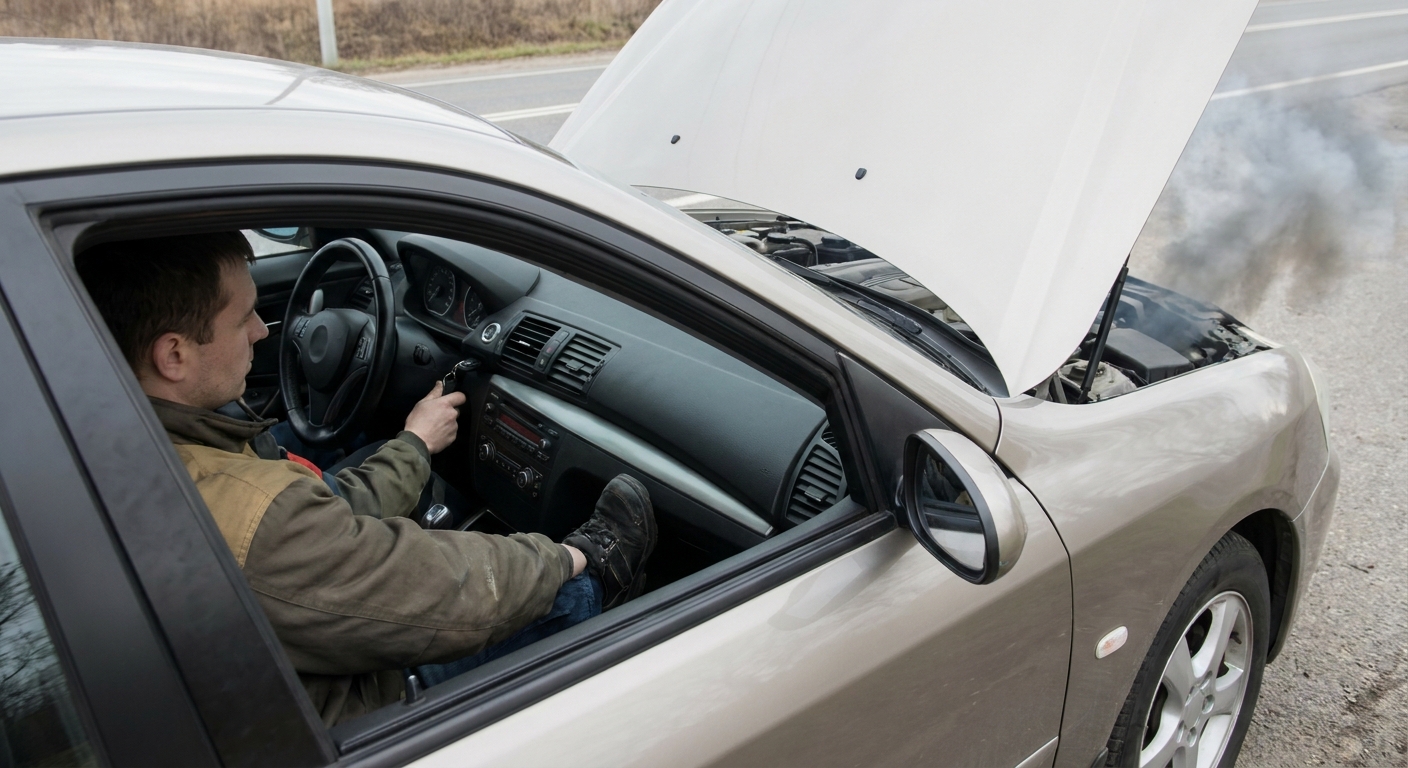
I have lost count of how many times a tow-in turned out to be a plain old flooded engine. The giveaway is almost always the same: it cranks strong, you catch a heavy raw-gas smell at the tailpipe (or under the hood), and it just will not light off (start). The good news is that most fuel-flooded gasoline engines can be cleared in a couple of minutes without tools, as long as you do it the right way and know when to stop.
What a flooded engine is
A gasoline engine needs a pretty tight air-fuel ratio to start. When too much fuel gets into the cylinders, the spark plug tips get wet and the mixture goes too rich to ignite. That is a flooded engine. You can crank all day, but until you get more air in and or less fuel in, it will not catch.
Common signs
- Cranks normally (battery and starter sound healthy) but will not fire
- Strong smell of raw fuel at the exhaust or from the engine bay
- Occasional sputter or a single pop, then nothing
- Plugs may be wet if you pull one to check
Flooding is most common after repeated start attempts. It can also show up after lots of short trips that leave plugs sooty, the battery weak, and the engine spending more time in cold-start enrichment than it should. All of that makes a rich no-start more likely.
Before you try to clear it
Two quick safety notes from the shop floor.
- Do not keep cranking nonstop. You can overheat the starter, drain the battery, and wash oil off cylinder walls.
- If you smell fuel heavily and see fuel dripping (near the rail, injector area, or under the vehicle), stop and address the leak first. Raw fuel plus spark is not a combo you want.
If the engine has recently overheated, the oil level is way high and smells like gas, or you suspect hydrolock (liquid fuel filling a cylinder), skip the clear-flood attempt and get it checked. Hydrolock can bend rods.
The clear-flood procedure
Many fuel-injected cars have a built-in “clear flood” strategy. When the computer sees the throttle held wide open during cranking, it may reduce injector pulse or cut fuel to help you dry things out. It is common, but not universal across every make, model, and year.
On older throttle-body and carbureted setups, the same idea applies: wide-open throttle brings in maximum air and helps clear excess fuel.
Step-by-step
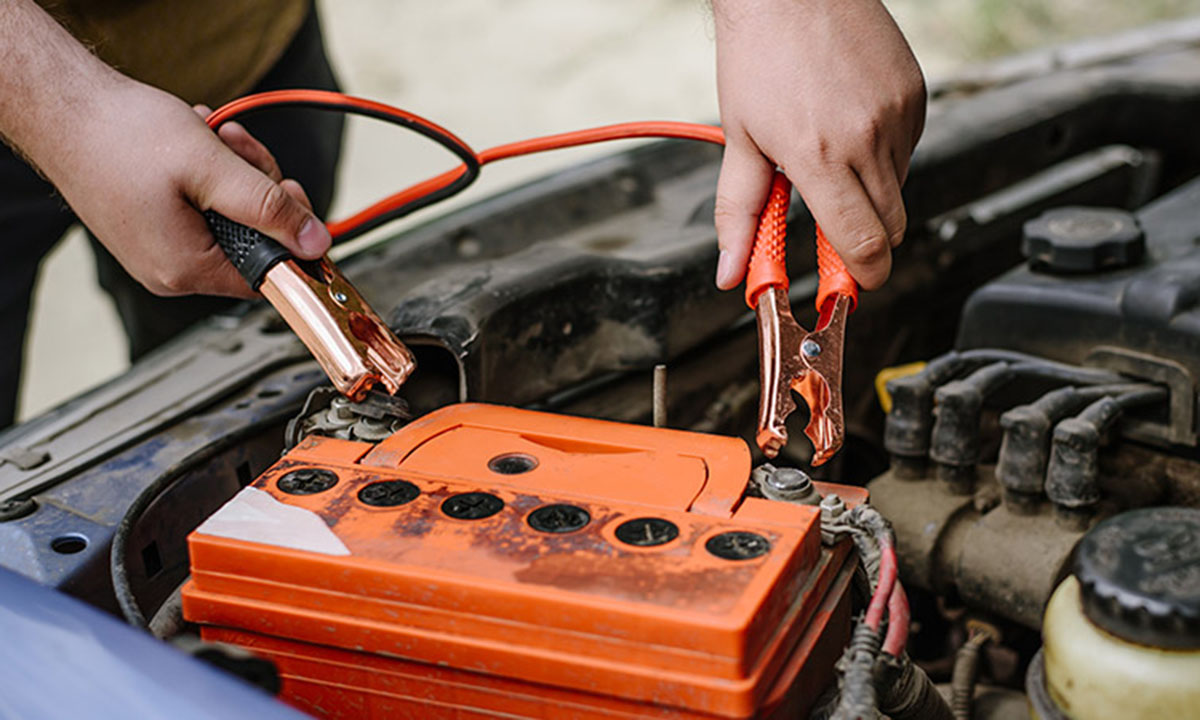
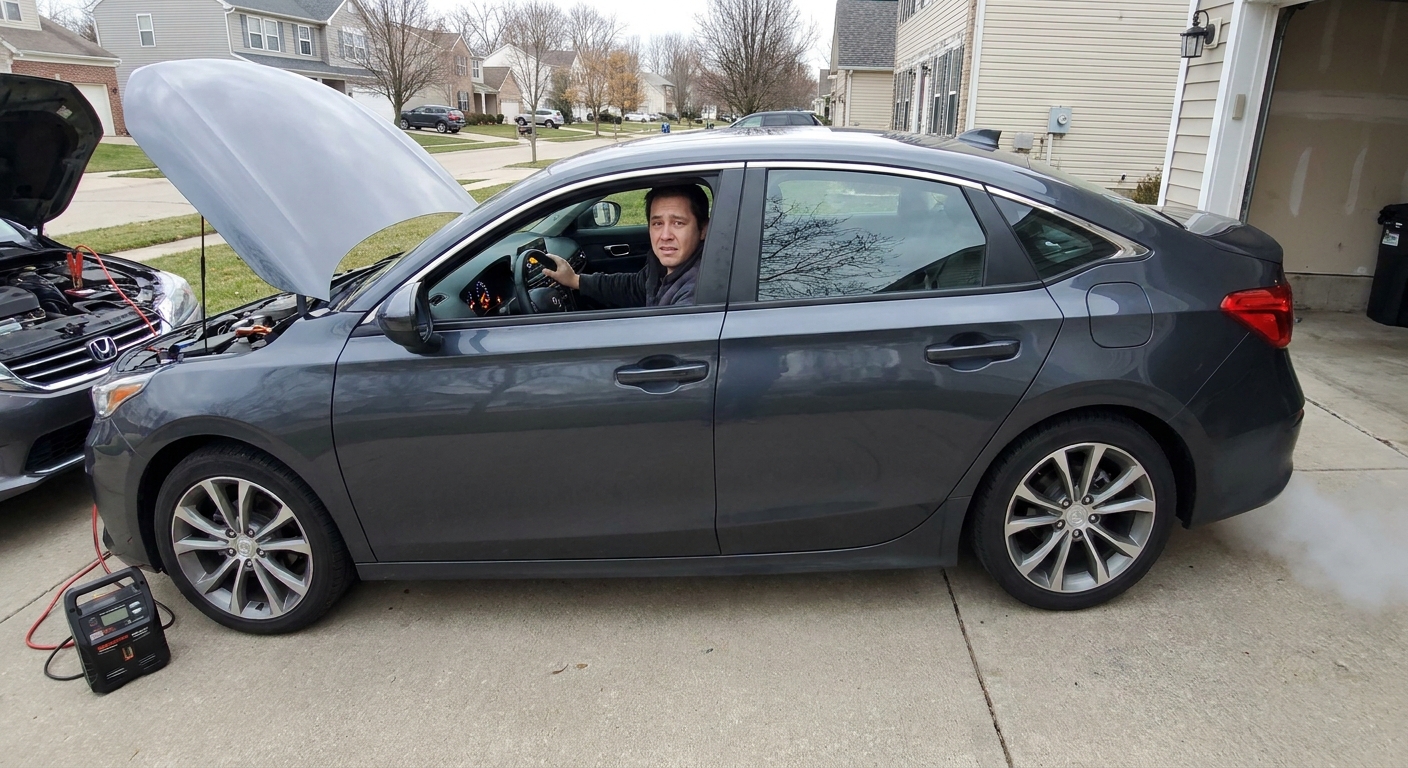
- Make sure the battery is healthy. If cranking speed is slow, connect a jump pack or charger. A slow-cranking engine is harder to clear and harder to start.
- Push the accelerator to the floor and hold it there. All the way down. Keep it steady.
- Crank in short bursts. Crank for 5 to 10 seconds, then stop.
- Rest the starter. Wait 30 to 60 seconds between attempts. This protects the starter and lets fuel vapor dissipate.
- Repeat up to a few cycles. Usually 2 to 4 rounds does it if the only problem is a temporarily flooded condition.
- When it starts to catch, ease off the throttle. Do not keep it pinned. Let it come up to a stable idle. If it stumbles, feather the throttle lightly for a few seconds.
If it fires and immediately dies, try one more clear-flood crank, then switch to a normal start (foot off the gas) once it sounds like it wants to run.
Push-button and drive-by-wire note
On push-button start cars, the pedal is just an electronic request. Many still honor a clear-flood request at wide-open throttle during cranking, but some do not. If you do not hear any change after a few proper attempts, do not assume it is user error.
When to stop cranking
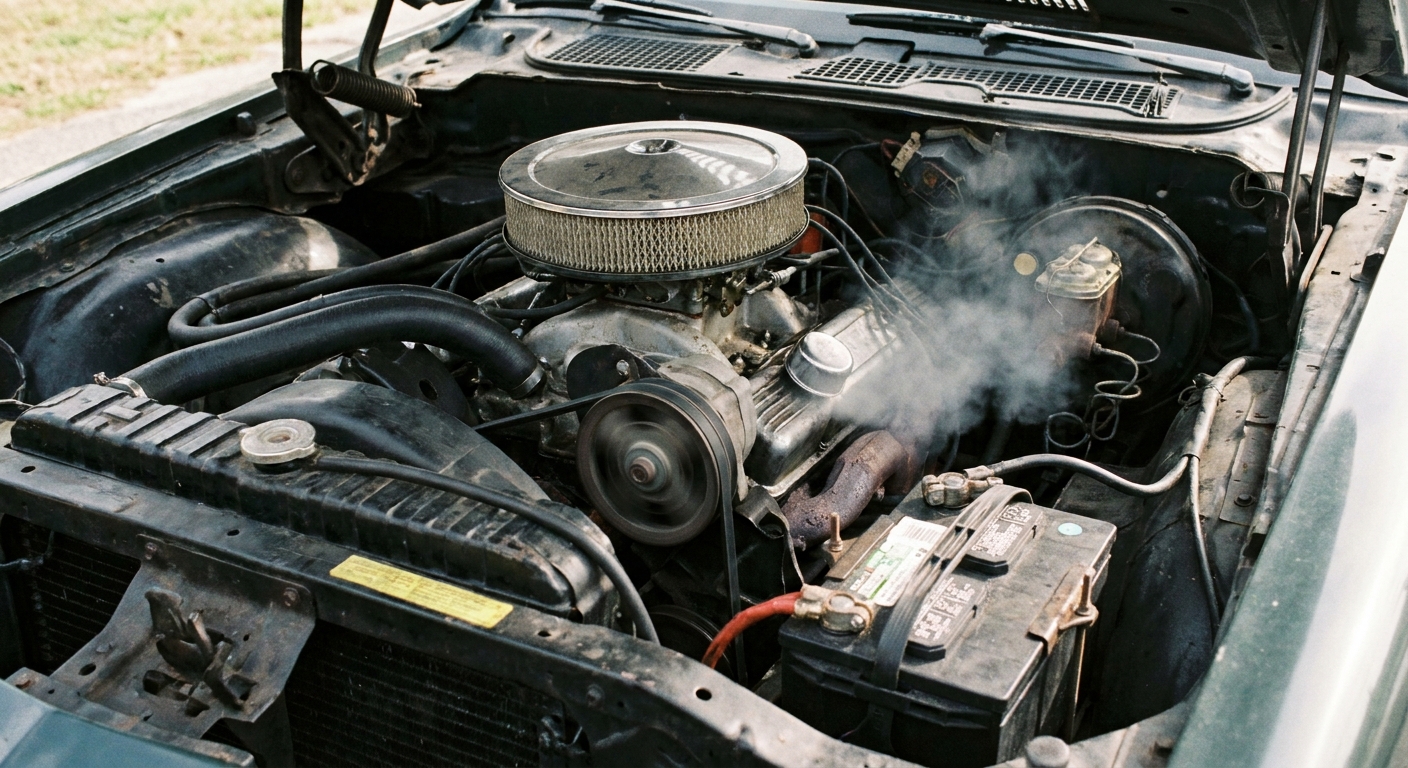
As a rule in the bays, I treat the starter like it is on a work-rest schedule. If you have done several 5 to 10 second cranks with proper rest and you are not getting any hint of ignition, continuing usually makes things worse.
Stop and reassess if any of these happen
- Cranking slows down (battery is dropping or starter is heating up)
- You smell fuel getting stronger each attempt instead of improving
- Backfiring through the intake or loud pops, which can indicate timing or ignition issues
- It starts and the Check Engine Light flashes once running, which can indicate a severe misfire
- No change at all after 3 to 5 cycles of clear-flood attempts
At that point, the engine may not be “just flooded.” It may be missing spark, missing compression, or the fuel system may be stuck delivering too much fuel continuously.
Quick reality check
- Do you hear the fuel pump prime? Many cars buzz for a second or two at key-on. No sound does not prove a bad pump, but it is a clue.
- Any hint of tach movement while cranking? On some vehicles a dead crank sensor can mean no RPM signal and no injector pulse or spark.
- Any history of misfire? Weak ignition is a classic way to end up with wet plugs and a “flooded” no-start.
Why it comes back
If you clear it and it floods again soon after, you have an underlying problem. Here are the repeat offenders I have seen most often. If you are not comfortable pulling plugs or working around fuel, this is where I stop guessing and start recommending a proper diagnostic.
Leaking injector
A stuck-open or dripping injector can dump fuel into one cylinder after shutdown, especially on hot soak. That cylinder goes pig rich on the next start and can drag the whole engine down.
- Clues: Hard starts after sitting 10 minutes to overnight, fuel smell near the rail, one spark plug repeatedly wet, rough start then clears
- Quick check: If you can safely pull plugs, compare them. One plug that is shiny-wet or smells strongly of fuel points to that cylinder.
Fuel pressure regulator problem
On systems with a vacuum-referenced fuel pressure regulator, a ruptured diaphragm can pull raw fuel into the intake through the vacuum hose. That is instant flooding, and it will keep coming back until the regulator is replaced.
- Clues: Strong fuel smell, black smoke once it runs, poor fuel economy, and sometimes fuel present in the regulator vacuum line
- What to do: If you remove the vacuum hose and it smells like fuel or is wet with fuel, stop driving and repair it. That is not a “maybe.”
EVAP purge valve stuck open
A purge solenoid that is stuck open can feed fuel vapor into the intake when it should not, leading to rich cold starts and occasional flooding, especially after refueling.
- Clues: Hard start right after filling up, rich smell, sometimes an EVAP-related code
Bad coolant temperature sensor
If the engine computer thinks the engine is ice cold when it is not, it can command too much fuel on start.
- Clues: Hard warm starts, rich running for longer than normal, temperature gauge behaving oddly on some vehicles
Weak ignition
Sometimes the fuel delivery is fine and the spark is the weak link. A weak spark cannot reliably light a cold rich mixture, so repeated start attempts wet the plugs and you end up flooded.
- Clues: Misfires under load, rough idle before the no-start, old plugs, moisture issues after rain
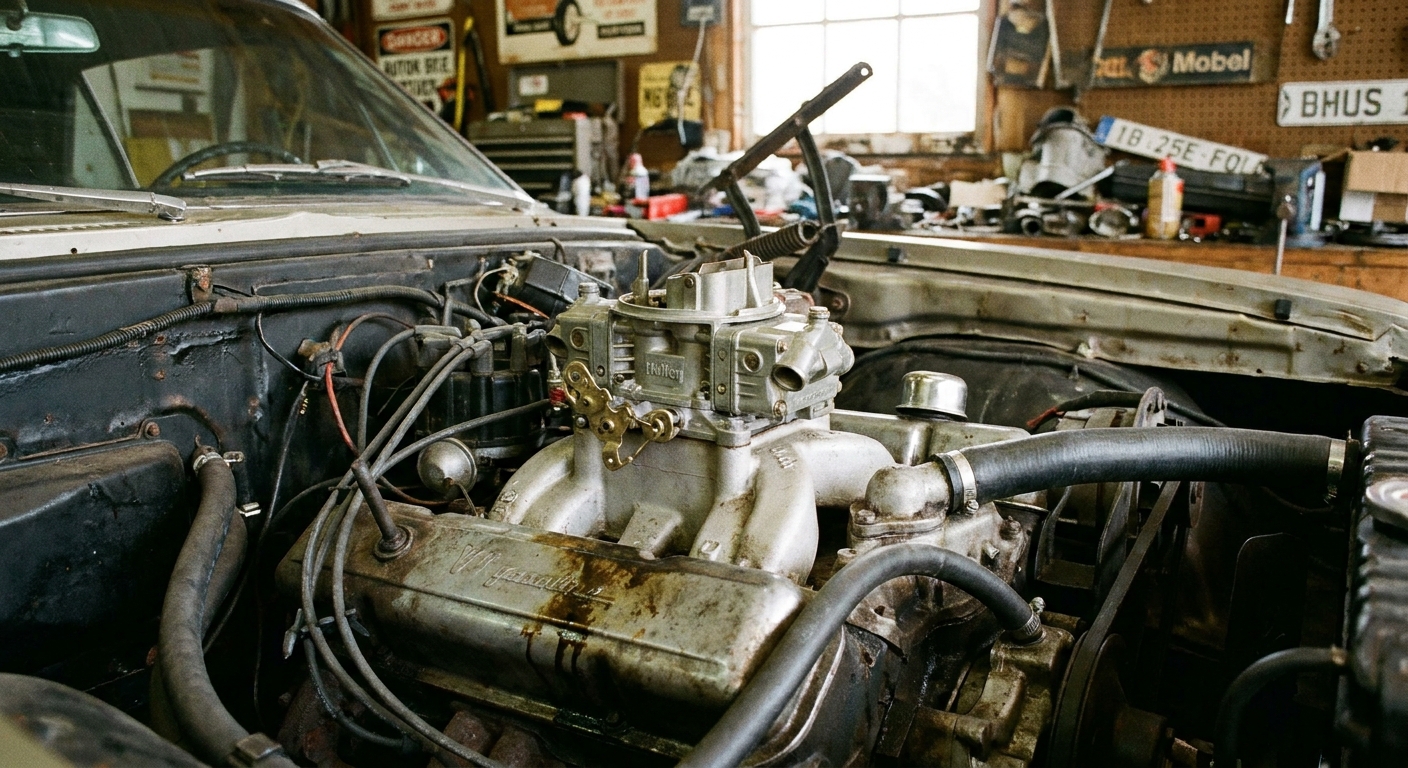
Older carbureted engines
On carbureted engines, flooding often happens after pumping the gas pedal repeatedly. The clear method is similar: hold the throttle open to let air in and reduce the vacuum signal that pulls fuel through the boosters.
- Avoid pumping repeatedly. One or two pumps to set the choke might be normal on some setups, but once it is flooded, more pumping usually makes it worse.
- Hold the throttle open and crank in short bursts with rest periods.
- If it still will not start, you may have a stuck choke or a high float level that is physically dumping fuel.
After it starts
Once it is running, let it idle for a minute or two and stabilize. If it runs rough, give it a little time. Wet plugs often clean up with heat. Then:
- Take a short drive if it runs smoothly enough to do so safely. Getting it fully up to temperature helps dry things out.
- Pay attention to smoke. A brief puff can happen after a rich start, but ongoing black smoke means it is still running rich.
- Check the oil level and smell. If the oil is overfull or smells strongly of gasoline, do not keep driving. Fuel dilution can damage the engine.
FAQ
Does holding the gas pedal down really cut fuel?
On many vehicles, yes. The engine computer recognizes wide-open throttle during cranking as a clear-flood request and reduces injector pulse to help clear a rich condition. It is not universal across every year and model, but it is common enough that it is my first move when the symptoms fit.
How long should I crank?
Keep it to 5 to 10 seconds per attempt, then rest 30 to 60 seconds. More continuous cranking just heats the starter and drops battery voltage, which makes starting harder.
Can a flooded engine damage anything?
It can. Excess cranking can overheat the starter and drain the battery. Repeated flooding can dilute engine oil with fuel, foul spark plugs, and in severe cases cause hydrolock. If your dipstick smells like gas or the oil level rises, treat it as a serious issue.
It starts with the pedal floored, but dies when I let off
That often means it is still too rich at idle or the idle air control strategy is not doing its job. A stuck-open injector, fuel pressure issue, or purge valve problem can keep the mixture rich. It can also be an air problem such as a sticking throttle body or heavy carbon buildup, but the raw-fuel smell points me back toward fueling first.
The bottom line
If your gasoline engine cranks strong, smells like raw fuel, and refuses to catch, clearing a flood is usually straightforward: hold the throttle wide open, crank in short bursts, and give the starter time to cool between attempts. If it keeps coming back, stop treating it like a one-time fluke. A leaking injector, a failed fuel pressure regulator, or an EVAP purge valve stuck open can flood an engine repeatedly, and no amount of wide-open-throttle cranking will “fix” that for long.