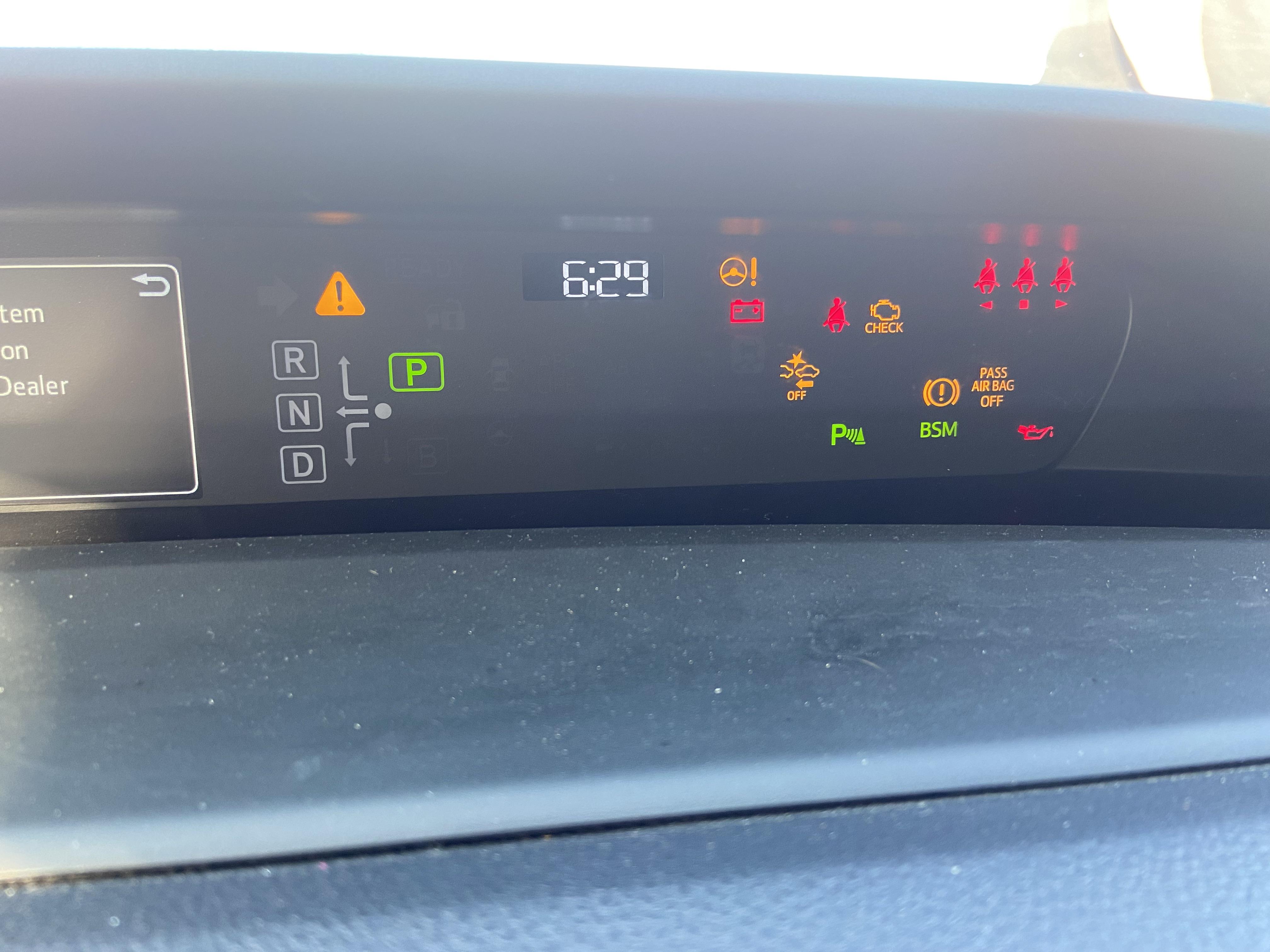
I’ve lost count of how many times I’ve heard some version of: “Ben, it says I’ve got 60 percent battery left… so why won’t it start?” If you’re coming from gas cars, this feels backwards. In an EV, the big traction battery can be perfectly fine and still leave you dead in the driveway because the car has to wake up and pass a few safety checks before it will go into Ready and let you shift into Drive.
Very often, this comes down to one of five things: a weak 12V battery, the car thinking it’s still plugged in, the brake pedal interlock, key detection issues, or a fault in the 12V charging path (the DC-DC converter system). Depending on the model, you can also get blocked by software glitches, immobilizer or security faults, or (more rarely) an actual high-voltage system issue. Let’s walk through the checks in the same order I’d do them in a parking lot.
What “won’t turn on” means
With a gas car, “won’t start” usually means the engine won’t crank. With an EV, you’re usually dealing with one of these:
- No response at all: You press the power button and nothing wakes up.
- Accessory mode only: The screen, radio, or lights come on, but you never get the “Ready” state (the state where the high-voltage contactors close and the car can drive).
- Ready comes on, but won’t shift: You can’t go into Drive or Reverse, or it immediately drops back to Park.
- Warnings and weird behavior: Multiple errors, flickering screens, random resets.
Those last three can all be classic low 12V symptoms, even if the traction battery shows plenty of charge.
The top culprit: a weak 12V battery
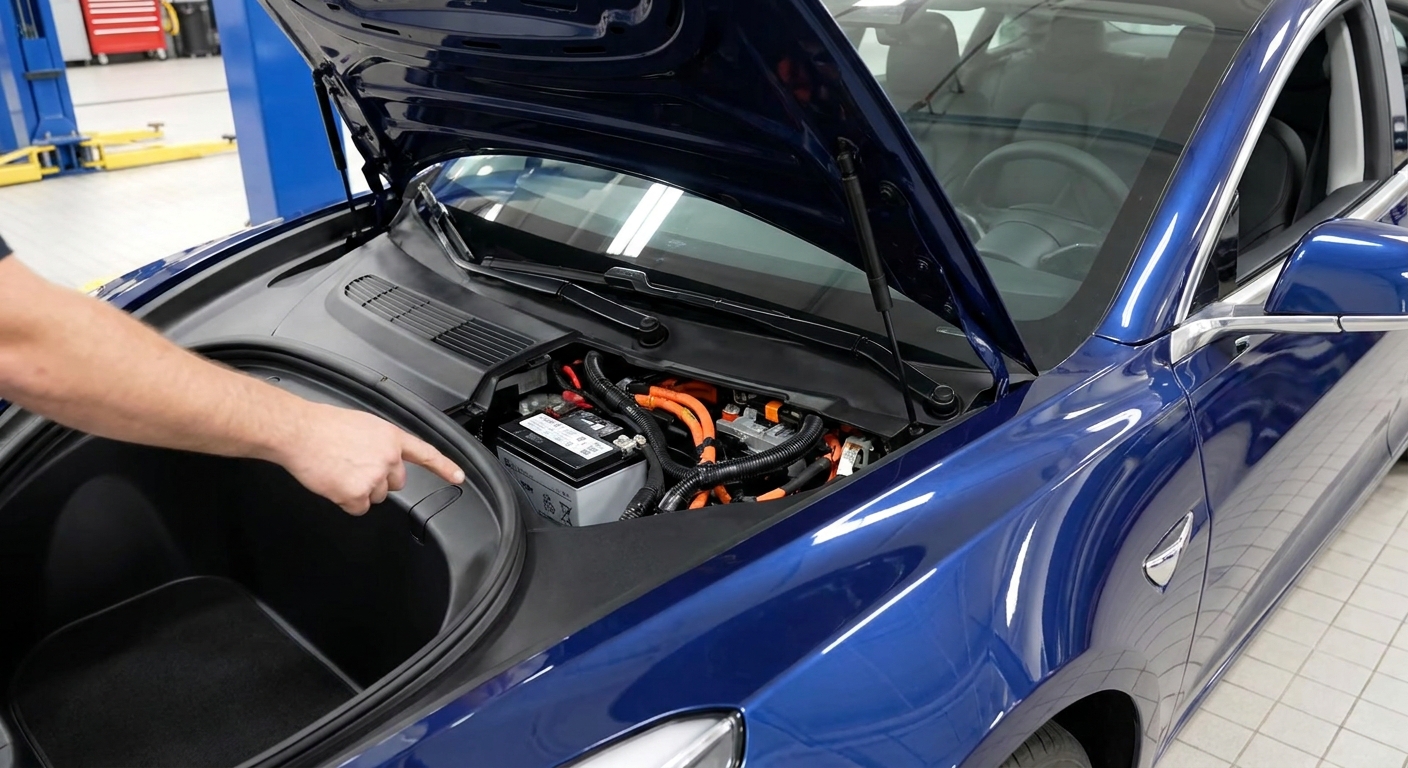
Your EV still has a 12V battery for “normal car stuff” like computers, locks, relays, safety modules, and the contactors that connect the high-voltage pack. Think of the 12V battery as the doorman. If it can’t do its job, the traction battery never gets invited to the party.
Signs the 12V battery is the problem
- Interior lights work but are dim, or they pulse.
- The screen boots slowly, reboots, or throws multiple unrelated alerts.
- Door handles or locks act weird.
- You hear clicks, but the car never goes into Ready.
- It worked yesterday, and today it’s suddenly “dead” despite showing charge.
Quick checks you can do safely
1) Try a proper “full reboot.” Get out, lock the car, walk away with the key, and let it sit long enough for modules to go to sleep. I start with 5 to 10 minutes, but some cars may need longer. Then come back and try again with the brake firmly pressed.
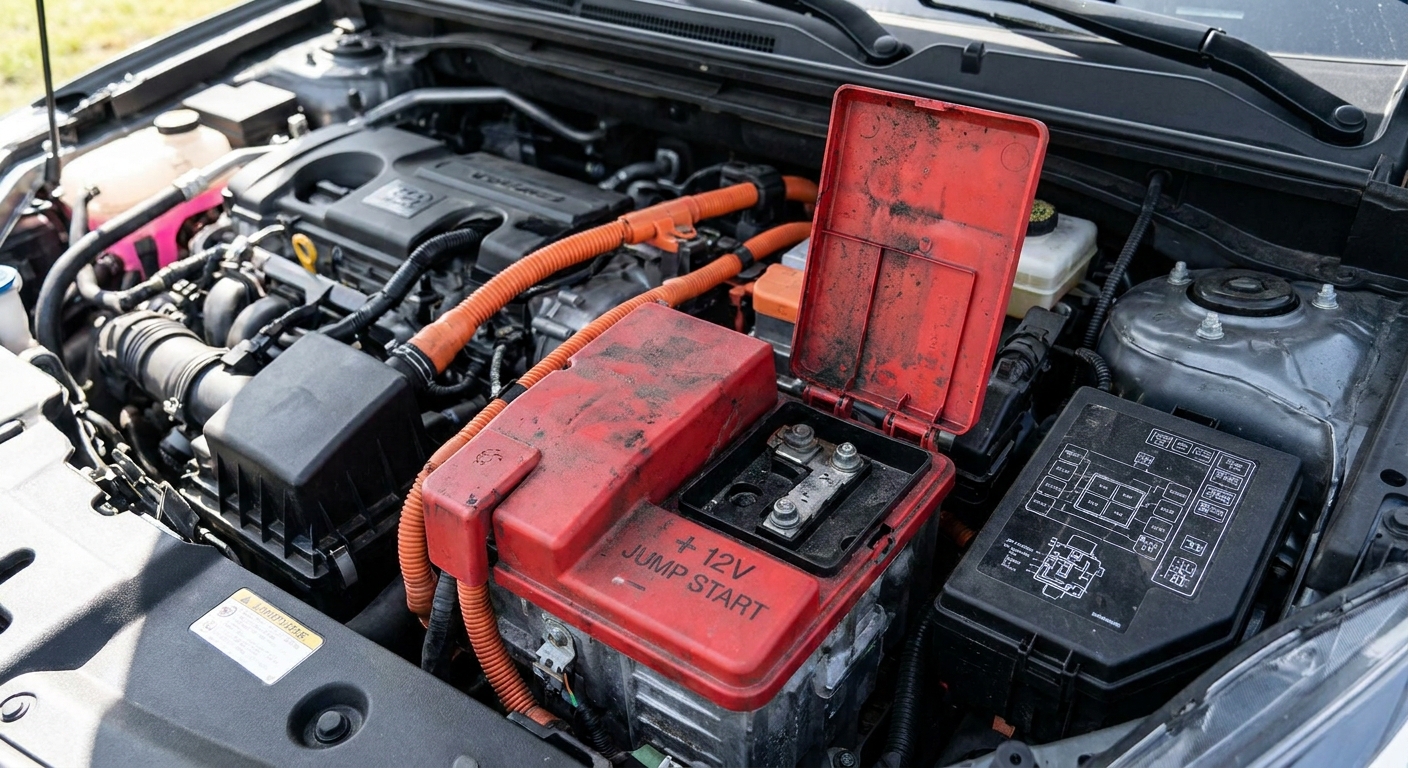
2) Check 12V voltage if you have a multimeter. Many EVs have the 12V battery under the hood or in a frunk area, but some hide it. If your car has dedicated jump posts, measure there. With the car off and having sat for a bit:
- ~12.6V: healthy and fully charged (roughly) for a lead-acid or AGM 12V battery.
- 12.2V to 12.4V: partially discharged. Could still boot, could also fail under load.
- Below about 12.0V: expect problems. Many EVs get finicky here.
Important caveat: those numbers are for lead-acid and AGM batteries. Some EVs use a 12V lithium pack, and the resting voltage can read higher. Voltage alone is not a perfect health test, but it’s an excellent clue.
Also, cold weather is brutal on borderline 12V batteries. A battery that was “fine” last week can turn into a no-Ready event overnight when temperatures drop.
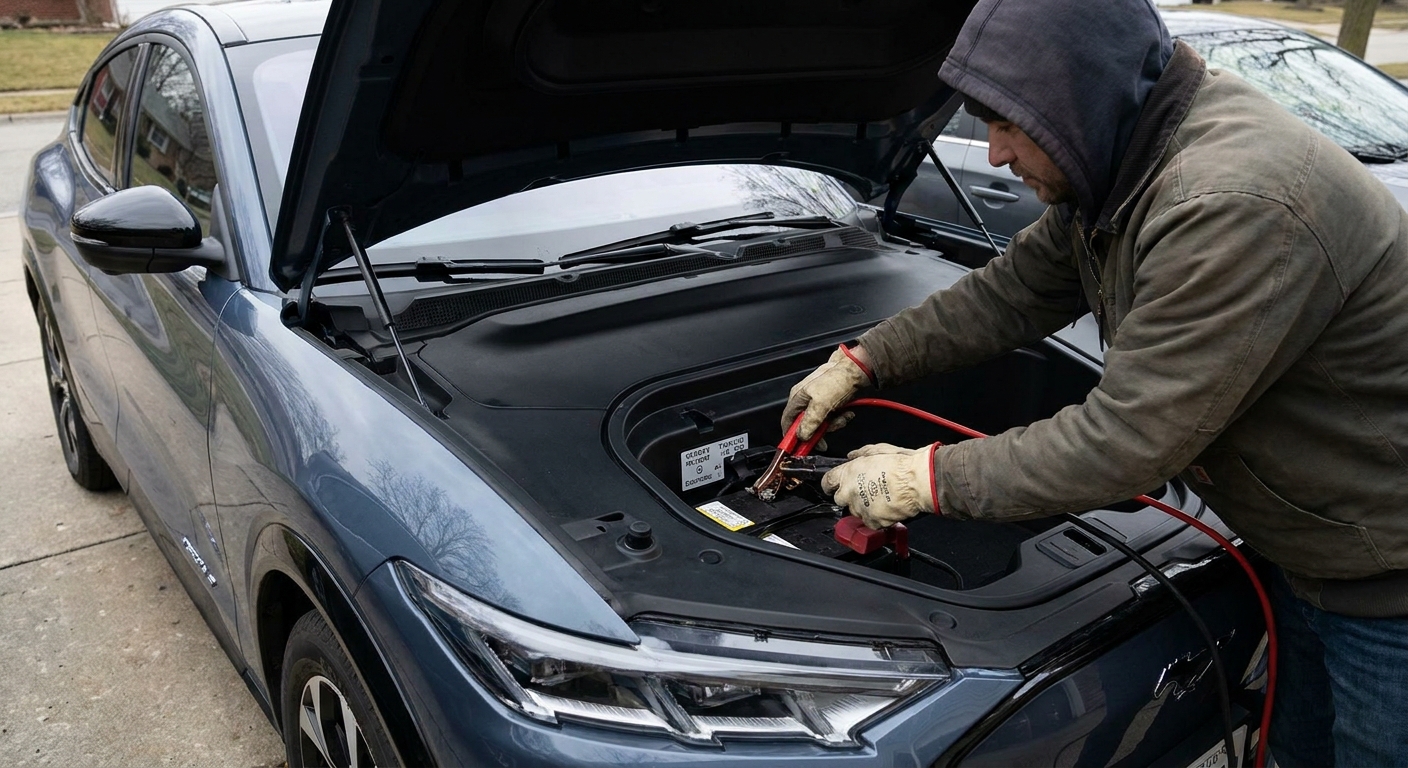
Can you jump-start an EV 12V battery?
Often, yes, but you need to be careful and follow your owner’s manual for your specific model. In general, you are not jump-starting the high-voltage battery. You are only supplying enough 12V power to wake the computers and attempt to close the high-voltage contactors.
- Use the dedicated jump posts if your EV has them.
- Double-check polarity before you connect anything.
- Once the car is in Ready, the DC-DC converter usually begins supporting the 12V system, unless the car has detected a charging or electrical fault.
If you’re not 100 percent sure, calling roadside assistance is smarter than gambling with an expensive electronics mistake.
The car may think it’s plugged in
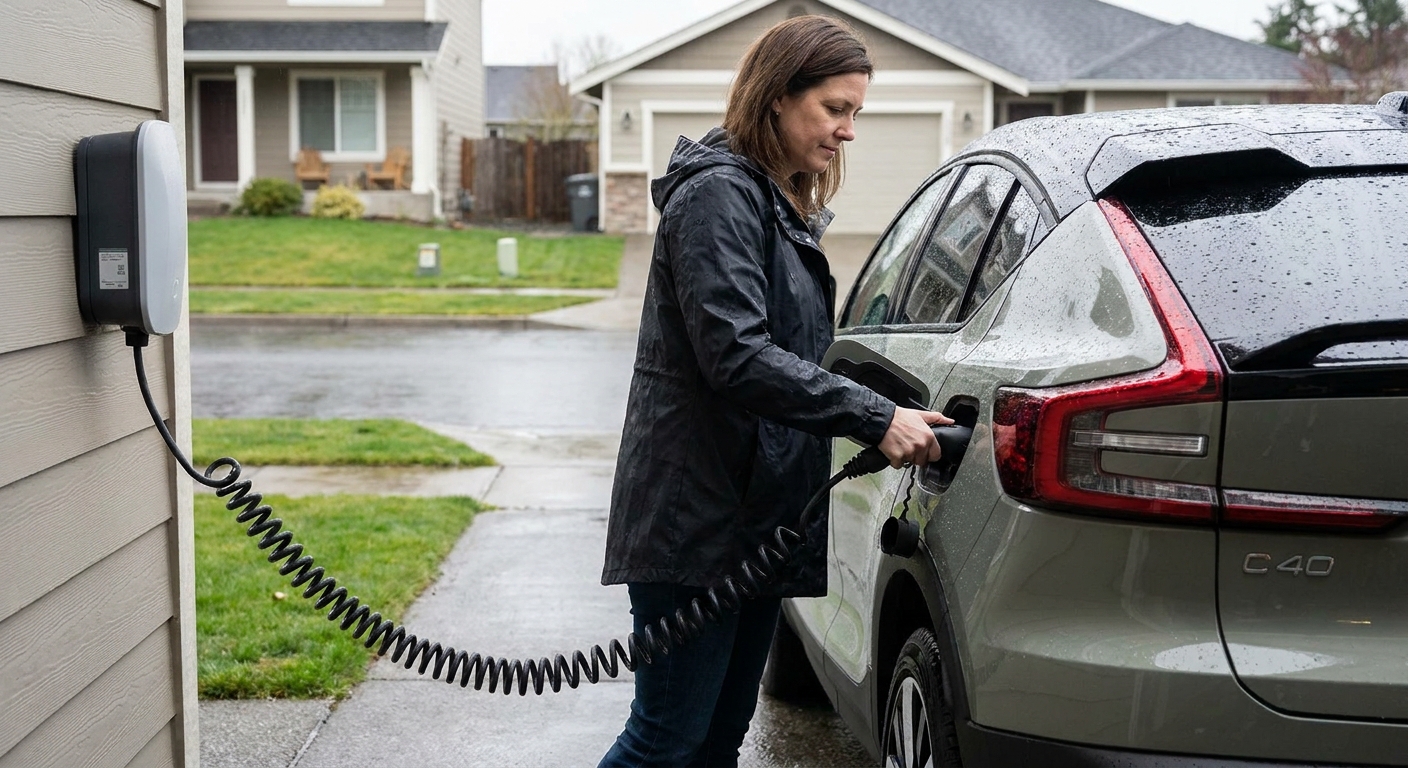
This one is more common than you’d think. If the charge connector is inserted, not fully latched, or the charge door sensor is unhappy, many EVs will refuse to shift out of Park as a safety measure. It’s model-dependent, but it’s easy to check.
What to do
- Unplug the charge cable and make sure it’s fully removed from the port.
- Inspect the charge handle and port for debris, bent pins, ice, or a sticky latch.
- Close the charge door firmly if your vehicle has one.
- If you’re using a public station, end the charging session in the app or on the charger screen, then unplug.
If it’s cold and you suspect the connector is frozen in place, don’t force it. Use the vehicle’s approved release procedure and gentle warming methods recommended by the manufacturer.
Brake interlock
Most EVs require you to press the brake pedal before the car will go into Ready and allow shifting. If the vehicle does not “see” the brake input, it can behave like it’s dead or stuck in Park.
Symptoms
- You press the power button and accessories come on, but it will not go to Ready.
- It goes to Ready sometimes, but shifting is inconsistent.
- You get a message like “Press brake to start” or “Depress brake pedal,” even though you are.
Checks
- Press the brake firmly and hold it while powering on. Sounds obvious, but light pressure can fail on some cars.
- Look for brake lights reflecting off a wall or ask someone to confirm they illuminate. No brake lights can indicate a brake switch issue or a 12V electrical problem.
- Make sure the floor mat is not interfering with pedal travel.
If the brake lights do not come on and you have a healthy 12V system, the brake pedal switch or related circuit may need service.
Key detection issues
If your EV can’t detect the key, it may refuse to power on, refuse to go into Ready, or power on but won’t allow shifting.
Try this first
- Replace the key fob battery if it’s been a while. Weak fob batteries cause intermittent detection and the problem often appears suddenly.
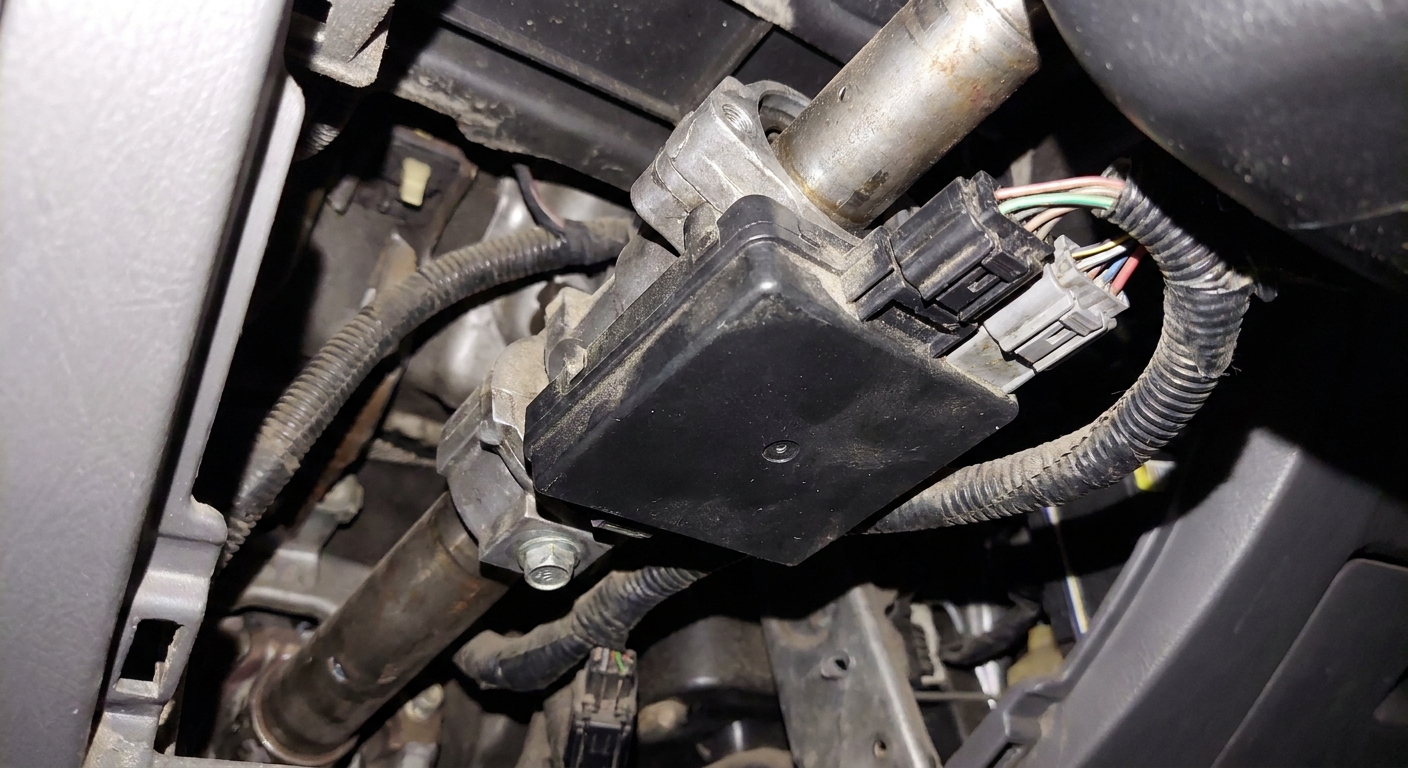
- Use the emergency start location inside the car. Many vehicles have a designated spot where you hold the fob (often on the steering column, center console area, or near a marked icon) so the car can read it even if the fob battery is weak.
- Try your spare fob if you have one.
If your car is phone-key based, verify Bluetooth is on, the app is signed in, and airplane mode is off. Then try the physical key card or fob backup method.
If the car clearly detects the key but still refuses Ready and throws a security or immobilizer message, stop guessing and get it scanned. That is one of those cases where the fix is rarely a parking-lot trick.

DC-DC converter issues
Once the EV is in Ready, a DC-DC converter steps high-voltage power down to maintain the 12V system and charge the 12V battery. If that system fails or is disabled due to a detected fault, the 12V battery can drain and the car can refuse to boot or throw a pile of warnings.
Clues this is more than a simple 12V battery
- You jump it, it turns on, then dies again quickly.
- You replaced the 12V battery recently and the issue came back.
- You see warnings related to “12V system,” “charging system,” or “power reduced,” followed by a no-start.
At that point, you’re usually past driveway diagnostics. A shop will typically scan for codes, verify DC-DC output when the car attempts to enter Ready, and check fuses, wiring, and the converter itself.
Other quick checks
Not fully in Park
If the shifter feels odd, the car rolled slightly, or it was shut off on a steep incline, some EVs get stubborn about shifting. Try:
- Press the brake firmly.
- Set the parking brake.
- Power the car off fully, then back on.
Door or seat belt interlocks
Some models will limit shifting if the driver door is open or if it thinks the driver is not seated. Close the door, buckle up, and try again.
Aftermarket accessories
Dash cams, radar detectors, OBD dongles, and poorly installed audio gear can drain a small 12V battery fast. If you suspect this, unplug accessories and try booting again after charging the 12V.
A simple checklist
If your EV shows charge but will not turn on or shift, work through this order:
- 1) Confirm you are unplugged. Remove the charge connector completely and close the charge door.
- 2) Press and hold the brake firmly while powering on.
- 3) Verify key detection. Try the fob emergency read location or a spare key.
- 4) Look for low 12V symptoms like dim lights, glitches, clicking, or multiple warnings.
- 5) Measure 12V voltage at the battery or jump posts if you can, or have roadside assistance test it.
- 6) If a jump gets it going but it dies again, suspect a failing 12V battery or a DC-DC charging issue.
- 7) If this keeps happening, check for recalls, TSBs, and software updates for your model. Some repeat no-Ready complaints are fixed by updated control-module software.
When to stop and call help
I’m all for DIY, but there are a few lines you should not cross with high-voltage vehicles.
- Do not open or probe high-voltage components (orange cables, HV battery compartments, inverter housings).
- Call for service if you see a red high-voltage warning, smell burning, see smoke, or get repeated “pull over safely” messages.
- If the car is stuck somewhere unsafe, call roadside immediately.
If you need a tow, tell dispatch it’s an EV that cannot go into Drive. Many EVs require a flatbed, and towing rules are model-specific, so the safest move is to follow your owner’s manual towing instructions and ask for the appropriate truck.
FAQ
My EV has power, but it won’t go into Drive. Is that still a 12V issue?
Very often, yes. Accessory power can work at low voltage while the car refuses to enter Ready or release the shifter. It can also be a “still plugged in” condition, brake interlock, key detection trouble, or (less commonly) a security or software fault.
Why does the traction battery gauge still show charge if the car won’t start?
Because the battery state-of-charge display is not the same thing as the vehicle being able to close the high-voltage contactors and power up the systems needed for Ready. The 12V system usually has to boot first.
Can I replace the 12V battery as preventive maintenance?
On many EVs, the 12V battery is a normal wear item, and replacement every few years is not unusual depending on climate and usage. If you have repeated low-voltage warnings, slow booting screens, or an unexplained no-start, testing and possibly replacing the 12V battery is a sensible first move.
If I jump the 12V battery, how long should I let it run?
Once the EV is in Ready, the DC-DC converter typically supports the 12V system. If the car stays in Ready, drive it normally and monitor for warnings. If it drops out of Ready, throws charging warnings, or dies again quickly, get it inspected because you may have a 12V battery that will not hold charge or a DC-DC issue.
Bottom line
An EV that shows traction-battery charge but will not turn on is usually not a mysterious “main battery failure.” In the real world, it’s commonly a weak 12V battery, the car thinking it’s still charging, a brake pedal interlock issue, or a key detection hiccup. Start with the simple checks, and if the 12V system looks suspect, treat it like you would on any modern car: test it, charge it properly, and replace it if it cannot hold up under load.
If you want, tell me what EV you drive and what it does when you press the power button. Screen behavior and warning messages can narrow this down fast.