I’ve had this one roll into the shop a bunch of times: a perfectly fine car yesterday, then this morning the battery is dead and the first clue is staring you in the face. The brake lights are still glowing even though your foot is nowhere near the pedal. That one small problem can pull enough power to drain a healthy battery overnight.
The good news is that brake lights stuck on are usually caused by a simple mechanical issue at the brake pedal. In this guide I’ll walk you through quick checks you can do in your driveway, how the brake light switch is supposed to work, how to adjust it, and when it’s time to replace it.
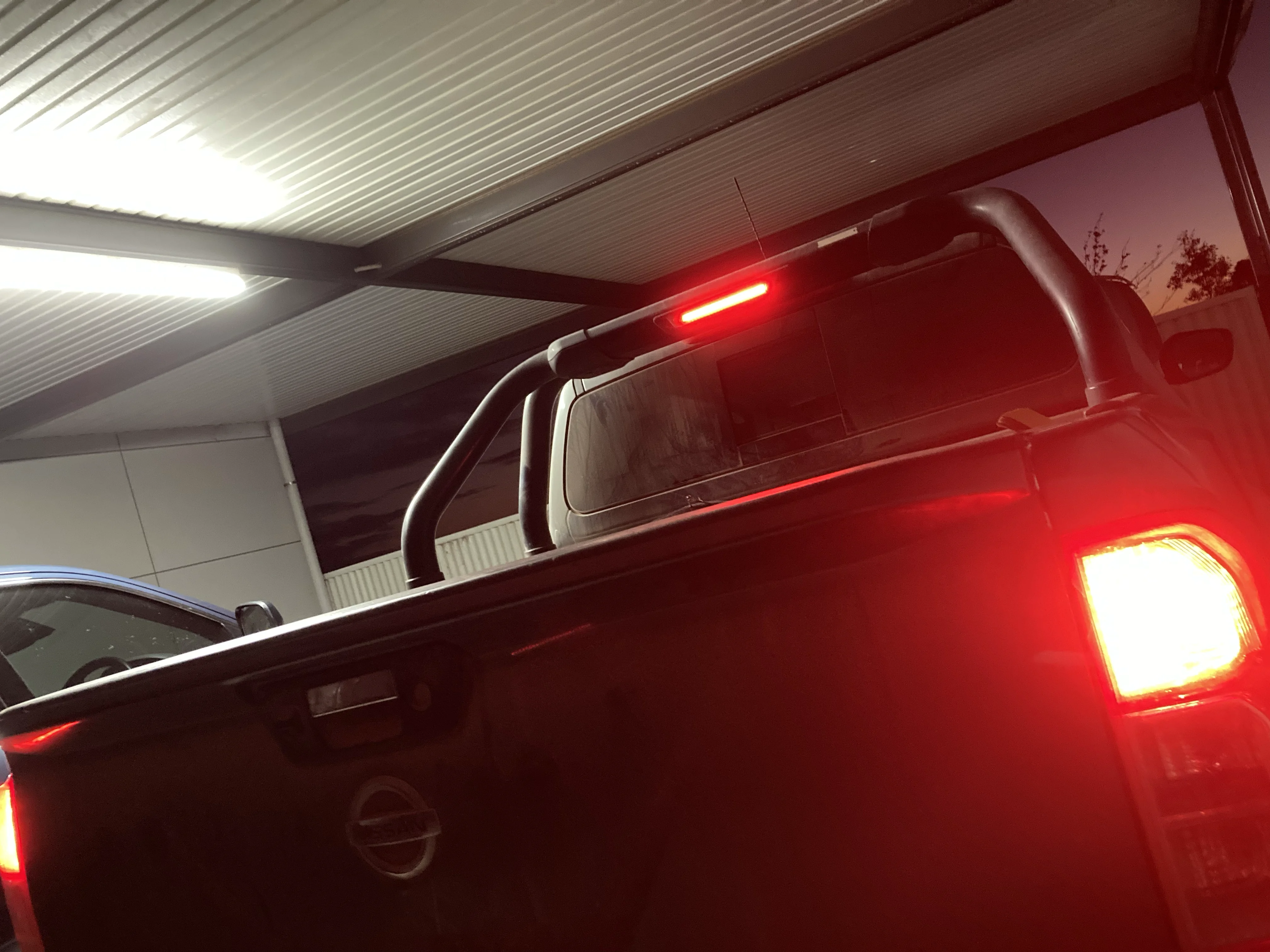
First, confirm the brake lights are actually staying on
Before we dig into parts, make sure it’s not a weird reflection or the wrong lights.
- Brake lights are the brighter red lights that come on when you press the pedal.
- Tail lights are dimmer and come on with your headlight switch.
- Hazards/turn signals flash.
Try this quick test:
- With the car off, walk behind it and look at the rear lights.
- Have someone gently pull up on the brake pedal with their toe. If the lights flicker or go out, you’re very likely dealing with a pedal or switch issue.
Why brake lights staying on drains a battery so fast
Brake light bulbs are not tiny loads. Traditional incandescent brake bulbs are often around 21 to 27 watts each, and many cars light up two or three bulbs when you hit the brakes. Even with LEDs, the draw can still be enough to drain a battery over several hours, especially if the battery is older or it was already a little low.
That is why the symptom often looks like “my car was fine, then it won’t crank in the morning.”
Most common causes (and the quick checks)
1) Something is holding the brake pedal down
This is the easiest win, and it happens more than you’d think.
- Floor mat slid forward and is pushing the pedal.
- A water bottle or piece of trash rolled up near the pedal.
- A pedal cover that shifted.
What to do: Pull the driver floor mat out completely and check the pedal’s full travel and return. If the lights go out with the mat removed, you found it. Reposition or replace the mat and make sure it can’t creep forward again.

2) The brake pedal is not returning all the way
If the pedal is slow to come back or feels “sticky,” the brake light switch may never get the signal to shut off. Causes can include a worn pedal pivot, a weak pedal return spring, or binding around the pedal arm.
What to do:
- With the car off, press the brake pedal by hand and let it snap back. It should return briskly.
- Lift up on the pedal with your hand. If the lights go out, the pedal is not returning far enough on its own.
- Look for anything rubbing on the pedal arm under the dash.
If the pedal return is inconsistent, address that first. Replacing a switch won’t help if the pedal itself can’t come fully home.
3) The brake light switch is out of adjustment
On many vehicles, the brake light switch is mounted up under the dash on a bracket at the top of the brake pedal arm. The switch has a plunger that is pressed in when the pedal is at rest. When you press the pedal, the plunger extends and the brake lights turn on.
If the switch is adjusted too far away from the pedal, the plunger stays extended even when the pedal is released, so the lights stay on.
Adjustment check:
- Locate the switch where the brake pedal arm meets the bracket under the dash.
- Look for a threaded body with a locknut, or a plastic switch that clicks into a bracket with an adjustable ratchet.
- With the pedal at rest, the switch should be fully depressed by the pedal or a stopper pad.
Basic adjustment steps (general):
- Threaded switch with locknut: loosen the locknut, turn the switch in or out so the plunger is fully depressed at rest (without forcing it), then tighten the locknut.
- Ratchet style: many self adjust when installed. You typically pull the plunger out, install the switch, then press the brake pedal fully once to set the clearance.
Important: After any adjustment, verify two things: the brake lights turn on with light pedal pressure, and they turn off immediately when you release.
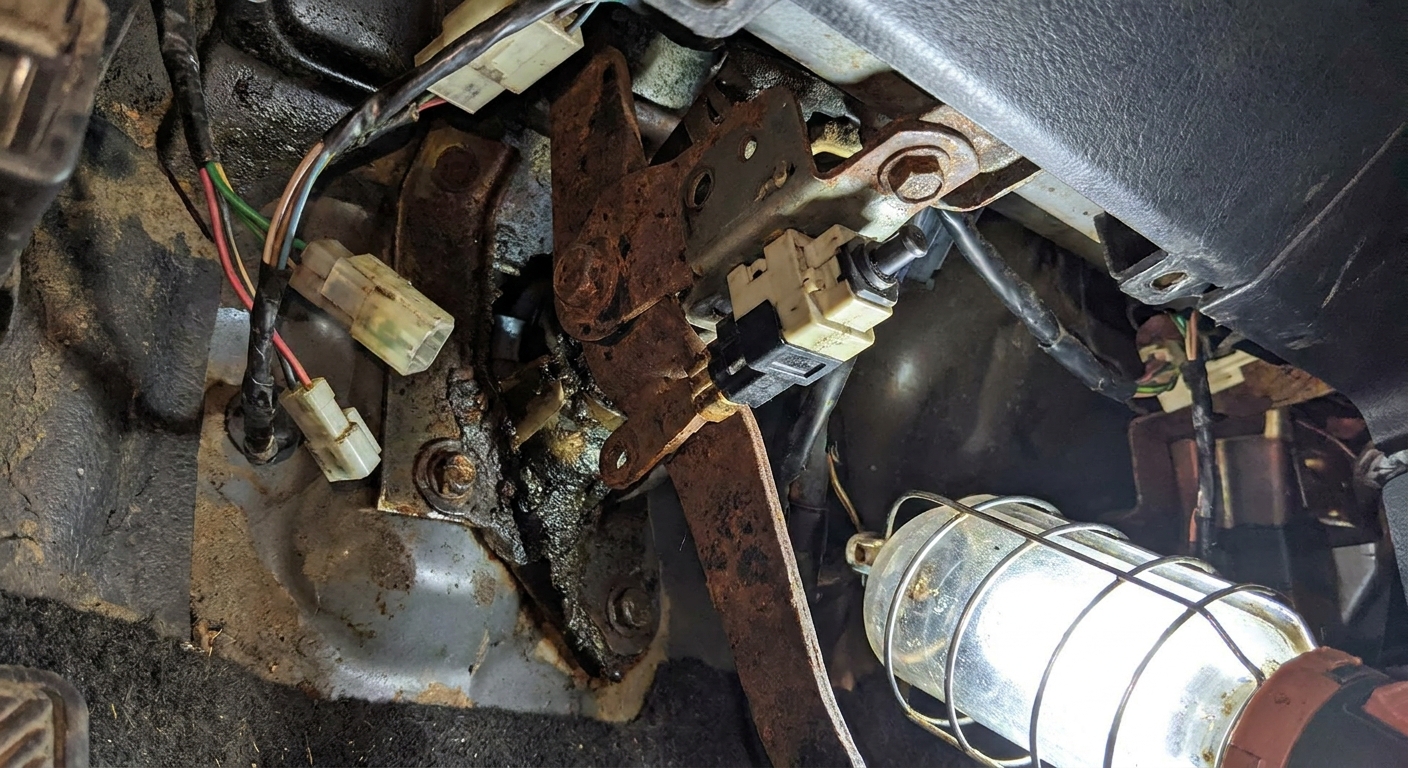
4) The brake pedal stopper pad is missing
This is a classic. Many cars use a small rubber or plastic pad on the brake pedal arm that contacts the switch plunger. When the pad falls apart or pops out, the pedal no longer presses the switch in far enough. Result: brake lights stuck on.
Signs you might have a missing stopper:
- You see the switch plunger touching bare metal where a pad should be.
- There’s a small empty hole in the pedal arm where a bumper would normally sit.
- You might find rubber crumbs on the driver floor mat.
Fix: Replace the stopper with the correct part for your vehicle. In a pinch, some folks use a temporary spacer solution to get home, but I recommend a proper replacement since this affects both lighting and, on many cars, shift interlock and cruise control behavior.
5) The brake light switch failed internally
Switches wear out. The internal contacts can stick, or the plastic body can crack so it no longer holds adjustment. If you’ve confirmed the pedal returns properly and the switch is being physically pushed in, yet the brake lights still stay on, the switch is a prime suspect.
When replacement is the smart move:
- The switch feels loose in its bracket or will not stay adjusted.
- The plunger movement feels gritty, sticky, or inconsistent.
- The lights behave intermittently, like flickering or coming on by themselves over bumps.
Brake light switches are usually inexpensive and quick to replace, but access can be awkward. Take your time under the dash and make sure the switch is securely locked in place after installation.
How to keep the battery alive until you fix it
If your brake lights are stuck on right now, you have two practical choices to keep from killing the battery:
- Unplug the brake light switch connector (under the dash). This turns the brake lights off, but you must remember you will have no brake lights until it’s reconnected. Only do this if the car will not be driven, or if you are moving it very carefully on private property.
- Disconnect the negative battery cable if the car is parked overnight. This is the safest way to prevent a dead battery, and it avoids messing with lighting circuits.
After the brake lights are fixed, do you still need to hunt for a parasitic draw?
If the brake lights were visibly on, that is your parasitic draw. Fixing the cause usually solves the overnight drain.
That said, if your battery still dies overnight after the brake lights reliably shut off, then it’s time to move on to a broader parasitic draw diagnosis (modules staying awake, trunk light on, glove box light on, aftermarket accessories, and so on). Keep that general draw hunting separate from this repair so you do not end up chasing two problems at once.
Safety and legality note
Brake lights are a required safety system. If they are stuck on, drivers behind you cannot tell when you are actually braking, and you can get pulled over for it. If you have to temporarily disable the lights to save the battery, treat it like a no drive situation until it’s corrected.
Quick checklist: what I’d check in 5 minutes
- Look at the brake pedal area for a floor mat or debris holding the pedal down.
- Pull up on the brake pedal with your hand and see if the lights go out.
- Inspect for a missing pedal stopper pad where the switch contacts the pedal.
- Verify the switch plunger is fully depressed with the pedal at rest.
- If it will not adjust or behaves inconsistently, replace the switch.
FAQ
Can stuck brake lights ruin the battery?
Yes. Leaving brake lights on for hours can drain even a healthy battery, and repeatedly deep discharging a starting battery can shorten its life.
Will a stuck brake light switch cause other issues?
Often, yes. Many vehicles use the brake switch for the shift interlock (shifting out of Park), cruise control cancel, and sometimes stability control logic. A bad signal can cause odd behavior beyond just the lights.
My brake lights stay on even with the switch unplugged. What then?
That’s less common, but it points away from the switch itself and toward wiring issues, a short to power in the brake light circuit, or an aftermarket device tied into the brake light wiring. At that point, a wiring diagram and a methodical electrical diagnosis are the right next step.